A Tidal Keepsakes Field Guide
The East Coast
Beachcomber's Guide
Shell Identification, Rare Finds & Coastal Collecting
From New Jersey to the Florida Gulf
tidalkeepsakes.com
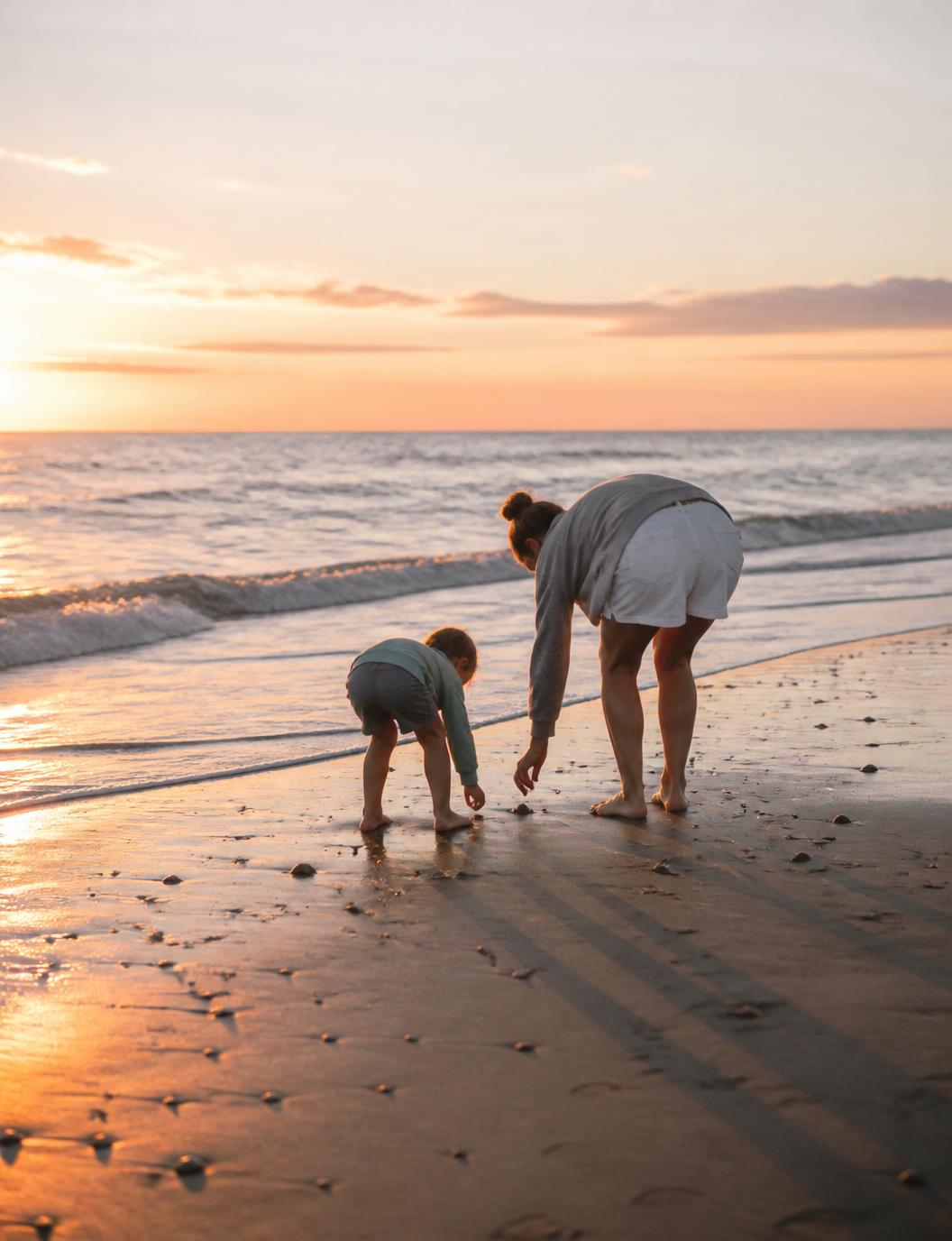
There is a particular magic to the empty beach at first light — the hush of the tide, the cool damp sand, and the promise that the sea has left something behind just for you.
Your companion for the Atlantic seaboard — identification plates, regional maps, rare finds, a seasonal calendar, and field-tested tips for cleaning and displaying your treasures.
Learn the language of shells and identification becomes second nature. These are the features collectors read at a glance.
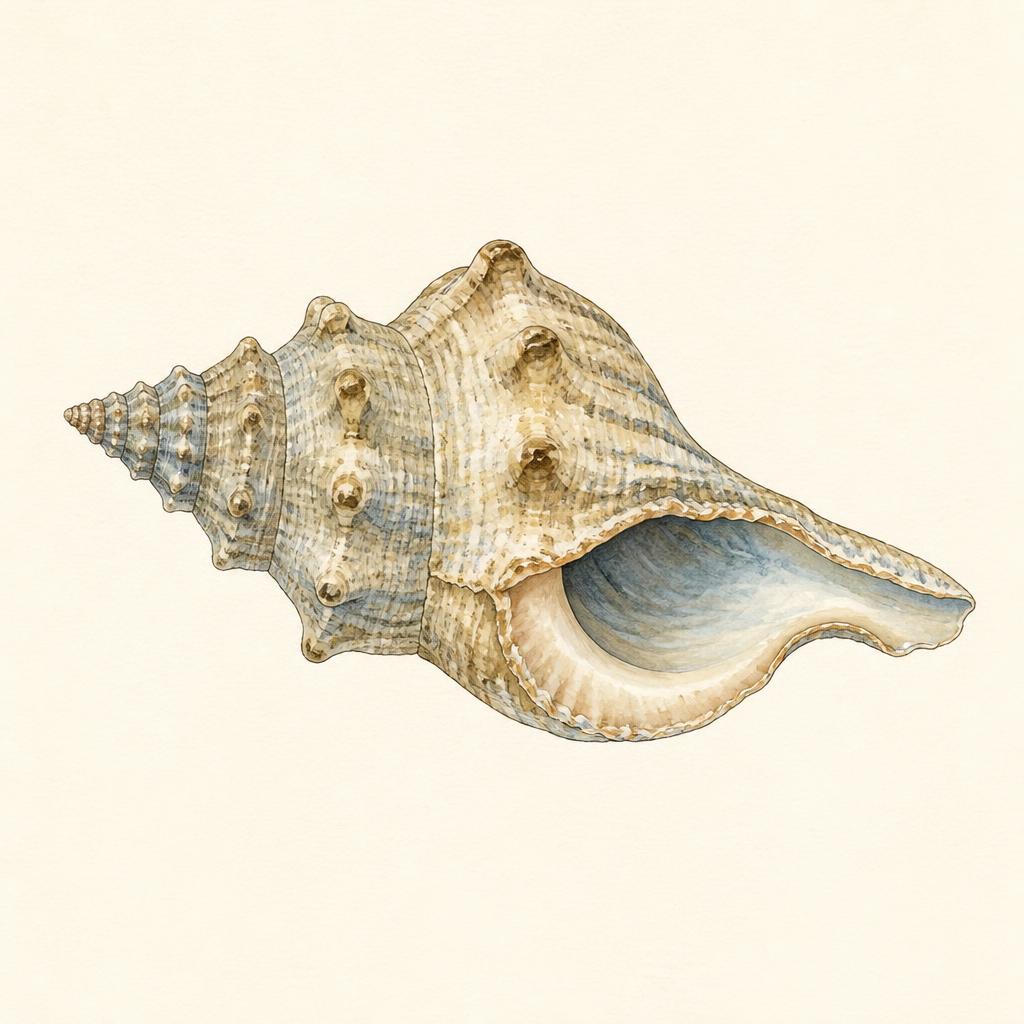
The pointed tip of the spire — the oldest part of the shell.
The coiled whorls above the body, rising to the apex.
The largest, final whorl that holds the animal.
The opening from which the living mollusk emerged.
The narrow channel that protected the breathing siphon.
The central pillar around which the whorls coil.
The flaring edge of the aperture, often thickened with age.
Raised nodes along the shoulder — a whelk's signature.
Fine ridges recording the shell's lifelong expansion.
Most marine snail shells coil to the right (dextral). A left-coiling “sinistral” whelk, like the Lightning Whelk, is a prized exception and a fun field clue.
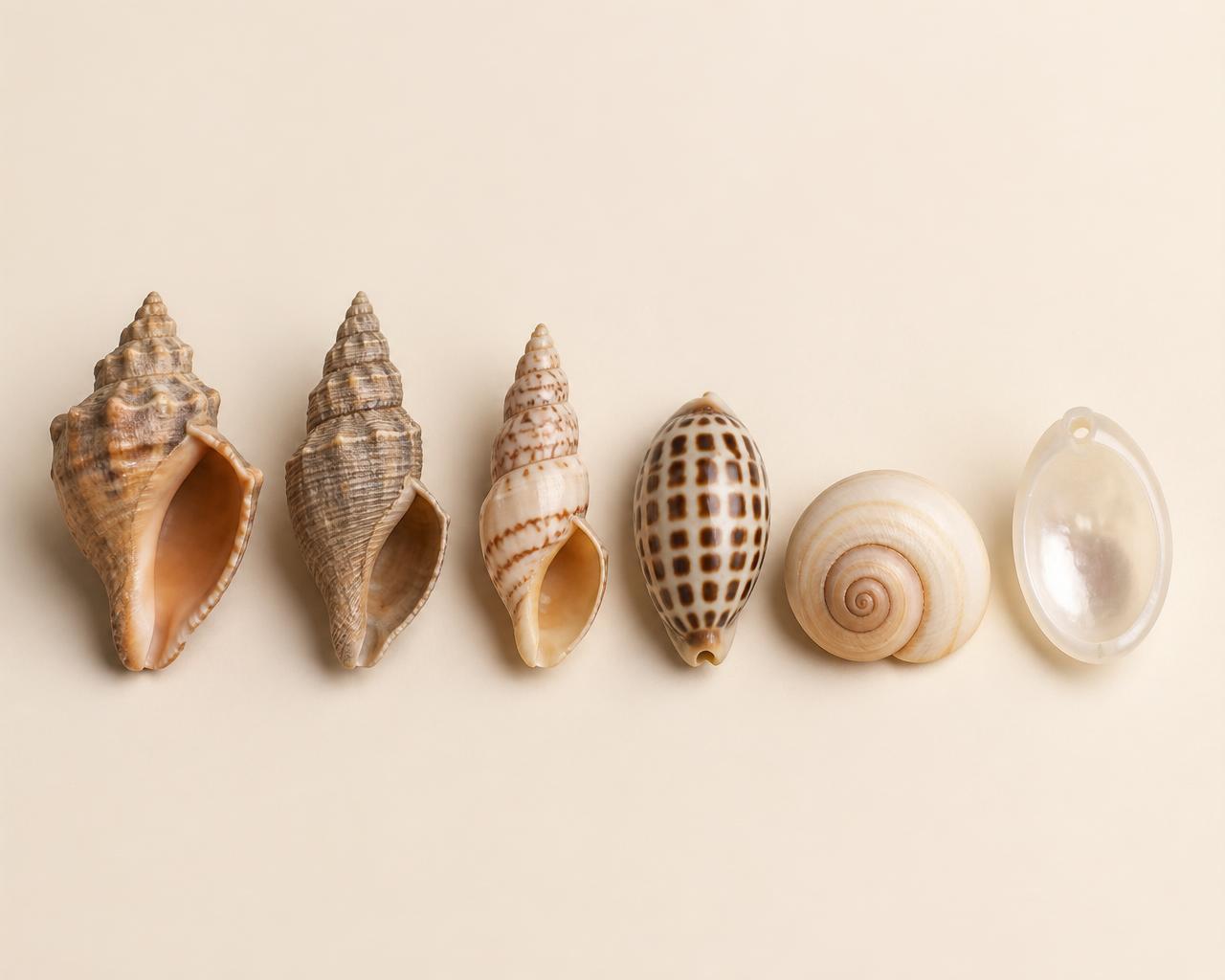
Heavy, spired shell with bold shoulder knobs; the New Jersey state shell.
Smoother whorls separated by a deep spiral channel; pear-shaped.
Left-handed opening with striking lightning-streak banding.
Glossy cylinder etched with tent-like zigzag markings.
Round, smooth globe with a tidy spiral and a broad foot.
Translucent, pearlized discs that chime like coins in the wind.
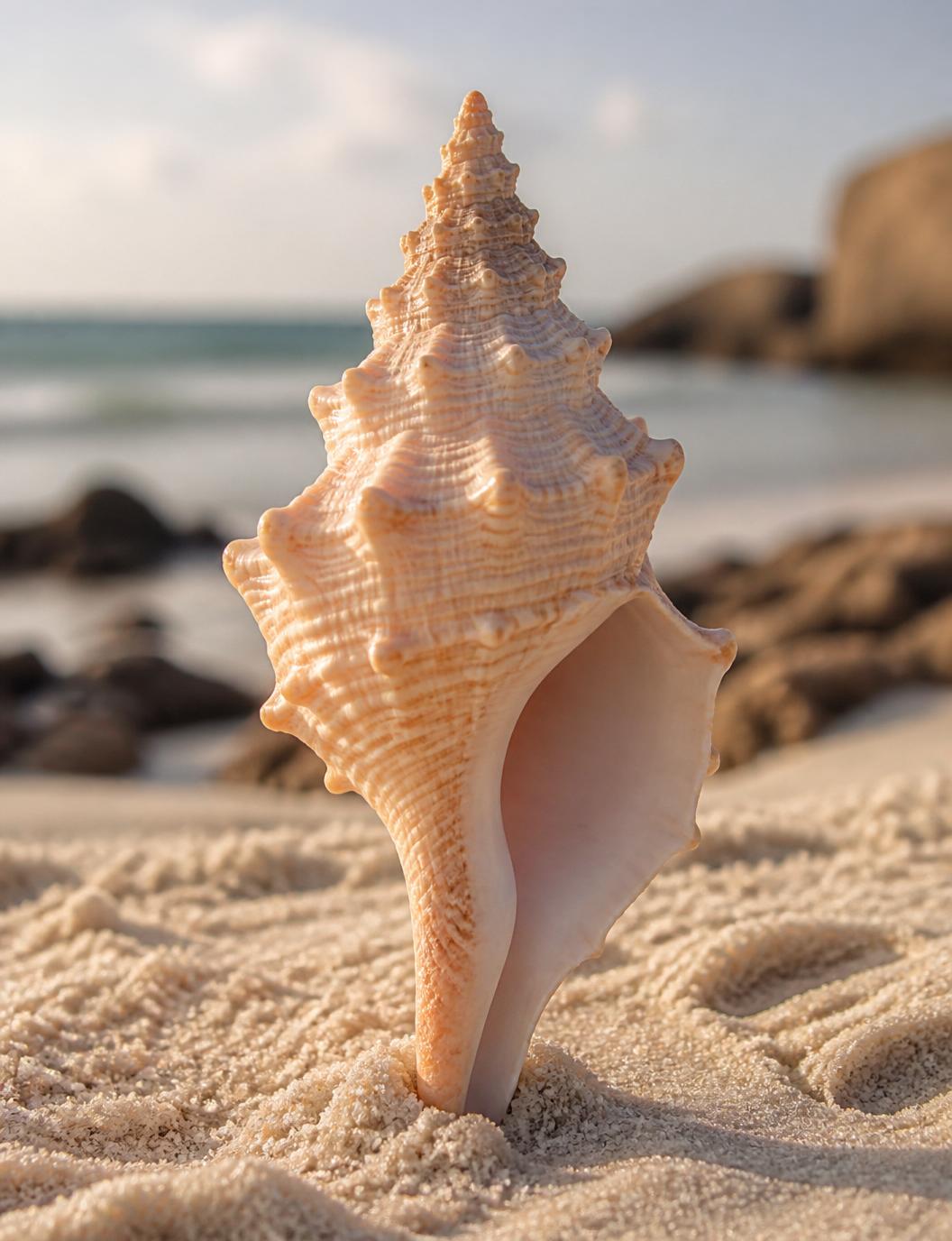
Busycon carica — the grand prize of a Mid-Atlantic walk. Up to nine inches long, with a row of blunt knobs crowning the shoulder and a flush of apricot inside the aperture.
After winter storms, whole knobbed whelks wash ashore on barrier-island beaches — dawn after a nor'easter is the collector's golden hour.
Channeled or Lightning? Two look-alikes, told apart by a single, reliable clue: which way the opening faces.
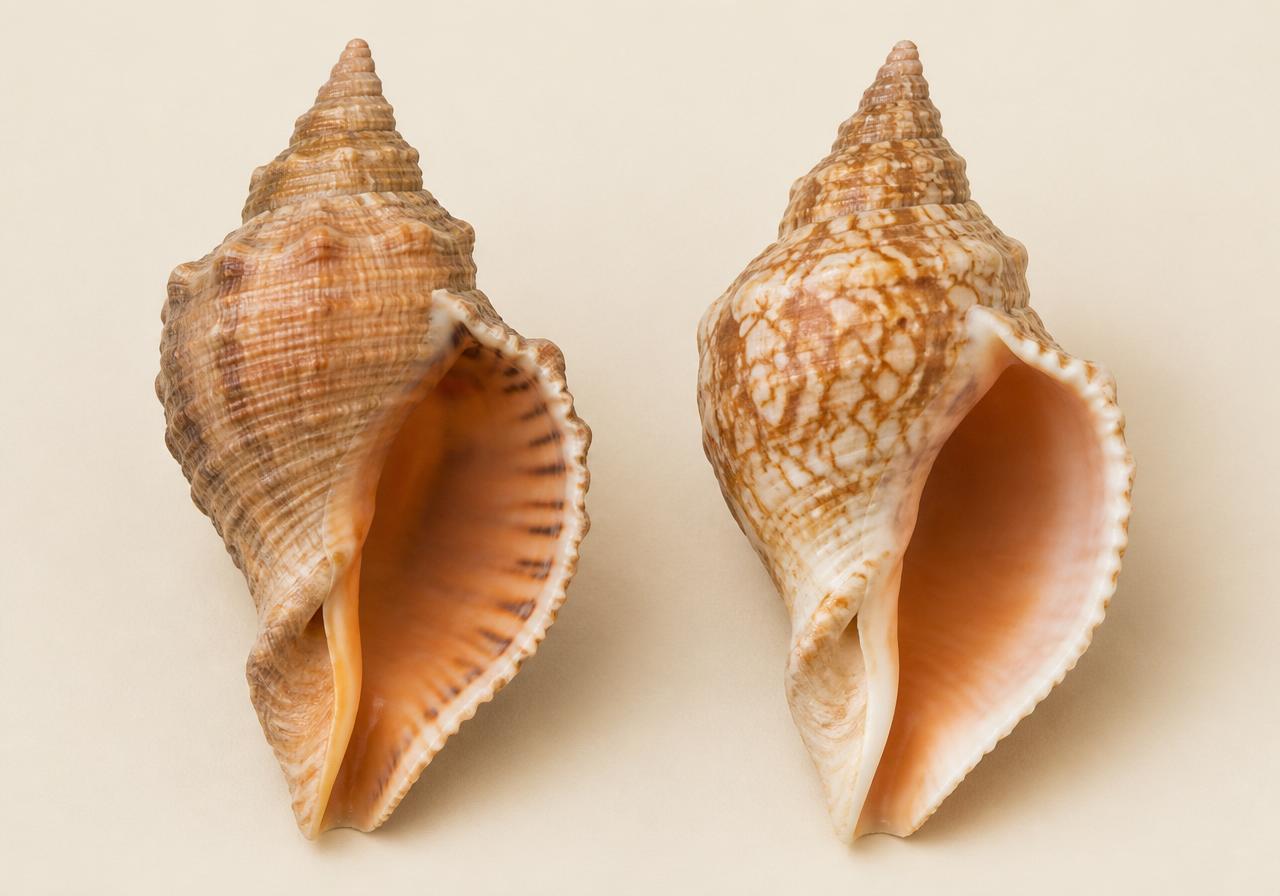
Aperture opens right. Smooth, pear-shaped whorls with a deep spiral groove (“channel”) at each suture. Tan to grey, 5–7 in.
Aperture opens left. The rare lefty — pale with violet-brown “lightning” streaks and shoulder knobs. A coveted find, 4–10 in.
Hold the shell with the spire up and opening toward you: if the opening is on your left, it's a Lightning Whelk. Nearly every other Atlantic whelk opens to the right.
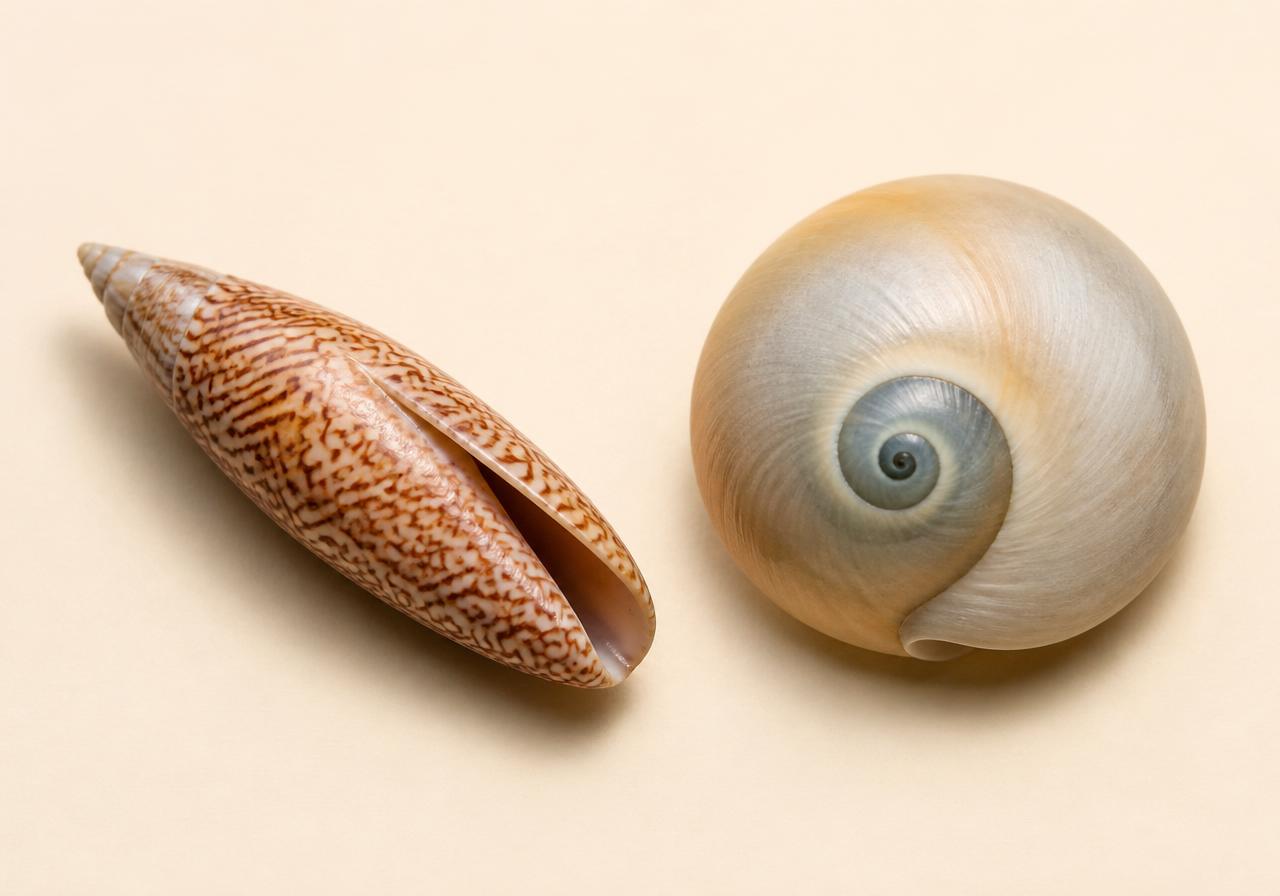
Glossy as polished stone, with fine zigzag “lettering.” The state shell of South Carolina. Tip: look along the swash line at low tide; their shine catches the morning sun.
A smooth grey globe with a neat spiral. Tip: the predatory snail drills a tidy countersunk hole in clams — find one and you've found a moon snail's calling card.
Moon snails lay eggs in a “sand collar” — a rubbery, collar-shaped ring of sand and mucus that looks man-made but is entirely natural.
The shore's confetti — small bivalves the tide sorts into a painter's palette of cream, butter, coral, lavender and slate.
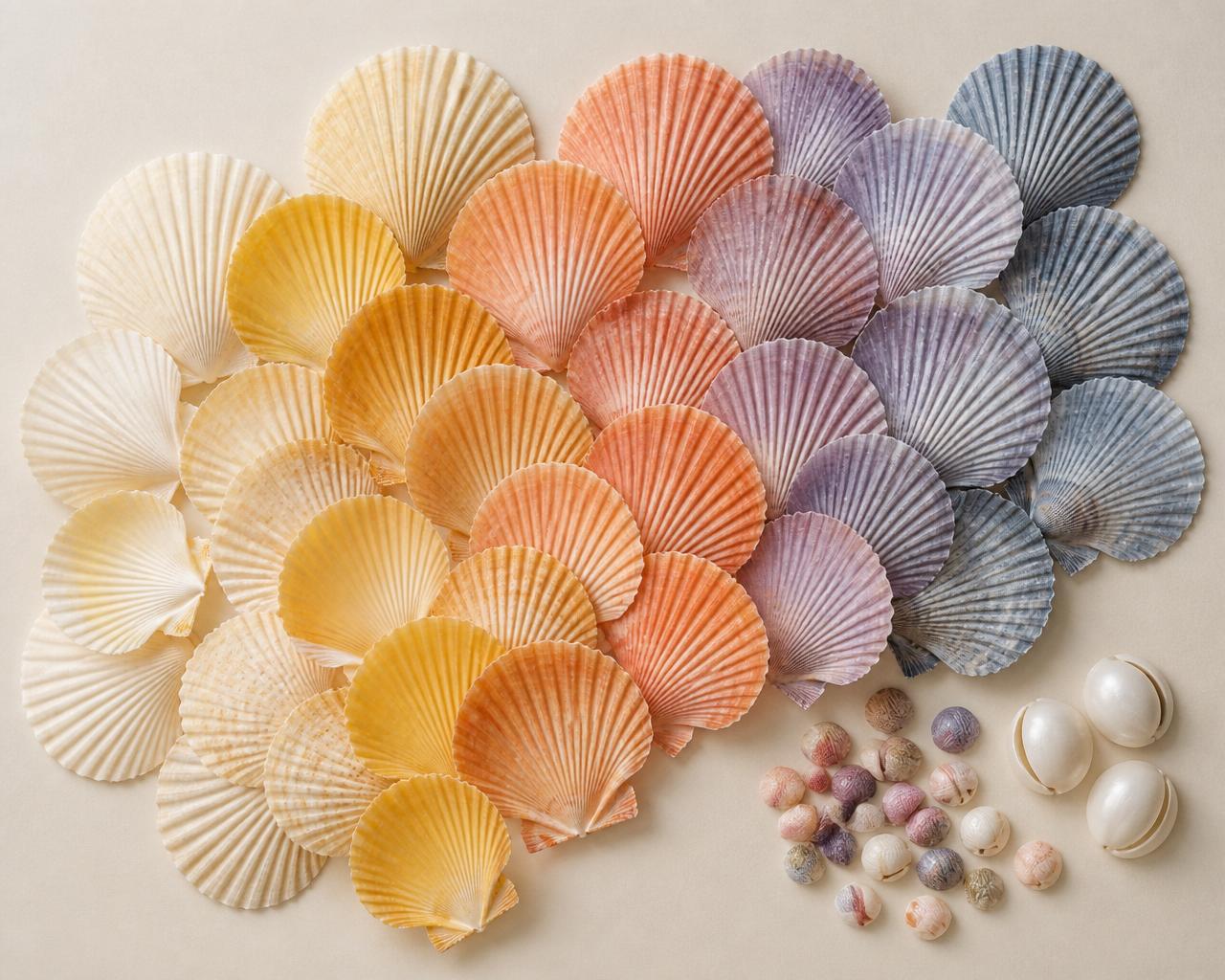
Argopecten irradians. Ribbed fans in every shade; matched pairs make the loveliest keepsakes.
Donax variabilis. Tiny, butterfly-bright clams; no two patterns alike.
Anomia simplex. Translucent and pearled; they chime softly when strung.
A “double” coquina — two valves still hinged and spread like wings — is a small lucky charm among collectors. Set them aside before the next wave takes them.
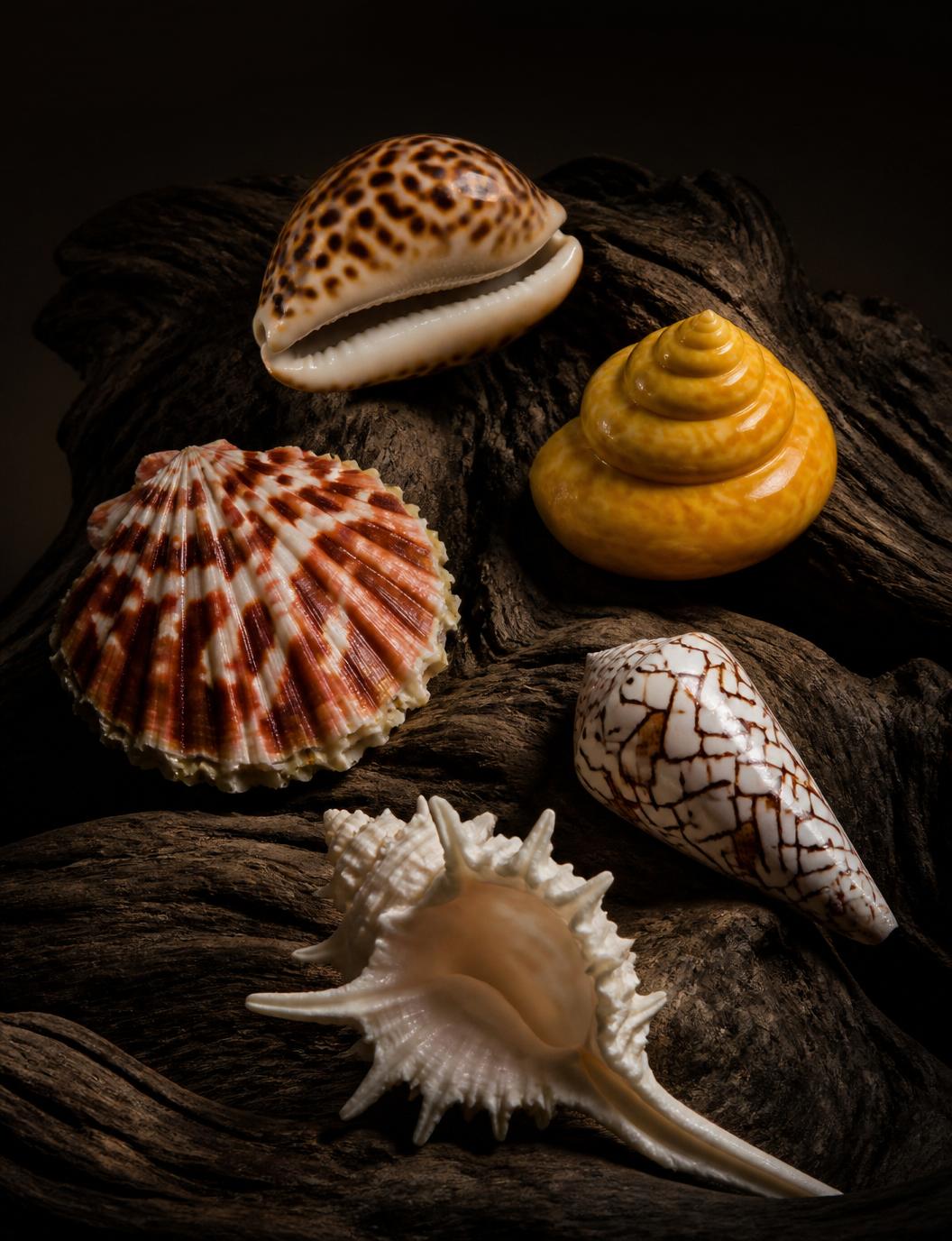
The shells that turn a casual walk into a lifelong pursuit — found once in a hundred low tides, and remembered forever.
Where the prized shells appear — and the stretches of coast that give collectors the best odds.
The state shell of North Carolina — a creamy, square-checked helmet shell.
Deep-water rarity that storms occasionally gift to Gulf beaches.
Cream shell typed with orange “letters”; a Florida favorite.
A heavy, knobbed scallop in vivid coral and orange.
Finding a Junonia on Sanibel once earned your photo in the local paper. Today it's still rare enough to make any sheller's whole year.
Diamonds and dawn light. The Mid-Atlantic's barrier beaches deliver whelks after every storm — and Cape May's famous quartz “diamonds” polished smooth by the surf.
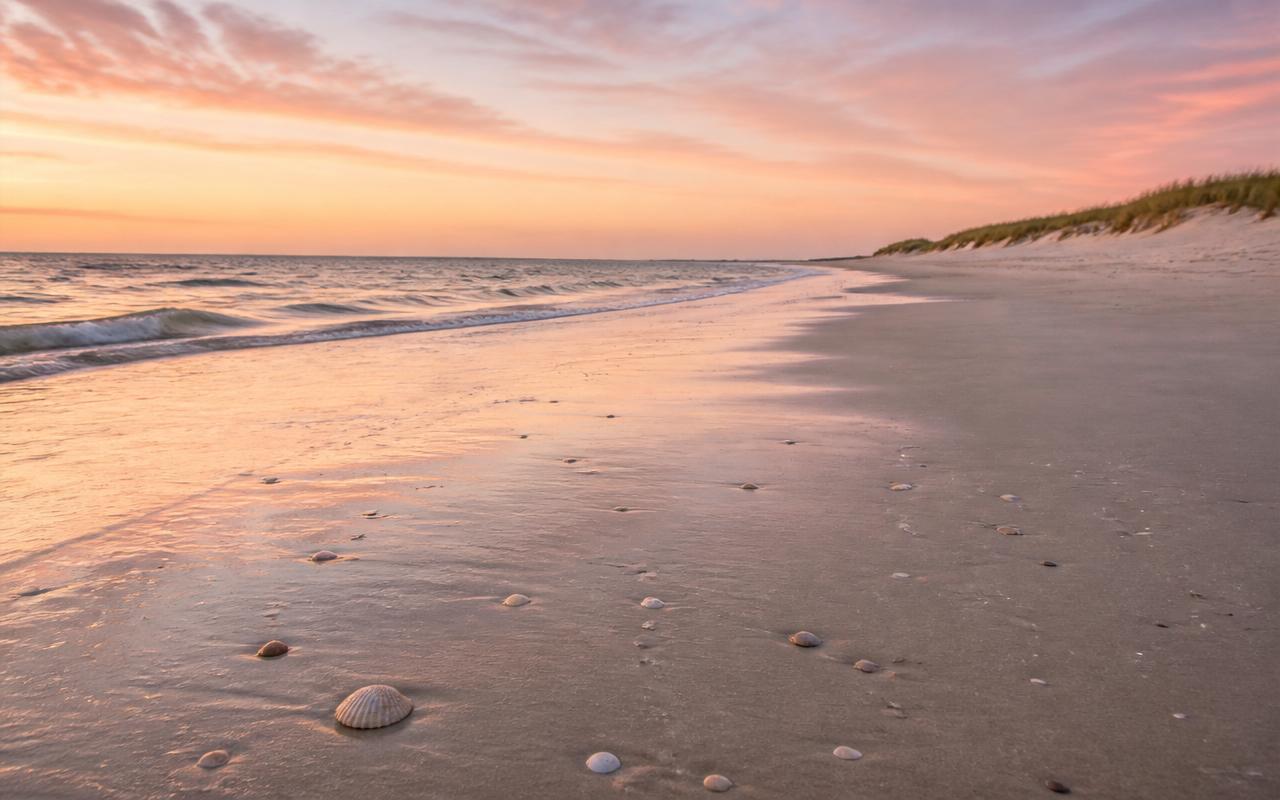
Slaughter Beach, Delaware is a horseshoe-crab sanctuary. In late spring, walk at dawn to admire — and gently right — the ancient crabs stranded by the tide.
Where wild horses roam the dunes. Assateague's undeveloped strand is a fossil-hunter's beach — sharks' teeth, ancient bone and frosted sea glass mingle with the shells.
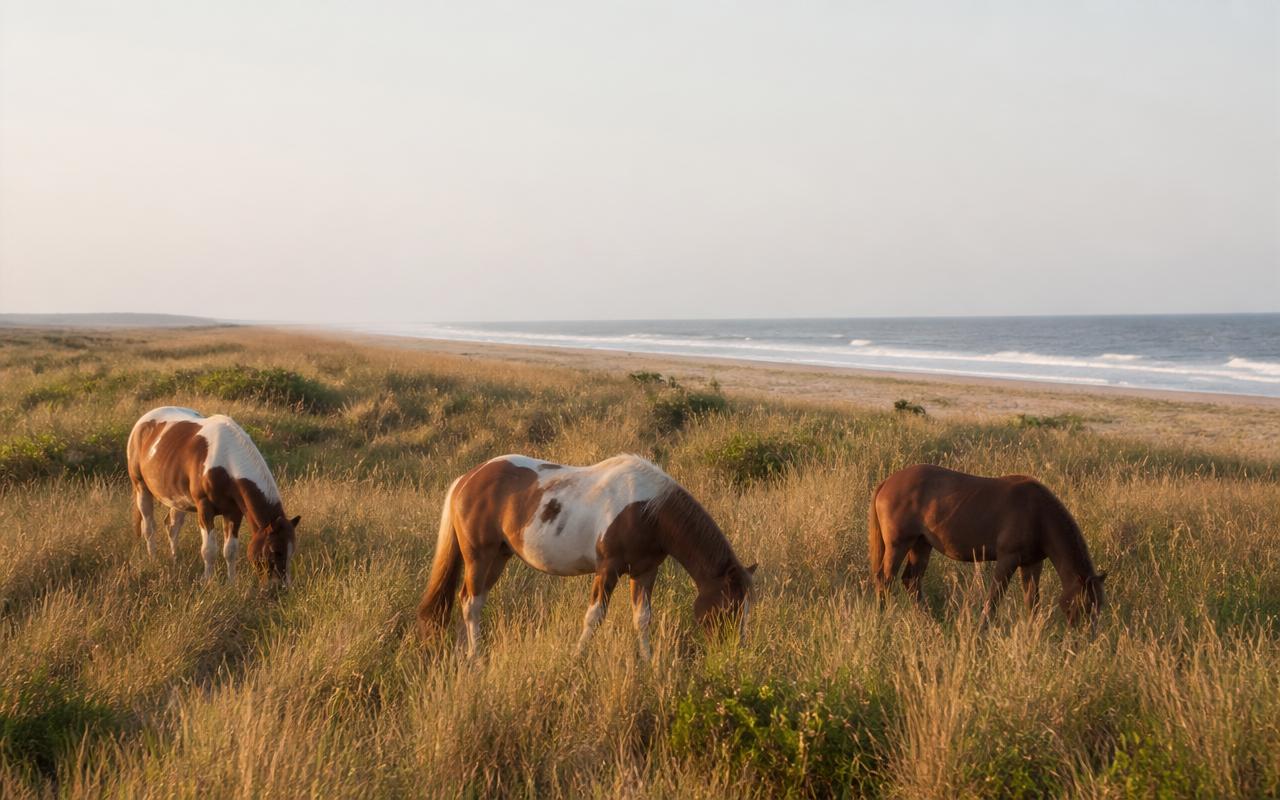
Always give Assateague's wild horses at least 40 feet. They are truly wild — and the best shelling is at the wrack line, not near the herd.
Barrier islands strung like beads. From Cape Lookout's diagonal-checked lighthouse to remote Ocracoke, the OBX is the East Coast's premier hunting ground for the Scotch Bonnet.
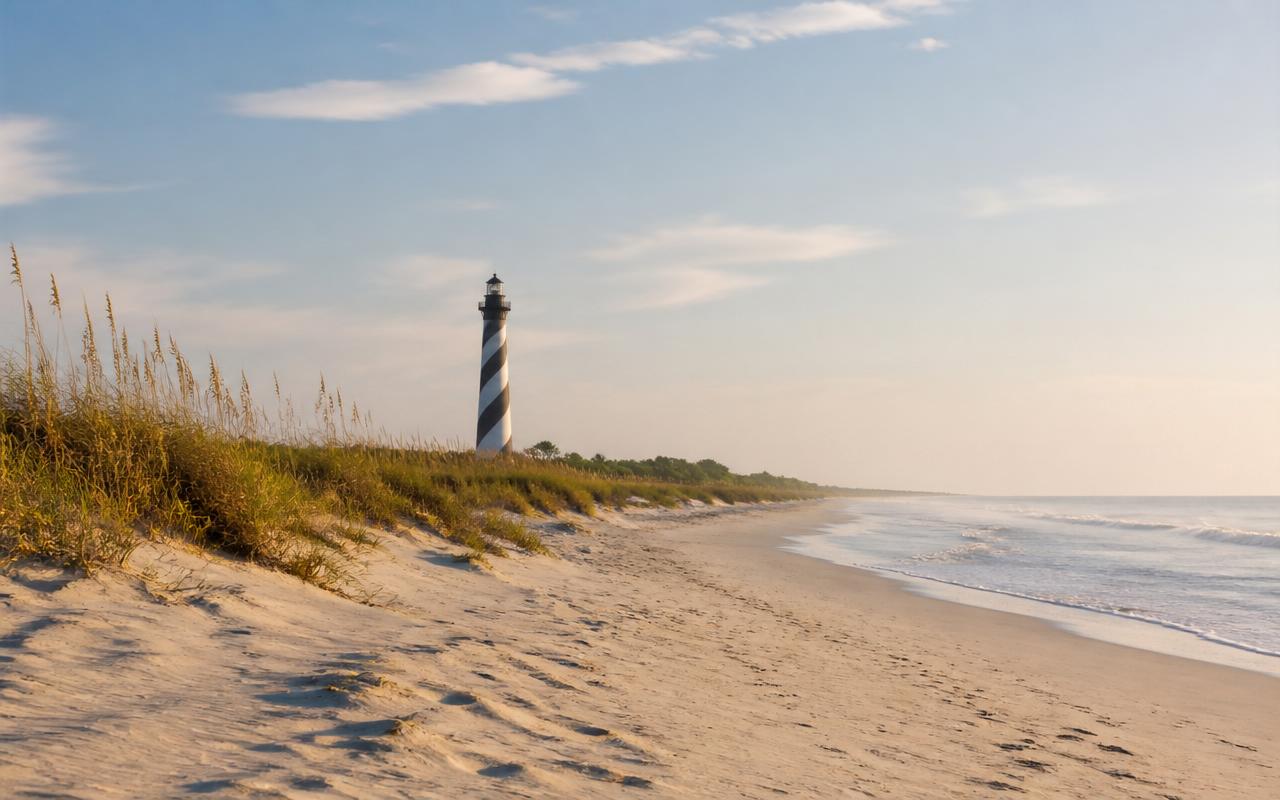
Ocracoke is reachable only by ferry, which keeps its beaches gloriously uncrowded — and its Scotch Bonnets far more likely to still be waiting at sunrise.
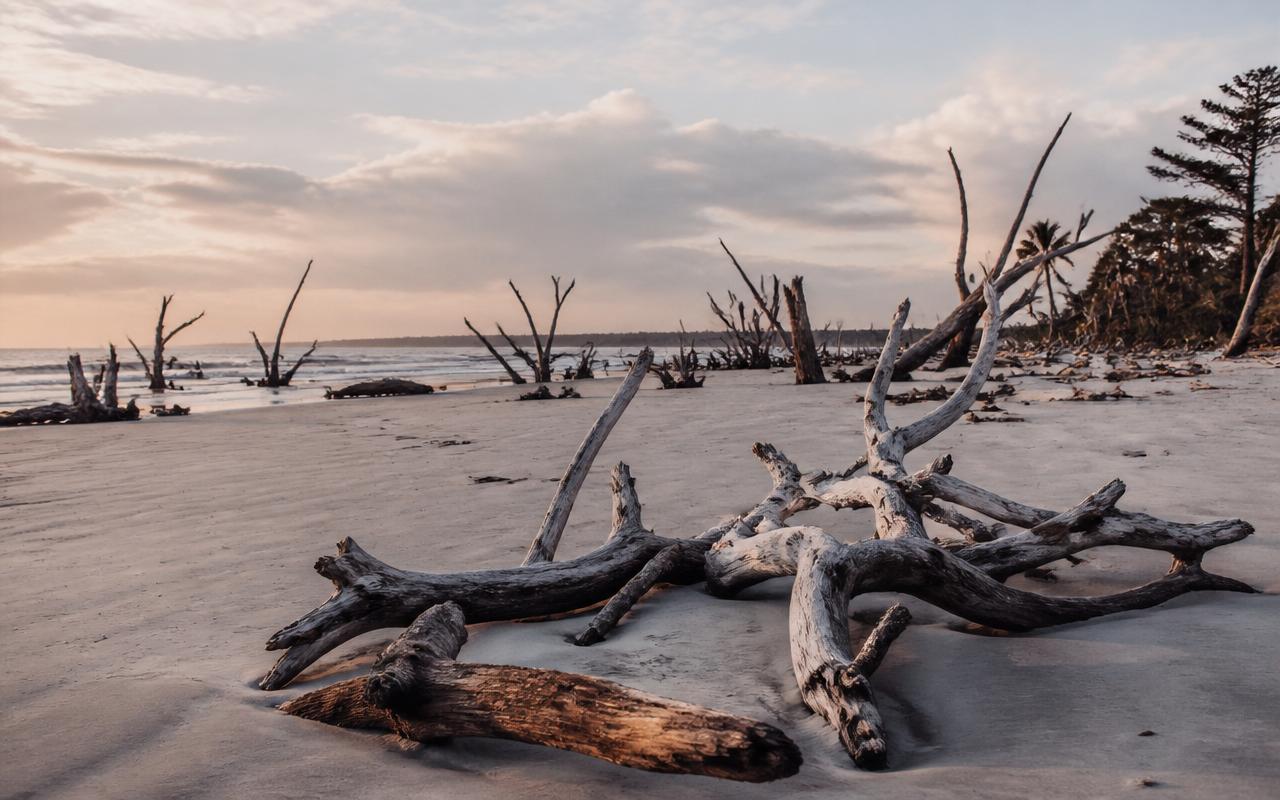
Sculptural driftwood and glossy olives. Hunting Island's “boneyard” beach is one of the most photogenic shores in America, and the Lowcountry hides whelks, conchs and sharks' teeth.
The Lettered Olive is South Carolina's state shell — and Edisto Beach is famous for fossils. Sift the dark shell hash at low tide for sharks' teeth.
The shelling capital of the country. Sanibel's east-west tilt rakes Gulf shells onto its beaches by the millions — bend low, do the famous “Sanibel Stoop,” and prepare to be amazed.
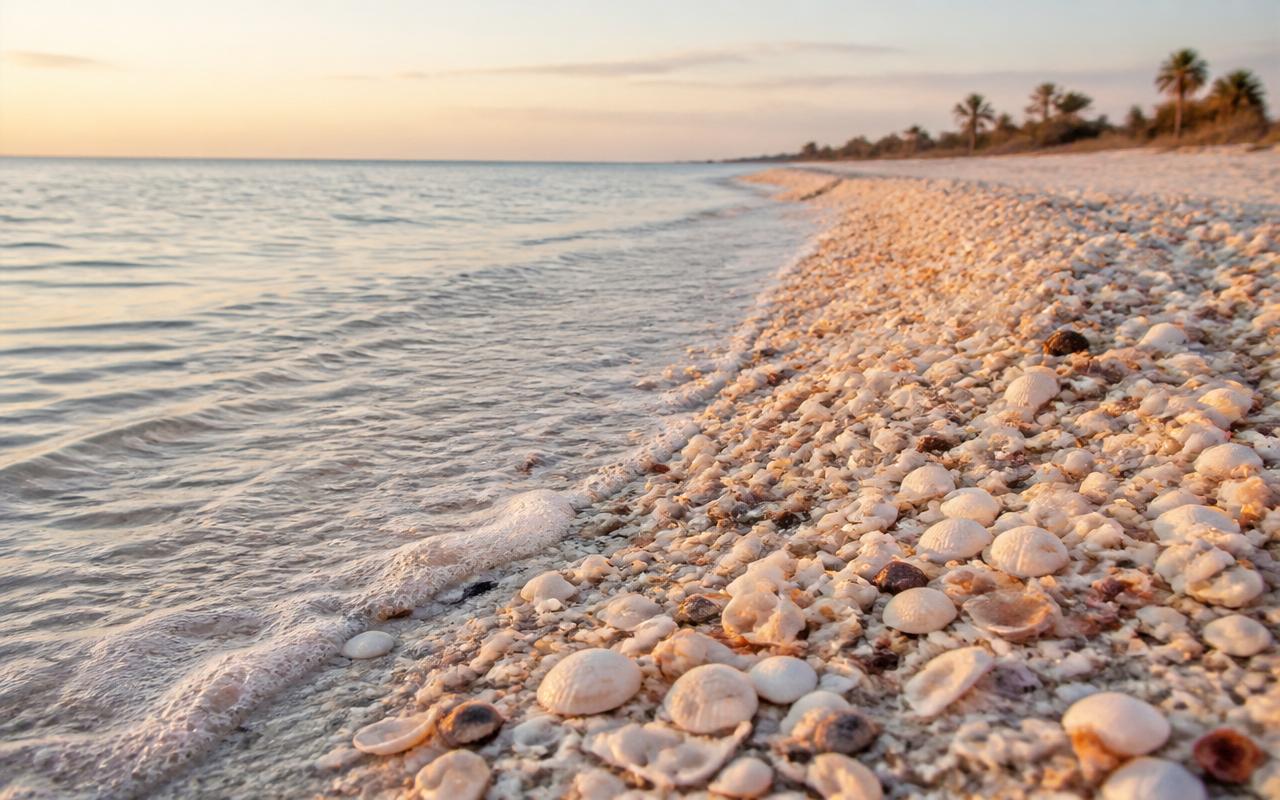
Venice, Florida is the “Shark Tooth Capital of the World.” A long-handled “Florida snow shovel” sifter turns the offshore fossil beds into a treasure box.
The sea keeps its own calendar. Time your walks to the tide and the season, and the shore gives up its best.
Golden rule: arrive at the low tide nearest sunrise, the morning after onshore winds or a storm. Walk the wrack line — that ribbon of seaweed and debris marks the high-tide harvest.
A gentle ritual turns a sandy, salt-dulled shell into a keepsake worthy of display.
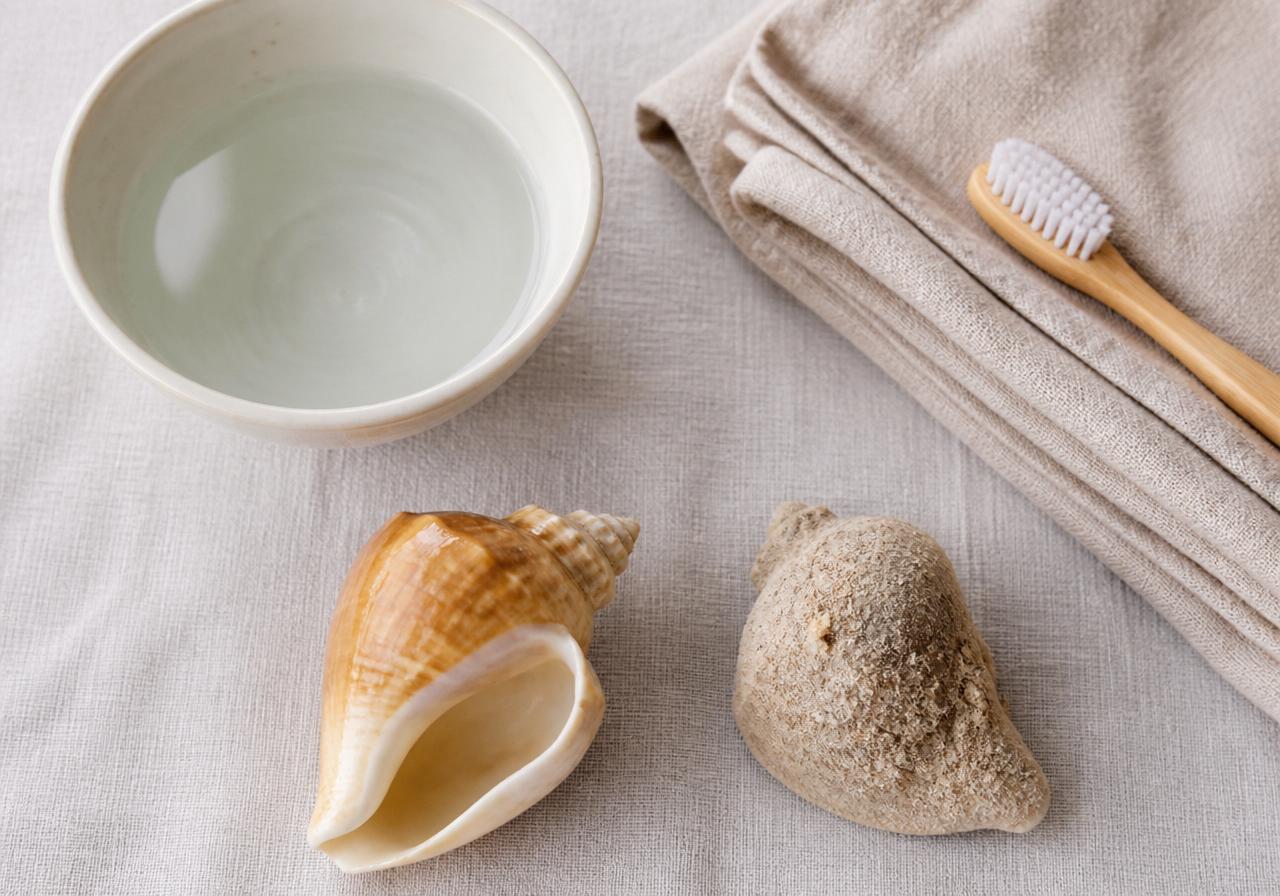
Rinse off loose sand under cool water.
Equal parts water & white vinegar, or mild soapy water, 1–2 hrs.
Work a soft toothbrush into ridges and the aperture.
Flush thoroughly with clean water; repeat if gritty.
Air-dry fully; a drop of mineral oil restores luster.
To remove a chalky build-up gently, a brief vinegar soak works — but never on pearly or fragile shells, as acid eats calcium carbonate. When in doubt, soap and water only.
Want the printable version? Scan the QR on the back cover for our full How to Clean Seashells guide.
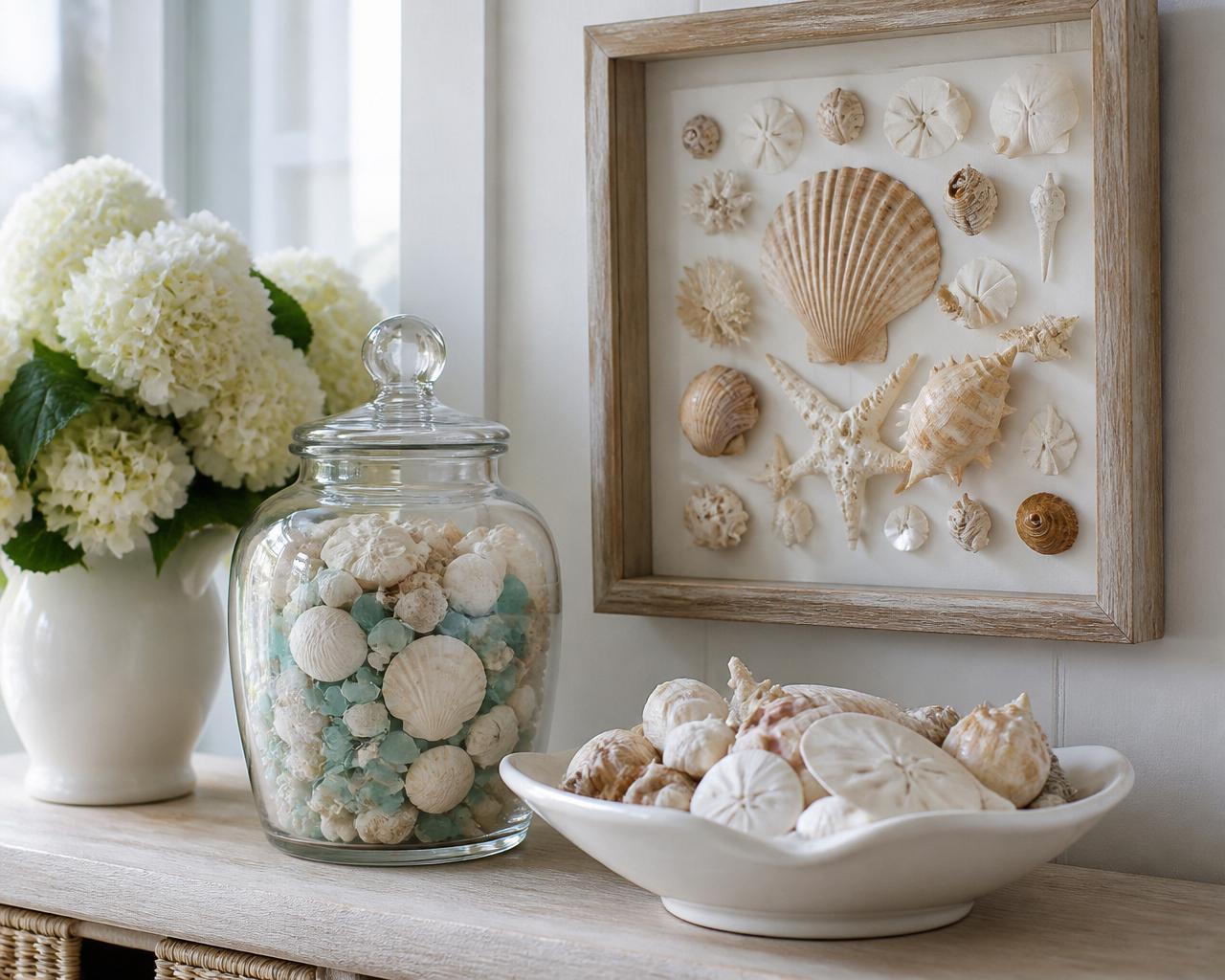
Layer a season's finds in a glass apothecary jar with a paper tag noting the beach and date.
Mount specimens on linen in a deep frame — a museum cabinet for your wall.
A white ceramic bowl of shells with hydrangeas is the easiest elegant table.
Garlands, place cards and ring dishes — handmade favors guests keep.
No finds of your own yet? Our hand-curated Signature Box and Collector Box arrive sorted, cleaned and ready to display — the perfect coastal gift. Visit tidalkeepsakes.com.
Record the walk while the salt is still in the air. Print this page and tuck it in your bag.

Explore our regional guides, identification resources and curated shell collections — and share your finds with us.


