 Save
SaveGuide
Best Time to Go Shelling on Florida's Gulf Coast
Timing beats luck. A practical guide to the tides, weather, and seasons that decide whether a Gulf Coast shell walk is exceptional or merely pleasant.
Timing beats luck. A practical guide to the tides, weather, and seasons that decide whether a Gulf Coast shell walk is exceptional or merely pleasant.
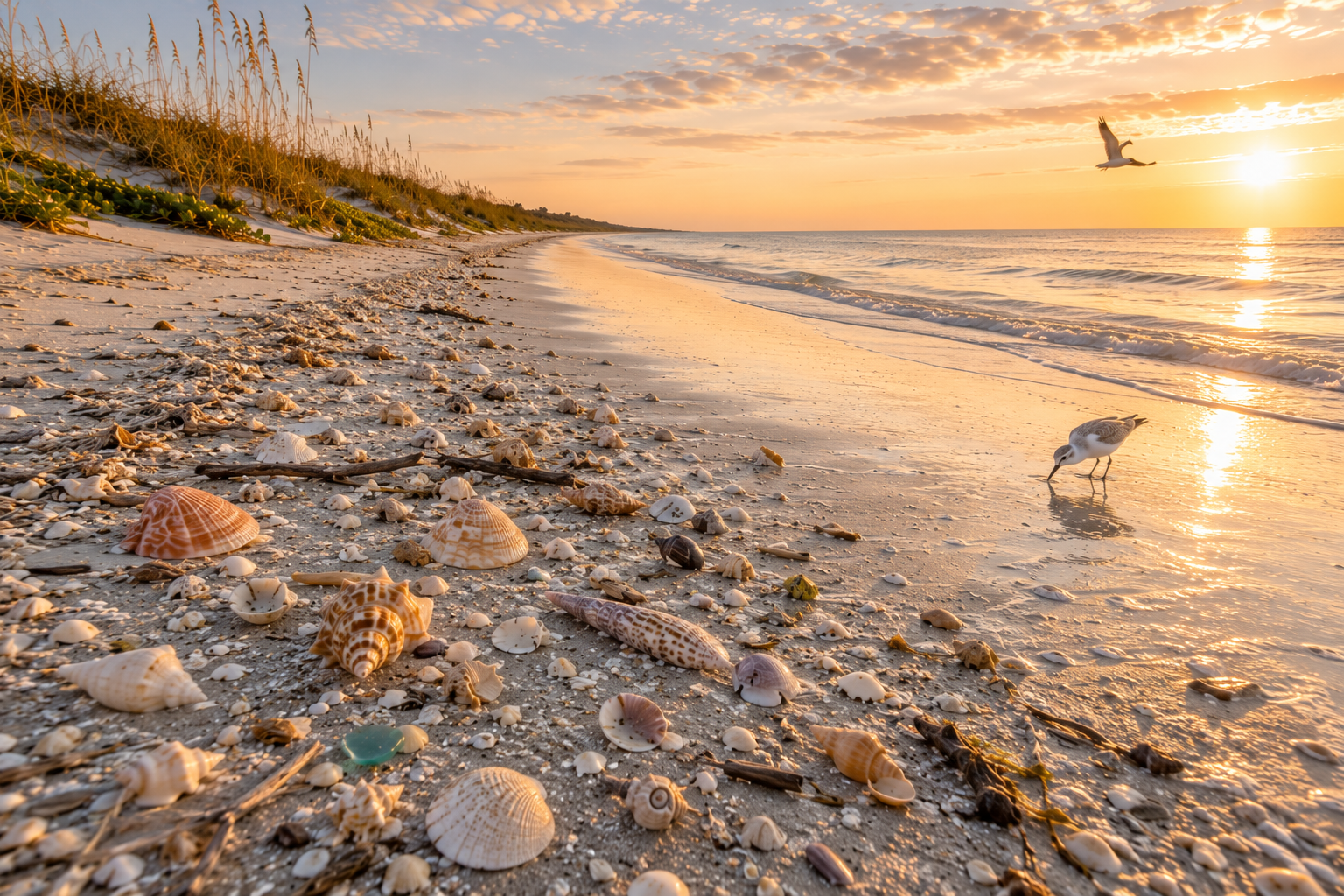
Four variables decide a Gulf Coast shell walk: the season, the tide, the weather in the two days before you go, and the beach you choose. Get all four right and an ordinary stretch of sand outperforms a famous one on a bad morning. This guide takes them in the order you should plan them.
The Season
Winter is the shell season on the Florida Gulf Coast. Cold fronts from November through March push Gulf water over shallow shell beds and drop new shells on the beach as they retreat. Summer visitors will still find shells — but not the quantity or variety a February collector will.
| Season | What drives the shells ashore | What to expect |
|---|---|---|
| Winter (Dec–Feb) | Cold fronts every week or two | Peak season; the widest variety and the quietest beaches |
| Spring (Mar–May) | Late-season fronts fading through March | Still strong early, easing as the fronts stop |
| Summer (Jun–Aug) | Calm water, occasional afternoon storms | Lighter pickings; morning after a storm is the exception |
| Autumn (Sep–Nov) | Tropical systems and the first fronts | Unpredictable but capable of the best single mornings of the year |
The Tide
Aim for the first low tide of the day, ideally within an hour of dawn. Two windows matter most: the falling tide (freshly uncovered wrack) and dead-low tide (widest exposed strand). Any decent tide table (or the NOAA tide predictions for your beach) will tell you when to go.
- Start walking about an hour before the predicted low so you follow the water down.
- Spring tides around the new and full moon expose the most beach; neap tides expose the least.
- The lowest low of the week is worth planning a day around — check the whole tide table when you book, not the morning of.
- Walk the wrack line first, then the wet sand the water has just left.
The Weather
- The morning after a strong onshore Gulf wind is the classic window.
- Post-front mornings in winter — cold, clear, and calm — are prime.
- Avoid the two-to-three days after weekend crowds have walked the tide line.
Weather overrides the calendar. The 24 to 48 hours after any system — front, tropical low, or a hard onshore blow — is the most productive window in any season, and a calm high-pressure week in February can be quieter than a stormy week in October.
The Beach Match
Sanibel and Captiva orient east-west and catch Gulf shells beautifully. Marco and Anna Maria are more forgiving family beaches. Caladesi and Shell Key reward the traveler willing to take a boat. Match the beach to the day you have.
| If your morning is… | Go to | Why |
|---|---|---|
| Post-front, pre-dawn low tide | Sanibel or Captiva | East-west orientation catches shells the retreating front pushes in |
| Calm, with a boat or ferry available | Shell Key or Caladesi | Access limits foot traffic, so deposits stay untouched |
| With children or a short window | Marco Island or Anna Maria | Easy access and gentler walking with steady, if smaller, finds |
Putting a Morning Together
- Check the week's tide table and mark the lowest early-morning low.
- Watch the forecast for a front or a sustained onshore wind in the two days before it.
- Choose the beach that matches the conditions and the party you're walking with.
- Arrive an hour before low, walk the wrack line out and the wet sand back, and check live animals before pocketing anything.
Plan the whole trip.
Florida Gulf Coast hubContinue Your Beachcombing Journey
Hand-picked next steps — chosen because they build directly on what you've just read.
Article
The Ultimate Shelling Guide to Anna Maria Island
Builds on the same core topic.
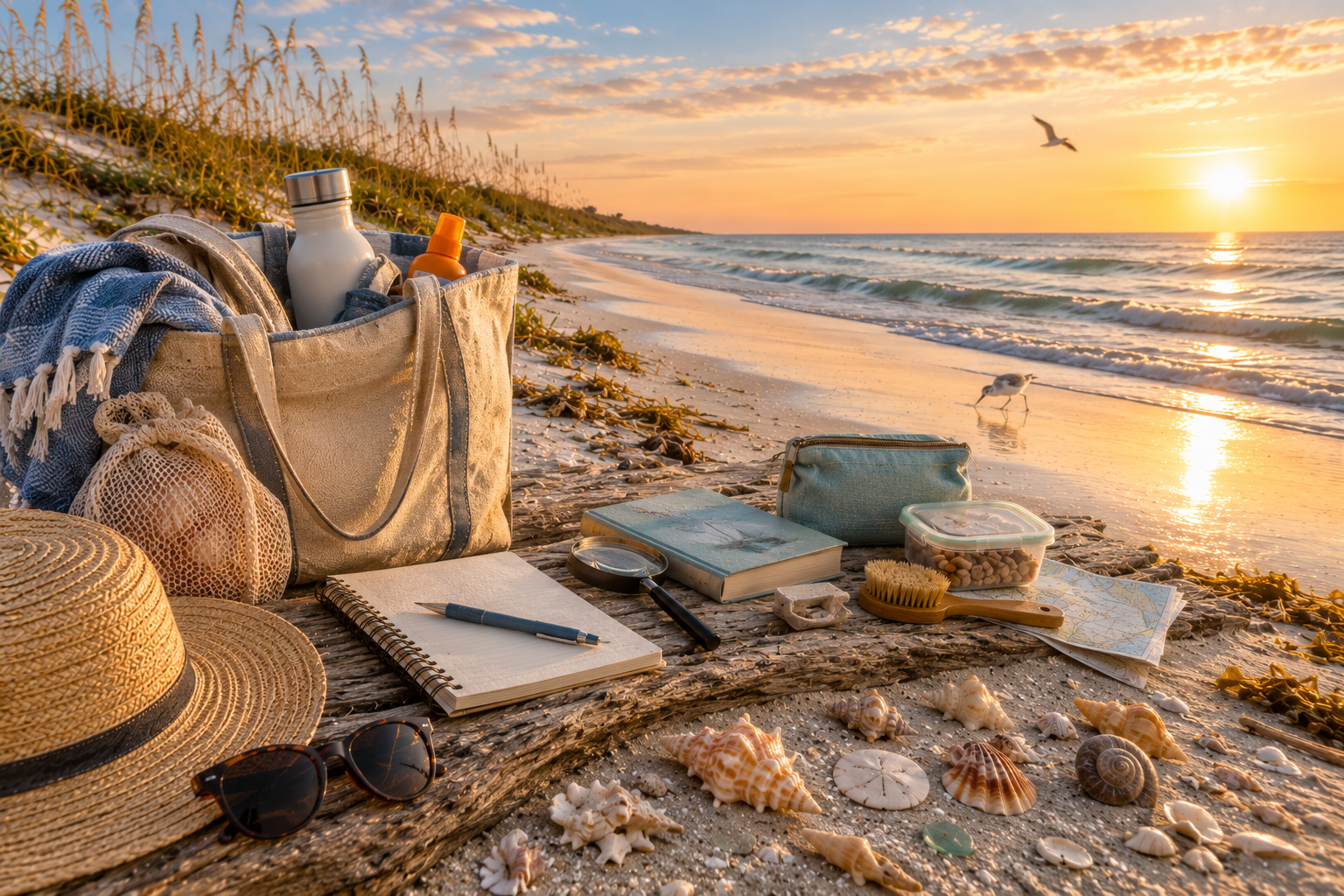
Guide
What to Bring on a Florida Shelling Trip
Builds on the same core topic.
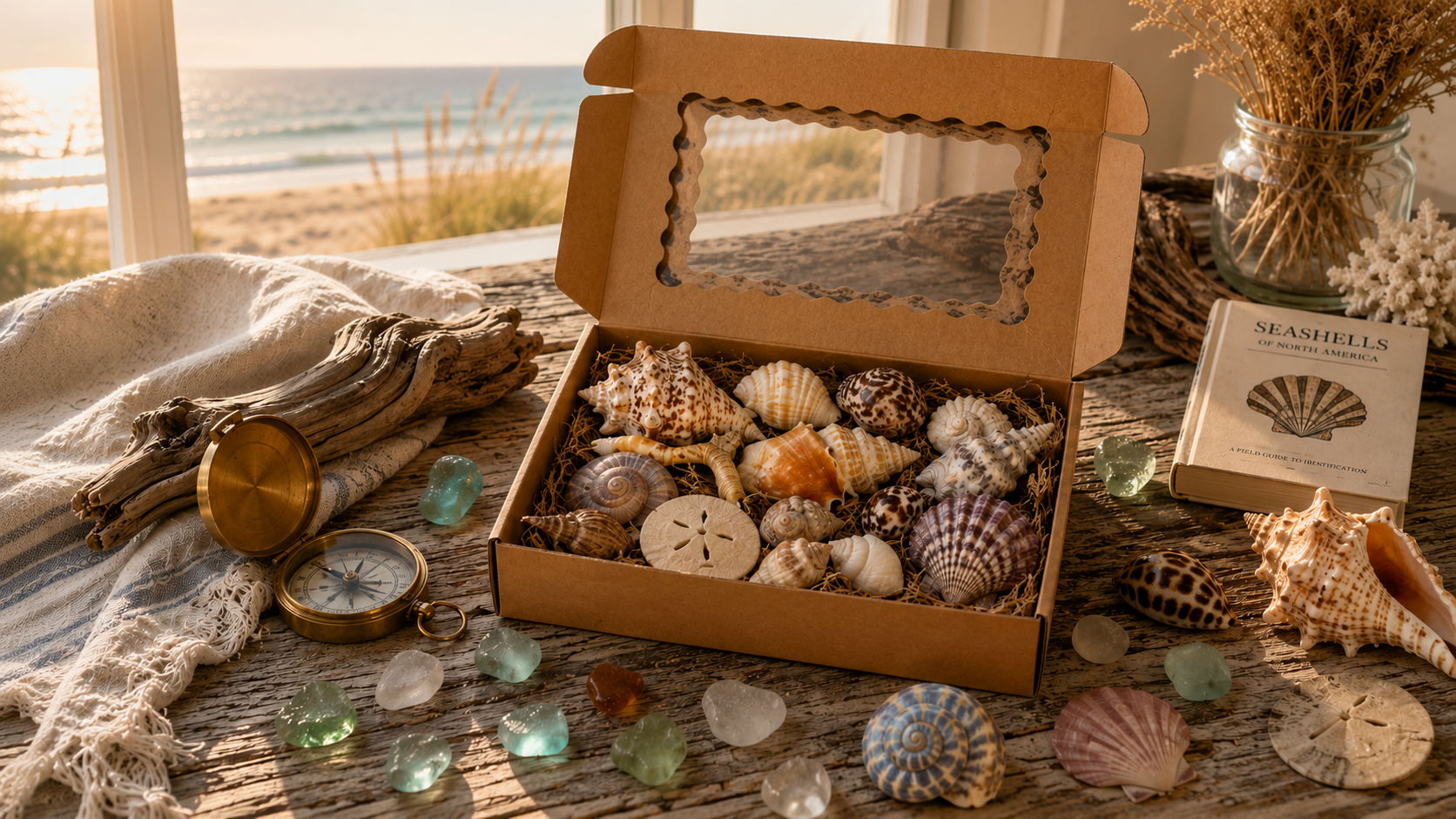
Curated Shell Box
The Signature Shell Box
See these ideas in a curated collection.
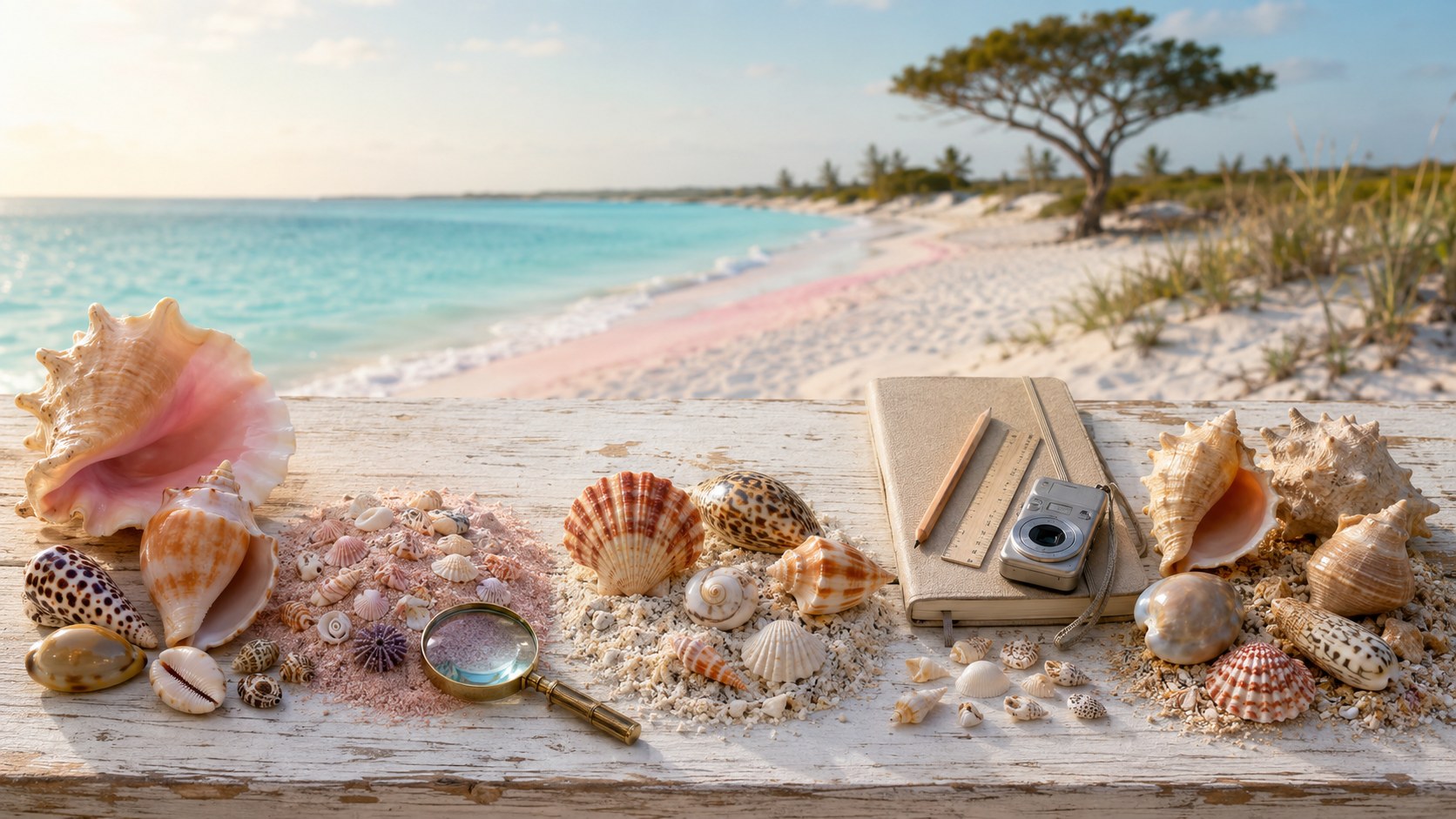
Article
5 Beaches, 5 Completely Different Shell Collections
Builds on the same core topic.
Compare Similar Shells
Species and look-alikes worth studying side by side. Every card routes into the shell reference.
Species
Scotch Bonnet
Semicassis granulata
Cream base with regular reddish-brown squares in tidy rows. Rounded body whorl and short spire; toothed inner lip.
Explore ShellSpecies
Knobbed Whelk
Busycon carica
Aperture opens on the right when the spire points up. Row of blunt knobs along the shoulder of the body whorl; interior often flushed with orange.
Explore ShellSpecies
Lettered Olive
Americoliva sayana
Cylindrical body with a very short spire and a long narrow aperture. The polished cream base carries tan or brown zigzag lines that give the species its 'lettered' name.
Explore ShellSpecies
Atlantic Auger
Terebra dislocata
Elongated screw-shaped shell up to 2 inches, pale grey to tan with faint spiral banding; each whorl carries fine axial ribs.
Explore ShellBeaches Worth Exploring Next
Shores connected to the shells, regions, and conditions on this page.
North Carolina Outer Banks
Outer Banks
A 200-mile chain of Atlantic barrier islands — Cape Hatteras, Ocracoke, and Cape Lookout deliver whelks, olive shells, and the state shell,…
Explore BeachGeorgia Coast
Jekyll Island
Historic Golden Isle with generous public beaches — Driftwood Beach and St. Andrews shore deliver moon snails, jingle shells, and…
Explore BeachFlorida Gulf Coast
Sanibel Island
Sanibel's east-west orientation sweeps Gulf shells onto its shore in exceptional variety — the reason it's the most celebrated shelling…
Explore BeachNorth Carolina Outer Banks
Ocracoke Island
A ferry-only Outer Banks island south of Hatteras — sixteen miles of protected National Seashore beach where Scotch bonnets and knobbed…
Explore BeachDiscover More Coastal Inspiration
Curated coastal favorites and specimen boxes that echo the story above.
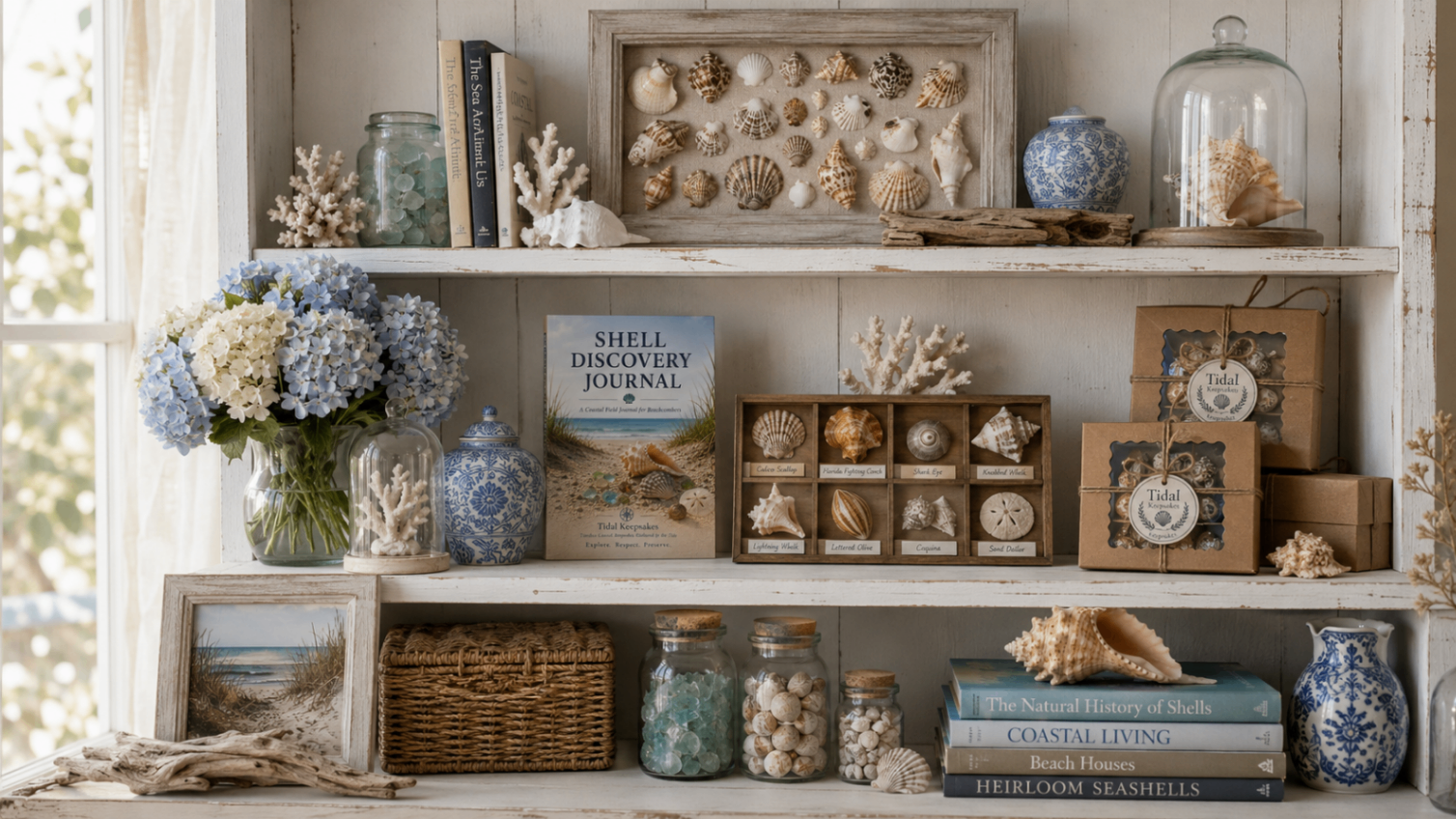
A Learning Journey to Follow
Planning a Shelling Vacation
For beginners · 5 steps
Trip-planning pathway. Starts wide with the best beaches, narrows to a region, and ends with a keepsake collection that reflects the coast you visited.
- 1
Pick the Coast
Best Beaches for Shelling
A shortlist of shores worth the drive.
Continue - 2
Know the Region
The East Coast Beachcomber's Guide
Season, tide, and species notes for the shore you're visiting.
Continue - 3
Pack the Essentials
Beach Travel Essentials
The kit that separates a casual walk from a real trip.
Continue - 4
Keep a Trip Journal
Shell Discovery Journal
One page per beach — the shells, the sky, the tide.
Continue - 5
Bring Home the Coast
The Signature Shell Box
A fuller assorted shell collection, arranged by hand.
Continue