 Save
SaveGuide
Beginner's Beachcombing Guide
Everything you need to know before your first shell hunt — timing, location, gear, and the treasures to look for.
Everything you need to know before your first shell hunt — timing, location, gear, and the treasures to look for.
 Save
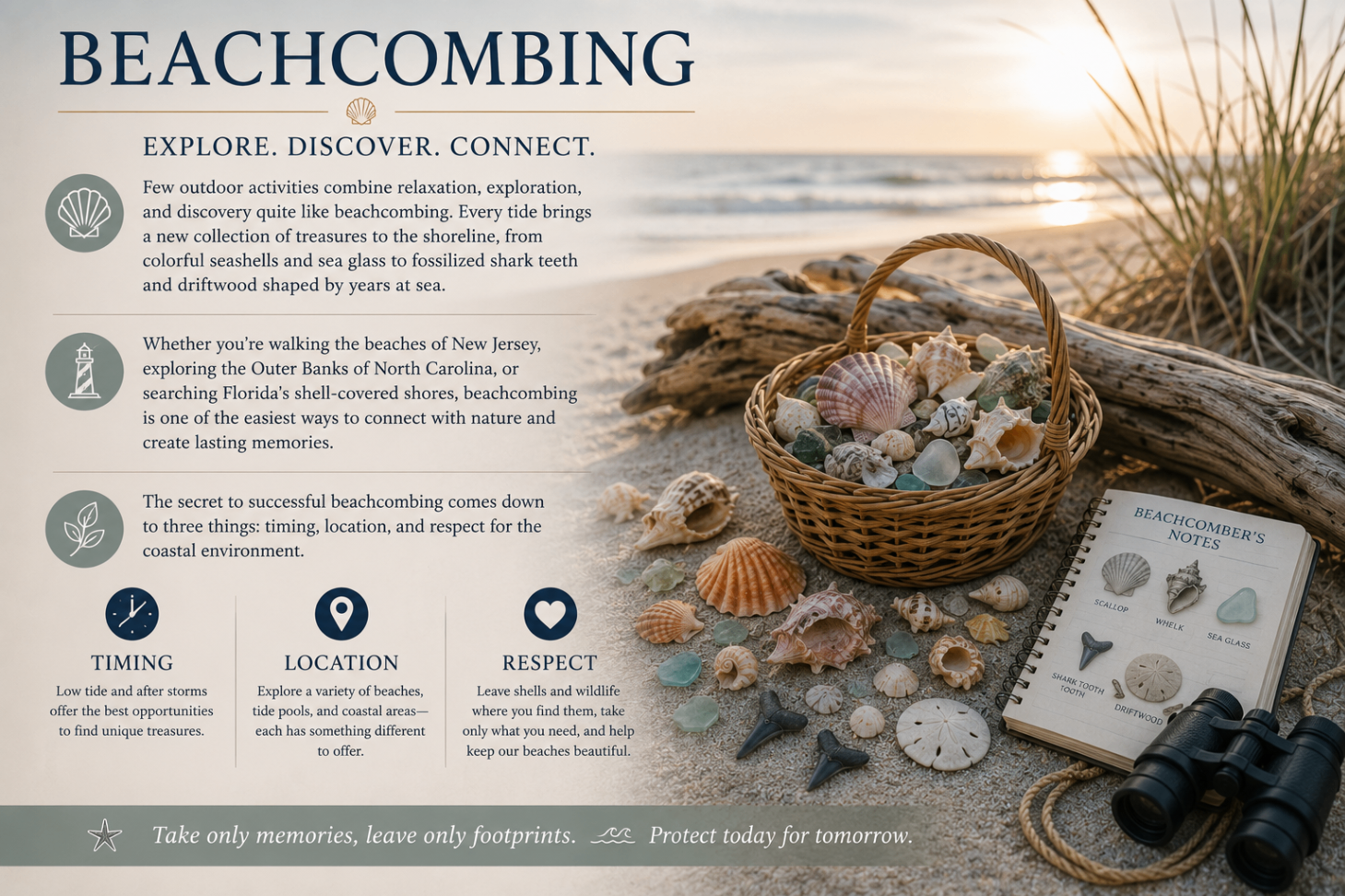
SaveFew outdoor activities combine relaxation, exploration, and discovery quite like beachcombing. Every tide brings a new collection of treasures to the shoreline, from colorful seashells and sea glass to fossilized shark teeth and driftwood shaped by years at sea.
Whether you're walking the beaches of New Jersey, exploring the Outer Banks of North Carolina, or searching Florida's shell-covered shores, beachcombing is one of the easiest ways to connect with nature and create lasting memories.
The secret to successful beachcombing comes down to three things: timing, location, and respect for the coastal environment.
What is Beachcombing?
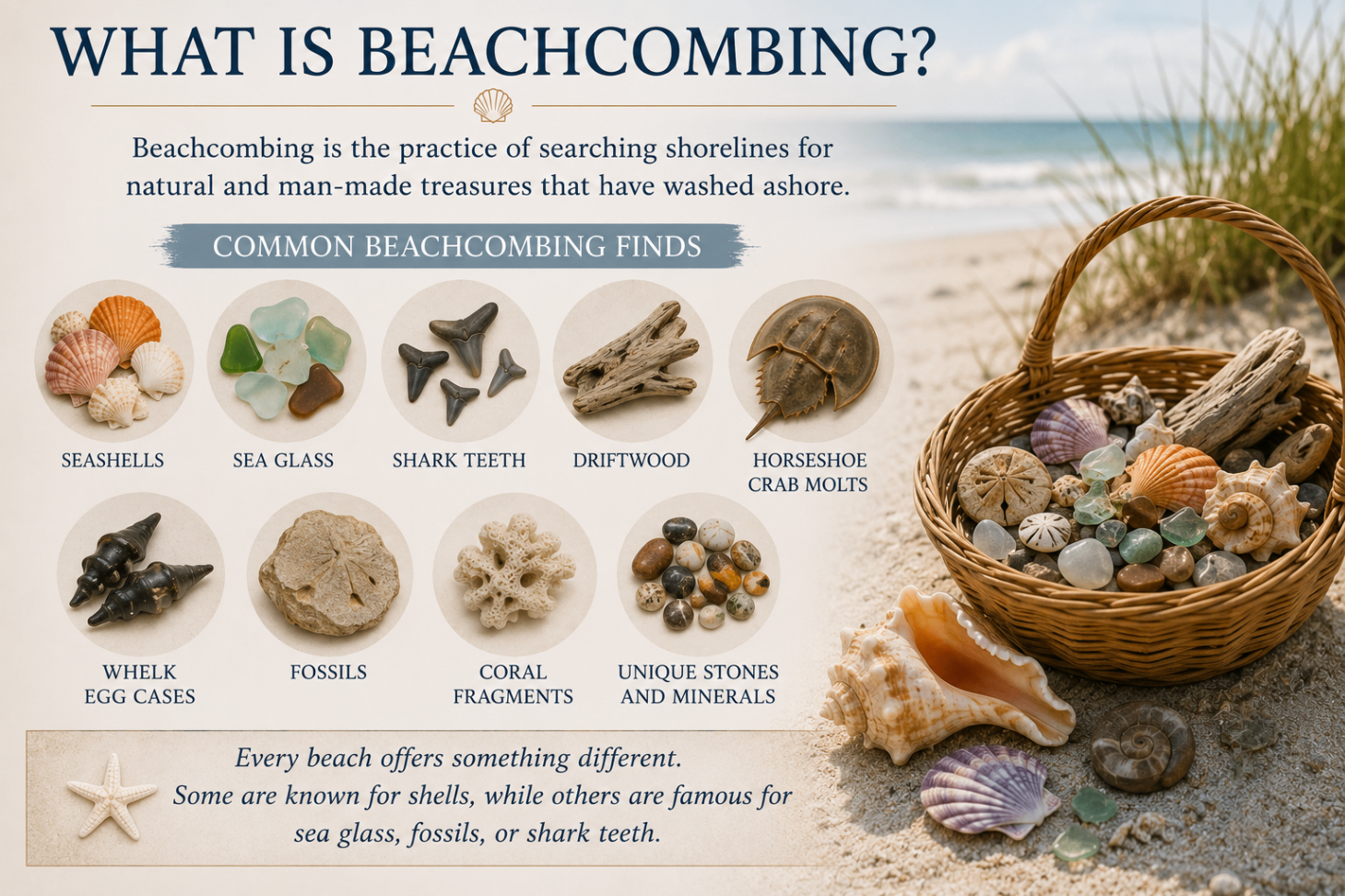
Beachcombing is the practice of searching shorelines for natural and man-made treasures that have washed ashore.
 Save
SaveCommon beachcombing finds include:
- Seashells
- Sea glass
- Shark teeth
- Driftwood
- Horseshoe crab molts
- Whelk egg cases
- Fossils
- Coral fragments
- Unique stones and minerals
Every beach offers something different. Some are known for shells, while others are famous for sea glass, fossils, or shark teeth.
Essential Beachcombing Gear
You do not need expensive equipment to get started.
 Save
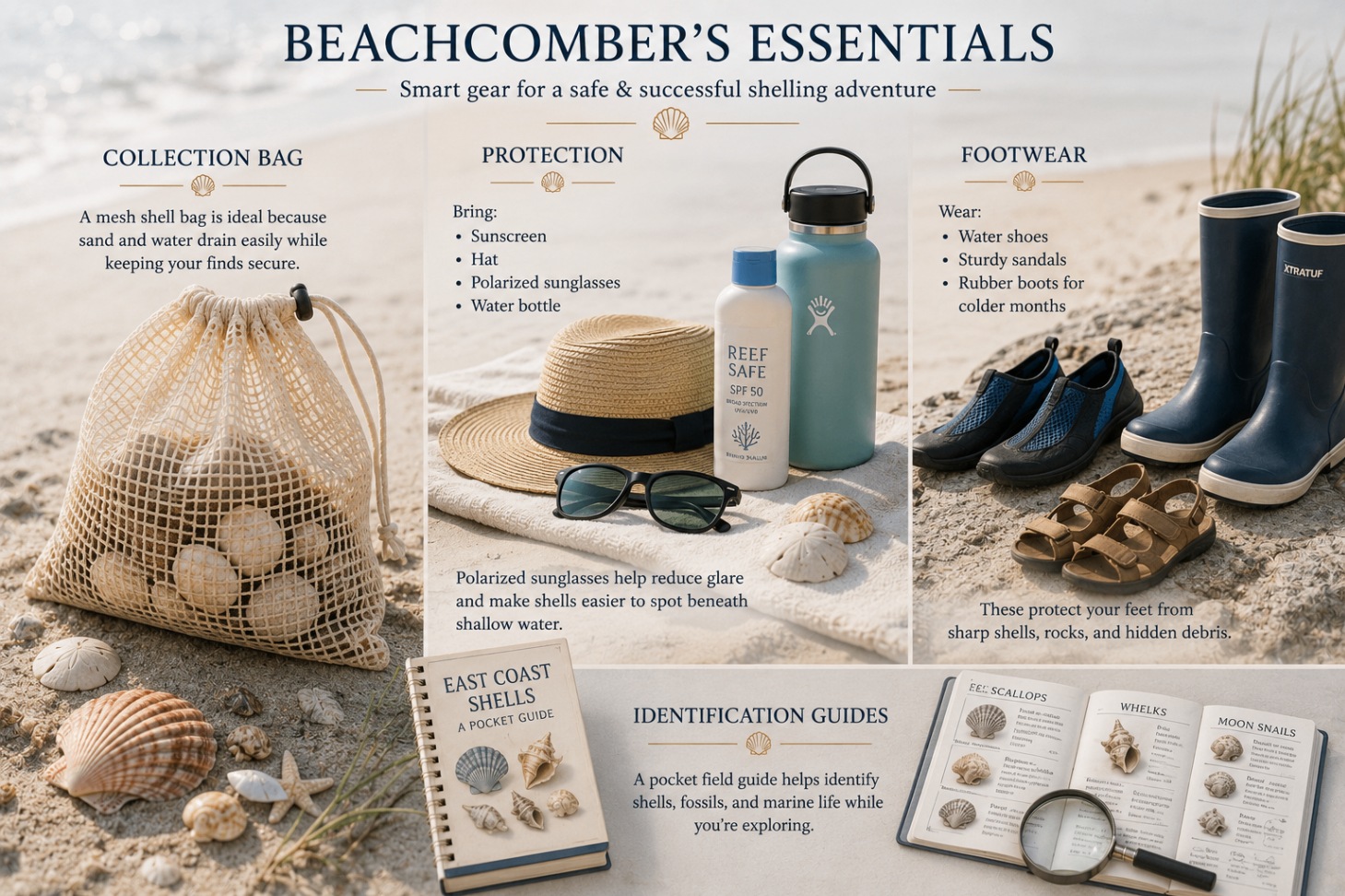
SaveCollection Bag
A mesh shell bag is ideal because sand and water drain easily while keeping your finds secure.
Protection
Bring:
- Sunscreen
- Hat
- Polarized sunglasses
- Water bottle
Polarized sunglasses help reduce glare and make shells easier to spot beneath shallow water.
Footwear
Wear:
- Water shoes
- Sturdy sandals
- Rubber boots for colder months
These protect your feet from sharp shells, rocks, and hidden debris.
Identification Guides
A pocket field guide helps identify shells, fossils, and marine life while you're exploring.
The Best Time to Go
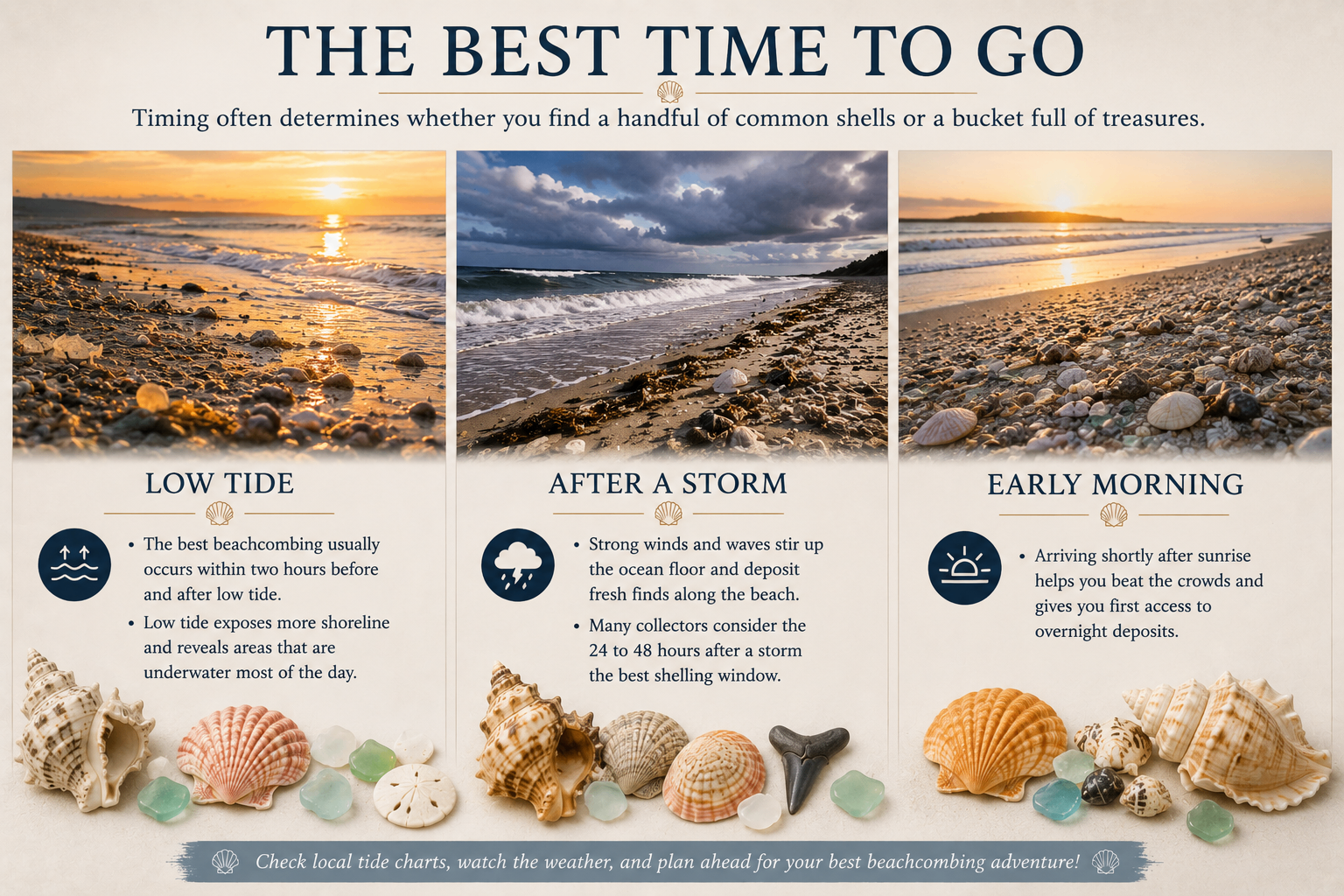
Timing often determines whether you find a handful of common shells or a bucket full of treasures.
 Save
SaveLow Tide
The best beachcombing usually occurs within two hours before and after low tide.
Low tide exposes more shoreline and reveals areas that are underwater most of the day.
After a Storm
Strong winds and waves stir up the ocean floor and deposit fresh finds along the beach.
Many collectors consider the 24 to 48 hours after a storm the best shelling window.
Early Morning
Arriving shortly after sunrise helps you beat the crowds and gives you first access to overnight deposits.
Where to Look
 Save
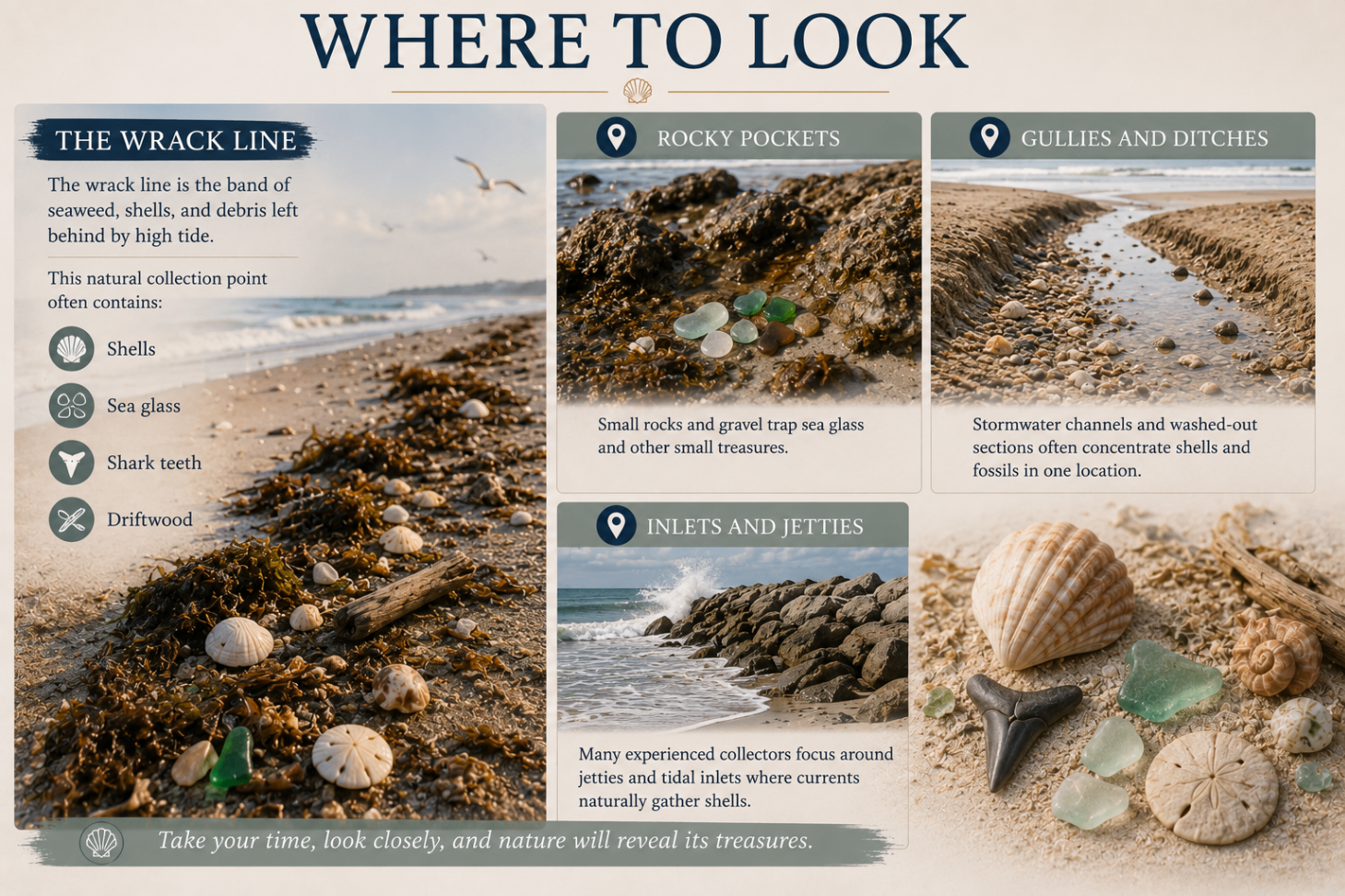
SaveThe Wrack Line
The wrack line is the band of seaweed, shells, and debris left behind by high tide.
This natural collection point often contains:
- Shells
- Sea glass
- Shark teeth
- Driftwood
Rocky Pockets
Small rocks and gravel trap sea glass and other small treasures.
Gullies and Ditches
Stormwater channels and washed-out sections often concentrate shells and fossils in one location.
Inlets and Jetties
Many experienced collectors focus around jetties and tidal inlets where currents naturally gather shells.
What Beginners Should Look For
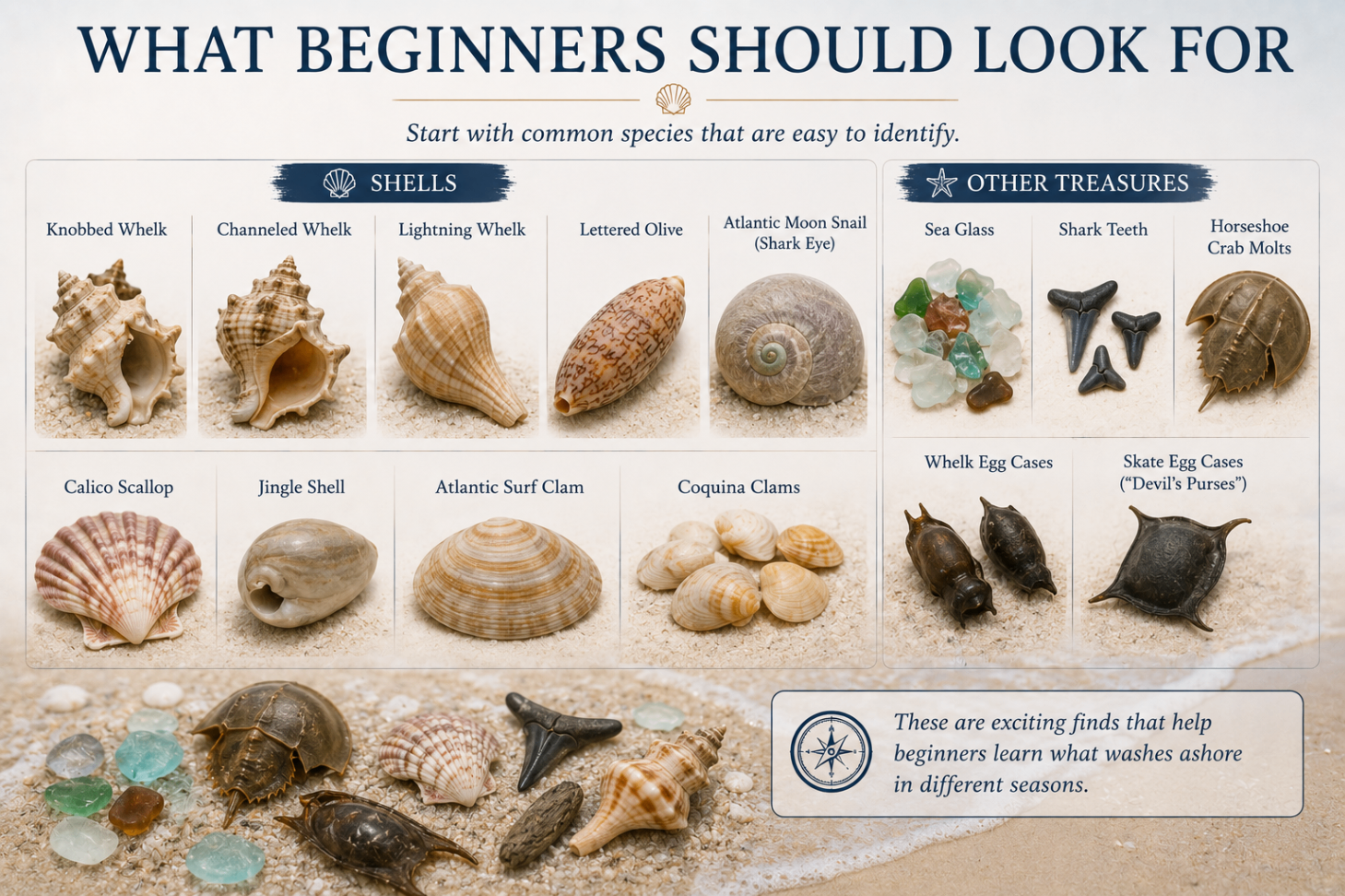
Start with common species that are easy to identify.
 Save
SaveShells
- Knobbed Whelk
- Channeled Whelk
- Lightning Whelk
- Lettered Olive
- Atlantic Moon Snail (Shark Eye)
- Calico Scallop
- Jingle Shell
- Atlantic Surf Clam
- Coquina Clams
Other Treasures
- Sea Glass
- Shark Teeth
- Horseshoe Crab Molts
- Whelk Egg Cases
- Skate Egg Cases ("Devil's Purses")
These are exciting finds that help beginners learn what washes ashore in different seasons.
Common Beginner Mistakes
Taking Live Shells
Always inspect shells carefully.
If a shell contains a living animal or hermit crab, return it to the water.
Ignoring Tide Schedules
Many beginners arrive during high tide and miss the best shelling conditions.
Cleaning Too Aggressively
Harsh chemicals and scrubbing can damage delicate shells.
Overlooking the Wrack Line
Many of the best finds are hidden among seaweed and natural debris.
Focusing Only on Large Shells
Small treasures like sea glass, shark teeth, and coquinas are often the most rewarding finds.
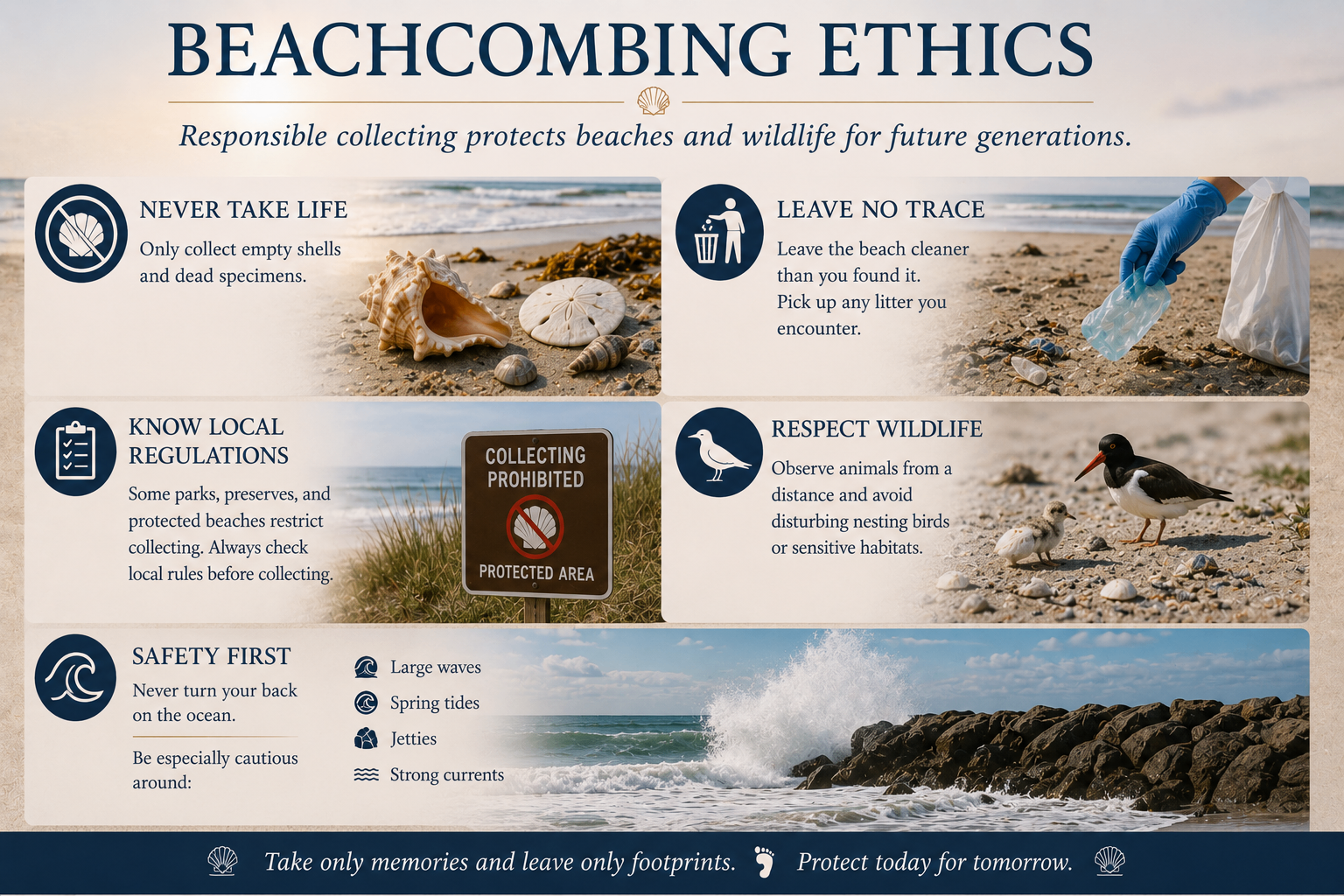
Beachcombing Ethics
Responsible collecting protects beaches and wildlife for future generations.
 Save
SaveNever Take Life
Only collect empty shells and dead specimens.
Leave No Trace
Leave the beach cleaner than you found it. Pick up any litter you encounter.
Know Local Regulations
Some parks, preserves, and protected beaches restrict collecting. Always check local rules before collecting.
Respect Wildlife
Observe animals from a distance and avoid disturbing nesting birds or sensitive habitats.
Safety First
Never turn your back on the ocean.
Be especially cautious around:
- Large waves
- Spring tides
- Jetties
- Strong currents
Beginner Beachcombing Checklist
- Mesh collection bag
- Water bottle
- Sunscreen
- Hat
- Polarized sunglasses
- Water shoes
- Small brush
- Pocket field guide
- Camera or smartphone
- Tide chart
Treasure Checklist
- Knobbed Whelk
- Channeled Whelk
- Lightning Whelk
- Lettered Olive
- Moon Snail
- Calico Scallop
- Jingle Shell
- Coquina
- Sea Glass
- Shark Tooth
- Horseshoe Crab Molt
- Whelk Egg Case
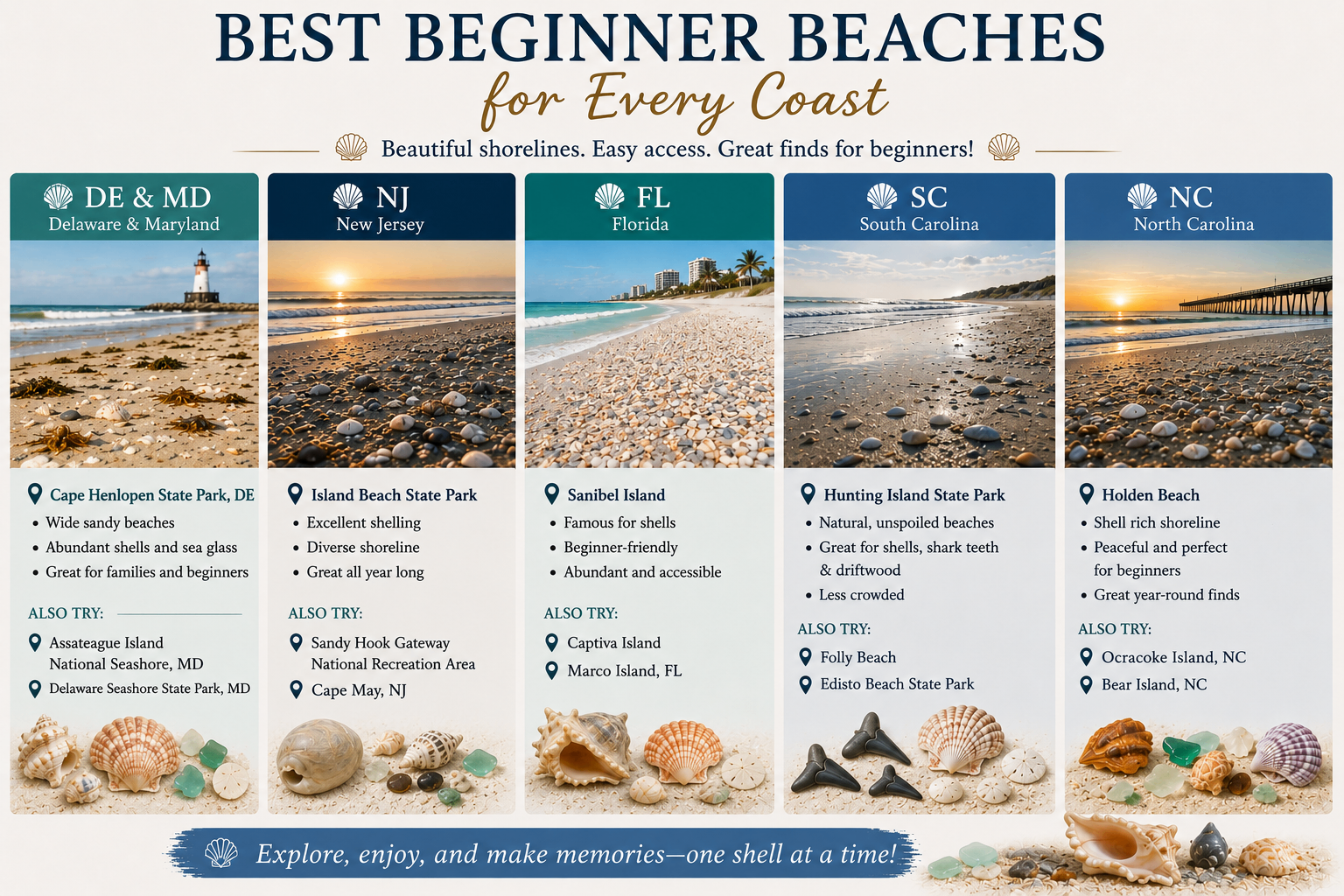
Best Beginner Beaches
 Save
SaveFlorida
Known for world-class shelling and the chance to find rare treasures like the Junonia.
North Carolina
Excellent for Scotch Bonnets, sea biscuits, and large whelks.
South Carolina
Great for shark teeth, olives, and scallops.
Maryland
Known for wild horses, shark teeth, and fossils.
Delaware
Excellent for sea glass, horseshoe crabs, and shell collecting.
New Jersey
Ideal for beginners looking for whelks, moon snails, and sea glass.
Top Resources for Beginners
- The Essential Guide to Beachcombing and the Strandline by Steve Trewhella
- Pocket Nature: Beachcombing by Sadie Small
- Beach Combing Pocket Guide
These guides provide identification tips, collecting advice, and fascinating information about the treasures you discover.
Start Your Beachcombing Adventure
Every shell has a story. Every beach offers something different. Whether you find a perfectly preserved whelk, a piece of frosted sea glass, or your first shark tooth, beachcombing rewards patience, curiosity, and observation.
Grab a bag, check the tide chart, and head to the shoreline. Your next favorite treasure may already be waiting.
Home with a bag of finds? Rinse, soak, and dry them properly before they go on a shelf.
How to Clean SeashellsWant to go deeper? Discover the best East Coast beaches, seasonal timing, and collector tips in our most complete guide.
Read The Ultimate Guide to Beachcombing Along the East CoastReady to start your shell collection? Explore The Mini Box, The Signature Shell Box, and The Collector Box to bring the beauty of the coast home.
Shop the CollectionsContinue Your Beachcombing Journey
Hand-picked next steps — chosen because they build directly on what you've just read.
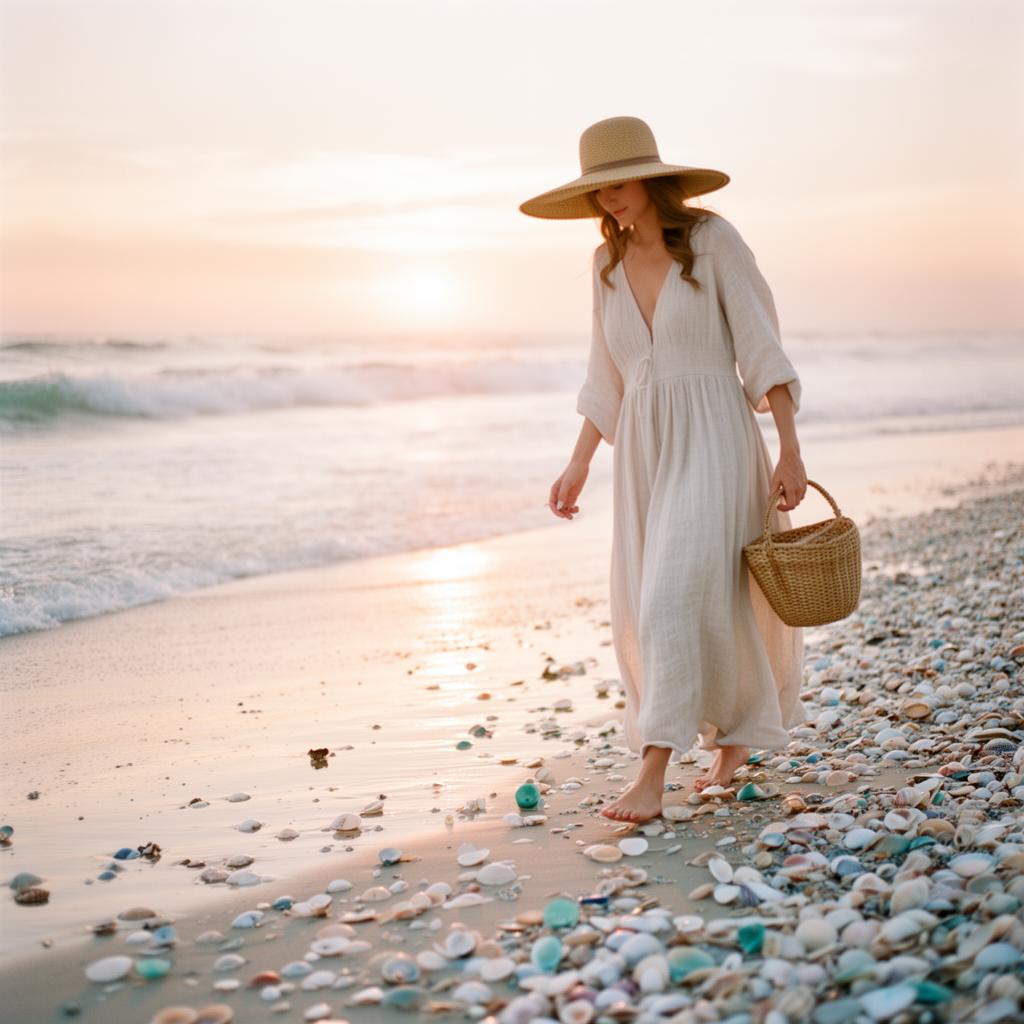
Article
The Ultimate Guide to Beachcombing Along the East Coast
Builds on the same core topic.
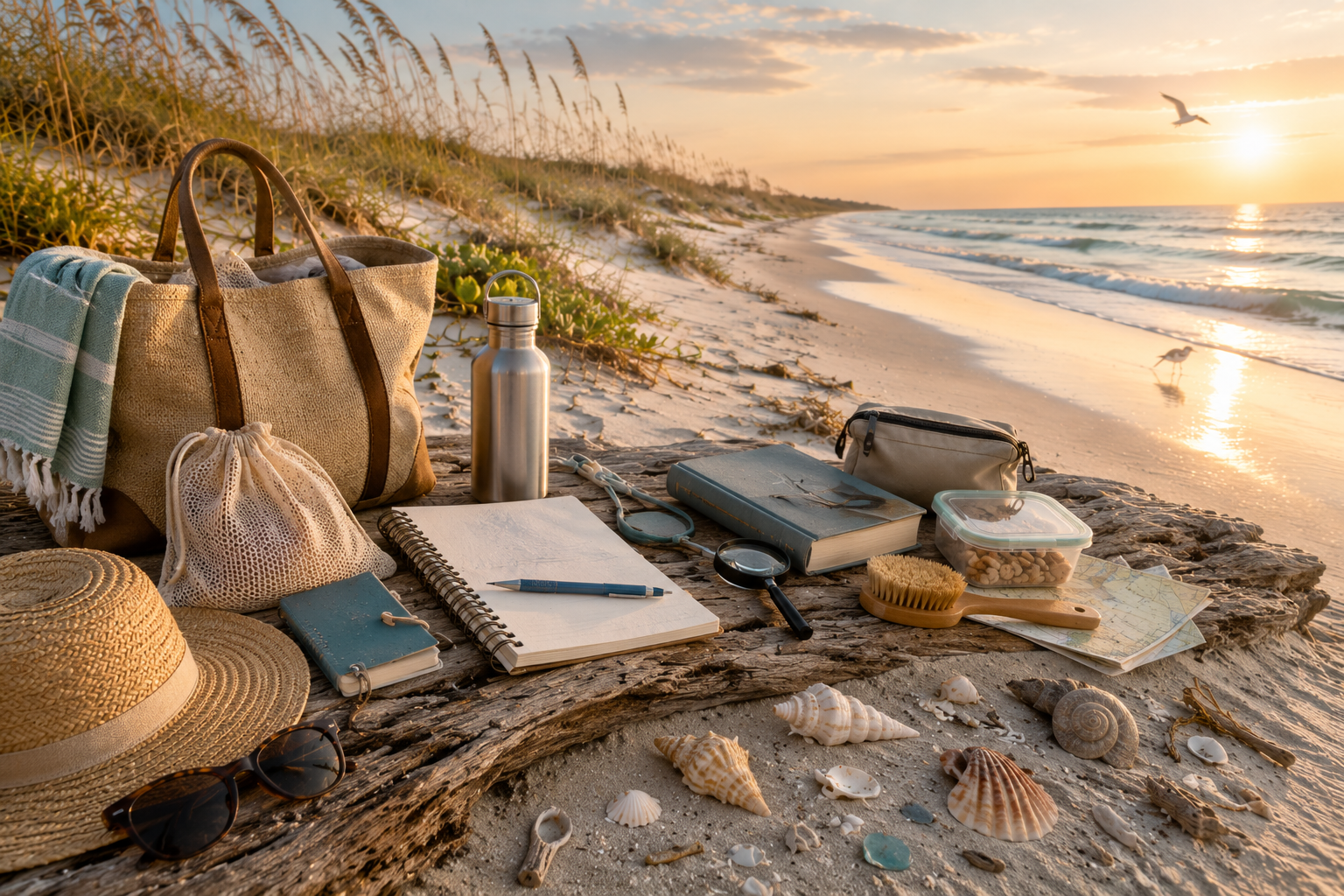
Guide
What to Bring Beachcombing
Builds on the same core topic.
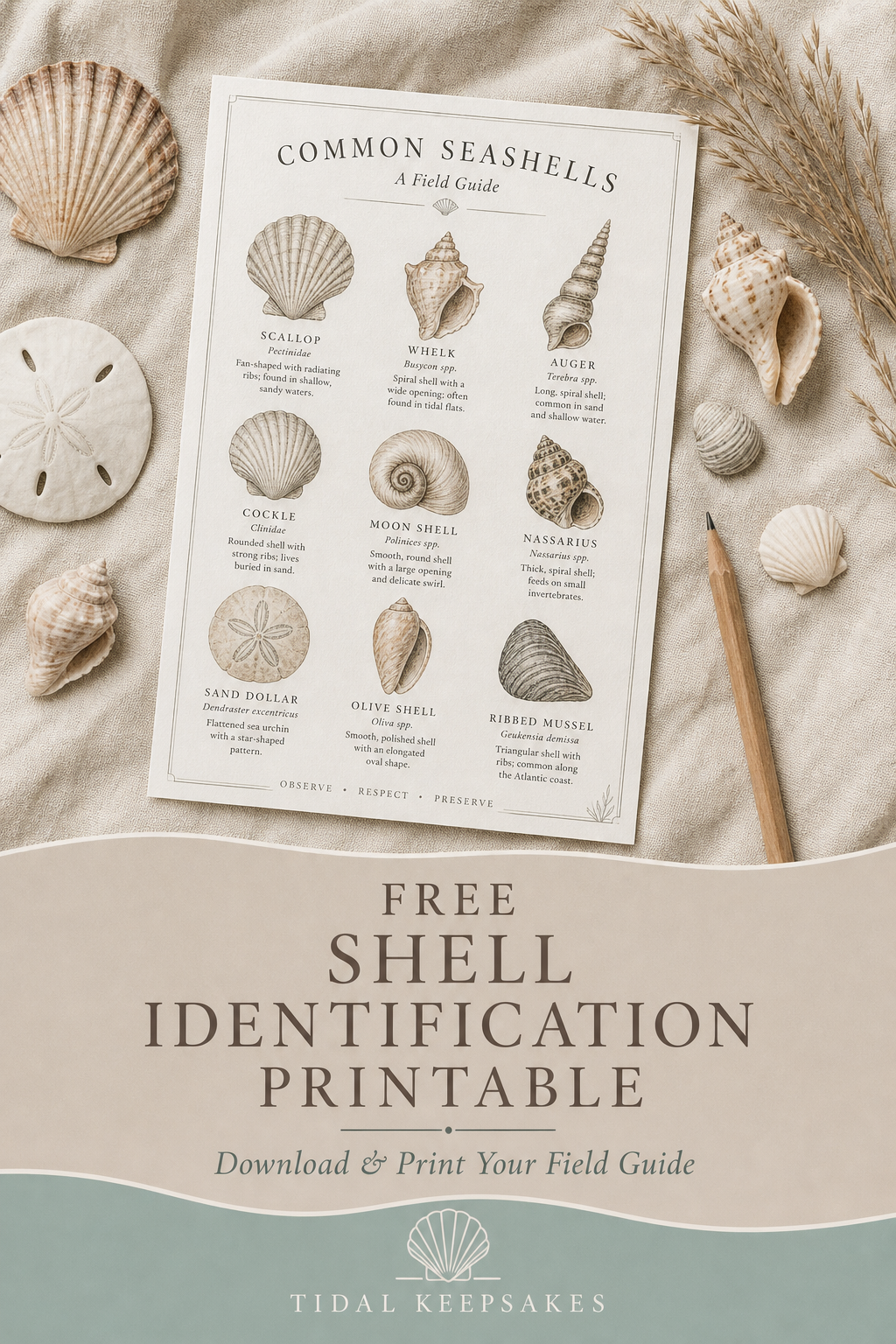
Resource
Free Shell Identification Printable
A thoughtful next step in your coastal journey.
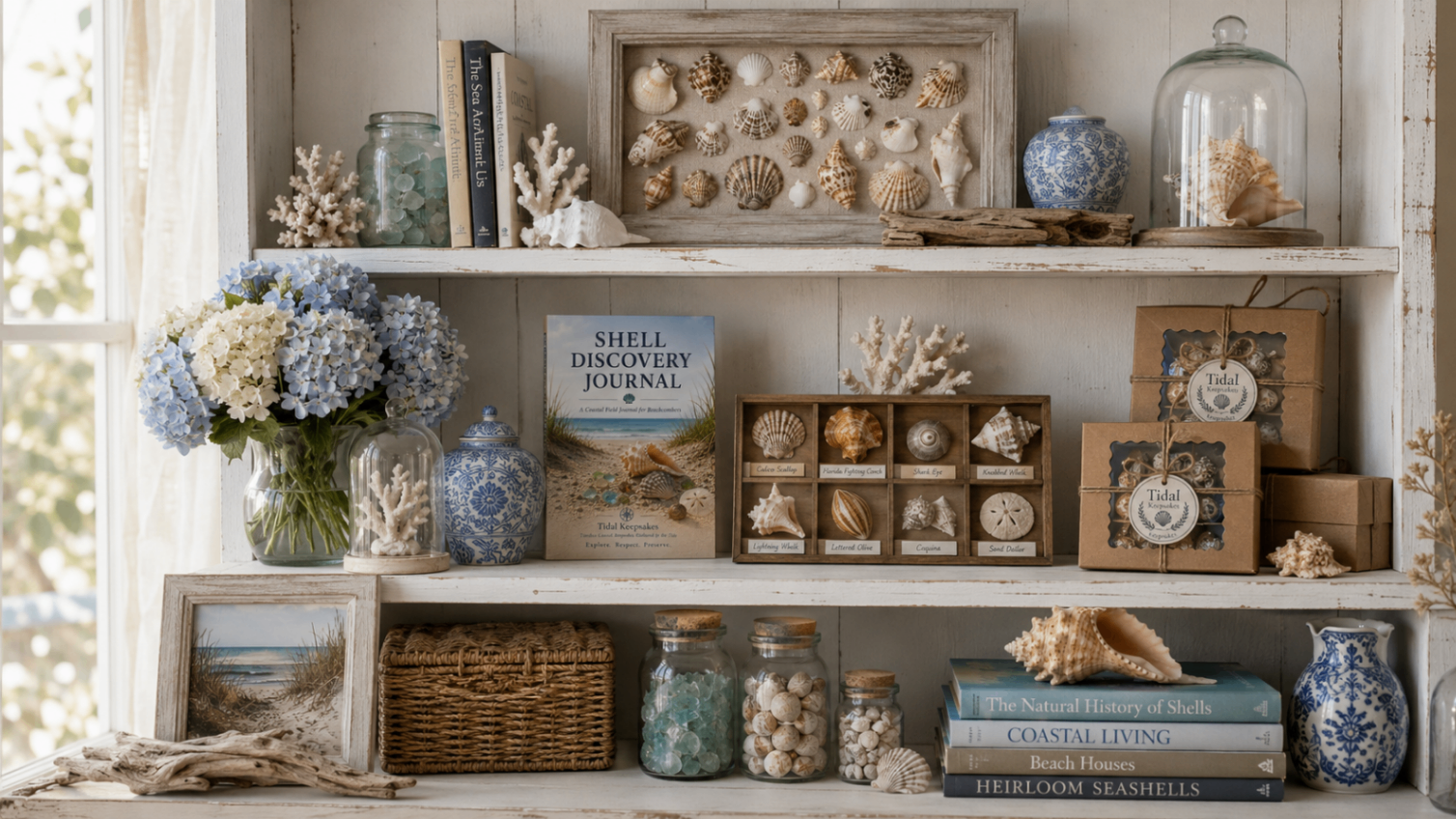
Curated Shell Box
The Collector Box
See these ideas in a curated collection.
Compare Similar Shells
Species and look-alikes worth studying side by side. Every card routes into the shell reference.
Species
Scotch Bonnet
Semicassis granulata
Cream base with regular reddish-brown squares in tidy rows. Rounded body whorl and short spire; toothed inner lip.
Explore ShellSpecies
Knobbed Whelk
Busycon carica
Aperture opens on the right when the spire points up. Row of blunt knobs along the shoulder of the body whorl; interior often flushed with orange.
Explore ShellSpecies
Lettered Olive
Americoliva sayana
Cylindrical body with a very short spire and a long narrow aperture. The polished cream base carries tan or brown zigzag lines that give the species its 'lettered' name.
Explore ShellSpecies
Atlantic Auger
Terebra dislocata
Elongated screw-shaped shell up to 2 inches, pale grey to tan with faint spiral banding; each whorl carries fine axial ribs.
Explore ShellBeaches Worth Exploring Next
Shores connected to the shells, regions, and conditions on this page.
North Carolina Outer Banks
Outer Banks
A 200-mile chain of Atlantic barrier islands — Cape Hatteras, Ocracoke, and Cape Lookout deliver whelks, olive shells, and the state shell,…
Explore BeachGeorgia Coast
Jekyll Island
Historic Golden Isle with generous public beaches — Driftwood Beach and St. Andrews shore deliver moon snails, jingle shells, and…
Explore BeachFlorida Gulf Coast
Sanibel Island
Sanibel's east-west orientation sweeps Gulf shells onto its shore in exceptional variety — the reason it's the most celebrated shelling…
Explore BeachNorth Carolina Outer Banks
Ocracoke Island
A ferry-only Outer Banks island south of Hatteras — sixteen miles of protected National Seashore beach where Scotch bonnets and knobbed…
Explore BeachDiscover More Coastal Inspiration
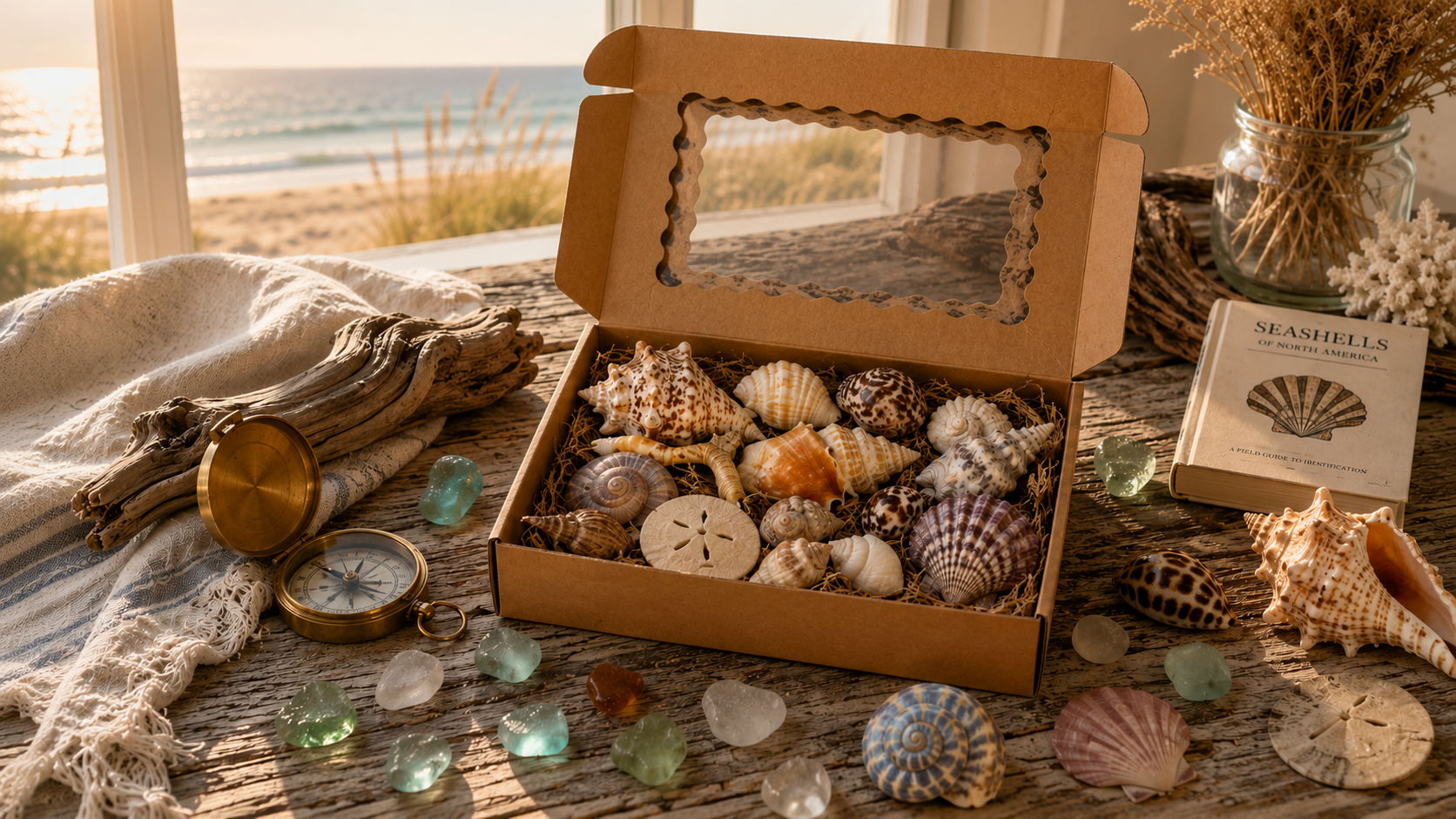
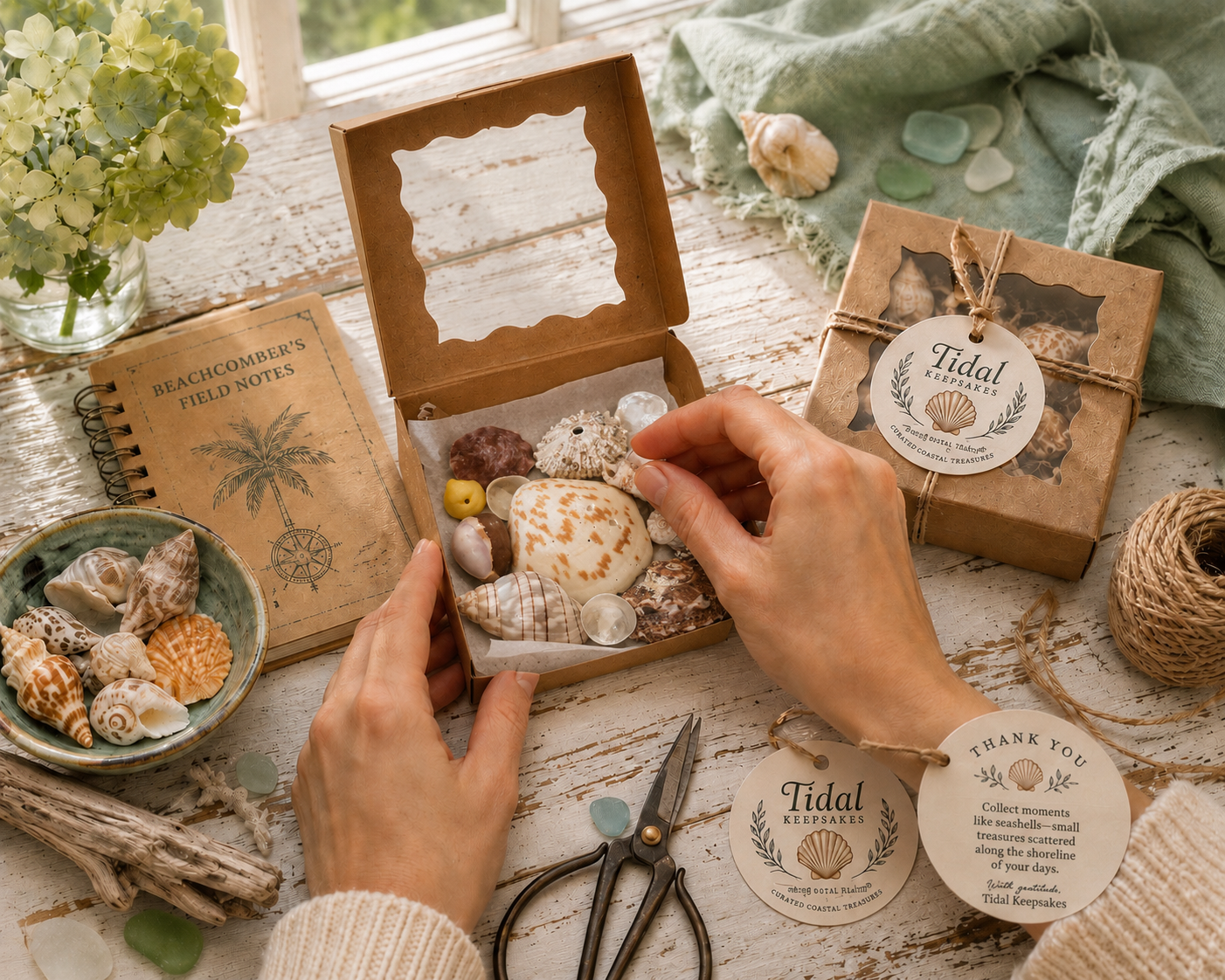
Curated coastal favorites and specimen boxes that echo the story above.
A Learning Journey to Follow
Learning Shell Identification
For growing collectors · 5 steps
For readers who already know a scallop from a whelk and want to sharpen the edge cases. Ends at the journal, where identification becomes a practice, not a lookup.
- 1
Understand the Anatomy
Shell Identification Guide
Vocabulary first — apex, whorl, aperture, columella.
Continue - 2
Meet the Common Species
Explore Common Shells
Browse the canonical shell records the site is built on.
Continue - 3
Compare Look-Alikes
Commonly Confused Shells
Side-by-side markers for the pairs that trip up new collectors.
Continue - 4
Find Them in the Wild
Best Beaches for Shelling
Where each species actually washes up.
Continue - 5
Practice in the Field
Shell Discovery Journal
Record each ID with sketches and notes to lock the learning in.
Continue