 Save
SaveGuide
Commonly Confused Shells: A Side-by-Side Field Guide
The look-alike pairs that trip up new collectors — with the single field mark that tells each pair apart.
The look-alike pairs that trip up new collectors — with the single field mark that tells each pair apart.
How to Use This Guide
Each pair below shares a silhouette, a habitat, or a common name — but one small feature (aperture direction, umbilicus, stromboid notch, pattern) settles the ID every time. Open a comparison for the full field-mark breakdown, size and range table, and photographs.
Gastropod Look-Alikes
- Lightning Whelk vs. Knobbed Whelk — which way the aperture opens
- Shark Eye and “Atlantic Moon Snail” — a naming question, not two species
- True Tulip vs. Banded Tulip — streaks versus crisp bands
- Fighting Conch vs. Florida Crown Conch — the stromboid notch
Start with the whelks — the most-asked question at any Gulf tide line.
Lightning Whelk vs. Knobbed WhelkSame shell, two labels — why “Atlantic moon snail” points back to the shark eye.
Shark Eye and “Atlantic Moon Snail”: Understanding the NamesFlorida's two tulips share a silhouette; the pattern gives them away.
True Tulip vs. Banded TulipOnly one of these is a true conch.
Fighting Conch vs. Crown ConchField Identification Tips
- Hold gastropods with the spire up and aperture facing you before comparing.
- Turn the shell over — the underside (umbilicus, columella, muscle scars) often carries the diagnostic mark.
- Note size honestly: many pairs separate cleanly on adult size alone.
- Photograph both sides in natural light before you leave the beach.
Ready to go deeper? Browse the full canonical reference.
Open the Shell Identification hubContinue Your Beachcombing Journey
Hand-picked next steps — chosen because they build directly on what you've just read.
Article
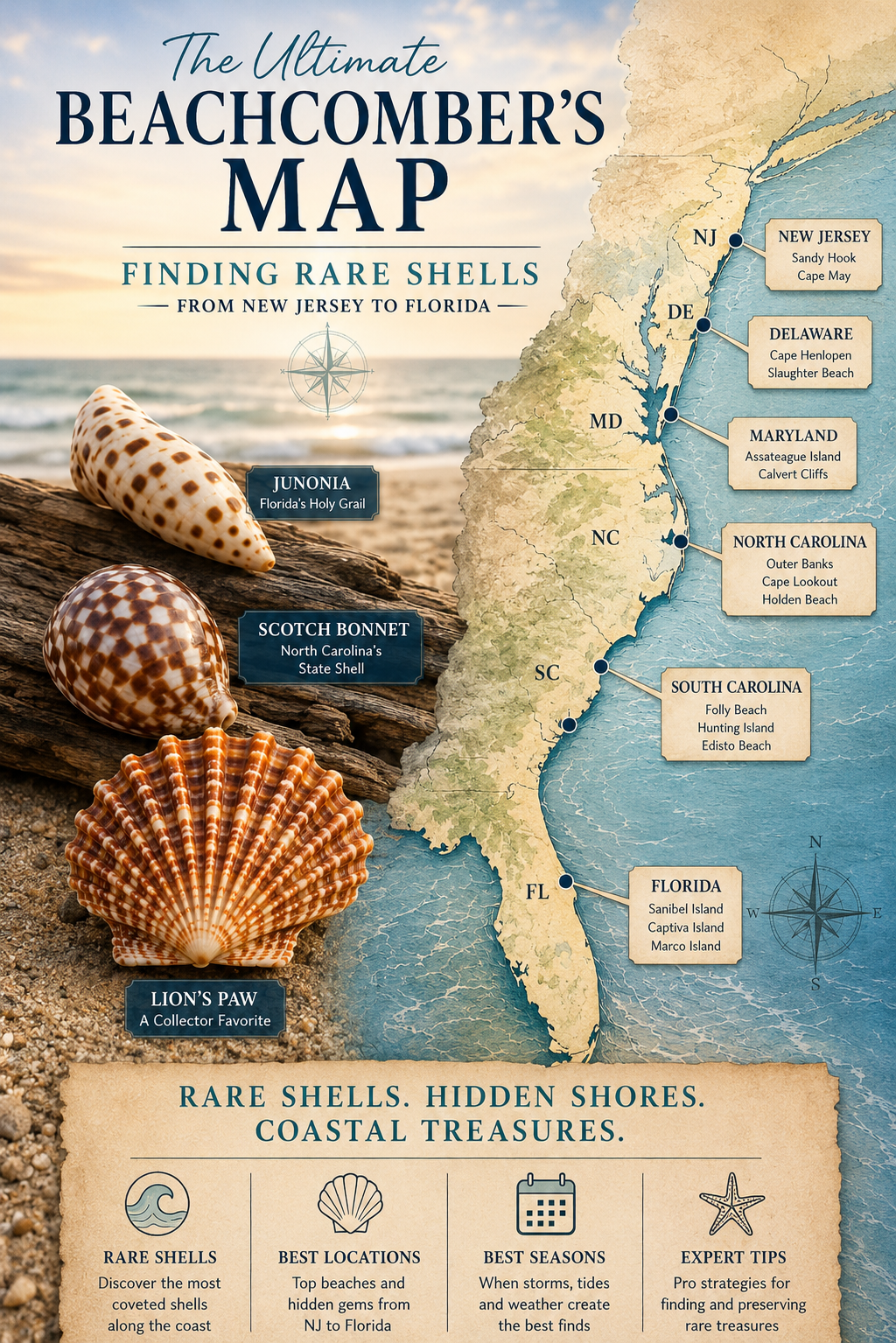
The Ultimate Beachcomber's Map: Finding Rare Shells from Jersey to Florida
Builds on the same core topic.
Guide
Lightning Whelk vs. Knobbed Whelk: A Field ID
Builds on the same core topic.
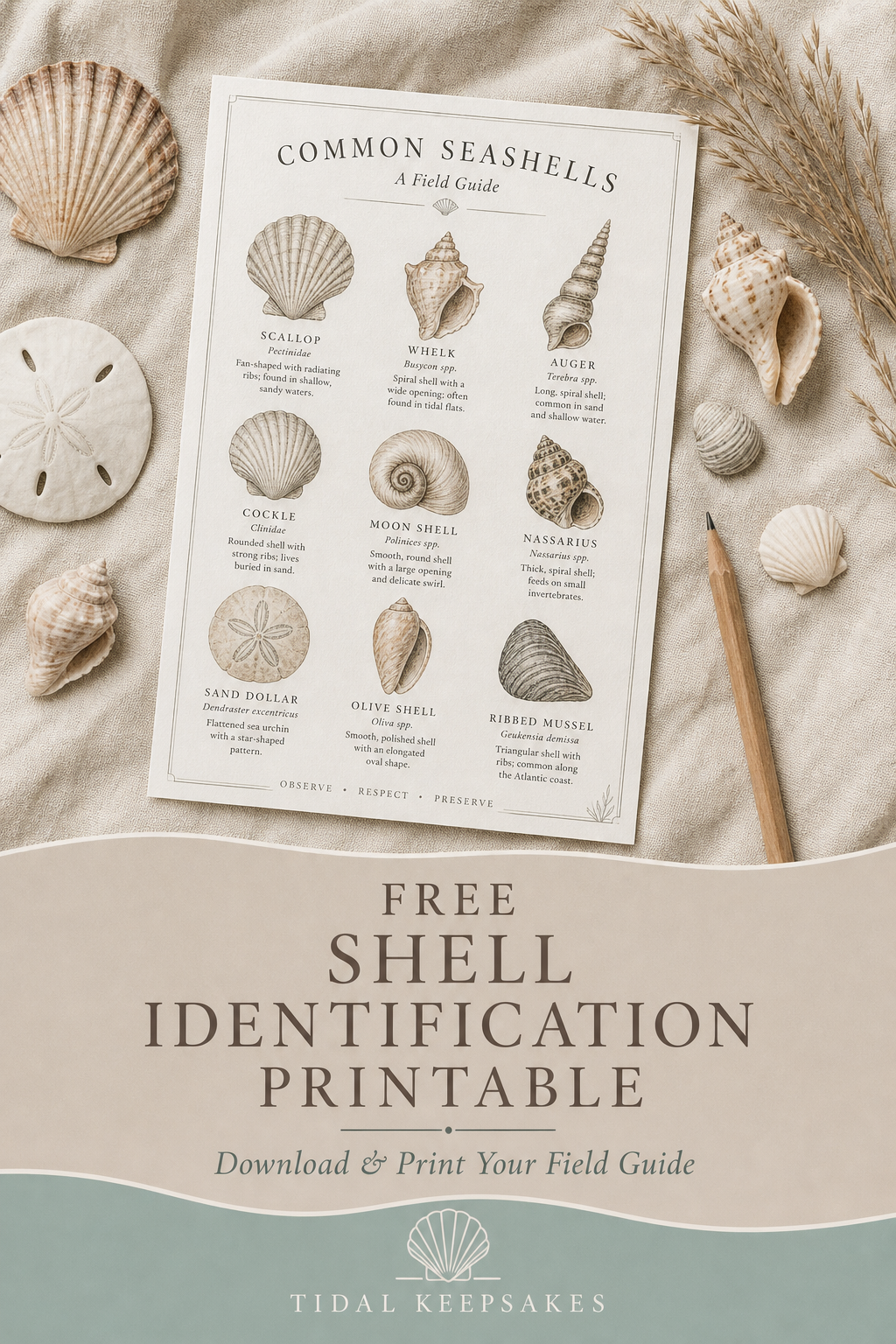
Resource
Free Shell Identification Printable
Builds on the same core topic.
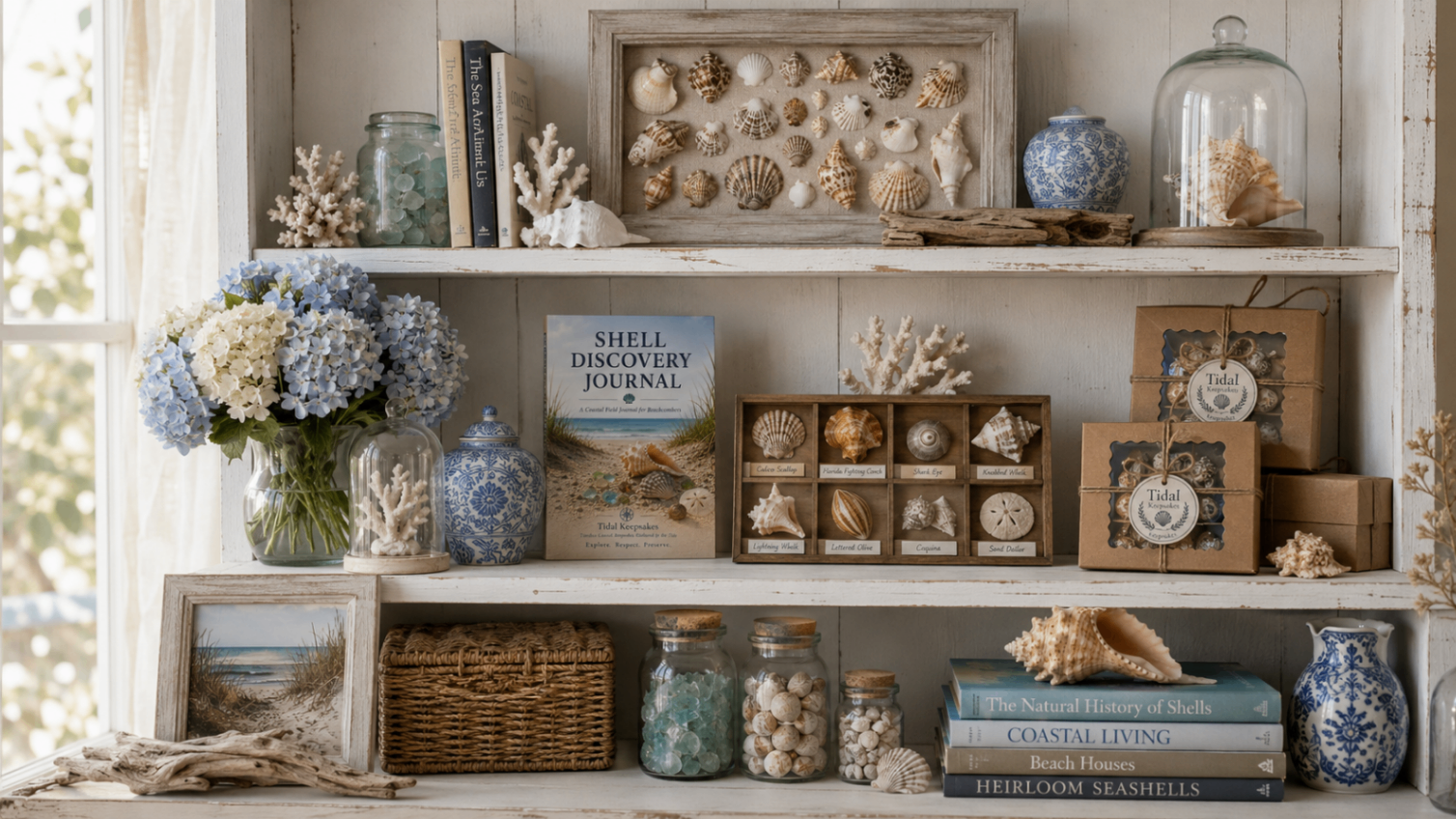
Curated Shell Box
The Collector Box
See these ideas in a curated collection.
Compare Similar Shells
Species and look-alikes worth studying side by side. Every card routes into the shell reference.
Species
Scotch Bonnet
Semicassis granulata
Cream base with regular reddish-brown squares in tidy rows. Rounded body whorl and short spire; toothed inner lip.
Explore ShellSpecies
Knobbed Whelk
Busycon carica
Aperture opens on the right when the spire points up. Row of blunt knobs along the shoulder of the body whorl; interior often flushed with orange.
Explore ShellSpecies
Lettered Olive
Americoliva sayana
Cylindrical body with a very short spire and a long narrow aperture. The polished cream base carries tan or brown zigzag lines that give the species its 'lettered' name.
Explore ShellSpecies
Atlantic Auger
Terebra dislocata
Elongated screw-shaped shell up to 2 inches, pale grey to tan with faint spiral banding; each whorl carries fine axial ribs.
Explore ShellBeaches Worth Exploring Next
Shores connected to the shells, regions, and conditions on this page.
North Carolina Outer Banks
Outer Banks
A 200-mile chain of Atlantic barrier islands — Cape Hatteras, Ocracoke, and Cape Lookout deliver whelks, olive shells, and the state shell,…
Explore BeachGeorgia Coast
Jekyll Island
Historic Golden Isle with generous public beaches — Driftwood Beach and St. Andrews shore deliver moon snails, jingle shells, and…
Explore BeachFlorida Gulf Coast
Sanibel Island
Sanibel's east-west orientation sweeps Gulf shells onto its shore in exceptional variety — the reason it's the most celebrated shelling…
Explore BeachNorth Carolina Outer Banks
Ocracoke Island
A ferry-only Outer Banks island south of Hatteras — sixteen miles of protected National Seashore beach where Scotch bonnets and knobbed…
Explore BeachDiscover More Coastal Inspiration
Curated coastal favorites and specimen boxes that echo the story above.
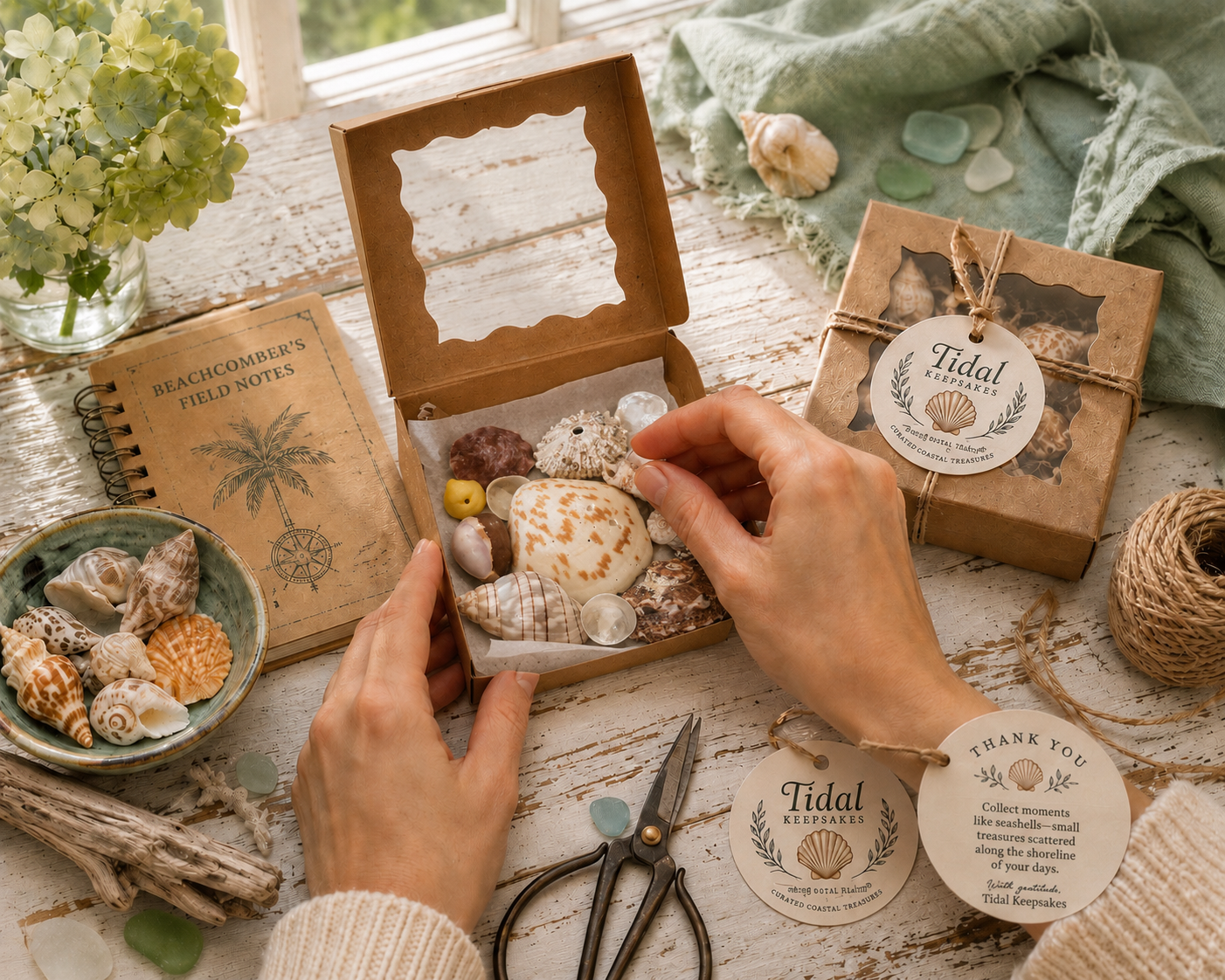
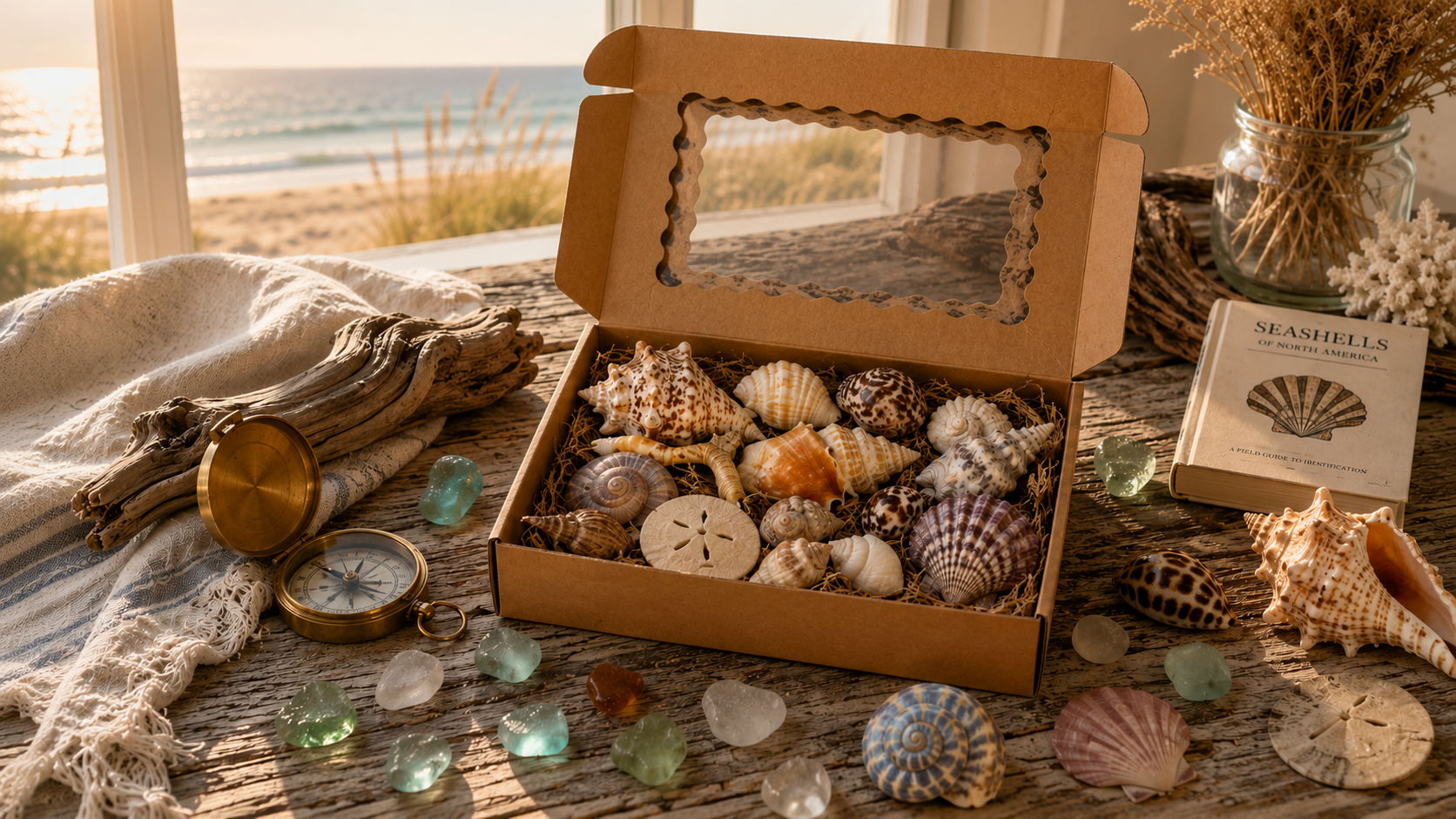
A Learning Journey to Follow
New to Beachcombing
For beginners · 5 steps
The pathway most first-time visitors take. It moves calmly from the beginner's guide into shell identification, then out to the beach and back home to the journal.
- 1
Start Here
Beginner's Beachcombing Guide
The foundation — what to bring, when to walk, how to look.
Continue - 2
Learn the Shells
Shell Identification Guide
Meet the species you're most likely to find on your first walk.
Continue - 3
Take Care of Finds
How to Clean Seashells
Bring shells home the right way so they last for years.
Continue - 4
Record the Walk
Shell Discovery Journal
Field-note every find while the memory is still fresh.
Continue - 5
Take the Coast Home
The Mini Box
A petite assorted shell collection, hand-gathered from the coast.
Continue