 Save
SaveGuide
Shark Eye and “Atlantic Moon Snail”: Understanding the Names
“Atlantic moon snail” is a name, not a second shell. Here's why Tidal Keepsakes files this moon snail under Shark Eye, Neverita duplicata.
“Atlantic moon snail” is a name, not a second shell. Here's why Tidal Keepsakes files this moon snail under Shark Eye, Neverita duplicata.
Why These Names Cause Confusion
Moon snails (family Naticidae) collect informal names quickly: they are common, they look alike from above, and regional usage varies along the coast. “Atlantic moon snail” reads like a species name, so it is easy to assume it labels a second shell sitting beside the shark eye on the same beach. It does not. Where the term is used carefully, it refers to the same animal Tidal Keepsakes records as the Shark Eye.
Shark Eye: The Canonical Species
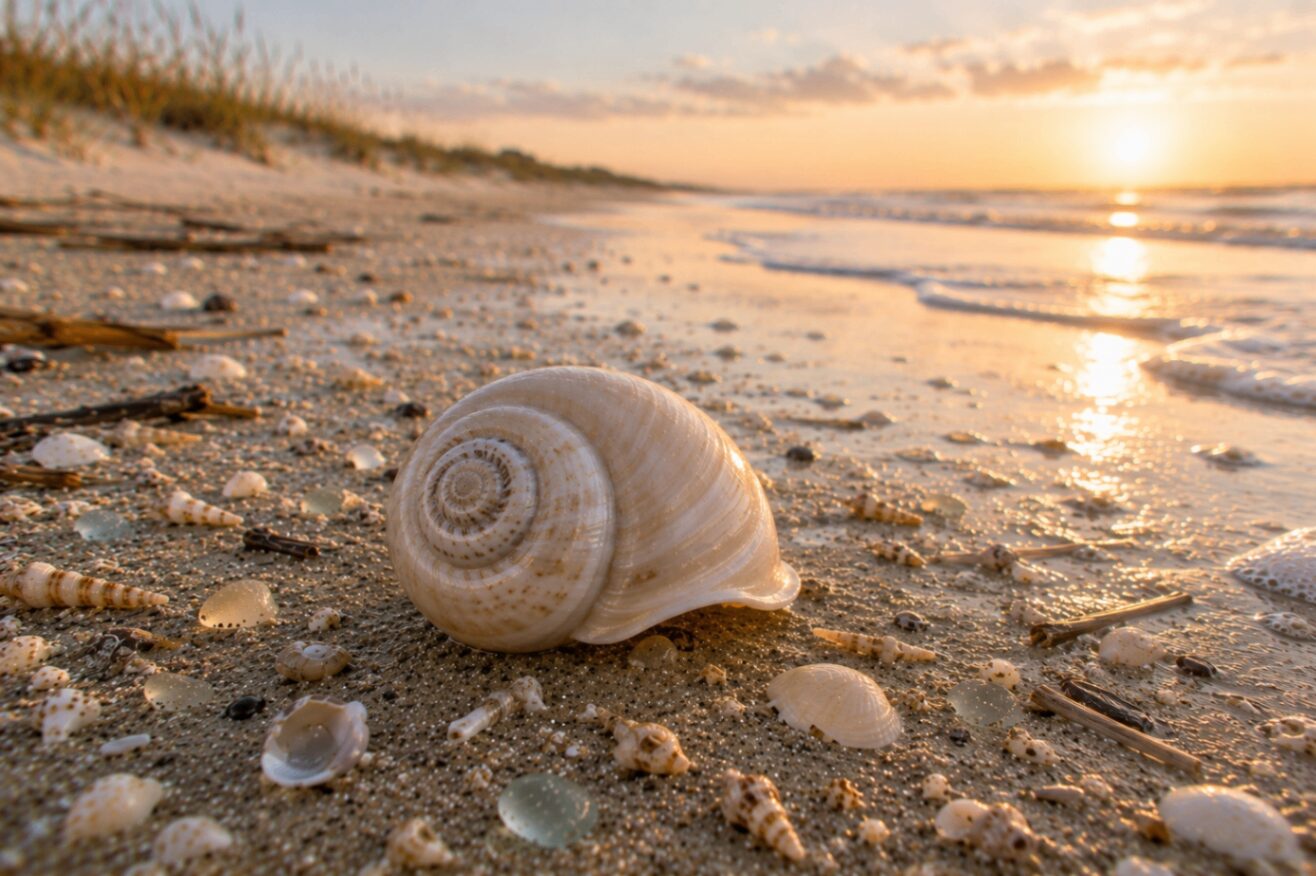
Shark Eye is Neverita duplicata, family Naticidae — an accepted scientific name, which is why it anchors our reference. It is a glossy globose shell 1–3 inches wide with a low spire and a deeply set umbilicus partly filled by a smooth-walled glossy callus. Colour runs pale tan to grey-blue, with the darker central ‘pupil’ at the apex that gives the shell its name.
- Round, polished body whorl, 1–3 inches wide.
- Dark spiral ‘eye’ at the apex.
- Smooth-walled umbilicus partly filled by a glossy callus.
- Pale tan to grey-blue overall.
Where “Atlantic Moon Snail” Appears
The phrase shows up in field lists, shop labels, and regional conversation. It is not treated as a standard vernacular by the strongest taxonomic authorities, and sources that do use it associate it with Neverita duplicata. Treat it as a label you may encounter, not as evidence that you are holding a different species.
Why Tidal Keepsakes Uses Shark Eye
- It maps to a single accepted scientific name, Neverita duplicata.
- It avoids implying a second canonical shell that does not exist in our reference.
- “Atlantic moon snail” is kept as a search term, so the name still finds the right record.
Northern Moonsnail Is a Different Species
There is a genuinely separate northern moon snail — Euspira heros, the accepted name for the Northern Moonsnail. It is a distinct species from the shark eye, and it is not what “Atlantic moon snail” reliably means. Tidal Keepsakes does not yet keep a canonical record for it, so we do not present it here as a side-by-side comparison.
How to Continue Identifying Moon Snails
Start from the group page for the shared moon-snail build — the near-spherical whorl, the wide crescent aperture, and the bevel-edged drilled holes these predators leave in bivalves — then work down to the shark eye record for the species-level field marks.
The Shark Eye record carries the full field marks, and the Moon Snail group page covers the wider family — both are linked in the related shells below.
More look-alike pairs, each with the one field mark that settles it.
Commonly Confused ShellsContinue Your Beachcombing Journey
Hand-picked next steps — chosen because they build directly on what you've just read.
Article
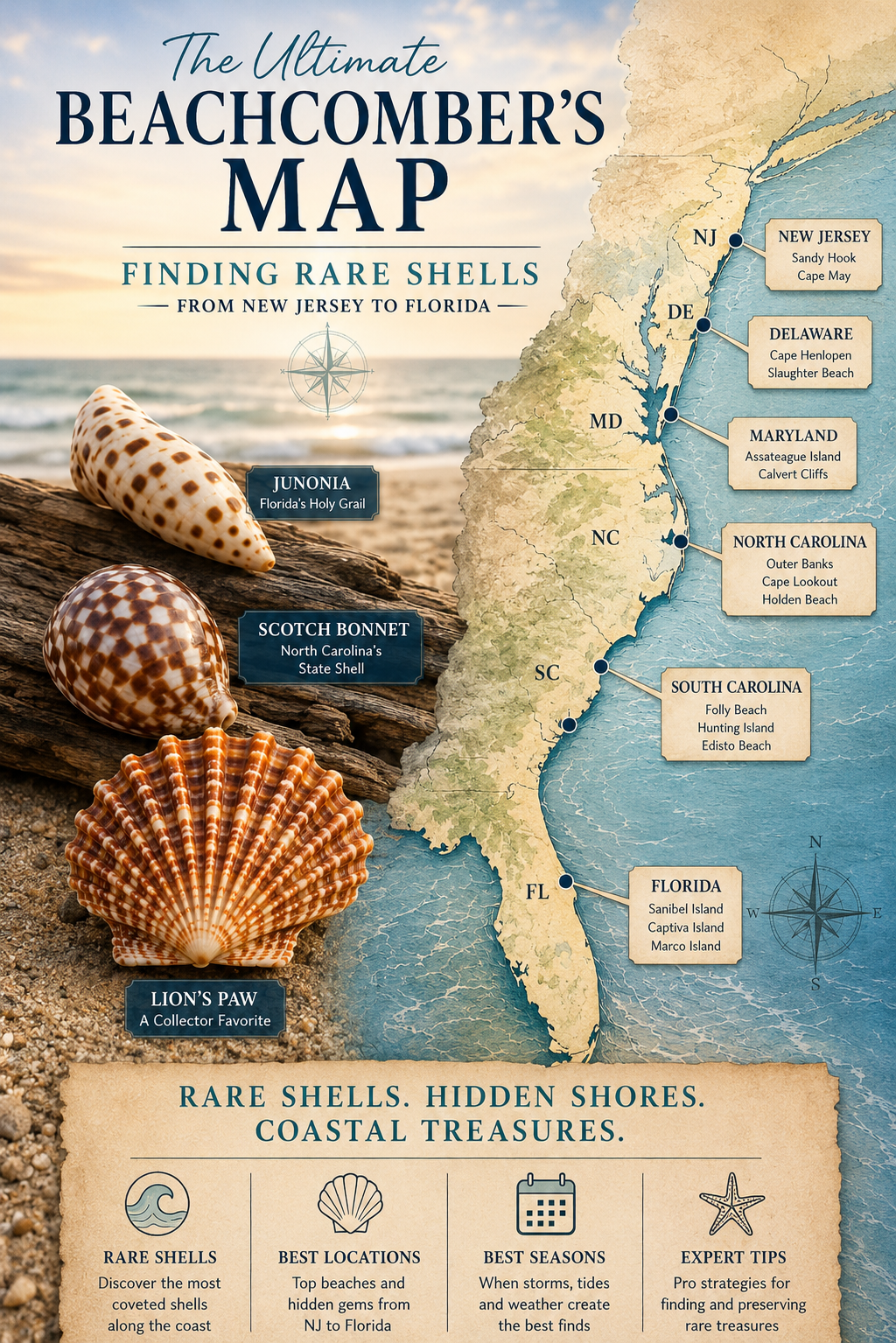
The Ultimate Beachcomber's Map: Finding Rare Shells from Jersey to Florida
Builds on the same core topic.
Guide
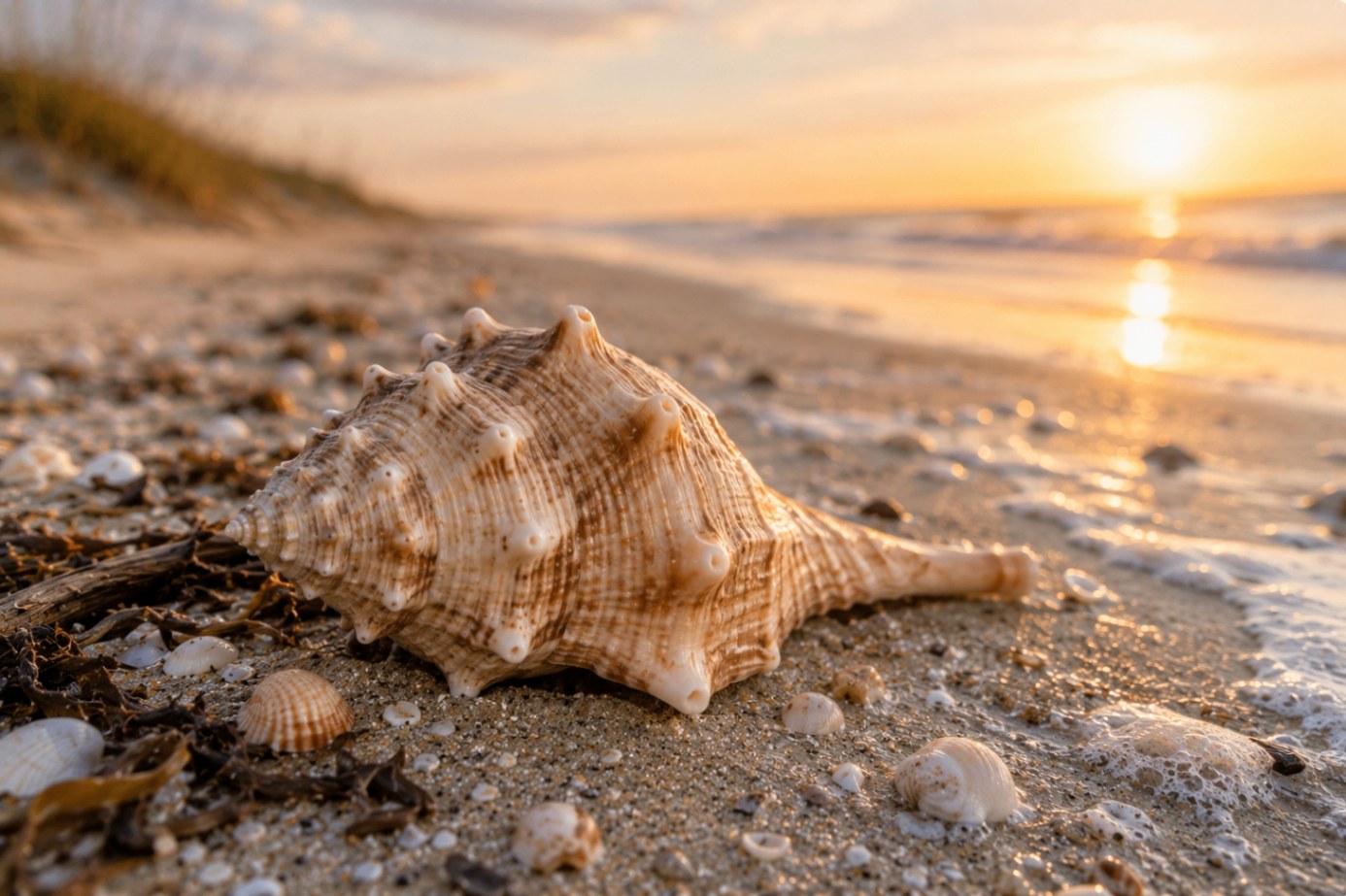
Commonly Confused Shells: A Side-by-Side Field Guide
Hand-picked next step from the editors.
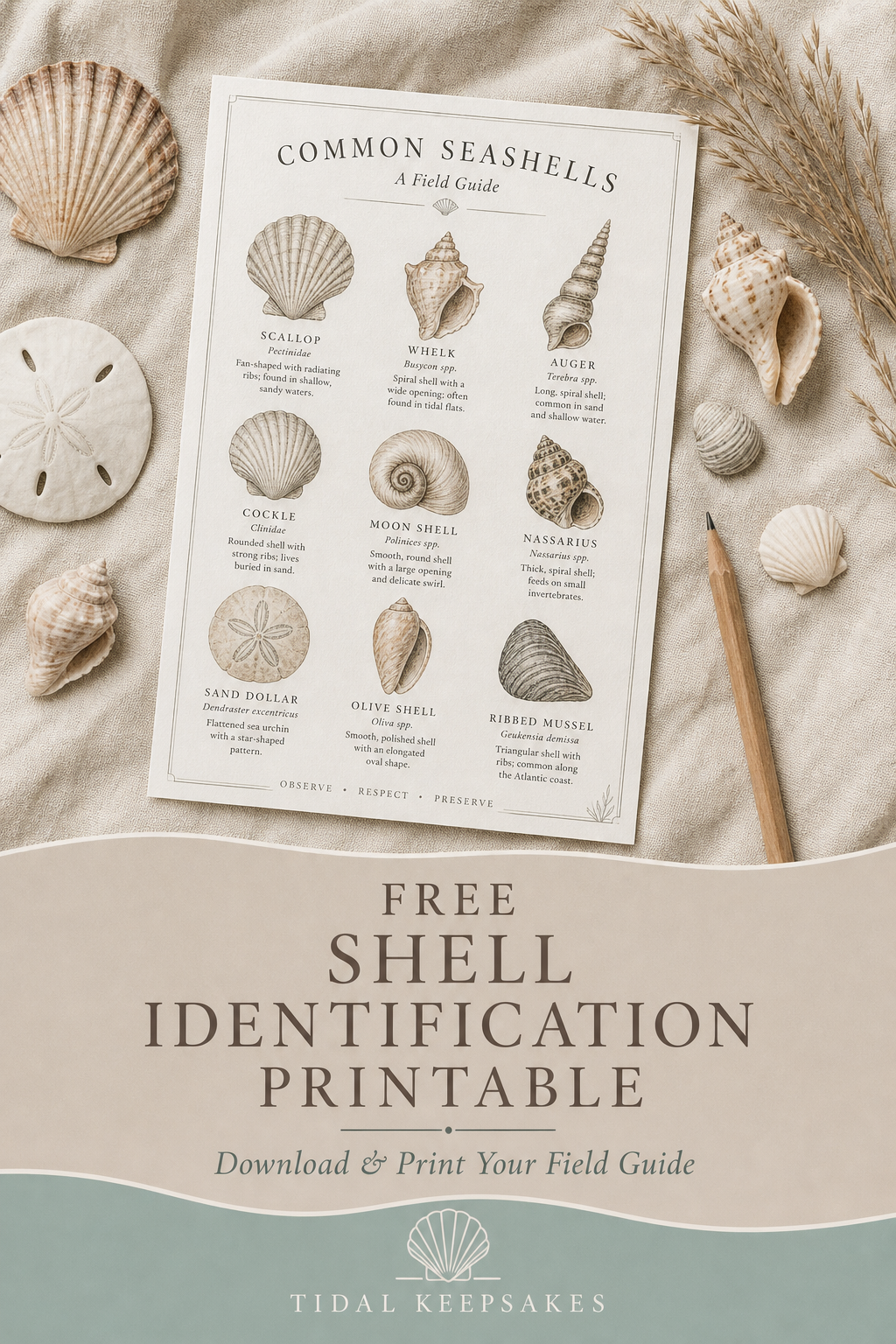
Resource
Free Shell Identification Printable
Builds on the same core topic.
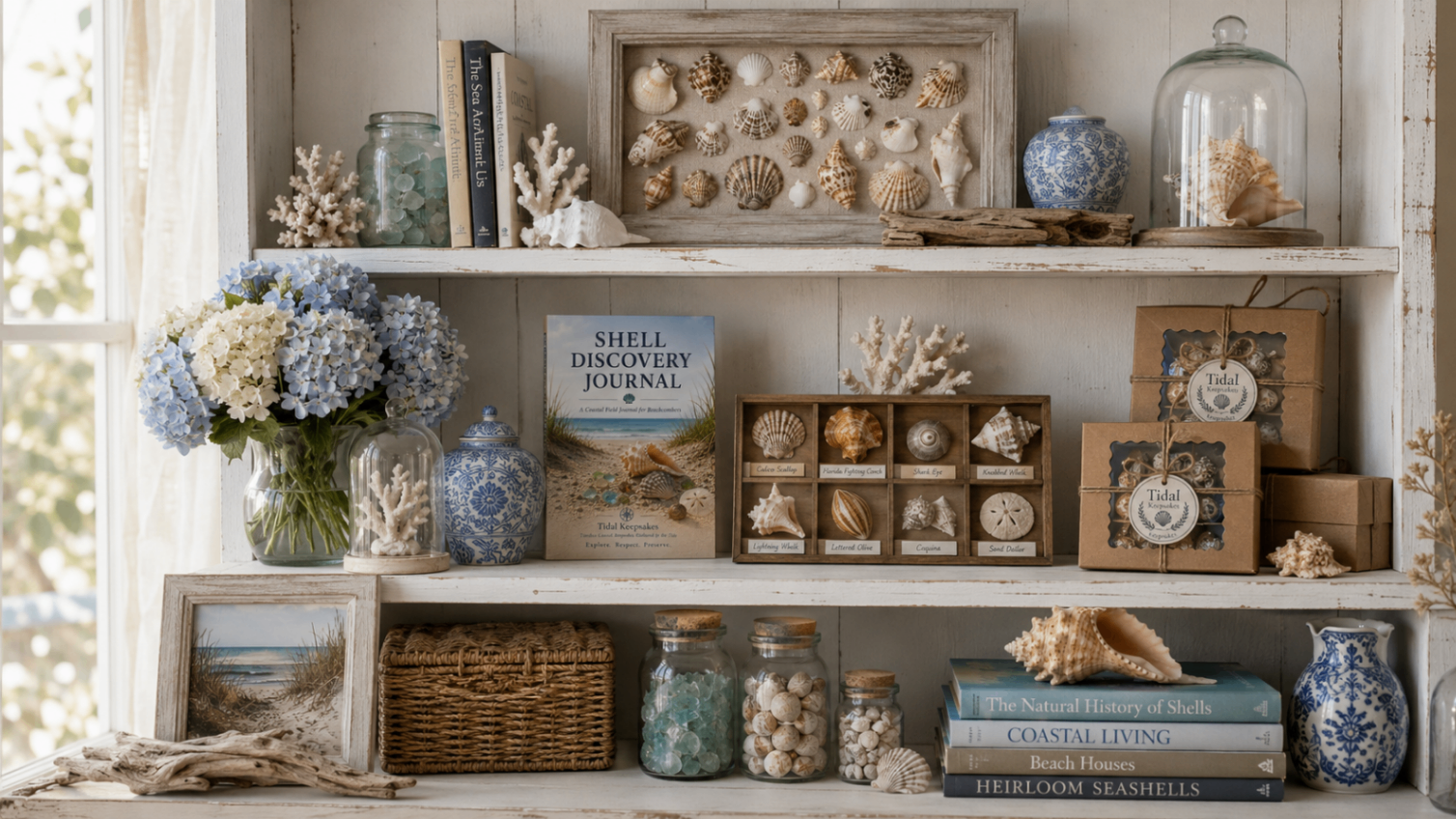
Curated Shell Box
The Collector Box
See these ideas in a curated collection.
Compare Similar Shells
Species and look-alikes worth studying side by side. Every card routes into the shell reference.
Species
Lightning Whelk
Sinistrofulgur sinistrum
Related shell in the coastal collection.
Explore ShellGroup
Whelk
Related shell in the coastal collection.
Explore ShellFamily
Olive Shell
Related shell in the coastal collection.
Explore ShellSpecies
Lettered Olive
Americoliva sayana
Related shell in the coastal collection.
Explore ShellBeaches Worth Exploring Next
Shores connected to the shells, regions, and conditions on this page.
North Carolina Outer Banks
Outer Banks
A 200-mile chain of Atlantic barrier islands — Cape Hatteras, Ocracoke, and Cape Lookout deliver whelks, olive shells, and the state shell,…
Explore BeachGeorgia Coast
Jekyll Island
Historic Golden Isle with generous public beaches — Driftwood Beach and St. Andrews shore deliver moon snails, jingle shells, and…
Explore BeachFlorida Gulf Coast
Sanibel Island
Sanibel's east-west orientation sweeps Gulf shells onto its shore in exceptional variety — the reason it's the most celebrated shelling…
Explore BeachNorth Carolina Outer Banks
Ocracoke Island
A ferry-only Outer Banks island south of Hatteras — sixteen miles of protected National Seashore beach where Scotch bonnets and knobbed…
Explore BeachDiscover More Coastal Inspiration
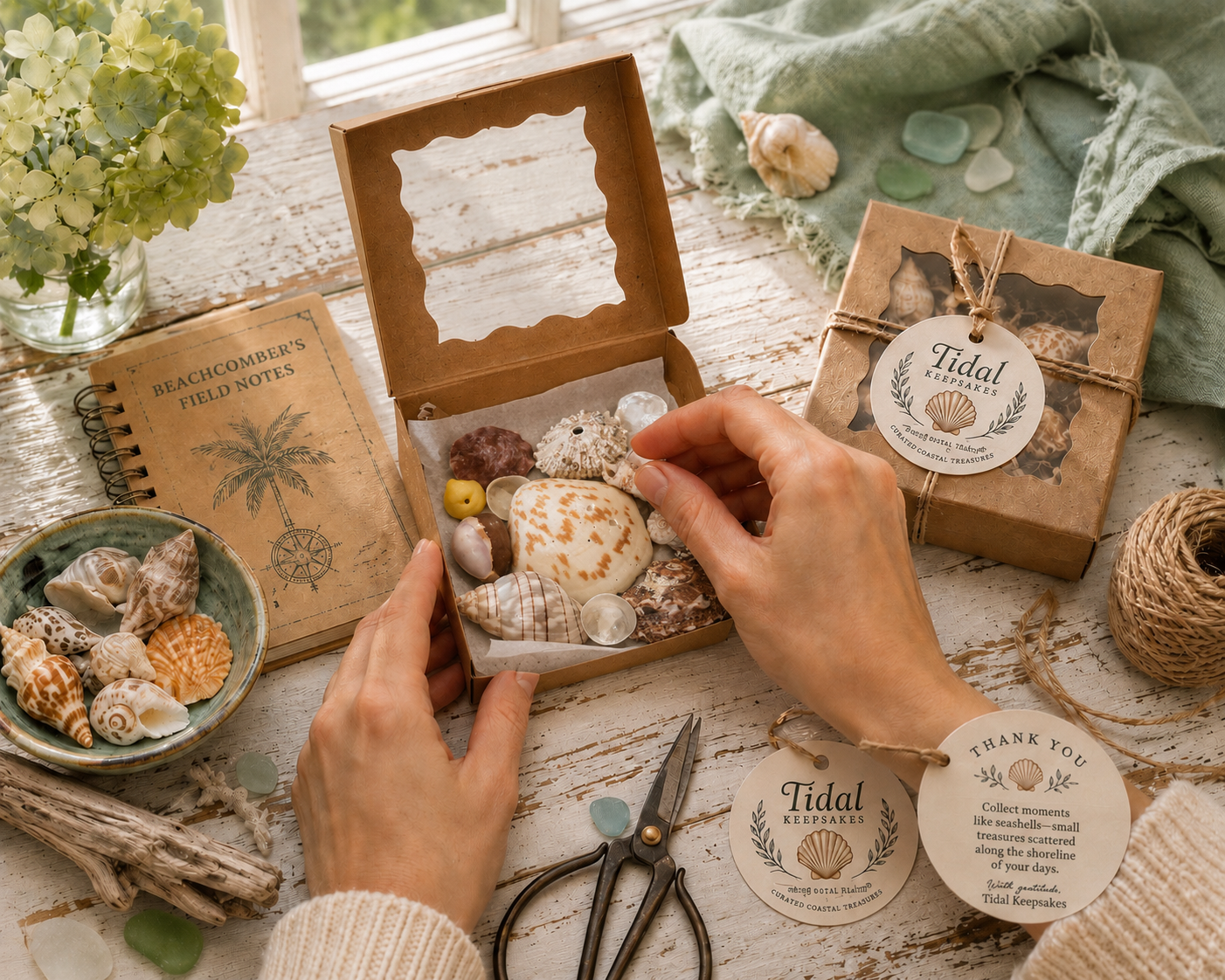
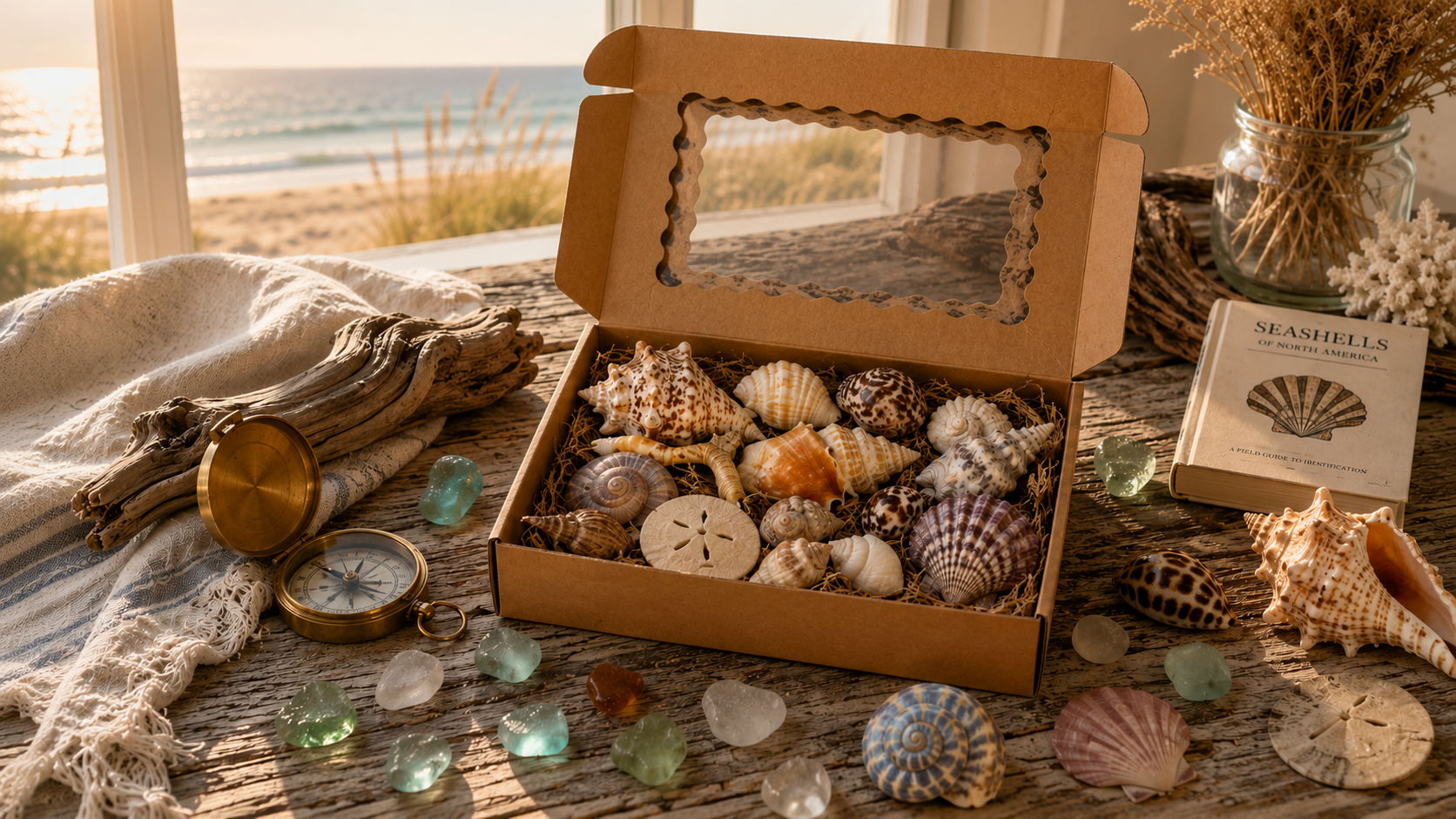
Curated coastal favorites and specimen boxes that echo the story above.
A Learning Journey to Follow
New to Beachcombing
For beginners · 5 steps
The pathway most first-time visitors take. It moves calmly from the beginner's guide into shell identification, then out to the beach and back home to the journal.
- 1
Start Here
Beginner's Beachcombing Guide
The foundation — what to bring, when to walk, how to look.
Continue - 2
Learn the Shells
Shell Identification Guide
Meet the species you're most likely to find on your first walk.
Continue - 3
Take Care of Finds
How to Clean Seashells
Bring shells home the right way so they last for years.
Continue - 4
Record the Walk
Shell Discovery Journal
Field-note every find while the memory is still fresh.
Continue - 5
Take the Coast Home
The Mini Box
A petite assorted shell collection, hand-gathered from the coast.
Continue