 Save
SaveBeachcombing
The Ultimate Guide to Beachcombing Along the East Coast
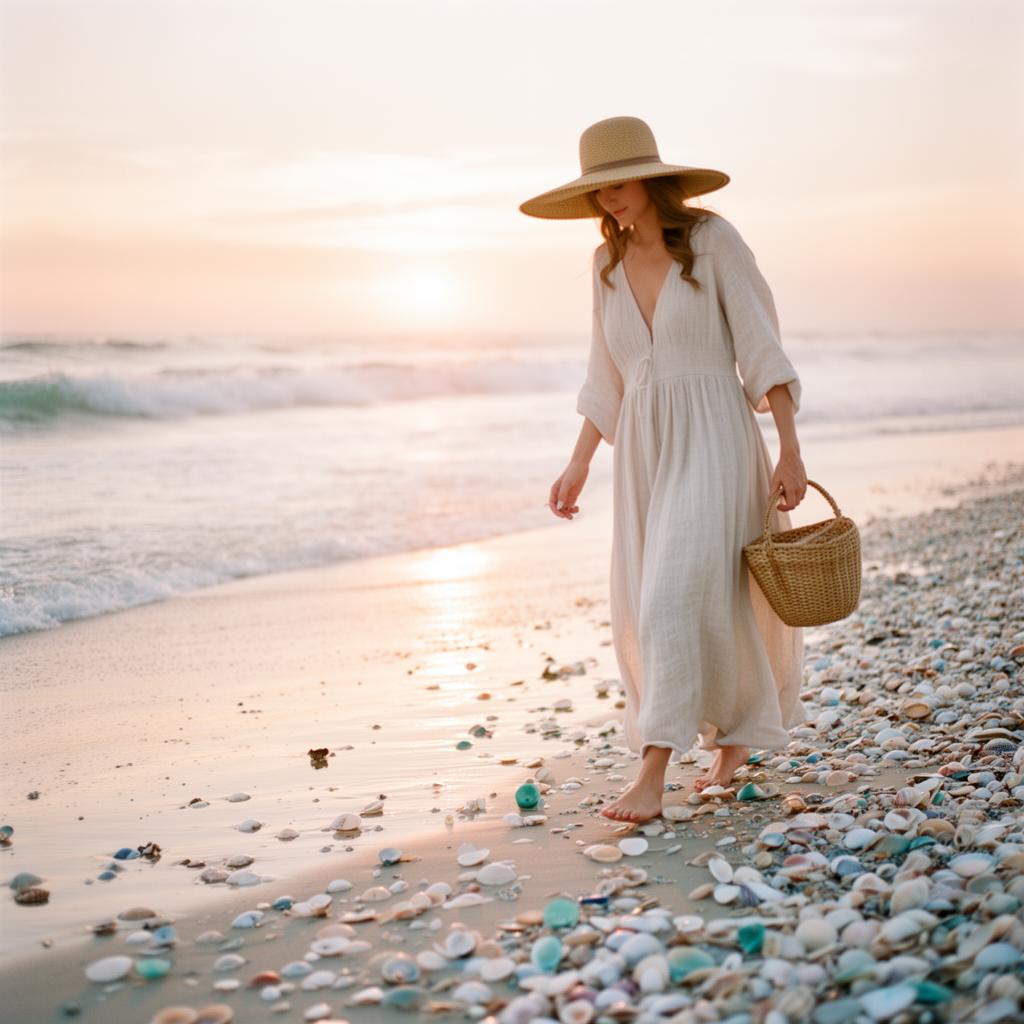
There's a particular kind of magic in walking a quiet shoreline at first light, eyes down, searching for whatever the tide has chosen to leave behind. Beachcombing is part treasure hunt, part meditation — a rewarding hobby that rewards patience, timing, and a slow pace.
The East Coast is one of the richest beachcombing regions in the country, stretching from the sun-warmed Gulf beaches of Florida to the windswept barrier islands of the mid-Atlantic. Each stretch of coast has its own signature finds, its own rhythm of tides, and its own best-kept secrets.
This guide walks you through the very best East Coast beaches for shelling state by state, the ideal time of day to search, exactly what to bring, and how to collect responsibly so these shores stay generous for generations to come.
Best Beaches for Shelling in Florida
 Save
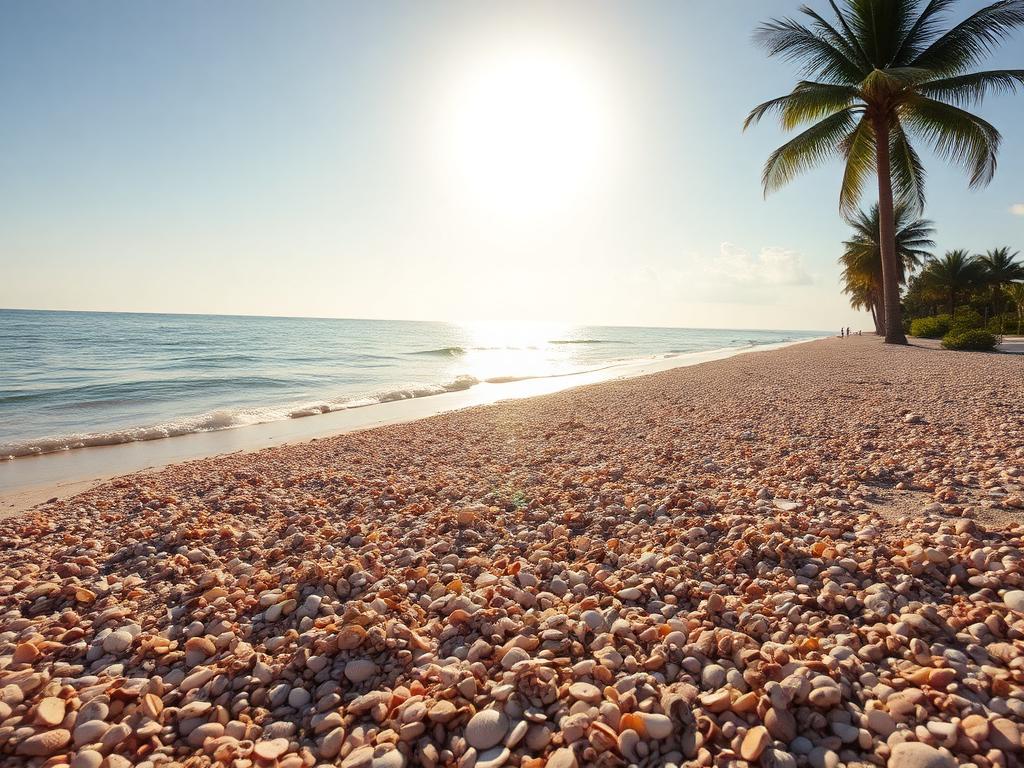
SaveFlorida is the undisputed crown jewel of American shelling, and Sanibel Island leads the way. Its rare east-west orientation acts like a giant scoop, gathering shells from the Gulf and Caribbean onto its southern-facing shores by the thousands — so much so that hunched-over collectors have given rise to the famous 'Sanibel stoop.'
The best shelling is found on the Gulf-side beaches, where strong currents constantly deposit fresh finds. Lightning whelks, fighting conchs, olives, and the prized junonia all turn up here for those who arrive early and look closely. Below are the island's top four spots, each with its own personality.
Blind Pass, Sanibel Island
 Save
SavePublic beach · 17181 Captiva Dr, Sanibel, FL
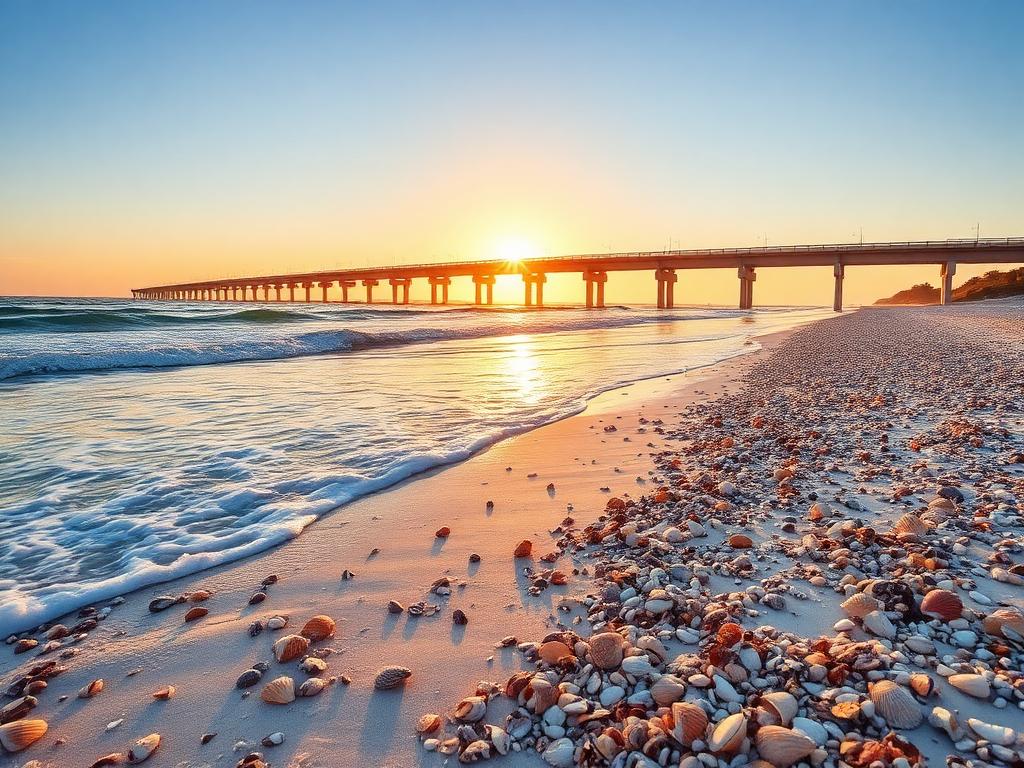
Located at the bridge connecting Sanibel and Captiva, Blind Pass is widely considered the top spot for larger and rarer finds like the elusive junonia. The strong currents constantly deposit new shells, though swimming is discouraged because of those same currents.
Locals are unanimous: "Blind Pass is the place to go — people are always finding junonias there." Get there at sunrise, still almost dark, and bring a flashlight if you want first pick of what washed in overnight.
Bowman's Beach, Sanibel Island
 Save
SavePublic beach · Bowman's Beach Parking, 1700 Bowman's Beach Rd, Sanibel, FL
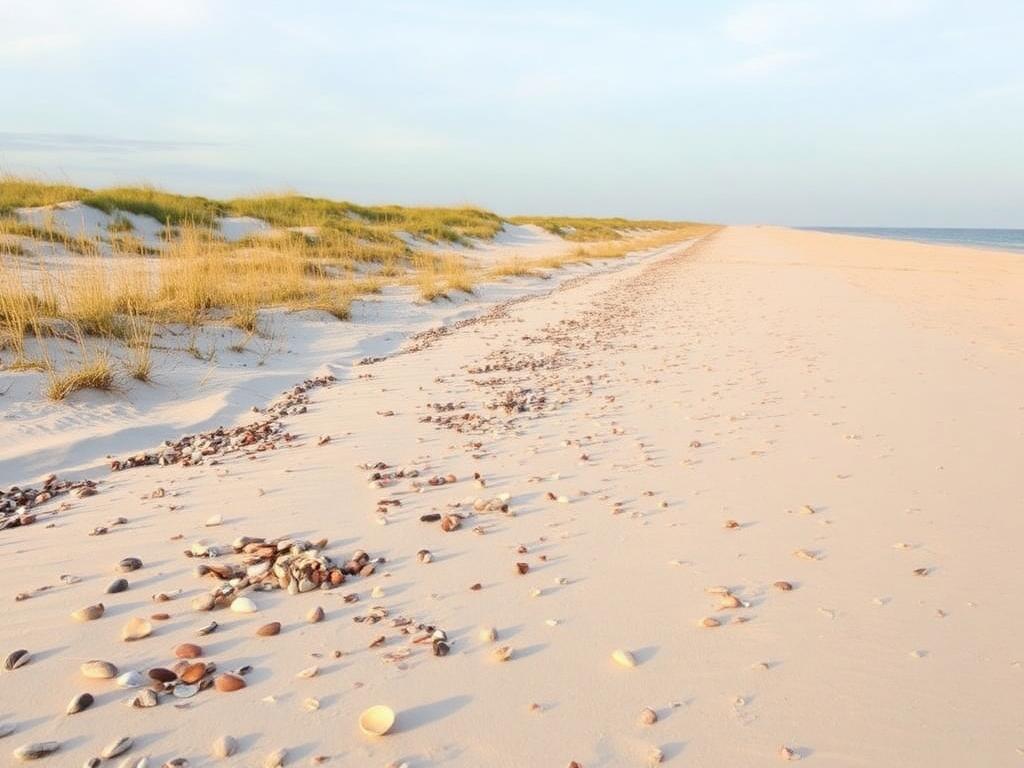
Known for its expansive, natural feel, Bowman's Beach offers plenty of room to walk and search without the crowds. A short boardwalk over the dunes keeps it wild and uncluttered, and it's consistently rated one of the best all-around shelling locations on the island.
As one enthusiast put it: "Bowman's Beach is a great spot. Walk either direction and there will be plenty of shells to choose from."
Lighthouse Beach, Sanibel Island
 Save
SavePublic beach · 110 Periwinkle Way, Sanibel, FL
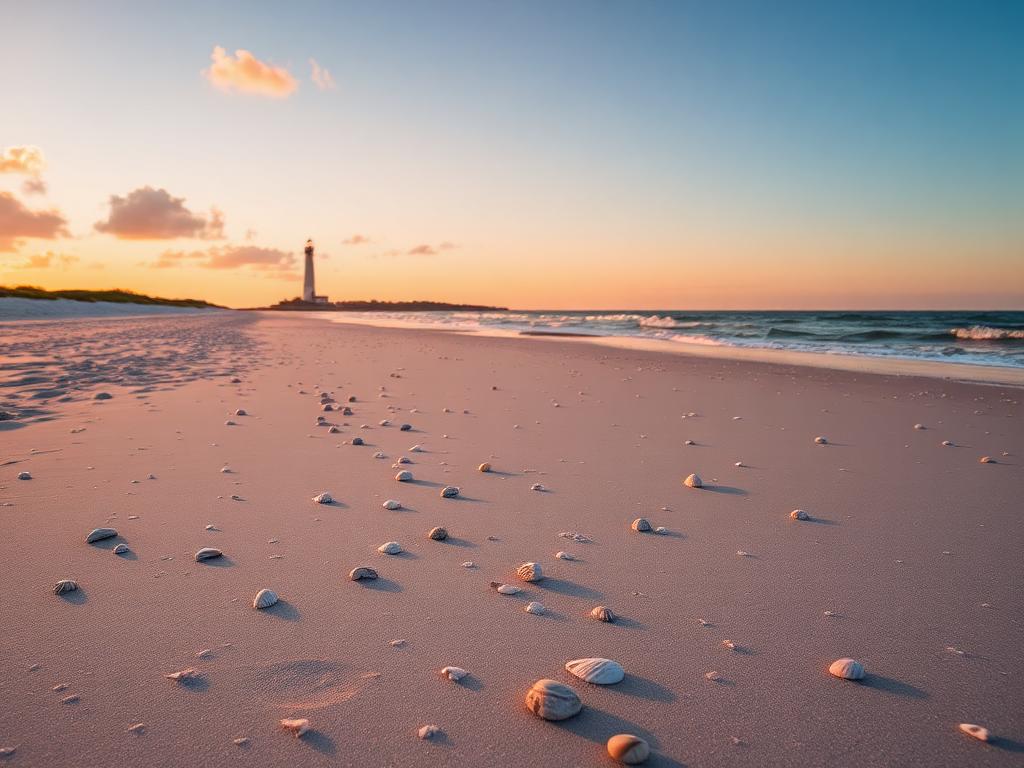
Situated at the island's eastern tip beneath the historic Sanibel lighthouse, this beach typically has an abundance of smaller shells. It's very popular and can get crowded, so early arrival is essential to snag a parking spot.
The fishing pier and grassy flats here also draw birds and wildlife, making it a rewarding stop even between shelling sessions.
Tarpon Bay Beach, Sanibel Island
 Save
SavePublic beach · 111 Tarpon Bay Rd, Sanibel, FL
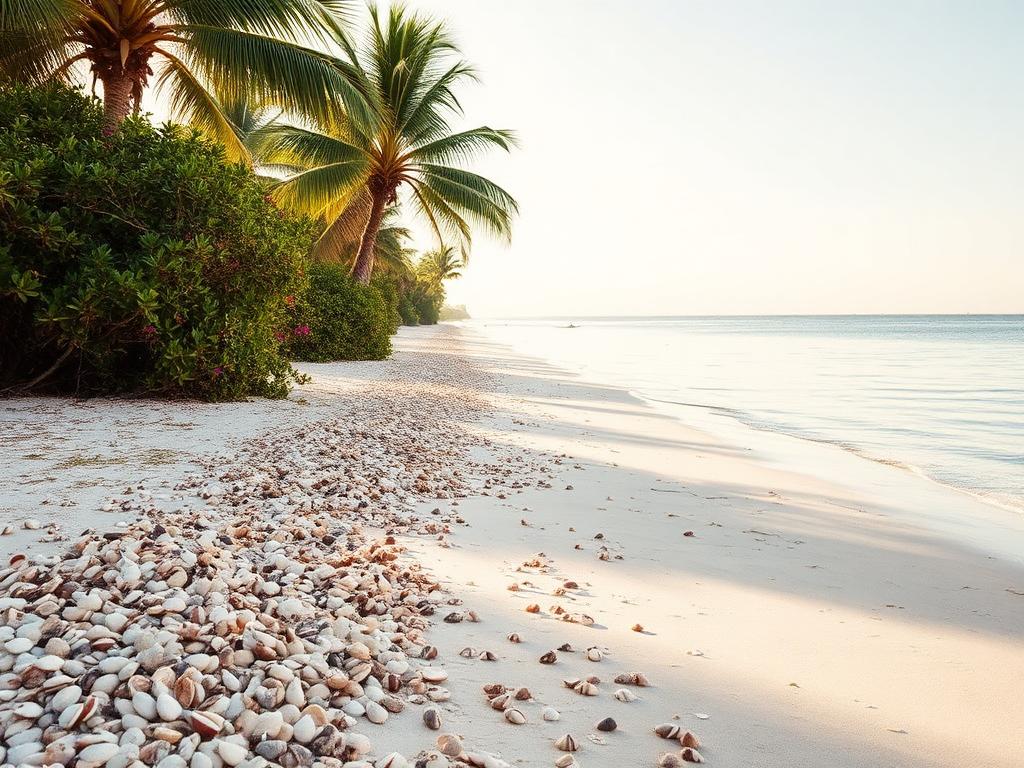
A family-friendly, centrally located beach with generous amenities and excellent shelling piles, Tarpon Bay is a gentler alternative to Blind Pass. Its calmer water makes it ideal for wading and shuffling your feet through the shallows to uncover buried treasures.
Best Beaches for Shelling in South Carolina
 Save
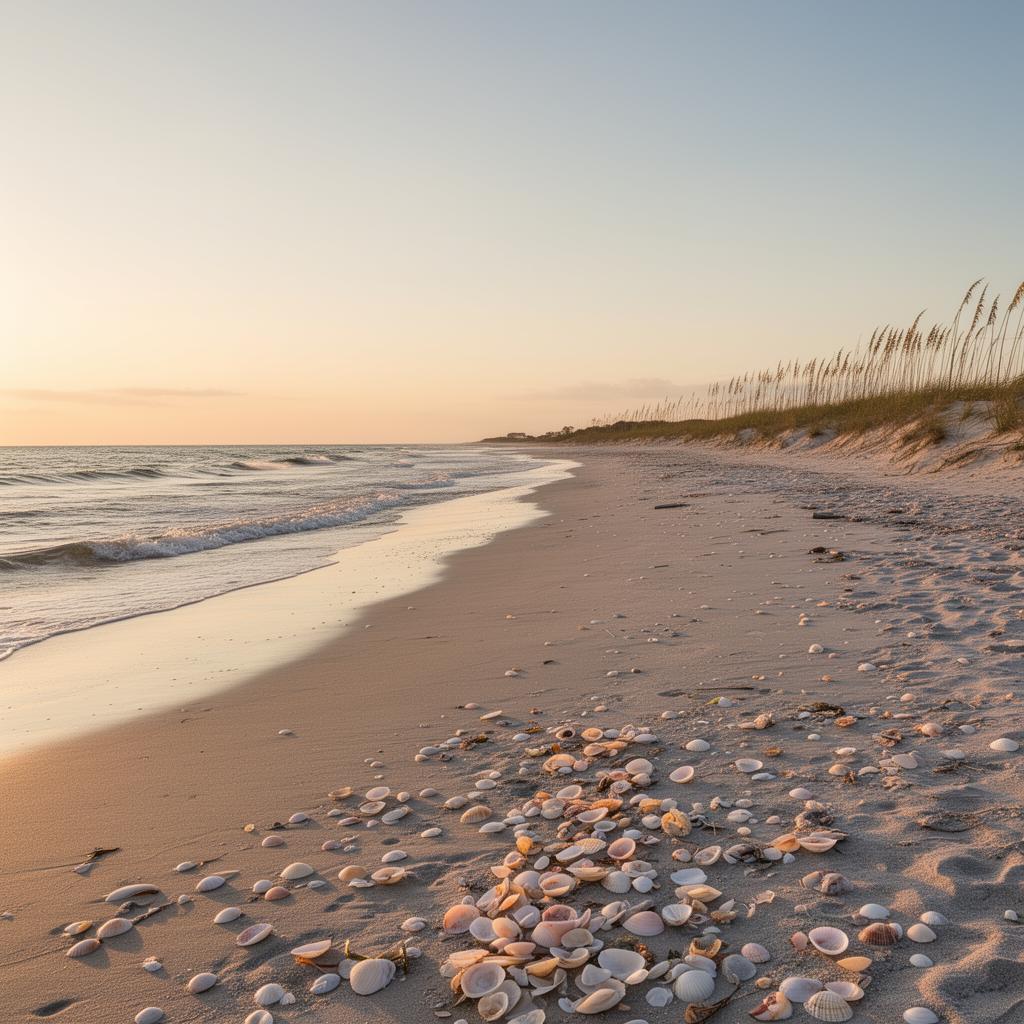
SaveSouth Carolina offers a diverse range of shelling, from the famous 'Pawleys Shell' in the north to the fossil-rich sands of the south. Edisto Beach and Hunting Island are widely regarded as the top spots for variety and abundance, while quieter barrier islands reward those willing to travel.
Keep an eye out for the glossy lettered olive — the state shell — along with whelks, augers, sand dollars, and the occasional shark's tooth. Veteran shellers favor late fall and winter, especially after a storm, when the beaches are less picked over.
Edisto Beach & State Park, South Carolina
 Save
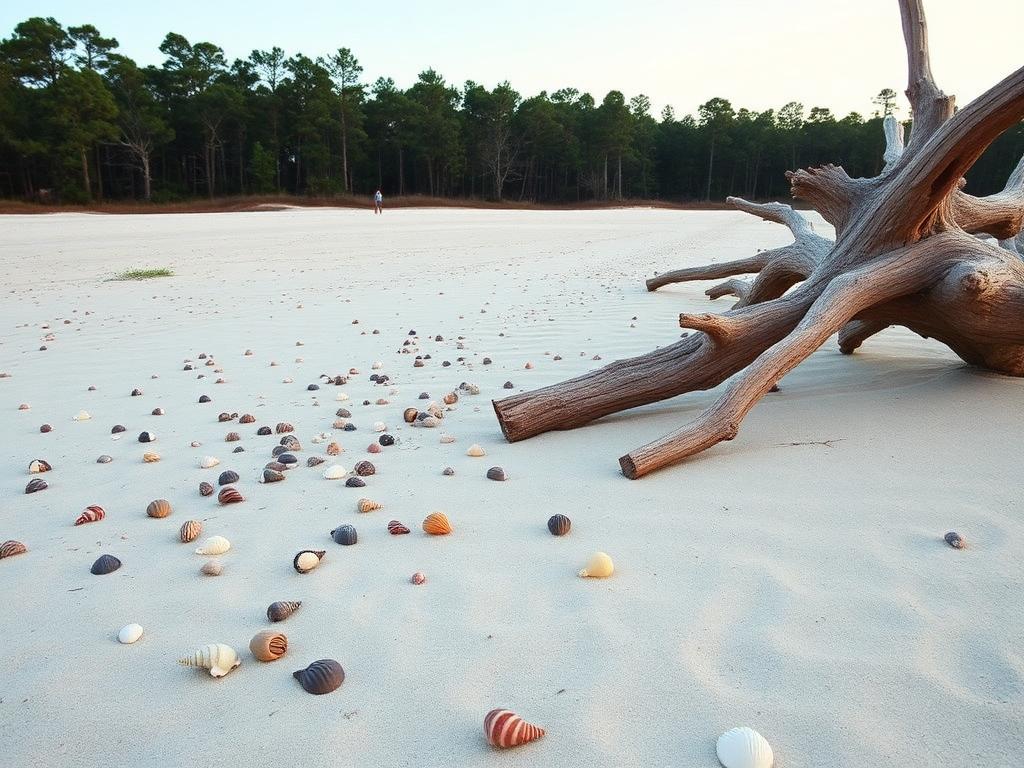
SaveRenowned as one of the best overall shelling beaches in the state, Edisto is particularly famous for large whelks and fossils. The wide, gently sloping shore lets shells settle in abundance at low tide.
Nearby Driftwood Beach (part of Botany Bay) is a favorite for its natural, untouched beauty and unique finds — but note that taking shells is strictly prohibited within the Botany Bay preserve, so come to look and photograph, not collect.
Hunting Island State Park, South Carolina
 Save
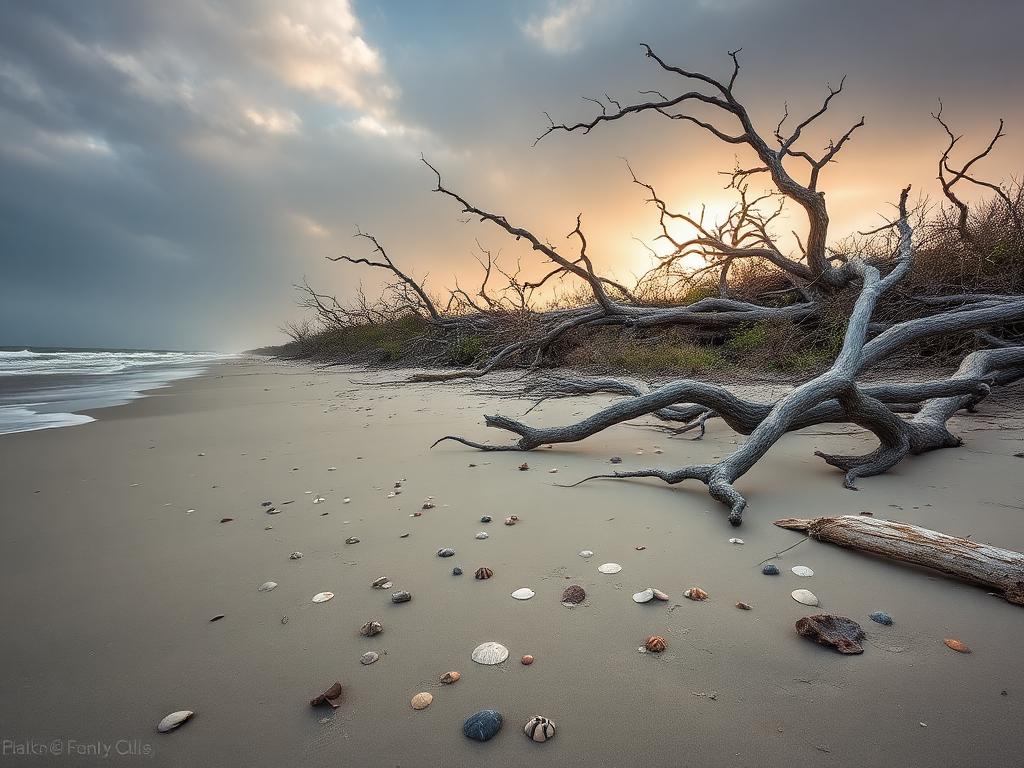
SaveHunting Island is famous for its dramatic, eroding shoreline that constantly unearths new treasures. The skeletal 'boneyard' of fallen trees gives the beach an otherworldly beauty.
It's one of the most reliable places in the state to find sand dollars and the lettered olive, South Carolina's official state shell. Walk the tide line slowly — the shifting sands reveal something new with every visit.
Pawleys Island, South Carolina
 Save
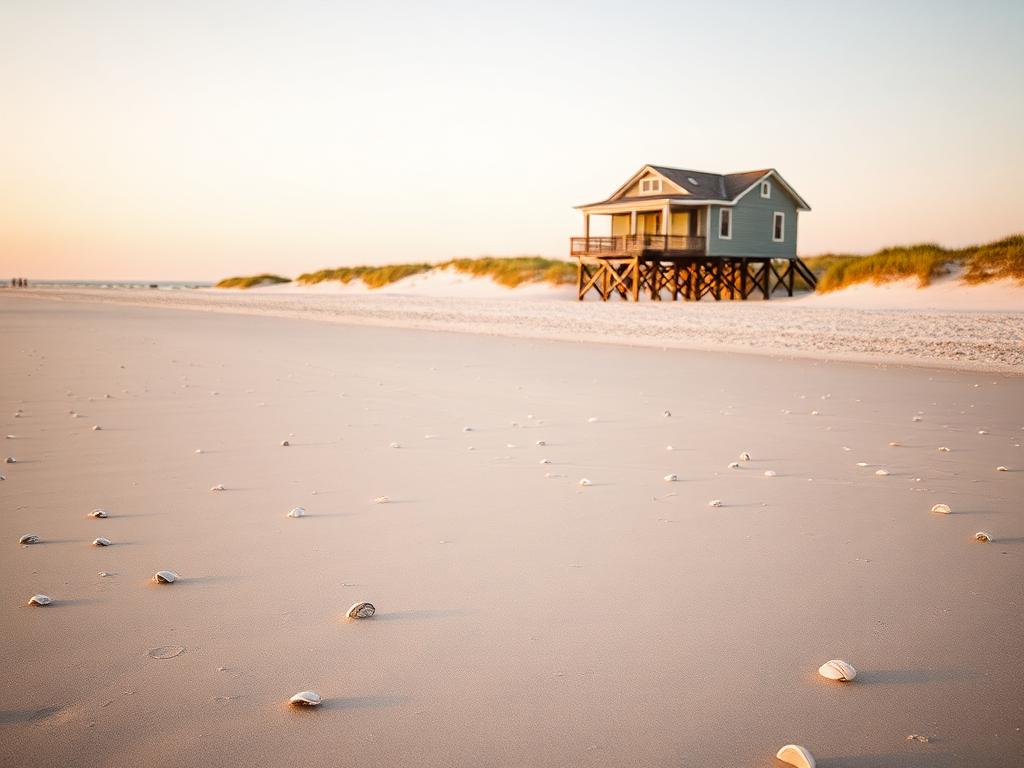
SaveA low-key, old-fashioned destination, Pawleys Island is known specifically for the 'Pawleys Shell' — a rare Venus clam shell said to be unique to this island.
The relaxed pace and uncrowded shore make it a peaceful place to hunt. Walk at low tide and check the wrack line carefully for these distinctive ribbed clam shells.
Folly Beach, South Carolina
 Save
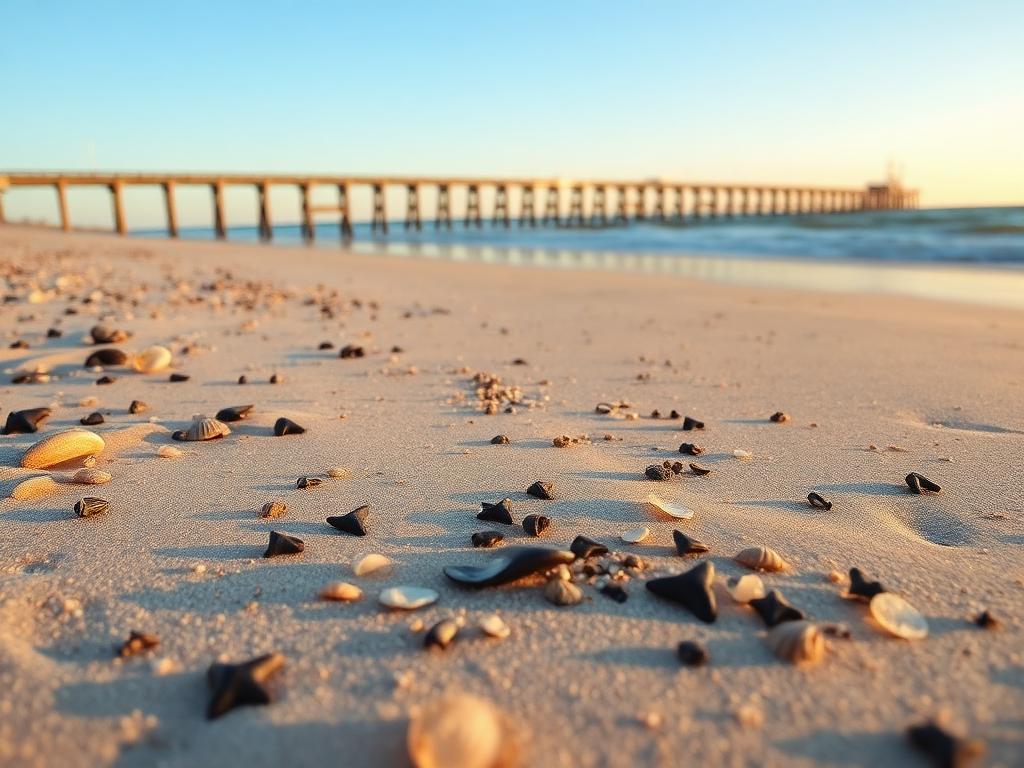
SaveA popular spot just outside Charleston, Folly Beach is a favorite for general beachcombing and finding fossilized shark teeth. The area around the pier and the washout at the island's end are especially productive.
Pair a low-tide walk here with a stop in Charleston, and you have one of the easiest day trips on this list.
Bulls Island, South Carolina
 Save
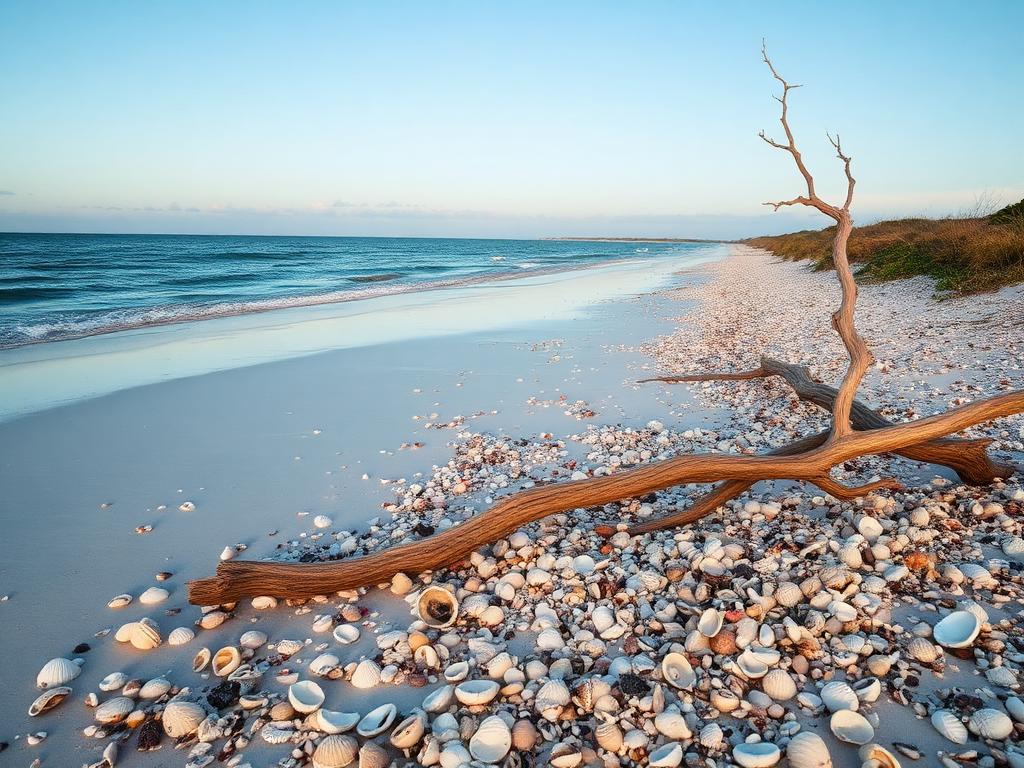
SaveAccessible only by boat, this remote barrier island offers some of the most pristine shelling in the state thanks to its lack of crowds. Its famous Boneyard Beach is lined with weathered, sun-bleached trees.
Because so few people make the trip, shells here are often whole and undisturbed. Book a ferry or guided tour with an outfitter like Coastal Expeditions to reach it.
Specialized Hunting Spots in South Carolina
Shark teeth: Myrtle Beach (especially near the Cherry Grove Pier) and Folly Beach are the top public areas for finding fossilized teeth.
Sand dollars: Sullivan's Island and the sandbars near Kiawah Island's Beachwalker Park are known for an abundance of sand dollars at low tide.
Whelks and tulips: Isle of Palms and 'The Point' in Cherry Grove are excellent for larger intact shells churned up by inlet currents.
Best Beaches for Shelling in North Carolina
 Save
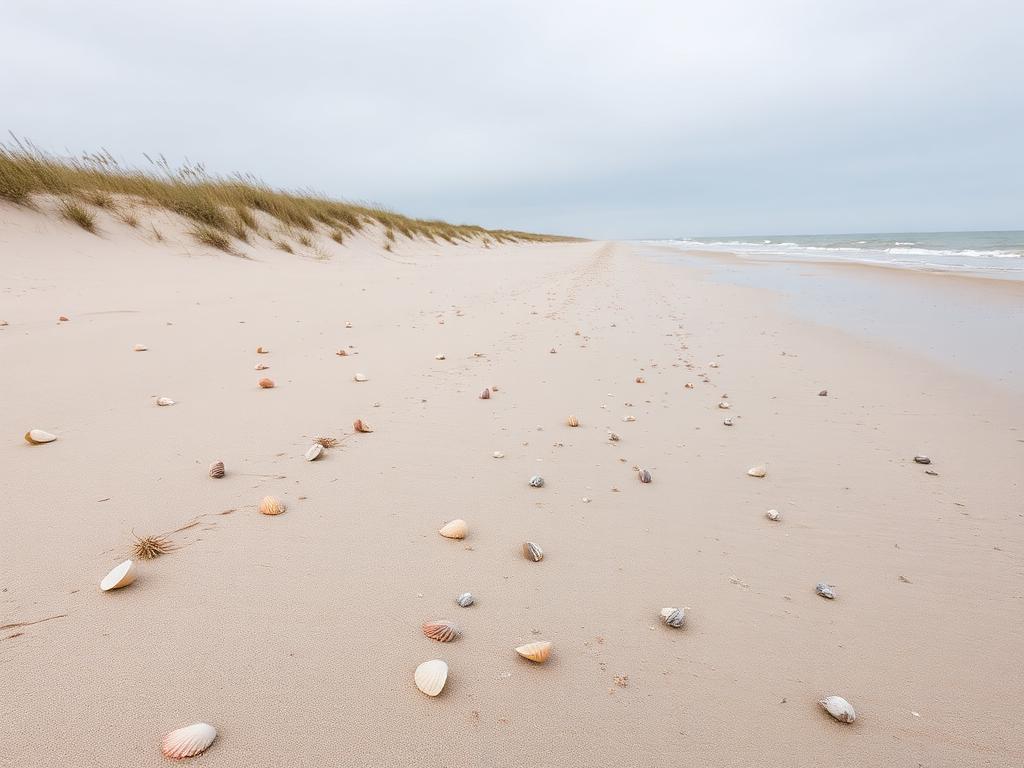
SaveNorth Carolina is widely considered one of the premier beachcombing regions in the country, particularly because of the unique 'hook' of the Outer Banks that catches diverse shells from both northern and southern currents. Ocracoke Island and Cape Lookout are the top-tier destinations for variety and rarity.
The Scotch bonnet — North Carolina's state shell, and the first ever designated in the nation — is the trophy find here. Remote, boat-access islands offer the most pristine hunting of anywhere on the East Coast.
Ocracoke Island, North Carolina
 Save
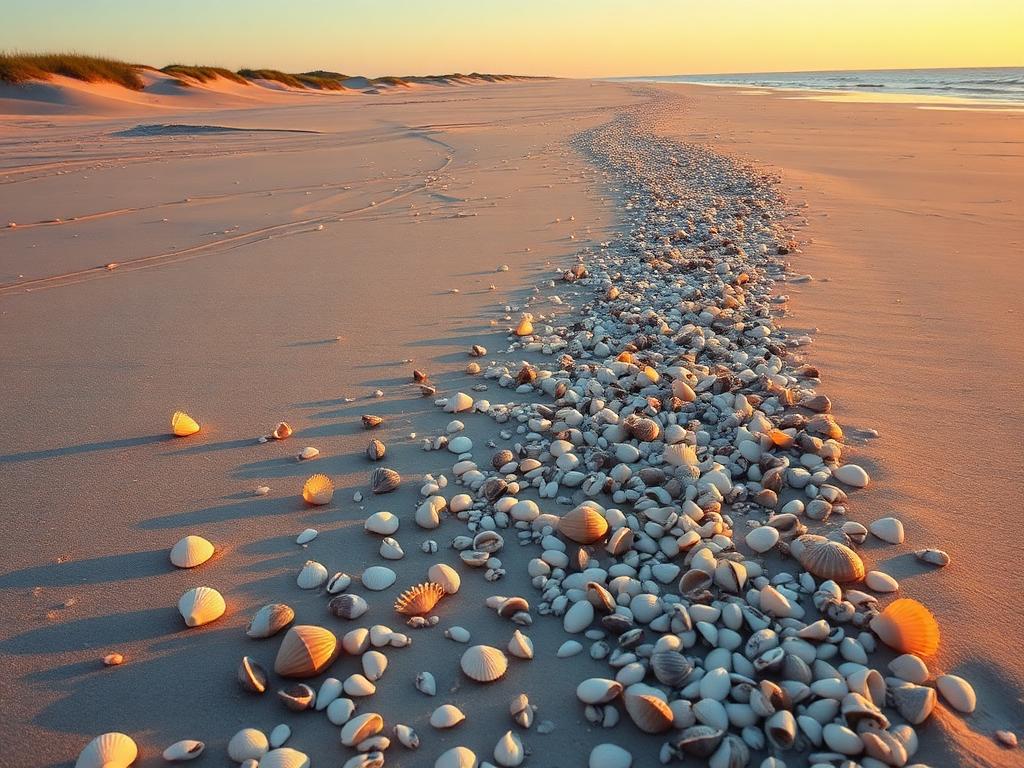
SaveFrequently ranked among the top shelling beaches in the country, Ocracoke is famous for its abundance and the chance to find the Scotch bonnet. Reachable only by ferry, it stays wild and uncrowded.
Drive or walk to the more remote stretches away from the day-use areas, and focus on the wrack line after a blow for the best whelks and bonnets.
Cape Lookout National Seashore, North Carolina
 Save
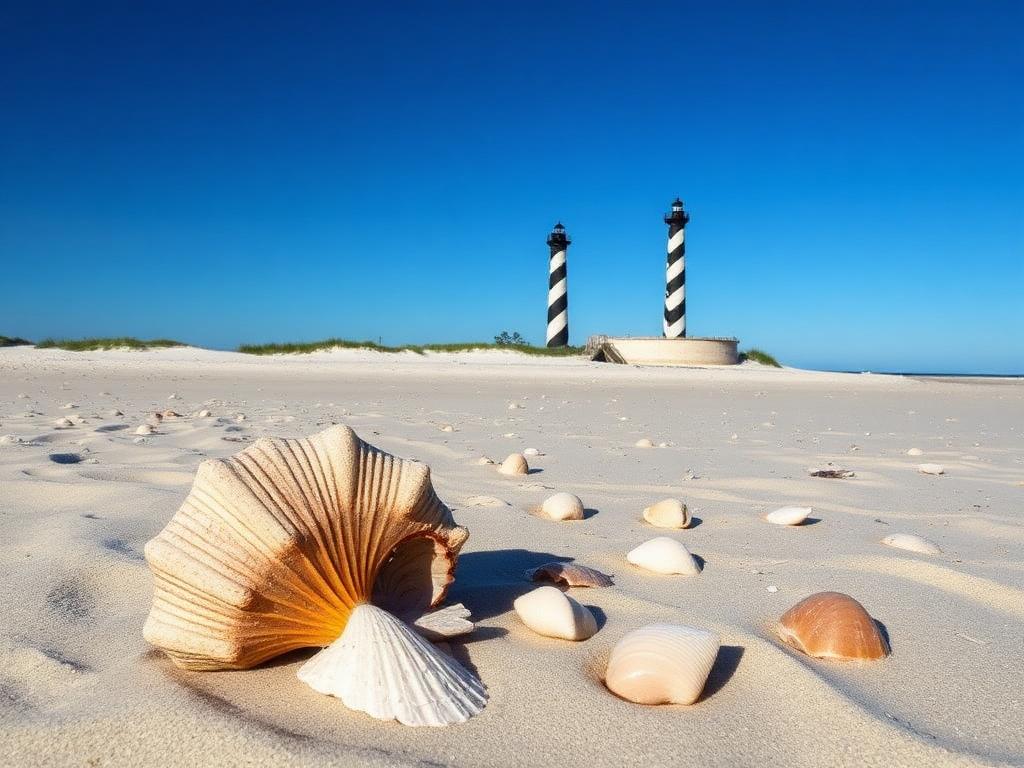
SaveSpanning 56 miles of remote, undeveloped barrier islands — North Core, South Core, and Shackleford Banks — Cape Lookout is accessible only by boat. It remains largely undisturbed, offering some of the best large whelk and conch hunting in the state.
The distinctive black-and-white diamond lighthouse marks the area. A ferry from Harkers Island or Beaufort gets you there.
Portsmouth Island, North Carolina
 Save
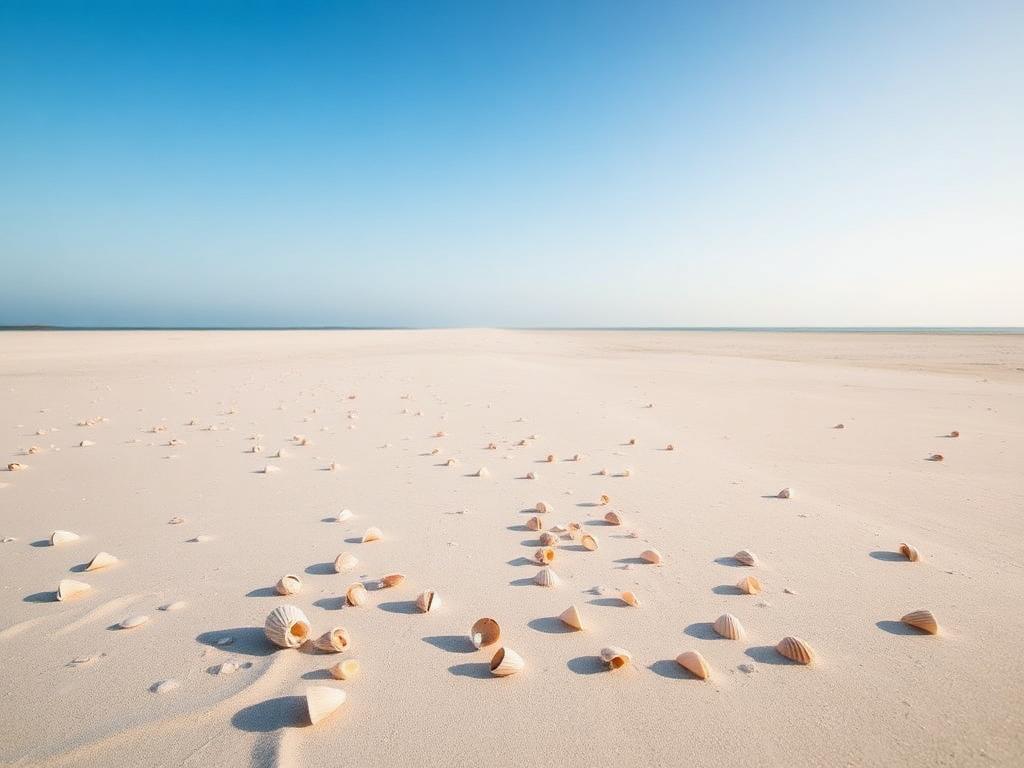
SaveLocated just south of Ocracoke and reachable by boat or ferry, this uninhabited island is a 'secret' favorite among serious shellers looking for pristine, unpicked specimens away from the crowds.
The former village turned ghost town adds a haunting beauty to the trip. Bring everything you need — there are no services here.
Shackleford Banks, North Carolina
 Save
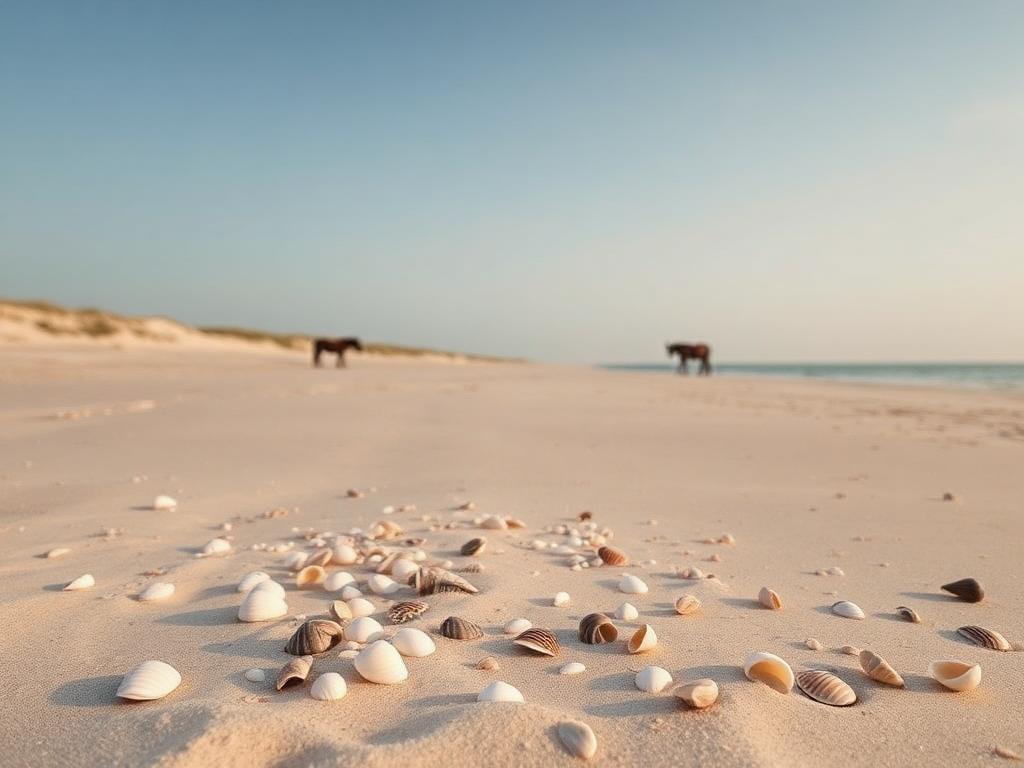
SaveKnown for its wild horses and secluded beaches, Shackleford Banks is an excellent spot for finding high-quality shells that haven't been picked through by many visitors.
Give the horses plenty of space and enjoy the rare experience of shelling a truly wild shore. A short ferry from Beaufort or Harkers Island brings you across.
Specialized Hunting Spots in North Carolina
Shark teeth: Topsail Island (especially North Topsail Beach) and Holden Beach are the most famous public spots for fossilized teeth. Shark Tooth Island in the Cape Fear River, reachable by kayak from Wilmington, is a dedicated fossil destination.
Sand dollars: The sandbars at Sunset Beach and Ocean Isle at low tide are renowned for large, intact sand dollars.
Whelks and Scotch bonnets: South-facing Outer Banks beaches like South Beach in Buxton and Frisco Beach are hotspots for these larger, more ornate specimens, thanks to the Gulf Stream currents. Coquina Beach is named for the millions of tiny coquina clams that wash up there.
Best Beaches for Shelling in New Jersey
 Save
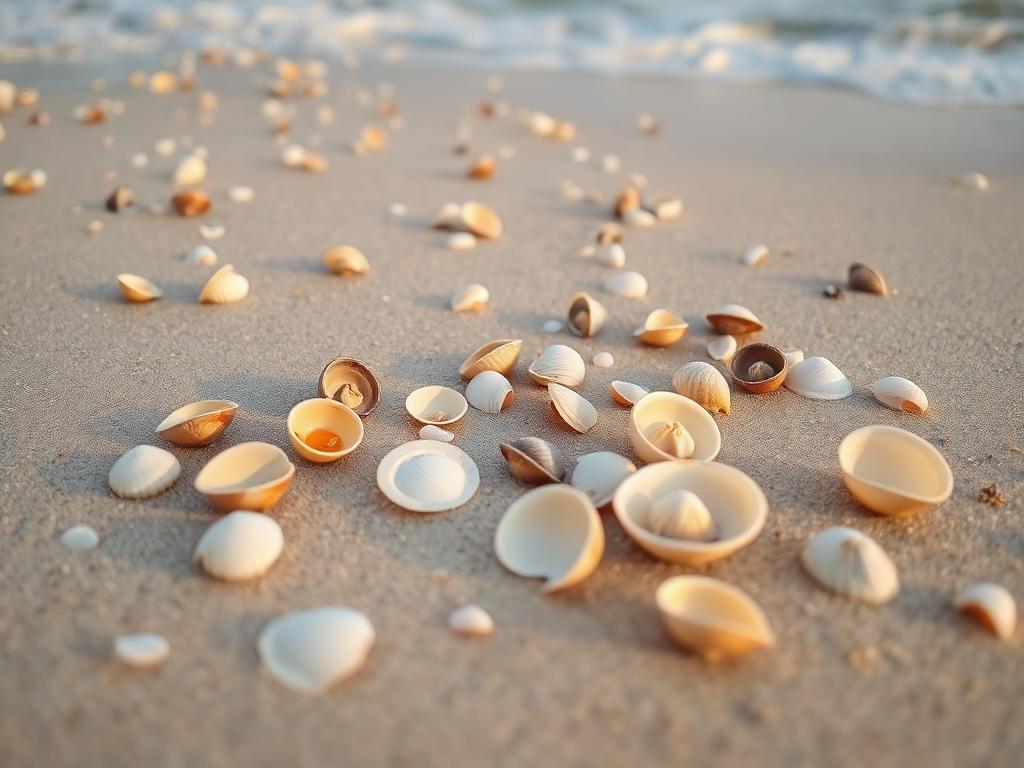
SaveWhile New Jersey beaches are often raked clean for tourists in summer, several natural spots remain excellent for shelling. Bayshore Waterfront Park and Stone Harbor Point are widely considered the top locations for finding whole specimens like the knobbed whelk, the state seashell.
For the best results, visit in late fall, winter, or early spring — and always after a strong northeaster, which churns up the ocean floor and deposits fresh 'shell pockets' along the wrack line.
Bayshore Waterfront Park, New Jersey
 Save
SavePark · Port Monmouth, NJ
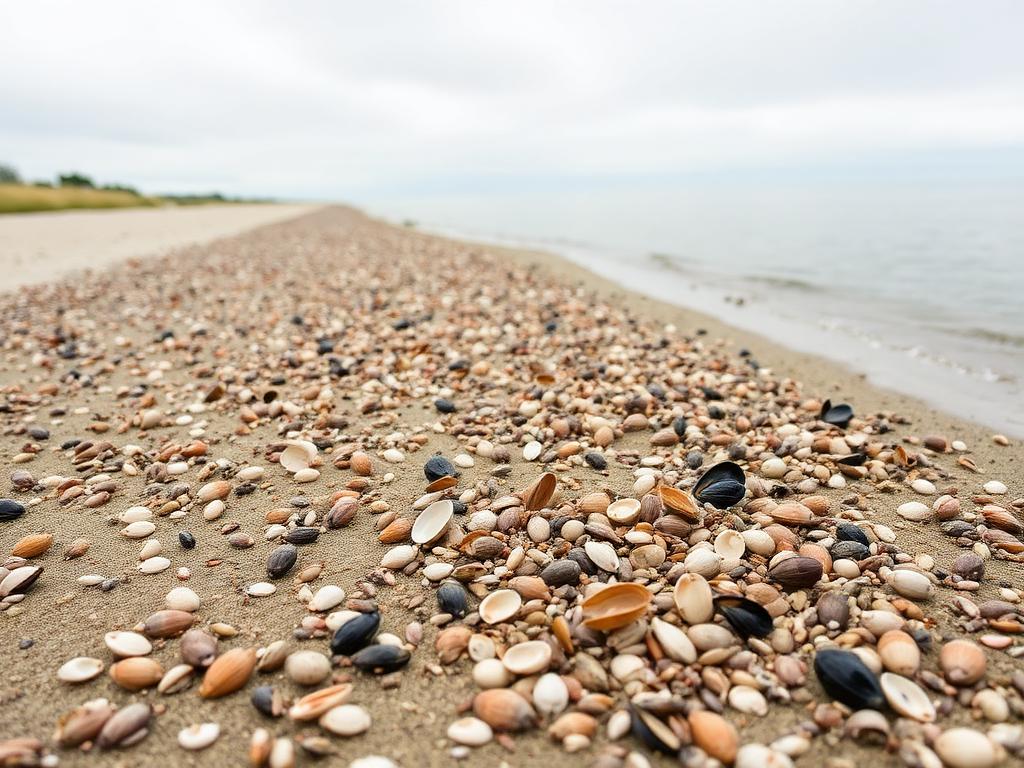
This bay-side beach is one of the most reliable spots in the state for large shells. You can find high numbers of slipper shells, clams, mussels, and — with a little luck — large knobbed whelks.
Its sheltered Raritan Bay location means gentler water and a generous, shell-strewn tide line.
Stone Harbor Point, New Jersey
 Save
SavePublic beach · Stone Harbor, NJ
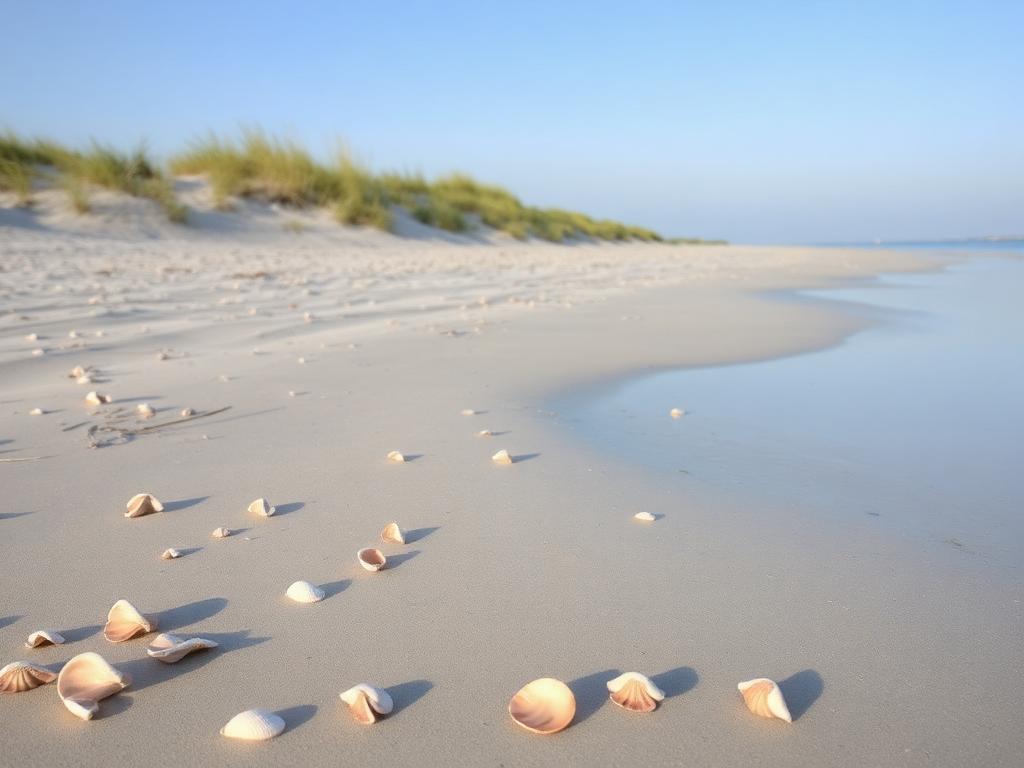
Located at the southern tip of Stone Harbor, this undeveloped area is a haven for nature lovers. It's famous for producing conch shells, sand dollars, and various unique specimens, especially at low tide.
The walk out to the point is part of the reward — protected dunes, nesting birds, and a wild, quiet shore.
Cape May Point State Park, New Jersey
 Save
SaveState park · Cape May Point, NJ
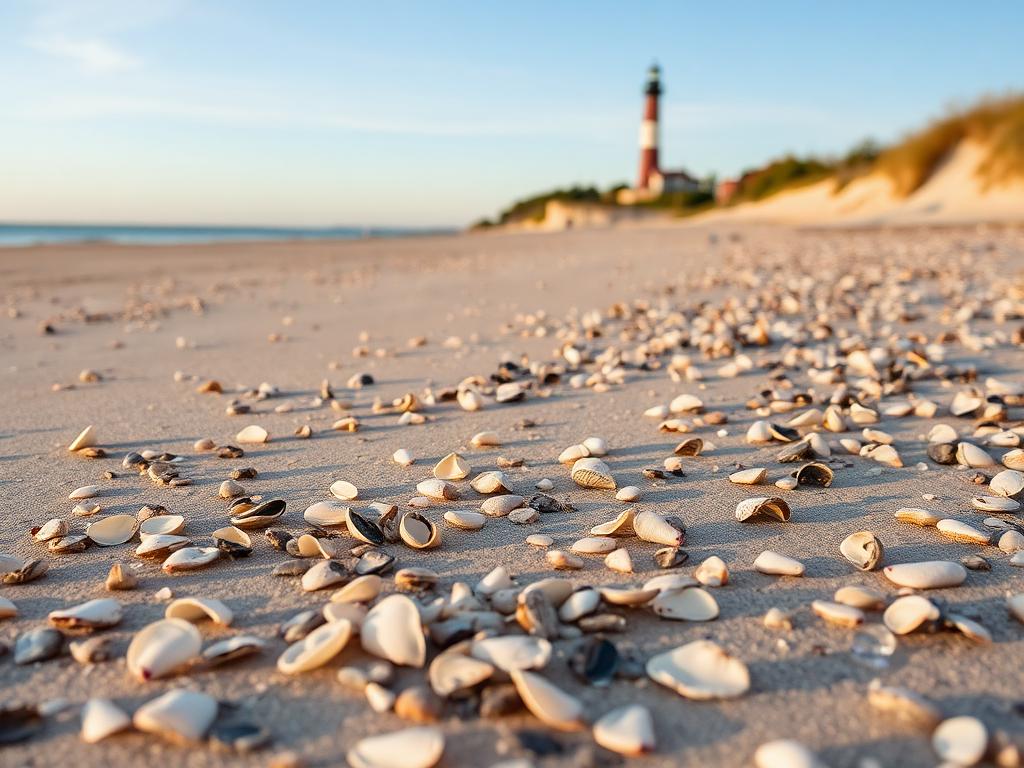
The area near the lighthouse and the WWII bunker is excellent for general beachcombing. Because it isn't heavily raked, it allows for more organic finds.
This is also the gateway to Cape May's most famous treasure — head to nearby Sunset Beach to hunt for 'Cape May diamonds,' clear quartz crystals that sparkle like real diamonds when wet.
Island Beach State Park, New Jersey
 Save
SaveMarine protected area · Lanoka Harbor, NJ
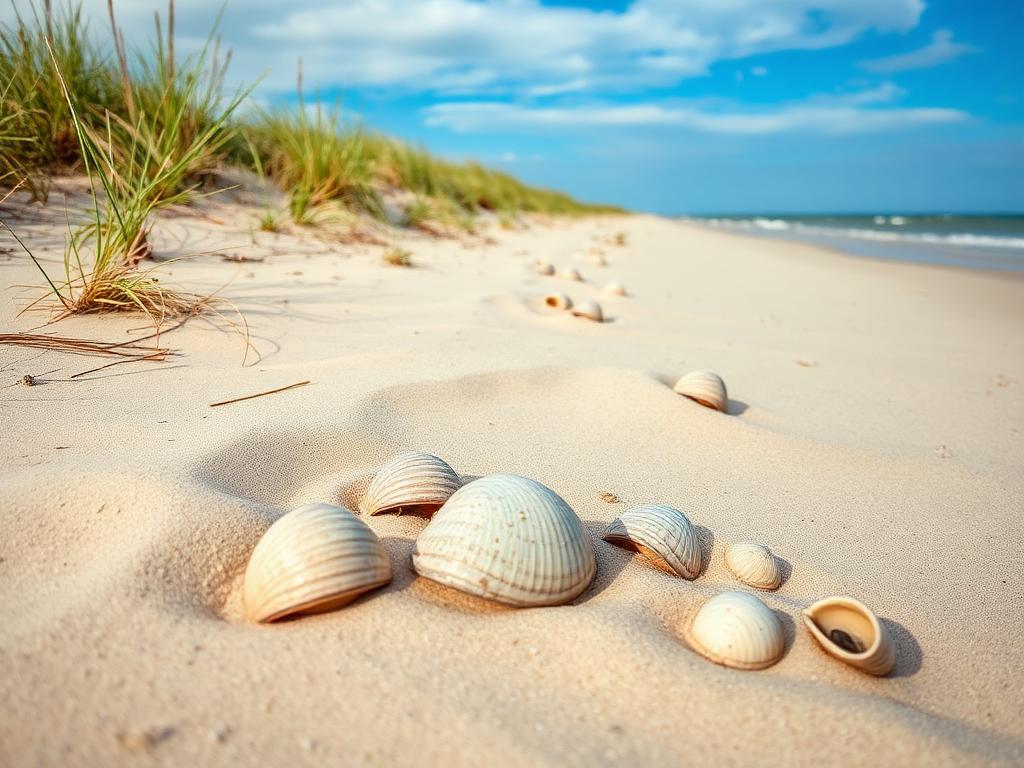
As one of the last undeveloped barrier-island ecosystems in the state, Island Beach offers miles of shoreline and a raw look at what the Atlantic washes in, including large surf clams and whelks.
Its protected dunes and natural setting make it as much a nature walk as a shelling trip.
Corson's Inlet State Park, New Jersey
 Save
SaveState park · Ocean City / Strathmere, NJ
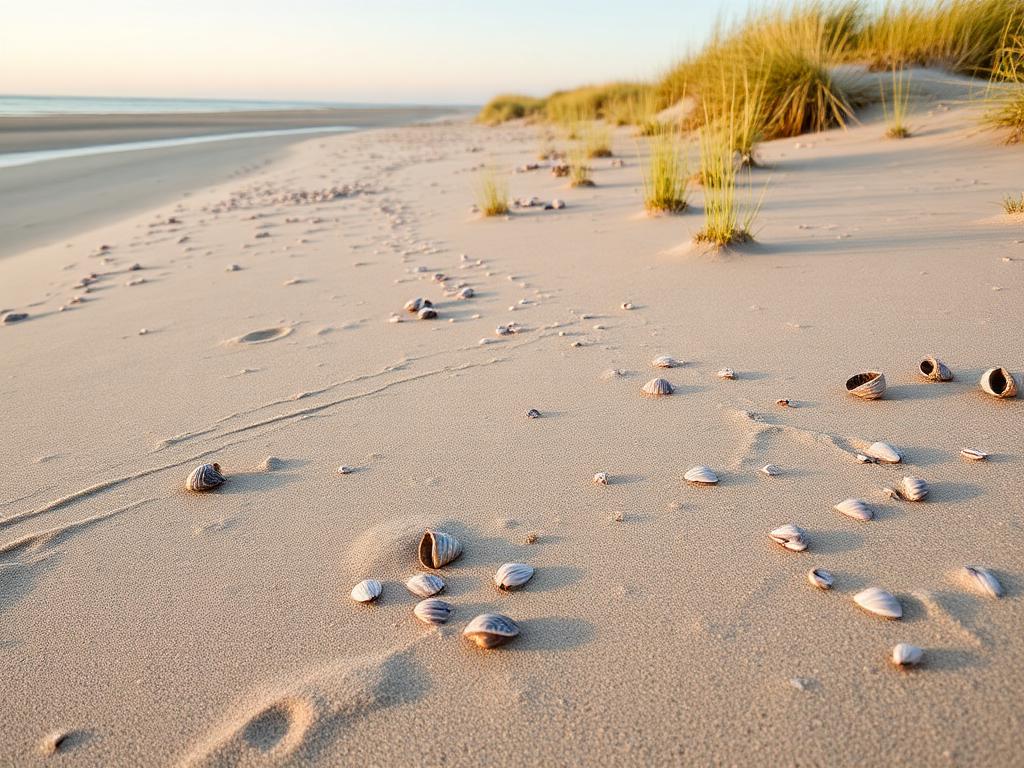
Known for its pristine, undisturbed dunes and tide pools, Corson's Inlet is a great spot for families to find small, intact shells and observe crabs and shorebirds.
The gentle inlet waters and quiet trails make it an easy, rewarding outing for younger collectors.
Best Beaches for Shelling in Maryland and Delaware
 Save
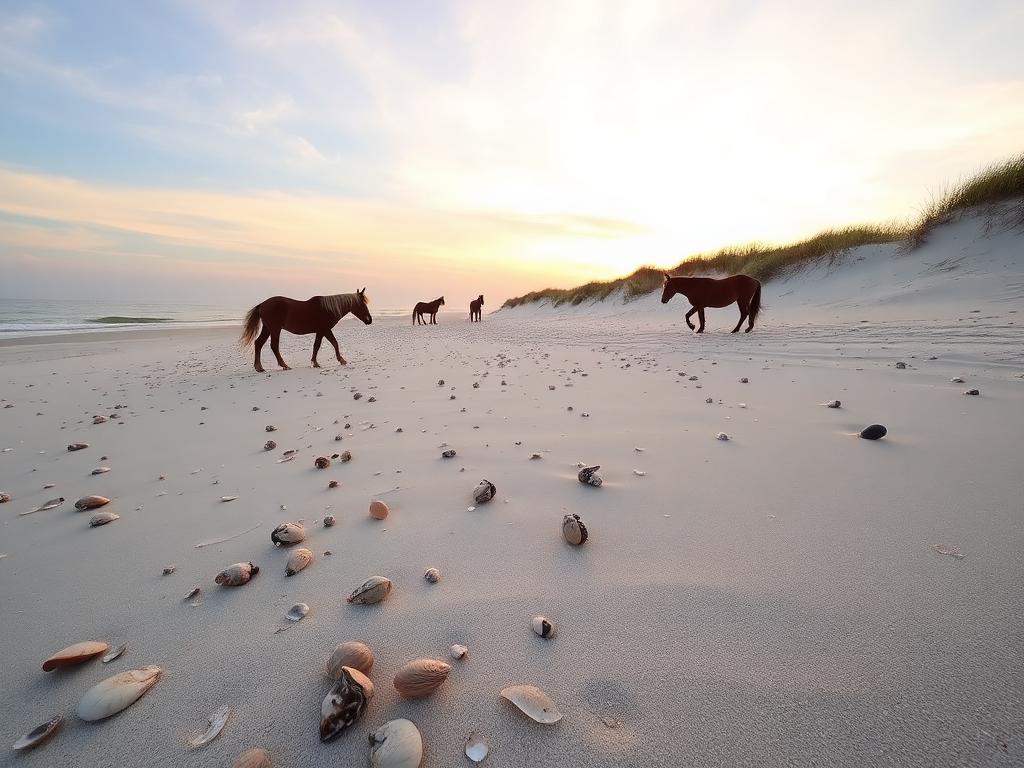
SaveMaryland and Delaware offer two distinct kinds of treasure hunting: fossilized shark teeth along the Chesapeake Bay, and Atlantic shells and sea glass on the ocean-facing shores. Assateague Island and Calvert Cliffs are the crown jewels for Maryland, while Cape Henlopen is the premier choice for Delaware collectors.
The Chesapeake's Miocene-era cliffs and riverbanks are world-famous for fossils — including the occasional megalodon tooth — while the barrier-island beaches deliver classic whelks, arks, and surf clams.
Assateague Island National Seashore, Maryland
 Save
SaveNational seashore · Berlin, MD
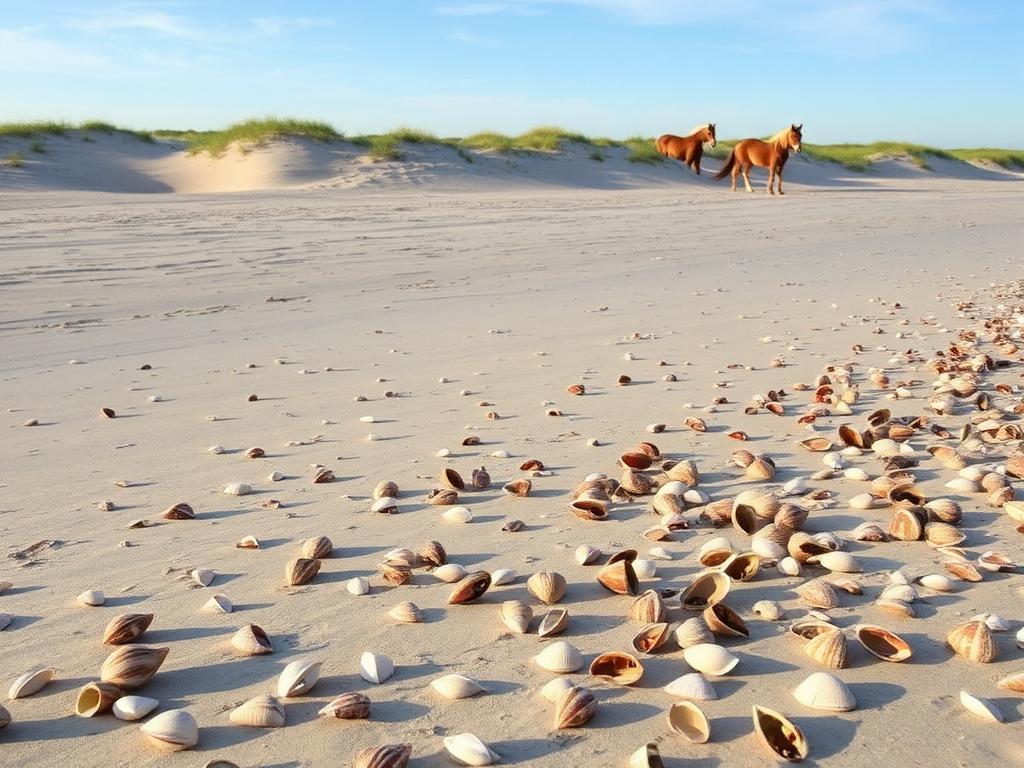
This wild, undeveloped island is the best place in the region for Atlantic shells like whelks, arks, and Atlantic surf clams — and it's just as famous for its free-roaming wild ponies. For the best luck, search the over-sand-vehicle (OSV) zones or the north end of the state park.
Keep a respectful distance from the ponies, and plan a sunrise walk for first pick of the tide line.
Calvert Cliffs State Park, Maryland
 Save
SaveState park · Lusby, MD
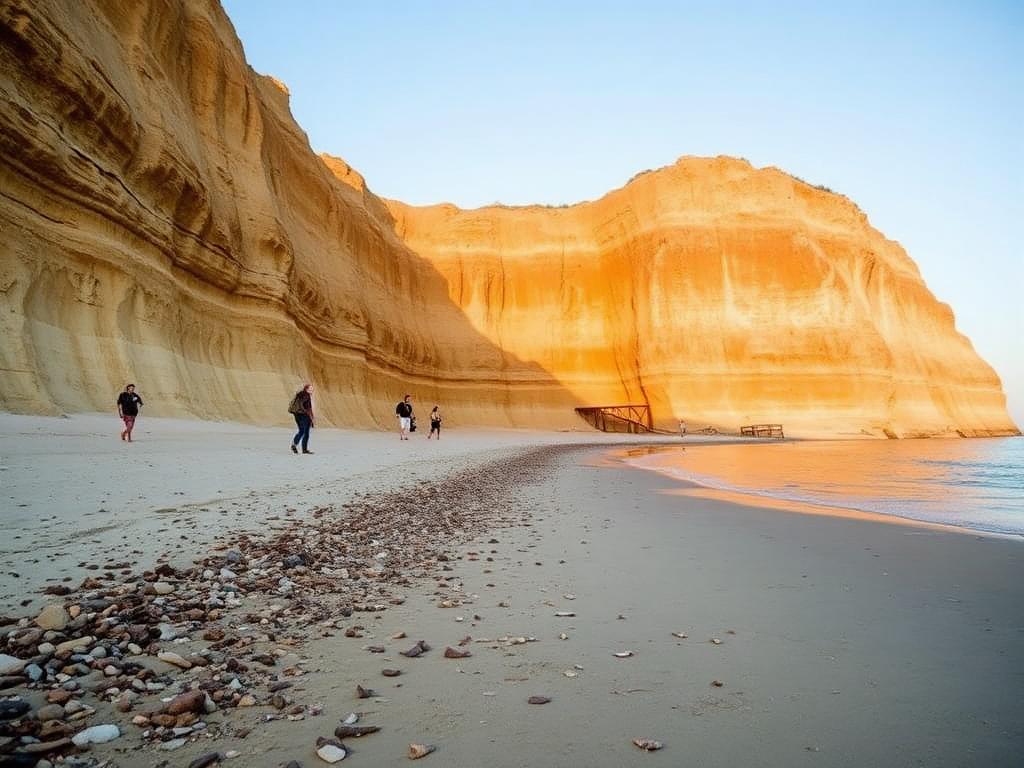
Famous globally for Miocene-era fossils, Calvert Cliffs lets visitors find shark teeth — including the occasional megalodon — along with stingray plates and fossilized shells by sifting through the sand and shallows.
A roughly 1.8-mile hike is required to reach the beach, so wear good shoes and bring a small sifter for the best results.
Purse State Park (Nanjemoy), Maryland
 Save
SavePark · Nanjemoy, MD
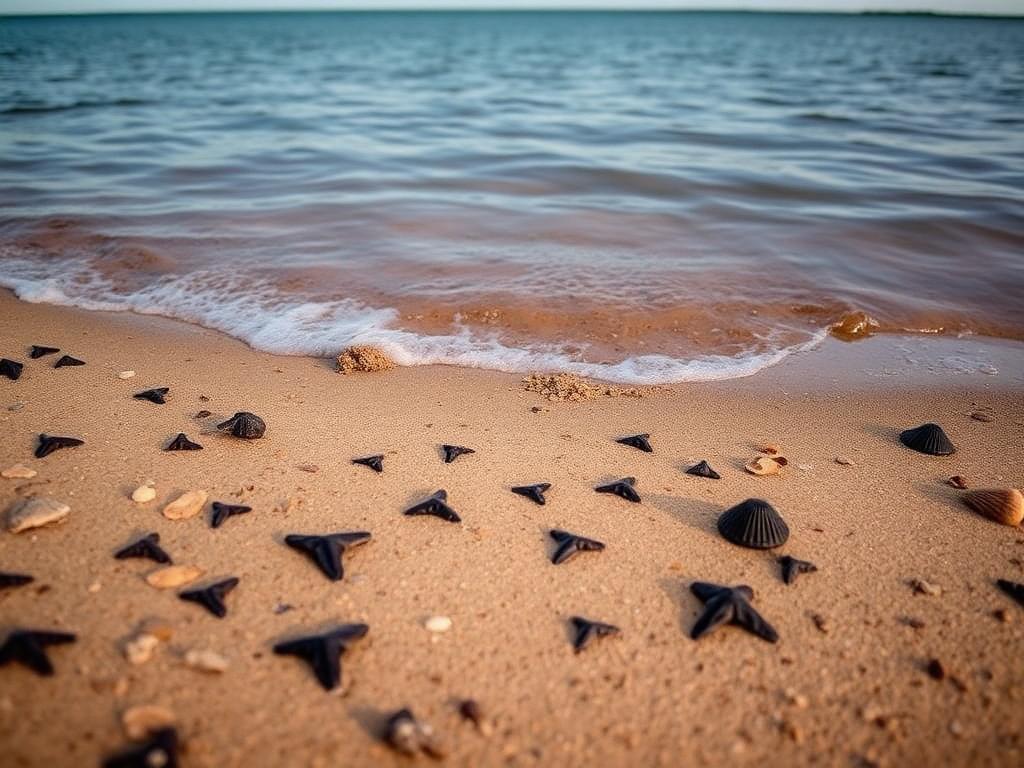
Located on the Potomac River, Purse State Park is a hidden gem for fossil hunters. It's less crowded than Calvert Cliffs and offers a high density of shark teeth and ancient shells.
Time your visit for low tide and walk the waterline slowly — the small black teeth stand out against the pale sand.
Flag Ponds Nature Park, Maryland
 Save
SavePark · Lusby, MD
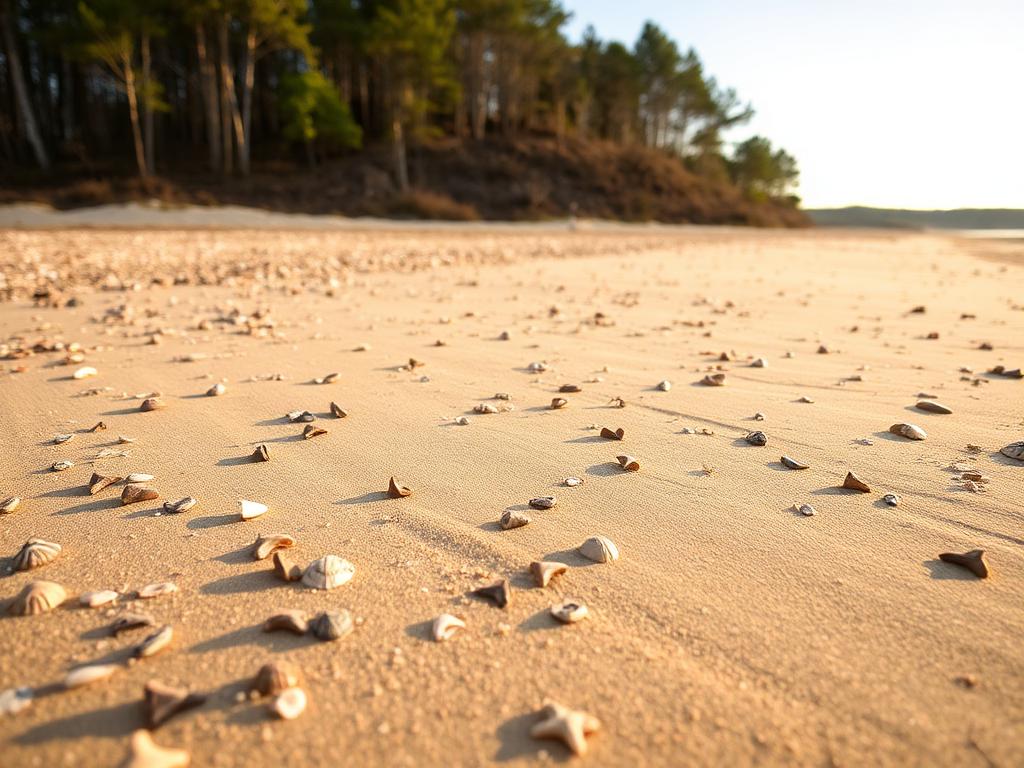
A family-friendly alternative to Calvert Cliffs, Flag Ponds offers shorter hikes to the beach and a high success rate for finding shark teeth.
The gentle Chesapeake shore and nature trails make it an easy, productive outing for first-time fossil hunters.
Cape Henlopen State Park, Delaware
 Save
SaveState park · Lewes, DE
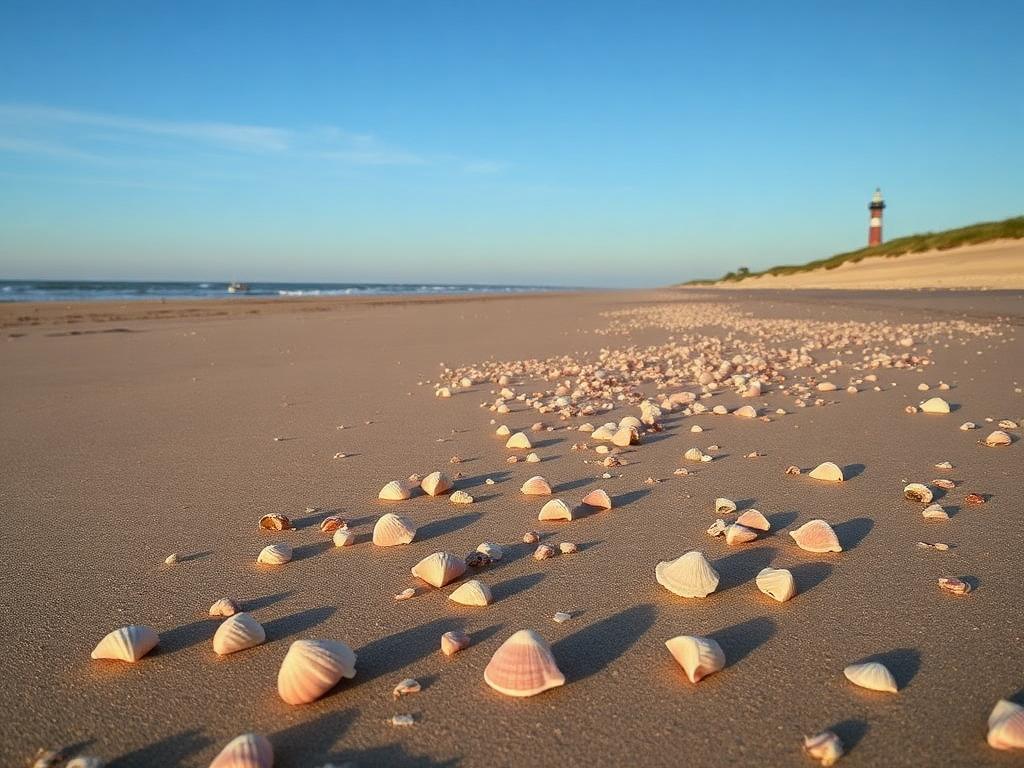
Delaware's Cape Henlopen State Park and the nearby beaches around Lewes are quietly excellent, offering whelks, slipper shells, and beautifully smoothed sea glass along their protected stretches.
The point where the bay meets the ocean is especially productive after a storm, when fresh debris collects along the wrack line.
Best Time of Day to Search for Shells
Timing is everything in beachcombing. The single best window is low tide, when the widest expanse of beach is exposed and shells that were underwater are suddenly within reach. Check a tide chart and aim to arrive an hour before the lowest point.
Early morning is golden for another reason: you'll have first pick before other collectors arrive, and the low-angle light makes shells easier to spot. For serious hunters, the combination of a low tide at dawn — especially after a storm or during a new or full moon — is as good as it gets.
What to Bring Beachcombing
You don't need much, but a few thoughtful items make all the difference. A mesh bag lets sand and water drain away so your finds stay light. A small trowel or scoop helps you sift the wrack line, and reef-safe sunscreen and a wide-brimmed hat keep you comfortable for hours.
Bring a refillable water bottle, sturdy water shoes for rocky stretches, and a small field guide or printable to identify finds on the spot. A soft cloth or a few paper towels help cushion delicate shells for the trip home.
Responsible Shell Collecting Practices
The golden rule of beachcombing: take only empty shells, and always leave living creatures where you found them. If a shell still has its inhabitant — a hermit crab, a snail, a mollusk — gently return it to the water. Living shells are the engine that keeps a beach healthy and productive.
Check local regulations before you collect, as many protected beaches and state parks limit or prohibit shell removal. Avoid disturbing dunes, nesting areas, and tide pools, and never take sand dollars or sea stars that are still alive. Collect modestly, and the shore will keep giving.
In Closing
Beachcombing along the East Coast is a hobby you can return to for a lifetime, each beach offering its own treasures and each tide writing a new chapter. Whether you're stooping on Sanibel or wandering Assateague at sunrise, the joy is the same: a quiet morning, the sound of the waves, and the thrill of a perfect shell catching the light.
Pack your mesh bag, check the tide chart, and go gently. The best souvenir is always the memory of the shore itself — and a few beautiful shells to bring it home.
Recommended Companion
The Shell Discovery Journal
Continue Your Beachcombing Journey
Hand-picked next steps — chosen because they build directly on what you've just read.
Article
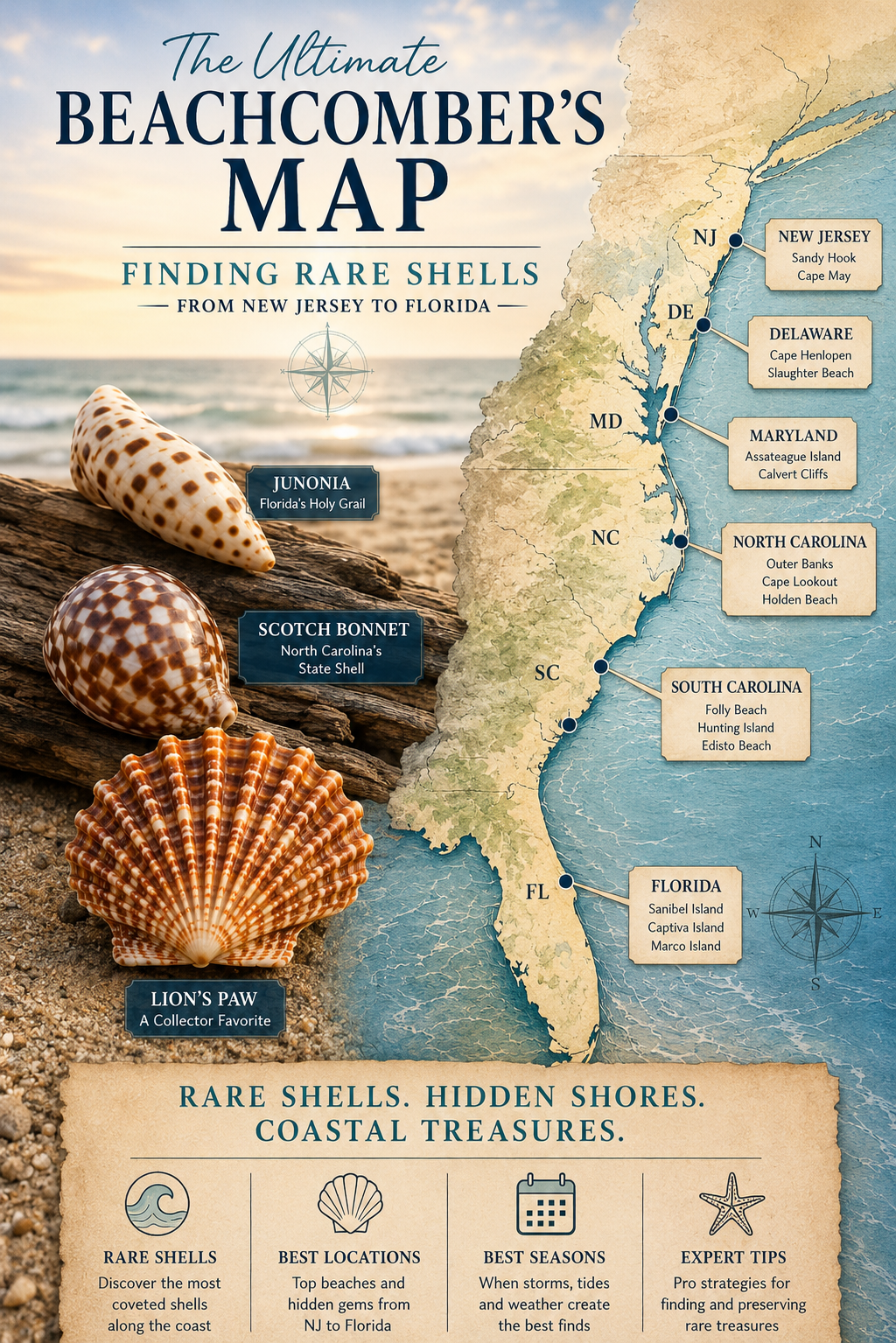
The Ultimate Beachcomber's Map: Finding Rare Shells from Jersey to Florida
Hand-picked next step from the editors.
Guide
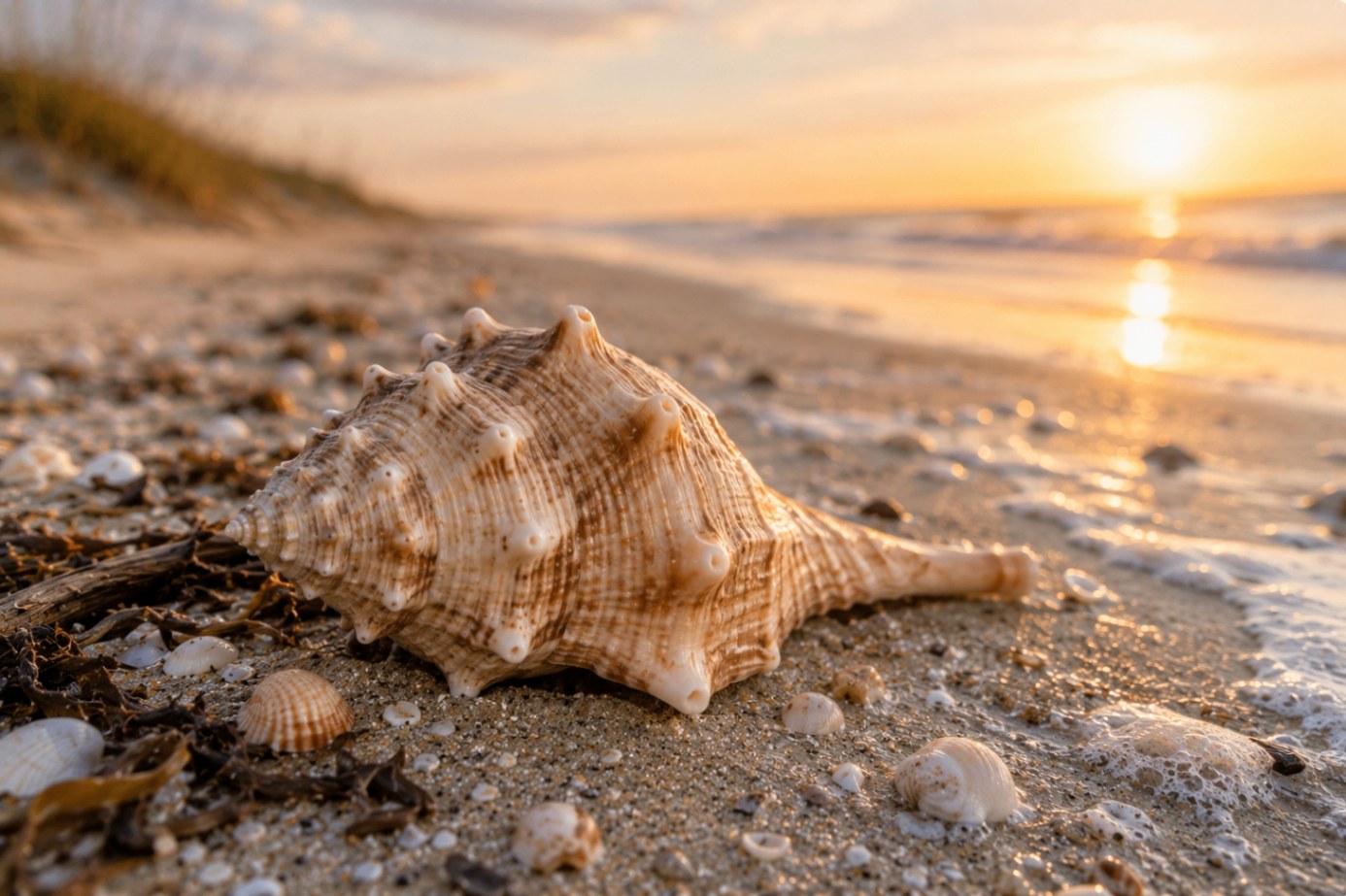
Commonly Confused Shells: A Side-by-Side Field Guide
Hand-picked next step from the editors.
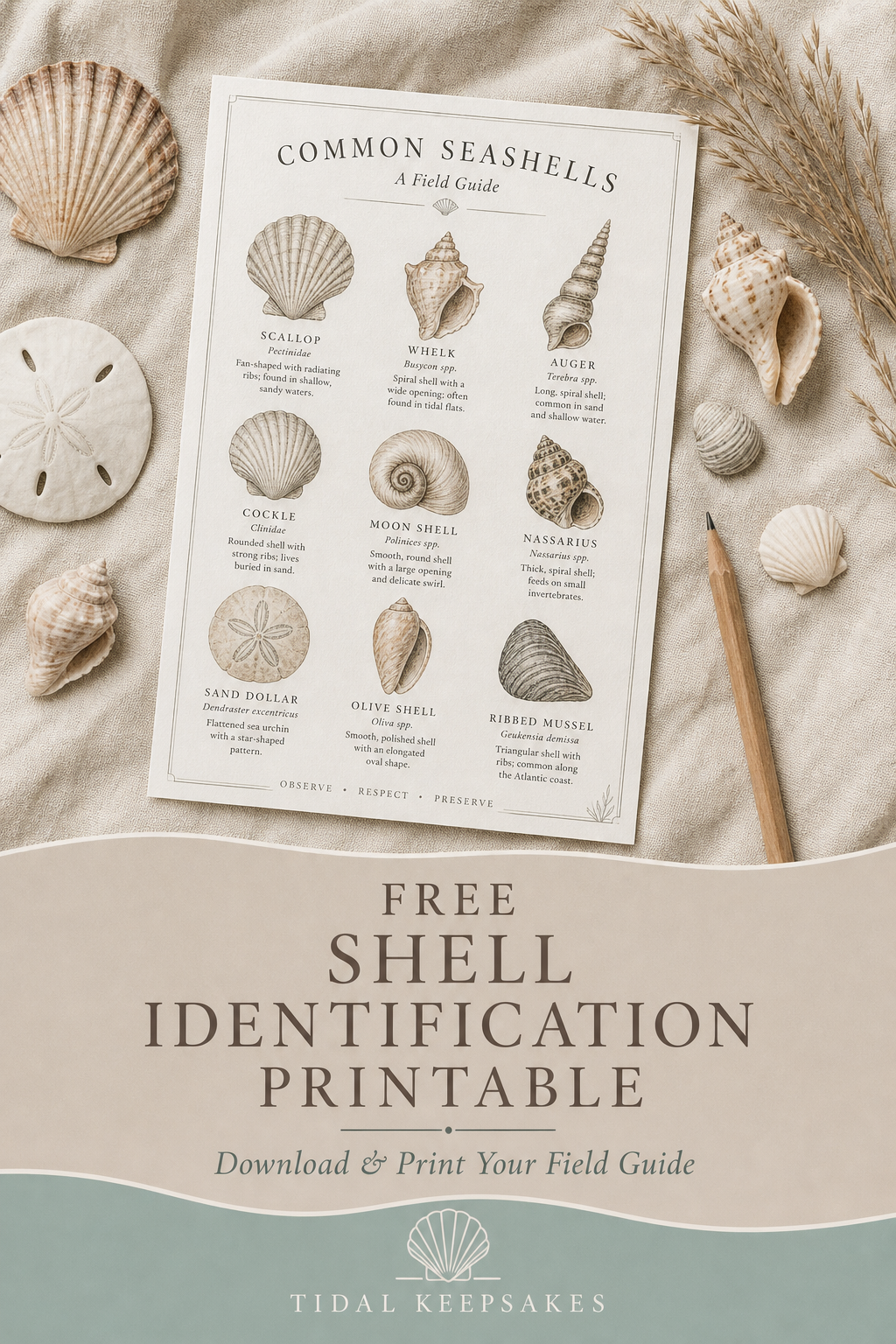
Resource
Free Shell Identification Printable
A thoughtful next step in your coastal journey.
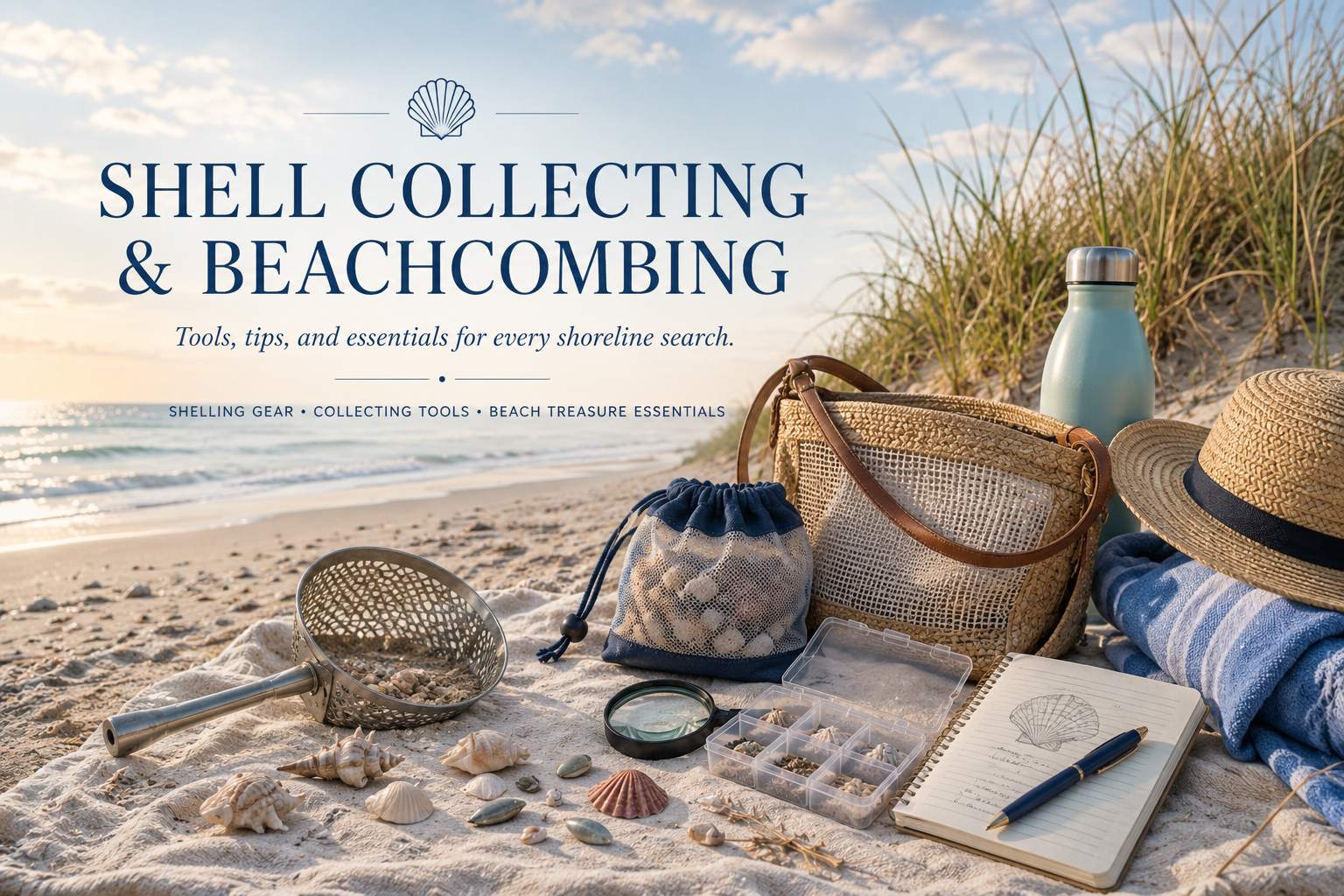
Coastal Collection
Shell Collecting & Beachcombing
Hand-picked next step from the editors.
Compare Similar Shells
Species and look-alikes worth studying side by side. Every card routes into the shell reference.
Species
Scotch Bonnet
Semicassis granulata
Cream base with regular reddish-brown squares in tidy rows. Rounded body whorl and short spire; toothed inner lip.
Explore ShellSpecies
Knobbed Whelk
Busycon carica
Aperture opens on the right when the spire points up. Row of blunt knobs along the shoulder of the body whorl; interior often flushed with orange.
Explore ShellSpecies
Lettered Olive
Americoliva sayana
Cylindrical body with a very short spire and a long narrow aperture. The polished cream base carries tan or brown zigzag lines that give the species its 'lettered' name.
Explore ShellSpecies
Atlantic Auger
Terebra dislocata
Elongated screw-shaped shell up to 2 inches, pale grey to tan with faint spiral banding; each whorl carries fine axial ribs.
Explore ShellBeaches Worth Exploring Next
Shores connected to the shells, regions, and conditions on this page.
North Carolina Outer Banks
Outer Banks
A 200-mile chain of Atlantic barrier islands — Cape Hatteras, Ocracoke, and Cape Lookout deliver whelks, olive shells, and the state shell,…
Explore BeachGeorgia Coast
Jekyll Island
Historic Golden Isle with generous public beaches — Driftwood Beach and St. Andrews shore deliver moon snails, jingle shells, and…
Explore BeachFlorida Gulf Coast
Sanibel Island
Sanibel's east-west orientation sweeps Gulf shells onto its shore in exceptional variety — the reason it's the most celebrated shelling…
Explore BeachNorth Carolina Outer Banks
Ocracoke Island
A ferry-only Outer Banks island south of Hatteras — sixteen miles of protected National Seashore beach where Scotch bonnets and knobbed…
Explore BeachDiscover More Coastal Inspiration
Curated coastal favorites and specimen boxes that echo the story above.
Coastal Collection
Shell Collecting & Beachcombing
Beachcombing essentials — hand lenses, mesh bags, tide guides, and field tools chosen to help you find and study the shoreline with intention.
Explore Collection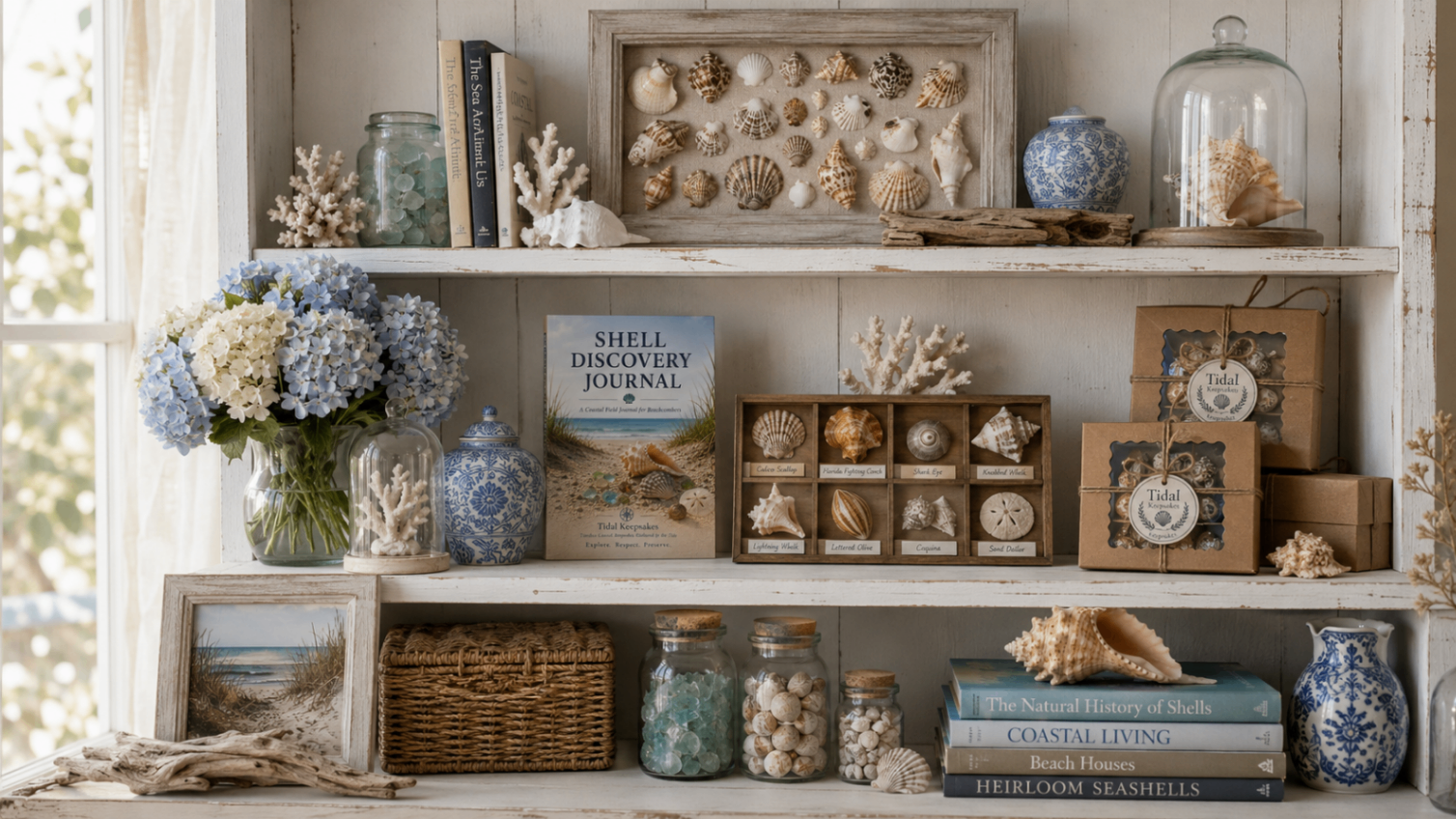
Curated Shell Box
The Collector Box
Explore Collection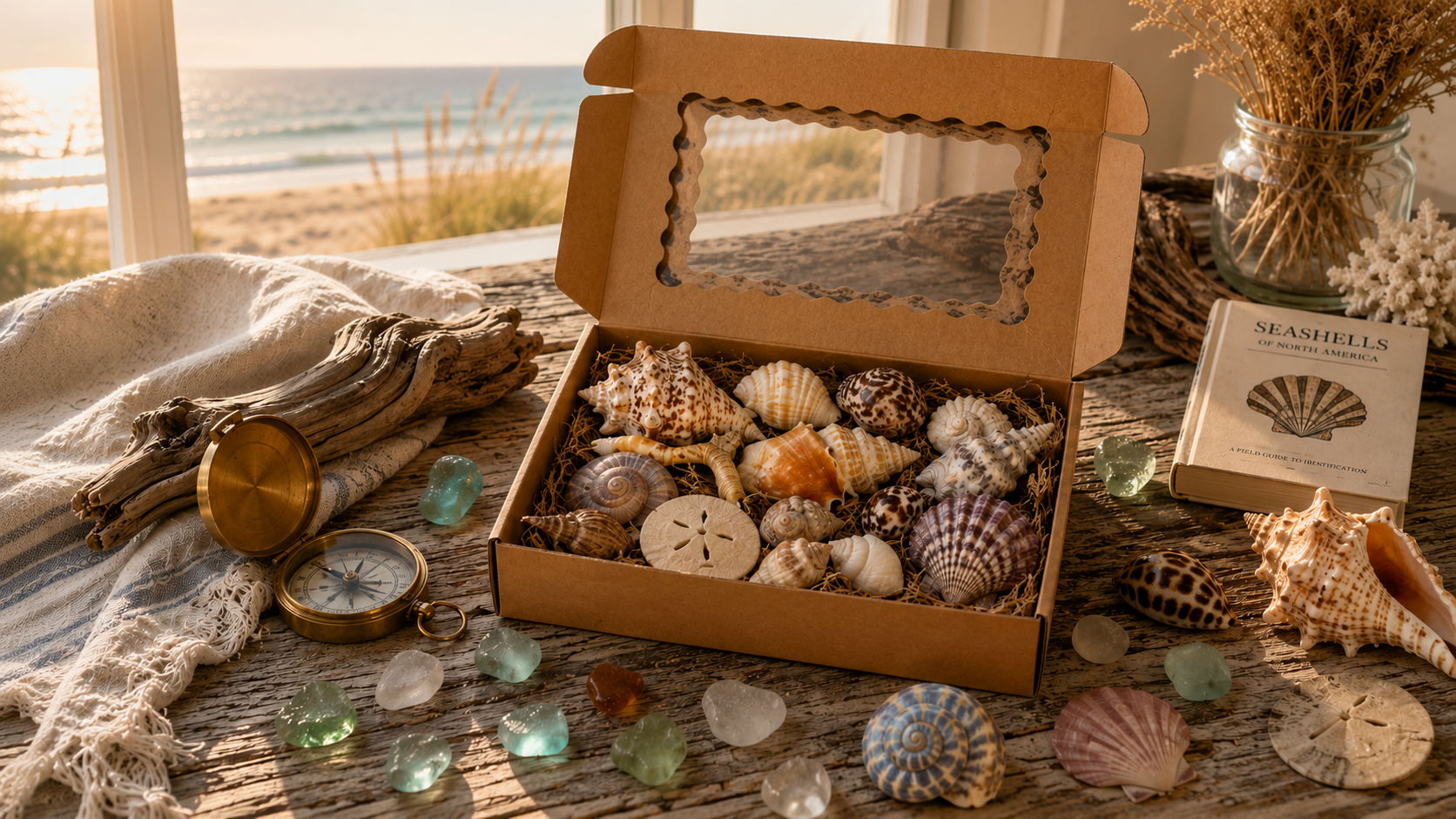
Curated Shell Box
The Signature Shell Box
Explore CollectionA Learning Journey to Follow
Learning Shell Identification
For growing collectors · 5 steps
For readers who already know a scallop from a whelk and want to sharpen the edge cases. Ends at the journal, where identification becomes a practice, not a lookup.
- 1
Understand the Anatomy
Shell Identification Guide
Vocabulary first — apex, whorl, aperture, columella.
Continue - 2
Meet the Common Species
Explore Common Shells
Browse the canonical shell records the site is built on.
Continue - 3
Compare Look-Alikes
Commonly Confused Shells
Side-by-side markers for the pairs that trip up new collectors.
Continue - 4
Find Them in the Wild
Best Beaches for Shelling
Where each species actually washes up.
Continue - 5
Practice in the Field
Shell Discovery Journal
Record each ID with sketches and notes to lock the learning in.
Continue