 Save
SaveCoastal Inspiration
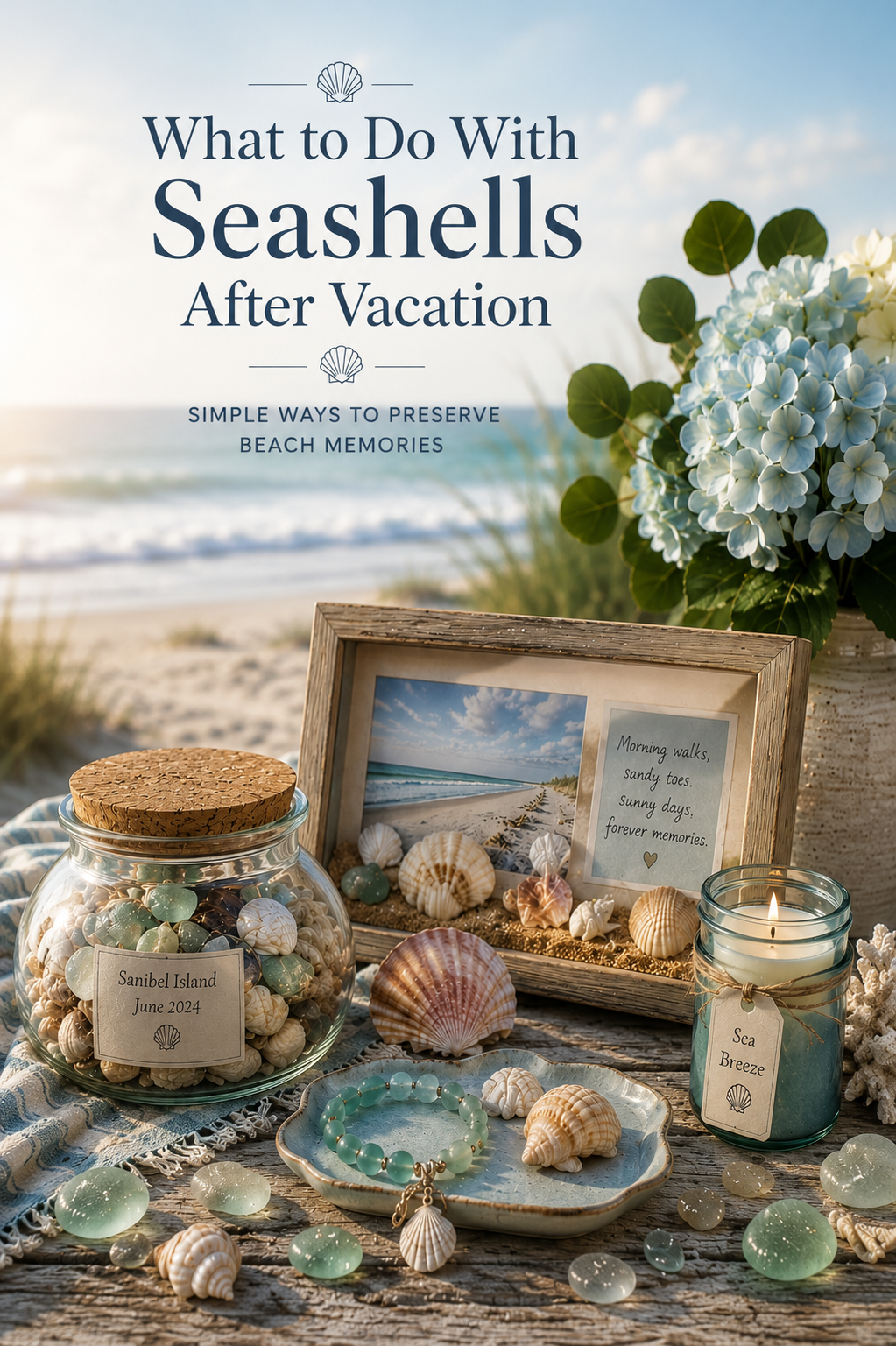
What to Do With Seashells After Vacation: Simple Ways to Preserve Beach Memories
Almost everyone comes home from the coast with a pocket, bucket, or bag full of shells.
At the beach, every shell feels special. Back home, many end up forgotten in a drawer, mixed in a box, or tucked away in a closet. With a little care and creativity, those vacation finds can become lasting reminders of favorite beaches, family trips, and quiet walks along the shore.
Here's a simple path from beach bag to beautiful keepsake.
Step 1: Clean Your Shells Gently
 Save
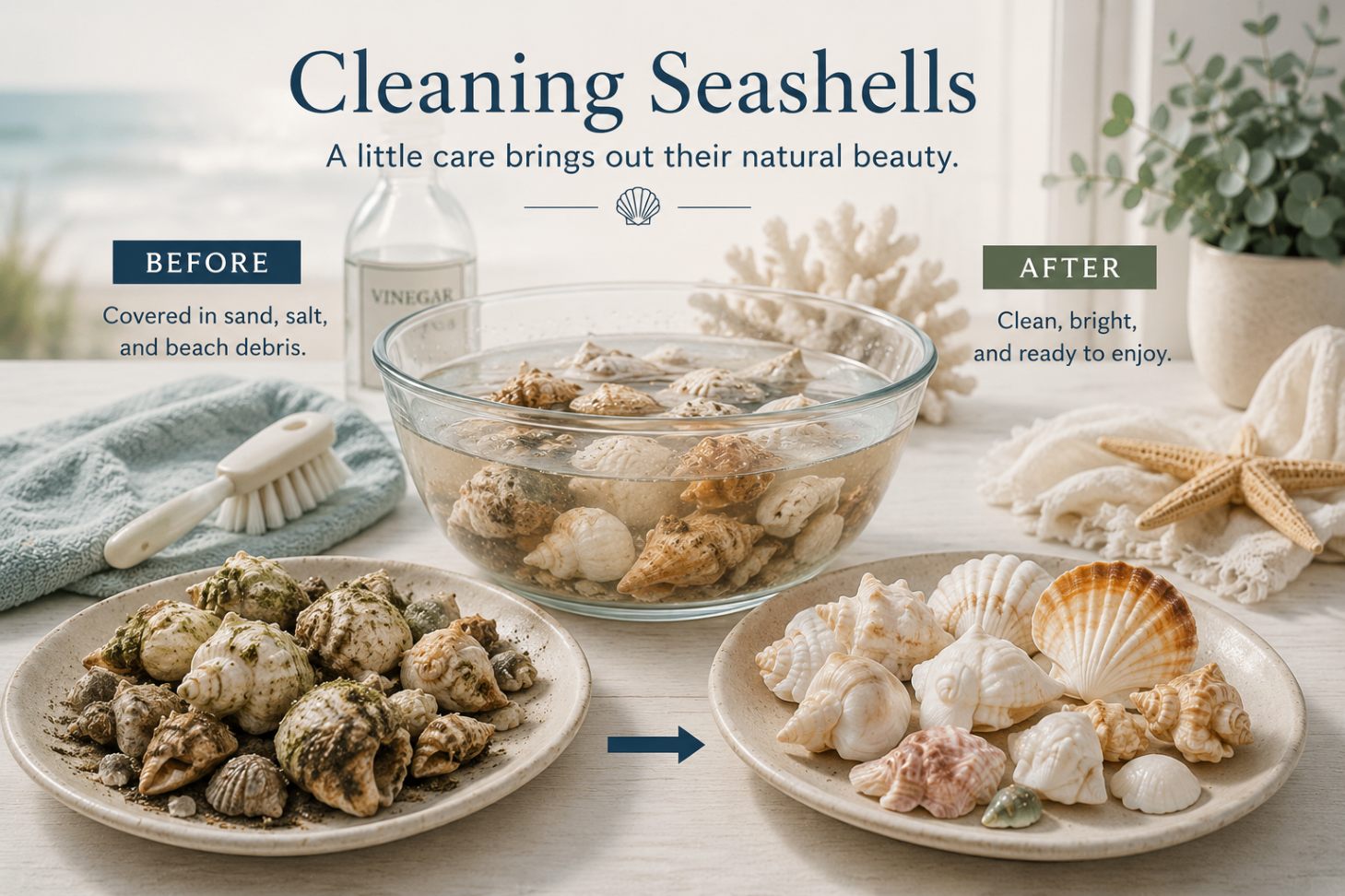
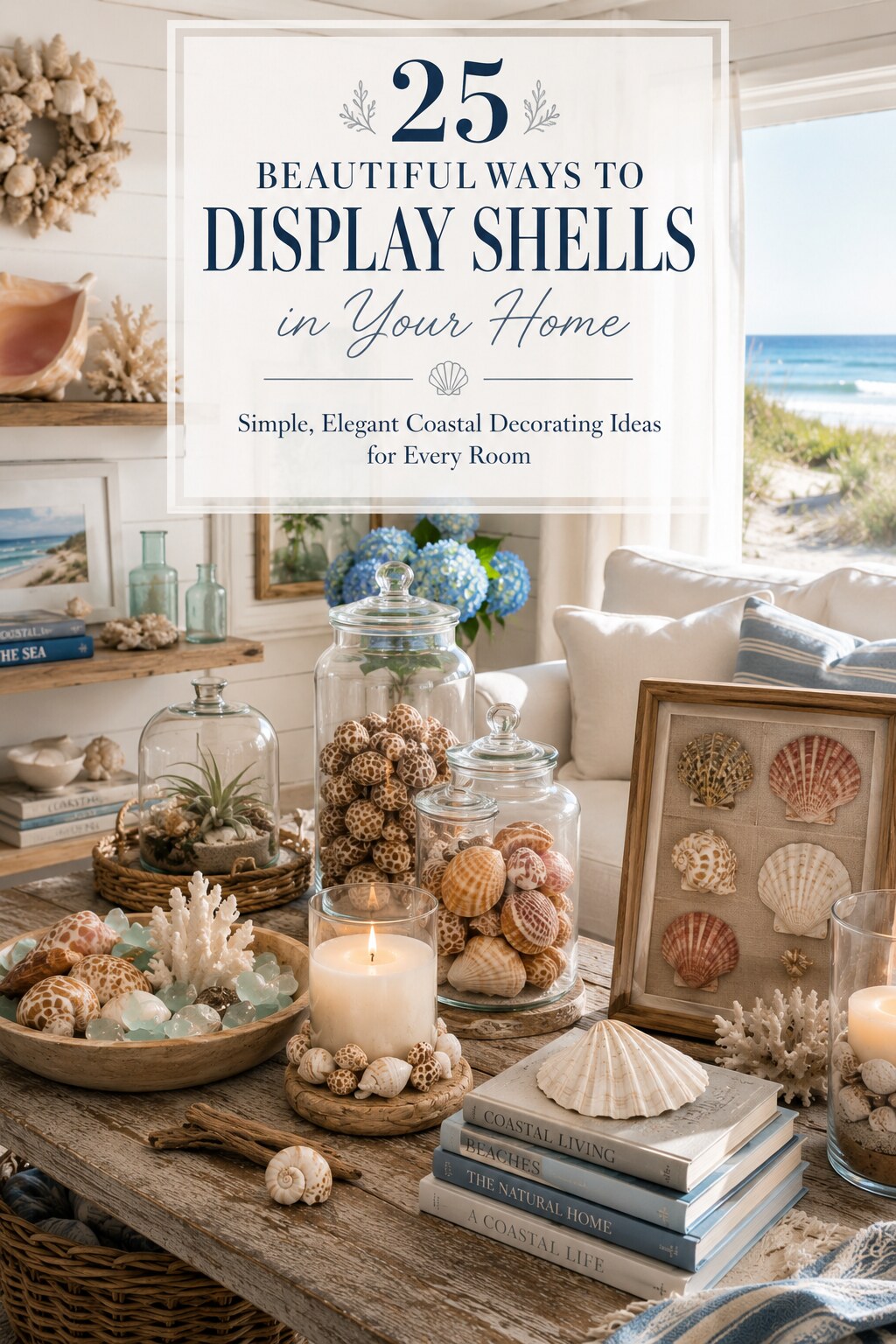
SaveBefore displaying or crafting with shells, give them a proper cleaning. Many shells arrive home covered in sand, salt, algae, or mineral deposits, and cleaning them carefully helps preserve their natural beauty.
A simple method works well: mix equal parts white vinegar and warm water, soak the shells for 30 to 60 minutes, gently scrub away debris with a soft toothbrush, rinse thoroughly with clean water, and let them air dry completely on a soft cloth.
Avoid using bleach on colorful shells such as lettered olives, calico scallops, lightning whelks, junonias, and cowries. Bleach often removes natural color and weakens delicate shells. For extra shine, apply a tiny amount of mineral oil with a soft cloth after the shells have dried.
Step 2: Sort and Curate Your Collection
 Save
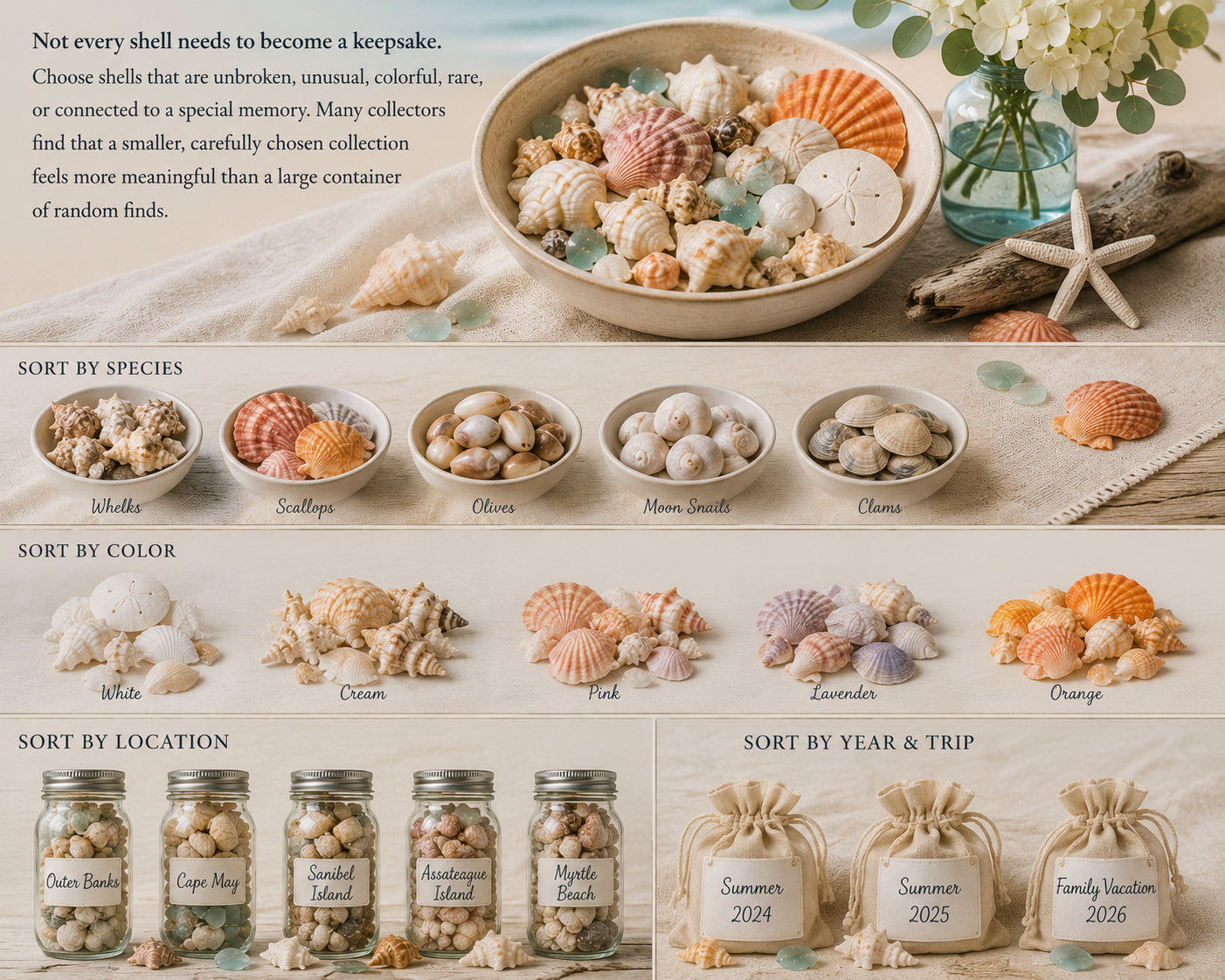
SaveNot every shell needs to become a keepsake. Choose shells that are unbroken, unusual, colorful, rare, or connected to a special memory. Many collectors find that a smaller, carefully chosen collection feels more meaningful than a large container of random finds.
You can sort by species such as whelks, scallops, olives, moon snails, and clams; by color such as white, cream, pink, lavender, and orange; by location such as the Outer Banks, Cape May, Sanibel Island, Assateague Island, or Myrtle Beach; or by year and trip, like Summer 2024, Summer 2025, or Family Vacation 2026.
Step 3: Create Memory Jars
 Save
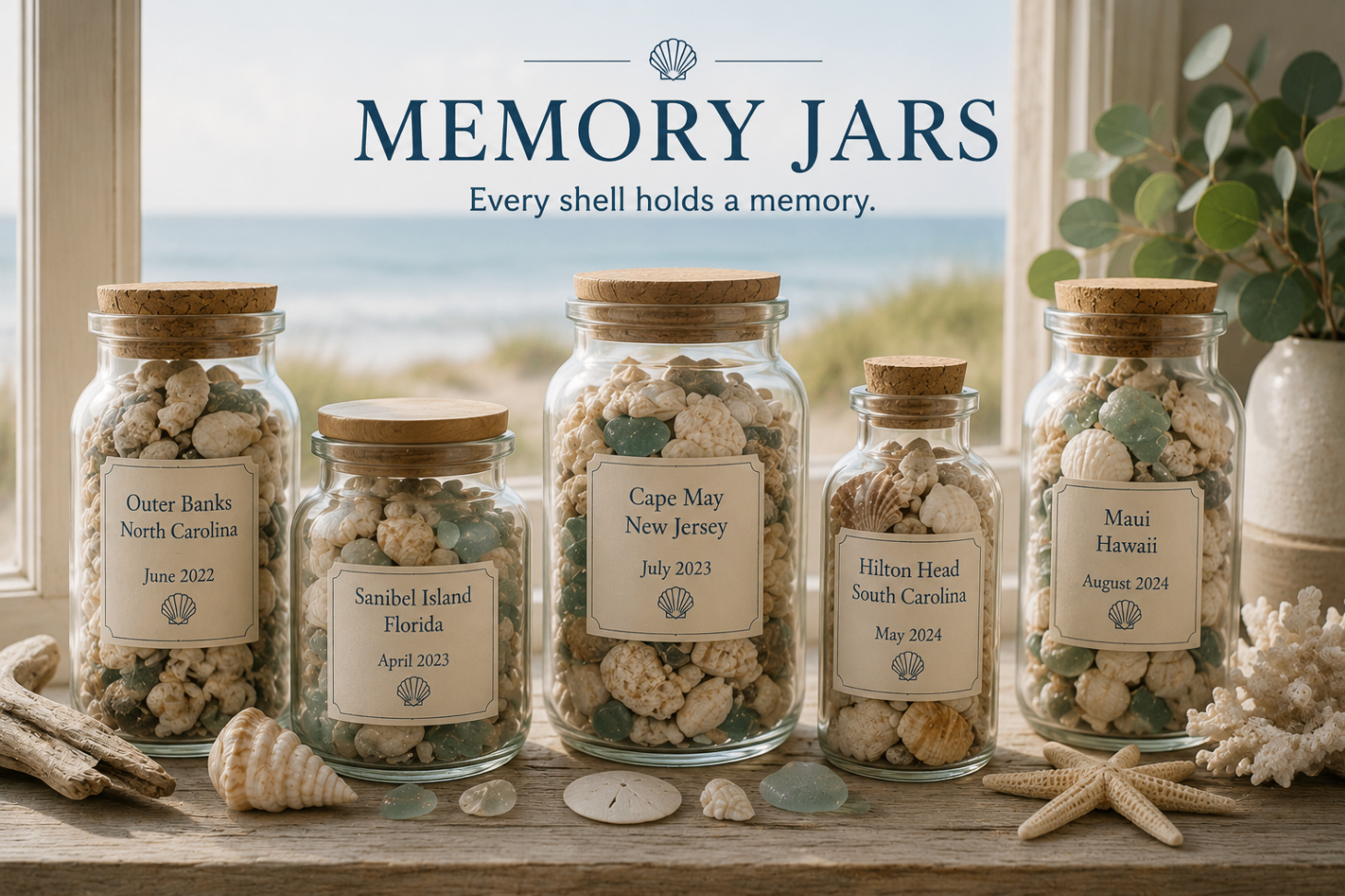
SaveOne of the easiest ways to preserve shells is with a labeled keepsake jar. Fill a glass apothecary jar with shells from a single trip and add a handwritten label with the beach name, date, family members, or a few special memories.
Over time, the jars become a visual travel diary — a shelf full of stories from favorite beaches and family trips.
Step 4: Build a Shadow Box Memory Display
 Save
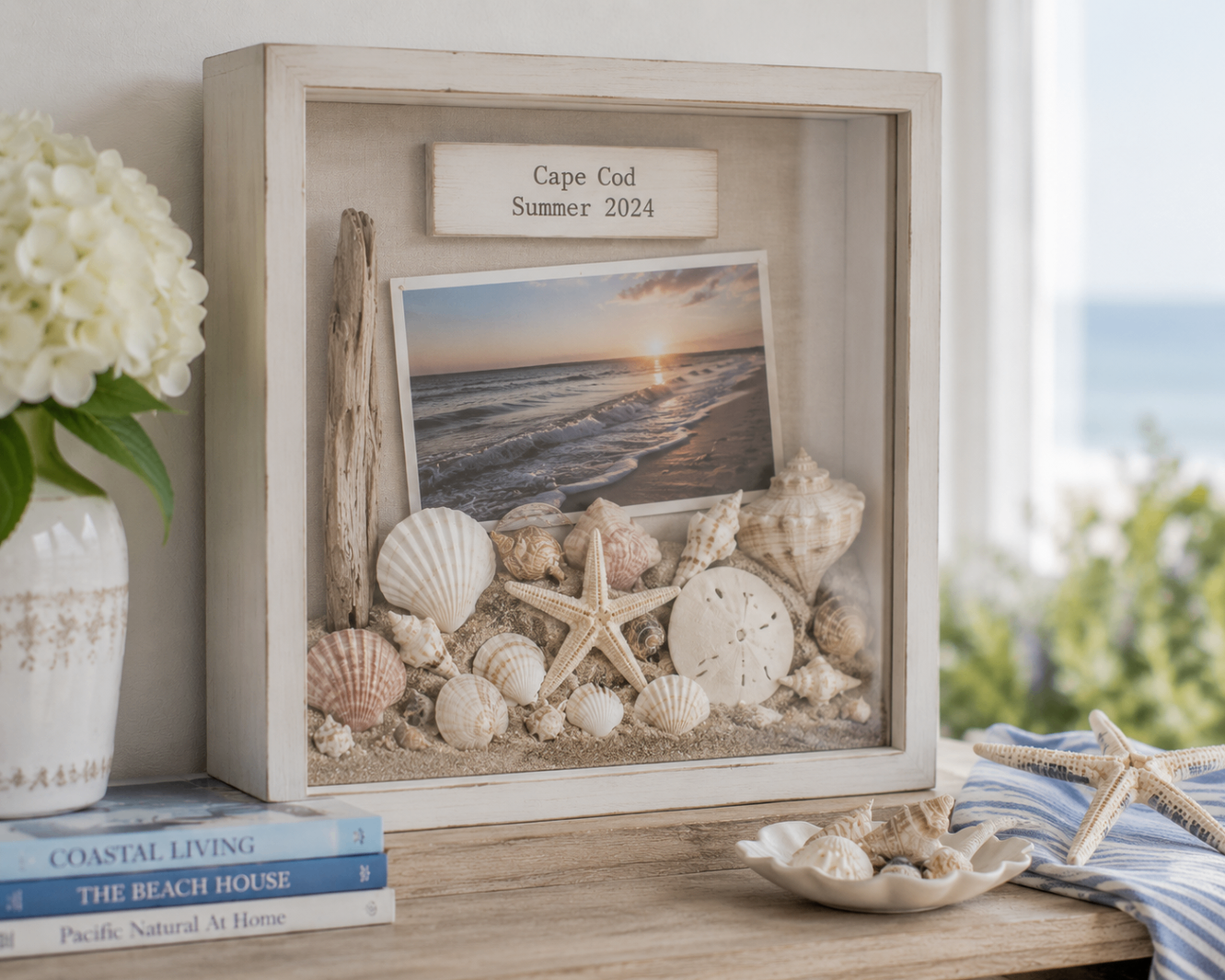
SaveShadow boxes are perfect for combining shells with photographs and souvenirs. Include favorite shells, a beach photograph, a postcard, sand, ticket stubs, or a short written memory from the trip.
These displays tell the story of a vacation rather than simply storing shells, and they make especially meaningful gifts or family keepsakes.
Step 5: Decorate Your Home
 Save
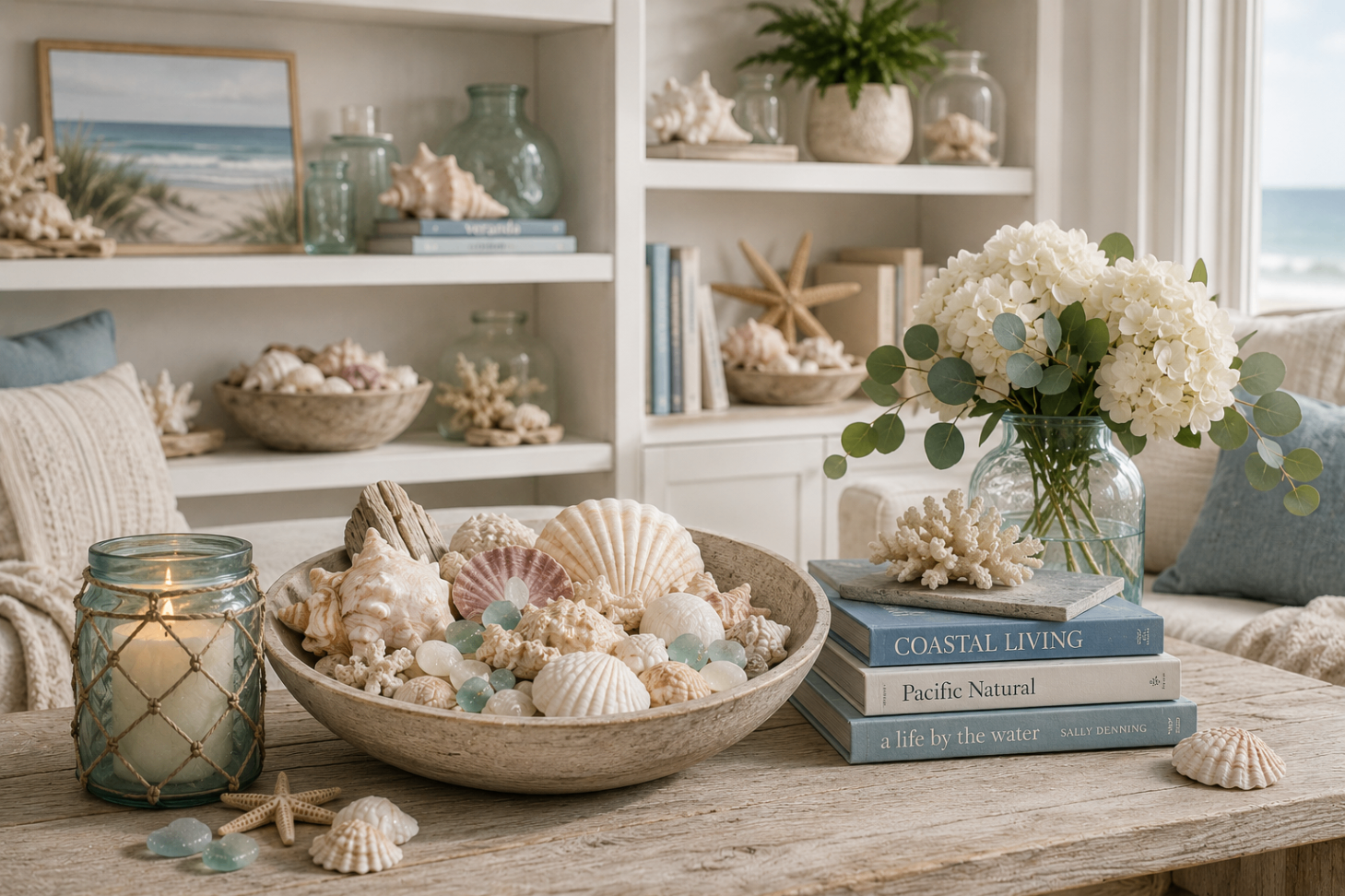
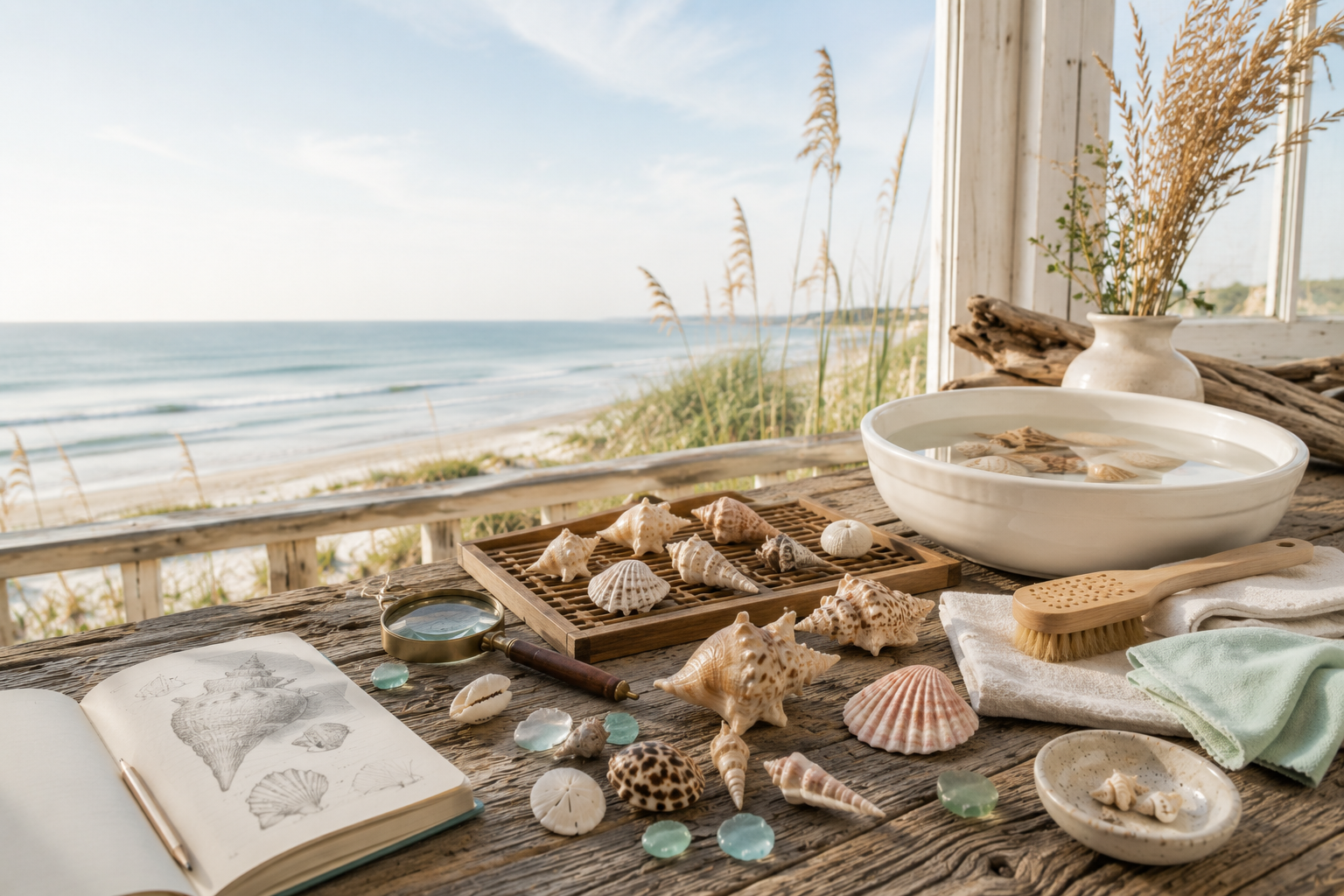
SaveShells bring a natural coastal touch to nearly any room. Layer sand and shells in clear glass vases, arrange shells beneath a cloche or inside a glass display box, place larger specimens in shallow bowls on coffee tables, or combine shells with driftwood, books, and sea glass on open shelves.
Keep displays simple. A few beautiful specimens often create more impact than dozens of shells crowded together.
Step 6: Turn Shells Into Crafts
 Save
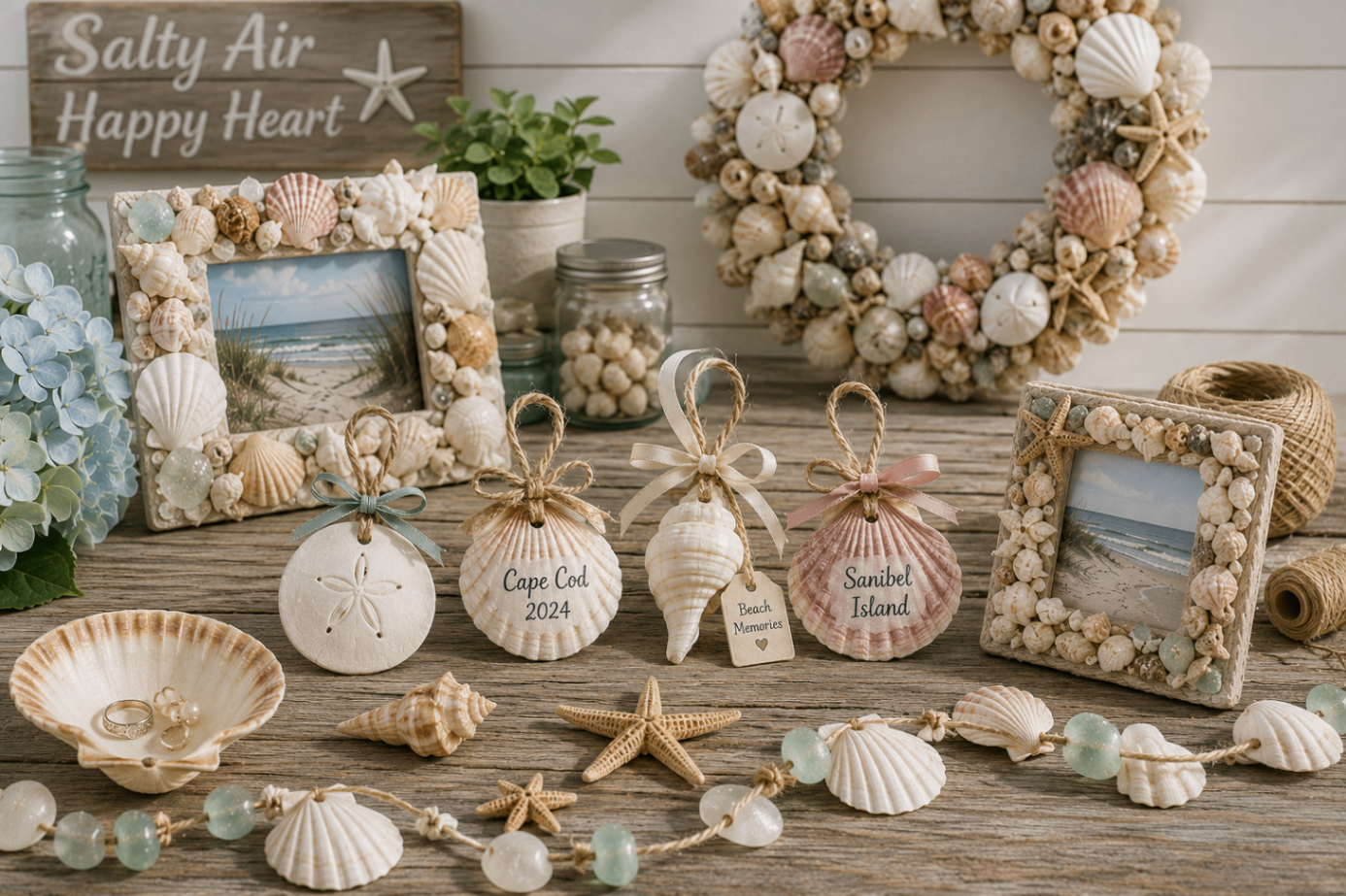
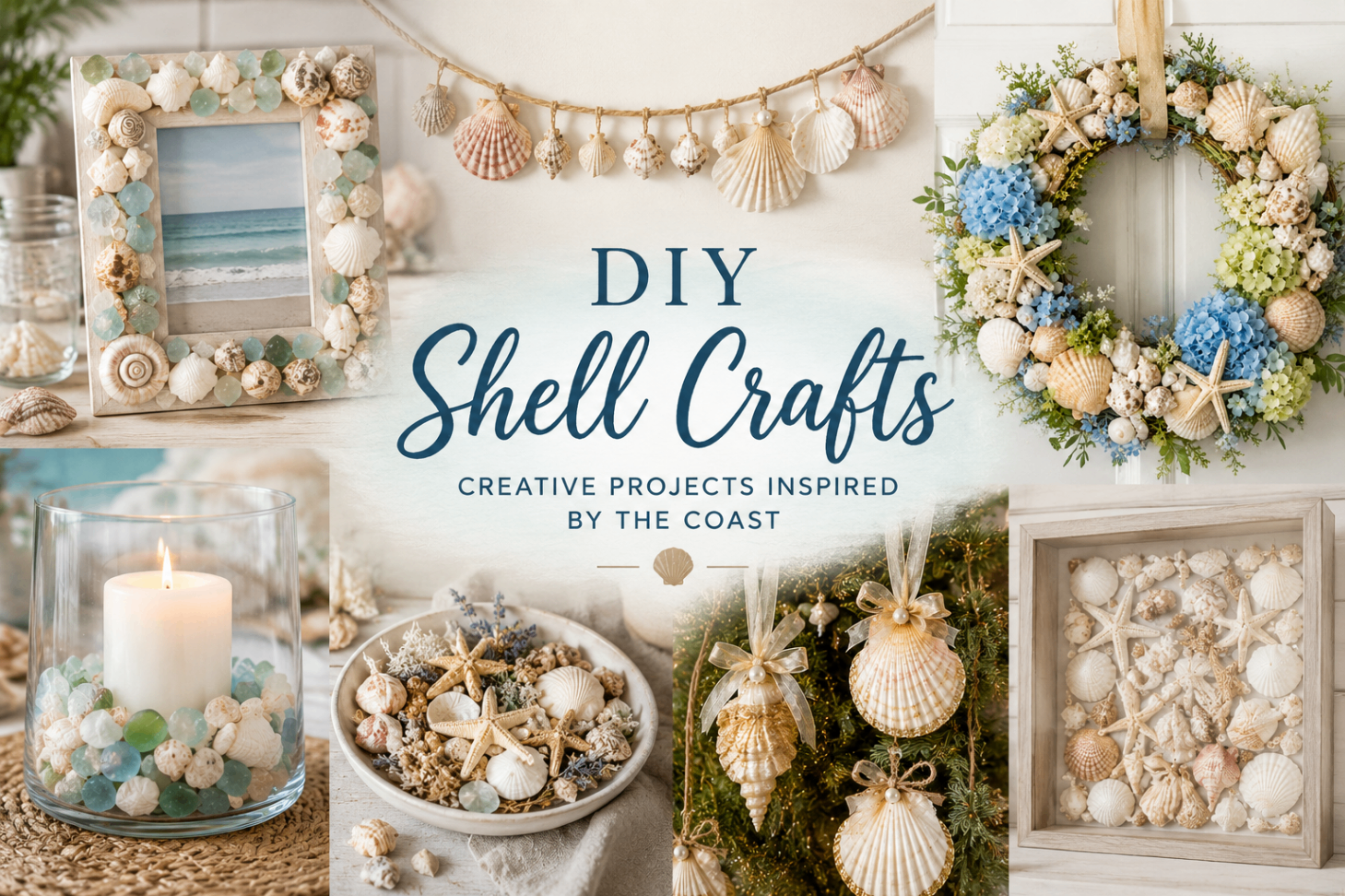
SaveShells are wonderful crafting materials and make meaningful handmade gifts. Popular projects include shell picture frames for vacation photos, shell ornaments personalized with dates or beach names, shell garlands strung on natural twine, jewelry dishes made from scallop shells, and shell wreaths for doors and walls.
Crafting with shells is one of the easiest ways to turn beach finds into everyday reminders of the shore.
Step 7: Share the Collection
 Save
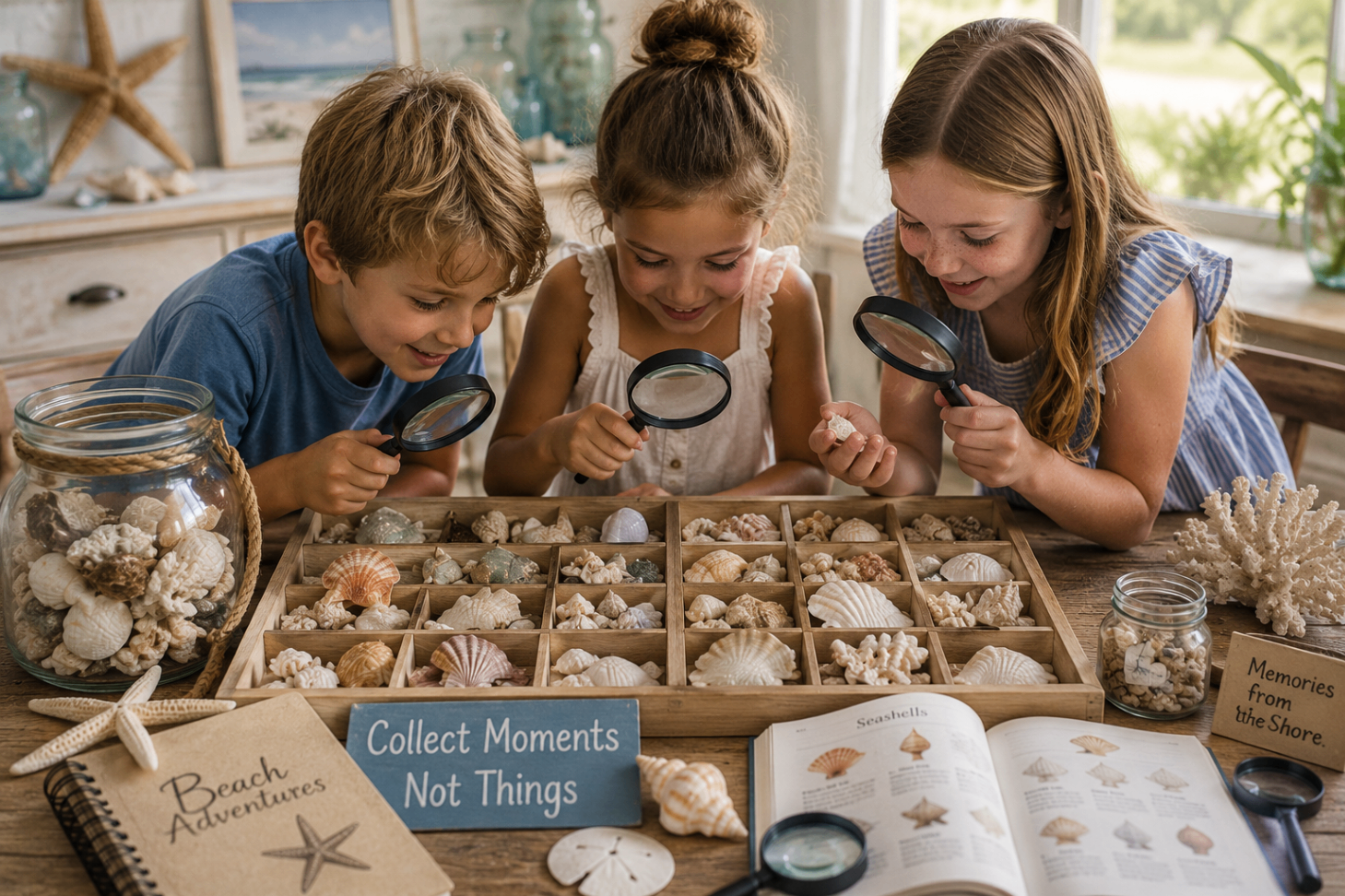
SaveMany shell collections grow faster than expected. Consider sharing extras with children, teachers, nature centers, scout groups, art programs, or friends and family.
A shell that no longer fits your collection might become someone else's favorite treasure, especially when it inspires curiosity, creativity, or a love of the coast.
Common Mistakes to Avoid
Always allow shells to dry completely before storing them. Damp shells tucked into plastic bags can trap moisture and lead to odor, discoloration, or damage over time. Harsh chemicals can also strip surfaces and dull natural color.
It also helps to avoid keeping every shell. Curating your collection creates a more meaningful display. And before bringing shells home, always check local collecting regulations so your beach memories start the right way.
In Closing
A shell collection becomes more valuable when it represents memories rather than quantity. A single shell picked up during a sunrise walk may mean more than an entire bucket collected at random.
Whether displayed in a jar, framed in a shadow box, or tucked into a keepsake box, vacation shells help preserve moments that might otherwise fade with time. Every shell carries a story: the sound of the waves, the warmth of the sun, and the excitement of discovery. With a little care, those memories stay close long after the tide has gone out.
Recommended Companion
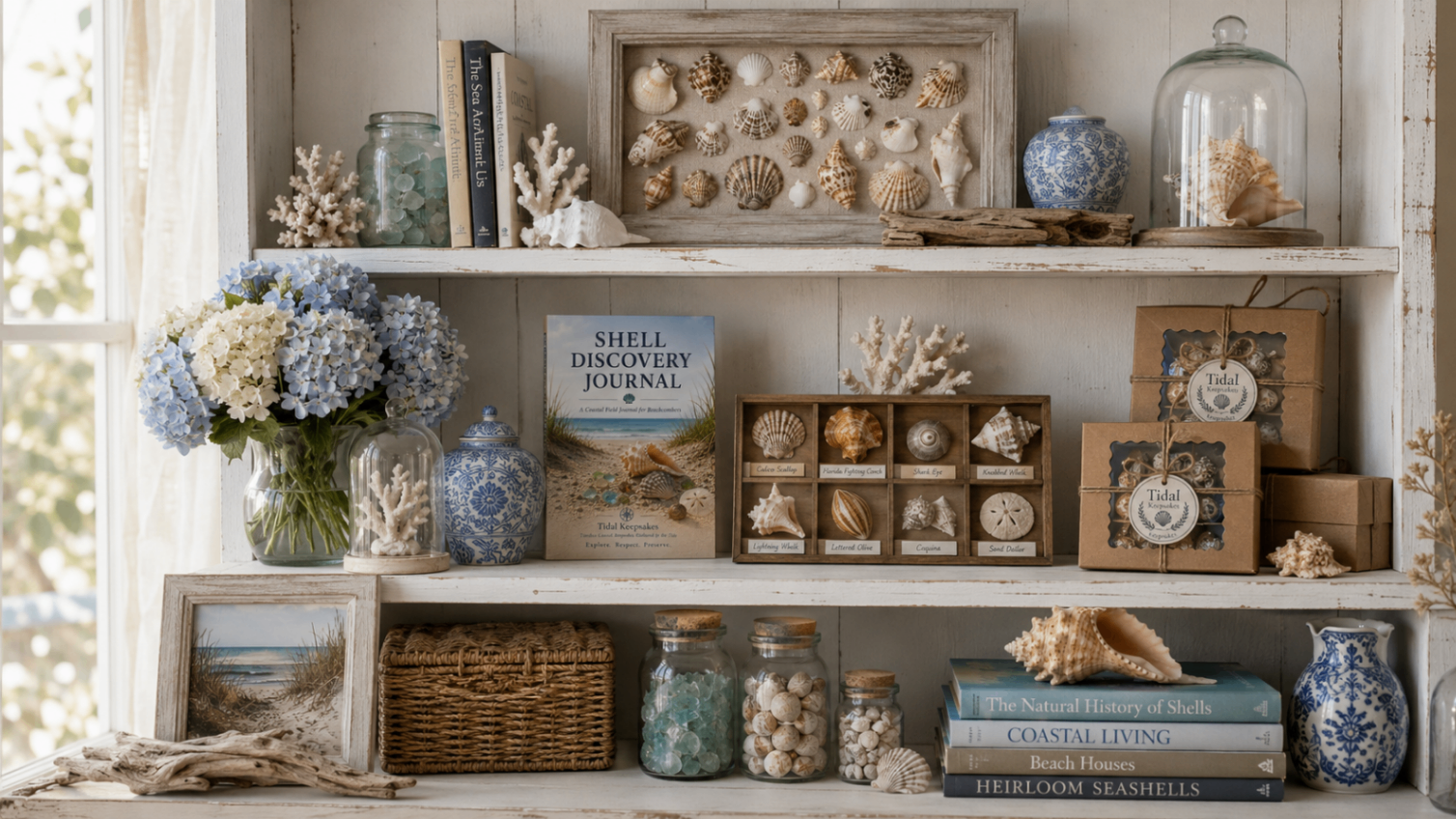
The Shell Discovery Journal
Continue Your Beachcombing Journey
Hand-picked next steps — chosen because they build directly on what you've just read.
Compare Similar Shells
Species and look-alikes worth studying side by side. Every card routes into the shell reference.
Species
Scotch Bonnet
Semicassis granulata
Cream base with regular reddish-brown squares in tidy rows. Rounded body whorl and short spire; toothed inner lip.
Explore ShellSpecies
Knobbed Whelk
Busycon carica
Aperture opens on the right when the spire points up. Row of blunt knobs along the shoulder of the body whorl; interior often flushed with orange.
Explore ShellSpecies
Lettered Olive
Americoliva sayana
Cylindrical body with a very short spire and a long narrow aperture. The polished cream base carries tan or brown zigzag lines that give the species its 'lettered' name.
Explore ShellSpecies
Atlantic Auger
Terebra dislocata
Elongated screw-shaped shell up to 2 inches, pale grey to tan with faint spiral banding; each whorl carries fine axial ribs.
Explore ShellBeaches Worth Exploring Next
Shores connected to the shells, regions, and conditions on this page.
North Carolina Outer Banks
Outer Banks
A 200-mile chain of Atlantic barrier islands — Cape Hatteras, Ocracoke, and Cape Lookout deliver whelks, olive shells, and the state shell,…
Explore BeachGeorgia Coast
Jekyll Island
Historic Golden Isle with generous public beaches — Driftwood Beach and St. Andrews shore deliver moon snails, jingle shells, and…
Explore BeachFlorida Gulf Coast
Sanibel Island
Sanibel's east-west orientation sweeps Gulf shells onto its shore in exceptional variety — the reason it's the most celebrated shelling…
Explore BeachNorth Carolina Outer Banks
Ocracoke Island
A ferry-only Outer Banks island south of Hatteras — sixteen miles of protected National Seashore beach where Scotch bonnets and knobbed…
Explore BeachDiscover More Coastal Inspiration
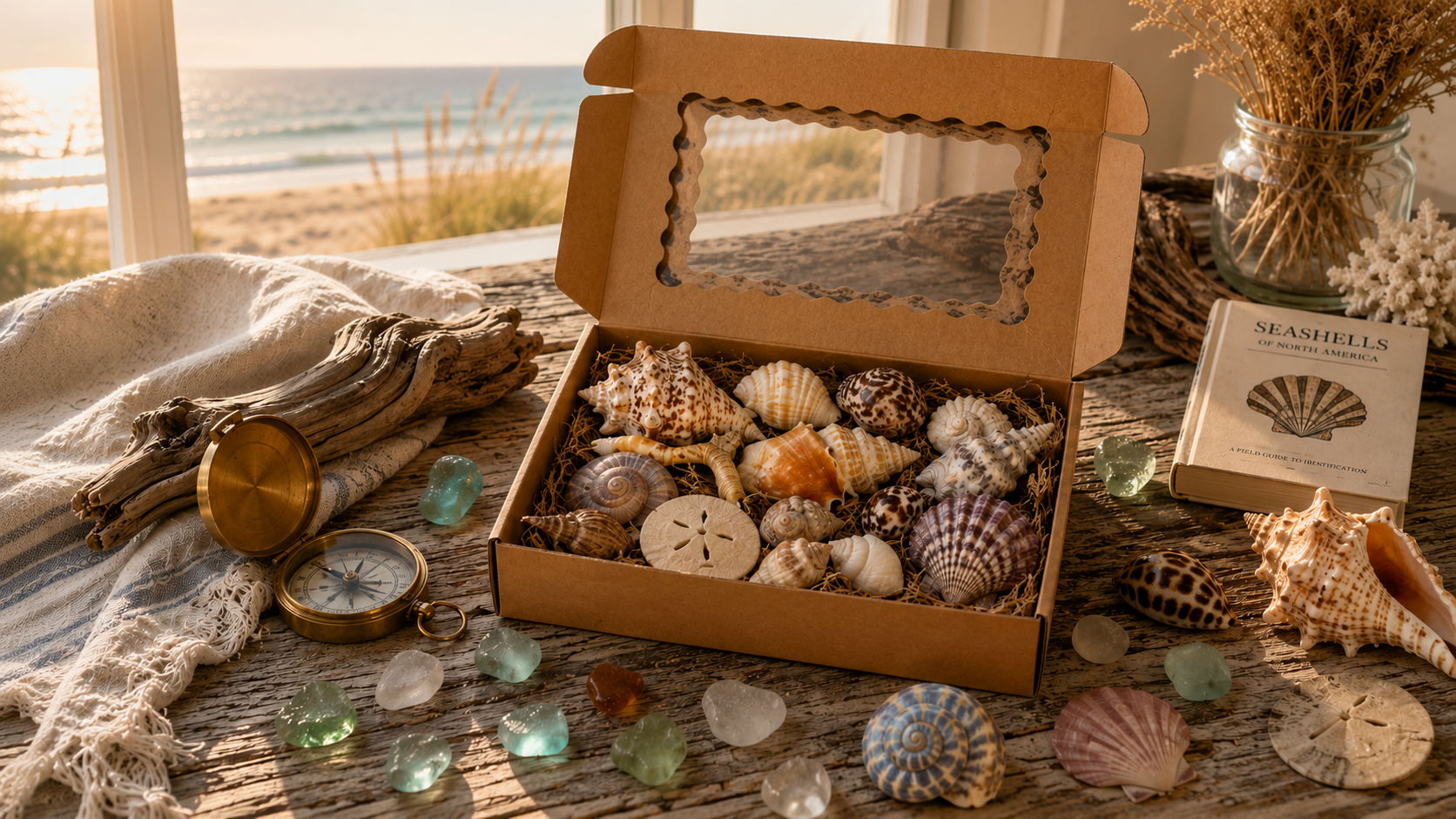
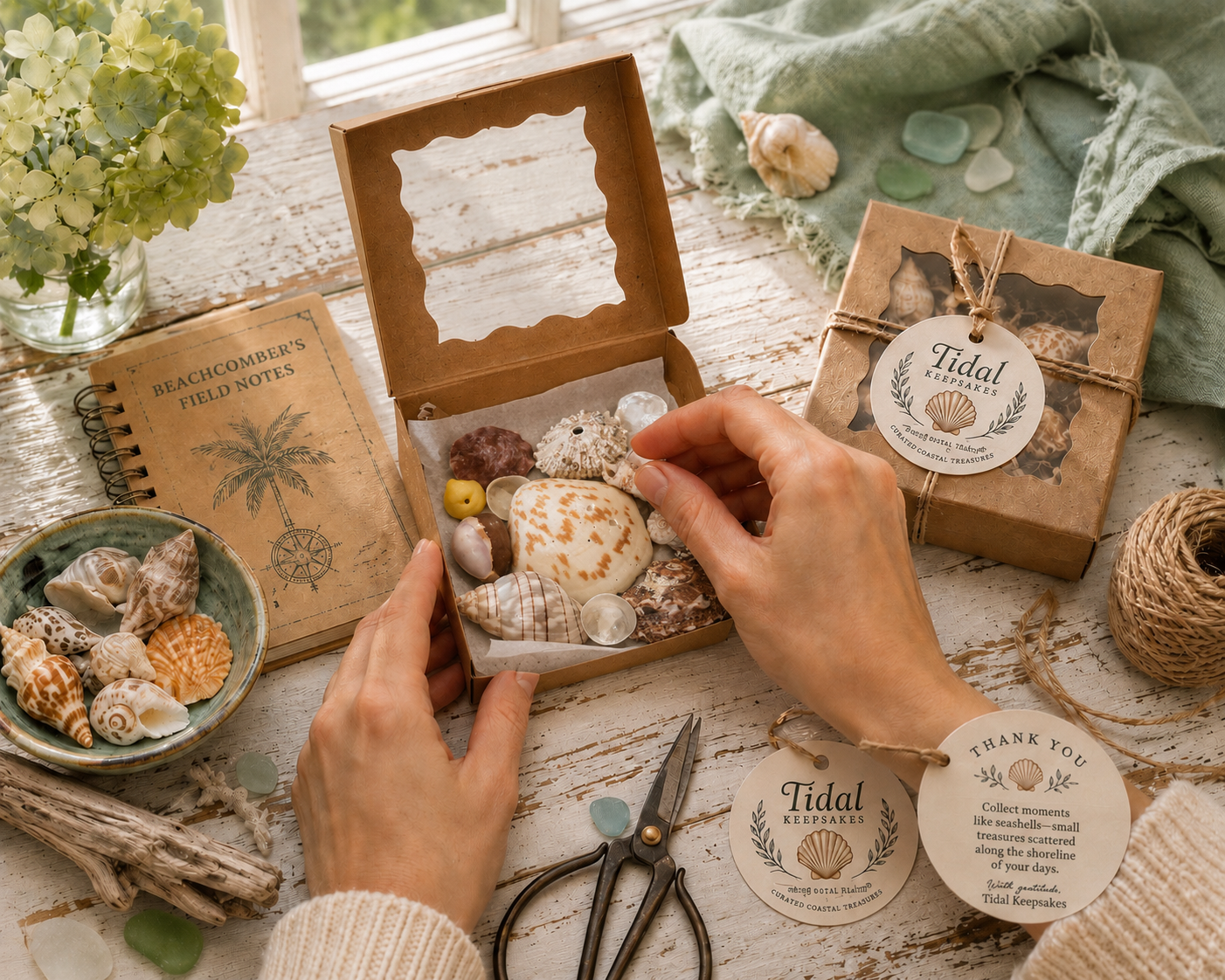
Curated coastal favorites and specimen boxes that echo the story above.
A Learning Journey to Follow
Learning Shell Identification
For growing collectors · 5 steps
For readers who already know a scallop from a whelk and want to sharpen the edge cases. Ends at the journal, where identification becomes a practice, not a lookup.
- 1
Understand the Anatomy
Shell Identification Guide
Vocabulary first — apex, whorl, aperture, columella.
Continue - 2
Meet the Common Species
Explore Common Shells
Browse the canonical shell records the site is built on.
Continue - 3
Compare Look-Alikes
Commonly Confused Shells
Side-by-side markers for the pairs that trip up new collectors.
Continue - 4
Find Them in the Wild
Best Beaches for Shelling
Where each species actually washes up.
Continue - 5
Practice in the Field
Shell Discovery Journal
Record each ID with sketches and notes to lock the learning in.
Continue
Ready to Fill Your Next Memory Jar?
Every shell tells a story. From colorful scallops and polished sea glass to rare treasures uncovered after a storm, the best collections begin with a simple walk along the shoreline.
Discover the best beaches, the right tides, and the hidden places where unforgettable finds wait to be uncovered.
Whether you're planning a weekend getaway or your next great beachcombing adventure, our complete guide will help you collect more than shells. You'll collect memories.