
 Save
SaveCoastal Decor
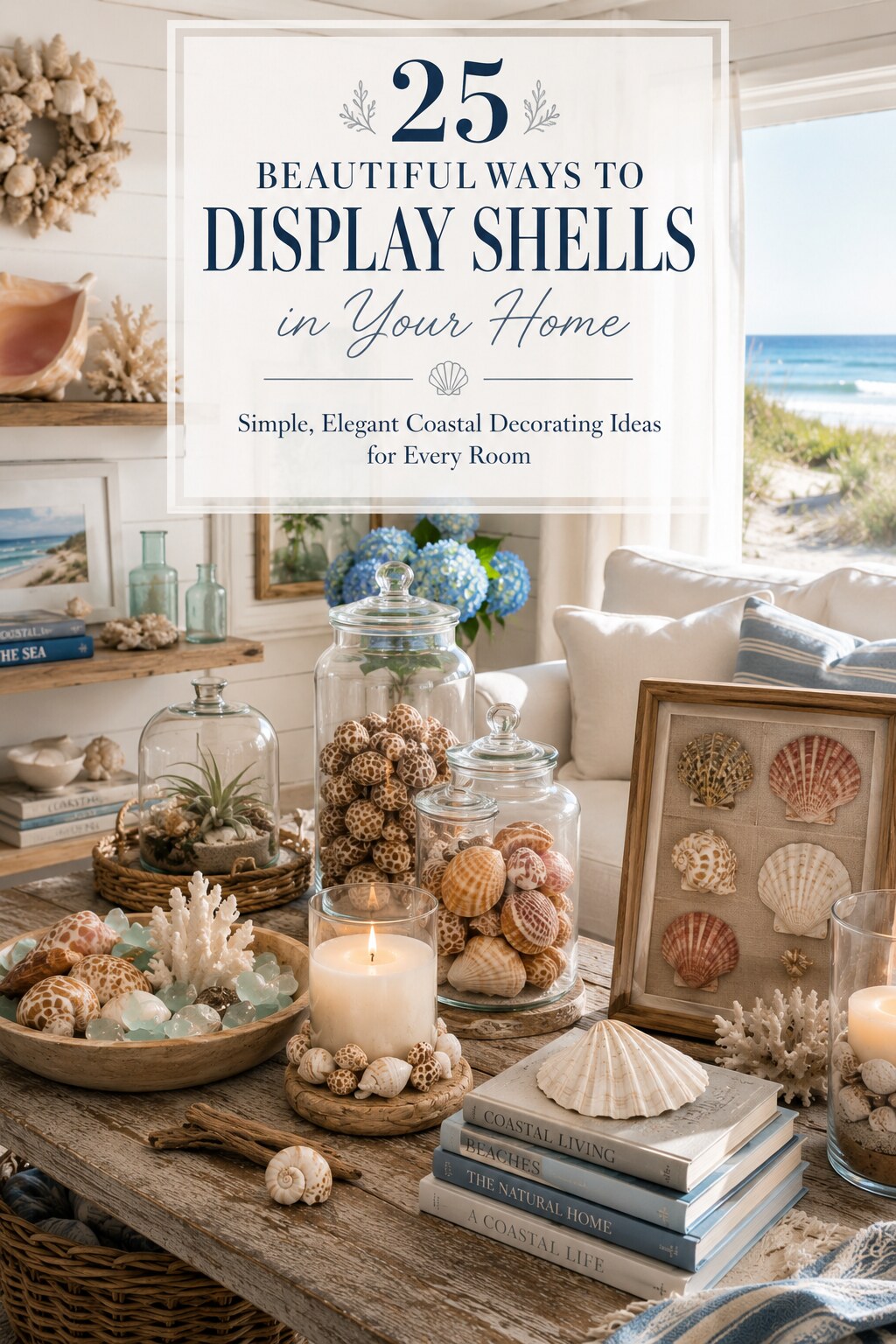
25 Beautiful Ways to Display Seashells in Your Home
A shell collection is far too lovely to keep hidden in a drawer. With a little intention, your finds can become quiet, beautiful accents throughout your home.
Coastal style at its best is restrained — a few natural objects, plenty of light, and a neutral palette that lets texture shine.
1. Glass Jars & Cloches
 Save
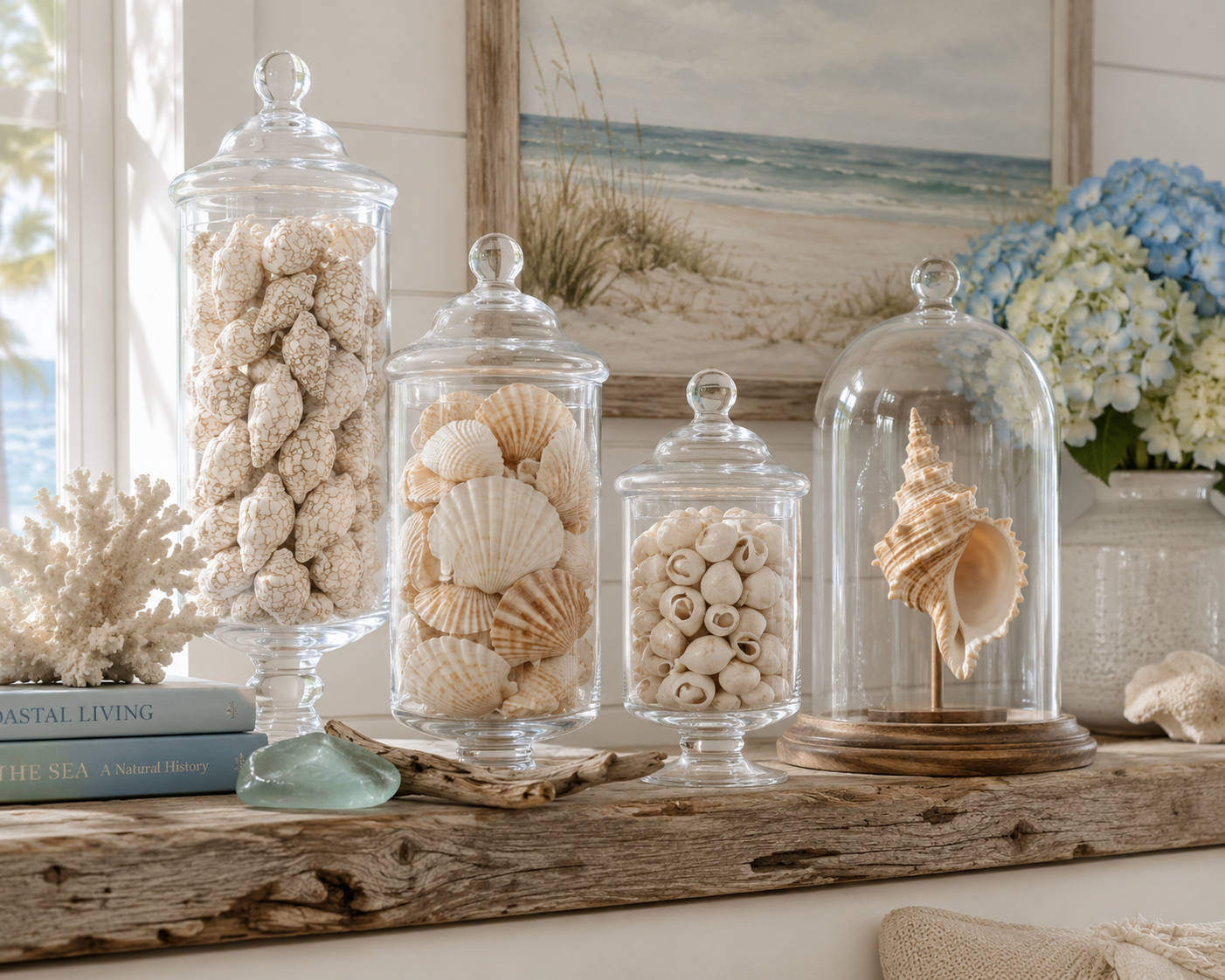
SaveFill an apothecary jar or glass cloche with a single type of shell for quiet impact. Grouping like with like reads as intentional rather than cluttered.
Vary the jar heights on a shelf or mantel for an effortless, gathered look.
2. Apothecary Jar Trio
 Save
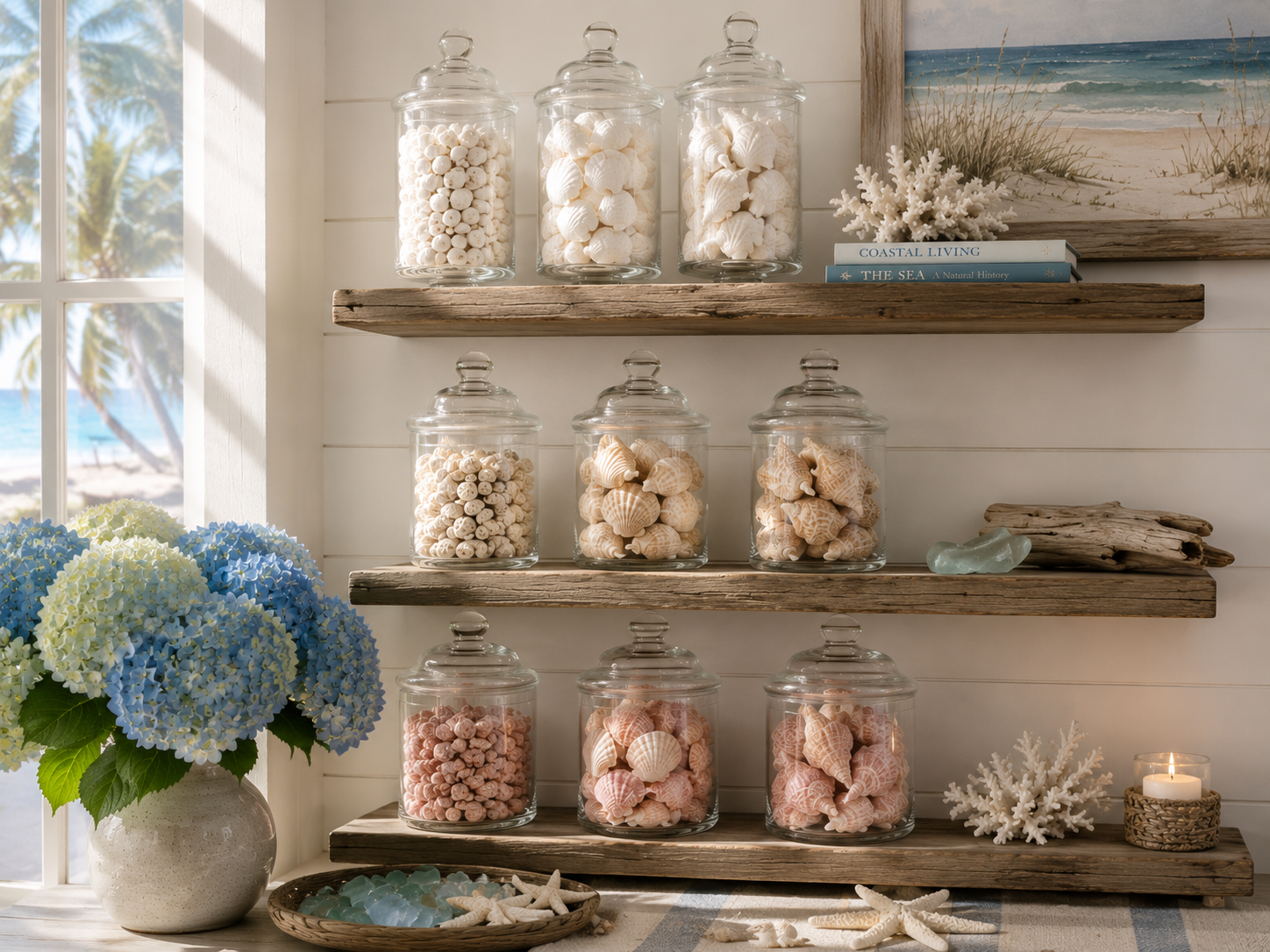
SaveLine up three matching apothecary jars and fill each with a different size or color of shell for a collected, layered display.
The repetition of the jars keeps even a varied collection looking calm and curated.
3. Shadow Boxes & Frames
 Save
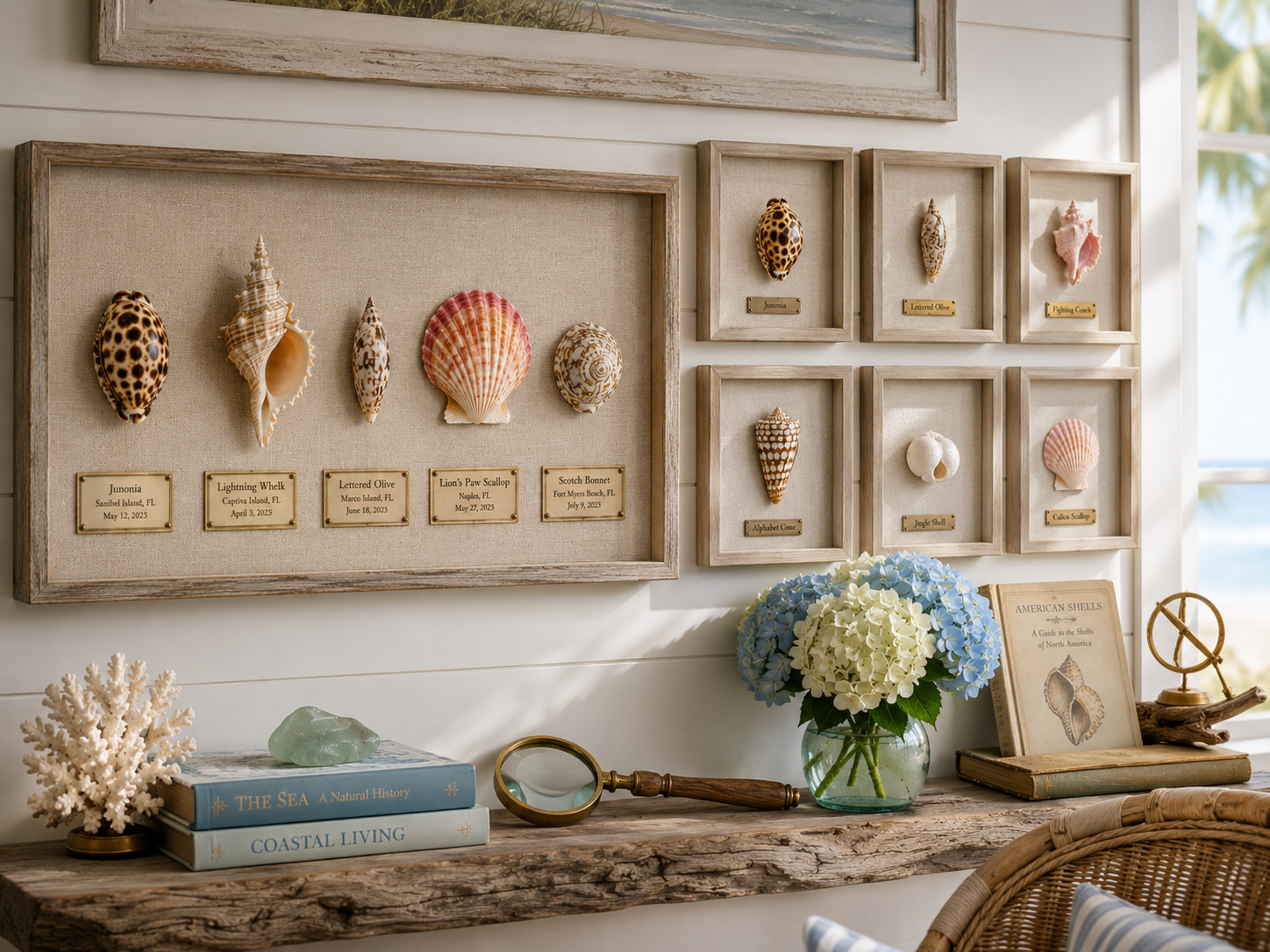
SaveMount a few standout specimens in a linen-backed shadow box to turn them into framed art. Label them for a natural-history feel.
A row of small frames, each holding one perfect shell, makes a striking gallery wall.
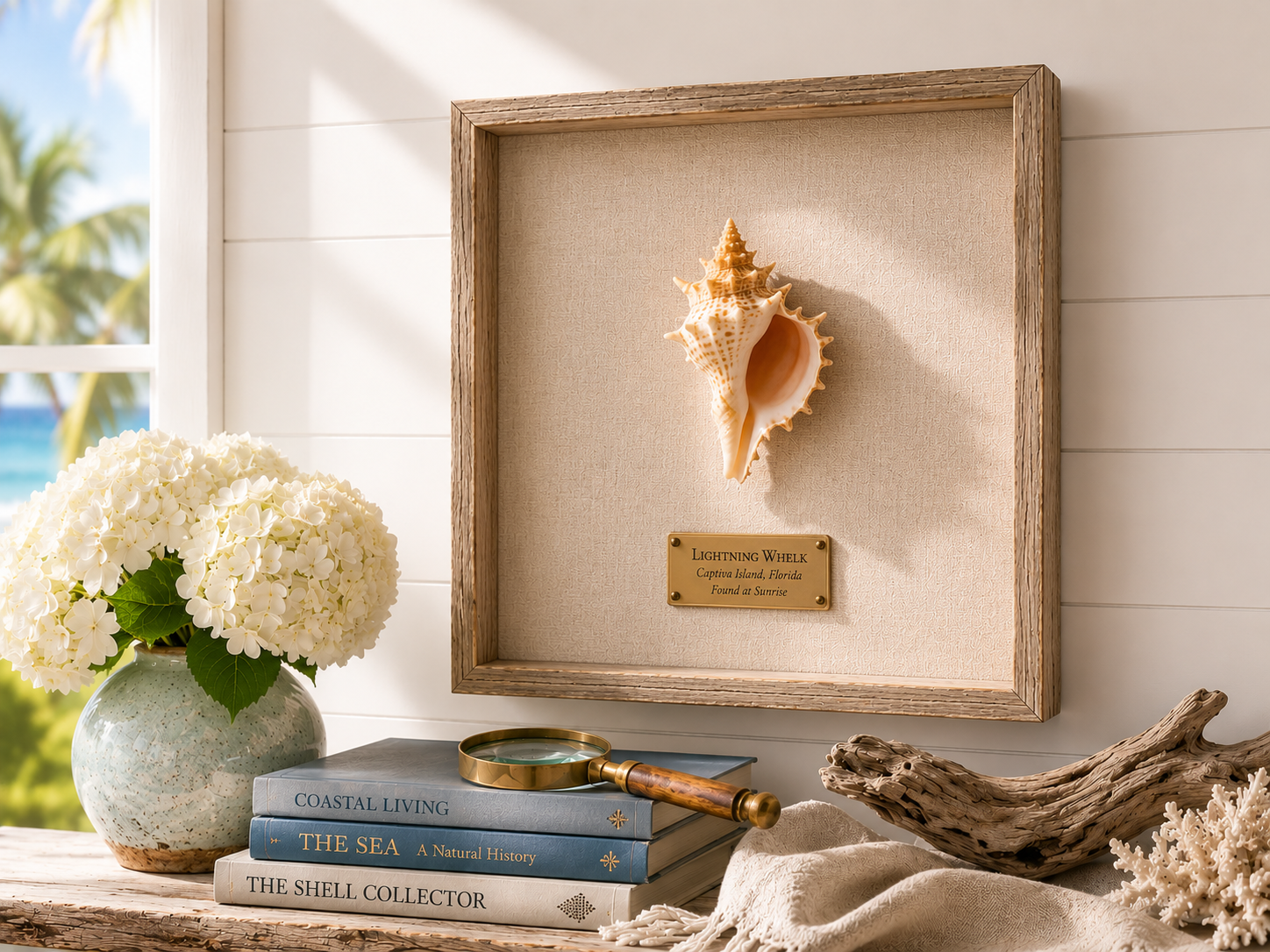
4. Single-Shell Frame
 Save
SaveGive one exceptional shell the spotlight by framing it alone against a neutral mat. The empty space makes the shell feel like a treasure.
It's a refined way to honor a shell with a special story or a particularly beautiful form.
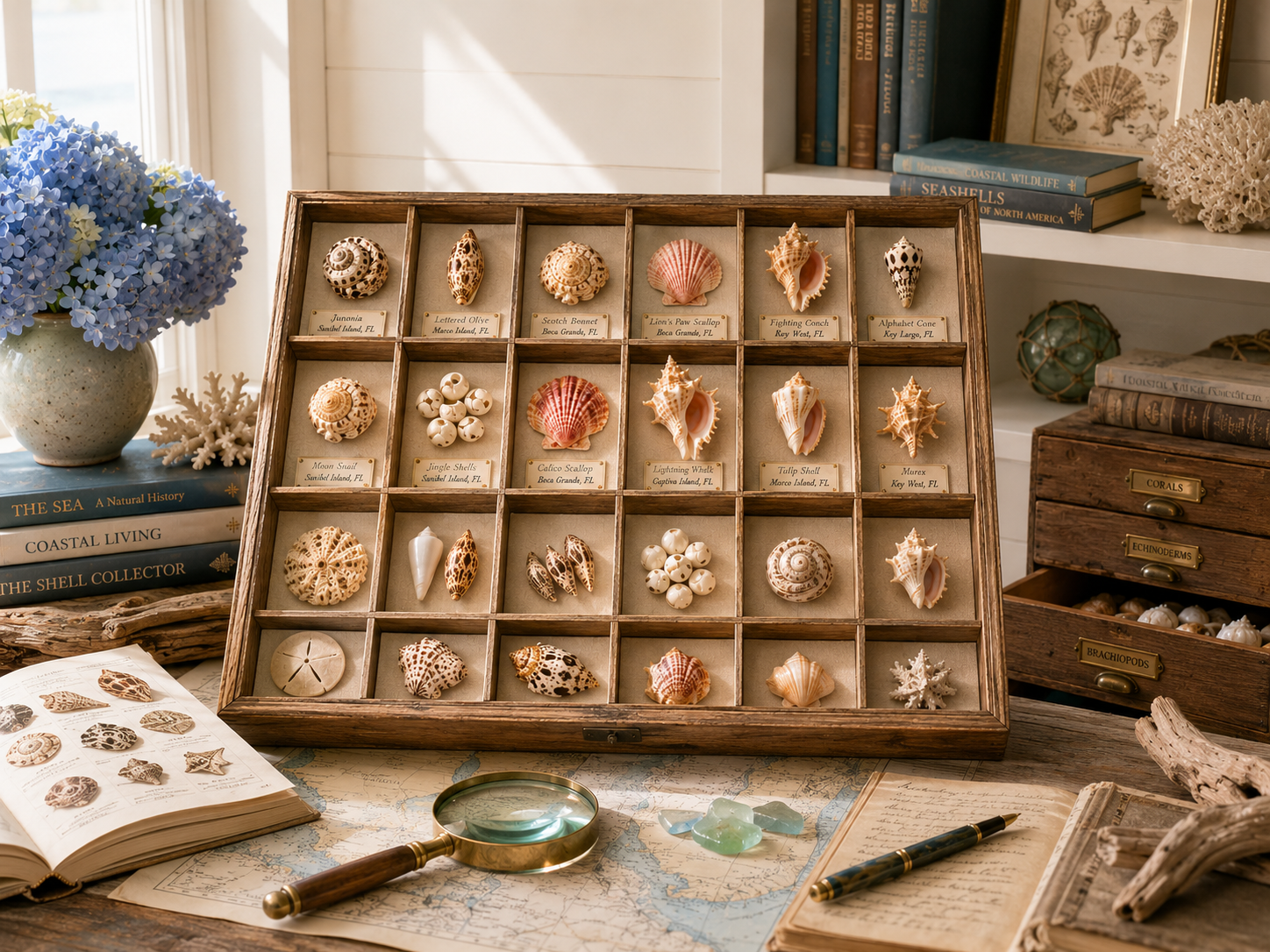
5. Specimen Display Case
 Save
SaveA compartmented case keeps each shell in its own little nook, echoing the old-world charm of a naturalist's collection.
Arrange by species, size, or color for a display that invites a closer look.
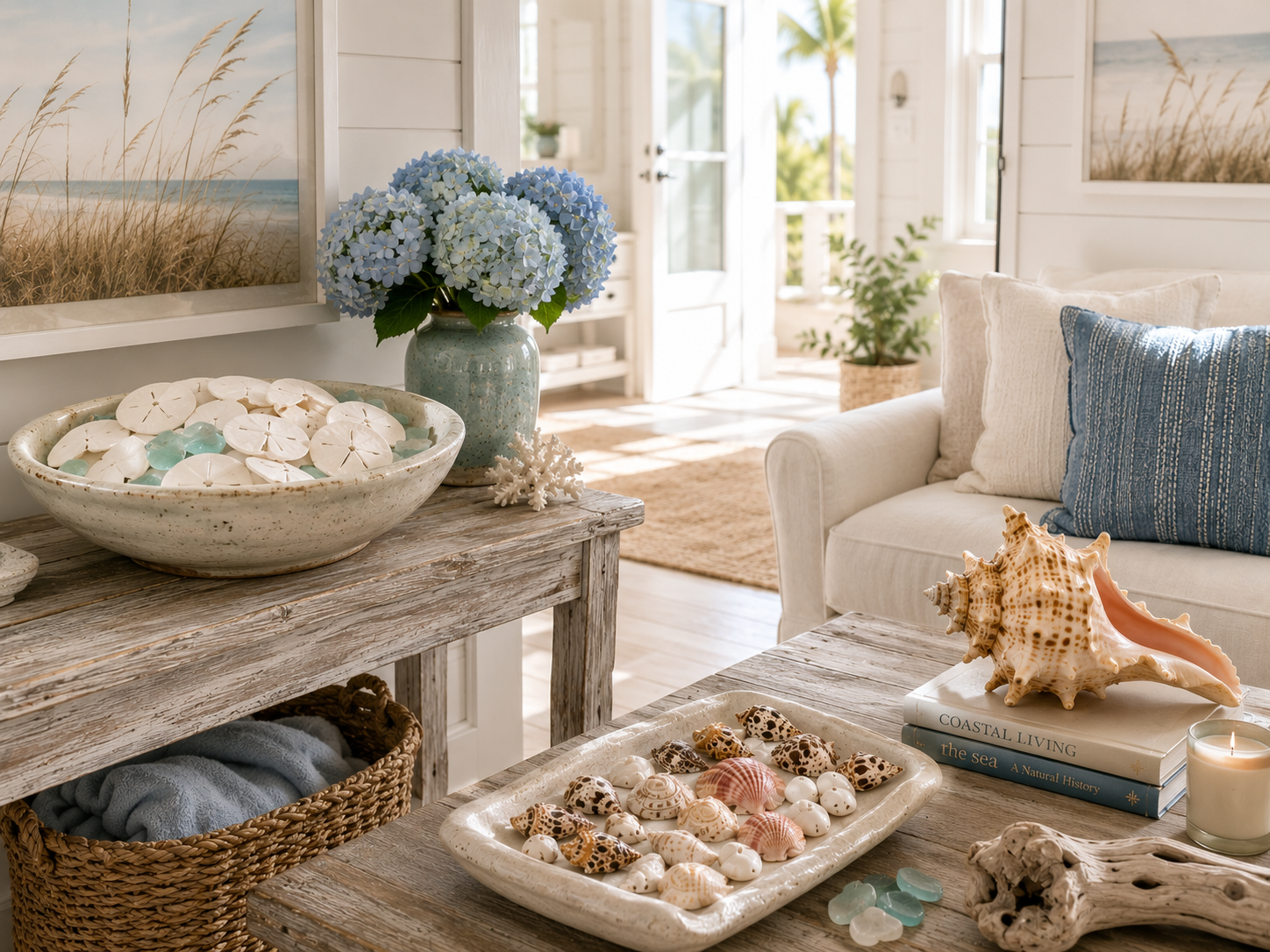
6. Bowls & Trays
 Save
SaveA shallow bowl of sand dollars on the entry table greets guests with the sea. A ceramic tray of mixed shells anchors a coffee table beautifully.
Keep surfaces uncluttered so one statement piece — a large conch or murex — can take center stage.
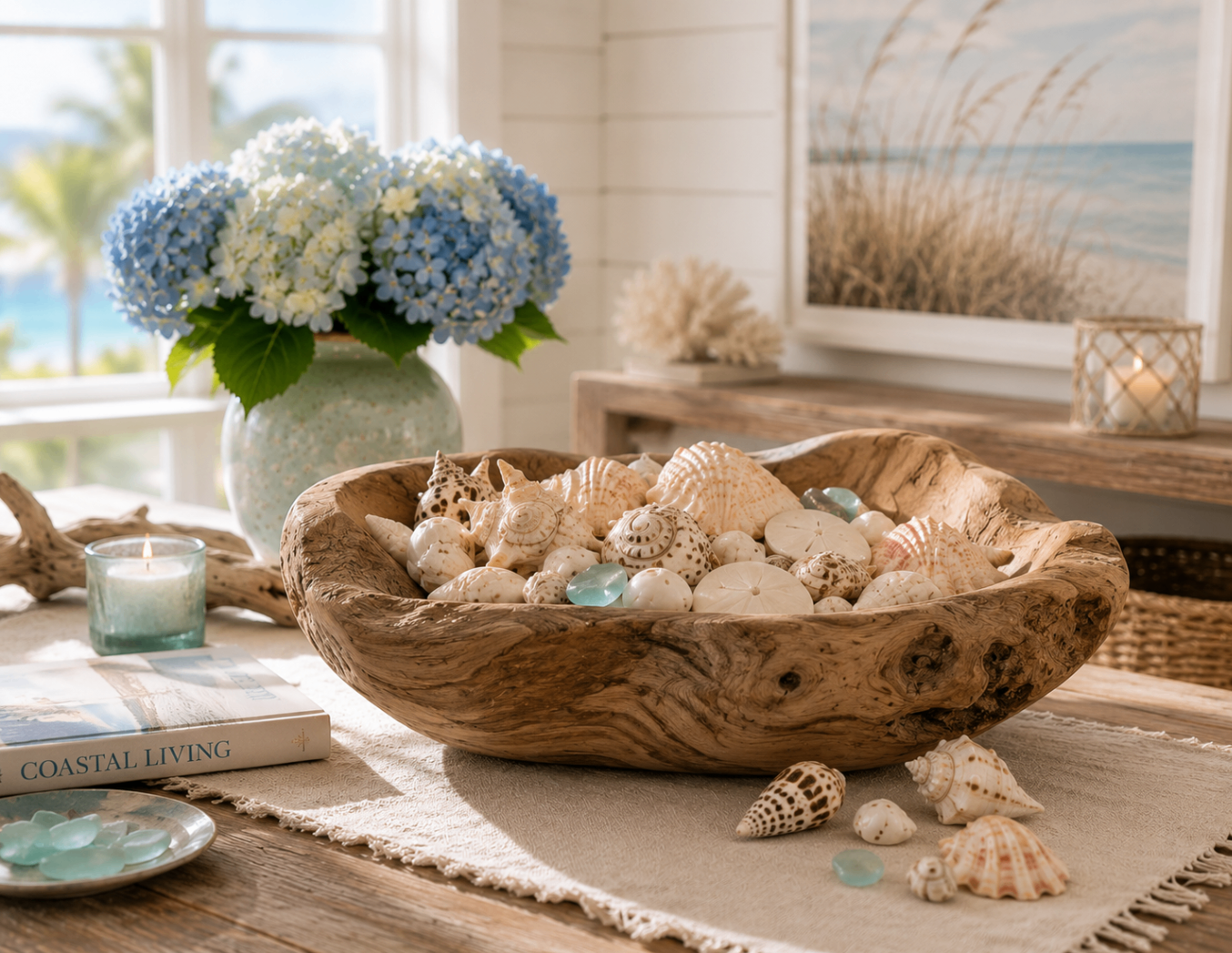
7. Carved Wooden Bowl
 Save
SaveThe warm grain of a hand-carved wooden bowl is the perfect foil for pale, chalky shells.
Set it on a console or dining table where its organic shape can be appreciated from every side.
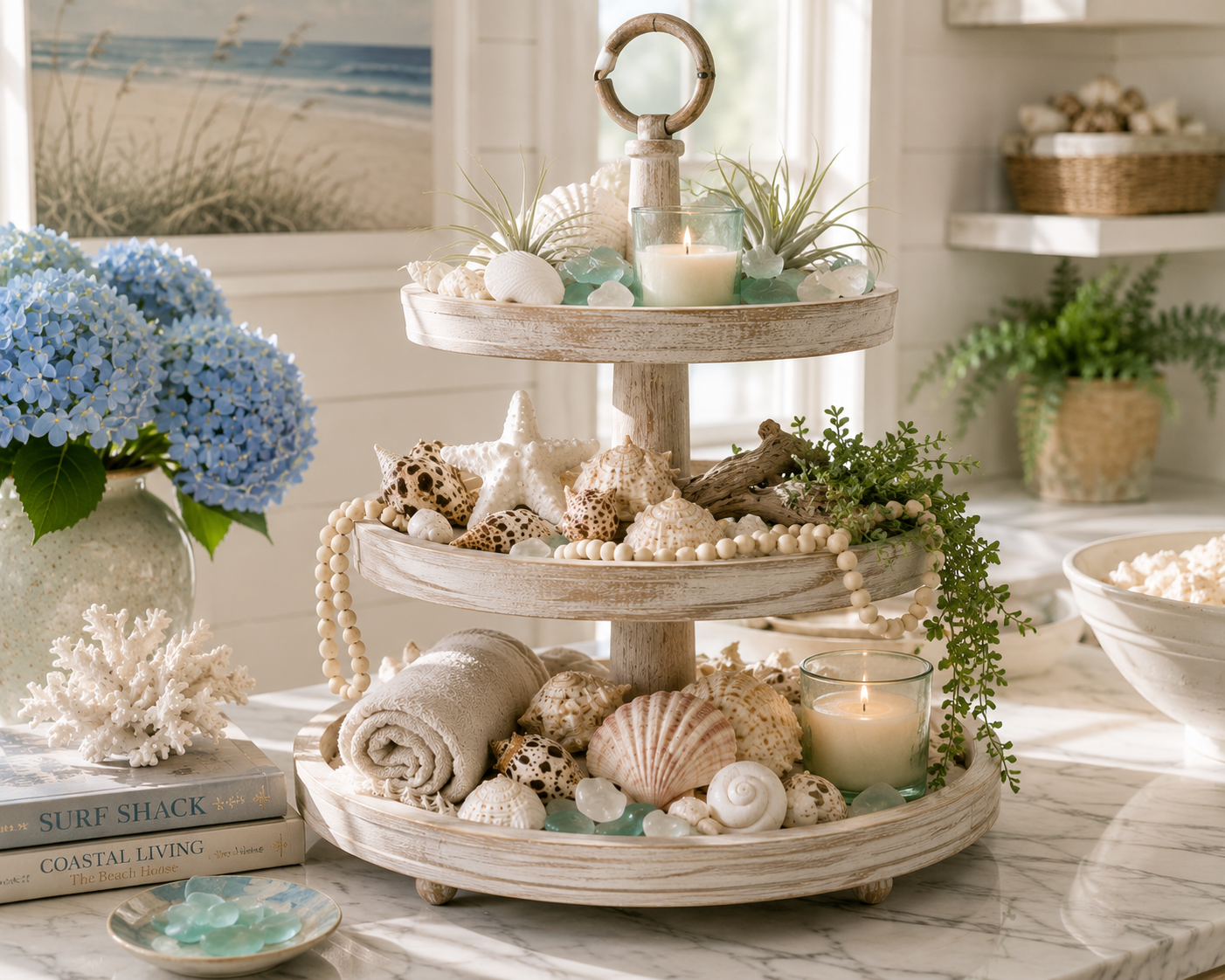
8. Tiered Tray
 Save
SaveA tiered tray lets you mix shells with candles, greenery, and small objects for a layered coastal vignette.
It's an easy way to add height and interest to a kitchen counter or bathroom vanity.
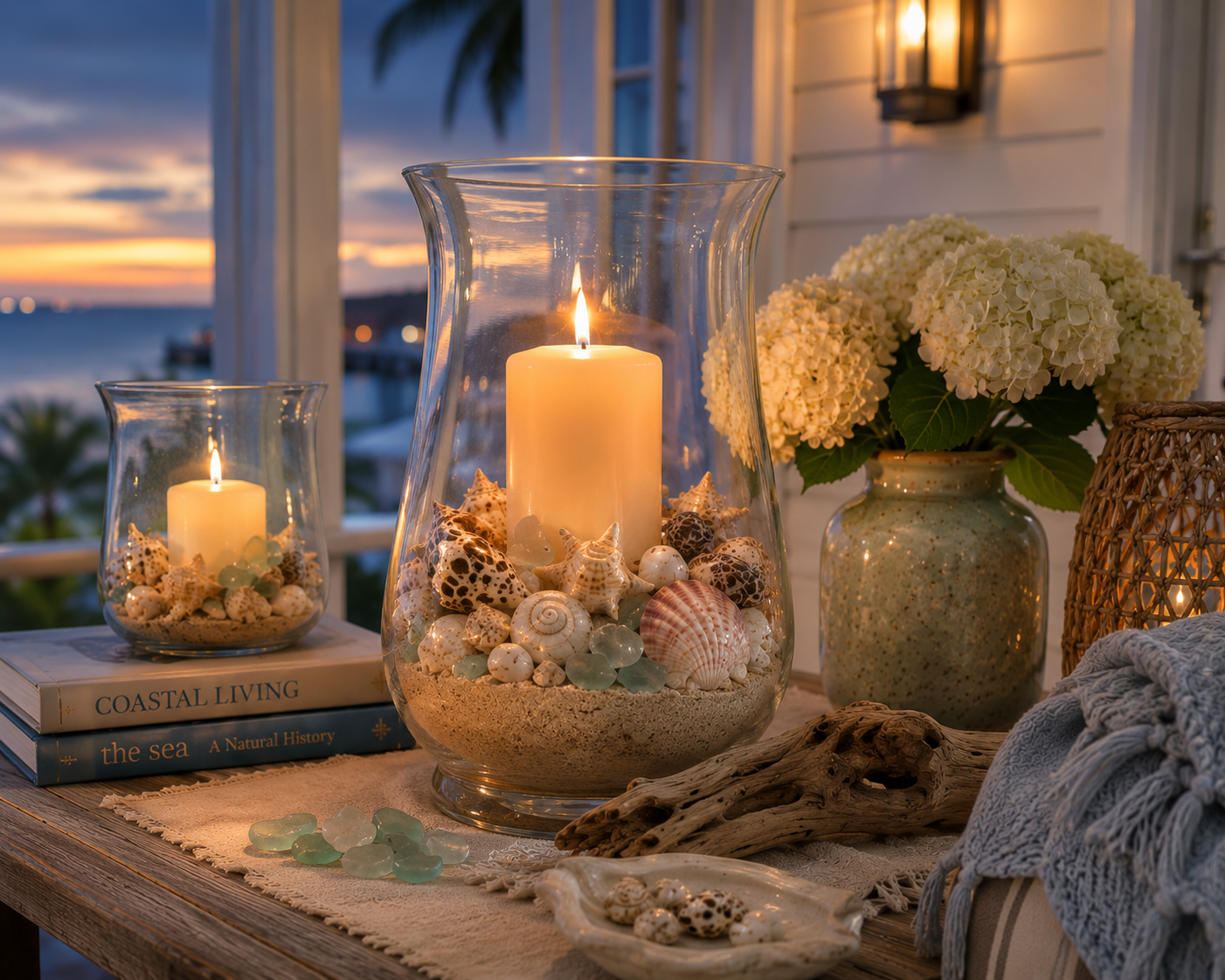
9. Hurricane Vase Filler
 Save
SaveNestle a pillar candle inside a tall hurricane vase and fill the space around it with shells and sand.
Lit in the evening, it casts a soft, flickering glow that feels like the shore at dusk.
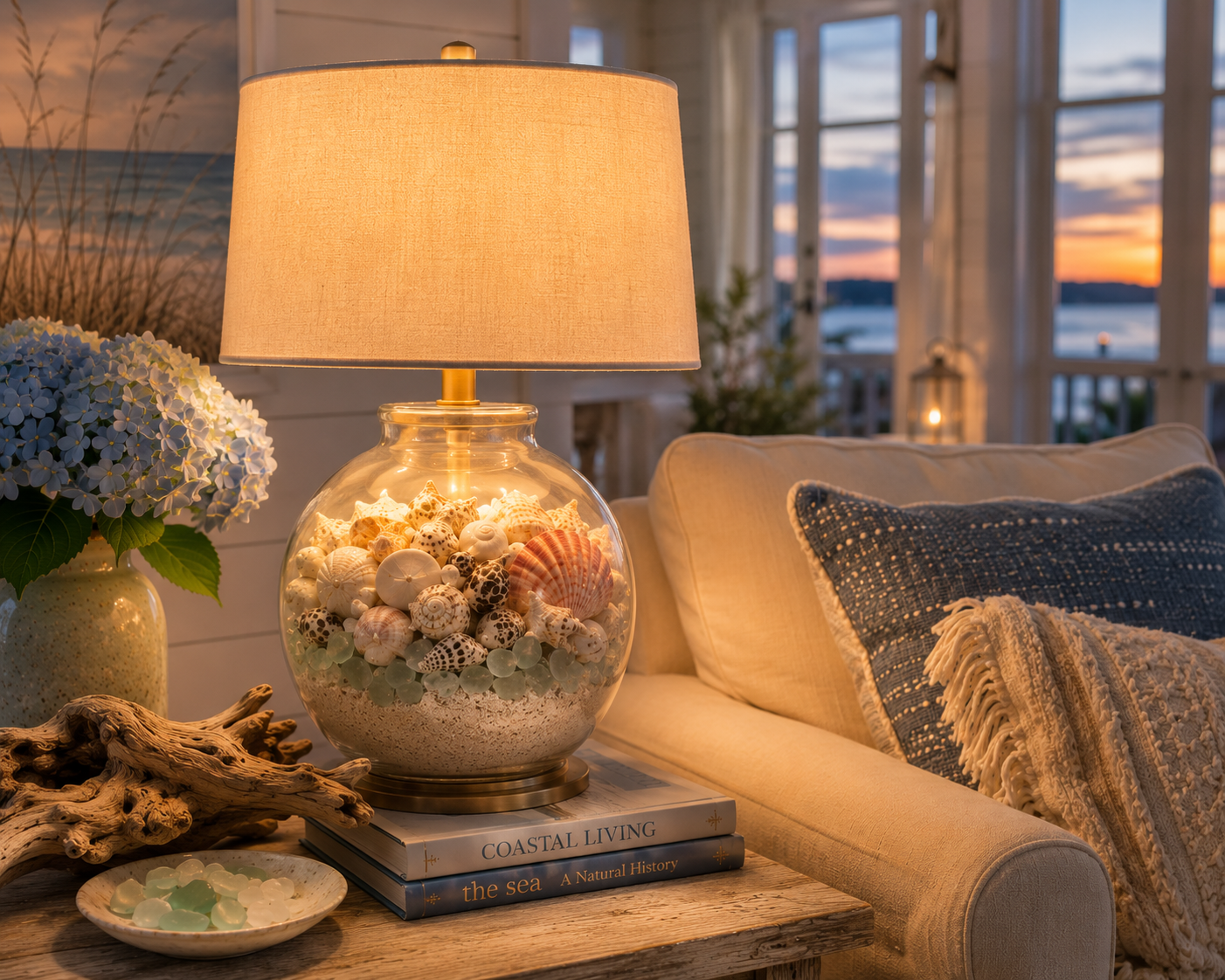
10. Shell-Filled Lamp Base
 Save
SaveA fillable glass lamp base is a clever way to show off shells while bringing warm light to a room.
Layer sand and shells for a soft, sandy gradient that glows when the lamp is on.
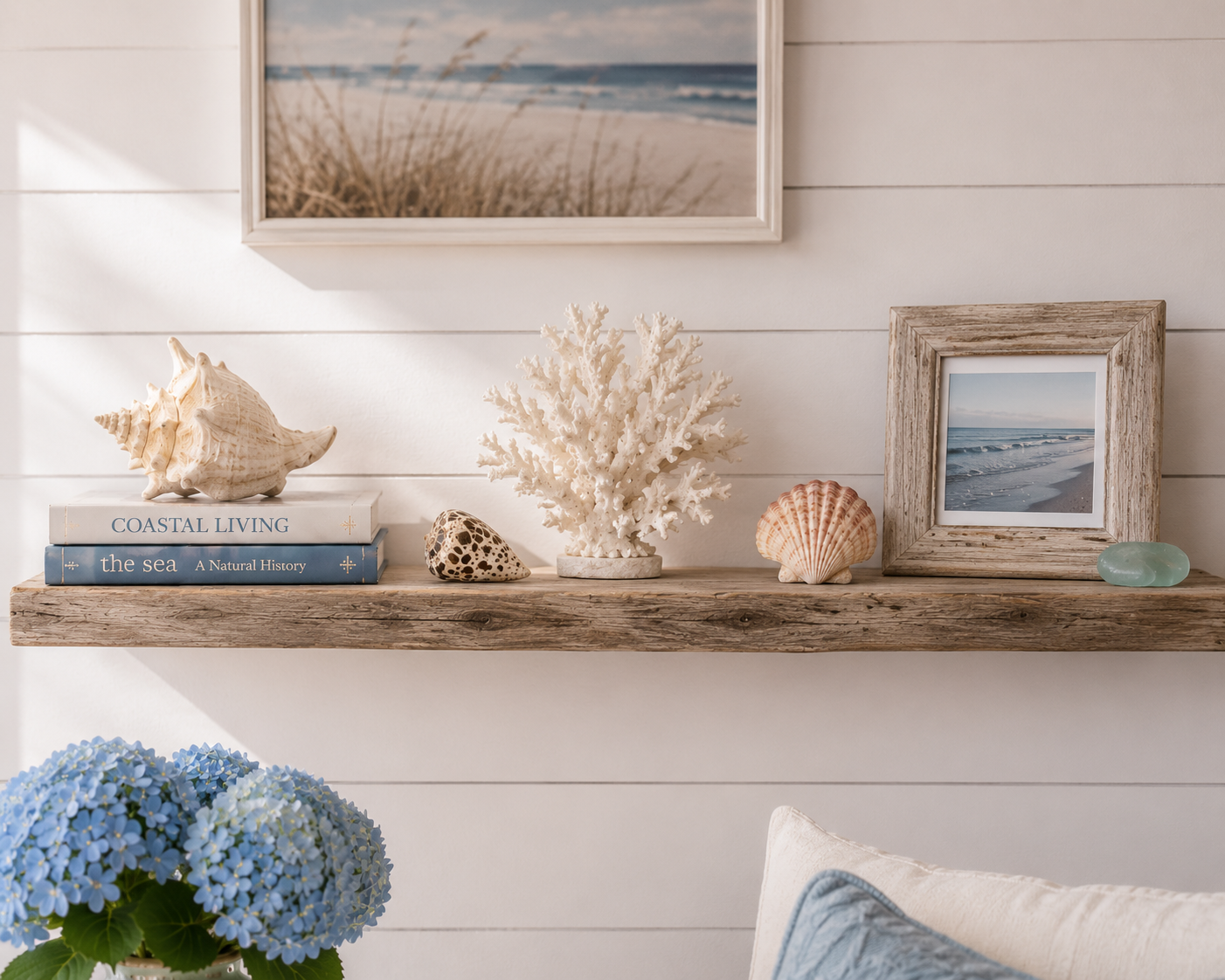
11. Floating Shelf Vignette
 Save
SaveStyle a floating shelf with a few shells, a piece of coral, and a small frame for a relaxed coastal arrangement.
Leave breathing room between pieces so each one has space to be noticed.
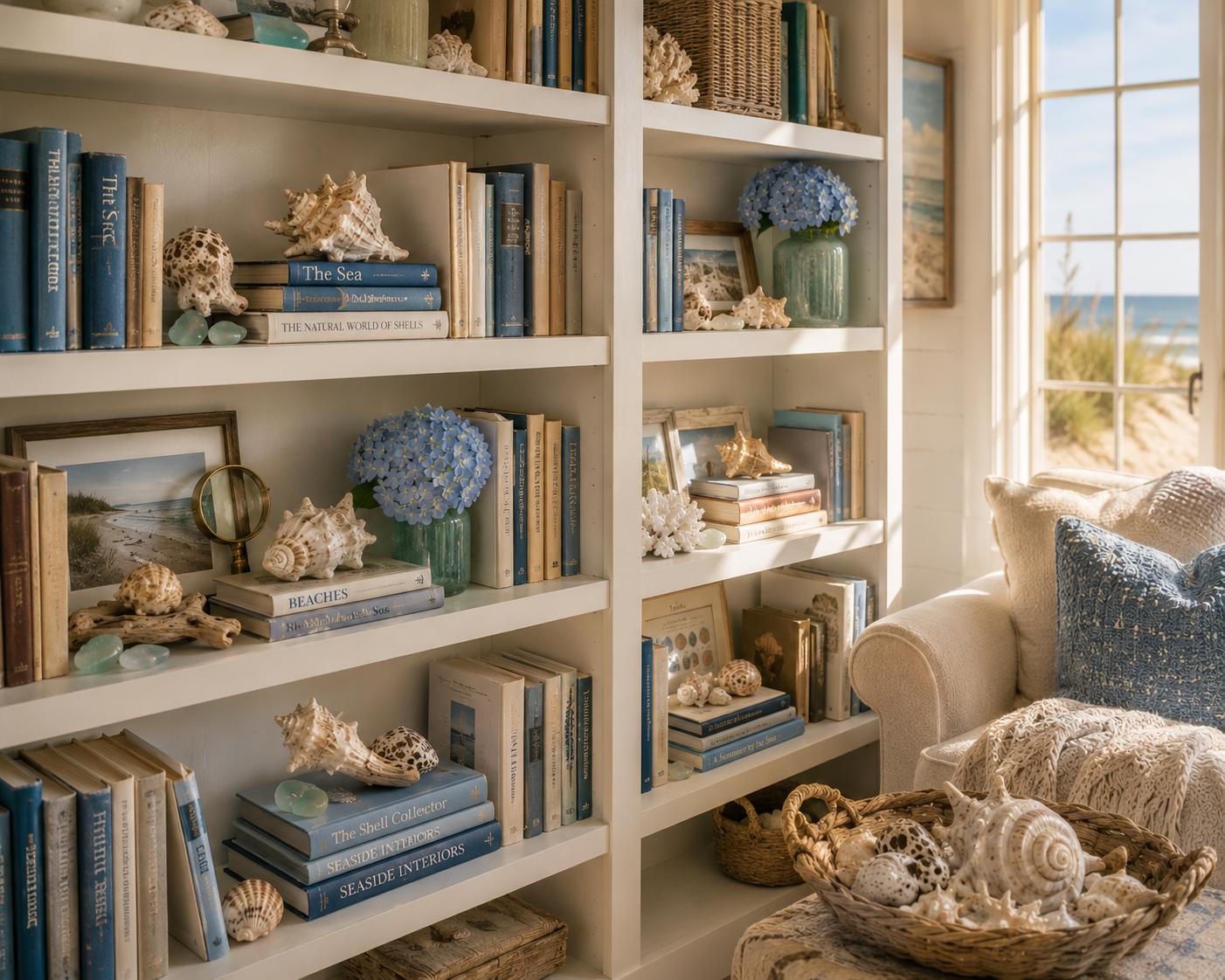
12. Among Your Books
 Save
SaveTuck shells between stacks of books or rest them atop a horizontal pile to break up a busy bookshelf.
They add texture and a personal touch among your favorite reads.
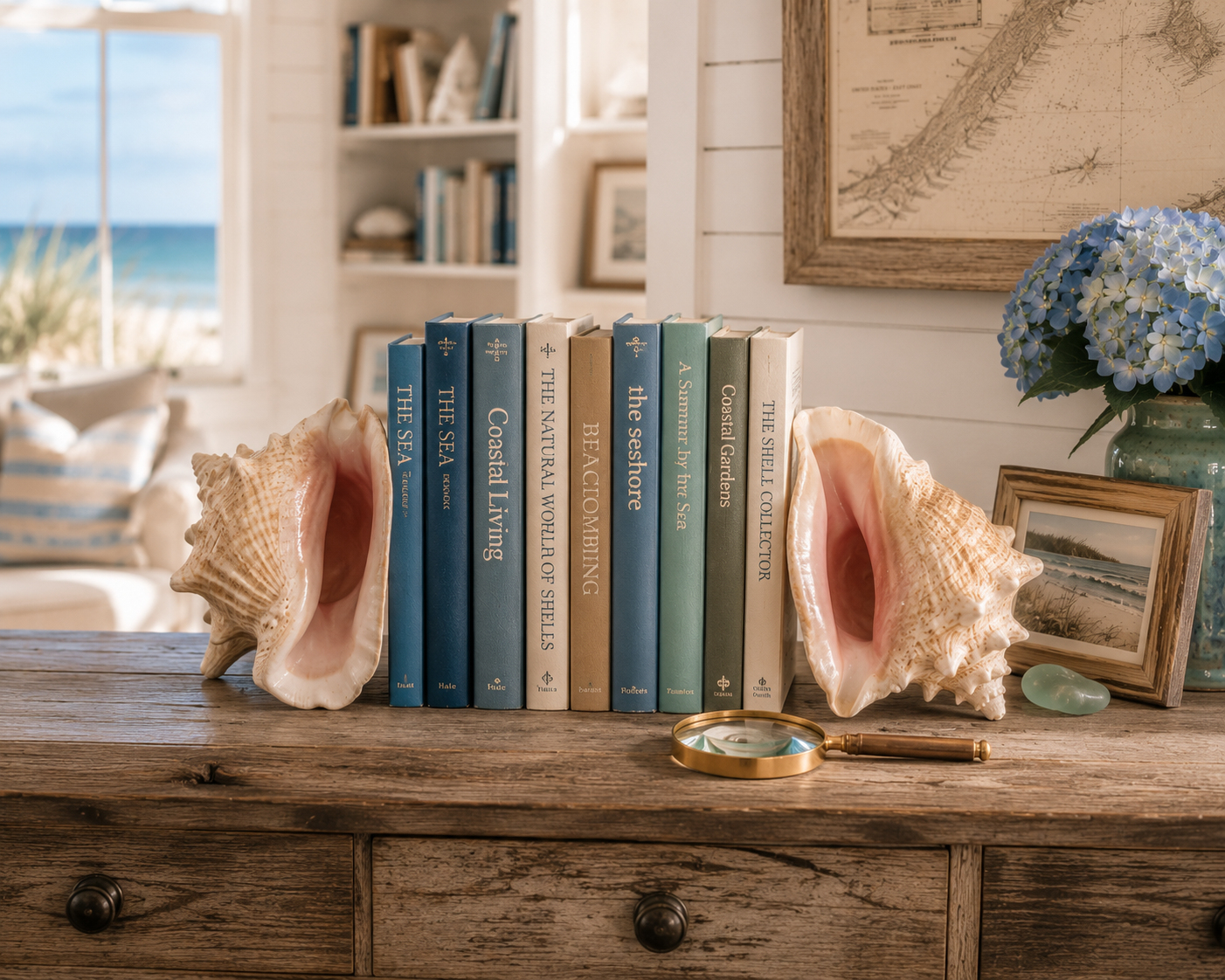
13. Shell Bookends
 Save
SaveA pair of large, sturdy shells like conchs makes sculptural, functional bookends.
They bring the coast to a study or living room while keeping your books in order.
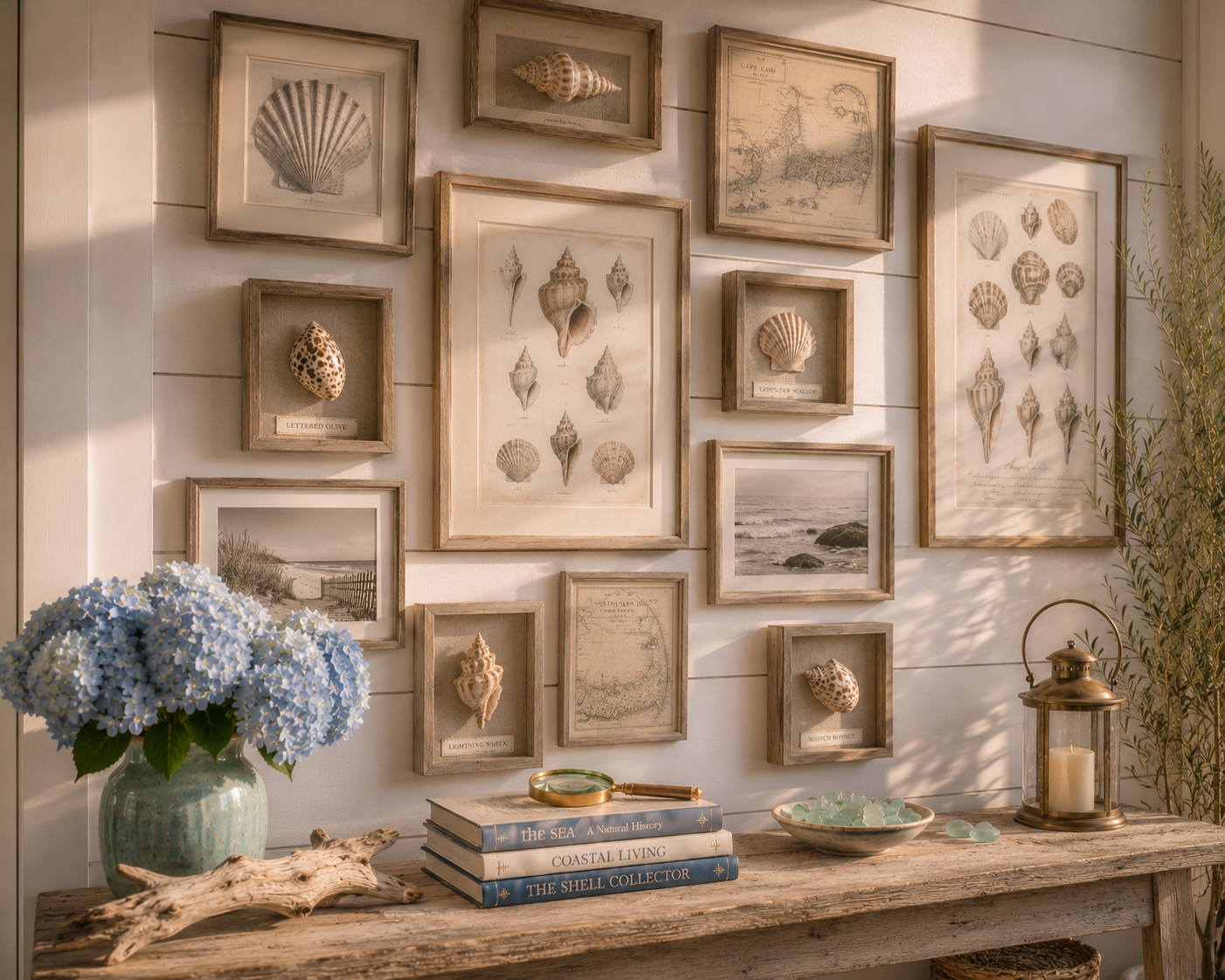
14. Coastal Wall Art
 Save
SaveCombine framed shell prints with a few mounted real shells for a layered gallery wall with depth.
Stick to a neutral palette so the arrangement feels serene rather than busy.
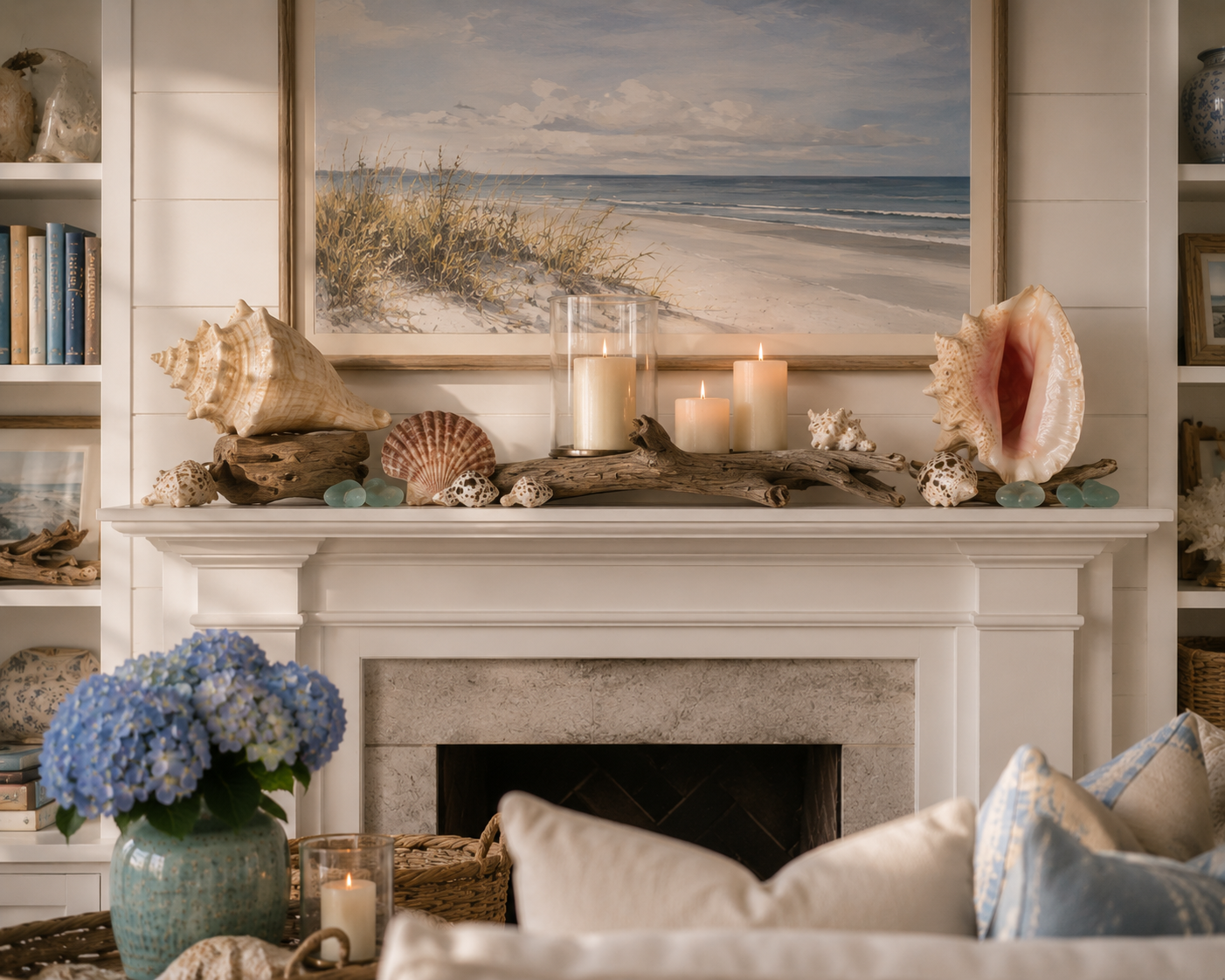
15. Mantel Display
 Save
SaveAnchor a mantel with a large shell or two, then layer in candles and a piece of driftwood for a natural focal point.
Vary heights and textures so the eye travels gently across the arrangement.
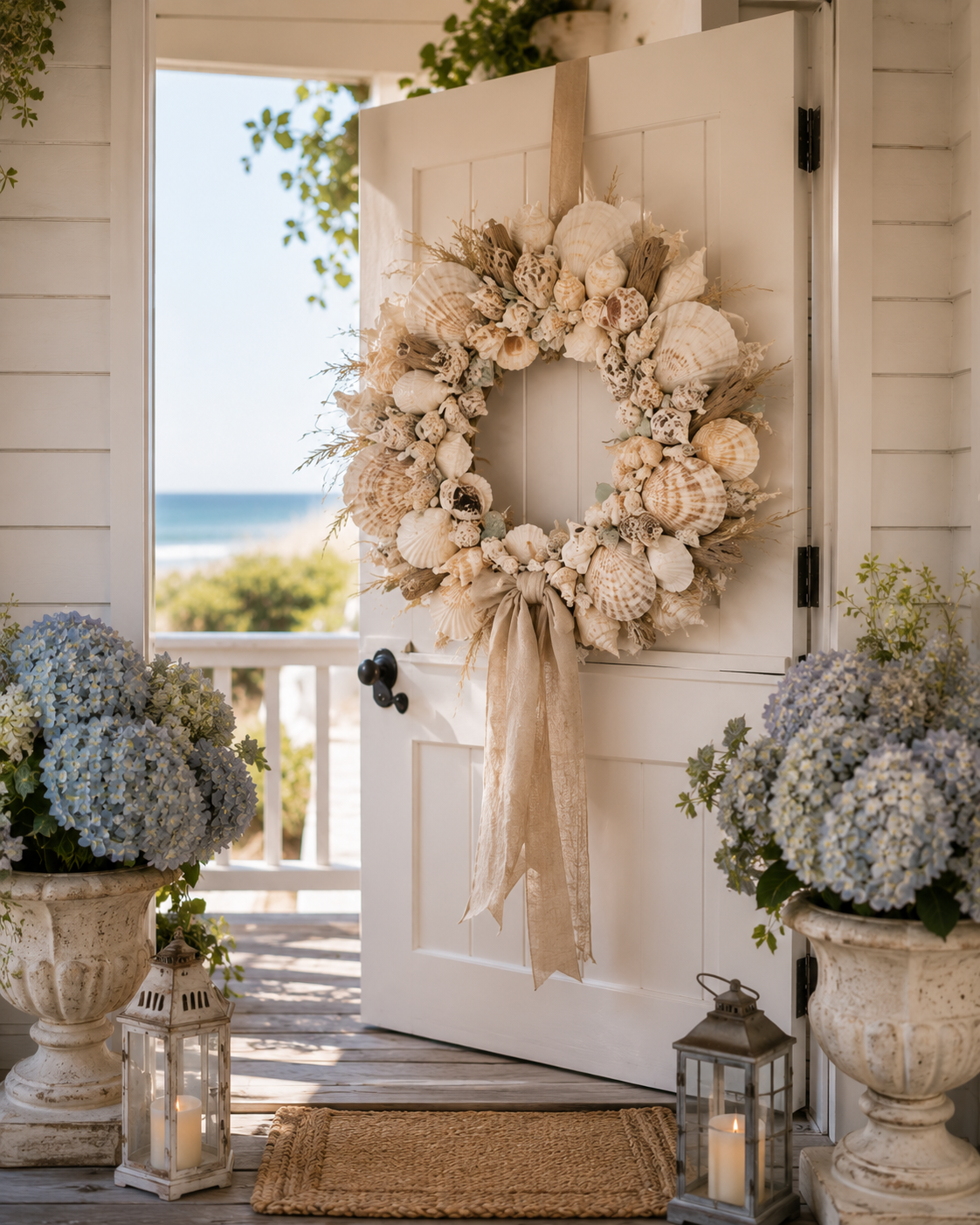
16. Shell Wreath
 Save
SaveA wreath of layered shells brings coastal charm to a door or a stretch of empty wall.
Keep the palette soft and tonal for a look that feels elegant in any season.
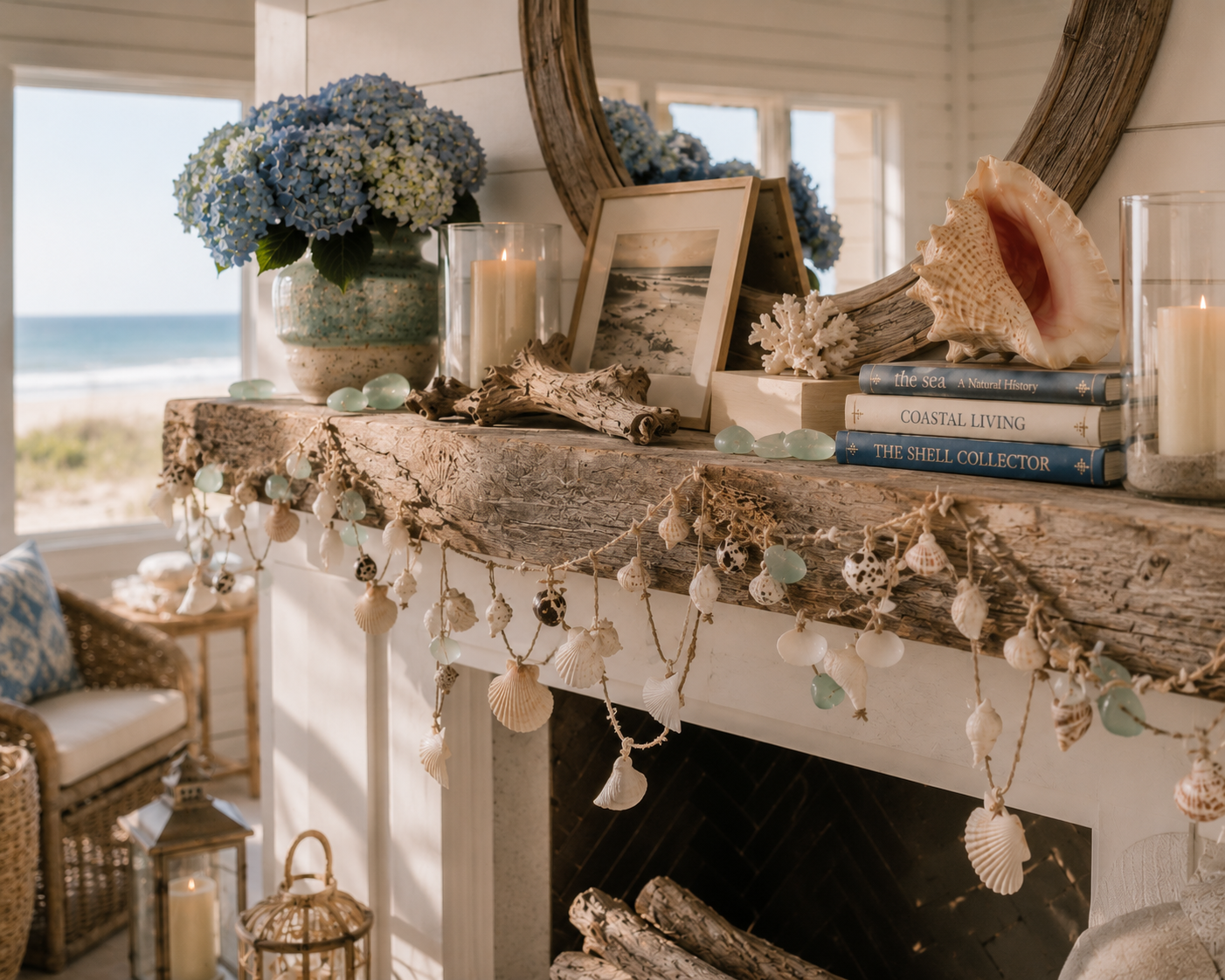
17. Shell Garland
 Save
SaveDrape a garland of small drilled shells along a shelf edge, mirror, or mantel for a soft, breezy accent.
The gentle movement and natural texture add a relaxed, seaside feel.
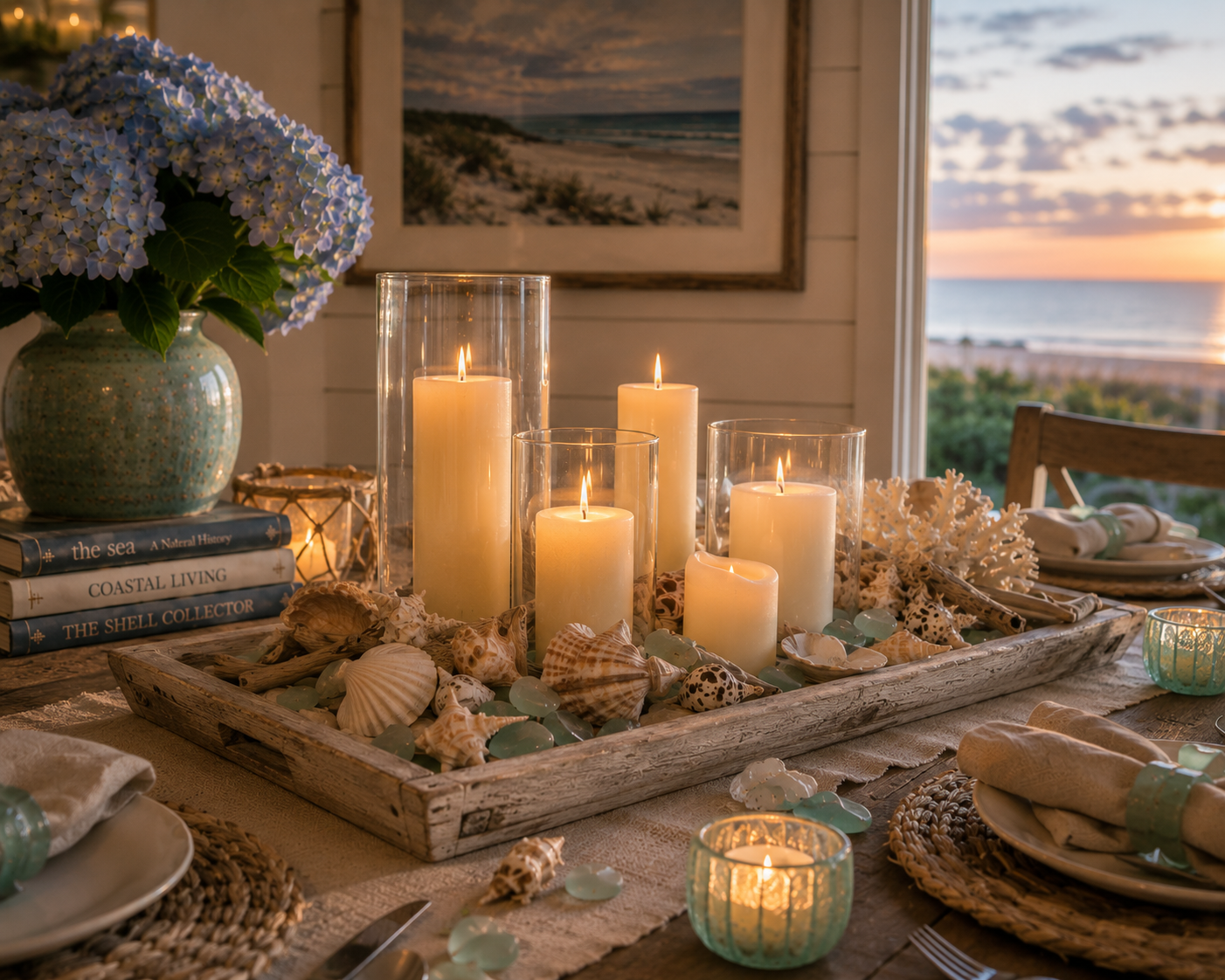
18. Candle Cluster
 Save
SaveGather pillar candles of varying heights on a tray and scatter shells around their bases.
Lit together, they create a warm, gathered centerpiece for a table or sideboard.
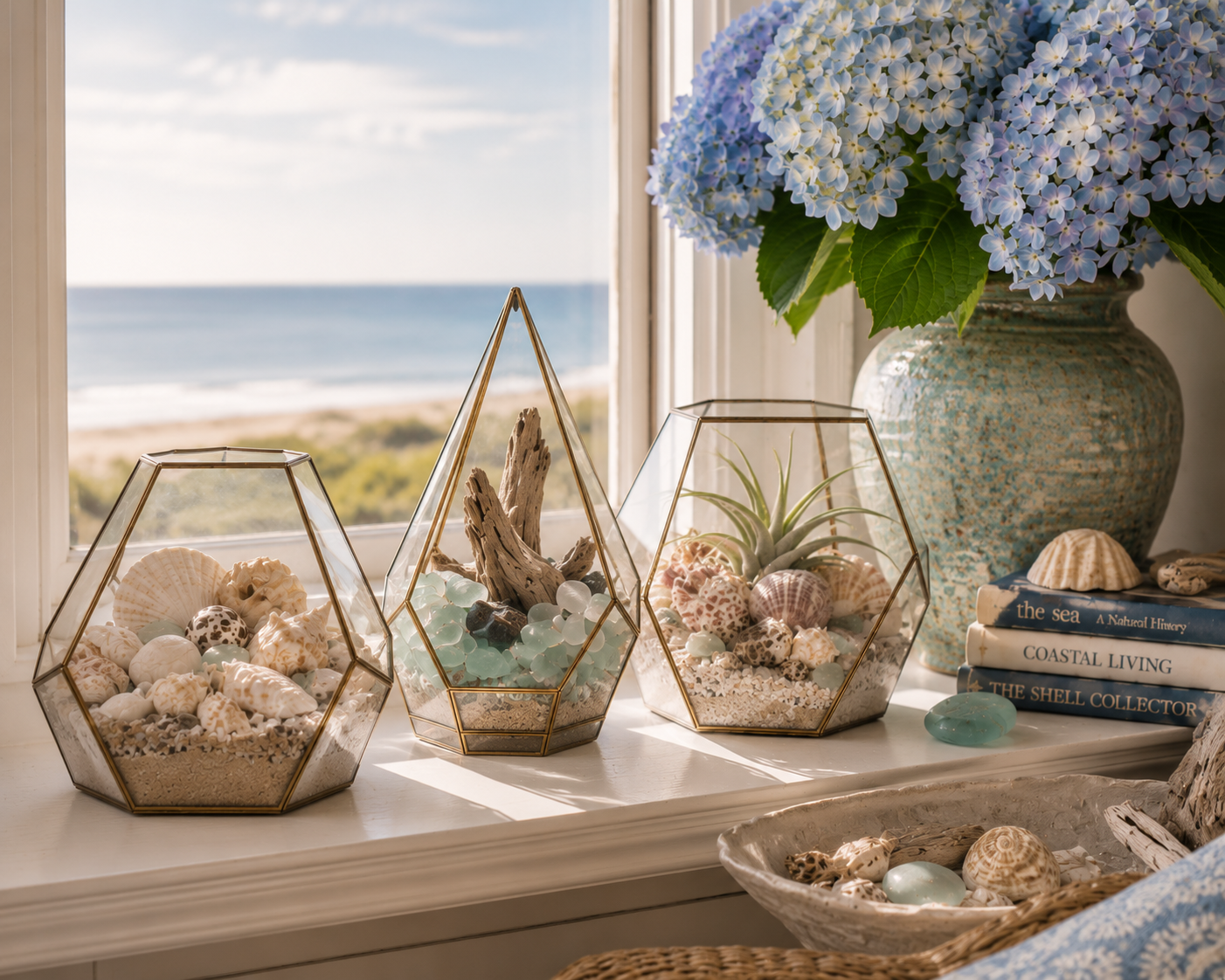
19. Glass Terrarium
 Save
SaveLayer sand, shells, and a small air plant inside a geometric glass terrarium for a tiny coastal landscape.
It's a sculptural piece that brings a bit of the shore to a desk or windowsill.
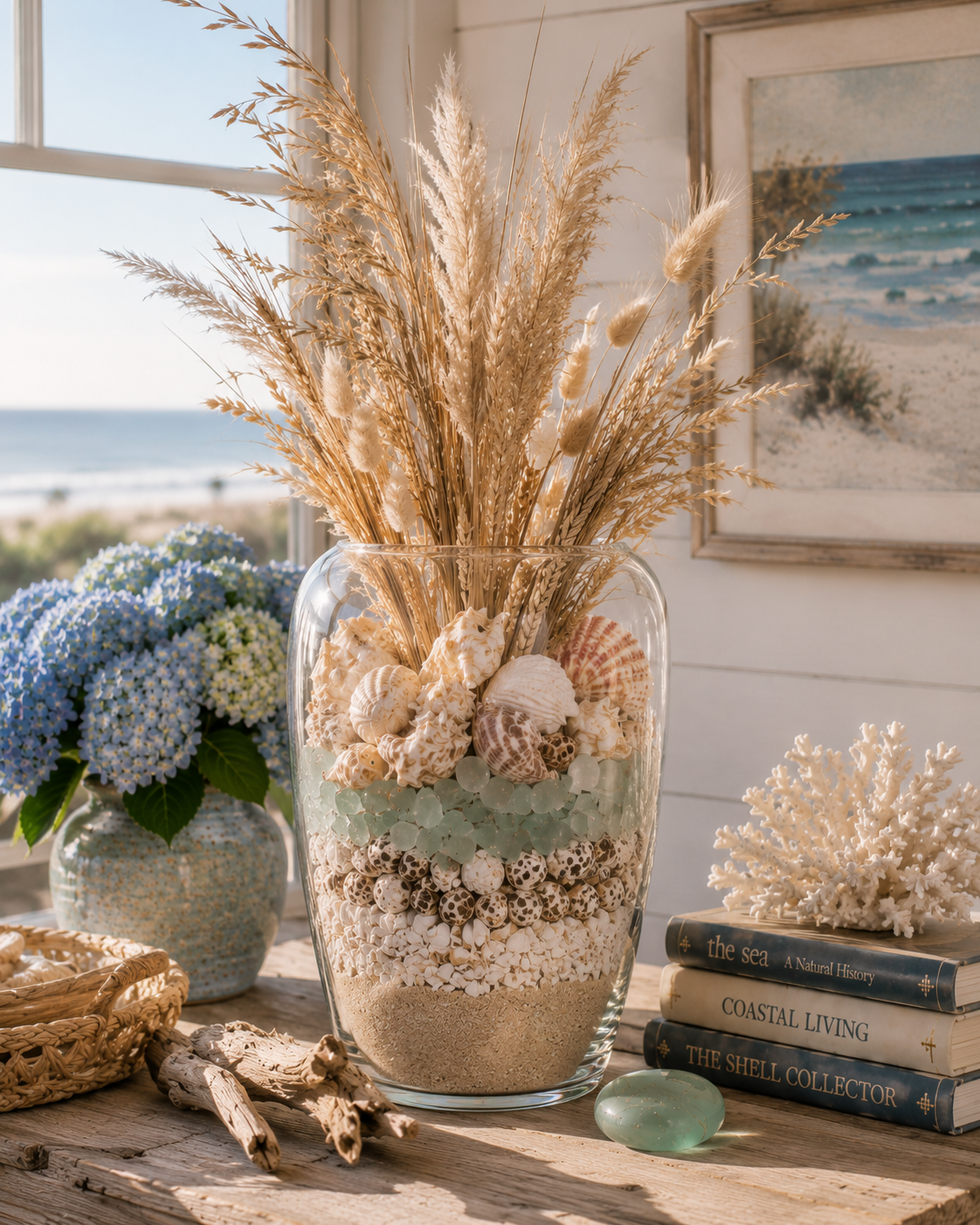
20. Sand & Shell Vase
 Save
SaveLayer sand and shells inside a clear vase to capture the feeling of a day at the beach.
Add a few stems of dried grass for height and a touch of softness.
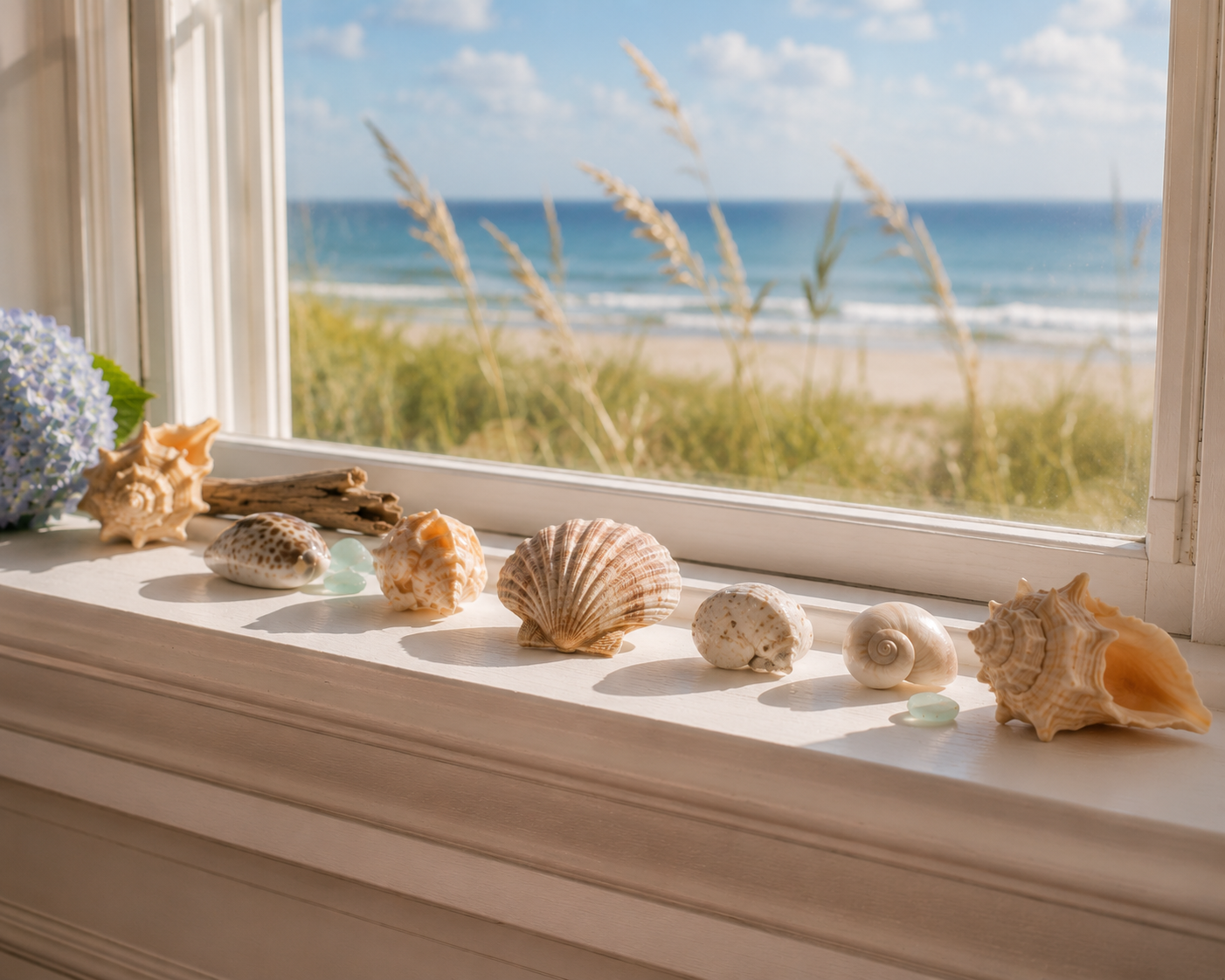
21. Windowsill Line-Up
 Save
SaveA simple row of shells along a sunny windowsill lets the light play across their curves and ridges.
It's the easiest display of all — and one that changes beautifully through the day.
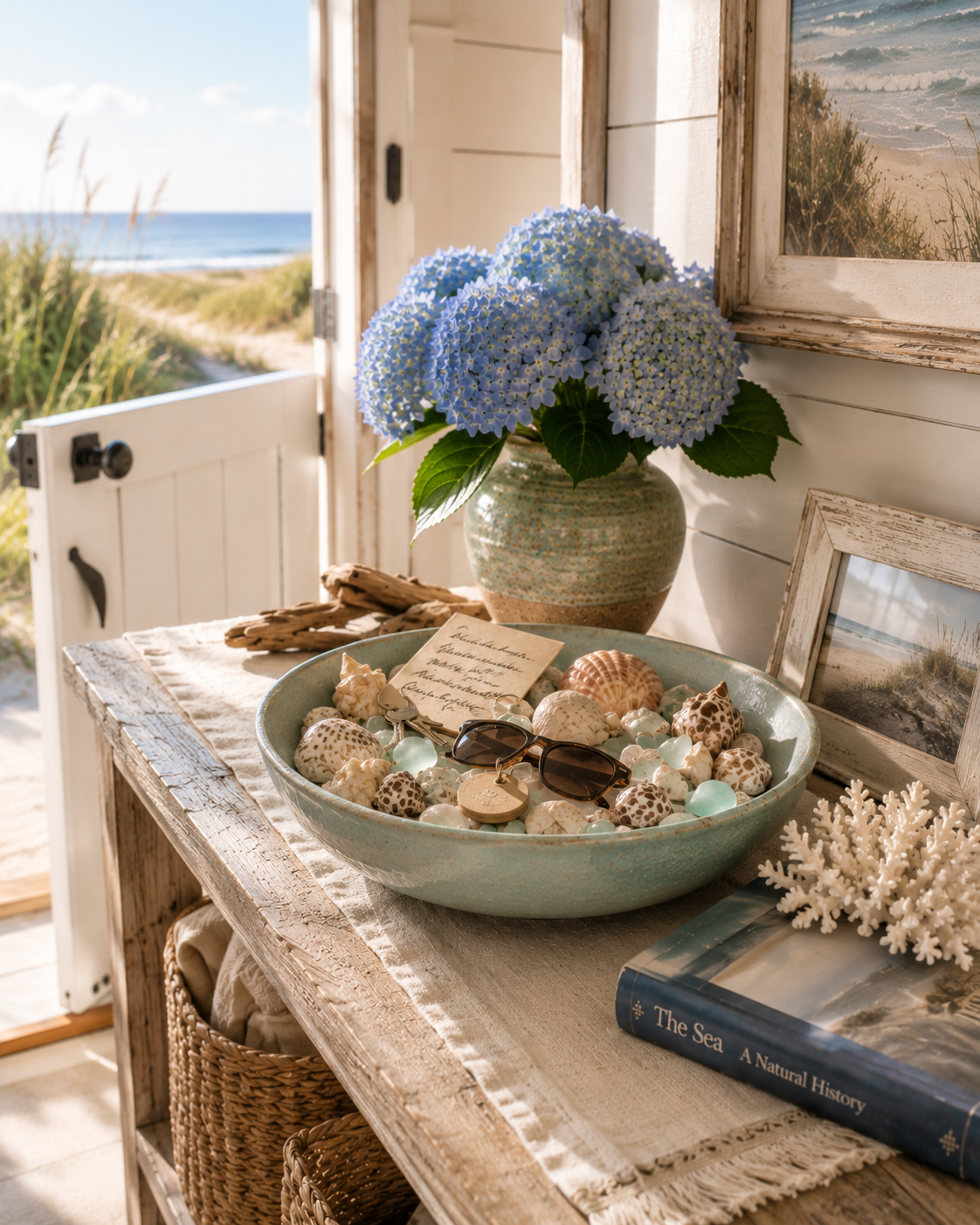
22. Entryway Catch-All
 Save
SaveSet a shallow bowl of shells on the entry console to greet you with the coast each time you come home.
It doubles as a pretty catch-all for keys and small everyday things.
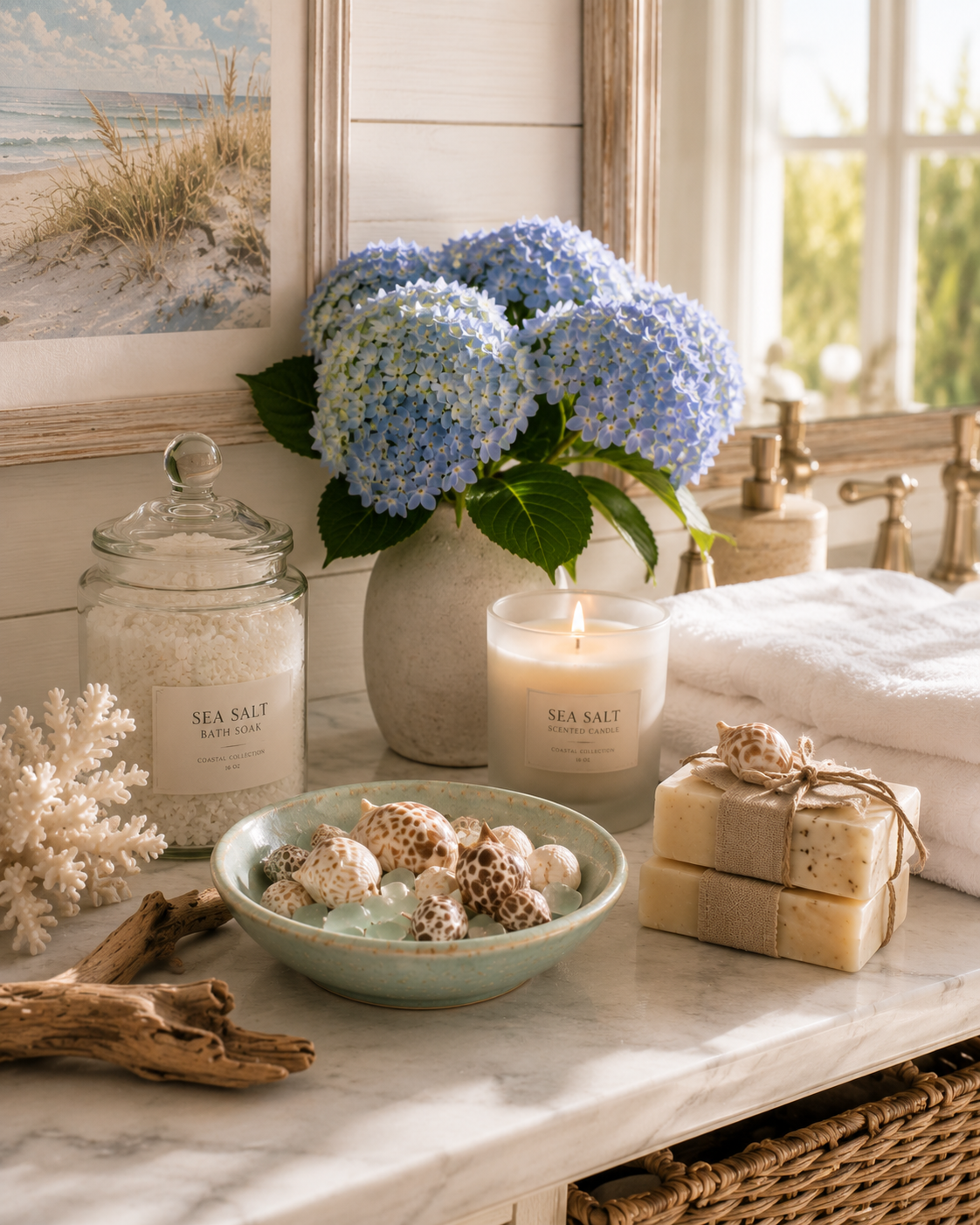
23. Bathroom Accents
 Save
SaveA small dish of shells on the bathroom vanity turns an everyday space into a calming, spa-like retreat.
Pair with natural soaps and a sea-salt candle to complete the feeling.
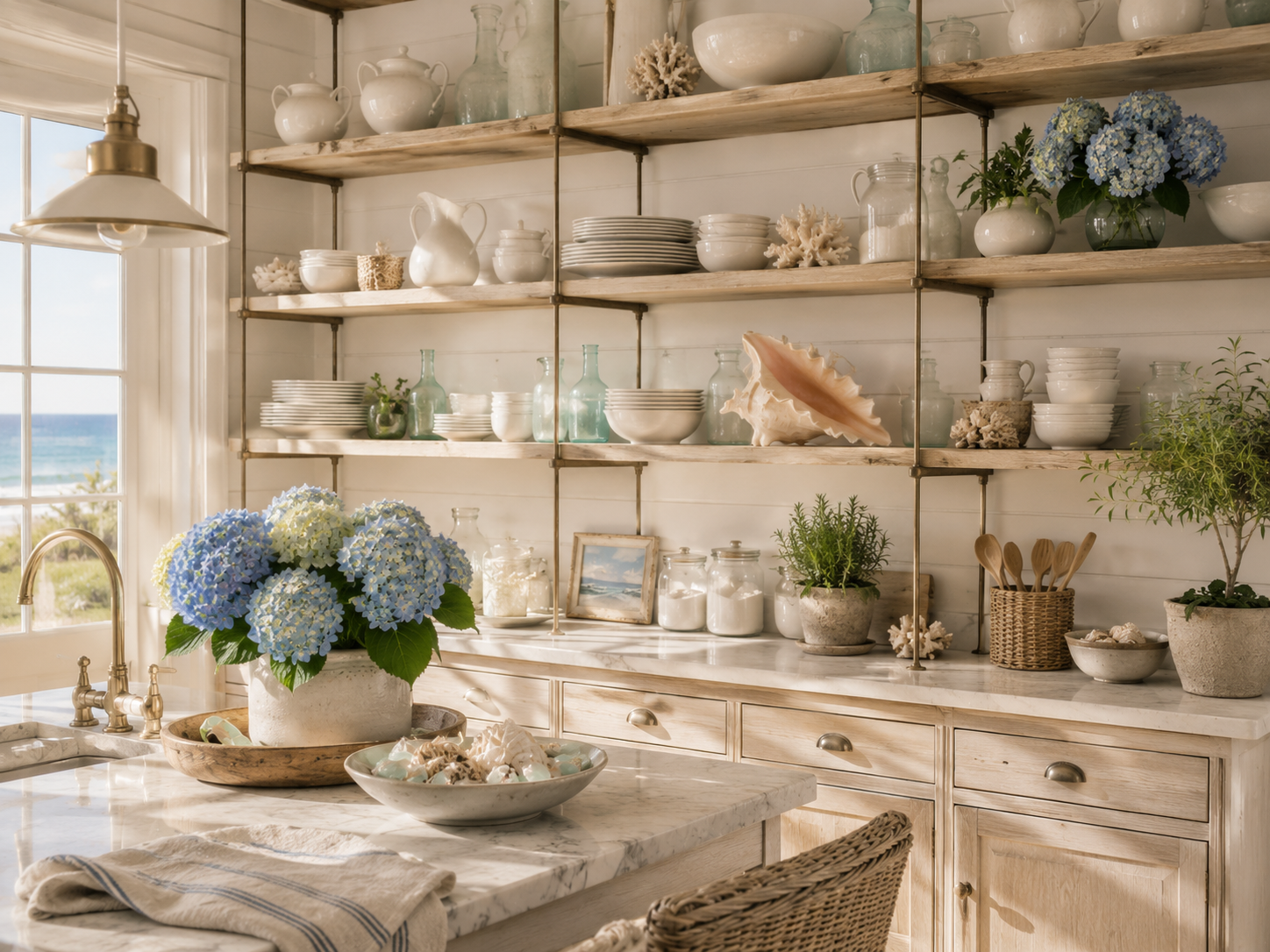
24. Kitchen Touches
 Save
SaveMix a few shells among the ceramics on an open kitchen shelf for an unexpected, breezy detail.
They soften a hardworking space and tie it to the rest of your coastal home.
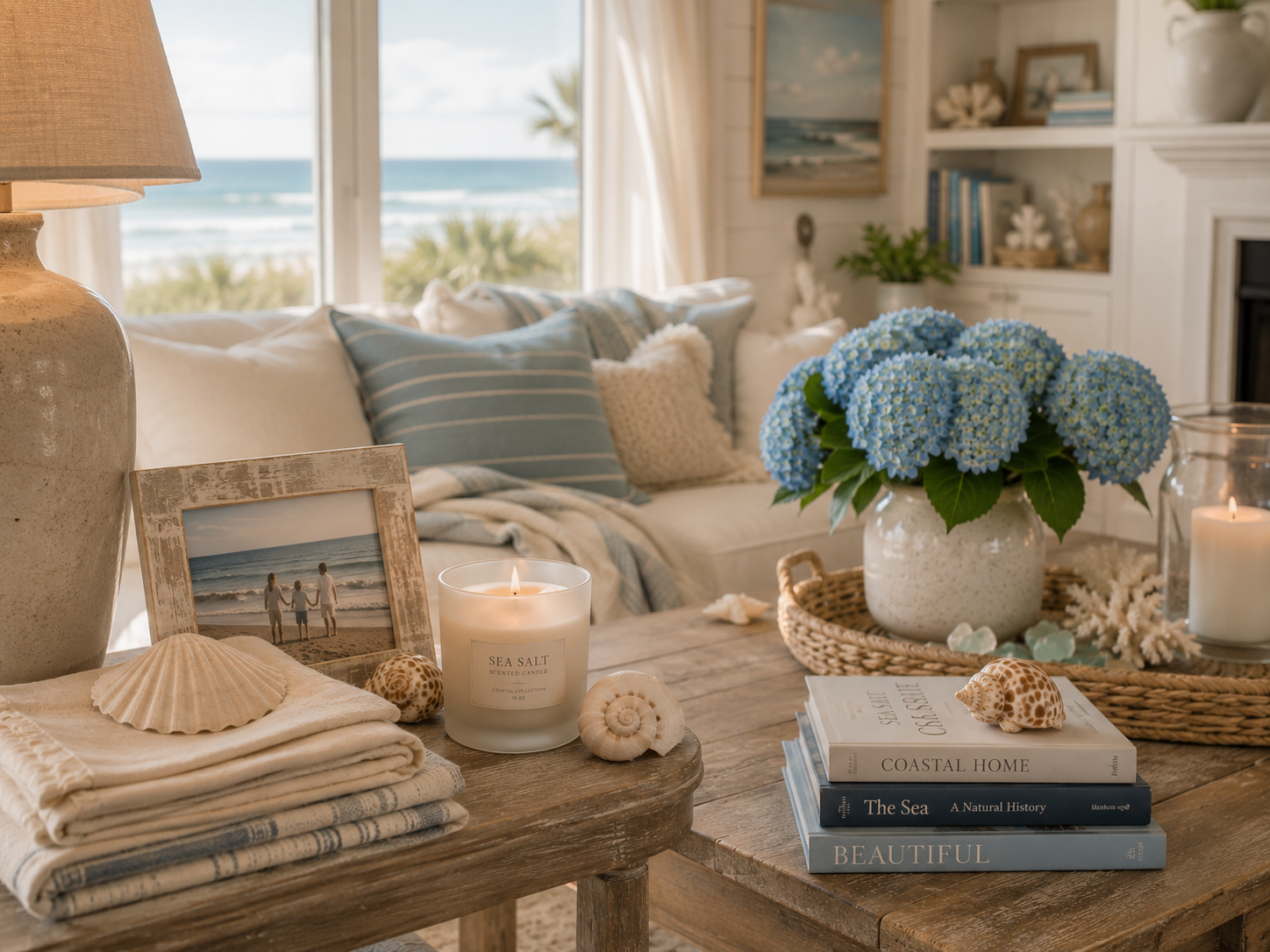
25. Everyday Touches
 Save
SaveTuck small shells around a candle, rest a single scallop atop a stack of linen napkins, or set one beside a framed photo.
These small moments bring the coast into a room without ever feeling themed.
In Closing
However you choose to display them, let restraint be your guide. A handful of beautiful shells, well-placed, will always outshine a crowded shelf.
Start with one quiet vignette and let your collection grow from there.
Continue Your Beachcombing Journey
Hand-picked next steps — chosen because they build directly on what you've just read.
Article
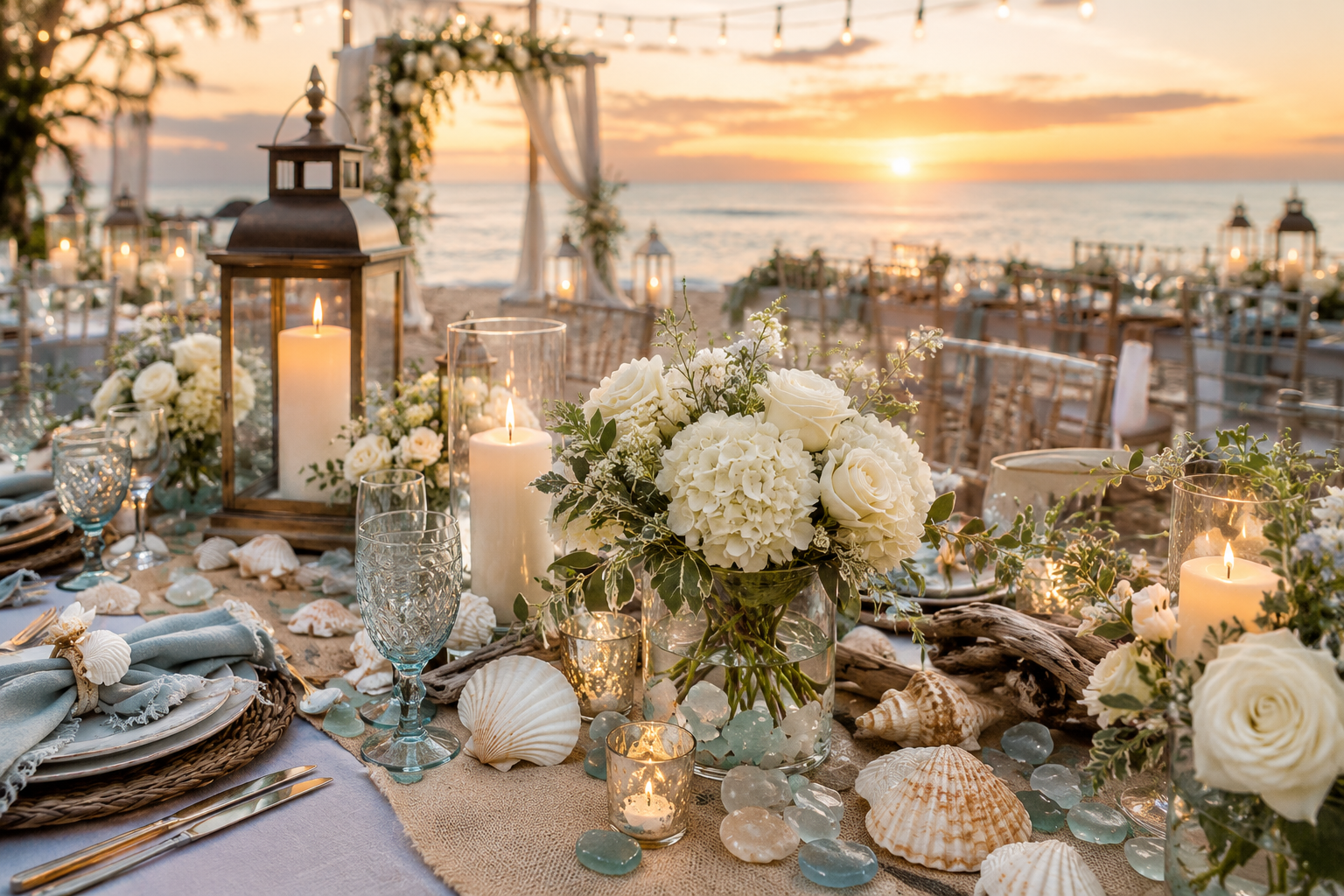
Coastal Wedding Inspiration: Elegant Seashell Ideas for a Timeless Seaside Celebration
Hand-picked next step from the editors.
Guide
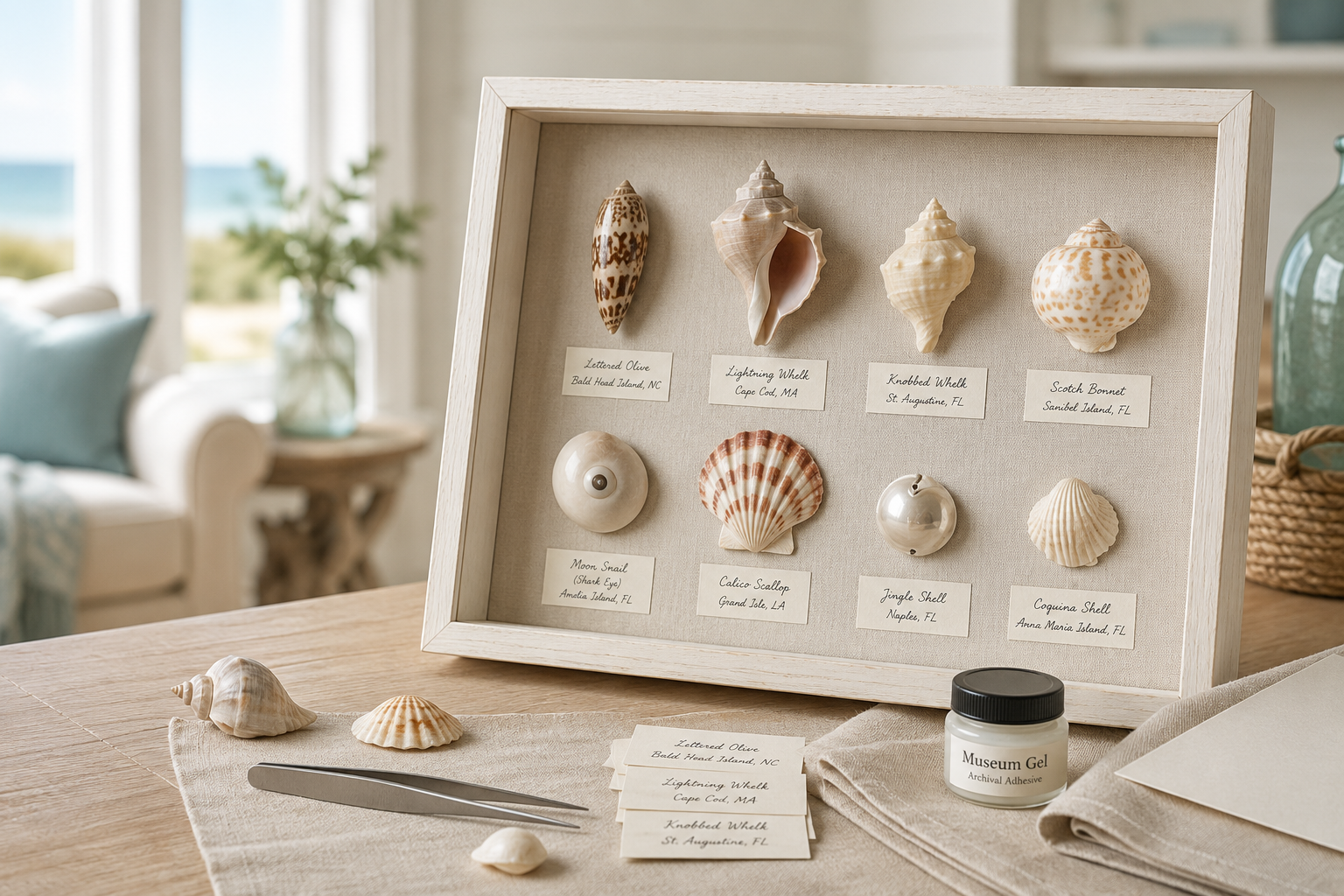
DIY Coastal Keepsakes
Hand-picked next step from the editors.
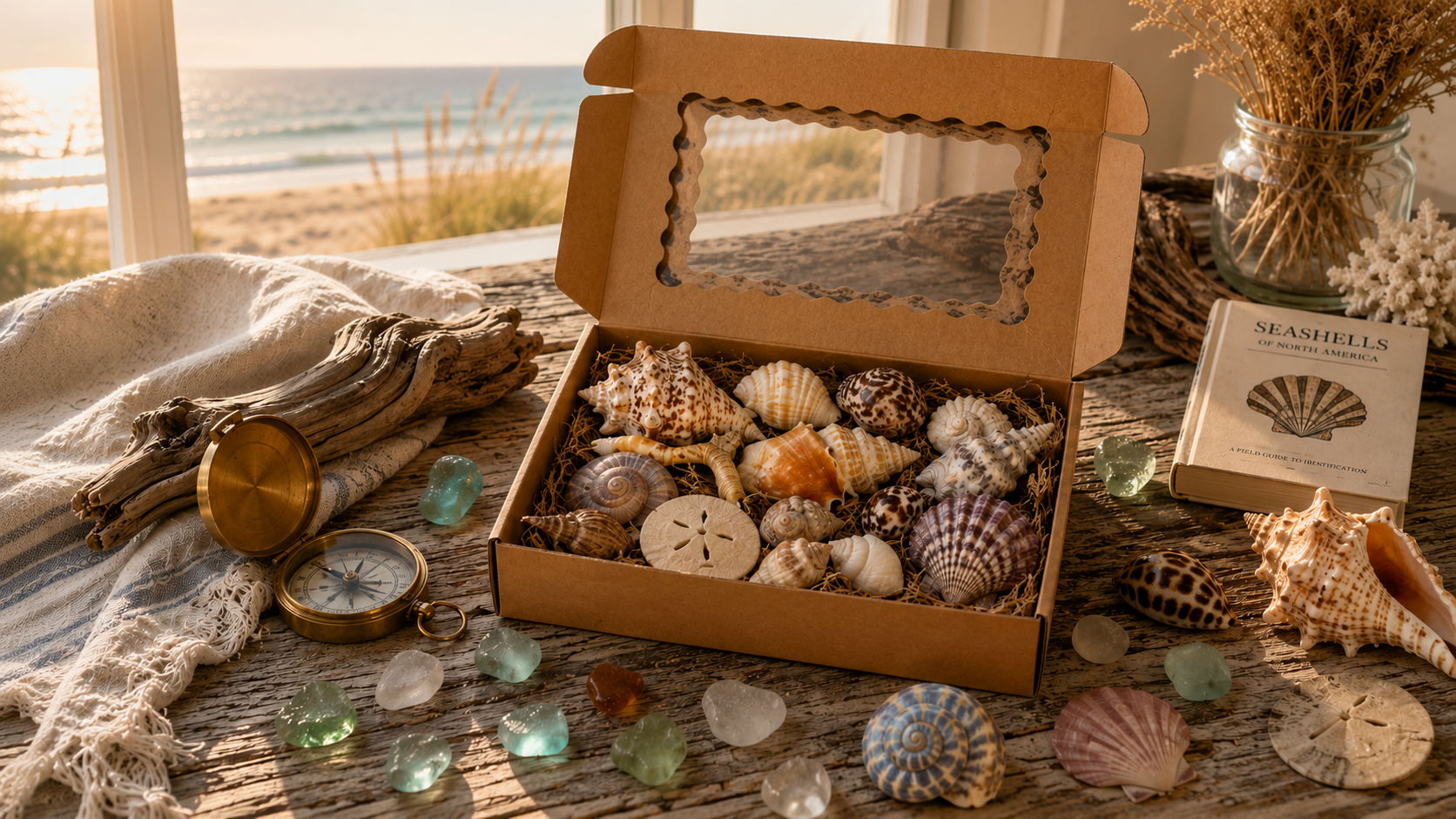
Curated Shell Box
The Signature Shell Box
See these ideas in a curated collection.
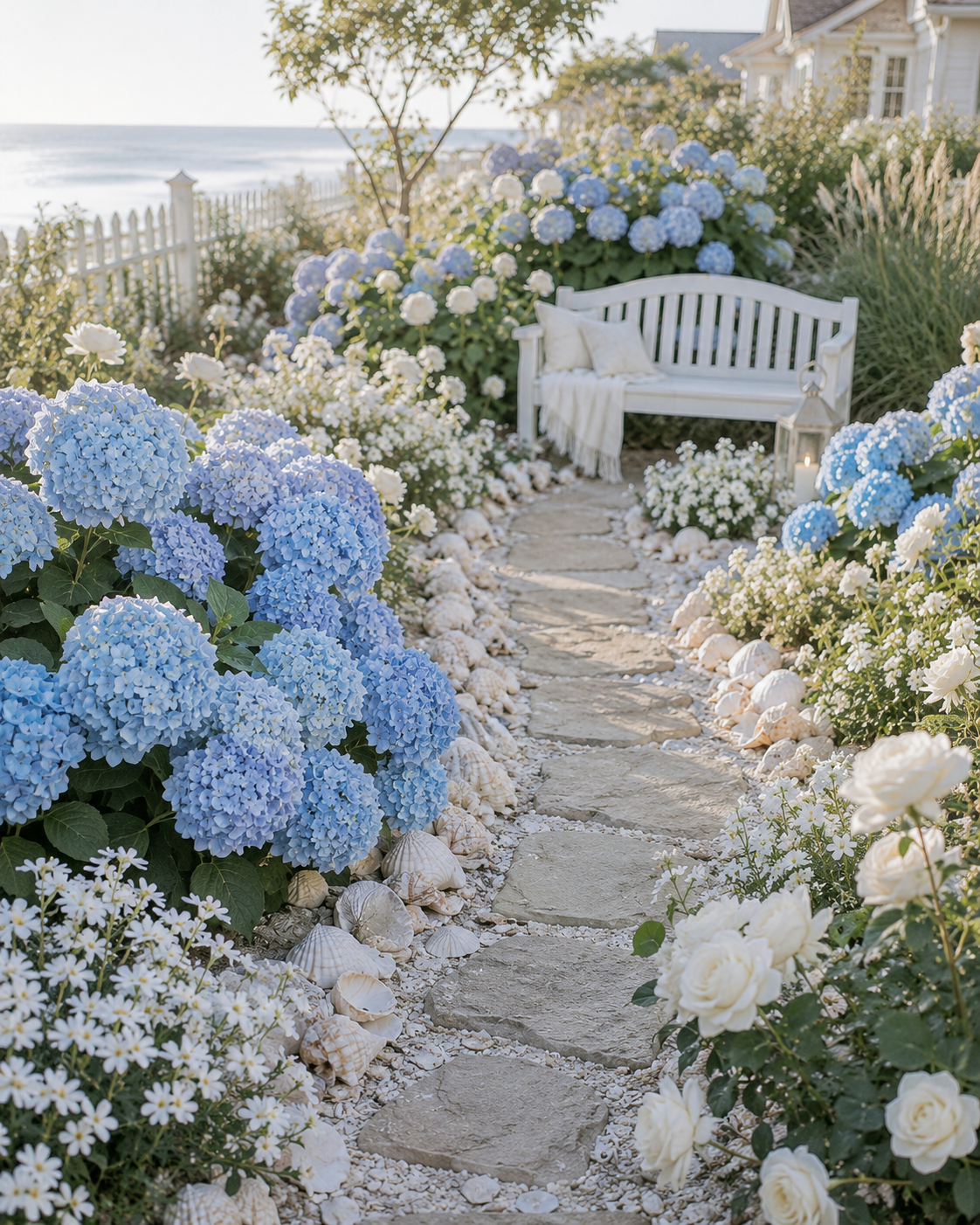
Article
Blue & White Coastal Garden Ideas: Creating a Seaside-Inspired Summer Retreat
Hand-picked next step from the editors.
Compare Similar Shells
Species and look-alikes worth studying side by side. Every card routes into the shell reference.
Species
Scotch Bonnet
Semicassis granulata
Cream base with regular reddish-brown squares in tidy rows. Rounded body whorl and short spire; toothed inner lip.
Explore ShellSpecies
Knobbed Whelk
Busycon carica
Aperture opens on the right when the spire points up. Row of blunt knobs along the shoulder of the body whorl; interior often flushed with orange.
Explore ShellSpecies
Lettered Olive
Americoliva sayana
Cylindrical body with a very short spire and a long narrow aperture. The polished cream base carries tan or brown zigzag lines that give the species its 'lettered' name.
Explore ShellSpecies
Atlantic Auger
Terebra dislocata
Elongated screw-shaped shell up to 2 inches, pale grey to tan with faint spiral banding; each whorl carries fine axial ribs.
Explore ShellBeaches Worth Exploring Next
Shores connected to the shells, regions, and conditions on this page.
North Carolina Outer Banks
Outer Banks
A 200-mile chain of Atlantic barrier islands — Cape Hatteras, Ocracoke, and Cape Lookout deliver whelks, olive shells, and the state shell,…
Explore BeachGeorgia Coast
Jekyll Island
Historic Golden Isle with generous public beaches — Driftwood Beach and St. Andrews shore deliver moon snails, jingle shells, and…
Explore BeachFlorida Gulf Coast
Sanibel Island
Sanibel's east-west orientation sweeps Gulf shells onto its shore in exceptional variety — the reason it's the most celebrated shelling…
Explore BeachNorth Carolina Outer Banks
Ocracoke Island
A ferry-only Outer Banks island south of Hatteras — sixteen miles of protected National Seashore beach where Scotch bonnets and knobbed…
Explore BeachDiscover More Coastal Inspiration
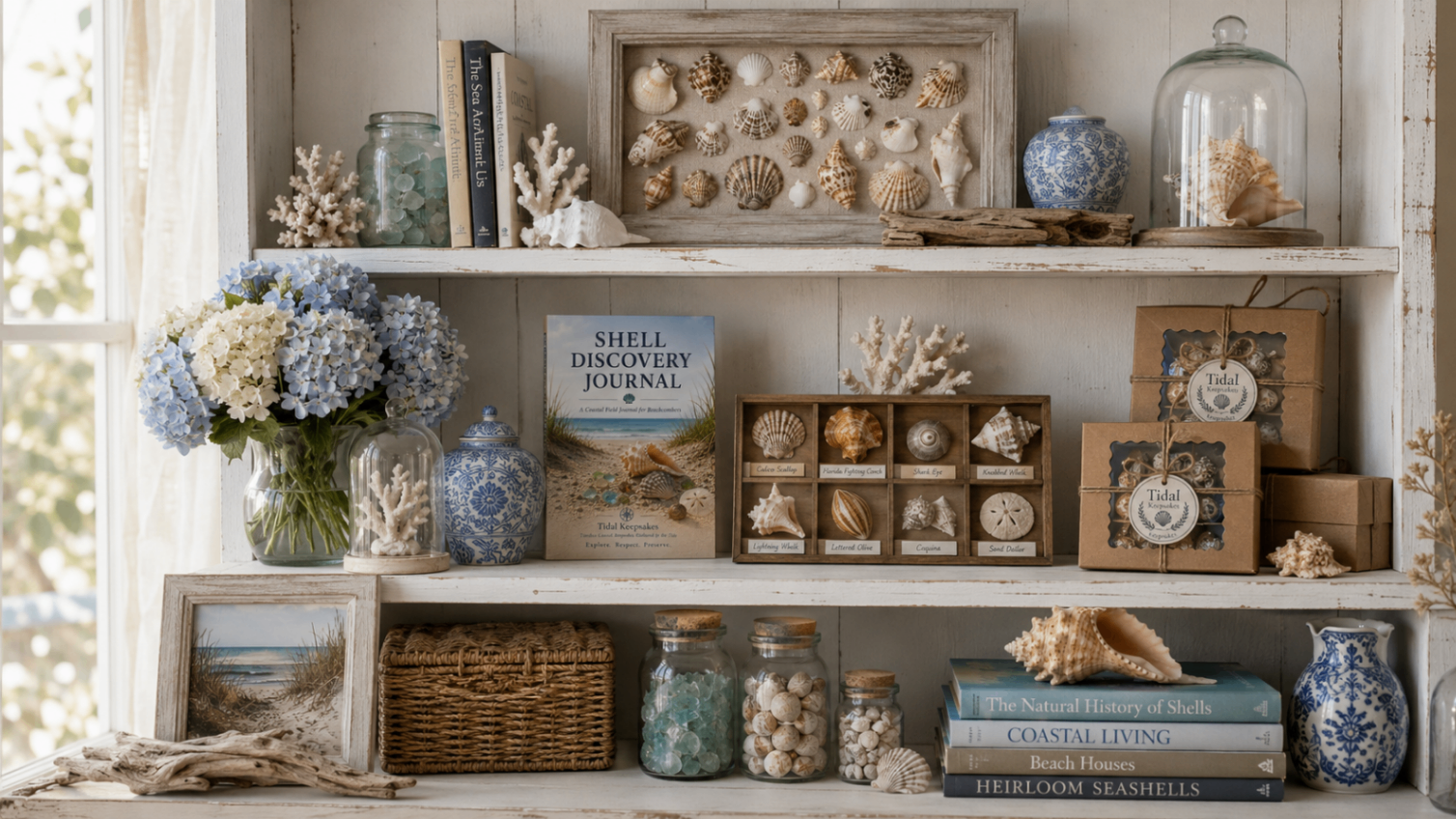
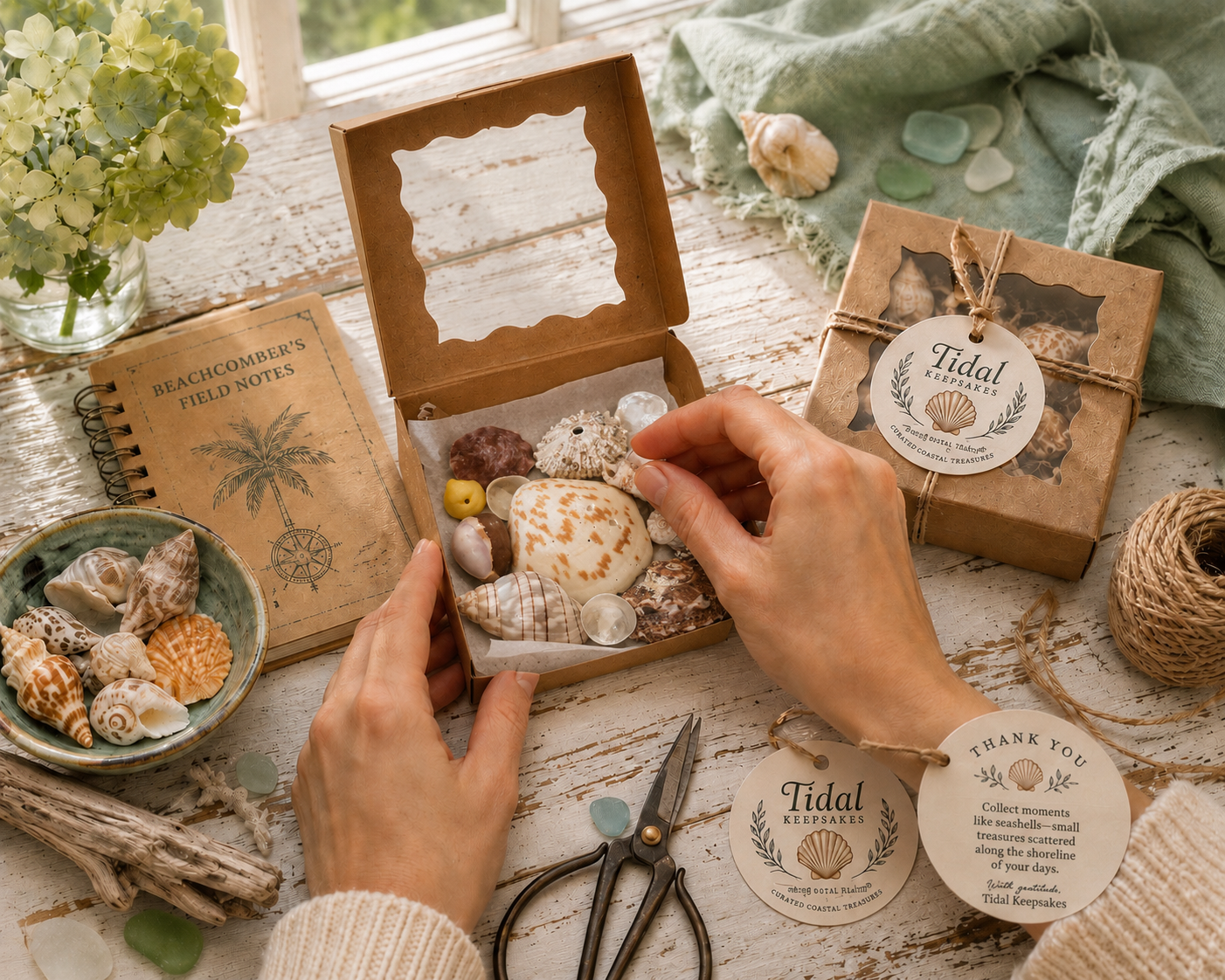
Curated coastal favorites and specimen boxes that echo the story above.
A Learning Journey to Follow
Learning Shell Identification
For growing collectors · 5 steps
For readers who already know a scallop from a whelk and want to sharpen the edge cases. Ends at the journal, where identification becomes a practice, not a lookup.
- 1
Understand the Anatomy
Shell Identification Guide
Vocabulary first — apex, whorl, aperture, columella.
Continue - 2
Meet the Common Species
Explore Common Shells
Browse the canonical shell records the site is built on.
Continue - 3
Compare Look-Alikes
Commonly Confused Shells
Side-by-side markers for the pairs that trip up new collectors.
Continue - 4
Find Them in the Wild
Best Beaches for Shelling
Where each species actually washes up.
Continue - 5
Practice in the Field
Shell Discovery Journal
Record each ID with sketches and notes to lock the learning in.
Continue