
 Save
SaveCoastal Inspiration
Blue & White Coastal Garden Ideas: Creating a Seaside-Inspired Summer Retreat
There is something timeless about a blue and white garden. The combination feels cool during the hottest days of summer, reflects natural light beautifully, and creates a sense of calm that never goes out of style.
Add carefully placed seashells, weathered stone, and coastal accents, and your garden begins to feel like a peaceful seaside retreat.
Whether you live near the coast or simply love the colors of the ocean, a blue and white garden offers an elegant way to bring coastal charm into your outdoor space.
Build Your Garden Around Blues and Whites
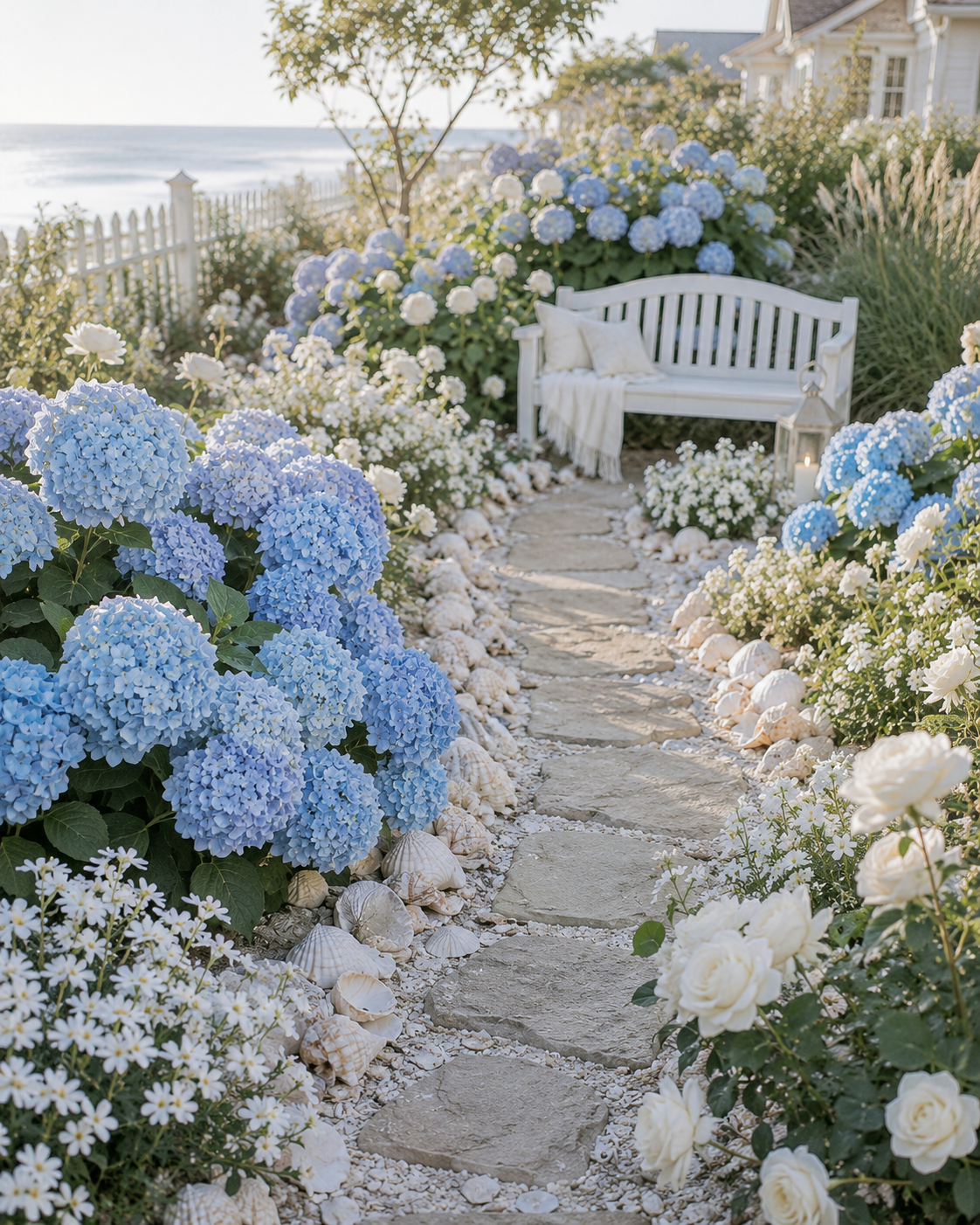
SaveThe secret to a successful blue and white garden is restraint. Limiting your palette creates a cohesive look and allows individual plants to shine. Even small garden beds feel larger and more sophisticated when they focus on only a few colors.
Recommended plants: blue hydrangeas, delphiniums, Russian sage, lavender, salvia, white roses, white petunias, white alyssum, white Shasta daisies, and white phlox.
Mix different shades of blue with bright white blooms and varying leaf textures for visual interest throughout the season.
Create Shell-Lined Garden Borders
 Save
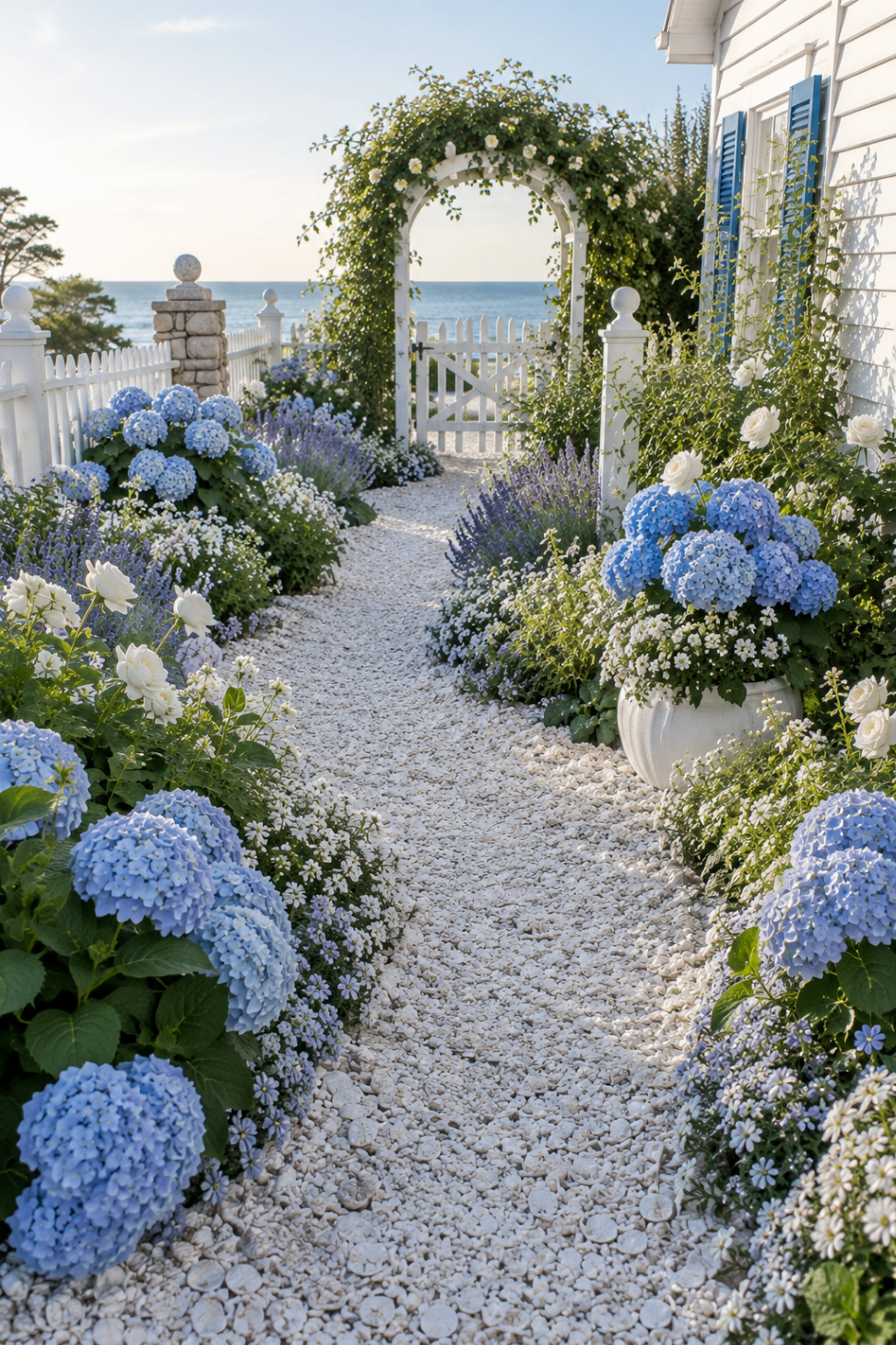
SaveSeashells make beautiful natural edging material and instantly introduce coastal character. Line flower beds, pathways, and garden borders with larger shells such as whelks, quahogs, surf clams, large scallops, and oyster shells.
The shells catch sunlight throughout the day and provide texture even when flowers are not blooming.
For a more refined appearance, combine shells with white decorative pebbles or crushed oyster shell pathways.
Coastal Pathways and Walkways
SaveFew garden features create more impact than a beautiful path. Crushed oyster shell pathways offer a classic coastal cottage look while reflecting sunlight and brightening shaded areas.
Pair shell pathways with white garden gates, driftwood accents, hydrangea borders, and boxwood hedges.
The result feels relaxed, elegant, and unmistakably coastal.
Pots, Containers, and Shell Accents
 Save
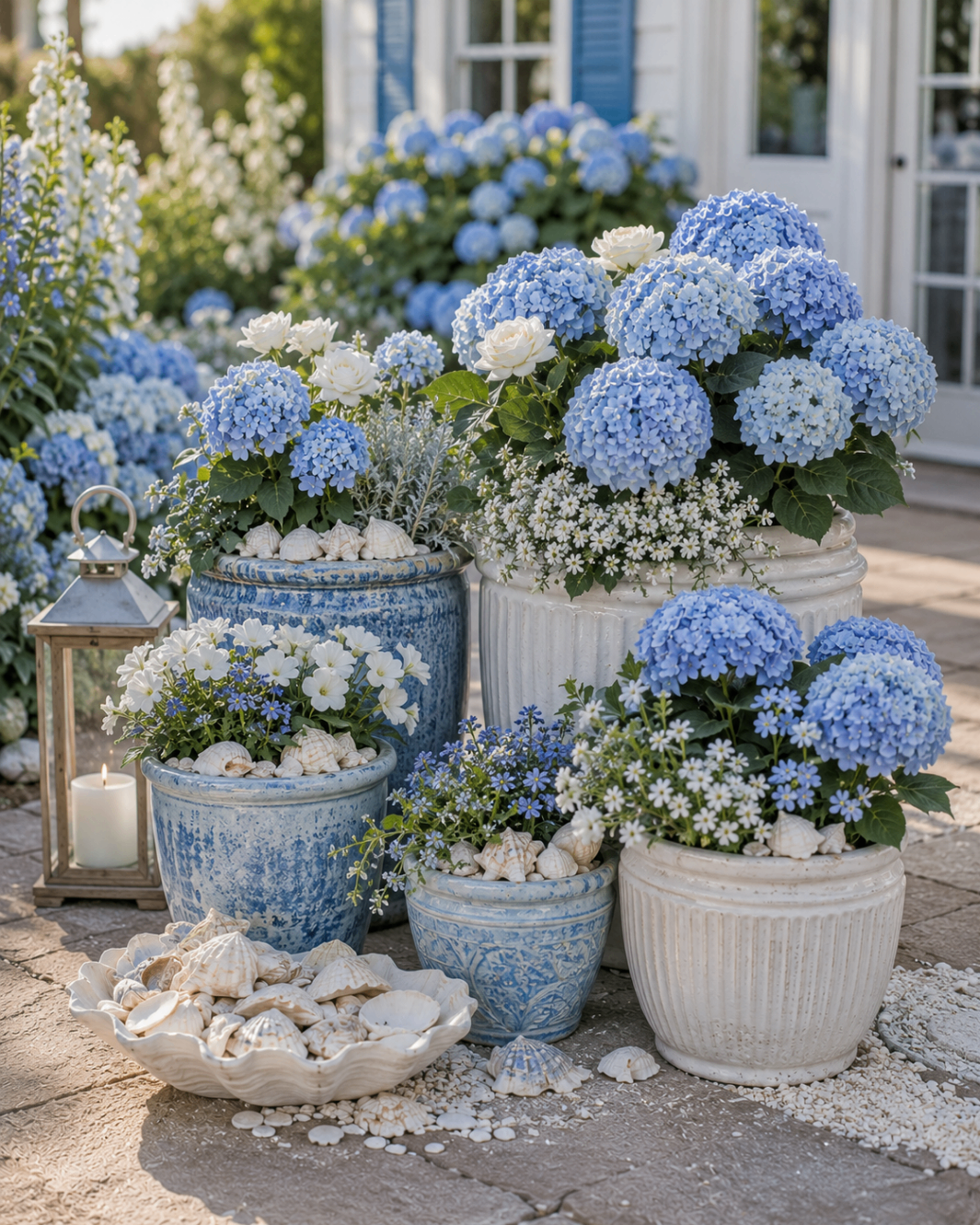
SaveContainer gardens provide another opportunity to introduce coastal details. White ceramic pots and weathered terracotta containers pair beautifully with blue and white flowers.
Top containers with crushed shells, white pebbles, and sea glass accents.
The shells act as decorative mulch while helping reduce moisture loss during hot weather.
Shell Displays for Garden Seating Areas
 Save
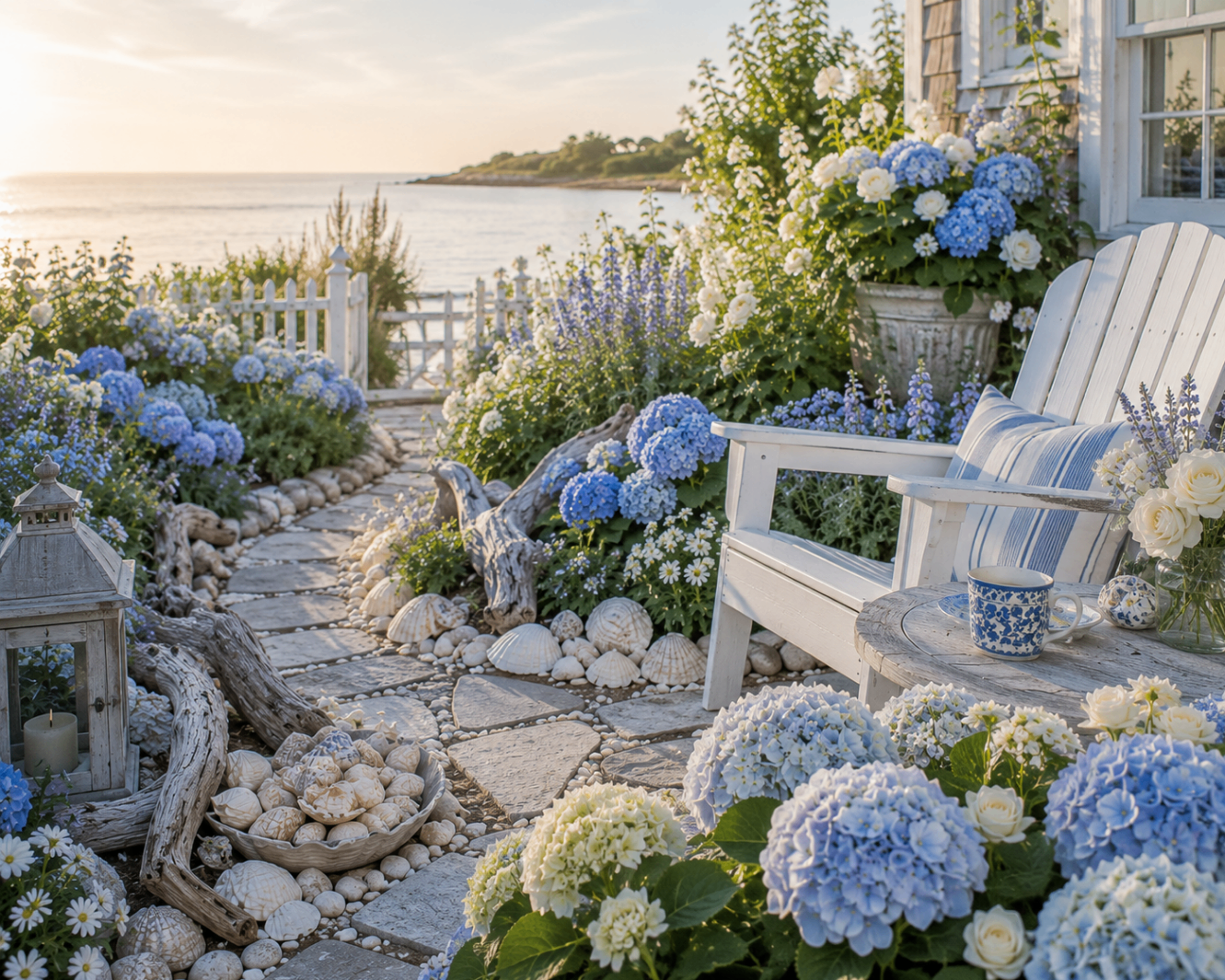
SaveOutdoor seating areas offer the perfect place to showcase special shell finds. Arrange shells in shallow bowls, stone birdbaths, decorative trays, and garden tables.
A simple collection of shells beside a bench creates a subtle focal point and encourages visitors to pause and enjoy the space.
Coastal Containers Around Patios
 Save
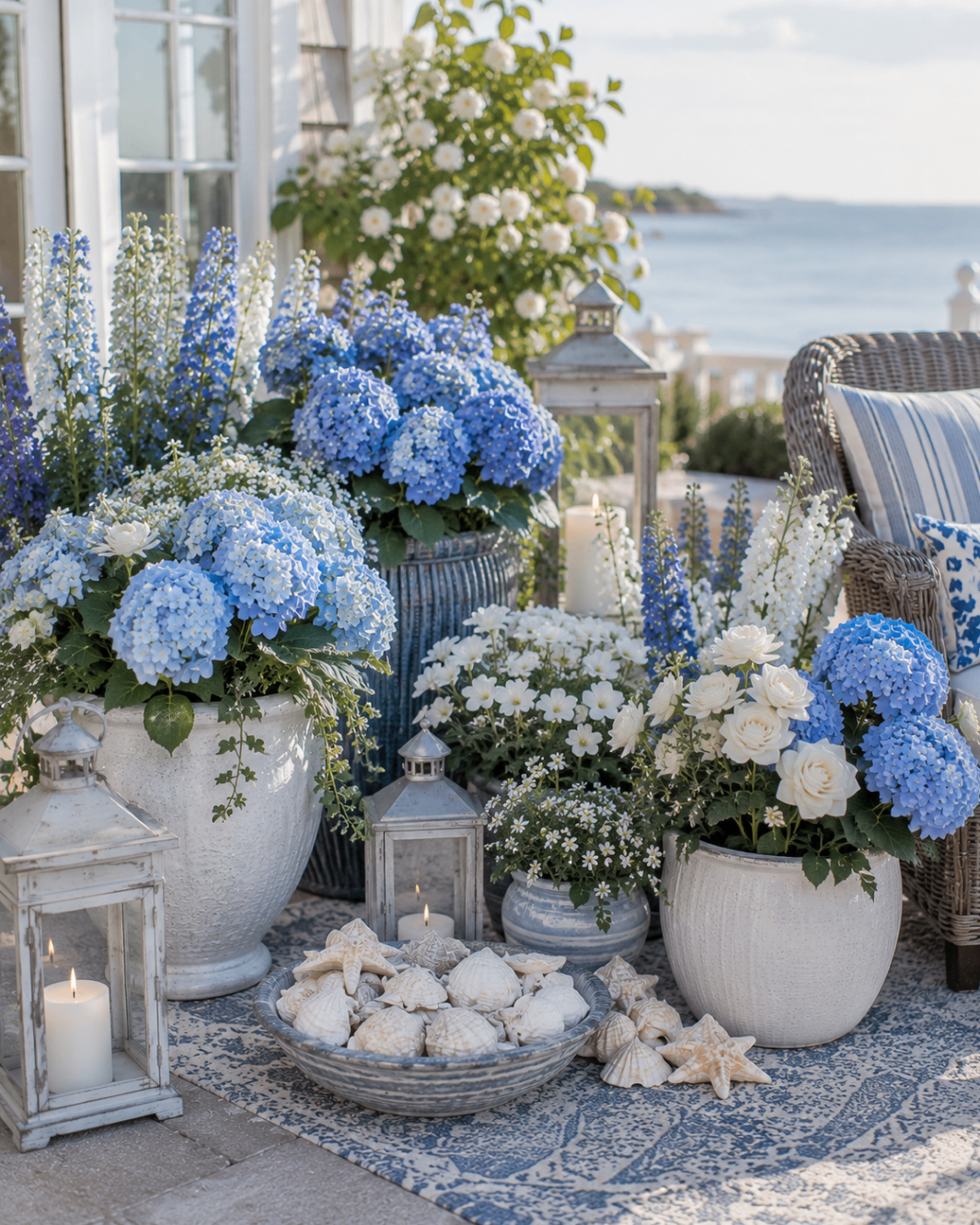
SavePatios often become gathering spaces during summer. Create a coordinated coastal look by grouping containers of varying heights filled with blue and white flowers. Tuck shells among the containers to tie everything together.
For added interest include lanterns, driftwood, white stone accents, and coastal pottery.
Add Texture with Driftwood and Natural Elements
 Save
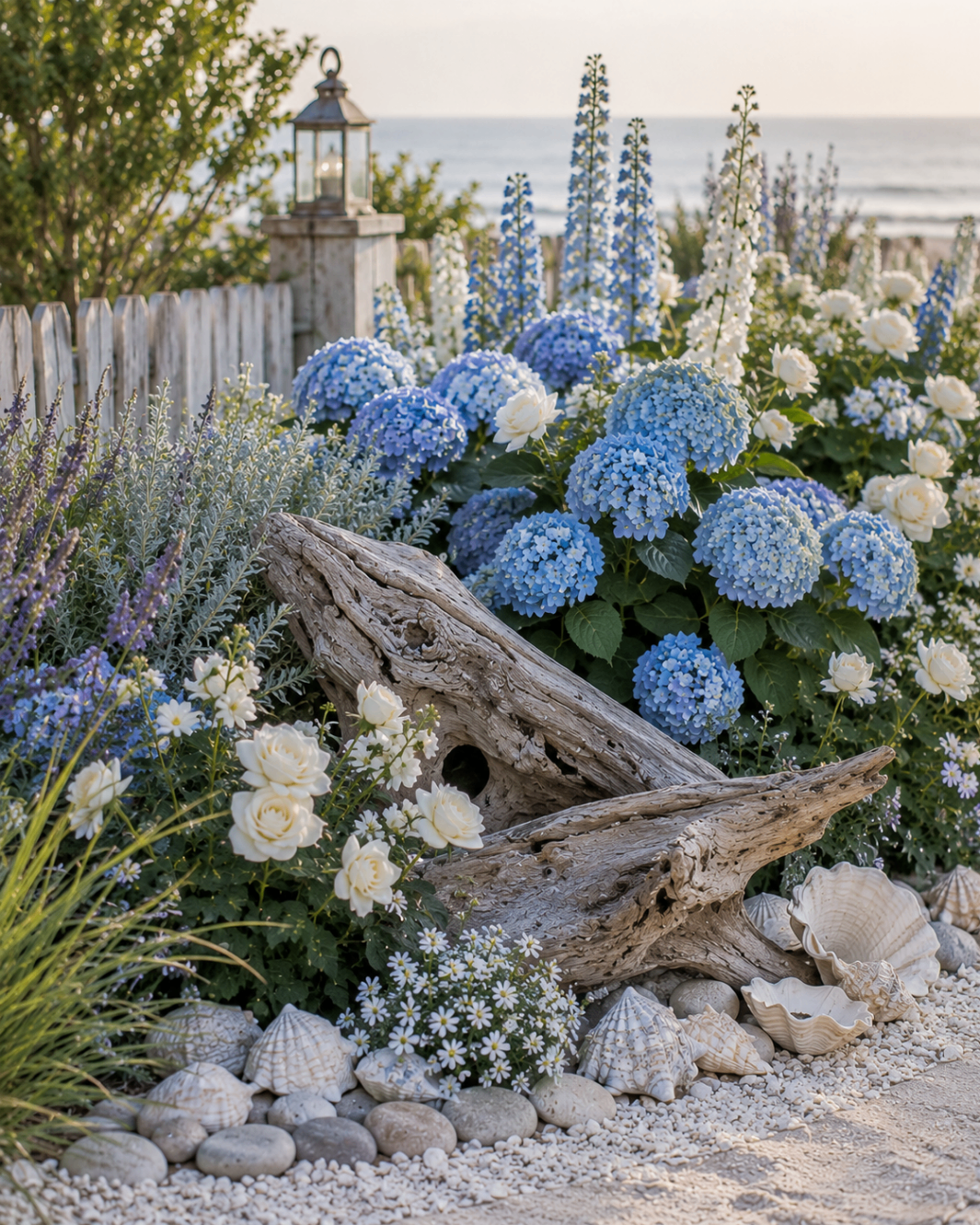
SaveCoastal gardens are not only about flowers. Natural materials add year-round structure and interest.
Consider incorporating driftwood, weathered logs, large beach stones, decorative shells, and white gravel.
These elements provide visual appeal even when plants are dormant.
Coastal Garden Styling Tips
SaveTo keep the space elegant: use shells as accents rather than the main attraction, repeat blue and white throughout the garden, and limit decorative items to avoid clutter.
Choose natural materials whenever possible, and group shells in odd numbers for a more organic appearance.
The most beautiful coastal gardens feel collected over time rather than heavily decorated.
Best Shells for Outdoor Garden Use
 Save
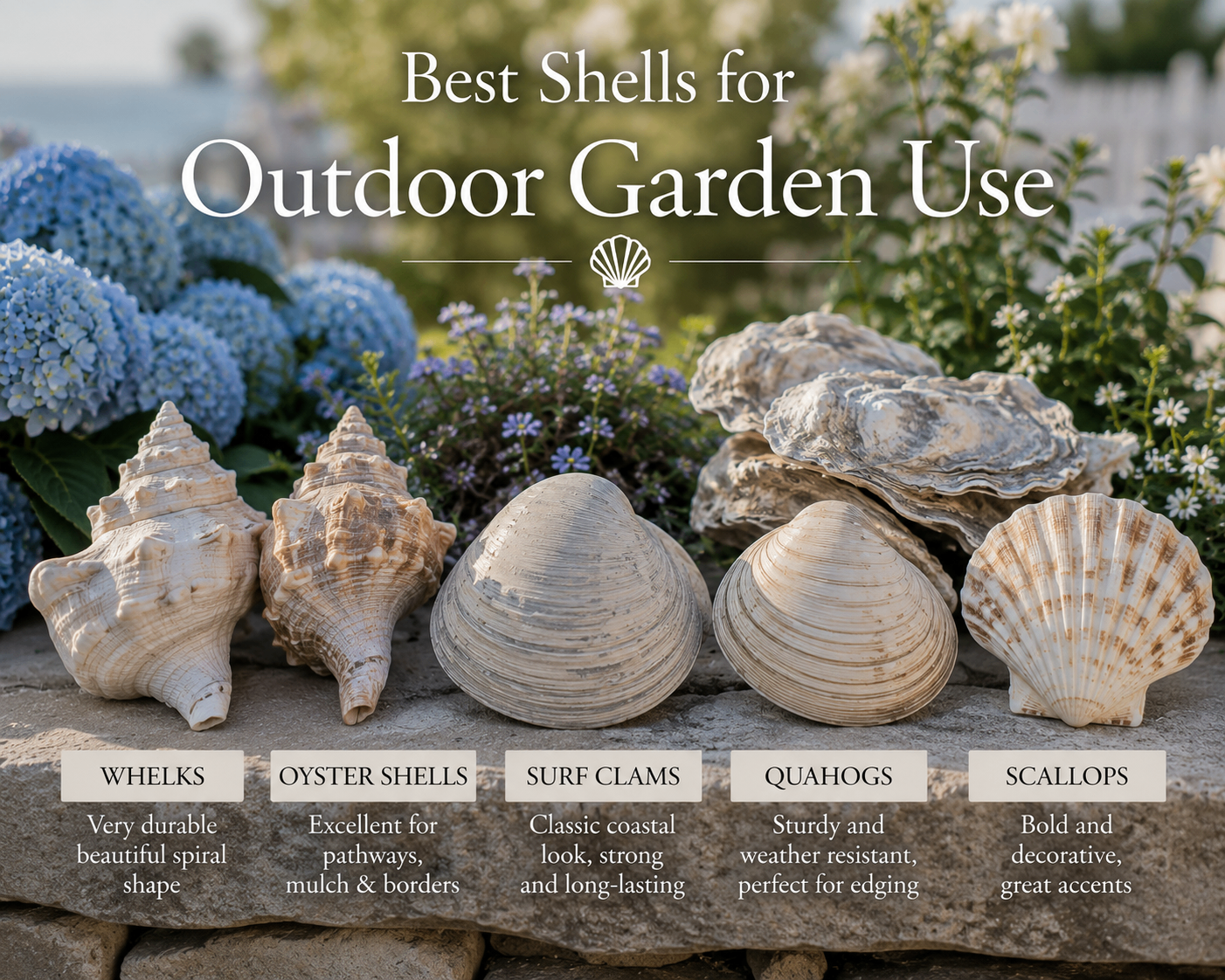
SaveSome shells hold up better outdoors than others. Recommended choices include whelks, oyster shells, surf clams, quahogs, and large scallops.
Use more delicate shells in protected areas or indoor displays where they are less likely to weather.
In Closing
A blue and white coastal garden rewards a light touch. Allow flowers to provide most of the color while shells, stone, and driftwood quietly support the design. The result is a garden that feels fresh, peaceful, and connected to the shoreline.
Whether you're enjoying morning coffee among the hydrangeas or watching the evening light reflect off shell-lined pathways, these simple coastal touches bring the spirit of the sea home all summer long.
Continue Your Beachcombing Journey
Hand-picked next steps — chosen because they build directly on what you've just read.
Article
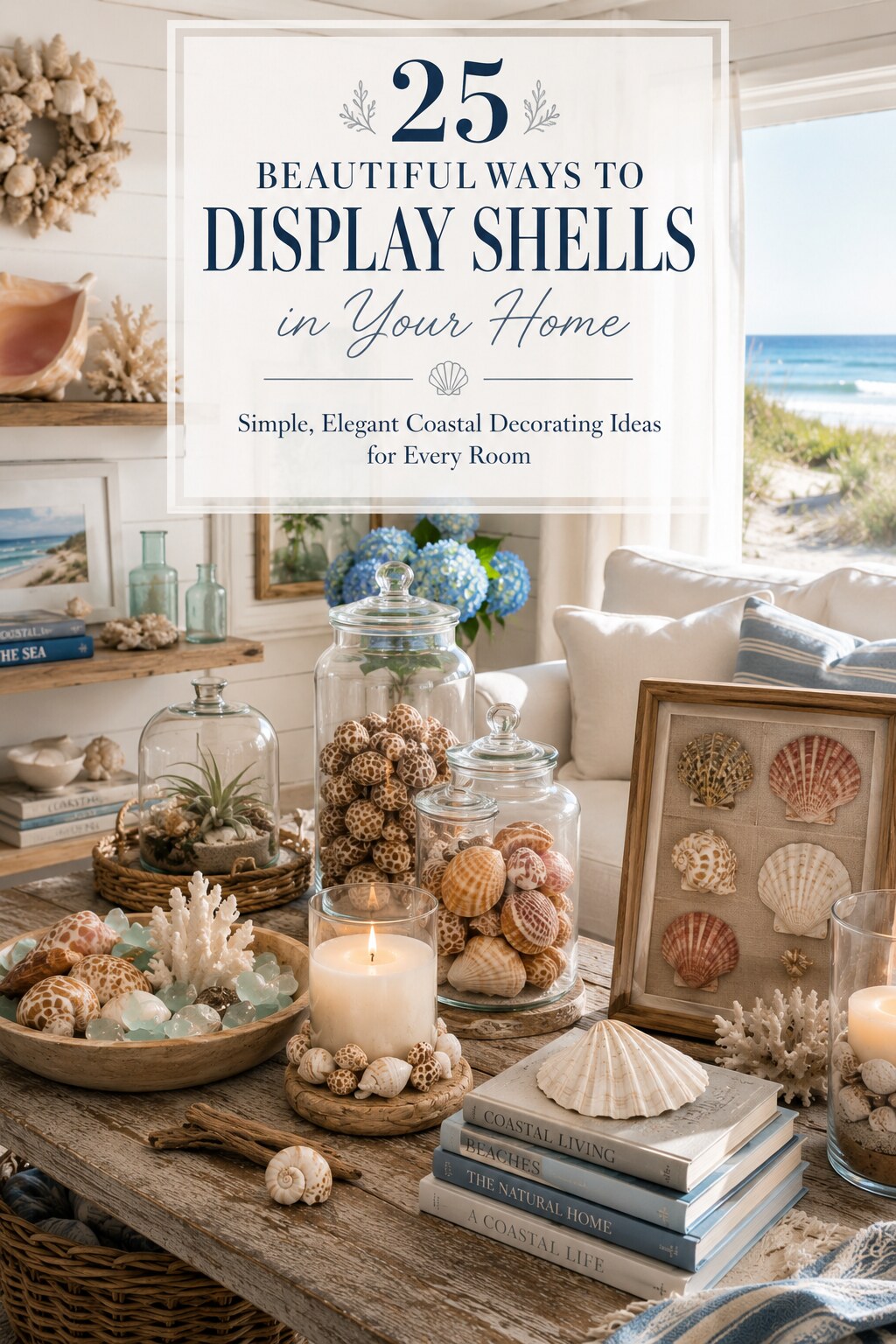
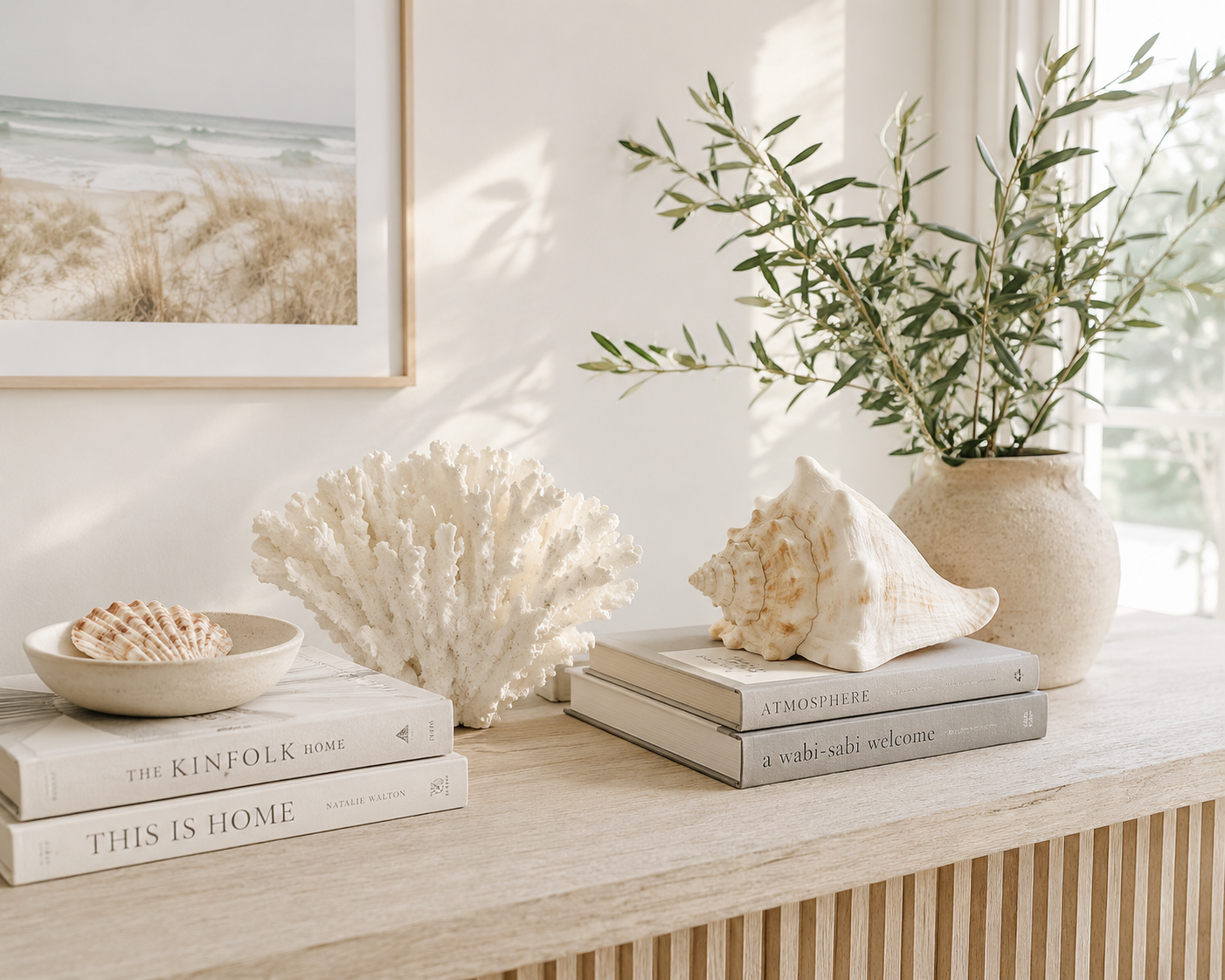
25 Beautiful Ways to Display Seashells in Your Home
Hand-picked next step from the editors.
Guide
Coastal Decor Ideas
Shares coastal-decor · shell-display.

Coastal Collection
Outdoor Seaside Living
Hand-picked next step from the editors.
Curated Shell Box
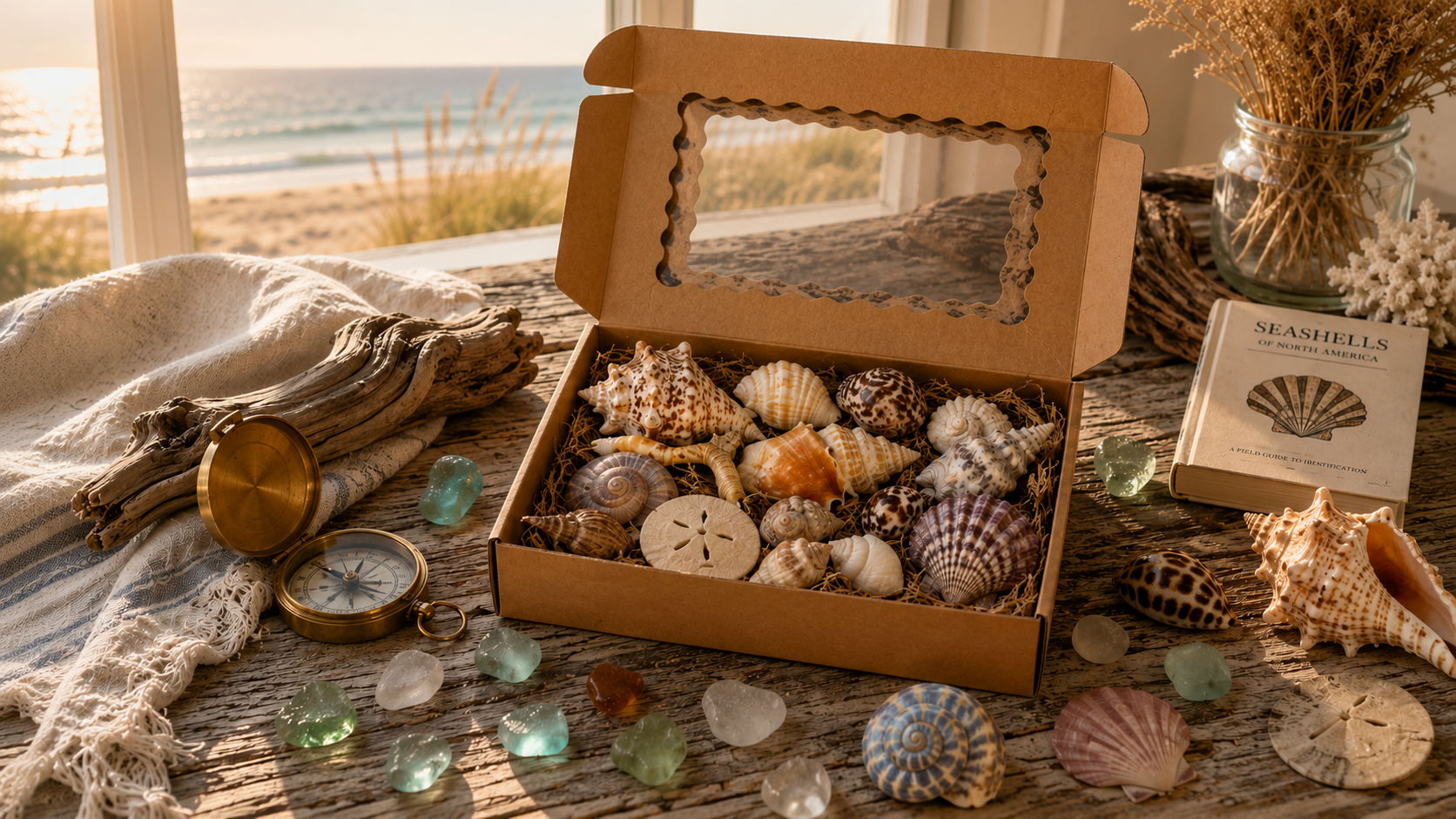
The Signature Shell Box
See these ideas in a curated collection.
Compare Similar Shells
Species and look-alikes worth studying side by side. Every card routes into the shell reference.
Species
Scotch Bonnet
Semicassis granulata
Cream base with regular reddish-brown squares in tidy rows. Rounded body whorl and short spire; toothed inner lip.
Explore ShellSpecies
Knobbed Whelk
Busycon carica
Aperture opens on the right when the spire points up. Row of blunt knobs along the shoulder of the body whorl; interior often flushed with orange.
Explore ShellSpecies
Lettered Olive
Americoliva sayana
Cylindrical body with a very short spire and a long narrow aperture. The polished cream base carries tan or brown zigzag lines that give the species its 'lettered' name.
Explore ShellSpecies
Atlantic Auger
Terebra dislocata
Elongated screw-shaped shell up to 2 inches, pale grey to tan with faint spiral banding; each whorl carries fine axial ribs.
Explore ShellBeaches Worth Exploring Next
Shores connected to the shells, regions, and conditions on this page.
North Carolina Outer Banks
Outer Banks
A 200-mile chain of Atlantic barrier islands — Cape Hatteras, Ocracoke, and Cape Lookout deliver whelks, olive shells, and the state shell,…
Explore BeachGeorgia Coast
Jekyll Island
Historic Golden Isle with generous public beaches — Driftwood Beach and St. Andrews shore deliver moon snails, jingle shells, and…
Explore BeachFlorida Gulf Coast
Sanibel Island
Sanibel's east-west orientation sweeps Gulf shells onto its shore in exceptional variety — the reason it's the most celebrated shelling…
Explore BeachNorth Carolina Outer Banks
Ocracoke Island
A ferry-only Outer Banks island south of Hatteras — sixteen miles of protected National Seashore beach where Scotch bonnets and knobbed…
Explore BeachDiscover More Coastal Inspiration
Curated coastal favorites and specimen boxes that echo the story above.
Coastal Collection
Outdoor Seaside Living
Design porches, patios, and gardens that carry the calm of the coast outdoors — with weathered textures, seaside plants, and gathering spaces made for salt air.
Explore CollectionCurated Shell Box
The Signature Shell Box
Explore Collection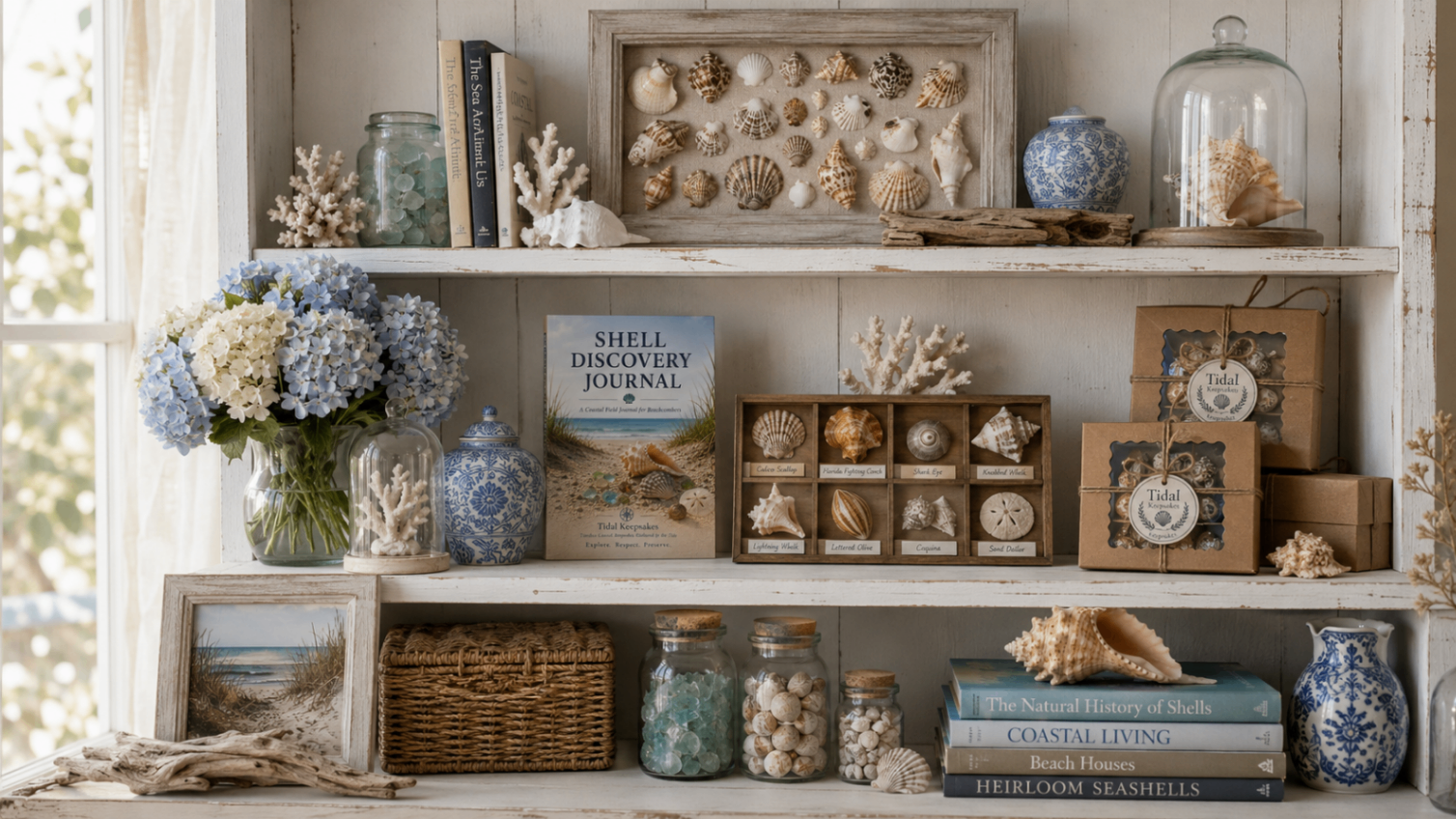
Curated Shell Box
The Collector Box
Explore CollectionA Learning Journey to Follow
Learning Shell Identification
For growing collectors · 5 steps
For readers who already know a scallop from a whelk and want to sharpen the edge cases. Ends at the journal, where identification becomes a practice, not a lookup.
- 1
Understand the Anatomy
Shell Identification Guide
Vocabulary first — apex, whorl, aperture, columella.
Continue - 2
Meet the Common Species
Explore Common Shells
Browse the canonical shell records the site is built on.
Continue - 3
Compare Look-Alikes
Commonly Confused Shells
Side-by-side markers for the pairs that trip up new collectors.
Continue - 4
Find Them in the Wild
Best Beaches for Shelling
Where each species actually washes up.
Continue - 5
Practice in the Field
Shell Discovery Journal
Record each ID with sketches and notes to lock the learning in.
Continue