 Save
SaveCoastal Garden Ideas
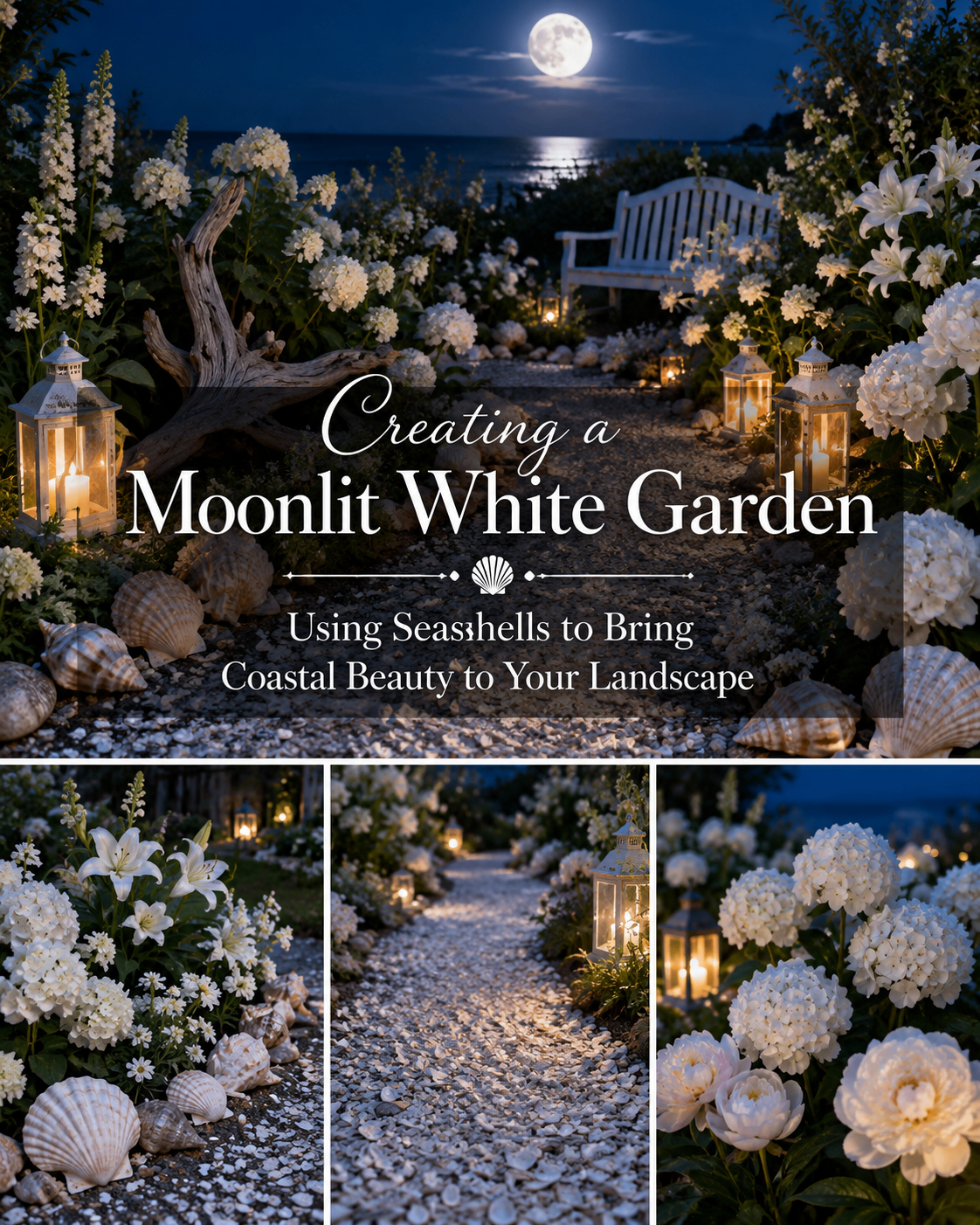
Creating a Moonlit White Garden
There is something timeless about a garden that glows after sunset. A moonlit white garden combines soft white flowers, silver foliage, and natural coastal elements to create an outdoor space that feels peaceful both day and night.
Whether you live near the ocean or hundreds of miles inland, seashells add texture, brightness, and coastal character to a moon garden.
What Is a Moon Garden?
A moon garden is designed around plants and materials that reflect moonlight. White blooms become more visible in the evening, while silver foliage creates contrast and movement.
The goal is simple:
- Bright flowers
- Light colored pathways
- Reflective textures
- Relaxing nighttime atmosphere
Why Seashells Work Beautifully in White Gardens
Seashells naturally complement the soft color palette of a moon garden.
Their ivory, cream, and pearl tones reflect light and create interest throughout the landscape.
Benefits include:
- Brightening dark corners
- Adding coastal charm
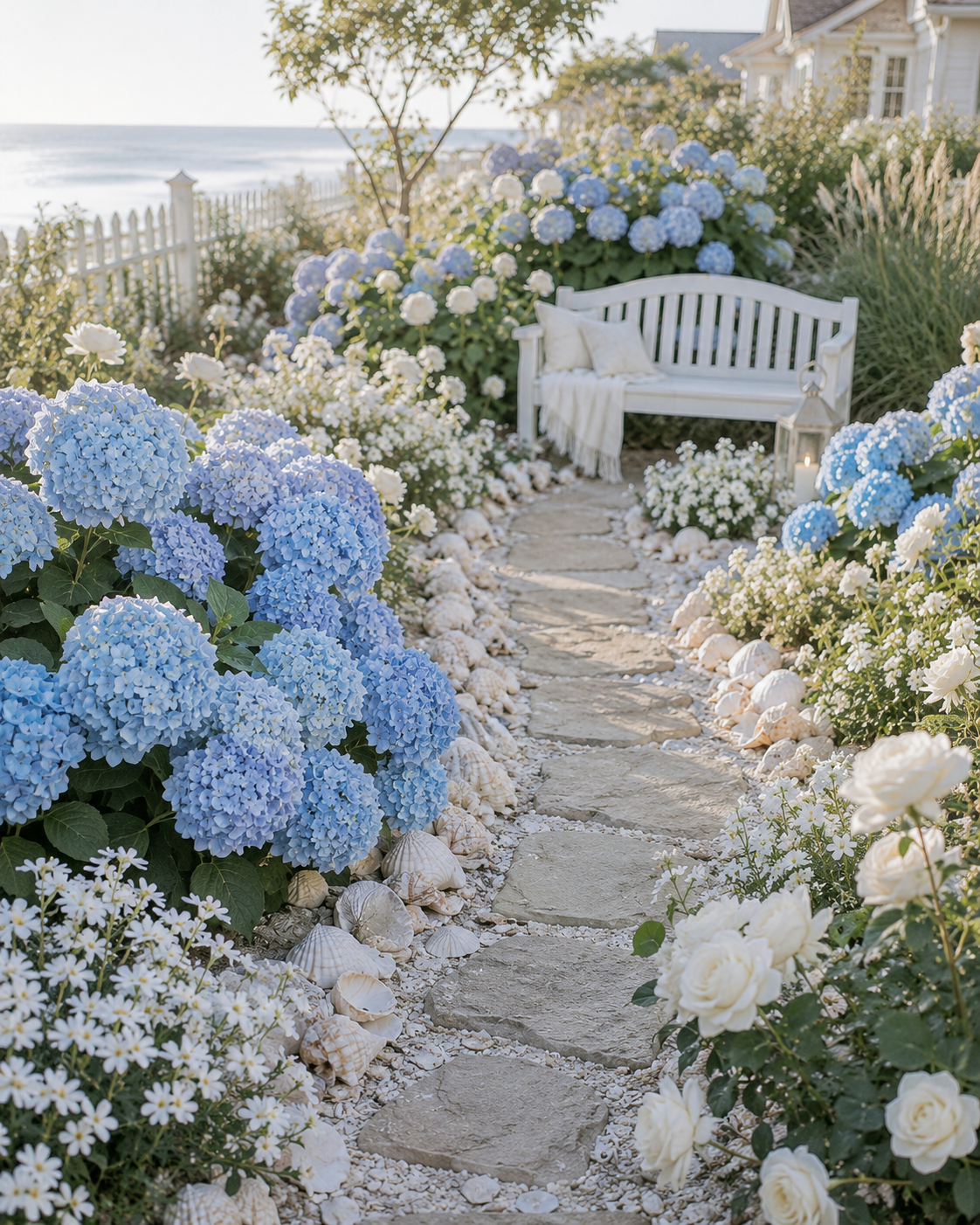
- Creating decorative borders
- Enhancing pathways and containers
- Providing year round visual interest
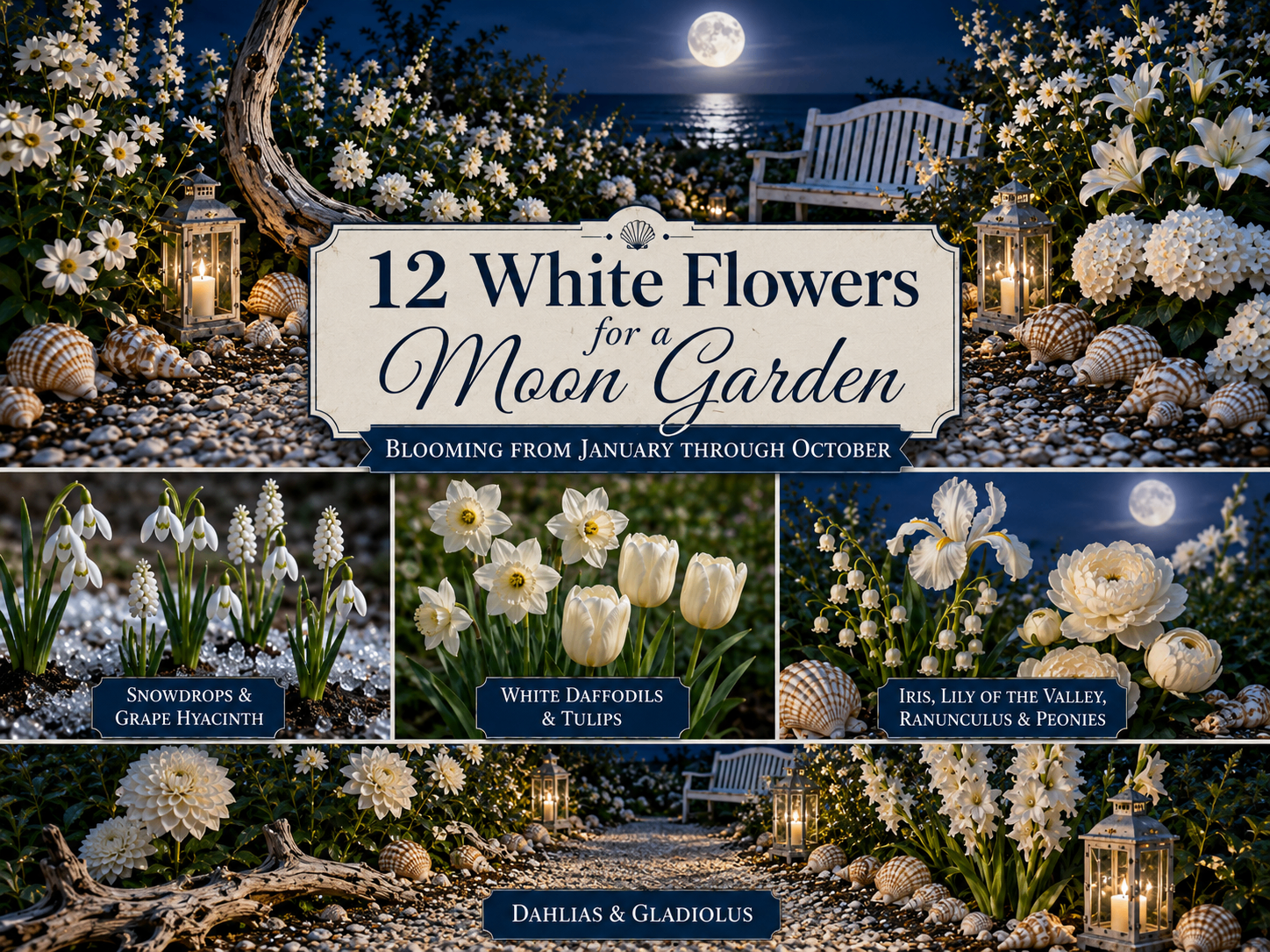
White Flowering Bulbs for a Moon Garden
 Save
SaveOne of the easiest ways to create a glowing spring display is by planting white flowering bulbs in the fall. Many return year after year and provide some of the first blooms of the gardening season.
Late Winter to Early Spring
- Snowdrops, January through March
- White Daffodils, February through March
- White Grape Hyacinth, February through March
- Summer Snowflakes, March through April
Spring Favorites
- Tulips, March through May
- White Iris, April through May
- Lily of the Valley, April through June
- Ranunculus, April through June
- Peonies, April through June
Summer and Fall Bulbs
- Dahlias, July through October
- Gladiolus, August through September
By layering bulbs with different bloom times, your moon garden stays bright from winter through fall.
White Perennial Flowers for a Moon Garden
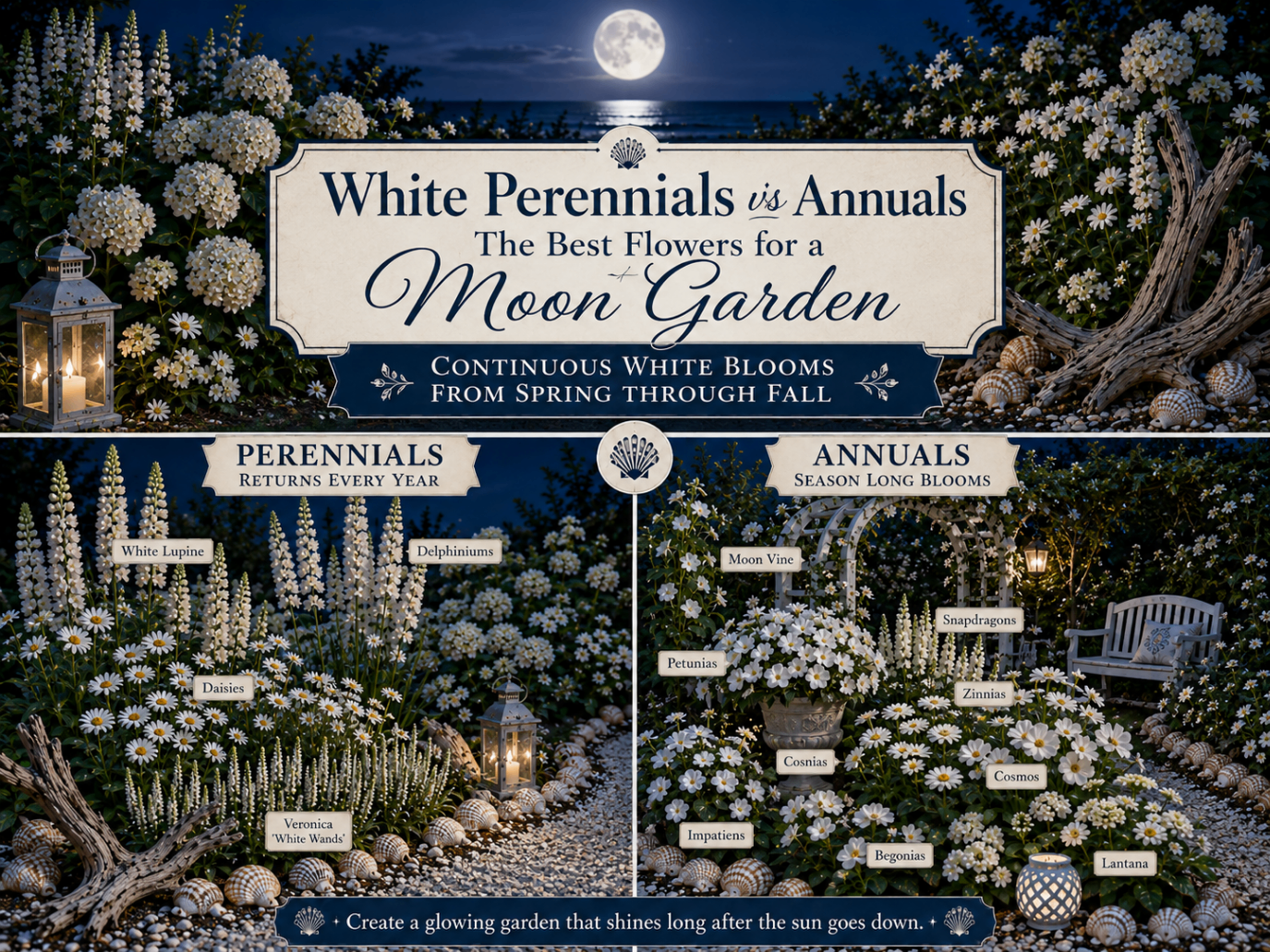
Perennials return every year, making them one of the best long term investments for a moonlit garden.
Spring and Early Summer
- White Lupine, April through June
- Daisies, May through July
- Delphiniums, May through July
Summer Bloomers
- Veronica 'White Wands', June through August
These plants provide structure, height, and dependable blooms that return season after season.
White Annual Flowers for a Moon Garden
 Save
SaveAnnuals bloom for a single growing season but provide months of color and attract beneficial pollinators.
Season Long Performers
- Petunias, spring through first fall frost
- Impatiens, spring through first fall frost
- Moon Vine, late spring through early fall
Summer Through Fall
- Zinnias, summer through fall
- Cosmos, summer through fall
- Geraniums, June through first fall frost
- Snapdragons, June through October
- Begonias, July through October
- Lantana, midsummer through first fall frost
Annuals are perfect for filling gaps between perennials and adding continuous color throughout the season.
White Wildflowers for a Natural Moon Garden
Wildflowers bring a softer, cottage style look while supporting butterflies, bees, and other pollinators.
Spring Through Summer
- Yarrow, April through October
- Cornflower, April through September
- Queen Anne's Lace, June through August
- Allium, June through August
Summer Through Fall
- Baby's Breath, June through October
- Fleabane, July
Wildflowers help create the relaxed, natural beauty often found in coastal landscapes.
Silver and Soft Green Foliage
While flowers provide the glow, foliage creates contrast and texture.
Consider adding:
- Dusty Miller
- Lamb's Ear
- Artemisia
- Silver Mound
These plants reflect moonlight beautifully and help tie the garden together.
Creative Ways to Use Seashells
 Save
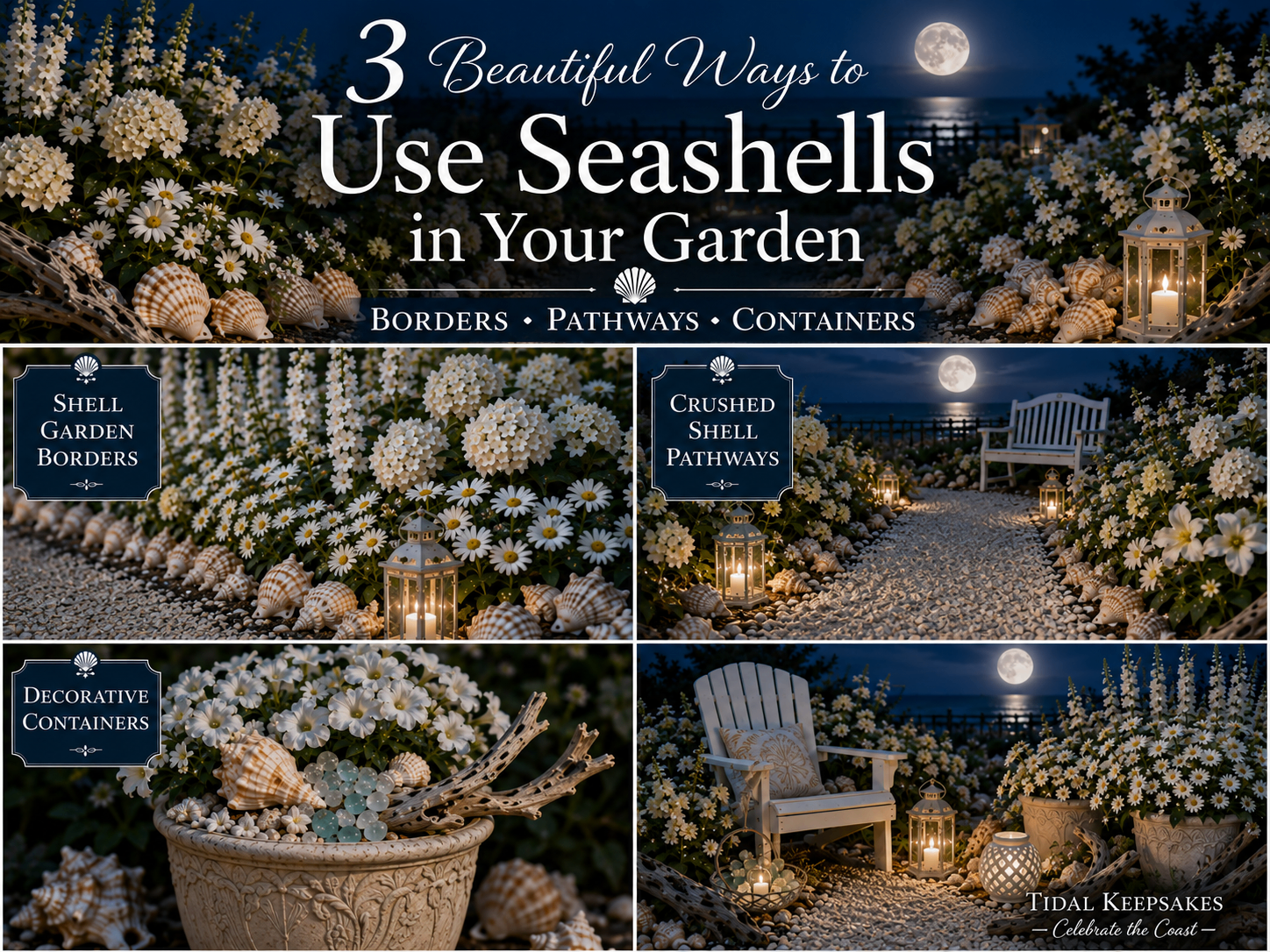
SaveShell Garden Borders
Create edging around flower beds using:
- Whelks
- Conchs
- Scallops
- Oyster shells
Shell borders help define planting areas while adding coastal texture.
Crushed Shell Pathways
Crushed oyster shells create bright walkways that remain attractive year round.
They also reflect moonlight and make evening strolls more enjoyable.
Decorative Containers
Fill planters with:
- Shell mulch accents
- Large whelk shells
- Sea glass
- Driftwood pieces
This creates instant coastal character without requiring major landscaping.
Plant Markers
Large scallop shells make charming garden markers for herbs and flowers.
Coastal Focal Points
 Save
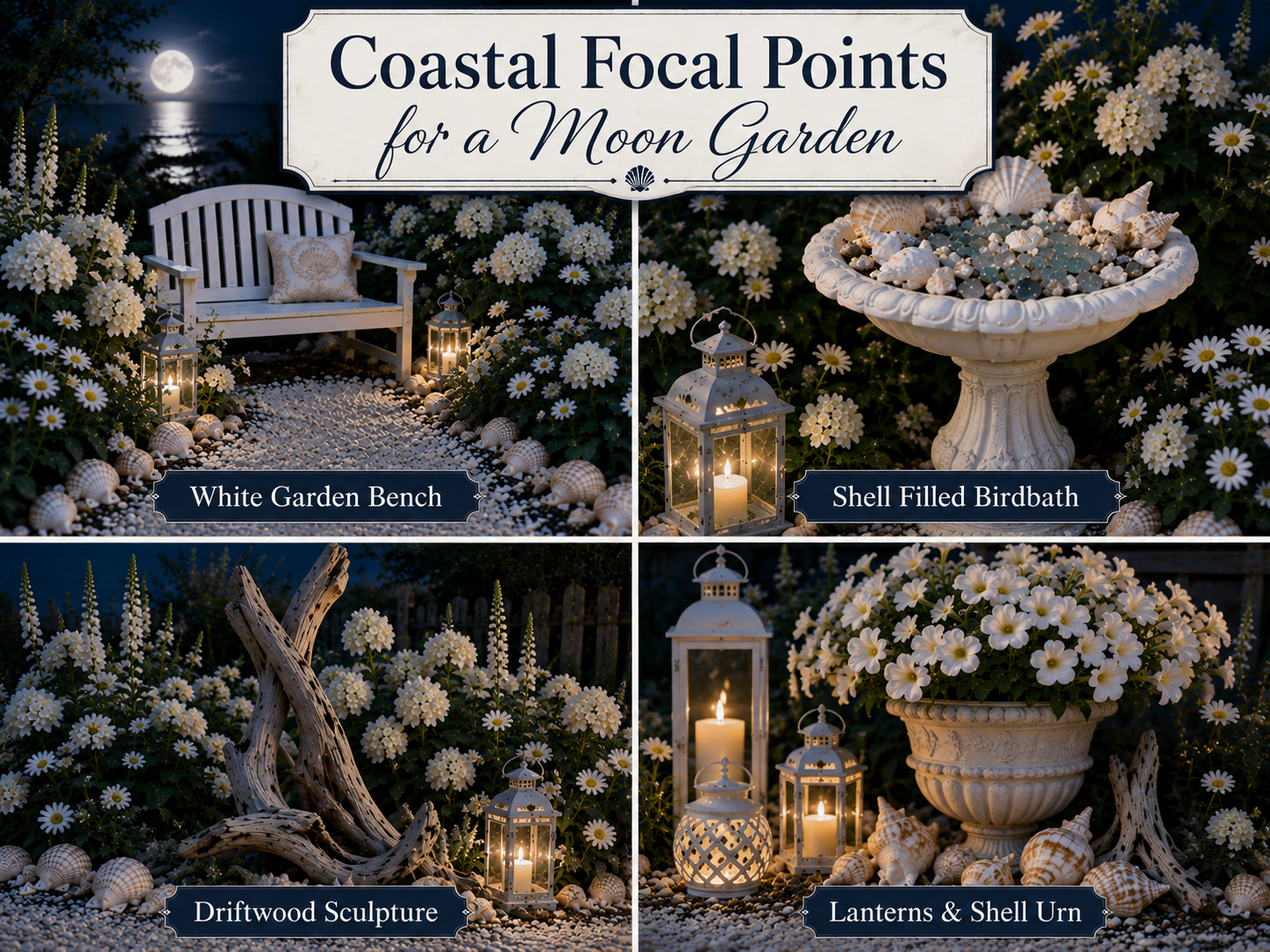
SaveA few statement pieces help anchor the design.
Ideas include:
- White garden bench
- Shell filled birdbath
- Driftwood sculpture
- Lantern grouping
- Decorative shell urn
These features provide structure during the day and visual interest after sunset.
Best Shells for Garden Use
Some of the best options include:
- Lightning Whelks
- Knobbed Whelks
- Fighting Conchs
- Oyster Shells
- Scallop Shells
Choose durable shells that withstand weather and seasonal changes.
Keep Interest Through Every Season
A thoughtfully planned moon garden offers blooms and texture nearly every month of the year.
Winter
- Snowdrops
- Shell borders
- Evergreen structure
Spring
- White Daffodils
- Tulips
- White Iris
- Peonies
Summer
- Hydrangeas
- Delphiniums
- Veronica
- Moon Vine
- White Roses
Fall
- Dahlias
- Gladiolus
- Snapdragons
- White Asters
- Ornamental Grasses
Simple Design Tips
- Repeat white flowers throughout the garden.
- Use shells in groups rather than scattered individually.
- Add soft landscape lighting.
- Include seating areas for evening enjoyment.
- Mix textures from shells, stone, driftwood, and foliage.
Bringing the Coast Home
 Save
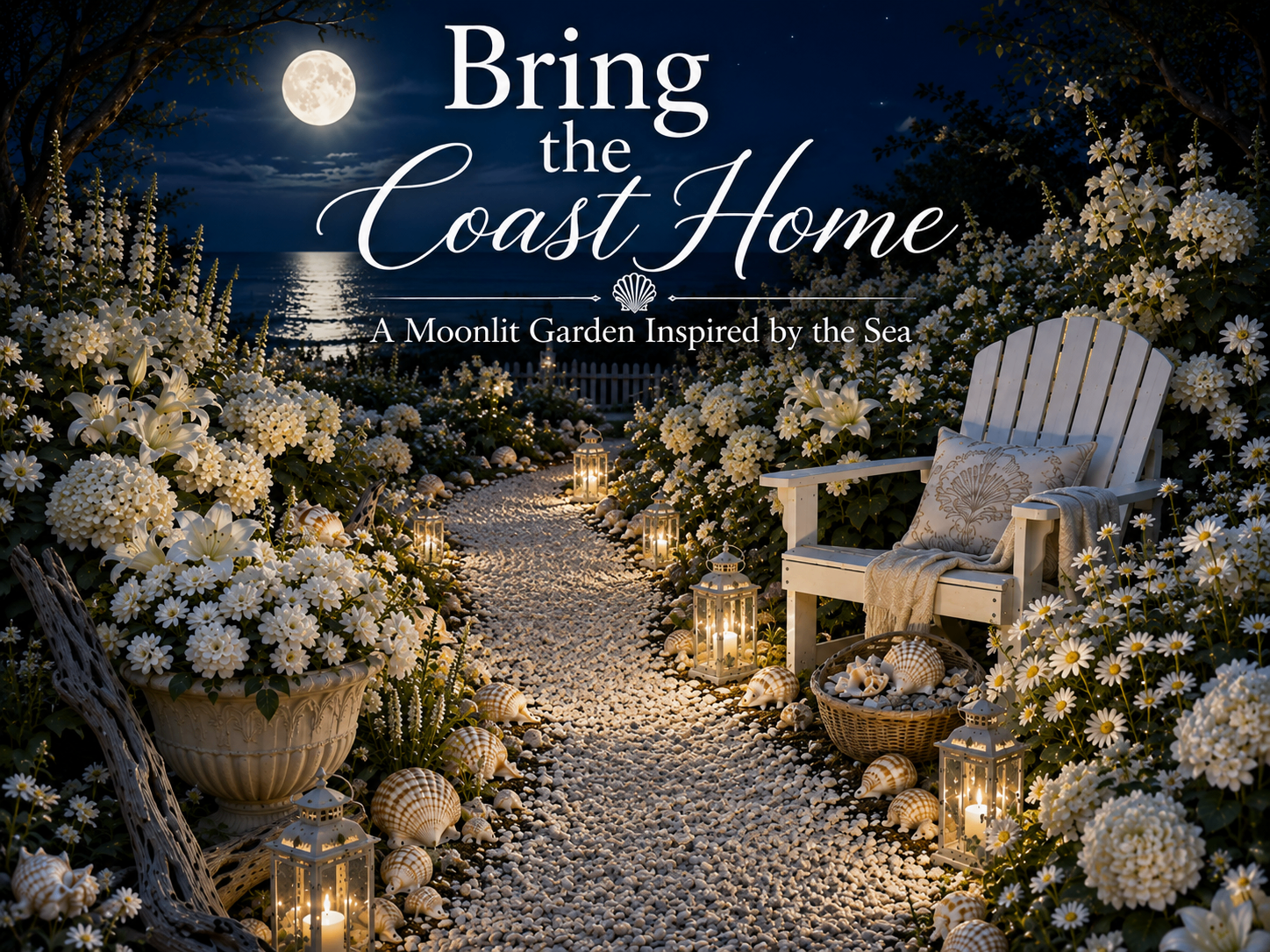
SaveA moonlit white garden offers more than beautiful flowers. It creates a place to slow down, enjoy summer evenings, and bring a touch of the coast into everyday life.
With a collection of shells, carefully chosen white blooms, and a simple design plan, you can create a garden that shines long after the sun goes down.
In Closing
Designing a moonlit white garden is an invitation to enjoy your outdoor space in a new way — softly lit, gently fragrant, and woven through with the quiet beauty of the coast.
Start with a few white blooms, a handful of silver-leaved plants, and a collection of weather-worthy shells, and let the garden grow into something that glows a little more with every passing season.
Continue Your Beachcombing Journey
Hand-picked next steps — chosen because they build directly on what you've just read.
Article
Blue & White Coastal Garden Ideas: Creating a Seaside-Inspired Summer Retreat
Hand-picked next step from the editors.
Guide
Coastal Decor Ideas
A thoughtful next step in your coastal journey.
Curated Shell Box
The Signature Shell Box
See these ideas in a curated collection.
Article
Shell Craft Tutorials
Hand-picked next step from the editors.
Compare Similar Shells
Species and look-alikes worth studying side by side. Every card routes into the shell reference.
Species
Scotch Bonnet
Semicassis granulata
Cream base with regular reddish-brown squares in tidy rows. Rounded body whorl and short spire; toothed inner lip.
Explore ShellSpecies
Knobbed Whelk
Busycon carica
Aperture opens on the right when the spire points up. Row of blunt knobs along the shoulder of the body whorl; interior often flushed with orange.
Explore ShellSpecies
Lettered Olive
Americoliva sayana
Cylindrical body with a very short spire and a long narrow aperture. The polished cream base carries tan or brown zigzag lines that give the species its 'lettered' name.
Explore ShellSpecies
Atlantic Auger
Terebra dislocata
Elongated screw-shaped shell up to 2 inches, pale grey to tan with faint spiral banding; each whorl carries fine axial ribs.
Explore ShellBeaches Worth Exploring Next
Shores connected to the shells, regions, and conditions on this page.
North Carolina Outer Banks
Outer Banks
A 200-mile chain of Atlantic barrier islands — Cape Hatteras, Ocracoke, and Cape Lookout deliver whelks, olive shells, and the state shell,…
Explore BeachGeorgia Coast
Jekyll Island
Historic Golden Isle with generous public beaches — Driftwood Beach and St. Andrews shore deliver moon snails, jingle shells, and…
Explore BeachFlorida Gulf Coast
Sanibel Island
Sanibel's east-west orientation sweeps Gulf shells onto its shore in exceptional variety — the reason it's the most celebrated shelling…
Explore BeachNorth Carolina Outer Banks
Ocracoke Island
A ferry-only Outer Banks island south of Hatteras — sixteen miles of protected National Seashore beach where Scotch bonnets and knobbed…
Explore BeachDiscover More Coastal Inspiration
Curated coastal favorites and specimen boxes that echo the story above.
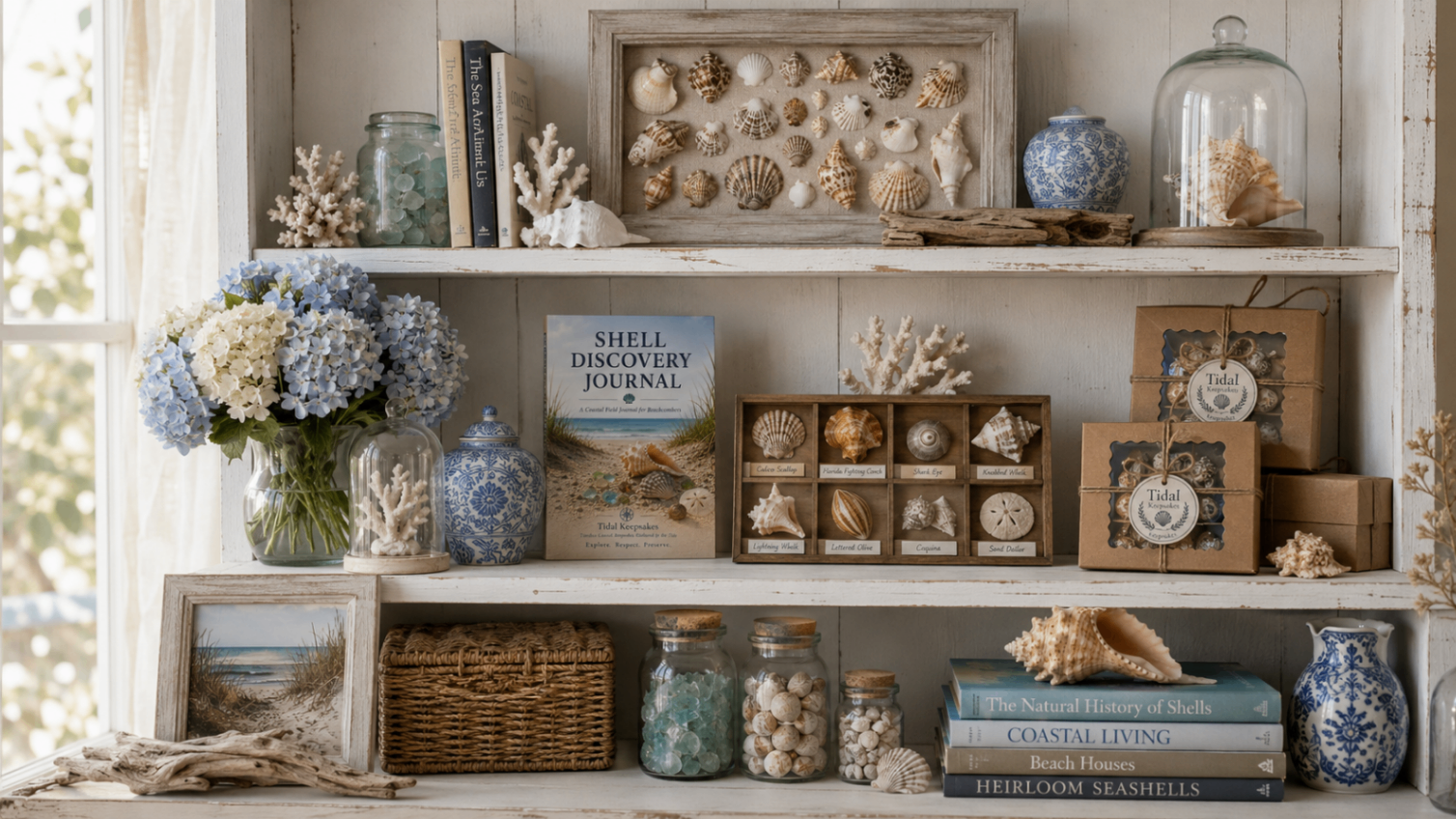
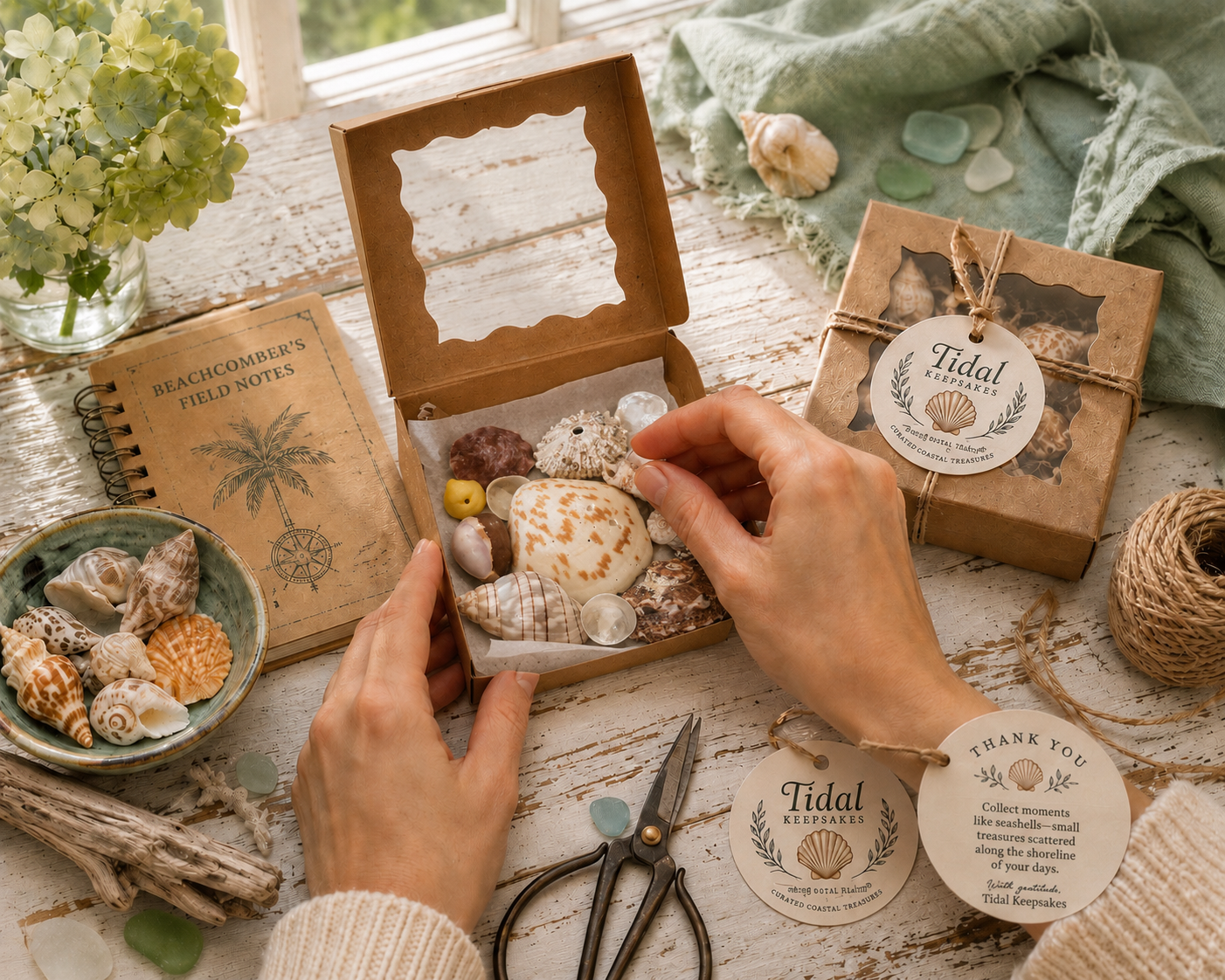
A Learning Journey to Follow
Learning Shell Identification
For growing collectors · 5 steps
For readers who already know a scallop from a whelk and want to sharpen the edge cases. Ends at the journal, where identification becomes a practice, not a lookup.
- 1
Understand the Anatomy
Shell Identification Guide
Vocabulary first — apex, whorl, aperture, columella.
Continue - 2
Meet the Common Species
Explore Common Shells
Browse the canonical shell records the site is built on.
Continue - 3
Compare Look-Alikes
Commonly Confused Shells
Side-by-side markers for the pairs that trip up new collectors.
Continue - 4
Find Them in the Wild
Best Beaches for Shelling
Where each species actually washes up.
Continue - 5
Practice in the Field
Shell Discovery Journal
Record each ID with sketches and notes to lock the learning in.
Continue