 Save
SaveBeachcombing Tips
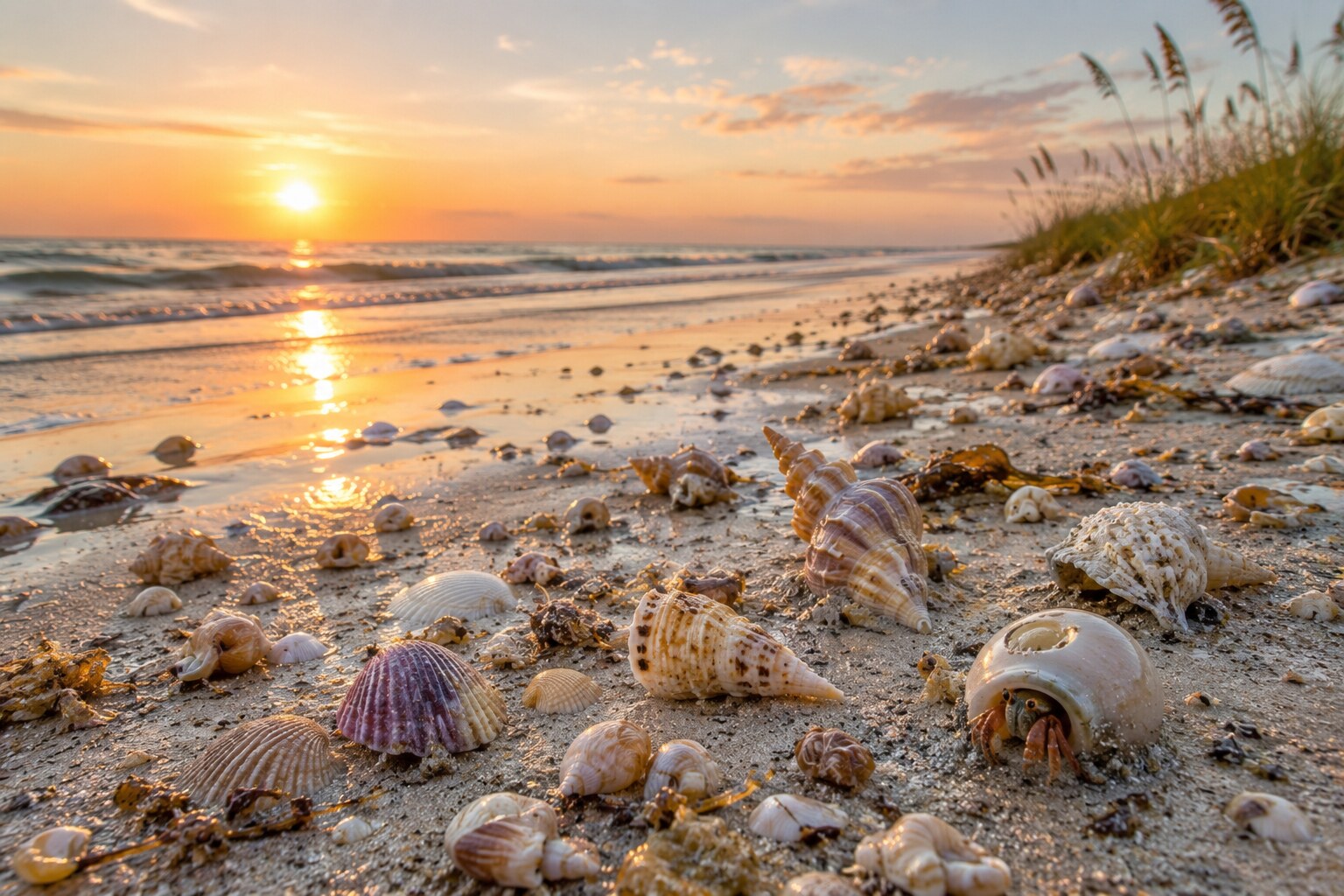
Best Time to Find Seashells
One of the most common questions new beachcombers ask is, "When should I go shelling?" The answer is simple: timing matters.
Many people focus only on the beach itself, but experienced shell collectors know that tides, weather, seasons, and even the time of day often determine whether you find a handful of common shells or a collection of treasures worth remembering.
Understanding these natural patterns dramatically increases your chances of success.
Low Tide: The Beachcomber's Best Friend
Low tide consistently provides the best shelling opportunities.
As the ocean retreats, it exposes portions of the shoreline that remain underwater for much of the day. These newly exposed areas often contain shells that would otherwise remain hidden beneath the waves.
The ideal window is:
- Two hours before low tide
- Low tide itself
- Two hours after low tide
During this period you can:
- Explore sandbars
- Search tidal pools
- Walk farther down the beach
- Reach shell beds normally covered by water
Many shell collectors use tide chart apps before planning a beach trip.
Negative low tides, when the water drops lower than normal, can be especially productive because they expose areas rarely accessible to beachcombers.
After a Storm: Nature's Shell Delivery Service
 Save
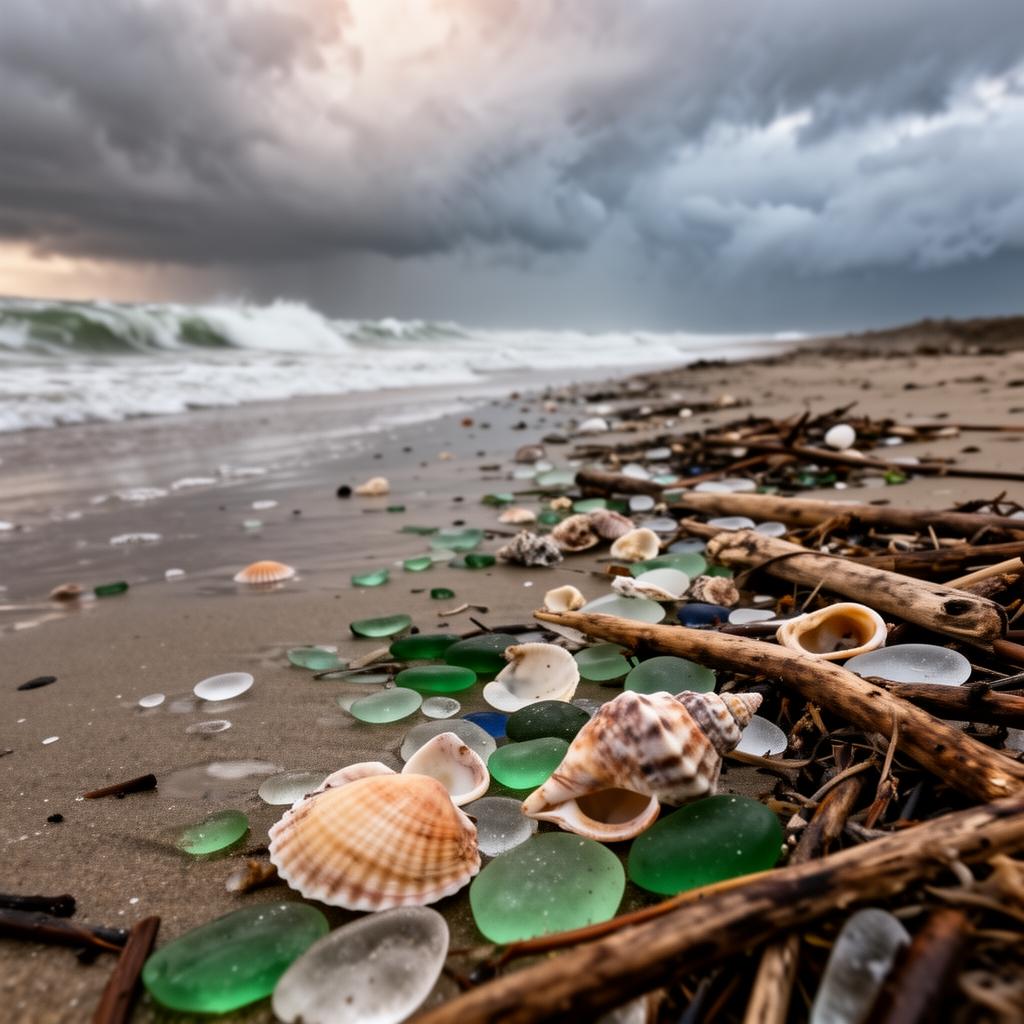
SaveAsk experienced shell collectors about their best finds and many will tell you they appeared after a storm.
Strong winds and rough surf churn the seafloor, lifting shells, sea glass, fossils, and other treasures from deeper water and carrying them onto the beach.
The most productive period is often:
- 24 to 48 hours after a storm
- Immediately after strong onshore winds
- Following tropical systems and nor'easters
Common storm finds include:
- Large whelks
- Olive shells
- Scallops
- Sand dollars
- Sea glass
- Shark teeth
- Whelk egg cases
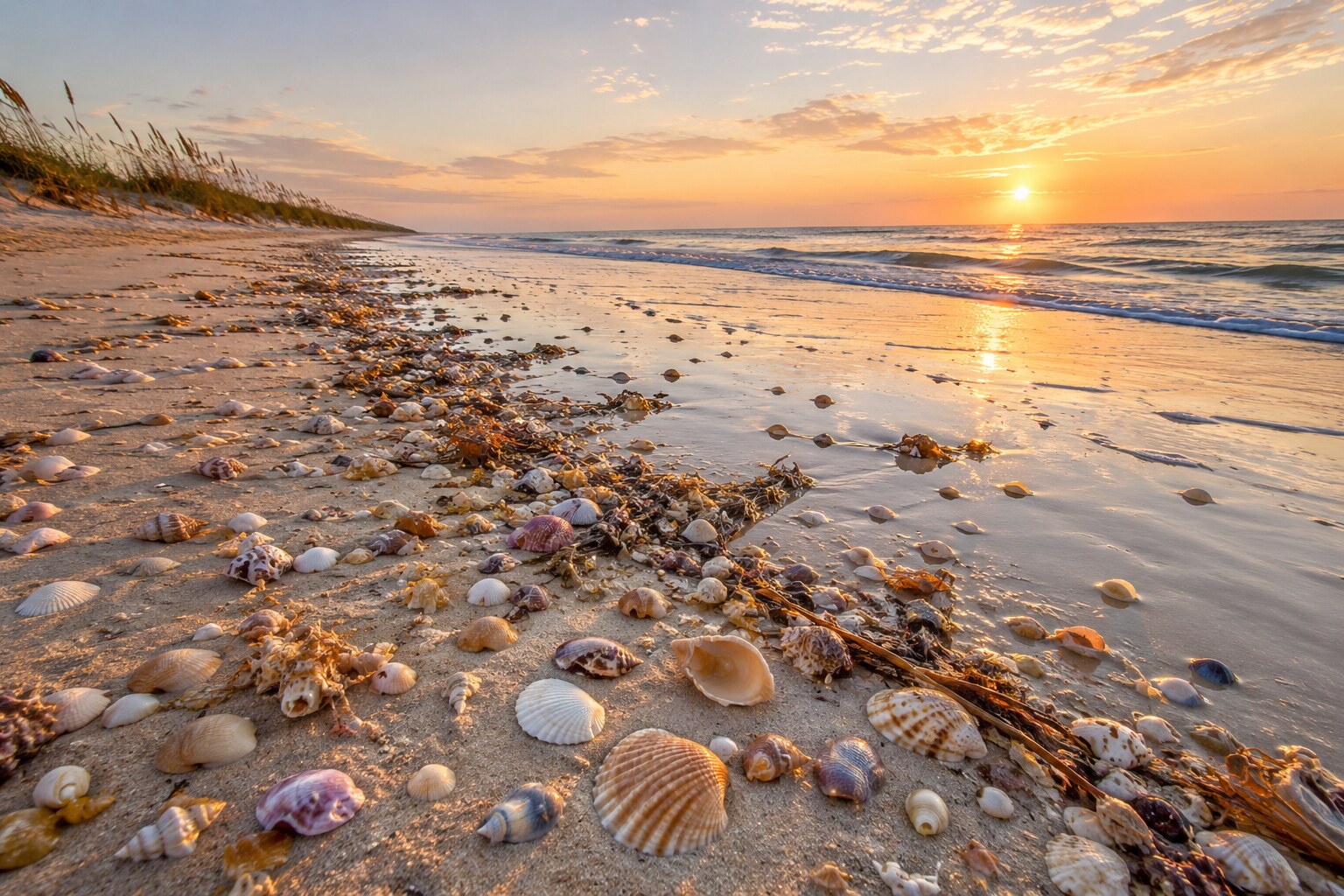
Early Morning: First Pick of the Beach
 Save
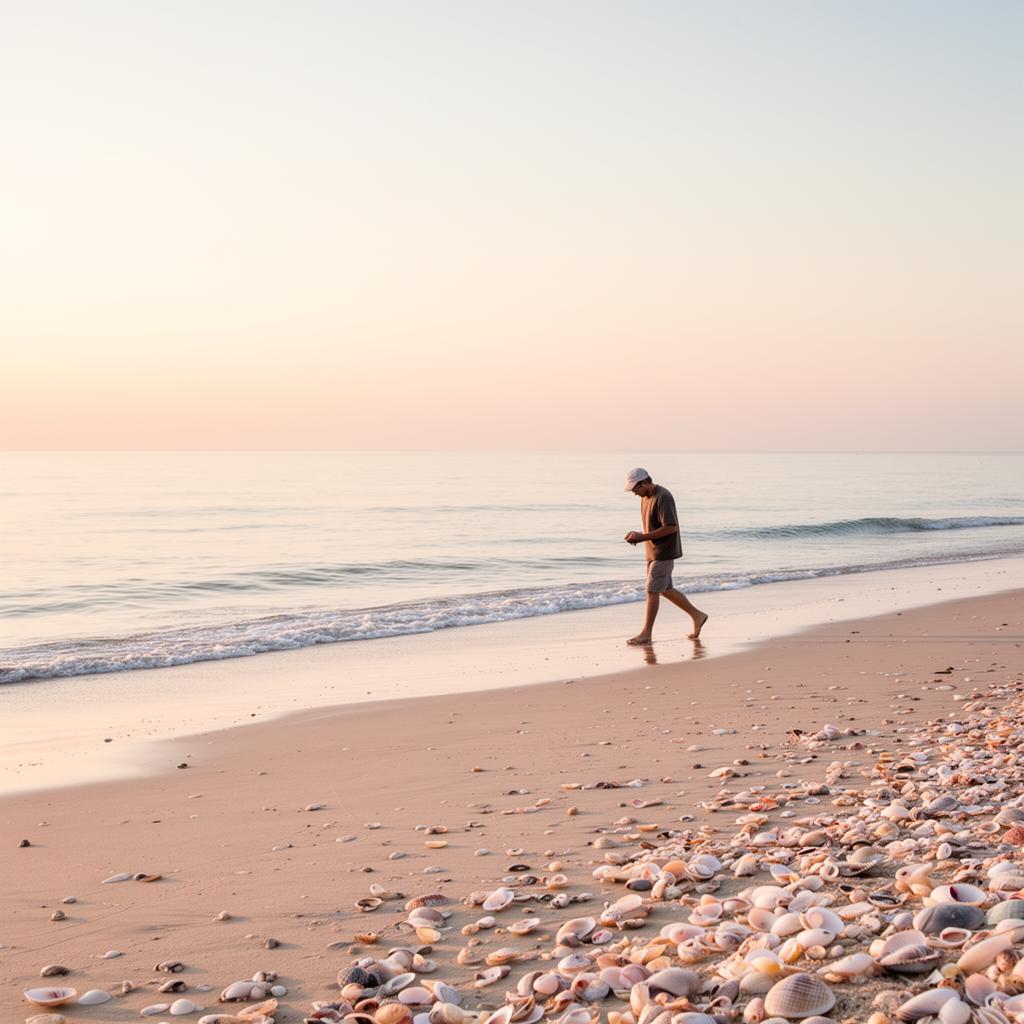
SaveMany serious beachcombers arrive at sunrise.
Overnight tides often leave fresh deposits of shells along the shoreline. Arriving early means you have an opportunity to search these areas before other collectors, walkers, and beach visitors arrive.
Benefits of early morning shelling include:
- Less competition
- Cooler temperatures
- Better lighting for photography
- Calmer conditions
- More wildlife sightings
Even heavily visited beaches can produce impressive finds for those willing to arrive shortly after dawn.
Incoming vs. Outgoing Tides
 Save
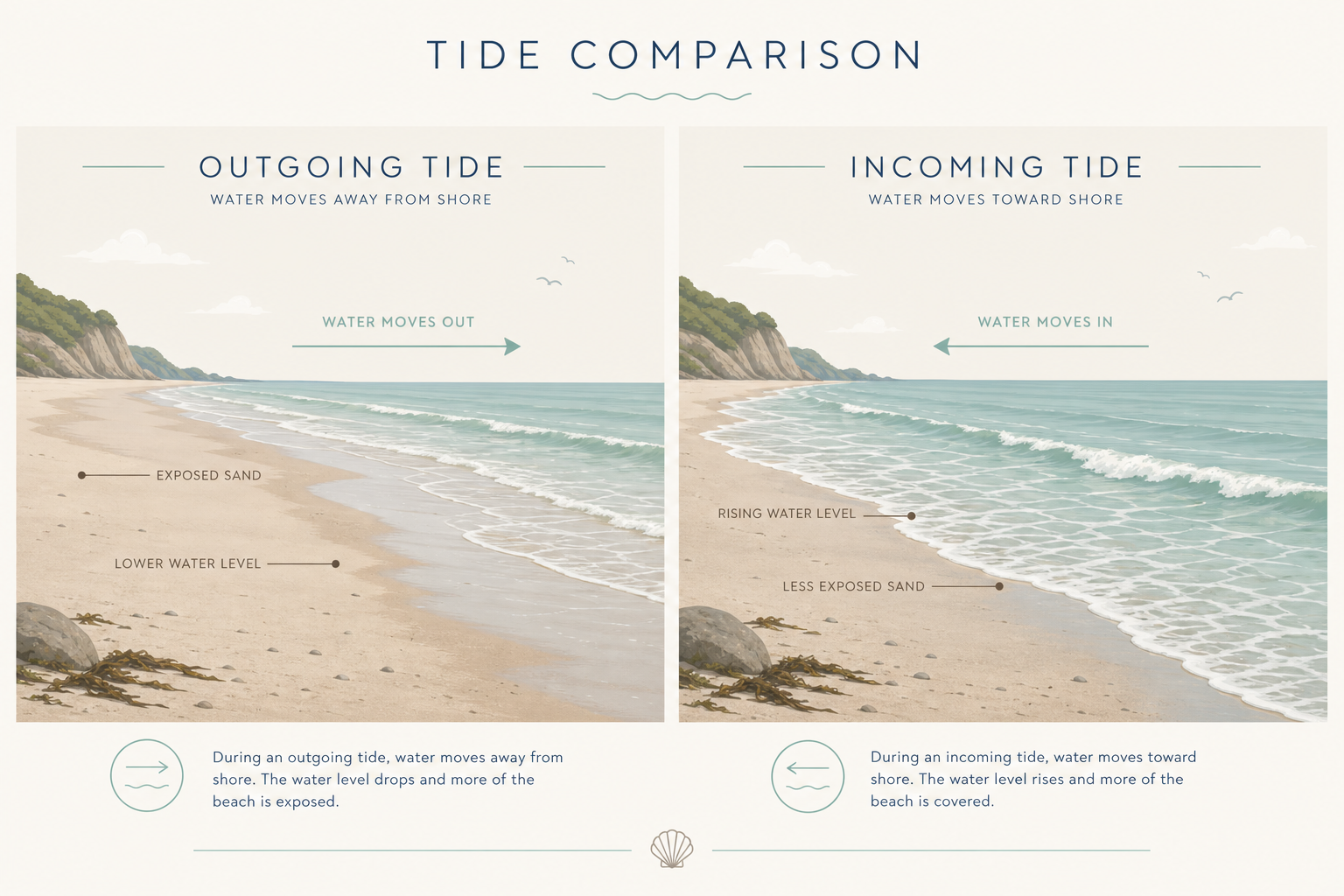
SaveBoth incoming and outgoing tides offer advantages.
Outgoing Tide
- New shells become exposed
- Sandbars emerge
- Tidal pools become accessible
Incoming Tide
- Fresh shells continue washing ashore
- Shell lines build along the beach
- New deposits appear throughout the day
Many collectors prefer starting near low tide and staying as the tide begins to rise.
Seasonal Shelling Opportunities
 Save
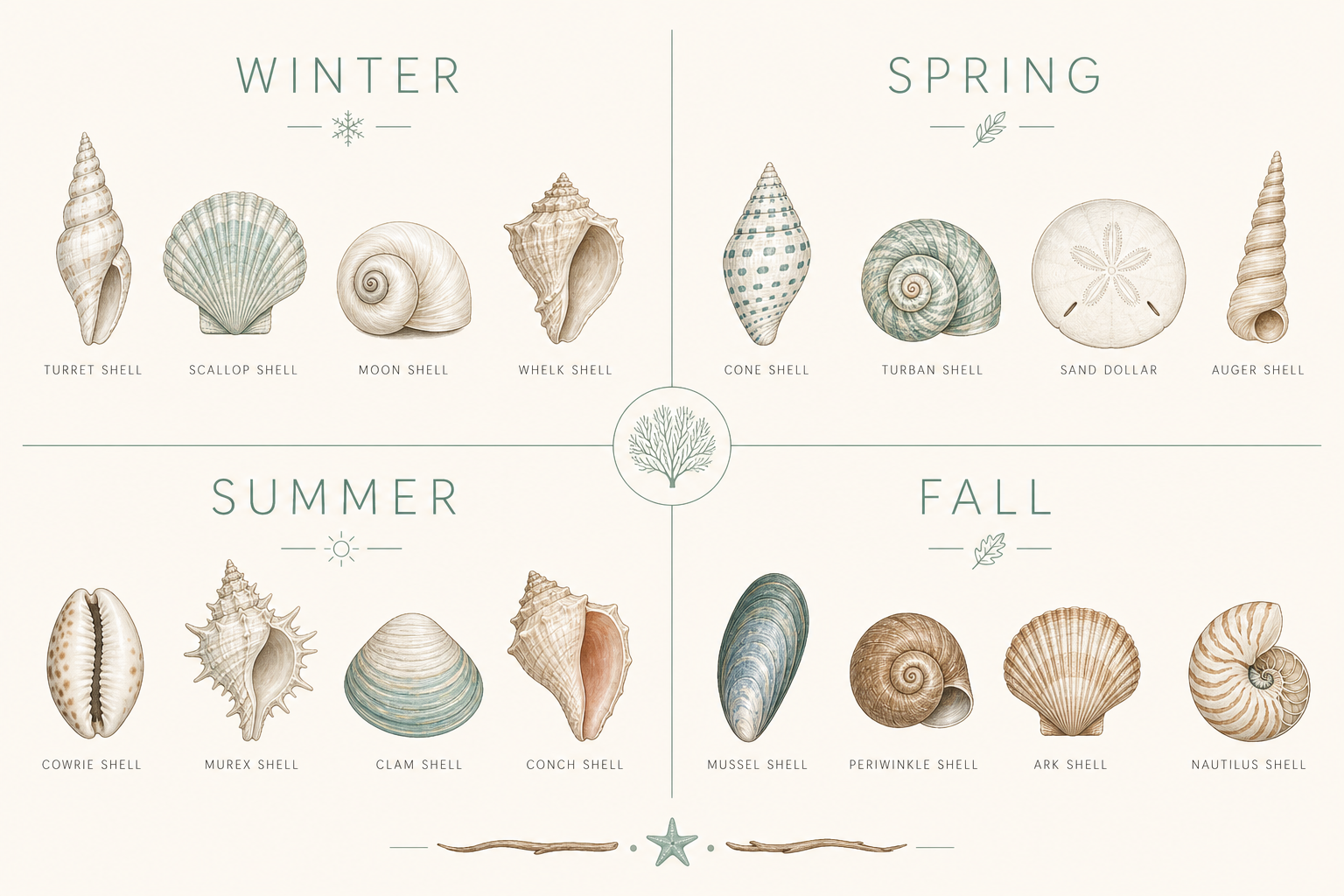
SaveEvery season brings its own conditions and signature finds. Knowing what each part of the year offers helps you plan the most rewarding beach days.
Winter
- Fewer visitors
- Stronger storms
- Less beach grooming
- Excellent sea glass opportunities
Look for: whelks, sea glass, shark teeth, and storm deposits.
Spring
- Scallops
- Olive shells
- Egg cases
- Fresh shell deposits
Summer
- Coquinas
- Jingle shells
- Moon snails
- Sand dollars
Fall
- Fewer visitors
- Tropical storm activity
- Pleasant temperatures
- Productive tides
Wind Direction Matters
 Save
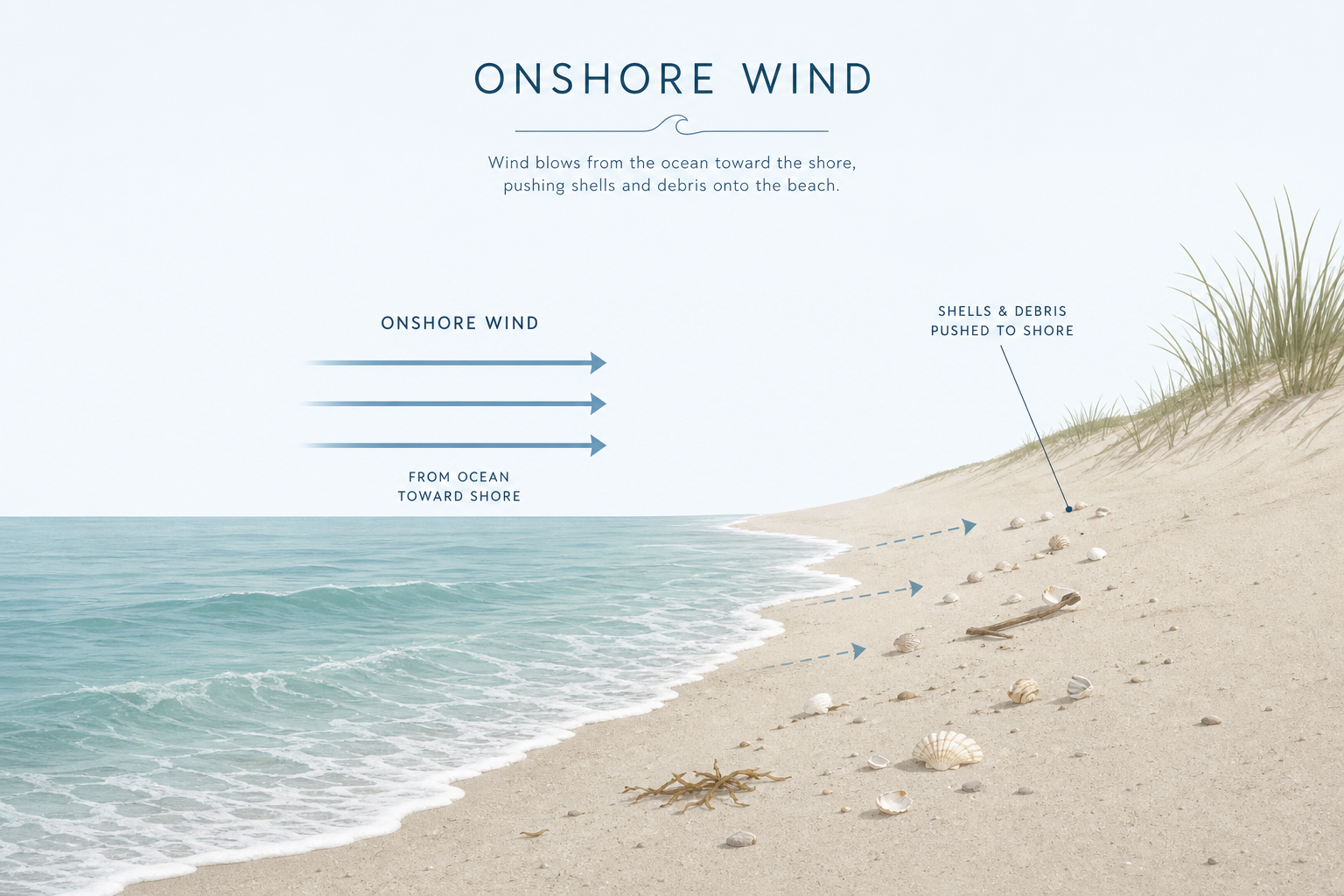
SaveWind influences where shells accumulate.
Onshore winds generally improve shelling conditions because they push floating debris and shells toward land.
Strong sustained winds can create:
- Shell piles
- Wrack lines
- Sea glass deposits
- Rare shell opportunities
Many shellers monitor weather forecasts as closely as tide charts.
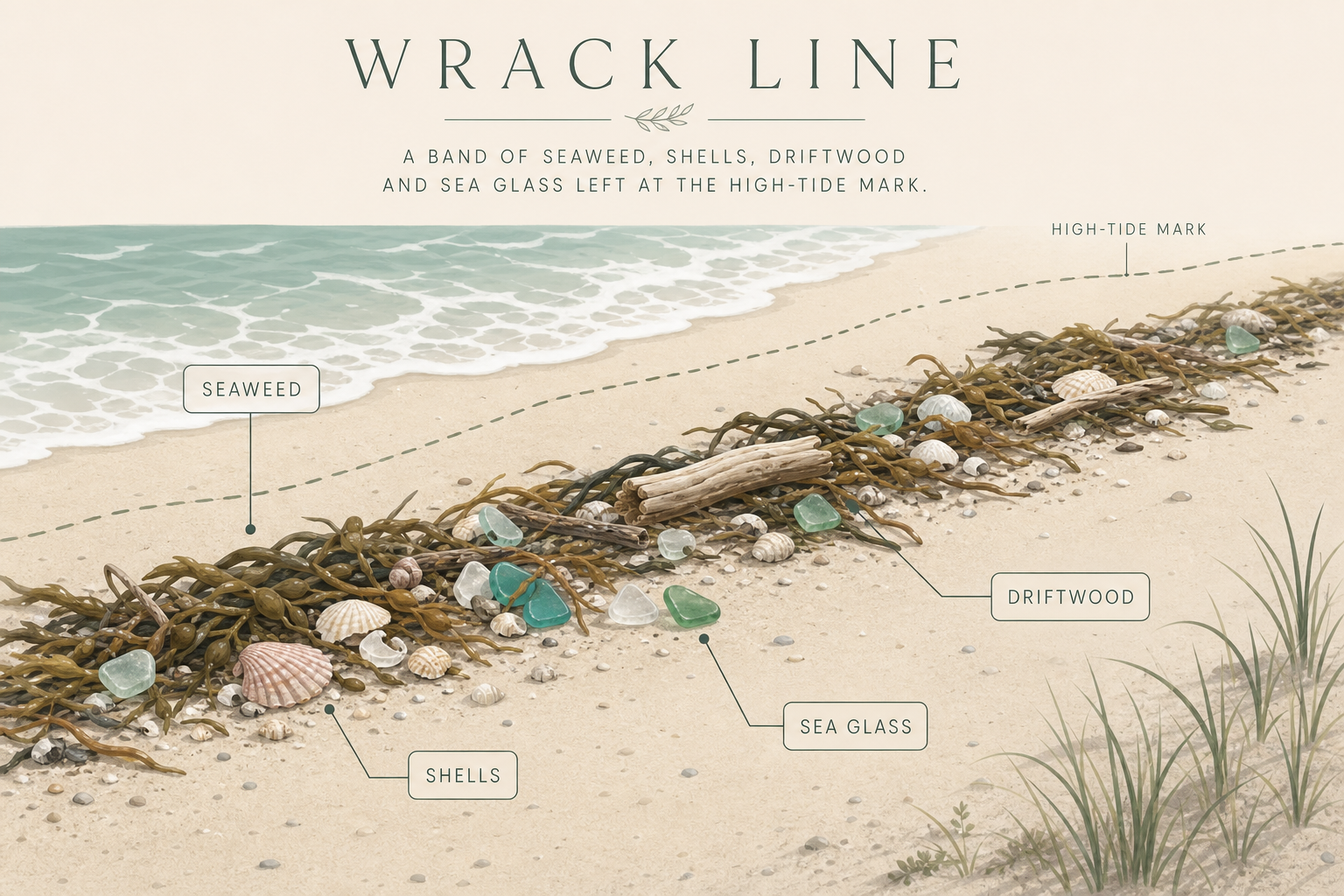
Look for the Wrack Line
 Save
SaveThe wrack line is the band of seaweed, shells, driftwood, and natural debris left behind by the highest tide.
Search carefully for:
- Olive shells
- Small cowries
- Sea glass
- Shark teeth
- Rare shell fragments
Many excellent finds hide within seaweed and natural debris, so take your time combing through the wrack line.
Plan Around the Moon
 Save
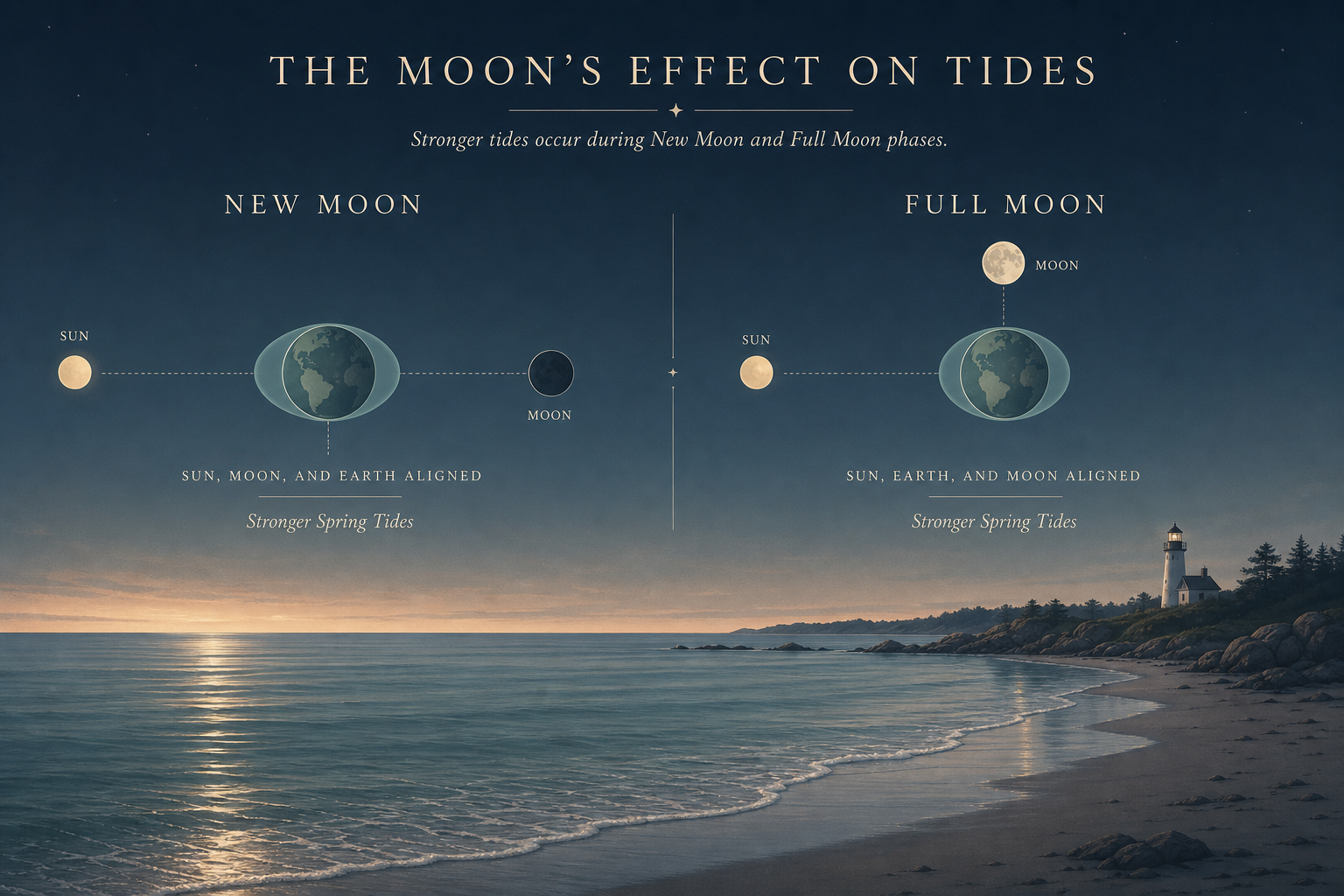
SaveThe moon affects tides.
During new moons and full moons, tides become stronger and more extreme.
These spring tides often expose more shoreline and create better shelling conditions than average tidal cycles.
Beachcomber's Golden Rule
The best shelling often happens when multiple favorable conditions occur together.
The ideal scenario:
- Low tide
- Early morning
- Recent storm activity
- Onshore winds
- Full or new moon tide cycle
In Closing
The best time to find seashells isn't a single moment — it's a combination of conditions you can learn to read and plan around.
Watch the tide charts, follow the storms, rise with the sun, and pay attention to the wind and the moon. When even a few of these factors line up, every beach walk becomes a treasure hunt with a real chance of an unforgettable find.
Frequently Asked
Questions readers ask about Best Time to Find Seashells
Recommended Companion
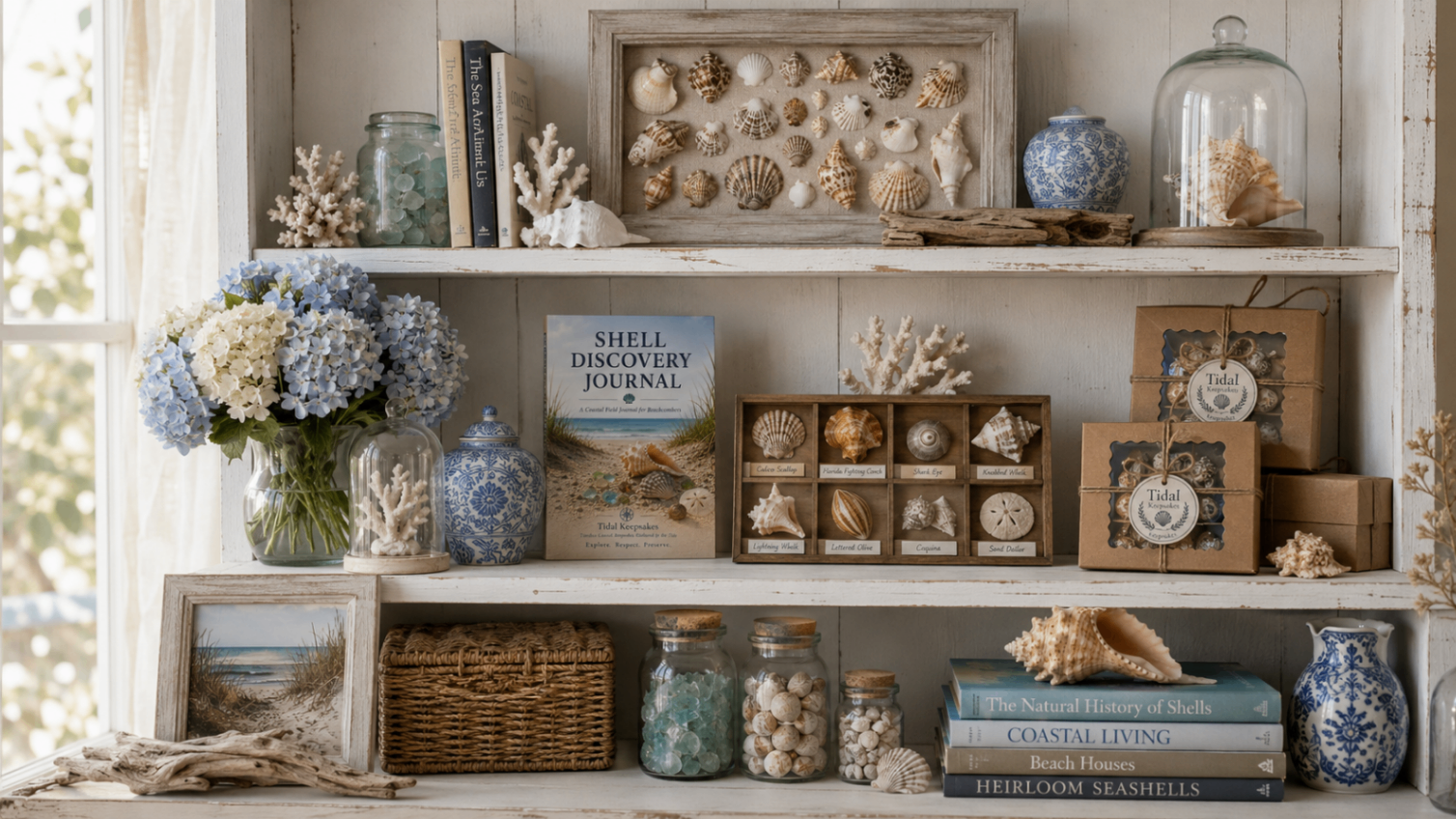
The Shell Discovery Journal
Continue Your Beachcombing Journey
Hand-picked next steps — chosen because they build directly on what you've just read.
Article
The Ultimate Guide to Beachcombing Along the East Coast
Hand-picked next step from the editors.
Guide
Best Time to Find Seashells
Builds on the same core topic.
Curated Shell Box
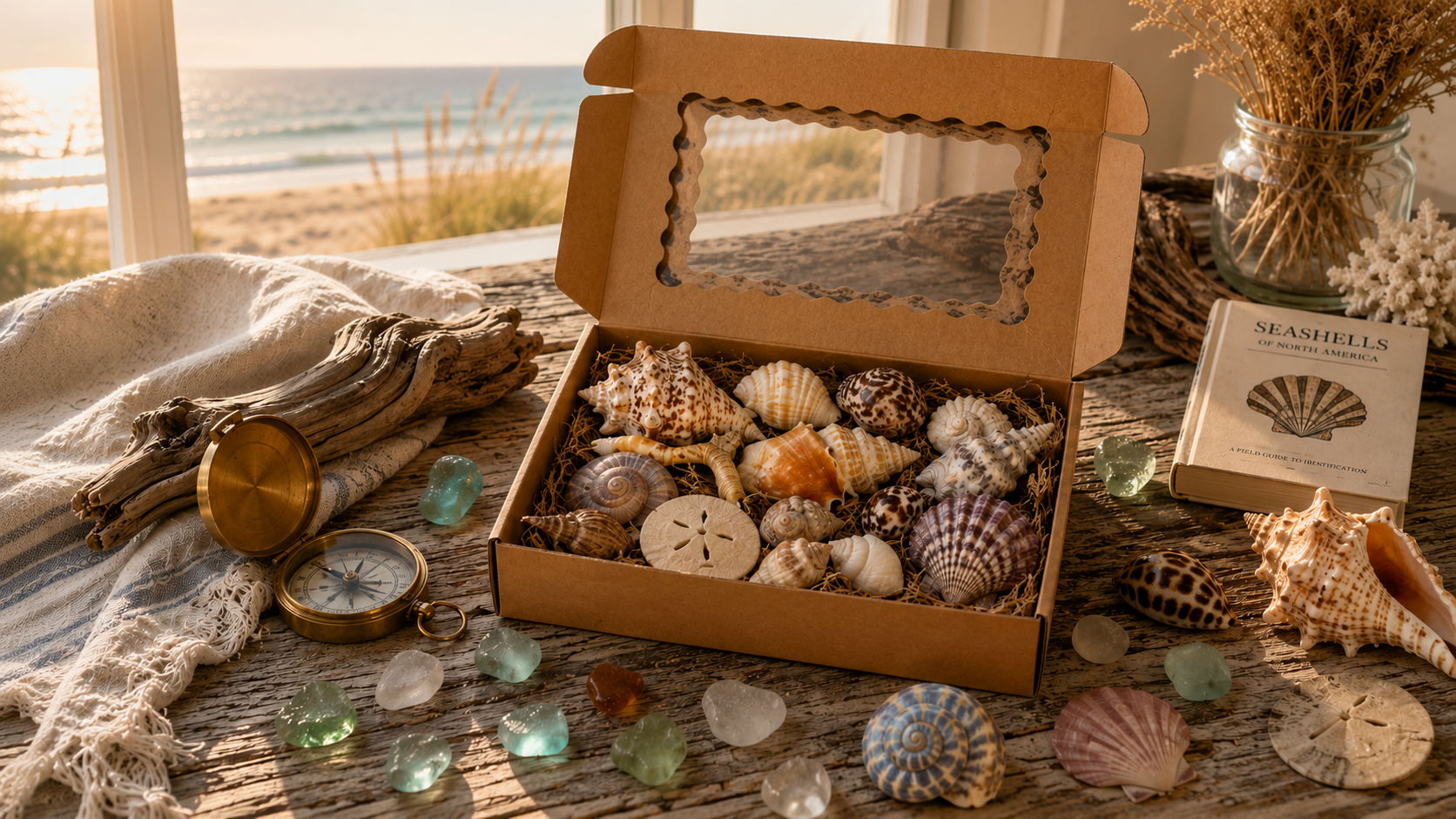
The Collector Box
See these ideas in a curated collection.
Article
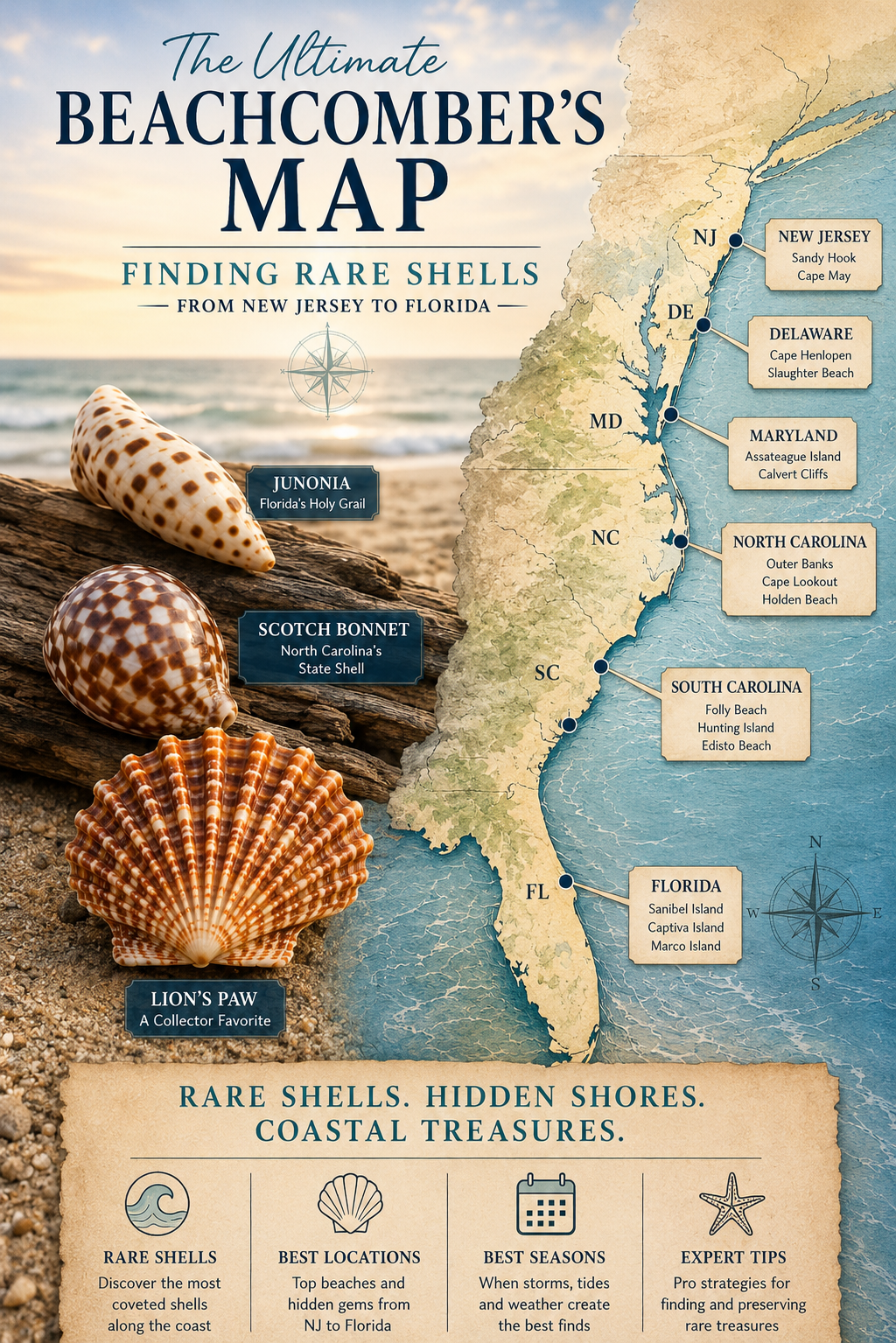
The Ultimate Beachcomber's Map: Finding Rare Shells from Jersey to Florida
Hand-picked next step from the editors.
Compare Similar Shells
Species and look-alikes worth studying side by side. Every card routes into the shell reference.
Species
Scotch Bonnet
Semicassis granulata
Cream base with regular reddish-brown squares in tidy rows. Rounded body whorl and short spire; toothed inner lip.
Explore ShellSpecies
Knobbed Whelk
Busycon carica
Aperture opens on the right when the spire points up. Row of blunt knobs along the shoulder of the body whorl; interior often flushed with orange.
Explore ShellSpecies
Lettered Olive
Americoliva sayana
Cylindrical body with a very short spire and a long narrow aperture. The polished cream base carries tan or brown zigzag lines that give the species its 'lettered' name.
Explore ShellSpecies
Atlantic Auger
Terebra dislocata
Elongated screw-shaped shell up to 2 inches, pale grey to tan with faint spiral banding; each whorl carries fine axial ribs.
Explore ShellBeaches Worth Exploring Next
Shores connected to the shells, regions, and conditions on this page.
North Carolina Outer Banks
Outer Banks
A 200-mile chain of Atlantic barrier islands — Cape Hatteras, Ocracoke, and Cape Lookout deliver whelks, olive shells, and the state shell,…
Explore BeachGeorgia Coast
Jekyll Island
Historic Golden Isle with generous public beaches — Driftwood Beach and St. Andrews shore deliver moon snails, jingle shells, and…
Explore BeachFlorida Gulf Coast
Sanibel Island
Sanibel's east-west orientation sweeps Gulf shells onto its shore in exceptional variety — the reason it's the most celebrated shelling…
Explore BeachNorth Carolina Outer Banks
Ocracoke Island
A ferry-only Outer Banks island south of Hatteras — sixteen miles of protected National Seashore beach where Scotch bonnets and knobbed…
Explore BeachDiscover More Coastal Inspiration
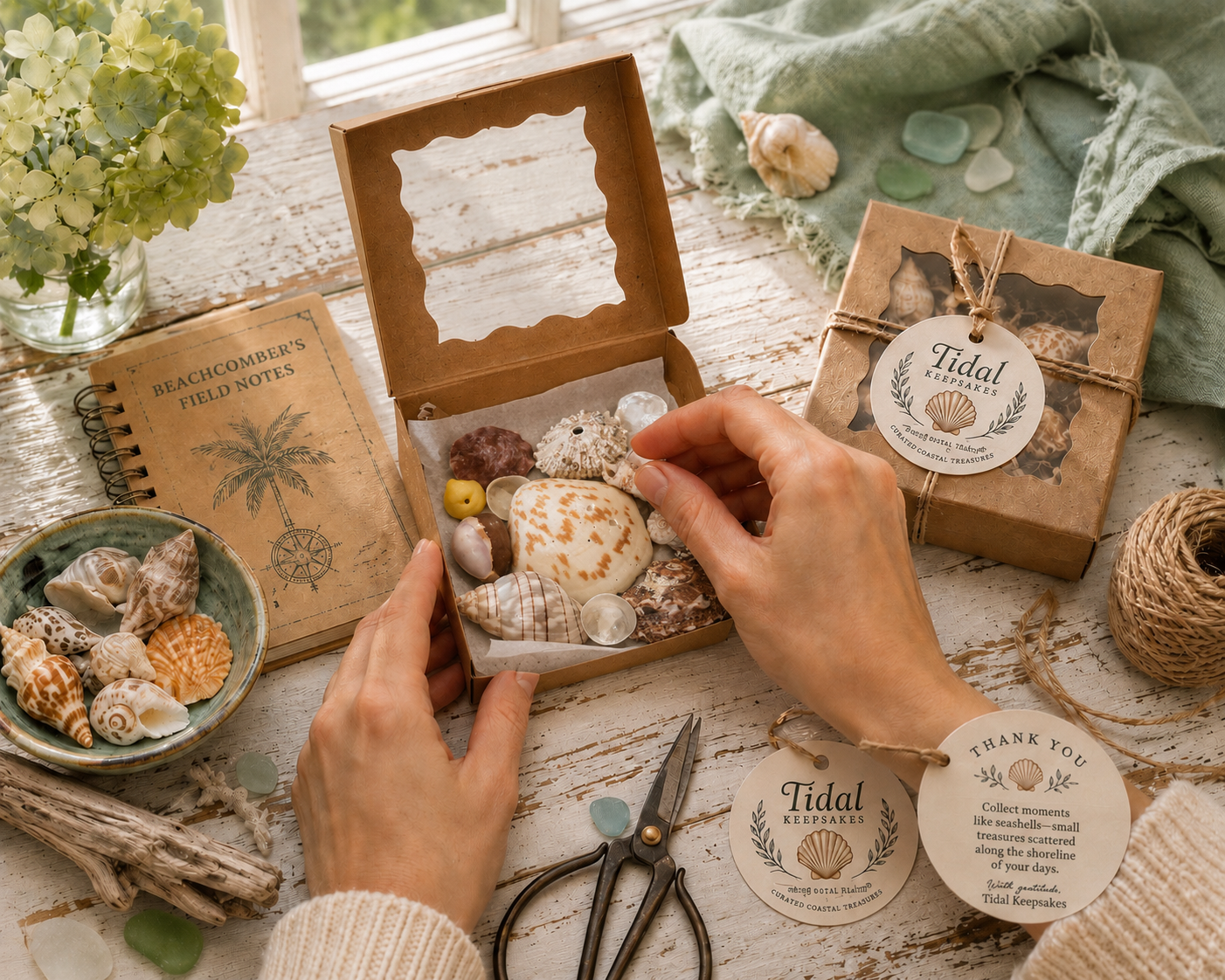
Curated coastal favorites and specimen boxes that echo the story above.
A Learning Journey to Follow
Learning Shell Identification
For growing collectors · 5 steps
For readers who already know a scallop from a whelk and want to sharpen the edge cases. Ends at the journal, where identification becomes a practice, not a lookup.
- 1
Understand the Anatomy
Shell Identification Guide
Vocabulary first — apex, whorl, aperture, columella.
Continue - 2
Meet the Common Species
Explore Common Shells
Browse the canonical shell records the site is built on.
Continue - 3
Compare Look-Alikes
Commonly Confused Shells
Side-by-side markers for the pairs that trip up new collectors.
Continue - 4
Find Them in the Wild
Best Beaches for Shelling
Where each species actually washes up.
Continue - 5
Practice in the Field
Shell Discovery Journal
Record each ID with sketches and notes to lock the learning in.
Continue