 Save
SaveGuide
DIY Coastal Keepsakes
Turn shells and sea glass into lasting keepsakes with simple beach craft projects, starting with a framed shadow box that protects your favorite finds.
Turn shells and sea glass into lasting keepsakes with simple beach craft projects, starting with a framed shadow box that protects your favorite finds.
Not every shell or piece of sea glass belongs on a shelf. Some of the most meaningful beach finds become lasting keepsakes through simple, thoughtful crafts. Whether you're preserving memories from a family vacation or displaying your favorite discoveries, a handmade project transforms ordinary treasures into something deeply personal.
One of the easiest places to begin is with a framed shadow box. This classic project protects delicate shells while creating a beautiful piece of coastal décor that celebrates your favorite shoreline.
Featured Beach Craft
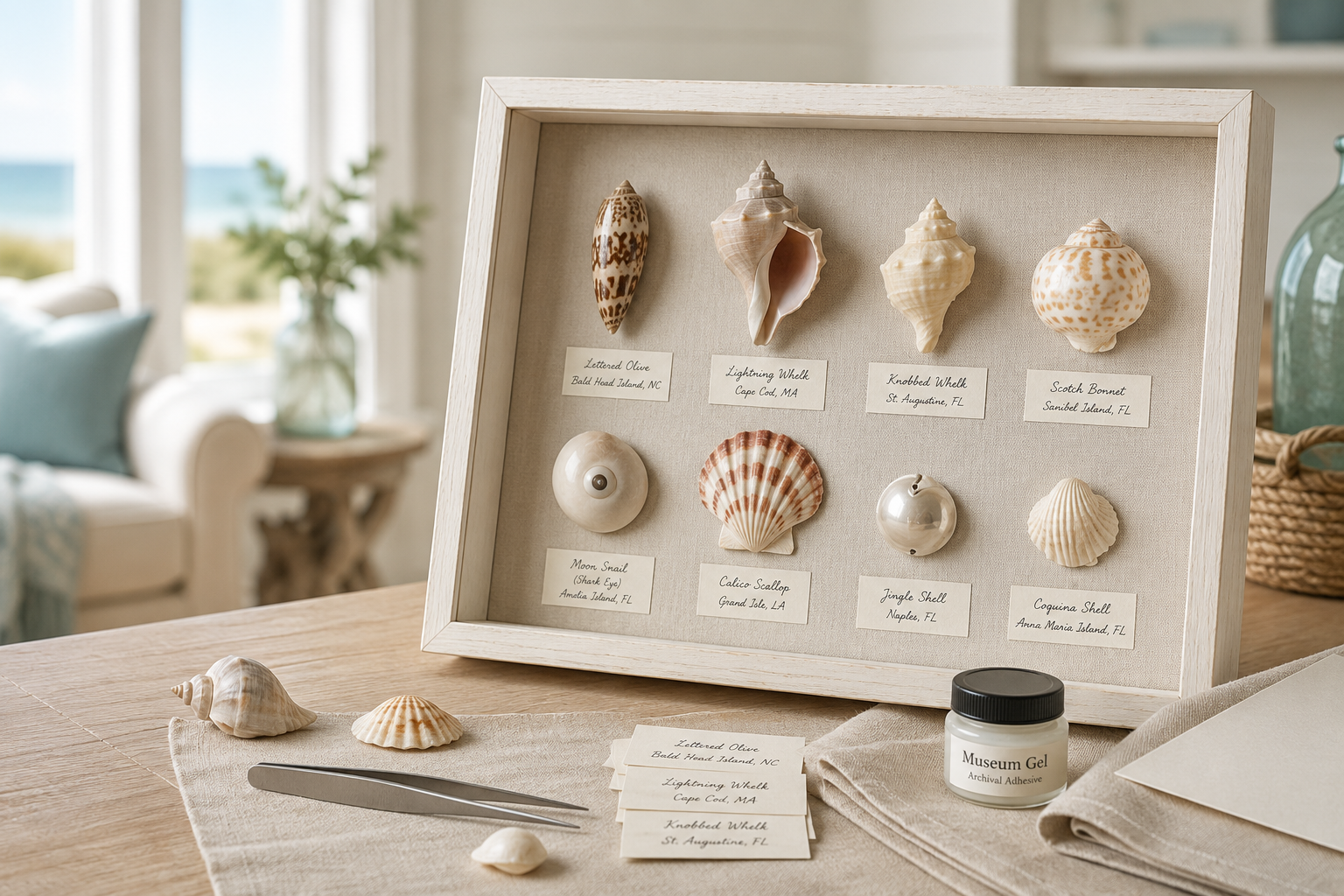
Shell Shadow Box Display
Skill Level: Beginner
Time Required: 30–60 minutes
You'll Need
- A shadow box frame
- Clean, completely dry seashells
- Acid-free cardstock or linen backing
- Museum gel or archival craft adhesive
- Small labels (optional)
- Tweezers for arranging smaller shells
How to Make It
- Sort your shells by size, color, or the beach where they were found.
- Experiment with different layouts before attaching anything.
- Secure each shell using museum gel or a small amount of archival adhesive.
- Add labels with the shell name, location, or date collected if desired.
- Close the frame and display it away from direct sunlight to preserve natural shell colors.
Tidal Keepsakes Tip
Leave a little open space around each shell. A thoughtfully arranged collection often feels more elegant than filling every inch of the frame.
Continue Exploring
Looking for More Beach Treasure Crafts?
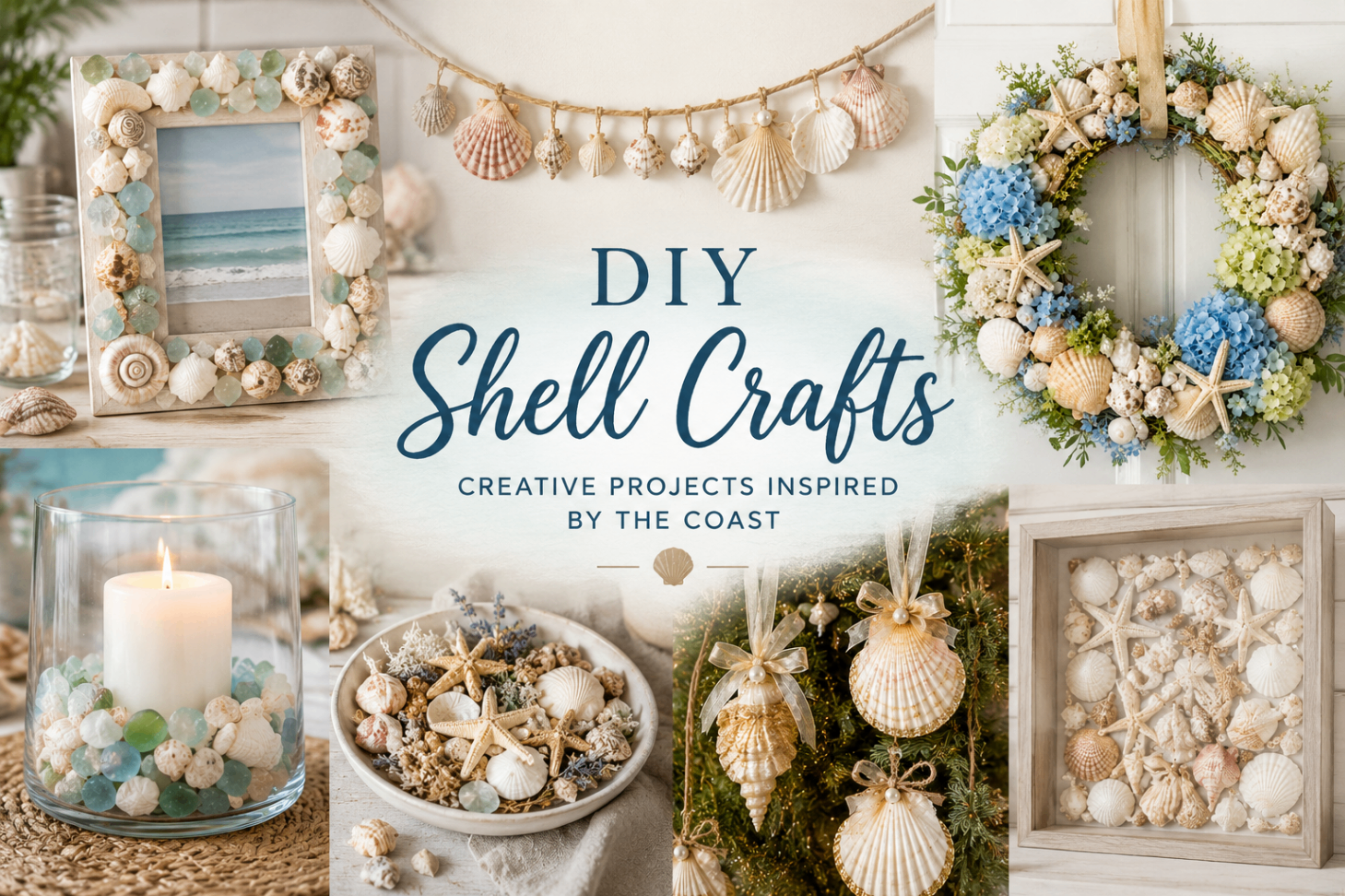
From seashell ornaments and sea glass lanterns to driftwood wall art, shark tooth jewelry, sand dollar displays, coastal wreaths, and dozens of creative DIY projects, there's an idea for every beachcomber and every collection.
Whether you're crafting with children, creating handmade gifts, decorating your home, or preserving vacation memories, our complete guide is filled with inspiration for turning your favorite beach finds into lasting keepsakes.
Explore the Complete Guide
The Ultimate Beach Treasure Craft Guide: 50 Creative Ideas →Continue Your Beachcombing Journey
Hand-picked next steps — chosen because they build directly on what you've just read.
Article
Shell Craft Tutorials
Builds on the same core topic.
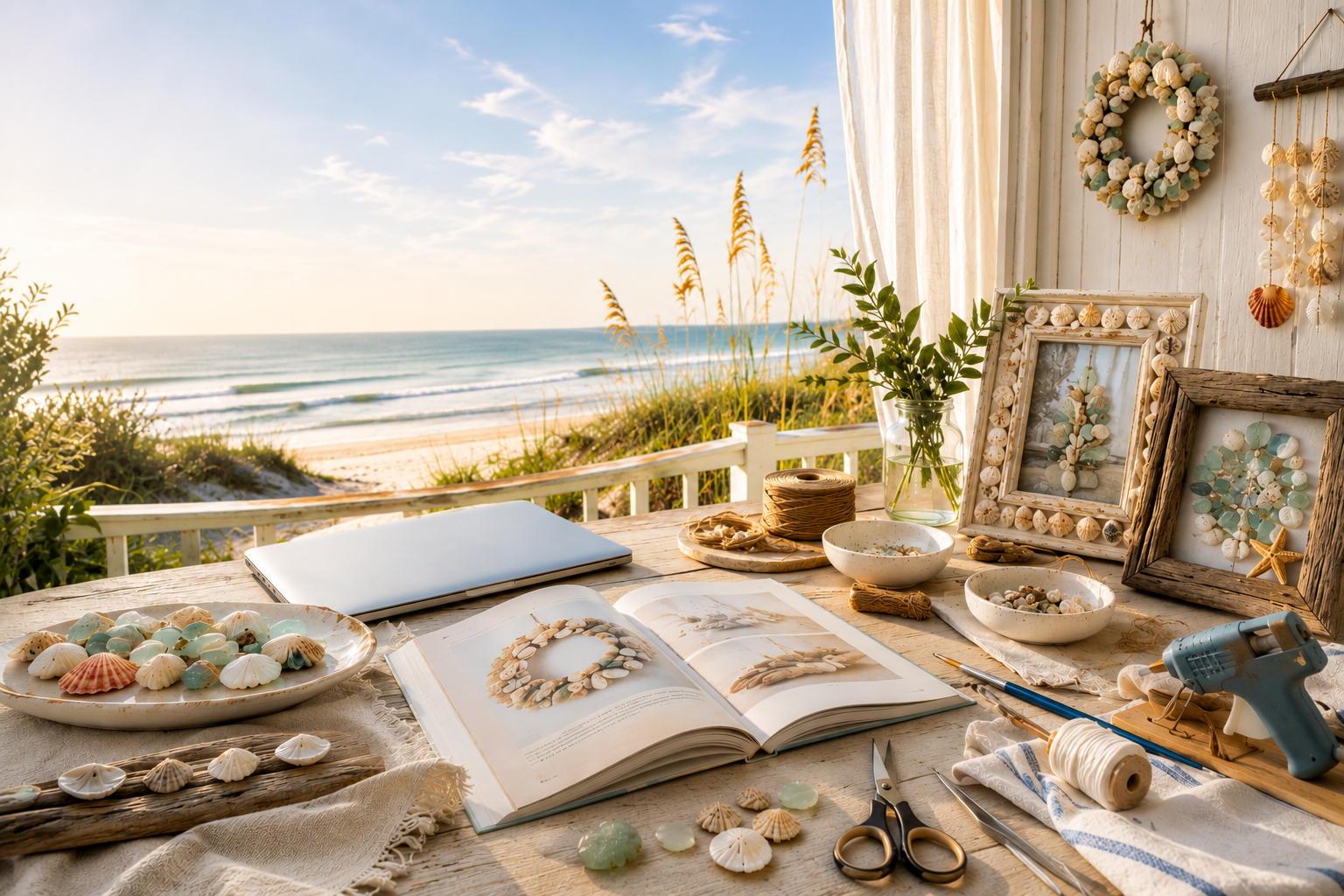
Guide
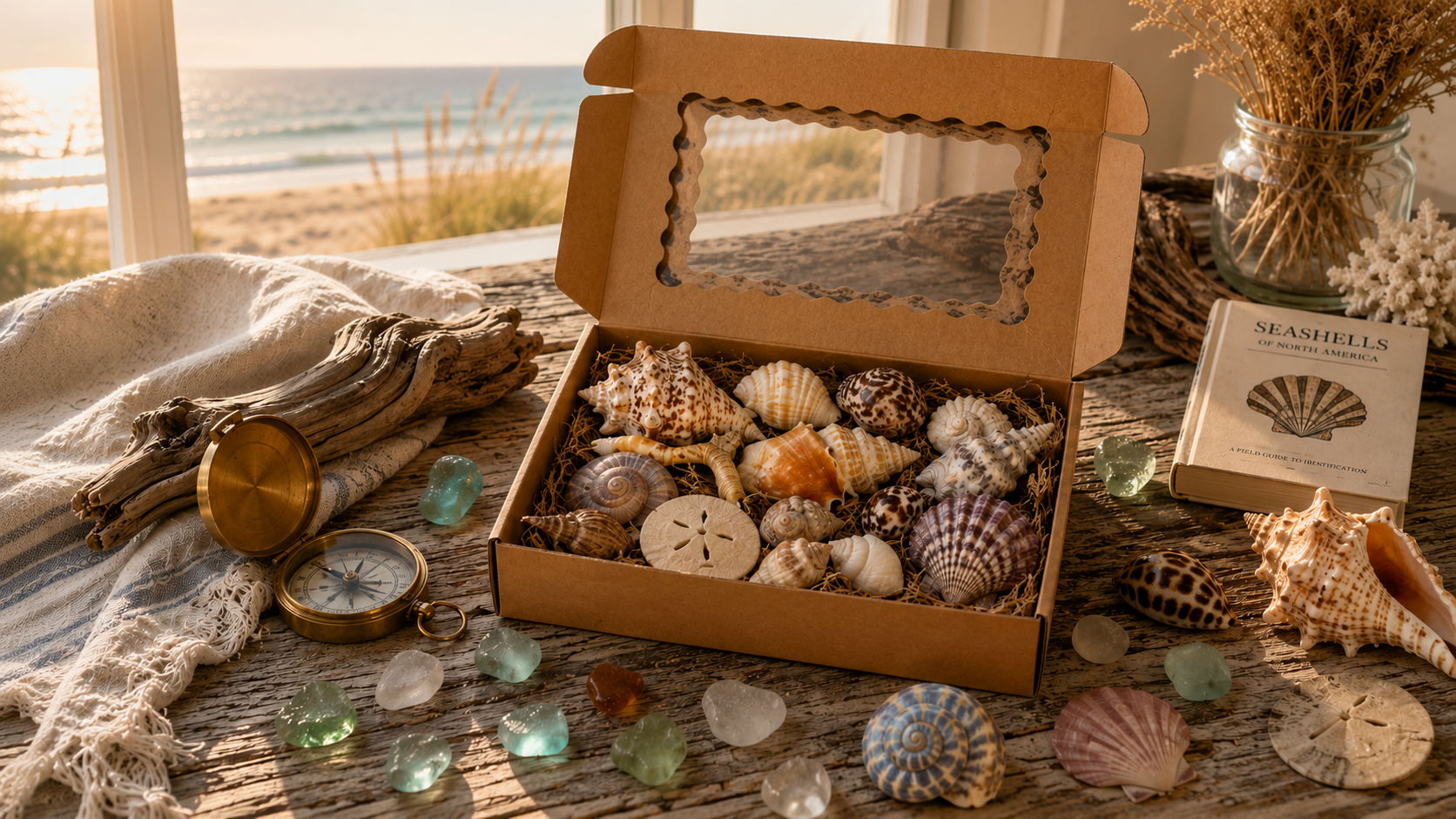
Best Resources for Shell Craft Tutorials
Builds on the same core topic.
Curated Shell Box
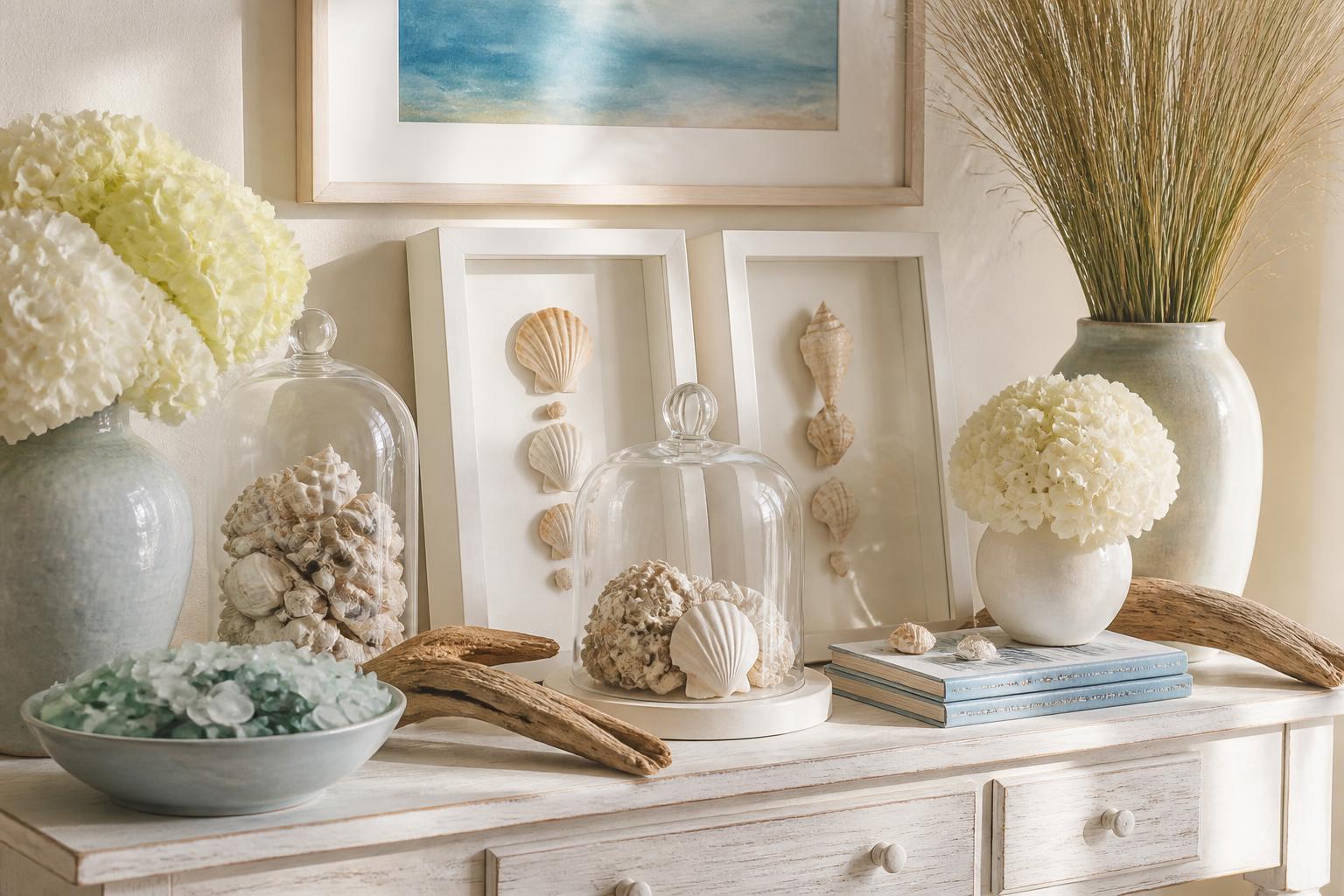
The Signature Shell Box
See these ideas in a curated collection.
Article
The Ultimate Beach Treasure Craft Guide: 50 Creative Ideas for Shells, Sea Glass, Shark Teeth, Driftwood, Sand Dollars, and More
Builds on the same core topic.
Compare Similar Shells
Species and look-alikes worth studying side by side. Every card routes into the shell reference.
Species
Scotch Bonnet
Semicassis granulata
Cream base with regular reddish-brown squares in tidy rows. Rounded body whorl and short spire; toothed inner lip.
Explore ShellSpecies
Knobbed Whelk
Busycon carica
Aperture opens on the right when the spire points up. Row of blunt knobs along the shoulder of the body whorl; interior often flushed with orange.
Explore ShellSpecies
Lettered Olive
Americoliva sayana
Cylindrical body with a very short spire and a long narrow aperture. The polished cream base carries tan or brown zigzag lines that give the species its 'lettered' name.
Explore ShellSpecies
Atlantic Auger
Terebra dislocata
Elongated screw-shaped shell up to 2 inches, pale grey to tan with faint spiral banding; each whorl carries fine axial ribs.
Explore ShellBeaches Worth Exploring Next
Shores connected to the shells, regions, and conditions on this page.
North Carolina Outer Banks
Outer Banks
A 200-mile chain of Atlantic barrier islands — Cape Hatteras, Ocracoke, and Cape Lookout deliver whelks, olive shells, and the state shell,…
Explore BeachGeorgia Coast
Jekyll Island
Historic Golden Isle with generous public beaches — Driftwood Beach and St. Andrews shore deliver moon snails, jingle shells, and…
Explore BeachFlorida Gulf Coast
Sanibel Island
Sanibel's east-west orientation sweeps Gulf shells onto its shore in exceptional variety — the reason it's the most celebrated shelling…
Explore BeachNorth Carolina Outer Banks
Ocracoke Island
A ferry-only Outer Banks island south of Hatteras — sixteen miles of protected National Seashore beach where Scotch bonnets and knobbed…
Explore BeachDiscover More Coastal Inspiration
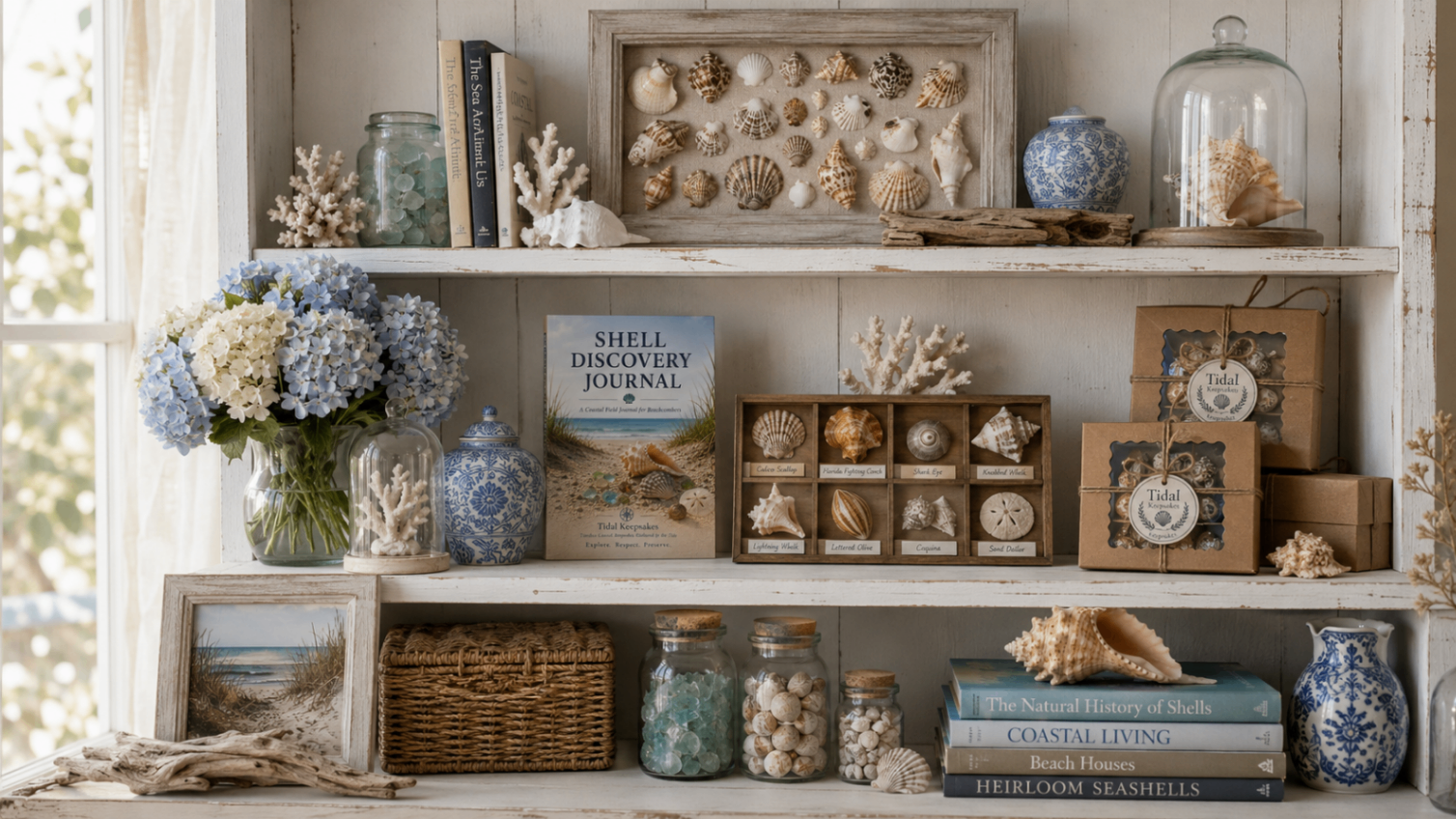
Curated coastal favorites and specimen boxes that echo the story above.
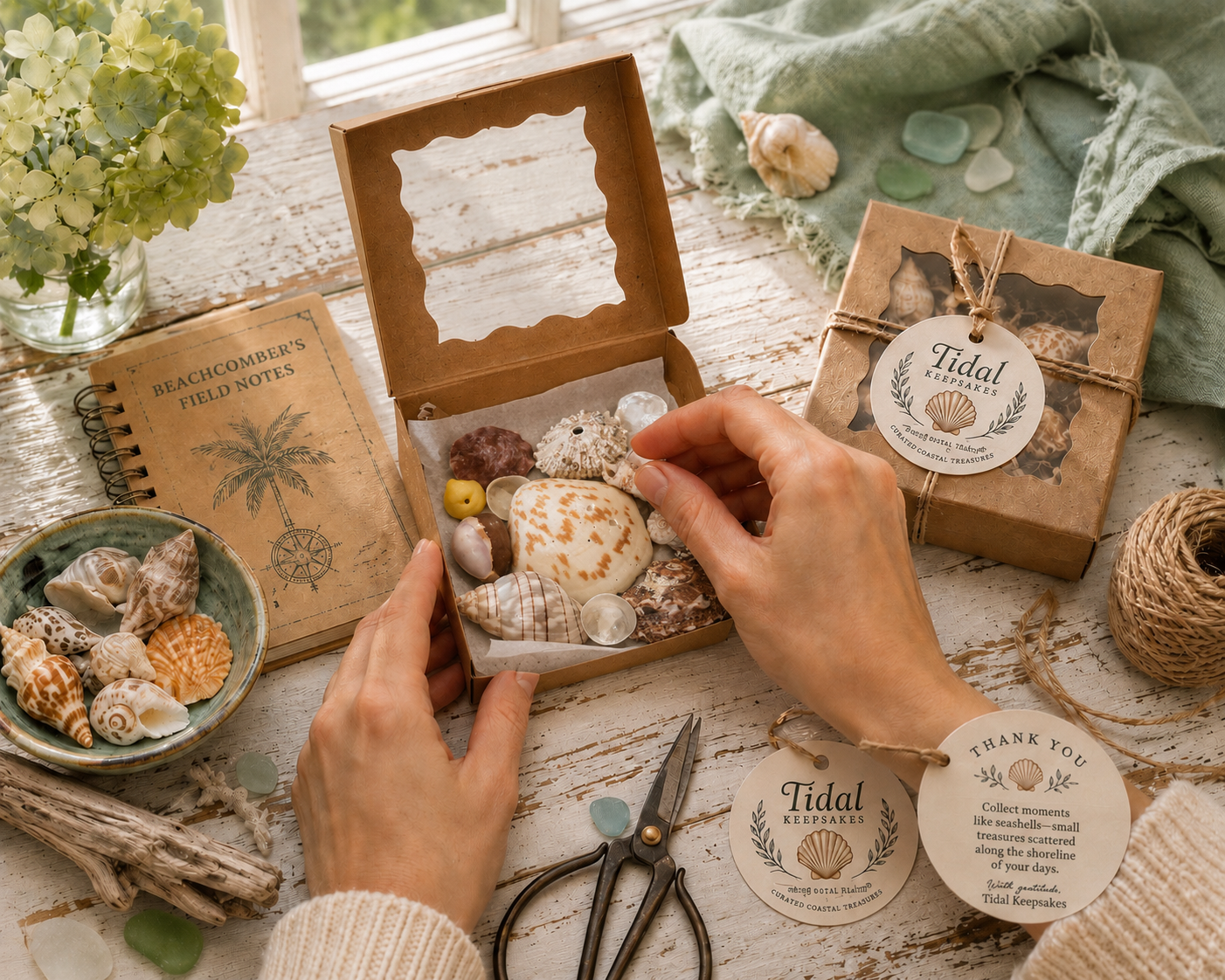
A Learning Journey to Follow
Learning Shell Identification
For growing collectors · 5 steps
For readers who already know a scallop from a whelk and want to sharpen the edge cases. Ends at the journal, where identification becomes a practice, not a lookup.
- 1
Understand the Anatomy
Shell Identification Guide
Vocabulary first — apex, whorl, aperture, columella.
Continue - 2
Meet the Common Species
Explore Common Shells
Browse the canonical shell records the site is built on.
Continue - 3
Compare Look-Alikes
Commonly Confused Shells
Side-by-side markers for the pairs that trip up new collectors.
Continue - 4
Find Them in the Wild
Best Beaches for Shelling
Where each species actually washes up.
Continue - 5
Practice in the Field
Shell Discovery Journal
Record each ID with sketches and notes to lock the learning in.
Continue