
 Save
SaveResource
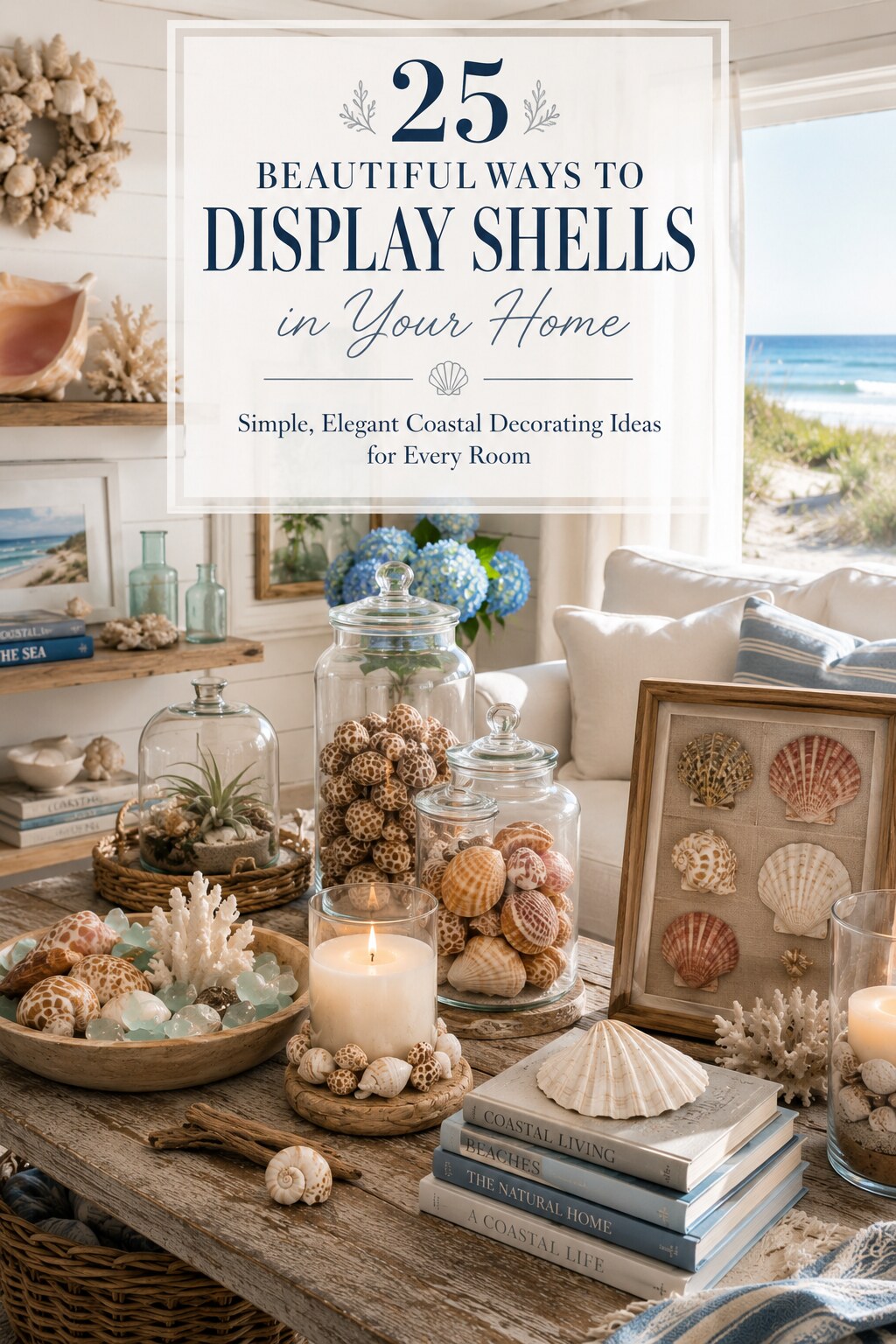
Shell Displays
Beautiful, simple ways to display your seashell collection so each piece gets the spotlight.
Beautiful, simple ways to display your seashell collection so each piece gets the spotlight.
Displaying shells well is less about quantity and more about intention. Give your best finds space, light, and a quiet backdrop.
Display Ideas
- A glass cloche over a single special shell
- A shallow ceramic bowl of sorted shells
- A shadow box with labeled specimens
- Floating shelves with a few pieces at a time
- Apothecary jars layered with sand and shells
Choosing the Right Display for the Shell
The display should follow the shell, not the other way round. A single sculptural find wants isolation; a set of near-identical shells wants repetition; a mixed handful wants a container that unifies it.
| What you have | Display that suits it | Why it works |
|---|---|---|
| One exceptional shell — a large whelk, a junonia | Glass cloche or a linen-backed frame | Isolation and empty space read as "treasure" rather than "decor" |
| Several matched shells of one kind | A row of apothecary jars or a shallow bowl | Repetition makes a plain shell look deliberate |
| A varied vacation handful | Compartmented specimen case or tiered tray | Compartments give a mixed group order without sorting it away |
| Small, flat finds — coquinas, sea glass | Layered jar or a labeled shadow box | Depth and backing stop small pieces from disappearing |
| Fragile pieces — sand dollars, urchin tests | Cloche or closed case on a high shelf | Enclosure protects them from handling and dust |
Styling Tips
- Group by color, size, or type for a curated look.
- Use odd numbers and vary heights.
- Keep the surrounding palette neutral.
- Rotate seasonal finds to keep it fresh.
Room by Room
- Entry: a shallow bowl of sand dollars on the console — one object, seen daily.
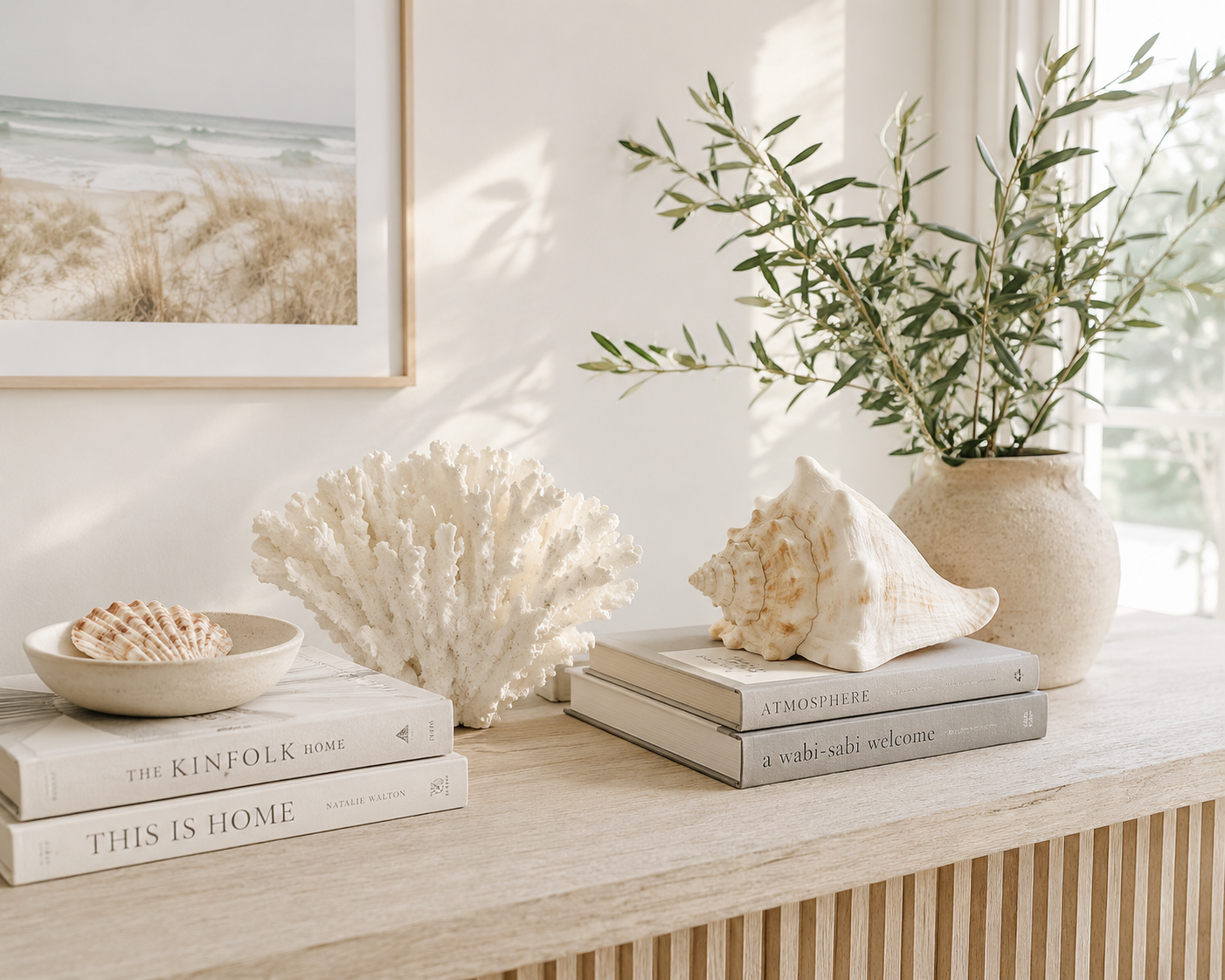
- Living room: a single statement conch or murex on an otherwise clear coffee table, with books stacked low beside it.
- Shelving: cloches and shadow boxes at varied heights, with plenty of empty shelf between groupings.
- Bathroom: a tiered tray or a small jar of sea glass, where damp air rules out paper and fabric.
- Bedroom: one framed specimen on the wall rather than a surface display that collects dust.
Labeling and Caring for a Display
- Label with the beach and date — a specimen label turns a shell into a record.
- Keep displays out of direct sunlight; sun fades colour on tulips, scallops, and olives.
- Dust with a soft dry brush rather than a cloth, which catches on spines and fronds.
- Make sure shells are fully dry and cleaned before they go into a closed case.
- Rest fragile pieces on cotton wool or acid-free tissue so they don't chip against glass.
Common Mistakes
- Filling every surface — scattering reads as clutter, grouping reads as a collection.
- Mixing too many shell types in one small container.
- Crowding a cloche, which cancels the isolation that makes it work.
- Placing a display in a sunny window.
- Letting a display go permanent; rotating a few pieces keeps it feeling alive.
Looking for more inspiration? Discover 25 beautiful ways to display seashells throughout your home.
Explore Seashell Display Ideas →Continue Your Beachcombing Journey
Hand-picked next steps — chosen because they build directly on what you've just read.
Article
25 Beautiful Ways to Display Seashells in Your Home
Builds on the same core topic.
Guide
Coastal Decor Ideas
Shares coastal-decor · shell-display.
Curated Shell Box
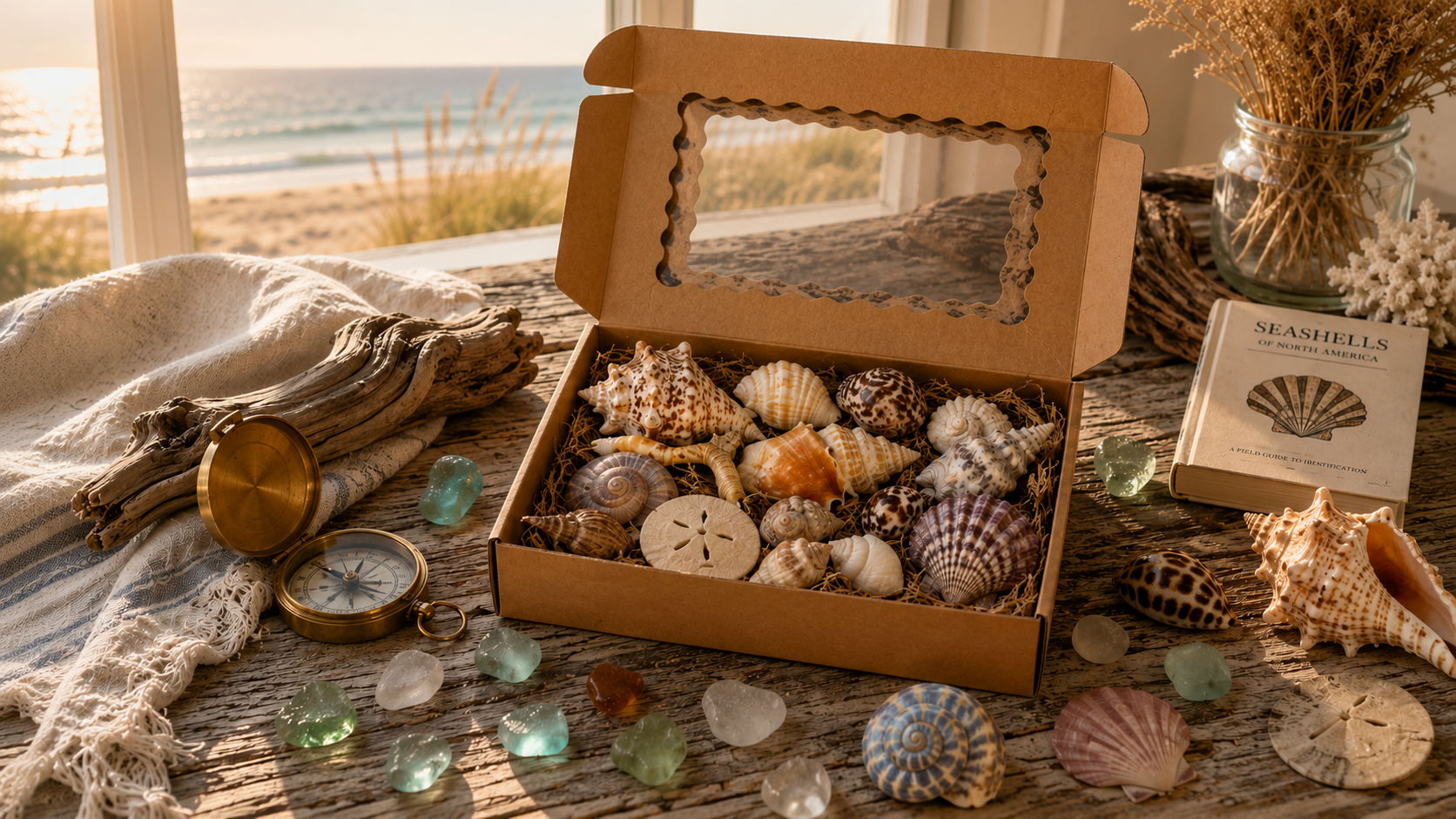
The Signature Shell Box
See these ideas in a curated collection.

Article
Coastal Living at Home: Bring the Ocean Indoors with Timeless Coastal Style
Shares coastal-decor · shell-display.
Compare Similar Shells
Species and look-alikes worth studying side by side. Every card routes into the shell reference.
Species
Scotch Bonnet
Semicassis granulata
Cream base with regular reddish-brown squares in tidy rows. Rounded body whorl and short spire; toothed inner lip.
Explore ShellSpecies
Knobbed Whelk
Busycon carica
Aperture opens on the right when the spire points up. Row of blunt knobs along the shoulder of the body whorl; interior often flushed with orange.
Explore ShellSpecies
Lettered Olive
Americoliva sayana
Cylindrical body with a very short spire and a long narrow aperture. The polished cream base carries tan or brown zigzag lines that give the species its 'lettered' name.
Explore ShellSpecies
Atlantic Auger
Terebra dislocata
Elongated screw-shaped shell up to 2 inches, pale grey to tan with faint spiral banding; each whorl carries fine axial ribs.
Explore ShellBeaches Worth Exploring Next
Shores connected to the shells, regions, and conditions on this page.
North Carolina Outer Banks
Outer Banks
A 200-mile chain of Atlantic barrier islands — Cape Hatteras, Ocracoke, and Cape Lookout deliver whelks, olive shells, and the state shell,…
Explore BeachGeorgia Coast
Jekyll Island
Historic Golden Isle with generous public beaches — Driftwood Beach and St. Andrews shore deliver moon snails, jingle shells, and…
Explore BeachFlorida Gulf Coast
Sanibel Island
Sanibel's east-west orientation sweeps Gulf shells onto its shore in exceptional variety — the reason it's the most celebrated shelling…
Explore BeachNorth Carolina Outer Banks
Ocracoke Island
A ferry-only Outer Banks island south of Hatteras — sixteen miles of protected National Seashore beach where Scotch bonnets and knobbed…
Explore BeachDiscover More Coastal Inspiration
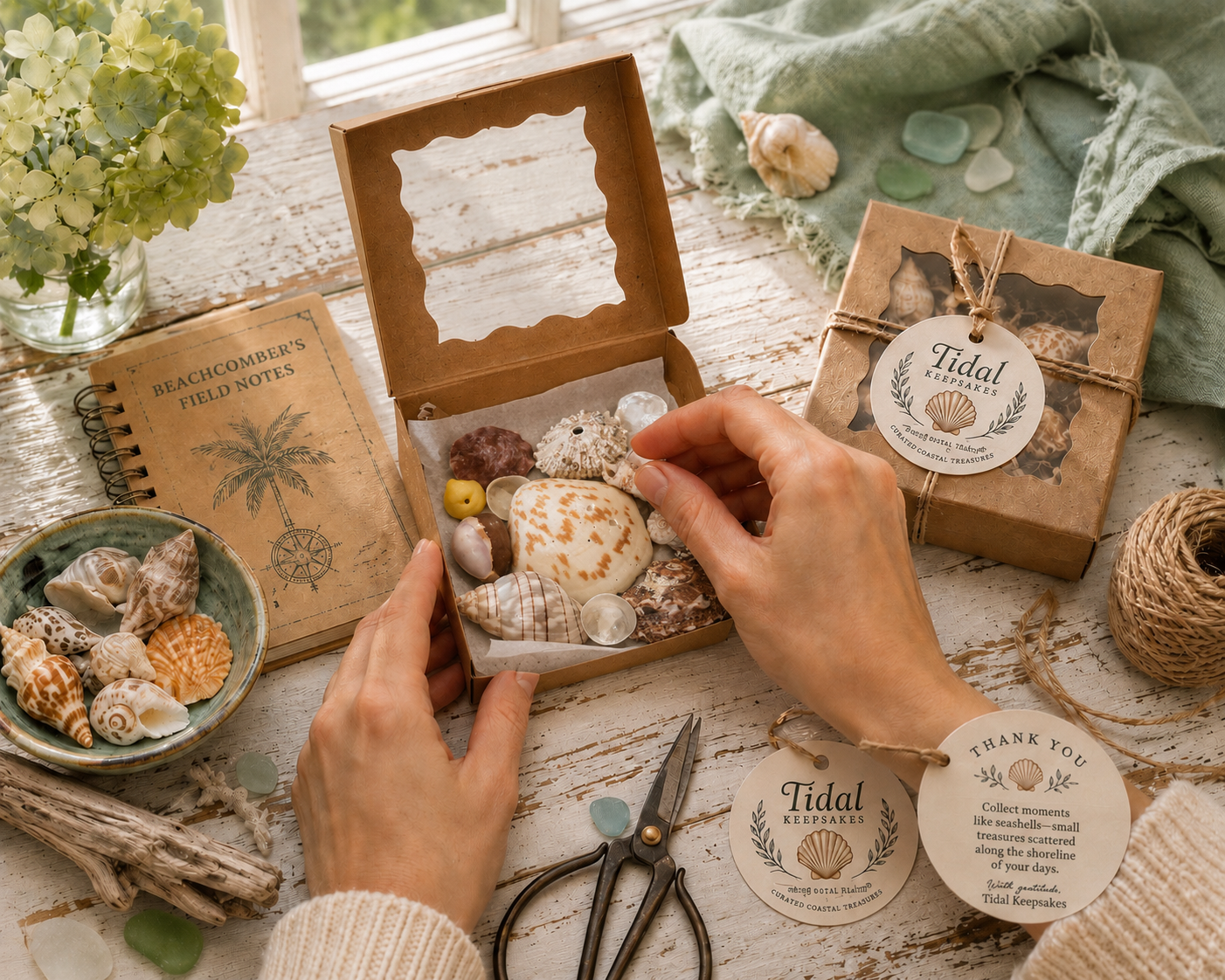
Curated coastal favorites and specimen boxes that echo the story above.
A Learning Journey to Follow
Learning Shell Identification
For growing collectors · 5 steps
For readers who already know a scallop from a whelk and want to sharpen the edge cases. Ends at the journal, where identification becomes a practice, not a lookup.
- 1
Understand the Anatomy
Shell Identification Guide
Vocabulary first — apex, whorl, aperture, columella.
Continue - 2
Meet the Common Species
Explore Common Shells
Browse the canonical shell records the site is built on.
Continue - 3
Compare Look-Alikes
Commonly Confused Shells
Side-by-side markers for the pairs that trip up new collectors.
Continue - 4
Find Them in the Wild
Best Beaches for Shelling
Where each species actually washes up.
Continue - 5
Practice in the Field
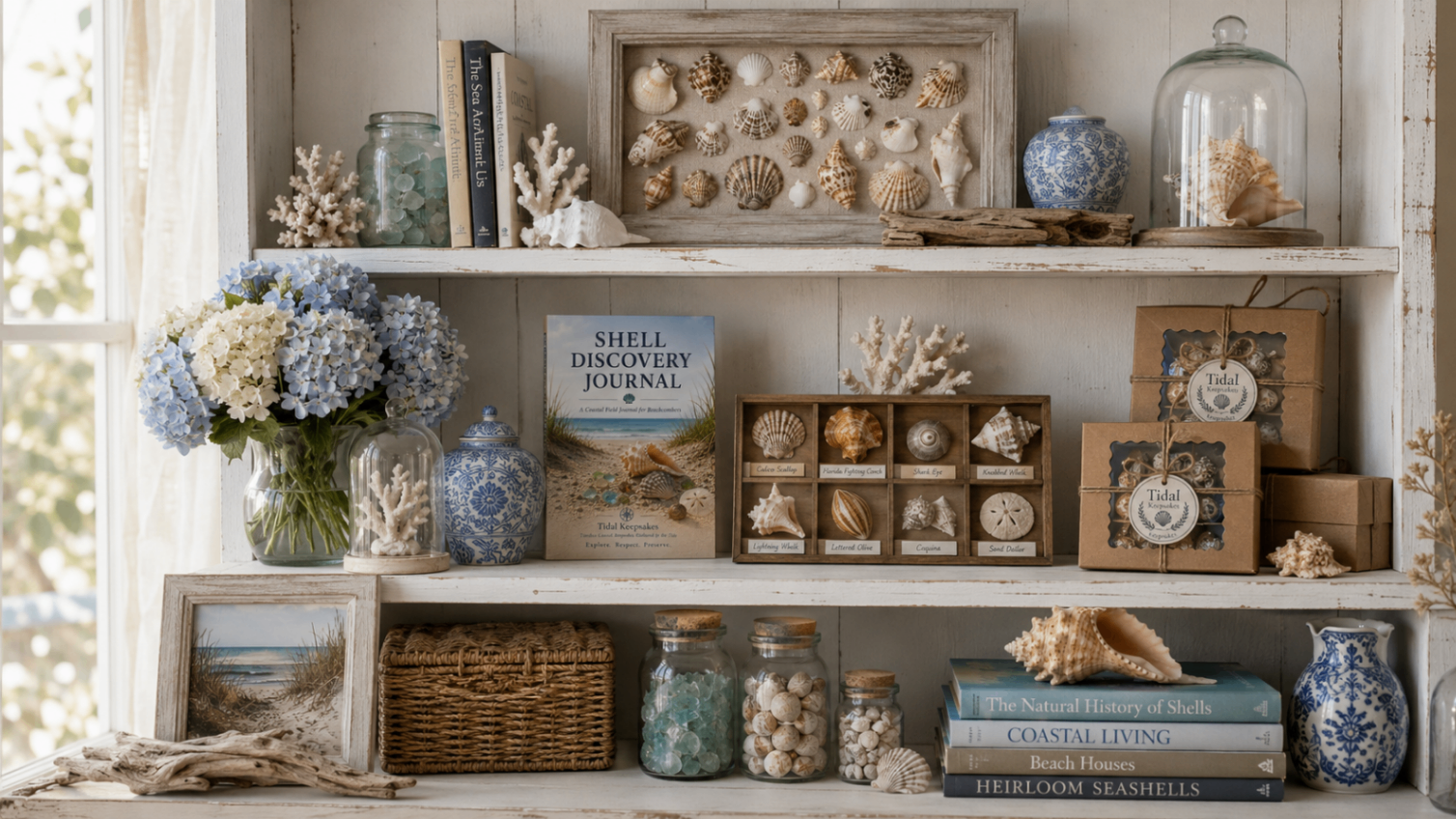
Shell Discovery Journal
Record each ID with sketches and notes to lock the learning in.
Continue