 Save
SaveBeachcombing Guides
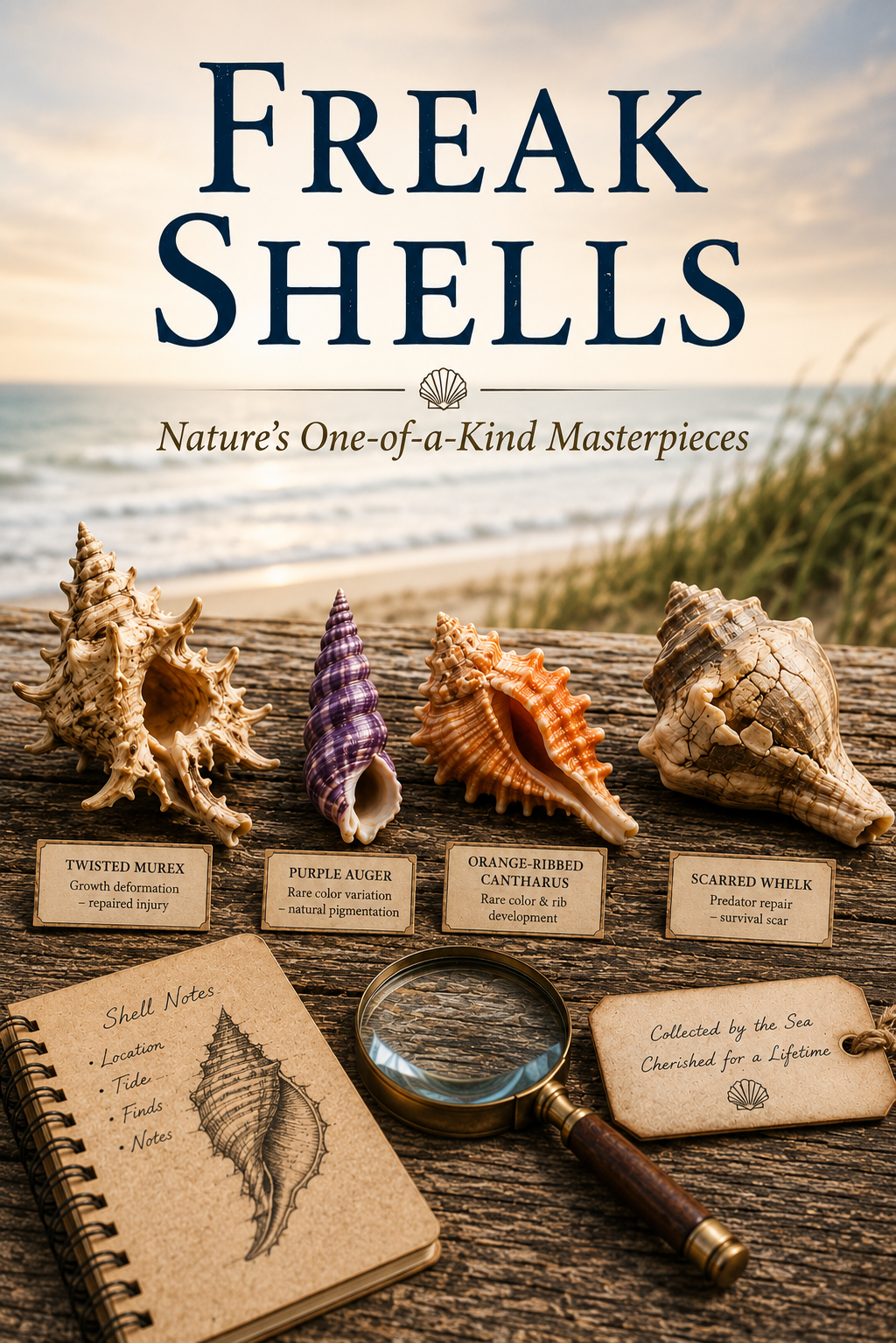
Freak Shells: Nature's One-of-a-Kind Masterpieces
Most collectors search for rare shells.
Experienced collectors often search for something even more unusual — a freak shell.
These remarkable specimens are not necessarily rare species. Instead, they are shells altered by injury, genetics, environmental conditions, or unusual growth patterns. No two are exactly alike, making them some of the most fascinating treasures a beachcomber can discover.
What Is a Freak Shell?
 Save
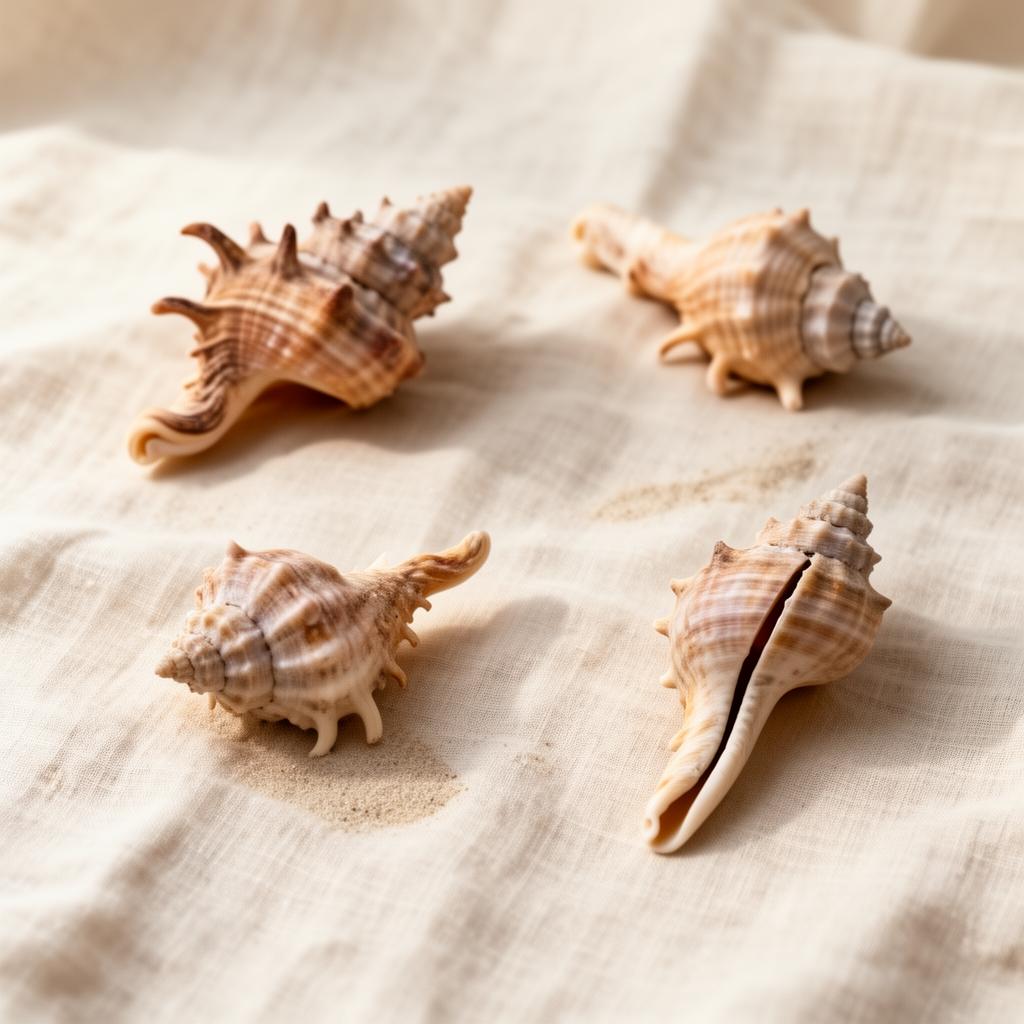
SaveA freak shell is any specimen whose shape, structure, or color falls outside the normal pattern for its species. Rather than being a rare species, it's an ordinary species that grew in an extraordinary way.
Most freak shells form through one of a few causes: growth deformities that twist or distort the spire, predator injuries that the animal survived and repaired, genetic mutations that alter form or pigment, and environmental conditions — temperature, water chemistry, and diet — that nudge a shell off its usual course.
Because each of these influences is unique to a single animal's life, no two freak shells are ever quite the same. A twisted murex, a crooked tulip, a split-spine whelk — each is a one-of-a-kind record of the creature that built it.
Freak Shell or Beach Damage?
 Save
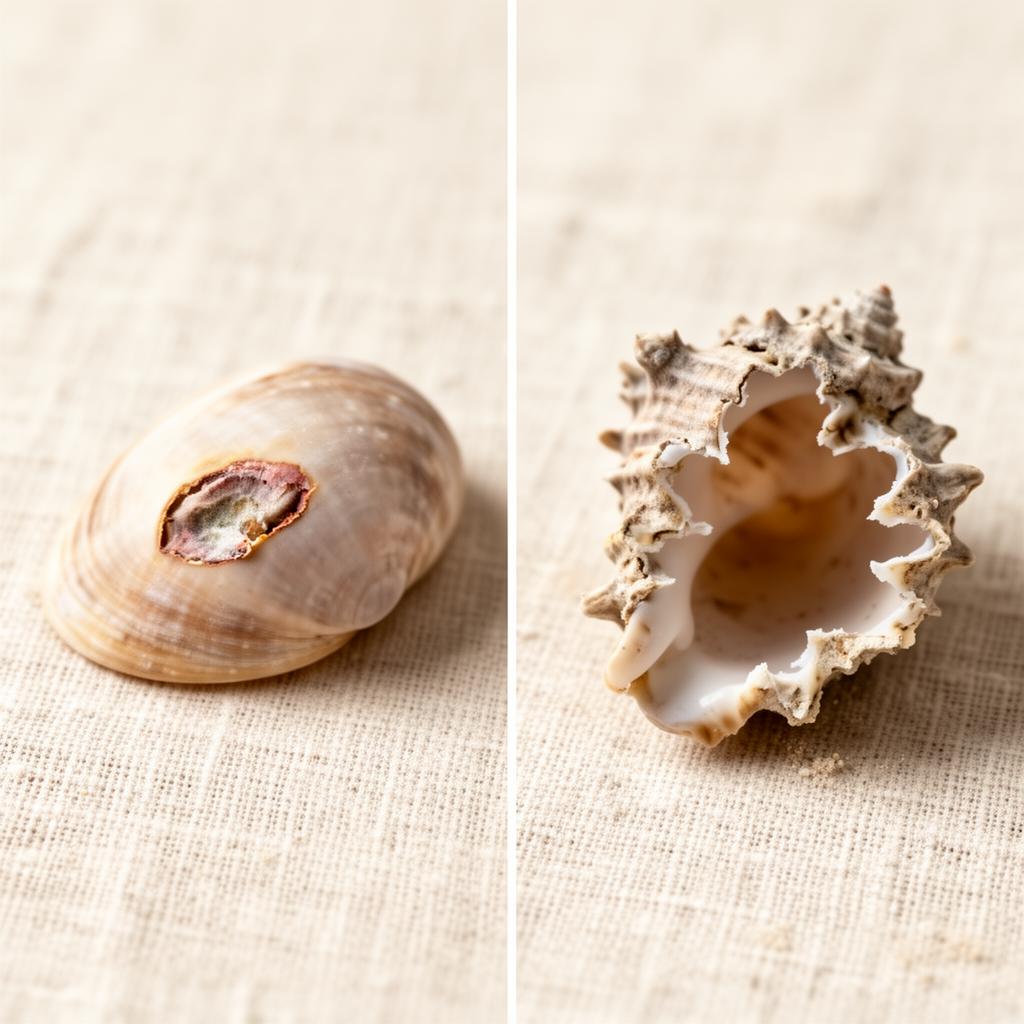
SaveThe single most important skill in collecting freak shells is telling a genuine anomaly from ordinary beach damage. A valuable freak shell shows changes the living animal made — smooth, healed, and grown over. Beach damage is mechanical breakage that happened after death, with raw, sharp, unrepaired edges.
Use this quick comparison when you pick up an unusual shell:
| Feature | Valuable Freak Shell | Ordinary Beach Damage |
|---|---|---|
| Edge Texture | Smooth and rounded where the shell healed over | Sharp, raw, and freshly broken |
| Growth Lines | Continue across the change — the animal grew through it | Cut off abruptly, with no regrowth |
| Symmetry | Distortion is consistent and built into the structure | Random chips and cracks with no pattern |
| Interior Shell | Glossy, intact, often with a repaired inner wall | Dull, worn, or hollowed out by abrasion |
Three Keys to Identifying Authentic Freak Shells
 Save
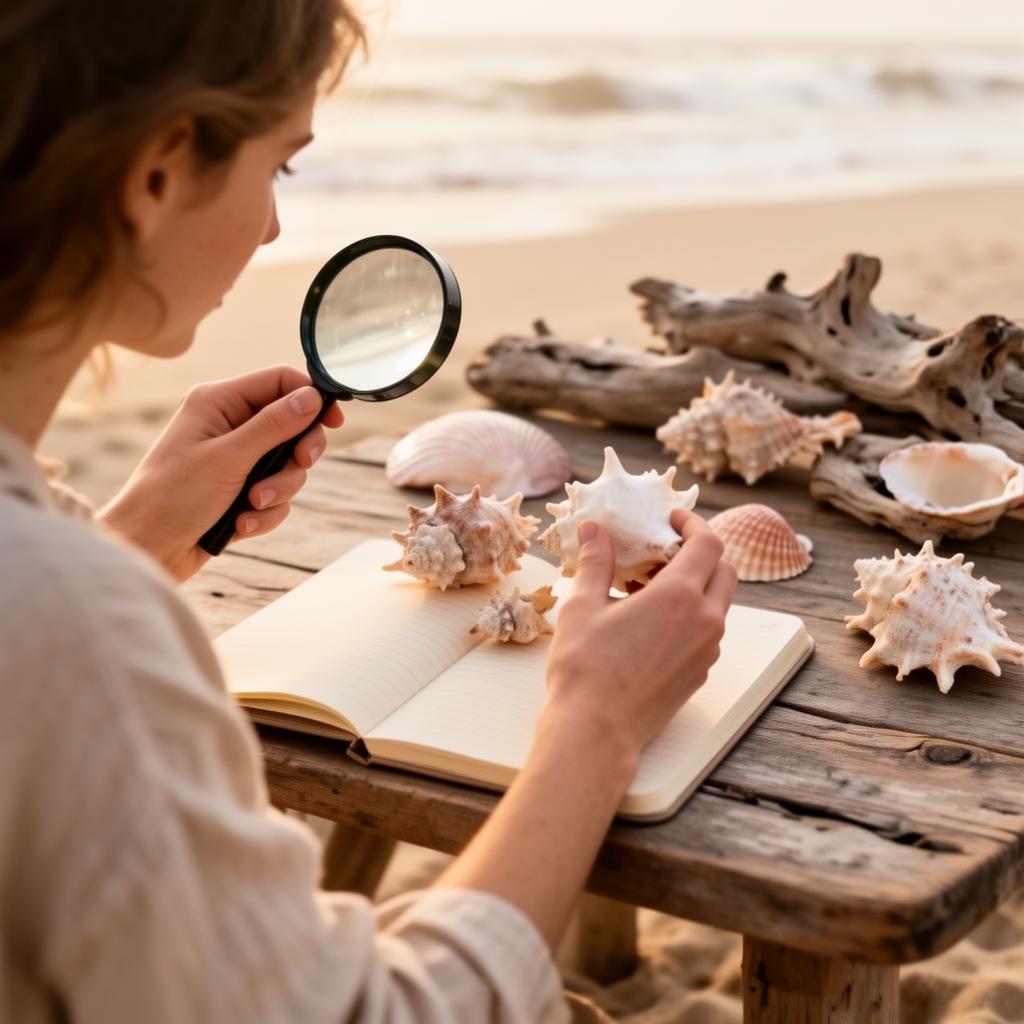
SaveOnce you know what to look for, a magnifying glass and a little patience are all you need. Three details separate a true anomaly from a lookalike.
Look for Scar Seams. Survived predator attacks leave a healed seam where new shell grew over an old wound. The seam is slightly raised, follows the curve of growth, and is the clearest sign the animal lived through something unusual.
Examine the Aperture. The opening of the shell records the final shape of the animal's body. A twisted, doubled, or off-axis aperture points to a genuine growth deformity rather than later breakage.
Follow the Spines and Ribs. Trace the ornamentation from spire to lip. On a real freak shell the spines and ribs bend, fork, or fuse continuously — the distortion is woven into the whole structure, not snapped on at one point.
Common Types of Freak Shells
 Save
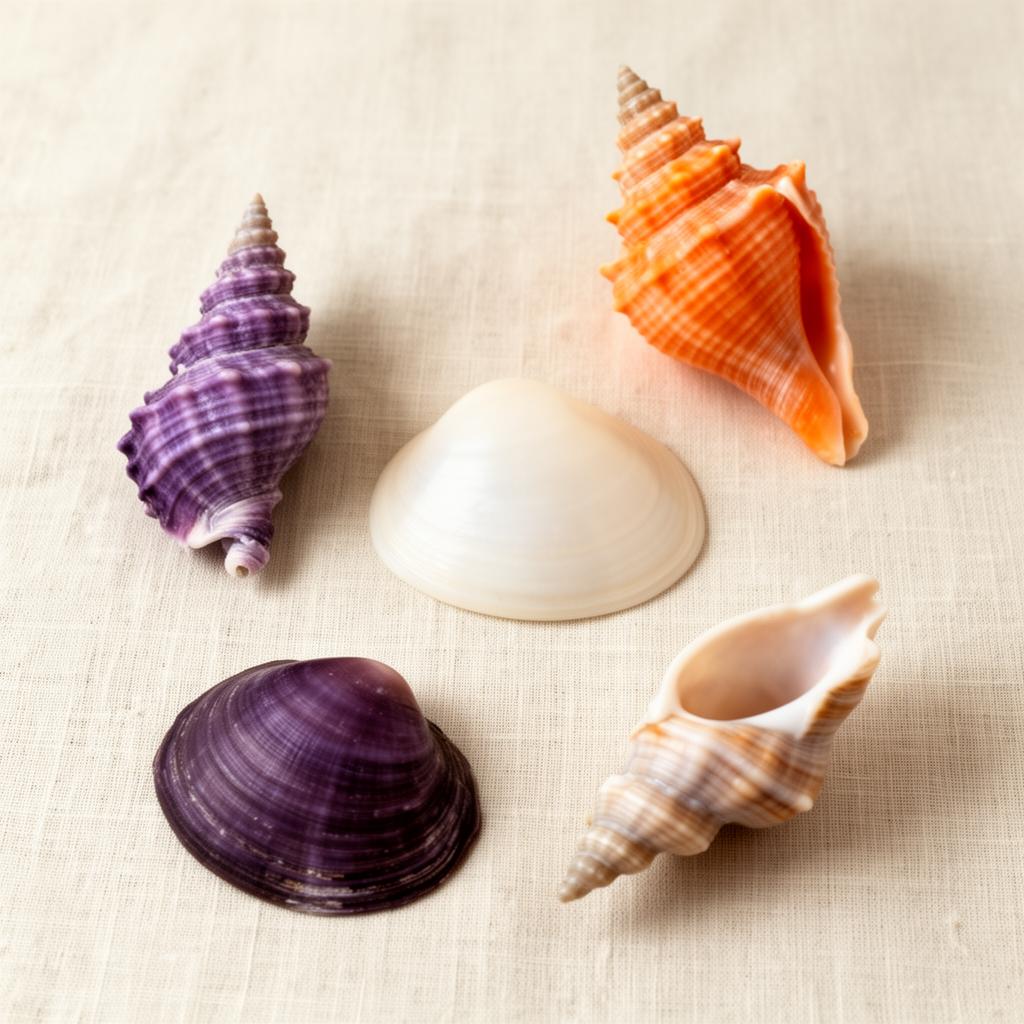
SaveFreak shells tend to fall into two broad families, and many specimens belong to both at once.
Growth Deformities. These are shells whose form went off-pattern: twisted spires, bent tulips, doubled apertures, fused spines, and S-shaped curves. They form when injury, crowding, or a developmental hiccup changes how the mantle lays down new shell.
Rare Color Variations. These are shells with pigment well outside the normal range — a lavender auger, a vividly orange-ribbed cantharus, a creamy albino tulip, or a deep purple shell where the species is usually pale. Color freaks are often the most striking finds on the beach.
How Predators Create Freak Shells
 Save
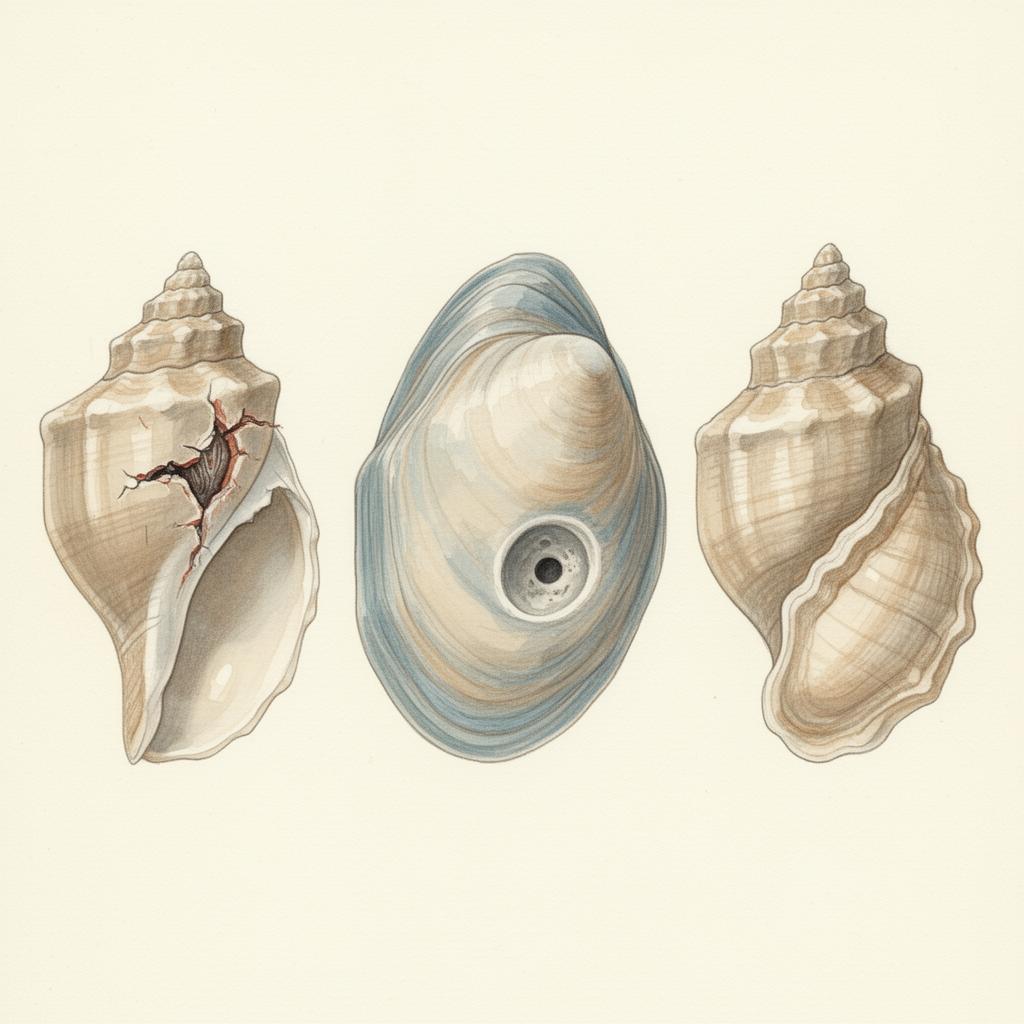
SaveMany of the most prized freak shells are survival stories. When a predator attacks and the animal lives, it repairs the damage — and that repair becomes a permanent, unique feature.
Stone Crabs. Powerful claws crush and peel the shell's lip. A mollusk that survives seals the crushed edge and keeps growing, leaving a thickened, scalloped scar along the aperture.
Moon Snails. These predators drill a neat, beveled, countersunk hole to reach the animal inside. Occasionally the prey survives an incomplete drilling and patches the hole from within, creating a distinctive repaired blister.
Cone Snails. Cone snails attack with a venomous harpoon. Survivors can show subtle puncture repairs and irregular growth where the shell resumed building after the strike.
The Science Behind Color Mutations
 Save
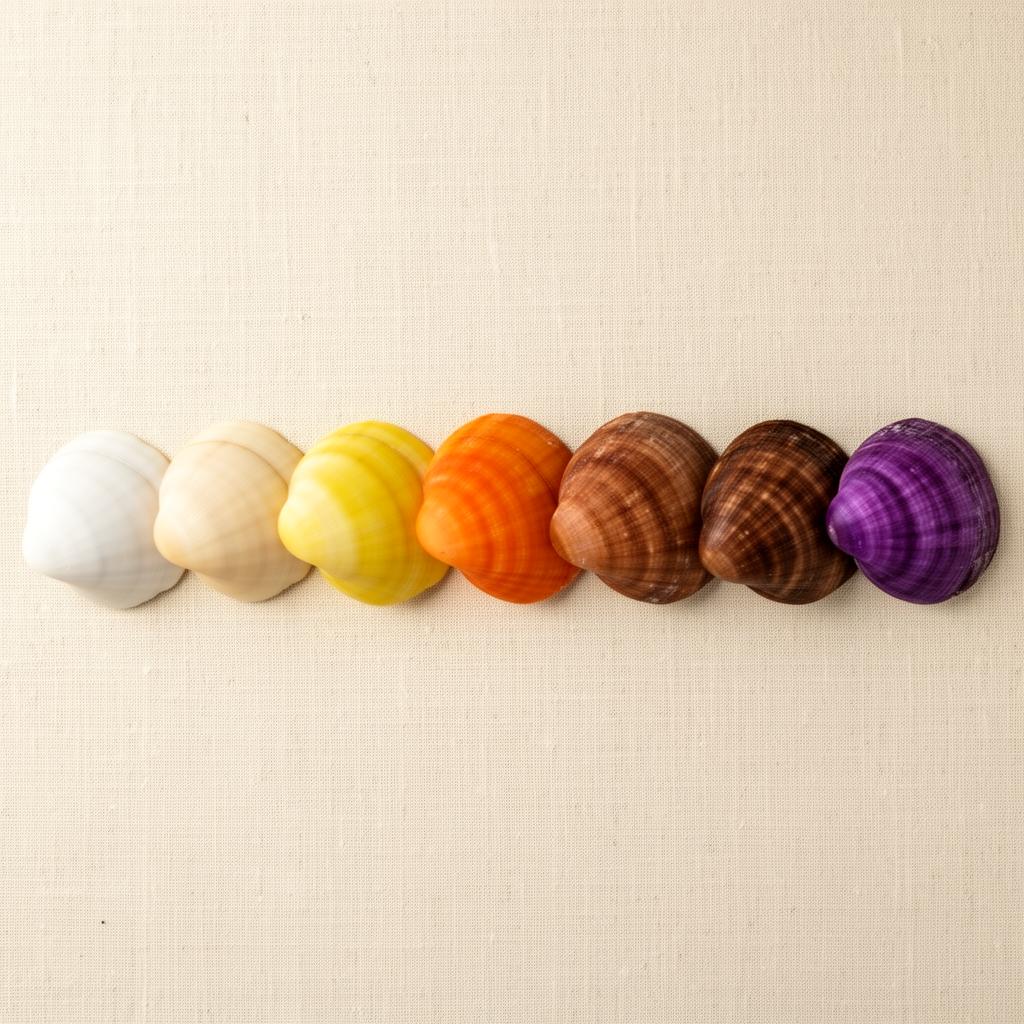
SaveShell color comes from pigments the animal deposits as it grows. When that process shifts, the result is a color freak.
Albinism. A loss of pigment leaves the shell white, pale, or ghostly cream — an albino tulip or whelk stands out instantly against its normally patterned relatives.
Xanthism. An excess of yellow and orange pigment produces unusually golden or fiery specimens, like a vividly orange-ribbed cantharus.
Hyperpigmentation. The opposite of albinism — extra pigment darkens the shell into deep brown or rich purple tones rarely seen in the species.
Diet Influences. Some color shifts trace back to what the animal ate. Local food sources and water chemistry can push a shell toward unexpected hues, which is why certain beaches produce more color freaks than others.
Why Collectors Love Freak Shells
 Save
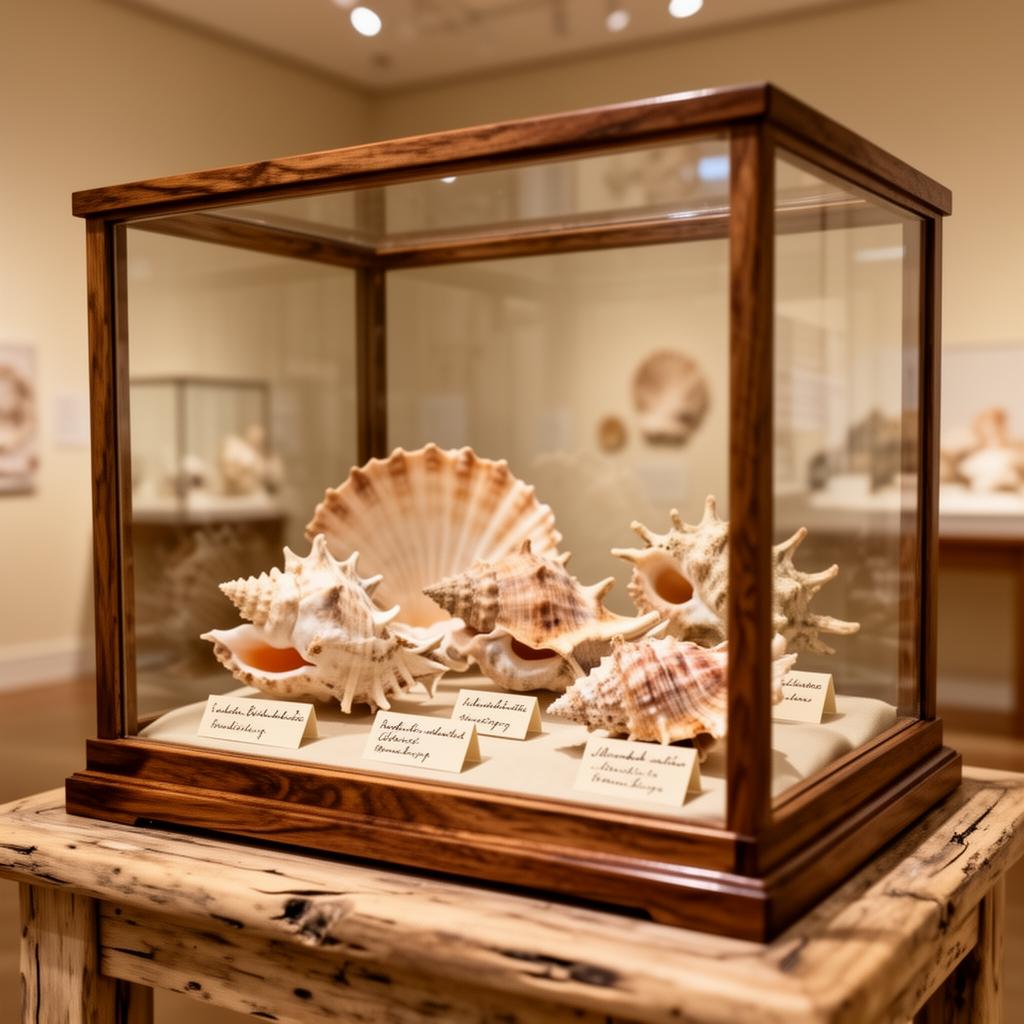
SaveRarity is the obvious draw — a freak shell is, by definition, hard to replace. But the deeper appeal is uniqueness. Two collectors can own the same species, yet no one else on earth owns your exact twisted murex or albino tulip.
Freak shells are also stars at shell shows, where unusual specimens routinely outshine textbook-perfect examples and draw the most attention from judges and fellow collectors.
For all those reasons, anomalies often carry real collector value, sometimes exceeding that of naturally rare species. A common shell with an extraordinary story can be the most prized piece in a cabinet.
Famous Freak Shells in Natural History
 Save
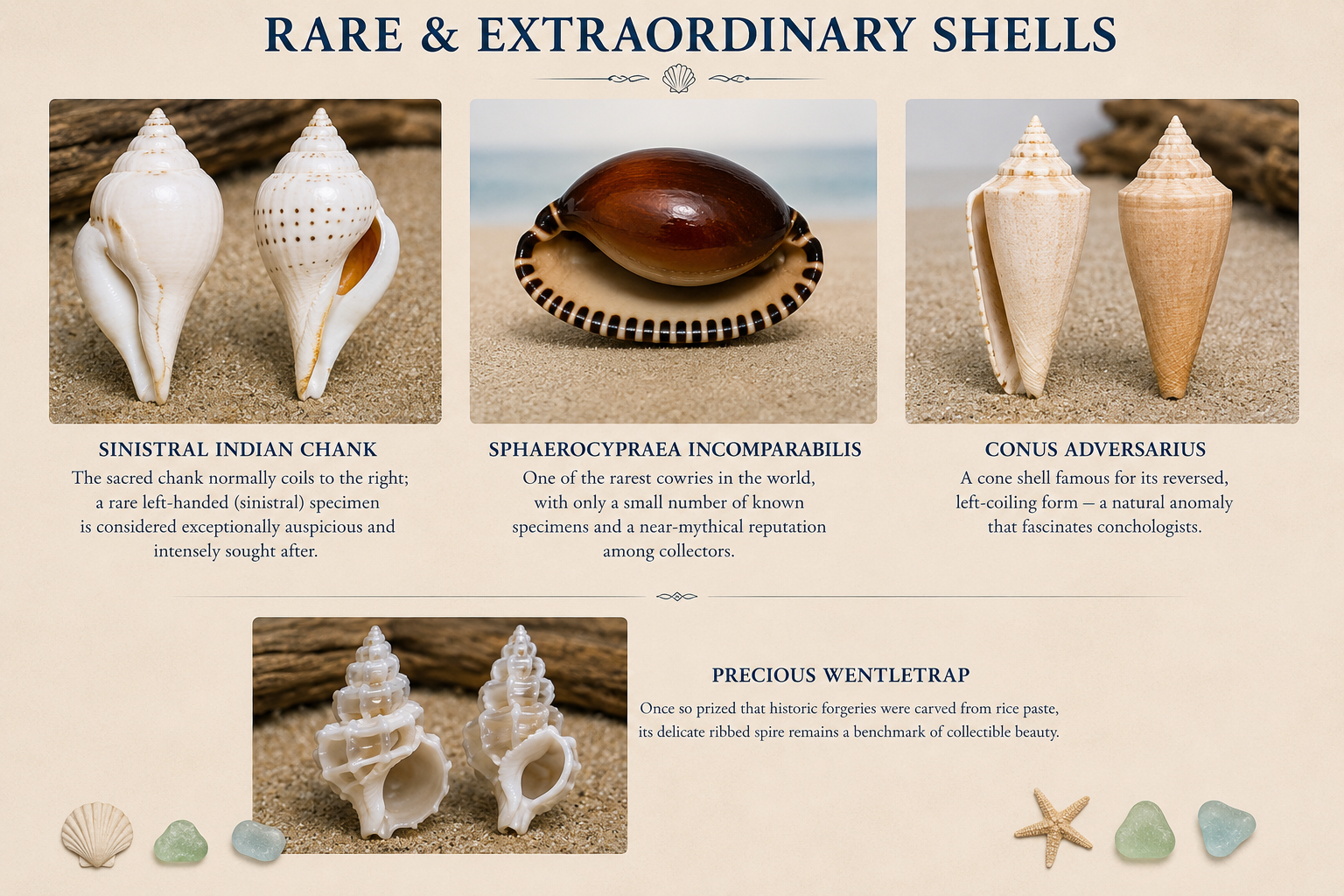
SaveA handful of shells have become legendary among collectors — some for reversed coiling, others for extreme rarity or unusual form.
The Thrill of Finding One
 Save
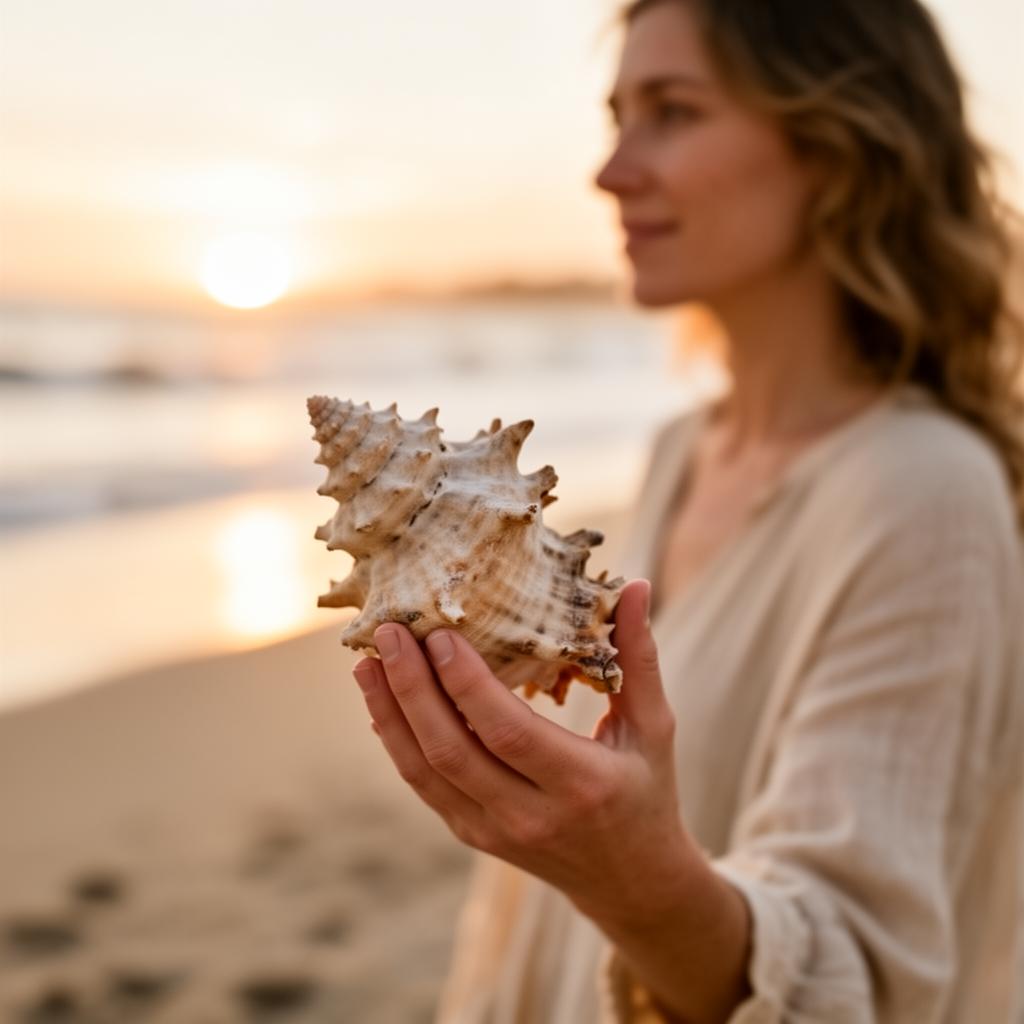
SaveThe secret to finding freak shells is simple: slow down. Most beachgoers scan for perfect, symmetrical shells and walk right past the twisted, scarred, or oddly colored ones that collectors treasure.
Pick up the imperfect shells. Turn them over. Look closely at the lip, the spire, and the color. The shell that looks 'wrong' at first glance is often the one worth keeping.
Every freak shell you find is unrepeatable — a small masterpiece shaped by one animal's life in the sea. Once you start looking, an ordinary beach walk becomes a genuine treasure hunt.
In Closing
Freak shells remind us that even the most common seashells can become extraordinary. They are nature's one-of-a-kind masterpieces — shaped by injury, genetics, and the sea itself.
Keep an eye out for unusual shapes, colors, and textures on your next walk. What looks 'imperfect' might just be your next great find.
Recommended Companion
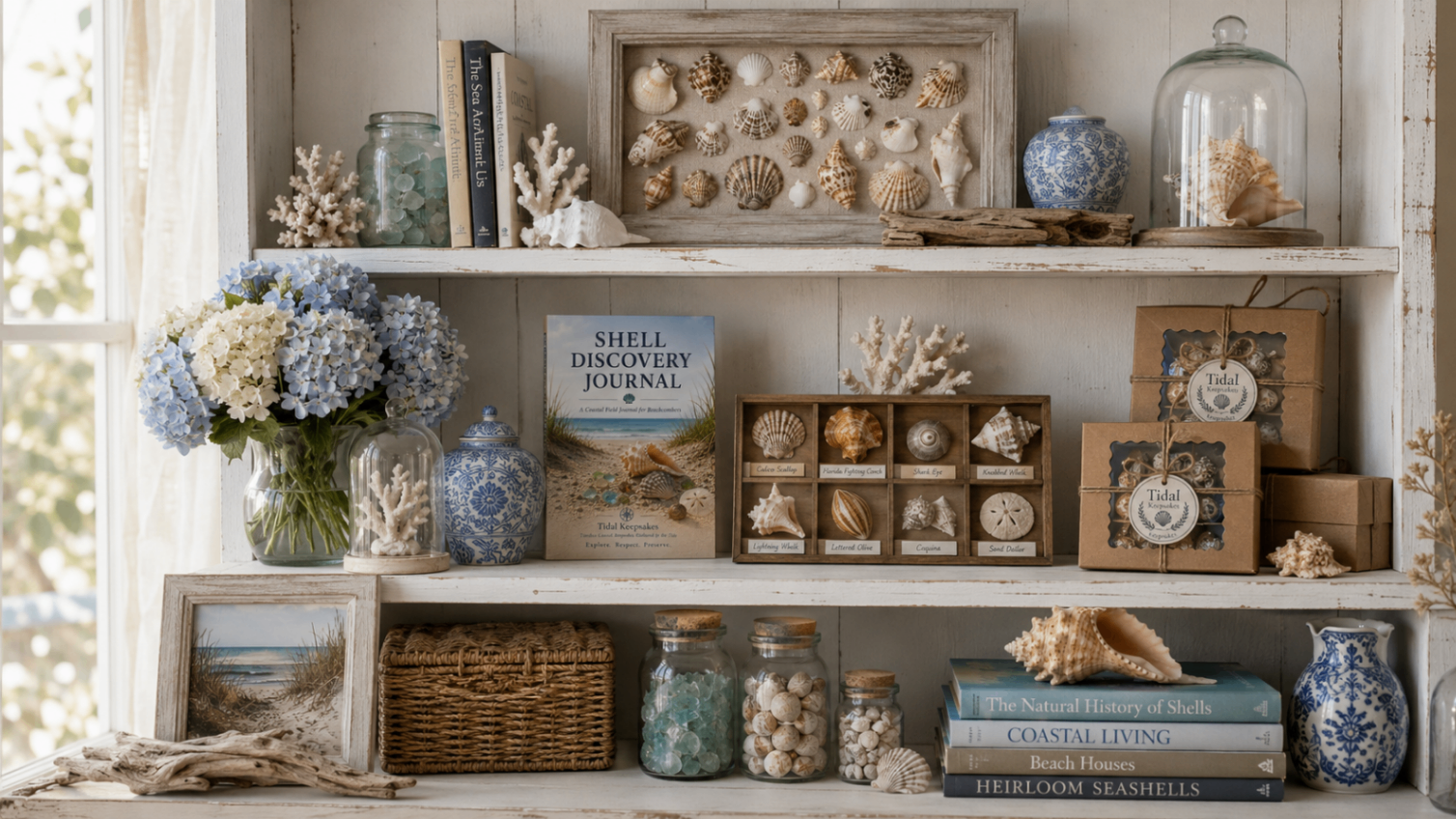
The Shell Discovery Journal
Continue Your Beachcombing Journey
Hand-picked next steps — chosen because they build directly on what you've just read.
Article
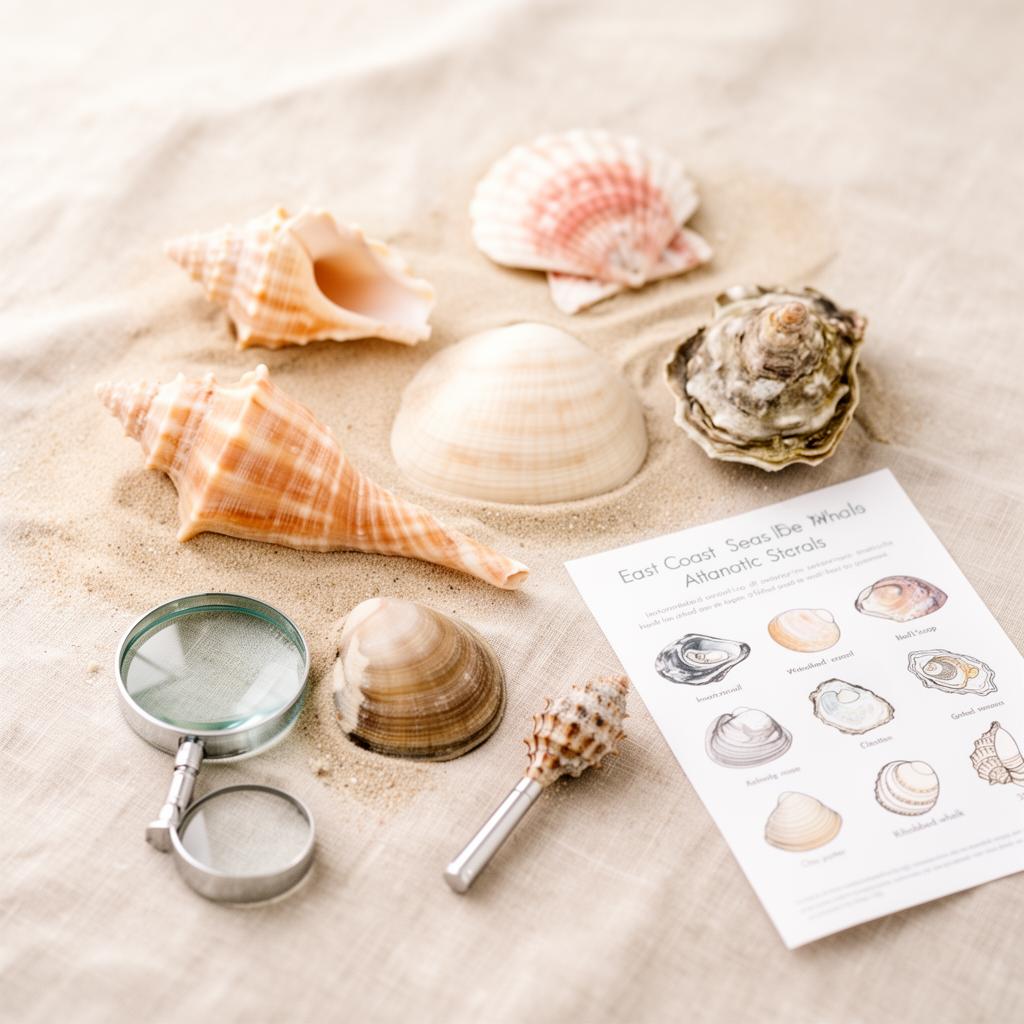
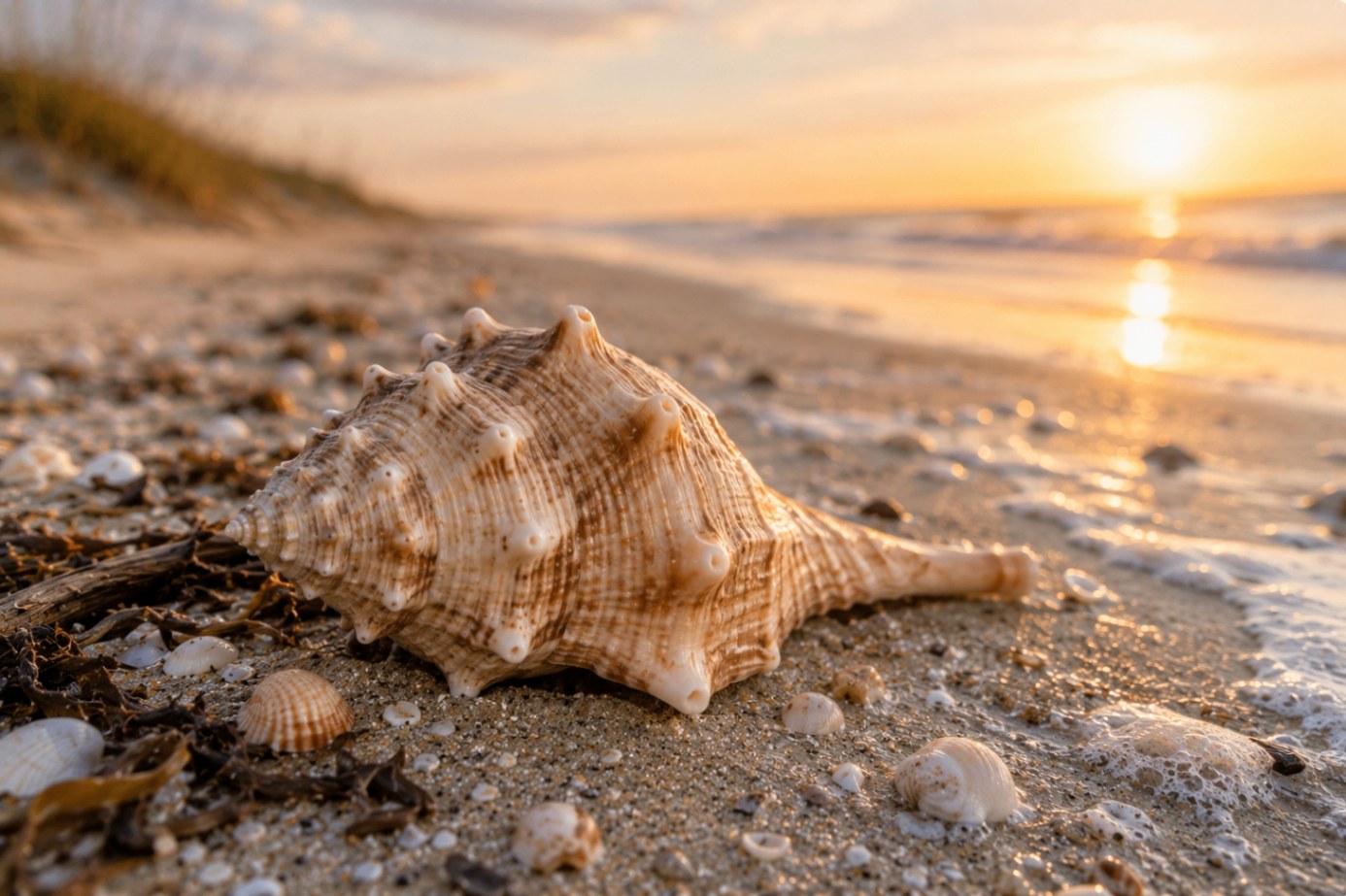
How to Identify Common East Coast Seashells and Where to Find Them
Hand-picked next step from the editors.
Guide
Commonly Confused Shells: A Side-by-Side Field Guide
Builds on the same core topic.
Resource
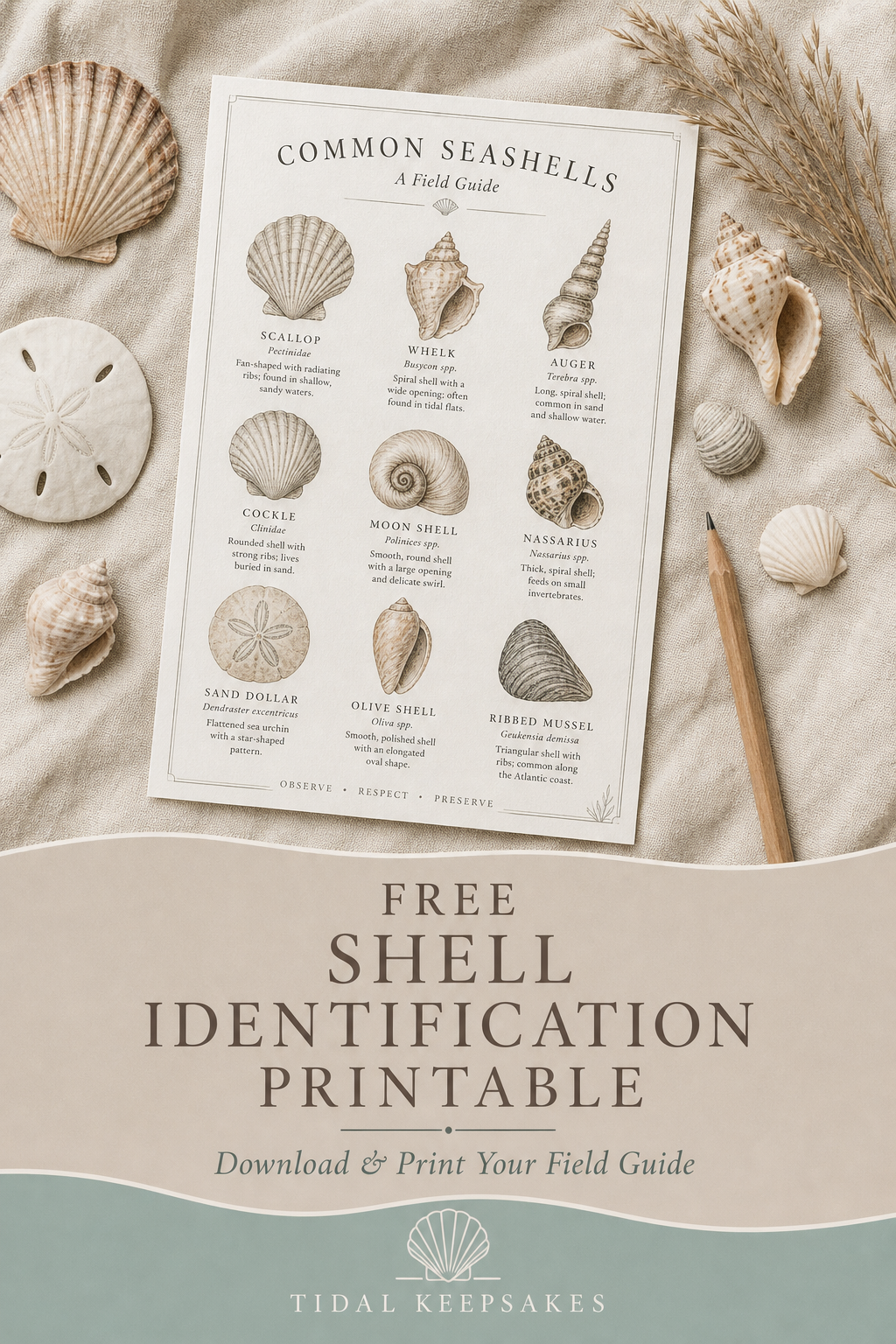
Free Shell Identification Printable
Builds on the same core topic.
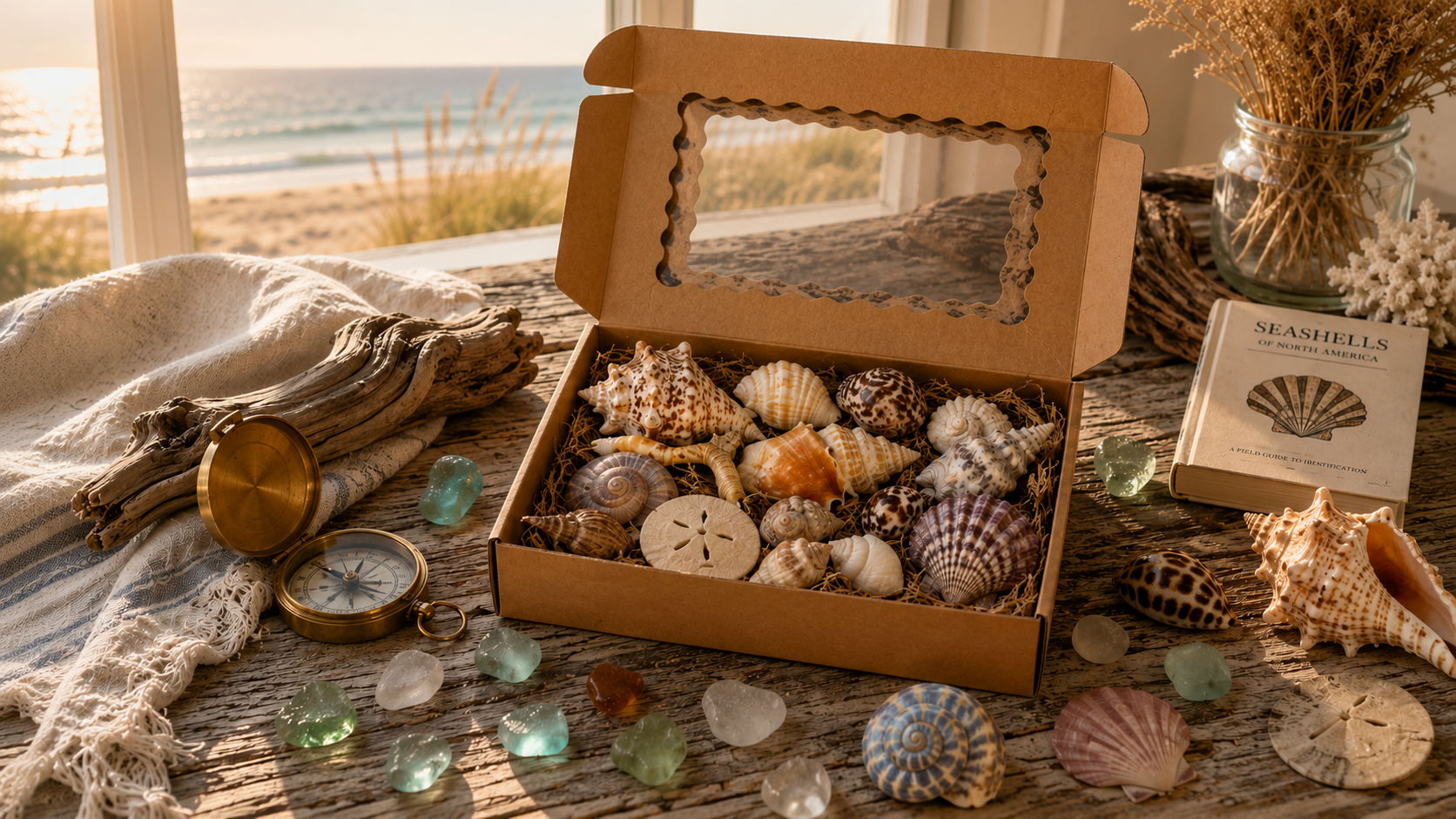
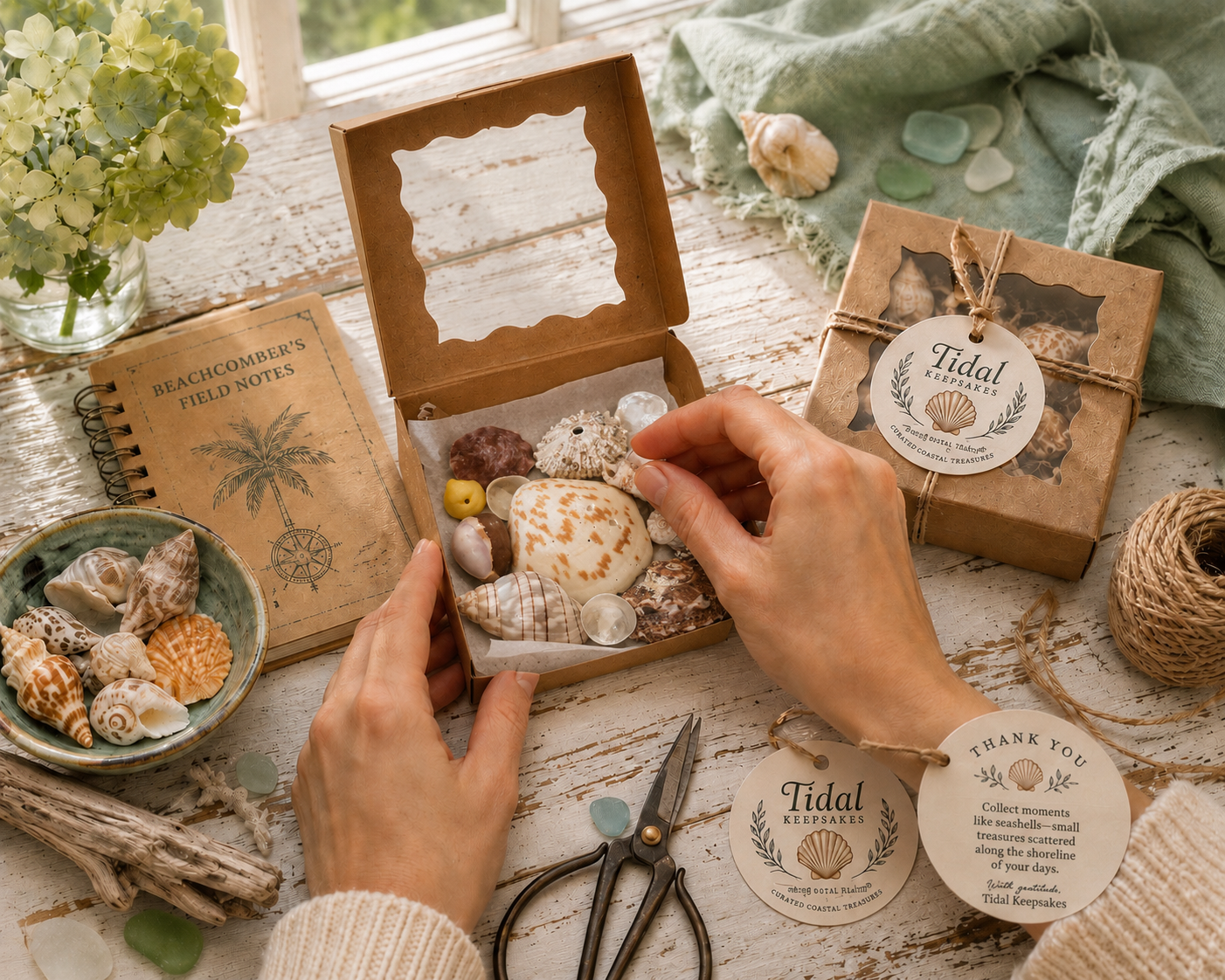
Curated Shell Box
The Collector Box
See these ideas in a curated collection.
Compare Similar Shells
Species and look-alikes worth studying side by side. Every card routes into the shell reference.
Species
Scotch Bonnet
Semicassis granulata
Cream base with regular reddish-brown squares in tidy rows. Rounded body whorl and short spire; toothed inner lip.
Explore ShellSpecies
Knobbed Whelk
Busycon carica
Aperture opens on the right when the spire points up. Row of blunt knobs along the shoulder of the body whorl; interior often flushed with orange.
Explore ShellSpecies
Lettered Olive
Americoliva sayana
Cylindrical body with a very short spire and a long narrow aperture. The polished cream base carries tan or brown zigzag lines that give the species its 'lettered' name.
Explore ShellSpecies
Atlantic Auger
Terebra dislocata
Elongated screw-shaped shell up to 2 inches, pale grey to tan with faint spiral banding; each whorl carries fine axial ribs.
Explore ShellBeaches Worth Exploring Next
Shores connected to the shells, regions, and conditions on this page.
North Carolina Outer Banks
Outer Banks
A 200-mile chain of Atlantic barrier islands — Cape Hatteras, Ocracoke, and Cape Lookout deliver whelks, olive shells, and the state shell,…
Explore BeachGeorgia Coast
Jekyll Island
Historic Golden Isle with generous public beaches — Driftwood Beach and St. Andrews shore deliver moon snails, jingle shells, and…
Explore BeachFlorida Gulf Coast
Sanibel Island
Sanibel's east-west orientation sweeps Gulf shells onto its shore in exceptional variety — the reason it's the most celebrated shelling…
Explore BeachNorth Carolina Outer Banks
Ocracoke Island
A ferry-only Outer Banks island south of Hatteras — sixteen miles of protected National Seashore beach where Scotch bonnets and knobbed…
Explore BeachDiscover More Coastal Inspiration
Curated coastal favorites and specimen boxes that echo the story above.
A Learning Journey to Follow
Learning Shell Identification
For growing collectors · 5 steps
For readers who already know a scallop from a whelk and want to sharpen the edge cases. Ends at the journal, where identification becomes a practice, not a lookup.
- 1
Understand the Anatomy
Shell Identification Guide
Vocabulary first — apex, whorl, aperture, columella.
Continue - 2
Meet the Common Species
Explore Common Shells
Browse the canonical shell records the site is built on.
Continue - 3
Compare Look-Alikes
Commonly Confused Shells
Side-by-side markers for the pairs that trip up new collectors.
Continue - 4
Find Them in the Wild
Best Beaches for Shelling
Where each species actually washes up.
Continue - 5
Practice in the Field
Shell Discovery Journal
Record each ID with sketches and notes to lock the learning in.
Continue
Ready to Find Your Own Coastal Treasures?
The next remarkable shell may be waiting just beyond the next wave. Learn where to look, when to go, and how to identify the treasures most beachgoers miss.