Strombus alatus · Strombidae
How to identify a florida fighting conch
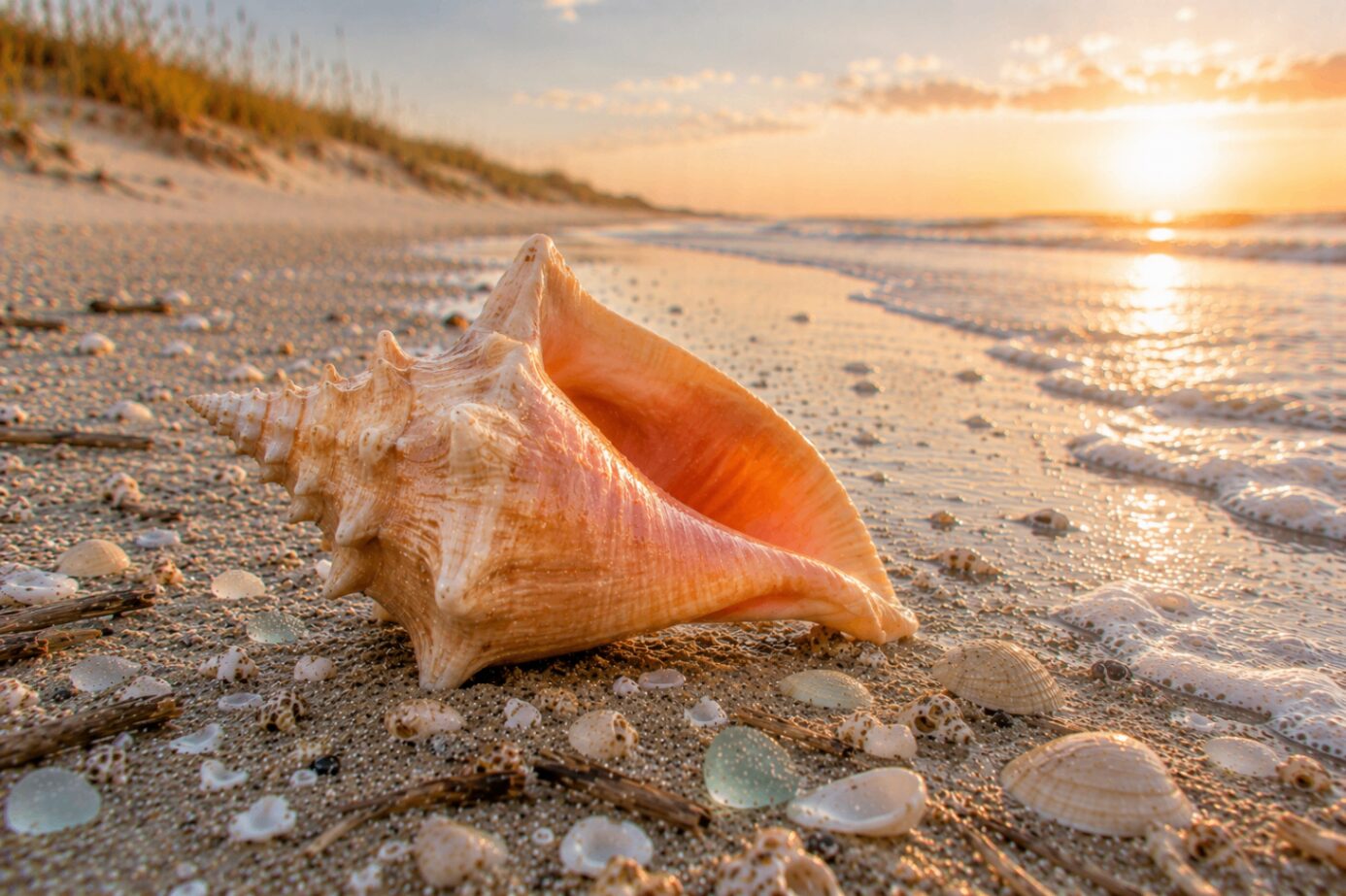
Solid spindle-shaped shell with a flared, thickened outer lip and a shallow stromboid notch near the anterior end. Rich orange to reddish-brown with darker banding.
- Flared outer lip with a stromboid notch (a small U-shaped indentation) near the front
- Heavy for its size — typically 3–4 inches long
- Warm orange to red-brown colour, often streaked
- Family
- Strombidae
- Class
- Gastropod
- Regions
- Gulf Coast · Southeast
- Habitat
- Sandy Subtidal · Grass Flats · Sandy Intertidal
- Best seasons
- Winter · Spring
- Collector level
- Beginner
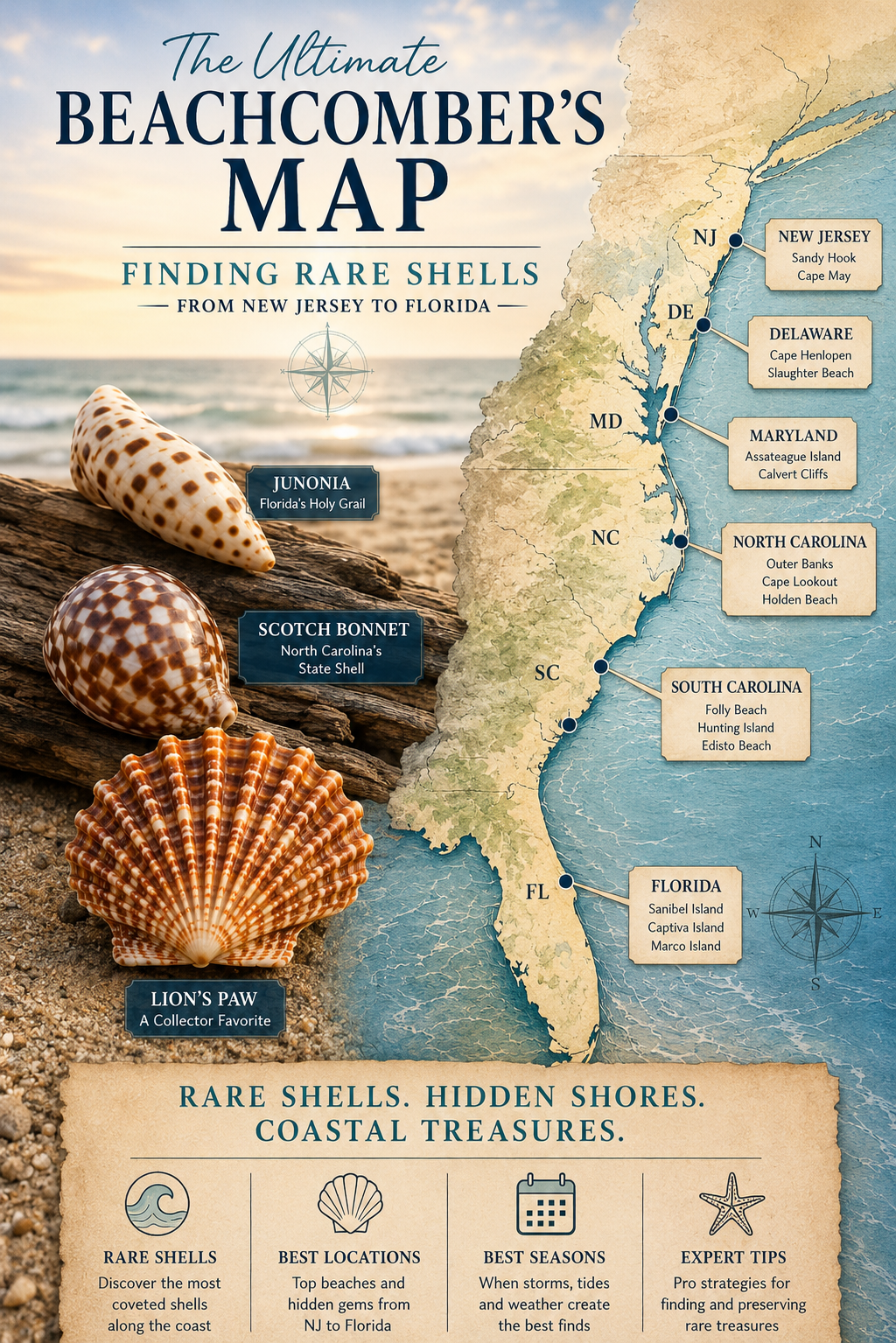
Common along Florida's Gulf coast; abundant on Sanibel post-front mornings.
Collect with care
- Live fighting conchs are common in shallow grass flats — always check the aperture and return live specimens to the water.
- Florida limits live-shell collection to two per person per day; empty shells only for keepsakes.
In your journal
- Sketch the stromboid notch — it's the fastest way to tell a true conch from a whelk.
- Note the tide, wind direction, and beach — fighting conchs cluster with weather.