 Save
SaveGuide
How to Clean and Store Vacation Shells
Post-vacation shell care — how to rinse, dry, pack, and store your finds so they travel home safely and keep their colour on the shelf.
Post-vacation shell care — how to rinse, dry, pack, and store your finds so they travel home safely and keep their colour on the shelf.
Vacation shells arrive home carrying three things you don't want: sand, salt, and traces of organic matter. Deal with all three before the drive home and the finds you unpack a week later will look exactly the way they did on the beach. This is the short travel version of our full cleaning guide — the steps that fit in a rental kitchen with a towel and a bowl.
Before You Leave the Beach
- Check every gastropod aperture and bivalve hinge for a live animal and return anything occupied to shallow water.
- Shake and rinse the worst of the sand off in the surf, not in the bag.
- Keep fragile finds — sand dollars, sea biscuits, urchin tests, egg cases — separate from heavy whelks so they don't crush in transit.
- Never seal damp shells in a plastic bag for more than a few hours; that is what creates the smell people write to us about.
Step 1 — Rinse
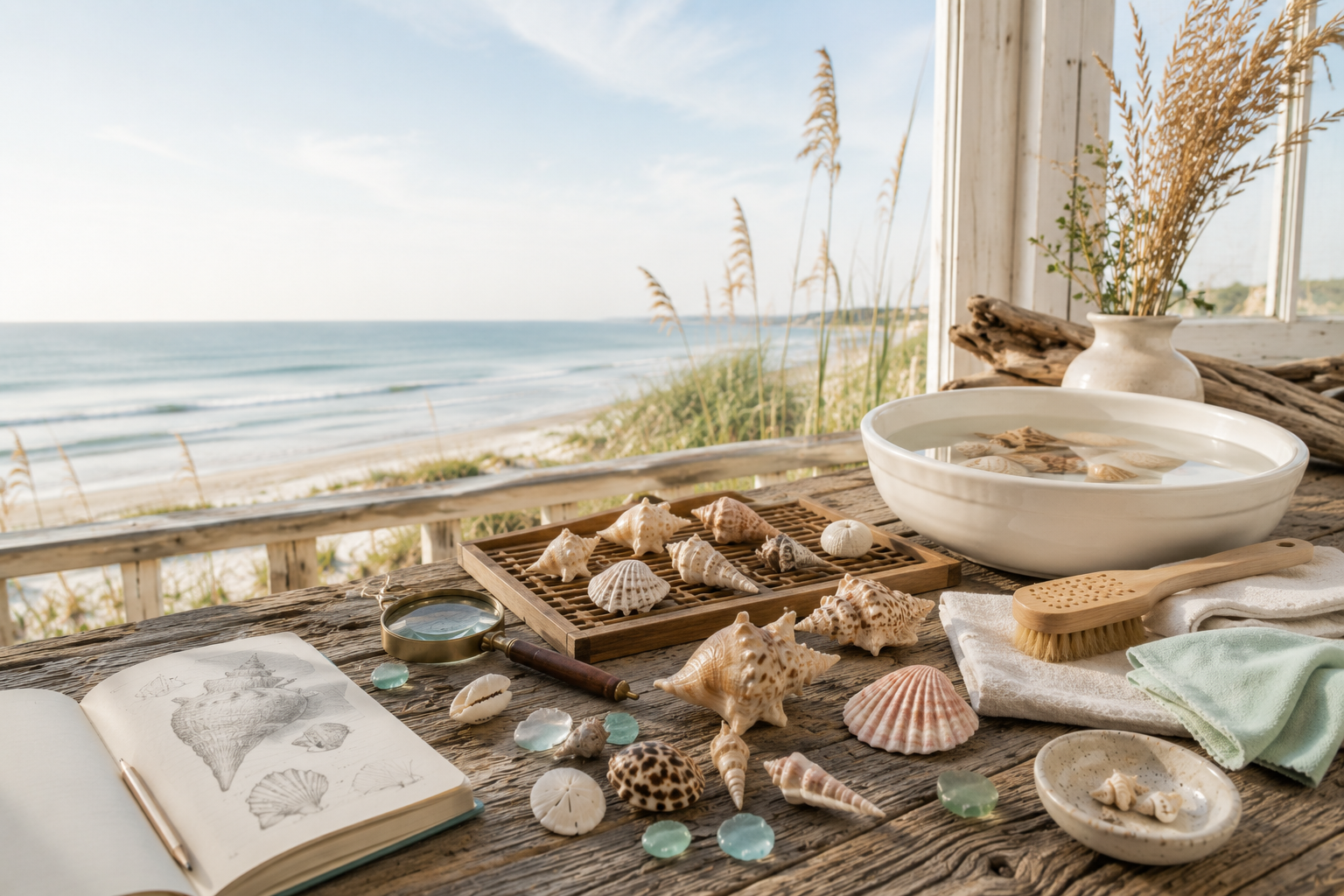
Rinse each shell in fresh cool water on the beach or at the rental. Removing sand and salt first prevents mineral staining later, and it tells you immediately which shells still hold sand deep in the whorls.
Step 2 — Soak
Soak shells in fresh water overnight, changing the water once. This dissolves remaining salt and softens dried organic matter. A few drops of dish soap in the second water helps with surface grime and is safe on every shell in this guide.
Step 3 — Gently Brush
A soft toothbrush is enough for most shells. Work from the aperture outward and use the brush tip, not the flat of the bristles, in the whorls. For delicate murex fronds and small scallops, skip the brush and let the soak do the work.
Step 4 — Dry Slowly
Air-dry on a towel out of direct sunlight for 24–48 hours. Direct sun fades colour, especially on tulips and calico scallops. Shells must be bone dry before they go into a box — trapped moisture is the single most common cause of odour and mildew in a stored collection.
The Smell Test
A persistent ocean smell almost always means residual organic matter. Repeat the soak with a mild dish-soap solution, then rinse and re-dry. Reserve bleach for shells that are still noticeably smelly after two soaks — and dilute it heavily (1:4 with water) to protect surface colour.
What Not to Do on Vacation Finds
- Don't bleach naturally glossy shells — lettered olives and cowries lose their finish permanently.
- Don't soak in vinegar for long periods; the acid erodes the calcium carbonate the shell is made of.
- Don't boil thin or fragile finds; reserve boiling for sturdy shells only.
- Don't pack shells still damp — dry first, always.
Packing Shells for the Trip Home
- Wrap each large or spined shell individually in a paper towel or a piece of tissue.
- Nest small shells in a rigid container — a food storage box or a hard-sided toiletry case — rather than loose in a suitcase.
- Fill empty space so nothing shifts; a folded tea towel does the job.
- Carry the fragile pieces in hand luggage if you're flying and pack the whelks and cockles in the case.
Storing Shells at Home
Once shells are fully dry, store them out of direct sunlight in a stable, dry spot. Sunlight is the main enemy of shell colour over years, and damp is the main enemy of everything else — attics and garages are poor choices, interior shelves and closets are good ones.
- Compartmented boxes or specimen trays keep species separated and stop shells abrading each other.
- Cotton wool or acid-free tissue under fragile pieces prevents chips.
- Label each shell or compartment with the beach and the date — the record is what turns a jar of shells into a collection.
- Keep sea glass and shark teeth apart from thin shells; the harder material scuffs the softer.
- A tiny drop of mineral oil buffed in with a soft cloth restores lustre on a dulled shell before it goes on display.
Quick Reference by Find
| Find | Cleaning method | Avoid |
|---|---|---|
| Whelks, conchs, cockles | Rinse, overnight soak, soft brush | Extended vinegar soaks |
| Lettered olives, cowries | Fresh water and dish soap, polish dry with a soft cloth | Bleach of any strength |
| Calico scallops, coquinas | Warm soapy water, swish to release sand | Direct sun while drying |
| Sand dollars and sea biscuits | Very gentle rinse only, dry flat | Brushing, handling while wet |
| Egg cases and molts | Short fresh-water soak, air dry in shade | Heavy bleach — they disintegrate |
| Sea glass | Warm soapy water and a soft brush | Oiling, if you want the frosted look |
See the full cleaning walkthrough.
How to Clean SeashellsContinue Your Beachcombing Journey
Hand-picked next steps — chosen because they build directly on what you've just read.
Article
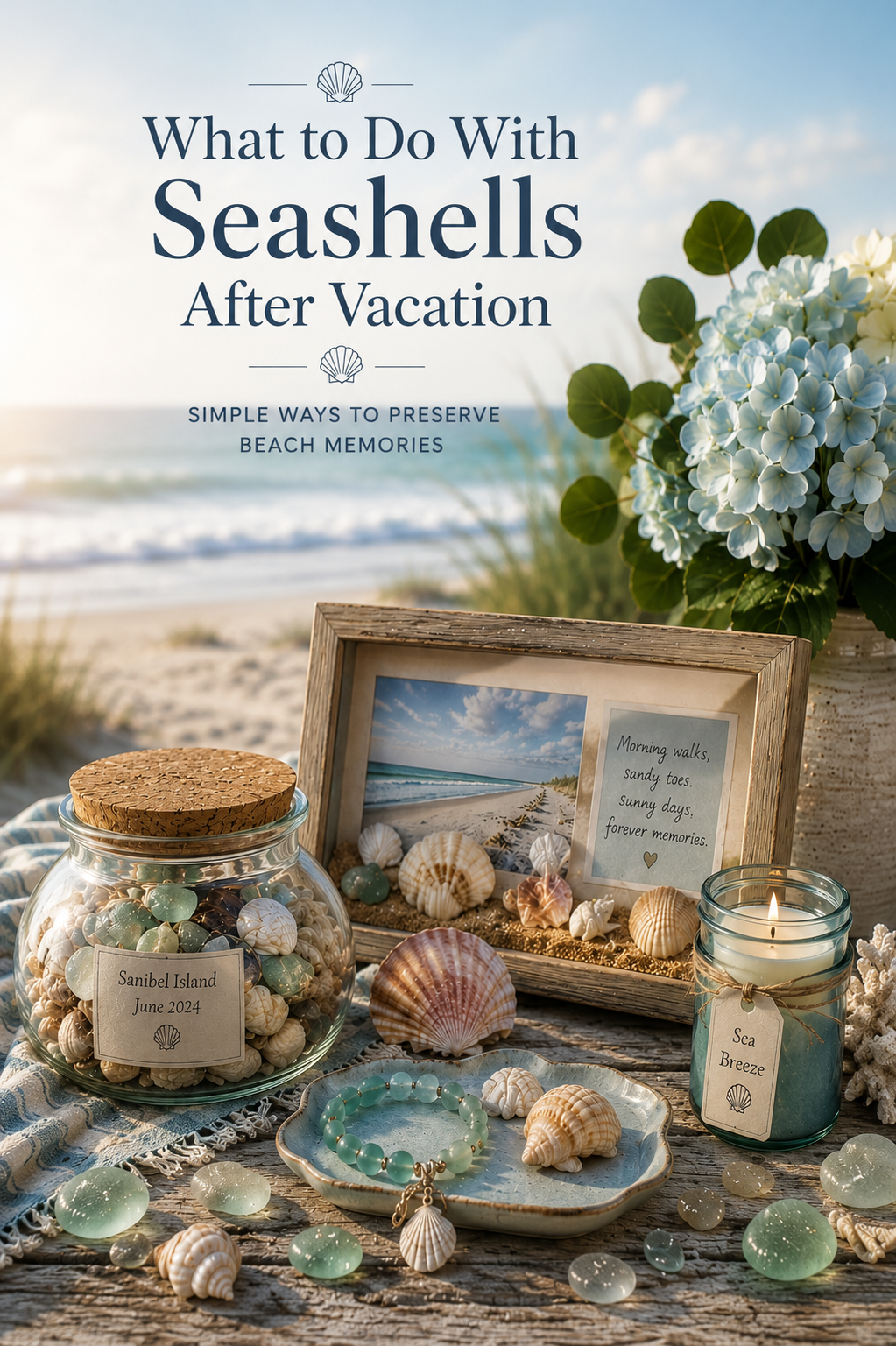
What to Do With Seashells After Vacation: Simple Ways to Preserve Beach Memories
Builds on the same core topic.
Guide
How to Clean Seashells
Hand-picked next step from the editors.
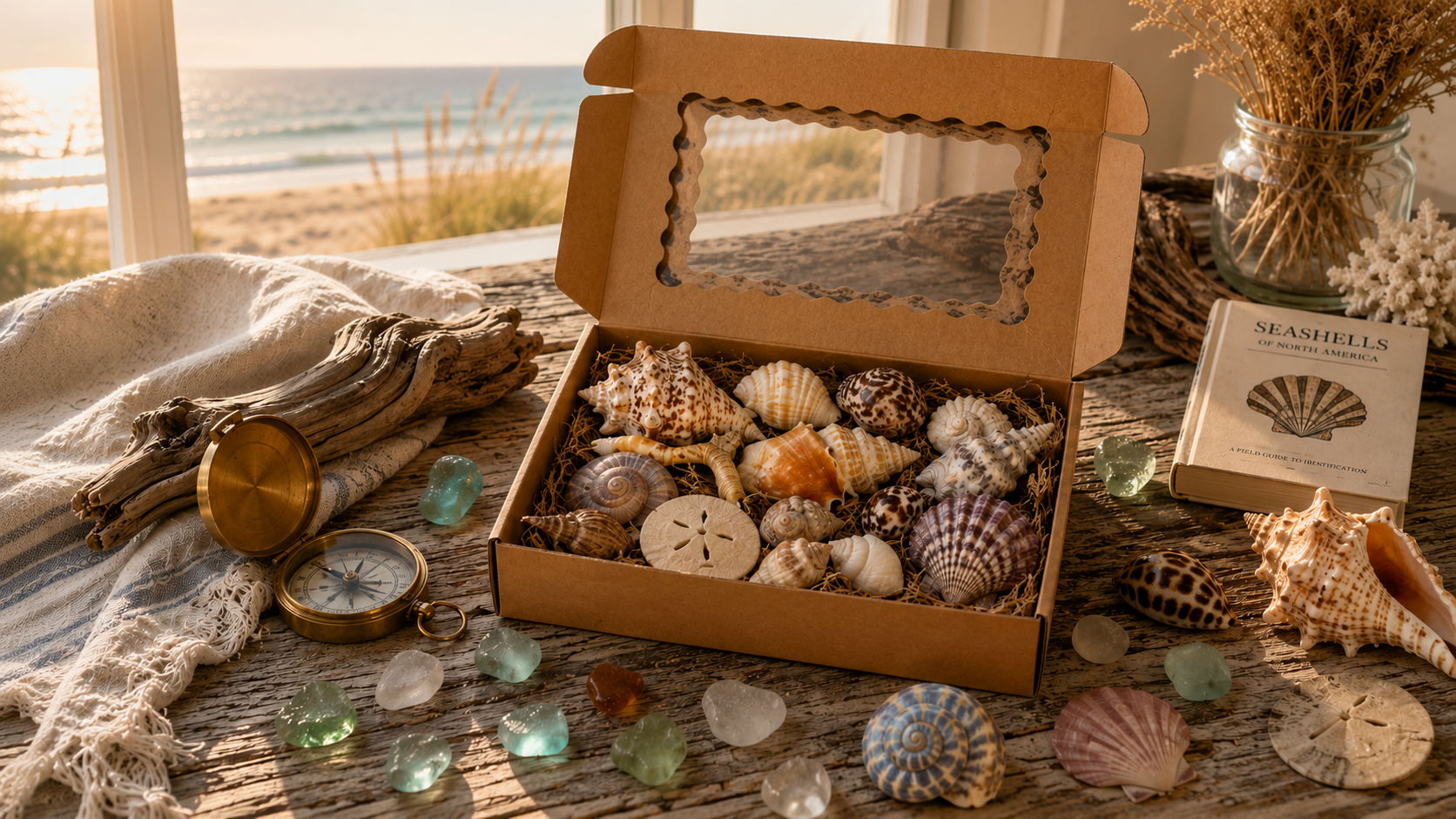
Curated Shell Box
The Signature Shell Box
See these ideas in a curated collection.
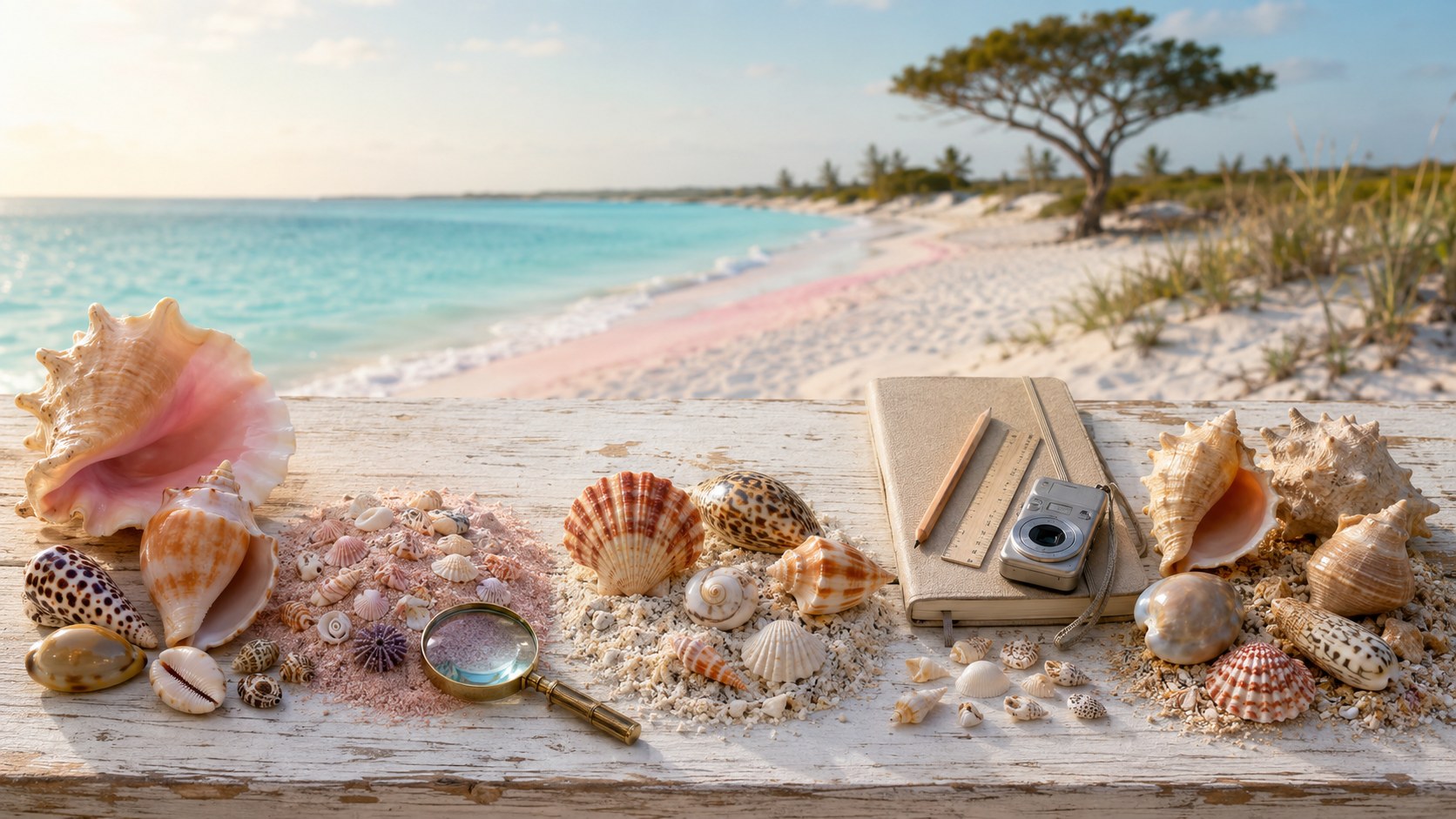
Article
5 Beaches, 5 Completely Different Shell Collections
Shares beachcombing · gulf-coast.
Compare Similar Shells
Species and look-alikes worth studying side by side. Every card routes into the shell reference.
Species
Scotch Bonnet
Semicassis granulata
Cream base with regular reddish-brown squares in tidy rows. Rounded body whorl and short spire; toothed inner lip.
Explore ShellSpecies
Knobbed Whelk
Busycon carica
Aperture opens on the right when the spire points up. Row of blunt knobs along the shoulder of the body whorl; interior often flushed with orange.
Explore ShellSpecies
Lettered Olive
Americoliva sayana
Cylindrical body with a very short spire and a long narrow aperture. The polished cream base carries tan or brown zigzag lines that give the species its 'lettered' name.
Explore ShellSpecies
Atlantic Auger
Terebra dislocata
Elongated screw-shaped shell up to 2 inches, pale grey to tan with faint spiral banding; each whorl carries fine axial ribs.
Explore ShellBeaches Worth Exploring Next
Shores connected to the shells, regions, and conditions on this page.
North Carolina Outer Banks
Outer Banks
A 200-mile chain of Atlantic barrier islands — Cape Hatteras, Ocracoke, and Cape Lookout deliver whelks, olive shells, and the state shell,…
Explore BeachGeorgia Coast
Jekyll Island
Historic Golden Isle with generous public beaches — Driftwood Beach and St. Andrews shore deliver moon snails, jingle shells, and…
Explore BeachFlorida Gulf Coast
Sanibel Island
Sanibel's east-west orientation sweeps Gulf shells onto its shore in exceptional variety — the reason it's the most celebrated shelling…
Explore BeachNorth Carolina Outer Banks
Ocracoke Island
A ferry-only Outer Banks island south of Hatteras — sixteen miles of protected National Seashore beach where Scotch bonnets and knobbed…
Explore BeachDiscover More Coastal Inspiration
Curated coastal favorites and specimen boxes that echo the story above.
A Learning Journey to Follow
Planning a Shelling Vacation
For beginners · 5 steps
Trip-planning pathway. Starts wide with the best beaches, narrows to a region, and ends with a keepsake collection that reflects the coast you visited.
- 1
Pick the Coast
Best Beaches for Shelling
A shortlist of shores worth the drive.
Continue - 2
Know the Region
The East Coast Beachcomber's Guide
Season, tide, and species notes for the shore you're visiting.
Continue - 3
Pack the Essentials
Beach Travel Essentials
The kit that separates a casual walk from a real trip.
Continue - 4
Keep a Trip Journal
Shell Discovery Journal
One page per beach — the shells, the sky, the tide.
Continue - 5
Bring Home the Coast
The Signature Shell Box
A fuller assorted shell collection, arranged by hand.
Continue