 Save
SaveShell Identification
How to Identify Common East Coast Seashells and Where to Find Them
Identifying seashells on the Atlantic coast begins with categorizing your find as either a Gastropod (a single, often spiraled shell) or a Bivalve (two hinged shells like clams or scallops). Once you can sort a shell into one of those two groups, naming it becomes far easier.
From the sturdy surf clams of the Mid-Atlantic to the ornate olives and conchs of the South, this guide walks you through the most common finds — plus the best beaches to look for them, state by state.
Step 1: Determine the Main Group
Gastropods (Univalves): Look for a single shell piece that usually grows in a spiral — for example Whelks, Olives, and Moon Snails. The whole animal lived inside one coiled shell.
Bivalves: Look for two interlocking valves connected by a hinge, such as Clams, Scallops, and Arks. These often wash up separated into individual "half" shells, so you'll usually find just one valve at a time.
Step 2: Identify Common Gastropods
 Save
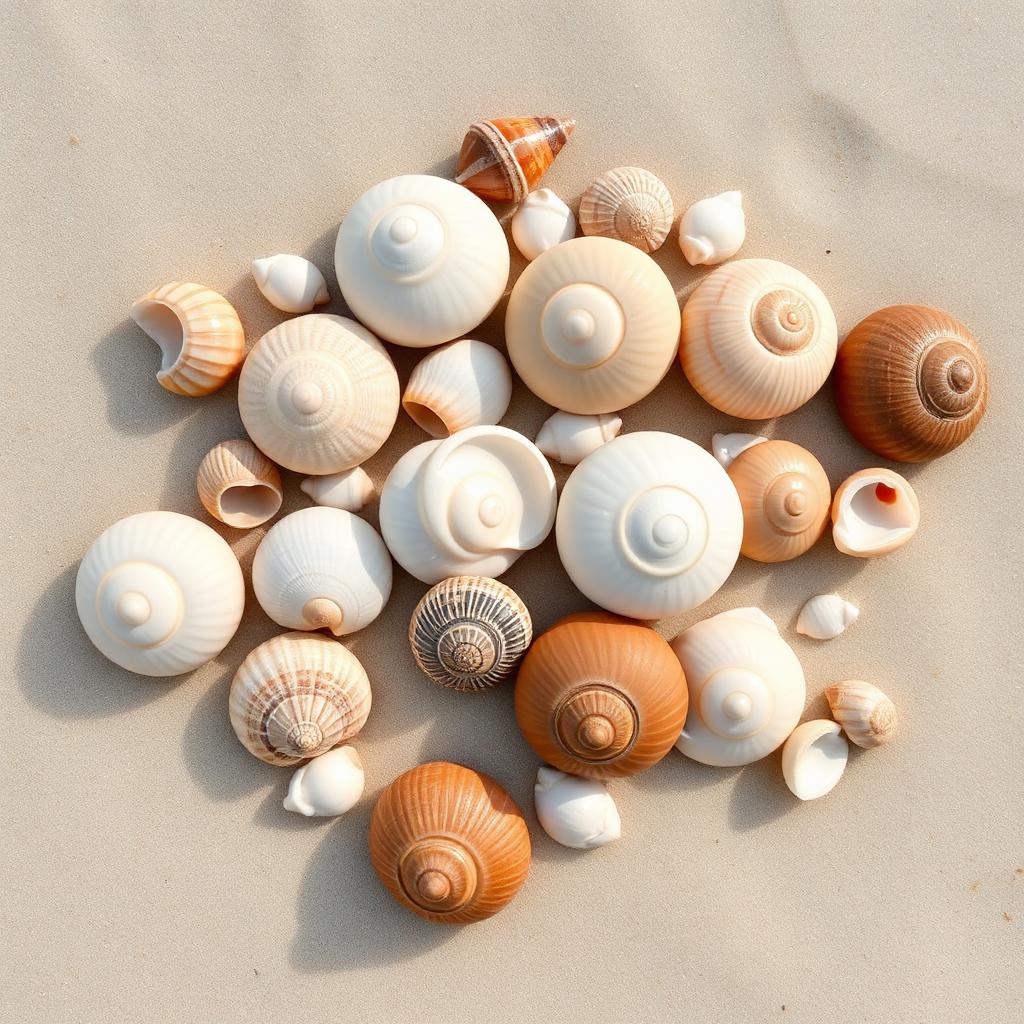
SaveGastropods are the single, spiraled shells most people picture when they think of a classic seashell. The East Coast hosts several standouts, from spiky whelks to glossy olives.
Use the shape of the spiral, the knobs (or lack of them), and the opening (aperture) to tell them apart.
Whelks vs. Conchs
 Save
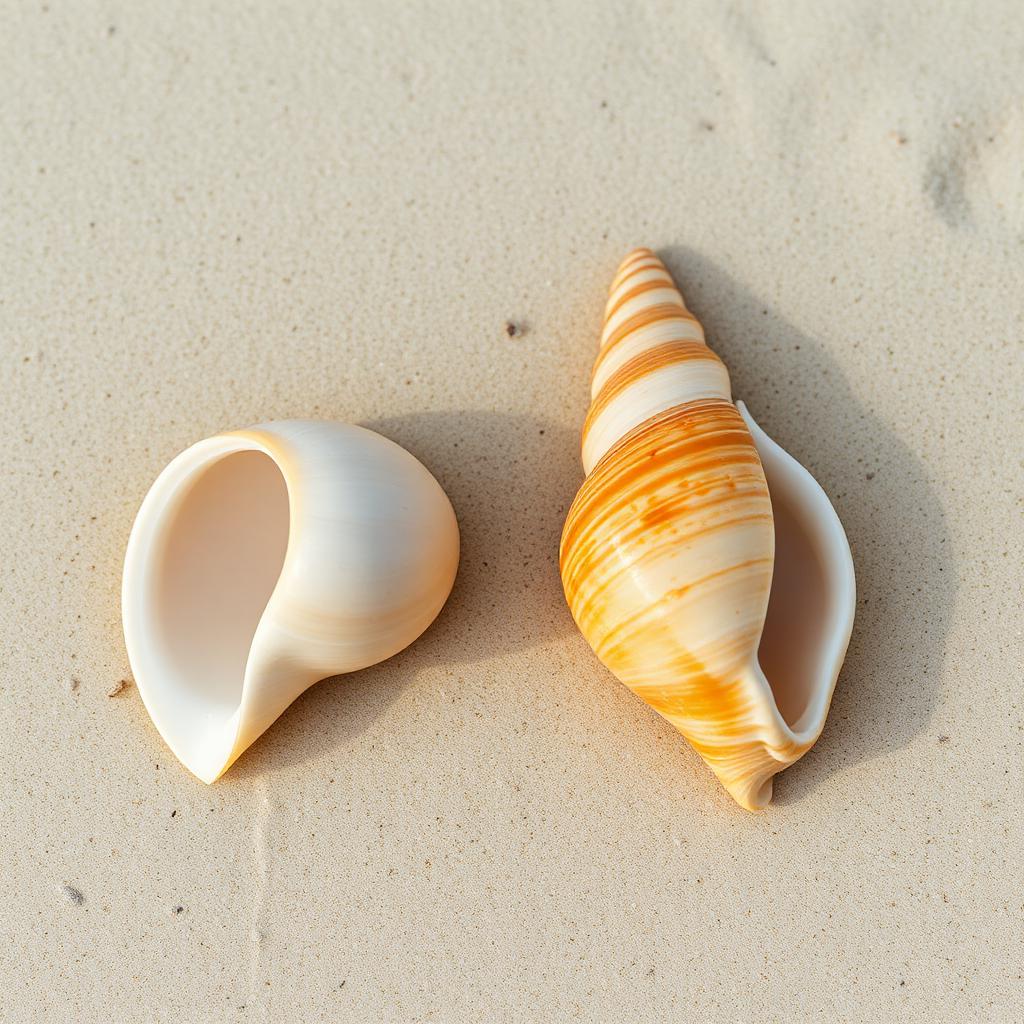
SaveWhile often confused, true Conchs (like the Florida Fighting Conch) have thick, elongated apertures with notches on both ends. Whelks are more common further north and have broader, smoother apertures.
If you're shelling north of the Carolinas, odds are you're holding a whelk; true conchs become common as you move into Florida.
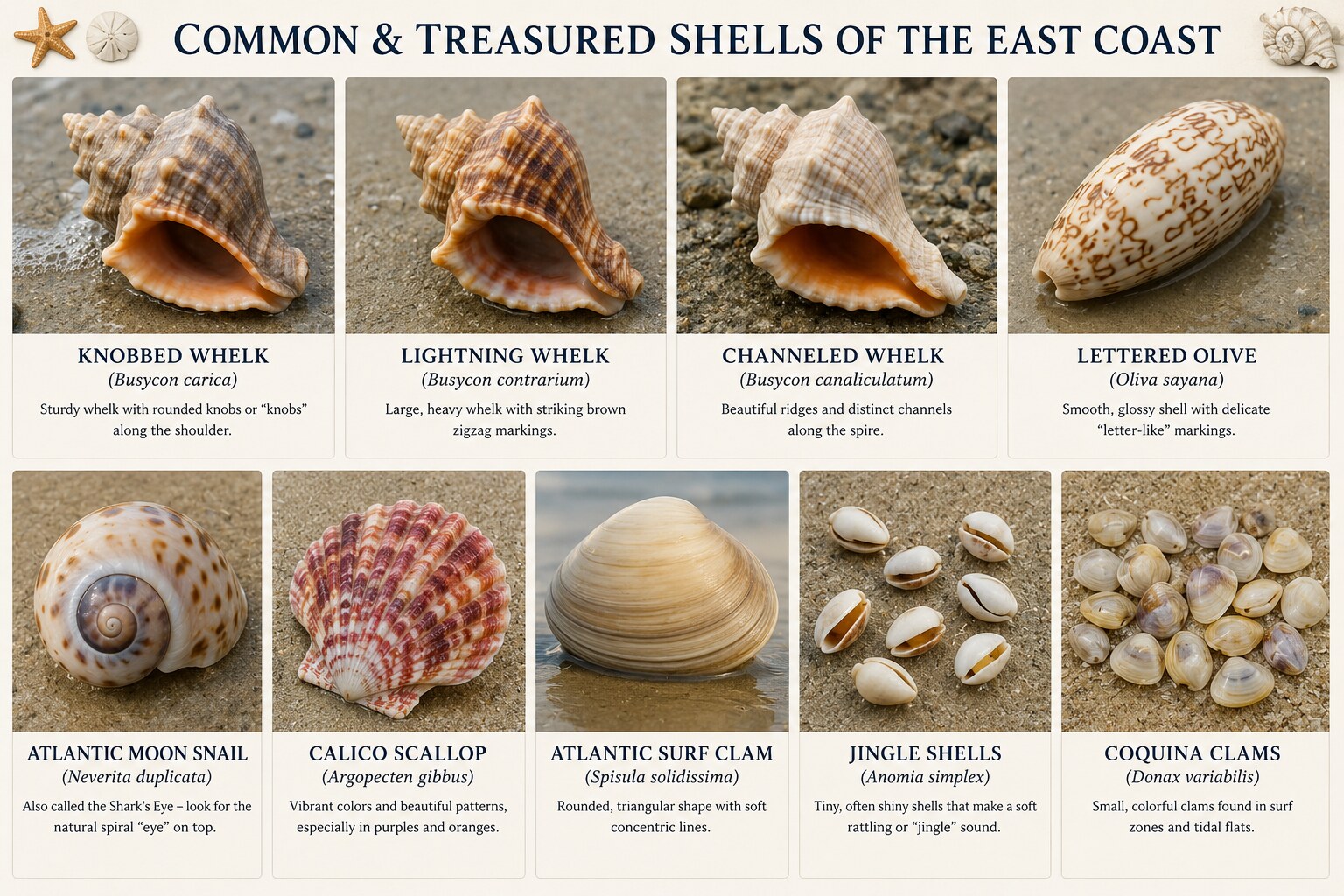
Common & Treasured Shells of the East Coast
 Save
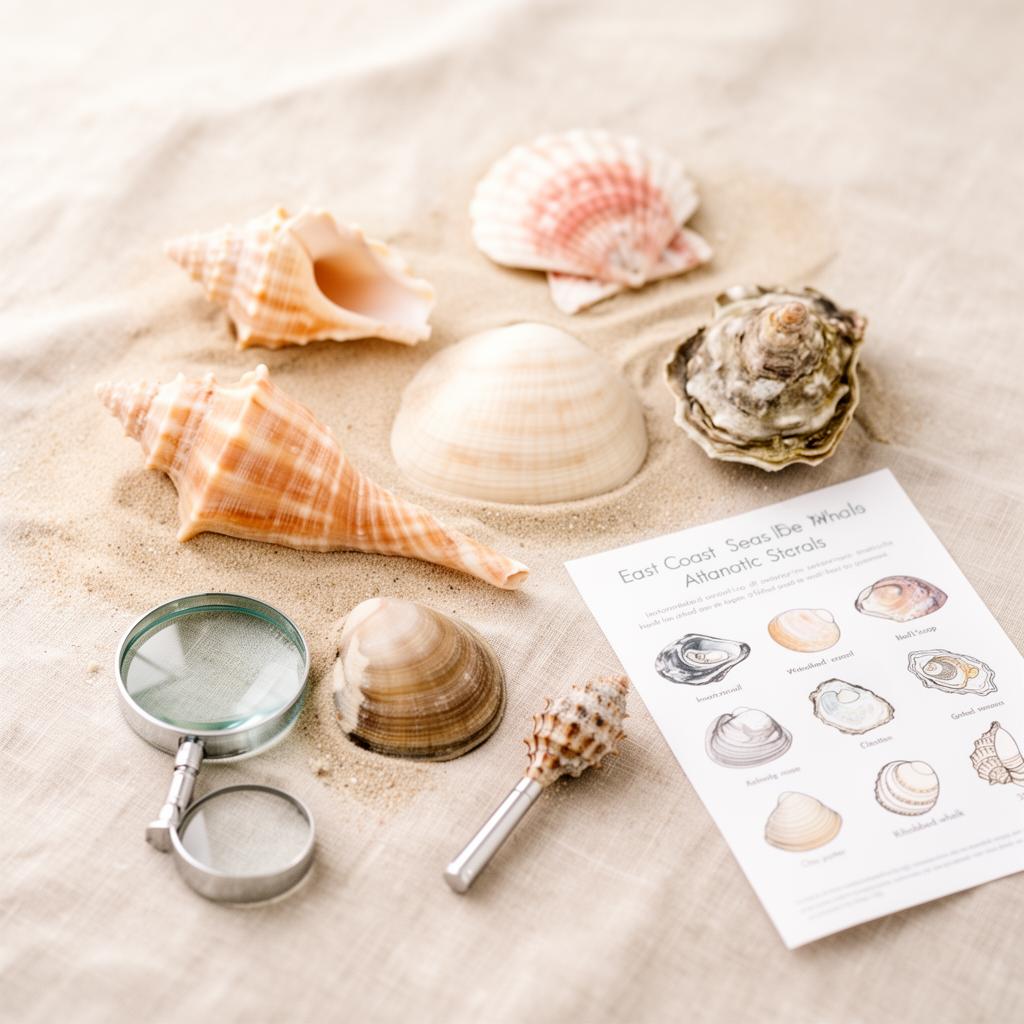
SaveUse this visual reference to compare the most common shells you'll encounter from Jersey to Florida at a glance. The sections below break each one down in more detail.
Knobbed Whelk
Identify the knobbed whelk by the distinct knobs or "spikes" on its shoulder. It is the state shell of New Jersey and usually spirals to the right (dextral).
These are among the largest shells you'll routinely find on Mid-Atlantic beaches, which makes a whole, unbroken one a real prize.
Lightning Whelk
The lightning whelk is one of the few species that spirals to the left (sinistral). If you hold the shell with the point up, the opening will be on your left side.
Named for the jagged, lightning-like streaks across its surface, its pale body with brown striping makes it an instant centerpiece in any collection.
Channeled Whelk
Look for deep, smooth "channels" between the spiral whorls and a lack of ornamentation or knobs. The result is an elegant, streamlined shell.
The channeled whelk is the state shell of Delaware, and Cape Henlopen is a reliable spot to find them along with their yellow spiraling egg cases.
Lettered Olive
Identify the lettered olive by its smooth, shiny, cylindrical "bullet" shape and intricate brown markings that resemble writing.
It's the state shell of South Carolina and turns up in high numbers along southern beaches, usually just below the waterline.
Atlantic Moon Snail (Shark's Eye)
Look for a round, smooth, sphere-shaped shell with a very short spire that resembles a land snail. Its understated gray and tan coloring is a quiet favorite among collectors.
You may also spot sand collars nearby — the gelatinous egg cases these snails leave behind in the wet sand.
Step 3: Identify Common Bivalves
 Save
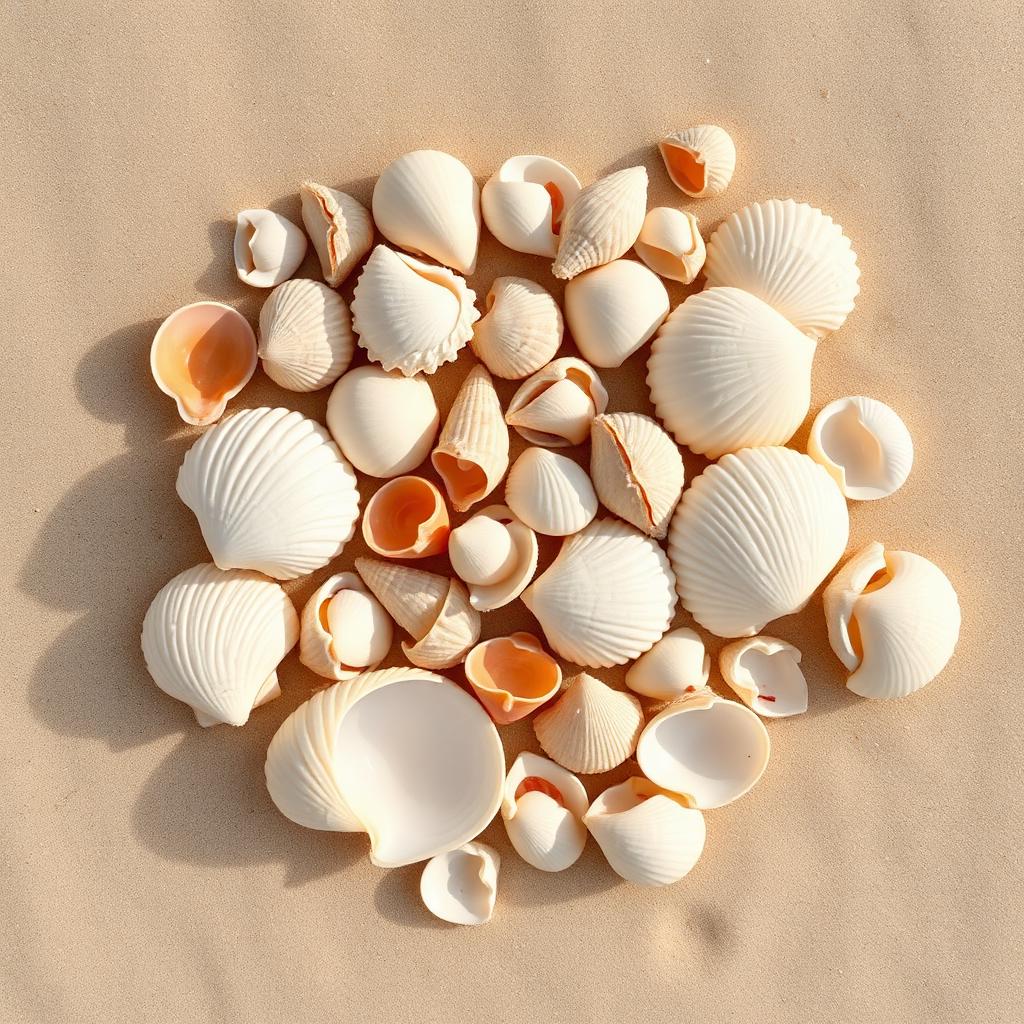
SaveBivalves have two hinged valves and usually wash ashore as single halves. Shape, weight, and color are your best clues for telling them apart.
These are the workhorses of the East Coast wrack line — from heavy white surf clams to confetti-bright coquina.
Calico Scallop
Recognizable by its classic "fan" shape and radiating fluted patterns, often in bright shades of pink or red. No two seem to share the exact same mottled coloring.
Their flat, sturdy form makes them perfect for crafts and display, and they wash up by the thousands on southern beaches.
Atlantic Surf-Clam
Large, heavy, and triangular-to-oval in shape, this is the most common large white shell found on New Jersey and Delaware beaches.
A clean, whole surf clam makes a natural little dish — handy for holding smaller finds at the end of a beach walk.
Jingle Shells (Witch's Toenails)
Small, thin, translucent shells that are often shiny and colorful — orange, yellow, or silver. They make a "jingly" sound when shaken together, hence the name.
They're delicate, so handle them gently. A bowl of jingle shells near a window catches the light beautifully.
Coquina Clams
Tiny, butterfly-shaped shells found in a rainbow of colors near the water's edge. They tumble in the surf in pinks, blues, yellows, and lavenders.
Gather a handful and you'll have a confetti of color — perfect for filling a small keepsake vial.
Key Identification Features
Spiral Direction: Most shells are "right-handed" (dextral). The Lightning Whelk is the primary "left-handed" (sinistral) exception on the East Coast.
Aperture Shape: Is the opening a long slit (Cones and Olives) or a wide, open "tail" (Whelks)? The shape of the opening narrows the field fast.
Spire Height: Does the shell have a high, pointed tip with many turns, or is it nearly flat? Spire height separates many similar-looking gastropods.
Quick Reference by State Shell
New Jersey — Knobbed Whelk: heavy shell with spiked knobs.
Delaware — Channeled Whelk: smooth, with deep channels along the whorls.
North Carolina — Scotch Bonnet: sturdy, white with brown squares.
South Carolina — Lettered Olive: shiny, "bullet" shape with calligraphy-like marks.
Florida — Horse Conch: giant, bright orange when alive.
Mid-Atlantic (NJ, DE, MD)
 Save
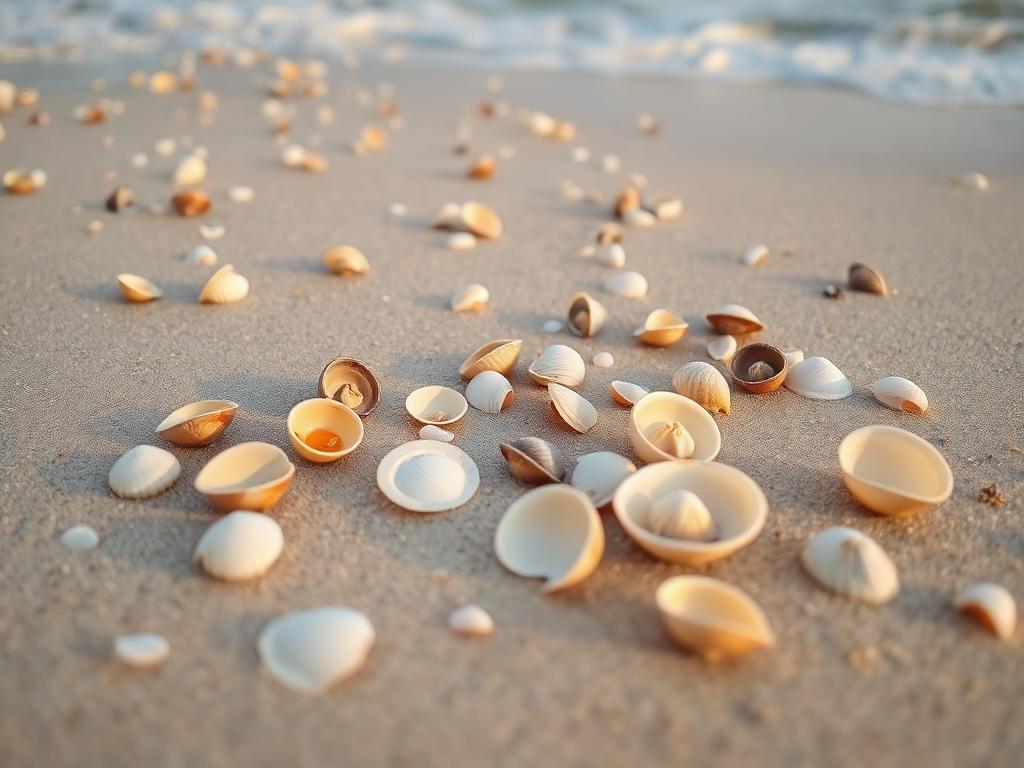
SaveBeaches in this region are known for large, sturdy bivalves and the unique presence of fossils.
New Jersey: The Knobbed Whelk (state shell) is a primary find. Other common sights include Atlantic Surf-Clams, Blue Mussels, Common Jingle Shells, and Slipper Shells.
Delaware: The Channeled Whelk is the state shell. Cape Henlopen frequently yields whelks and their distinctive yellow spiraling egg cases, along with Northern Quahogs, Horseshoe Crab molts, and Skate egg cases (mermaid's purses).
Maryland: At Assateague Island, look for Whelks, Moon Snails, Atlantic Surf Clams, and Wampum (purple quahog pieces). Calvert Cliffs is unique for fossilized Chesapecten Scallops, ancient Oysters, and Ecphora sea snails.
Southeast (NC, SC, FL)
 Save
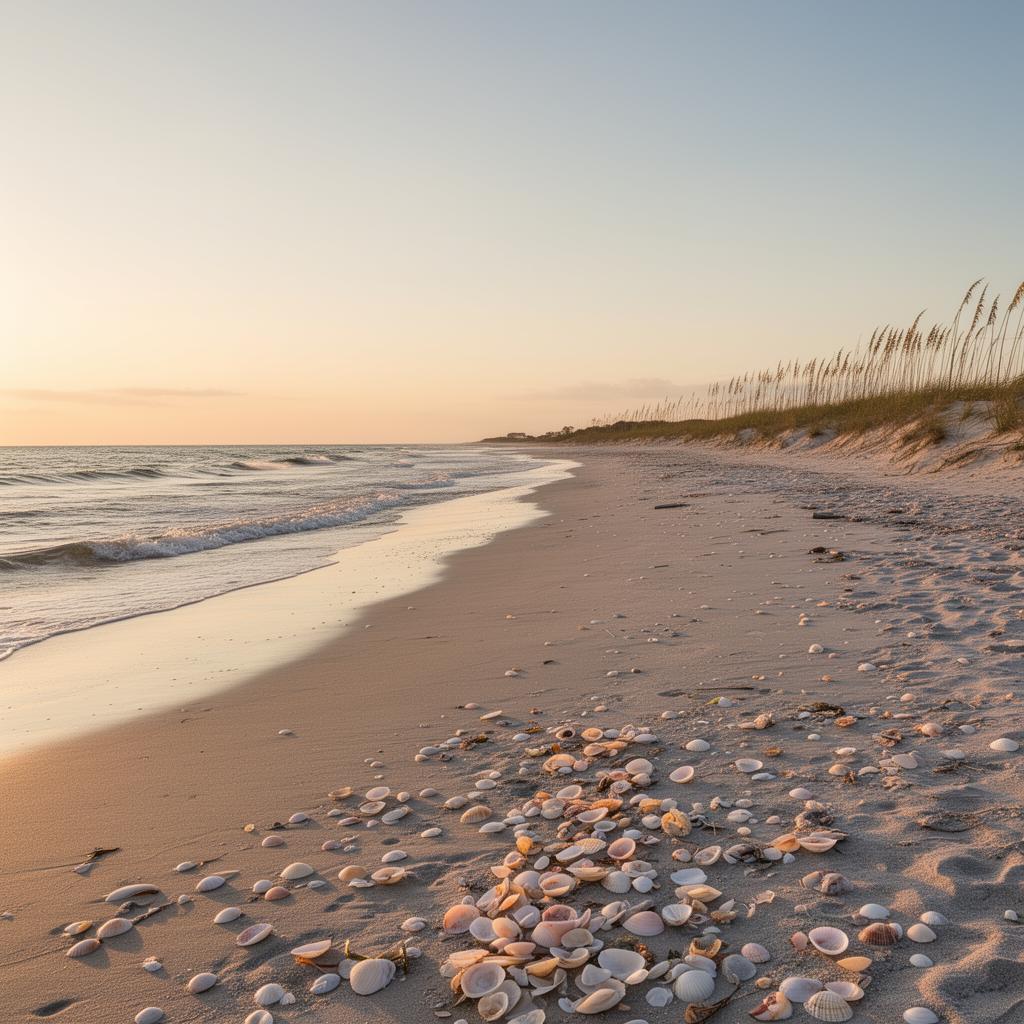
SaveSouthern beaches feature more colorful gastropods and specialized state shells.
North Carolina: The Scotch Bonnet (state shell) is a prized find, especially on the Outer Banks. Other common shells include Graceful Angel Wings, Lettered Olives, Calico Scallops, and Shark Eye Moon Snails.
South Carolina: The Lettered Olive is the state shell and is found in high numbers along the coast. Myrtle Beach specifically is known for Whelks, Jingle shells, Coquina, and Calico Scallops.
Florida: The Horse Conch (state shell) and Fighting Conchs are iconic finds. Beaches like Sanibel and Pensacola are famous for an incredible variety including Banded Tulips, Apple Murex, Kitten Paws, Sun Rays, and Keyhole Limpets.
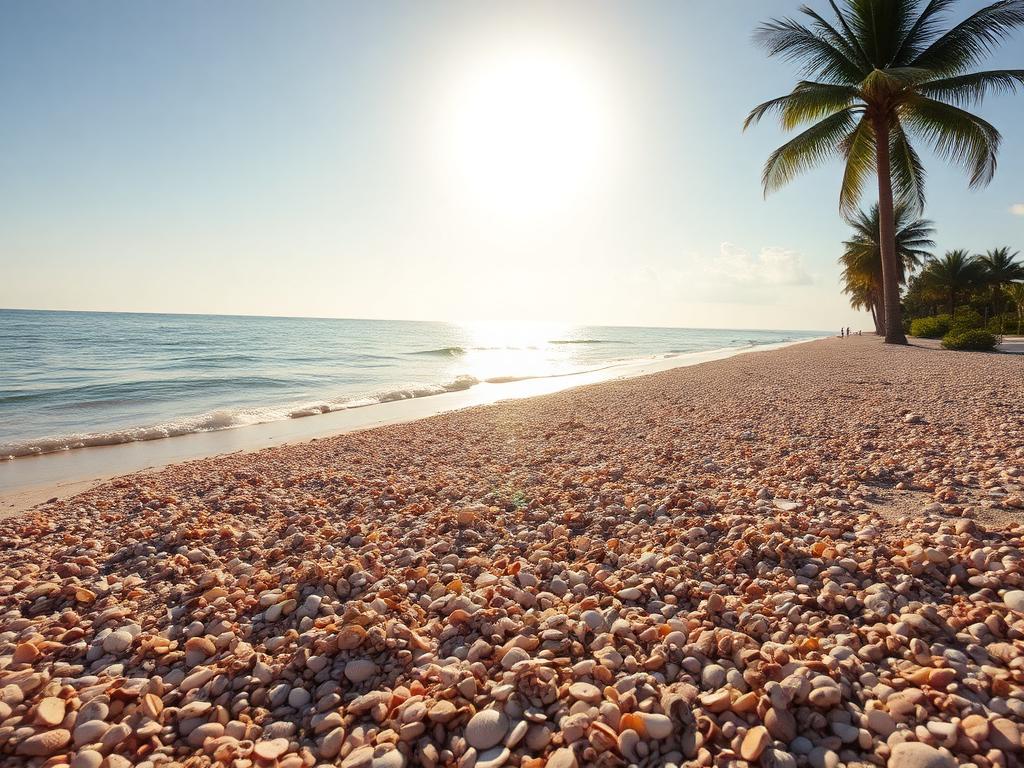
Florida: Sanibel Island Beaches
 Save
SaveSanibel is world-renowned for its shells. While the "Sanibel Six" (Whelk, Conch, Murex, Cone, Olive, and Tulip) are found across the island, each beach has its own personality.
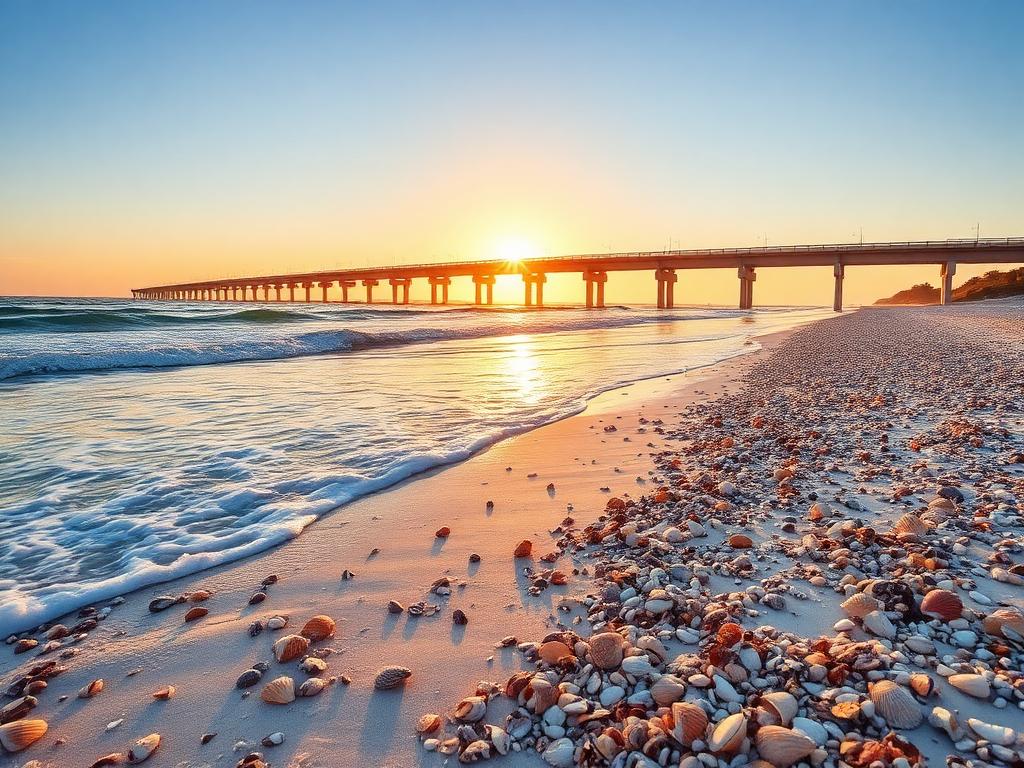
Blind Pass, Captiva
 Save
SaveFamous for massive "shell piles" deposited by strong currents. It is one of the best spots for larger treasures like Horse Conchs, True Tulips, Alphabet Cones, and the rare Junonia.
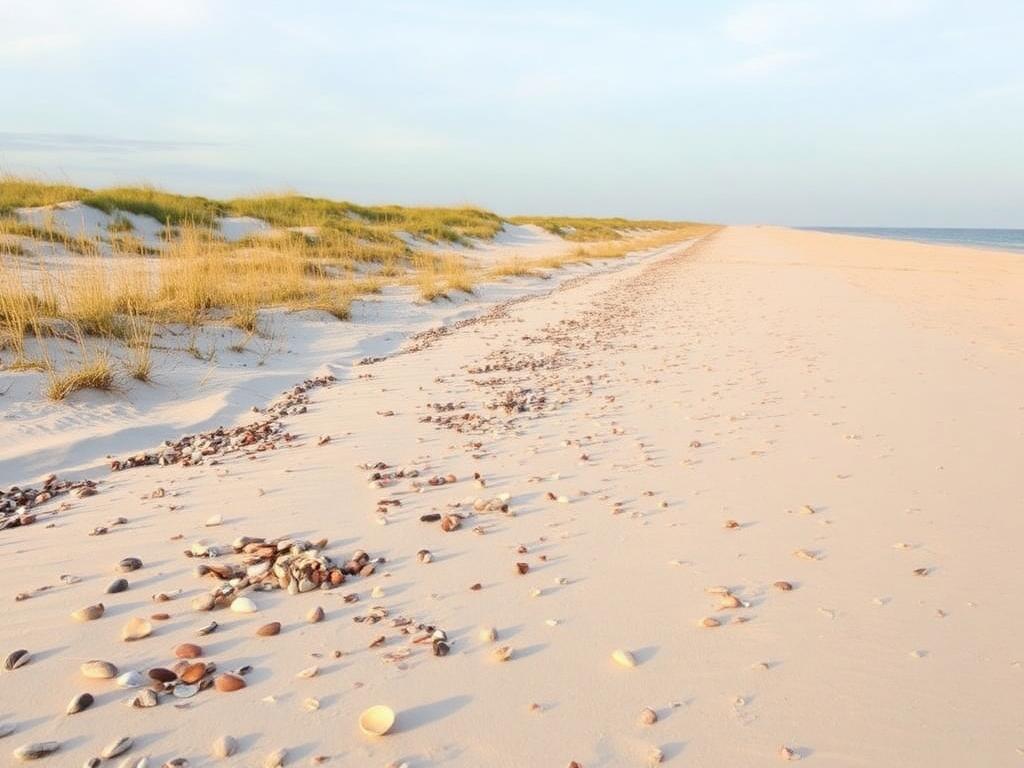
Bowman's Beach, Sanibel
 Save
SaveKnown for its natural, uncrowded atmosphere. You'll find a vast variety of Scallops (Calico, Bay, Rough), Fighting Conchs, Lightning Whelks, and Keyhole Sand Dollars. It's a great spot to walk away from crowds to find bigger specimens.
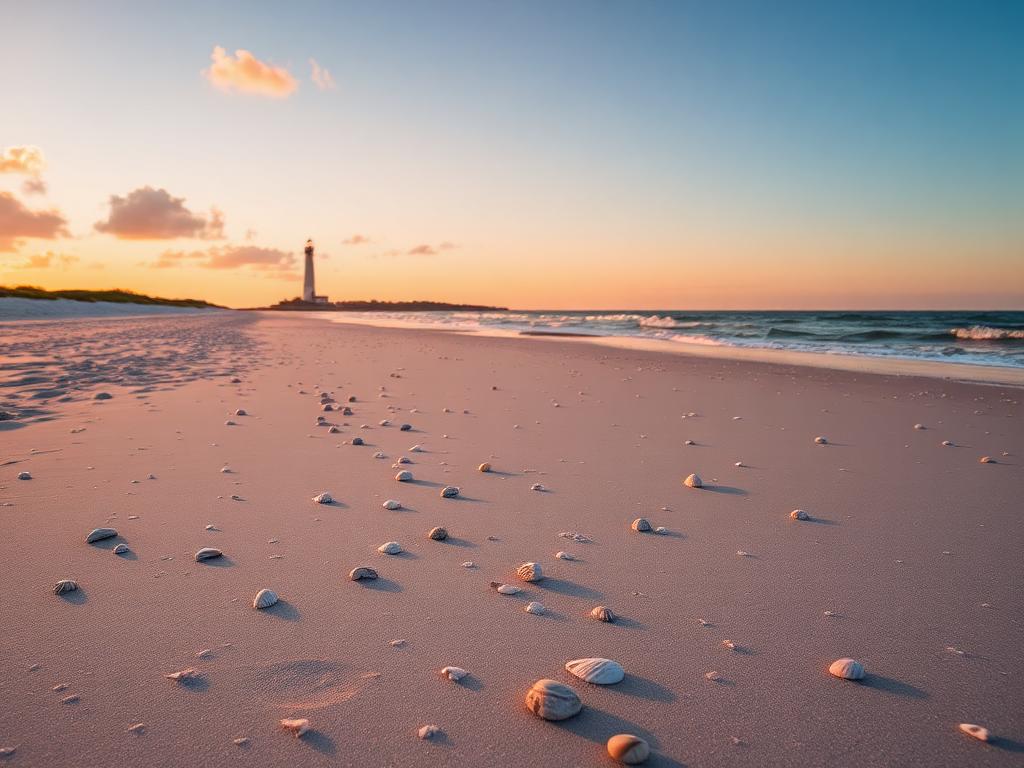
Lighthouse Beach Park, Sanibel
 Save
SaveTypically offers smaller, more delicate shells due to its location at the island's tip. Expect an abundance of Calico Scallops, Lettered Olives, Paper Figs, Shark Eyes, and Slipper Shells.
Tarpon Bay Beach, Sanibel
 Save
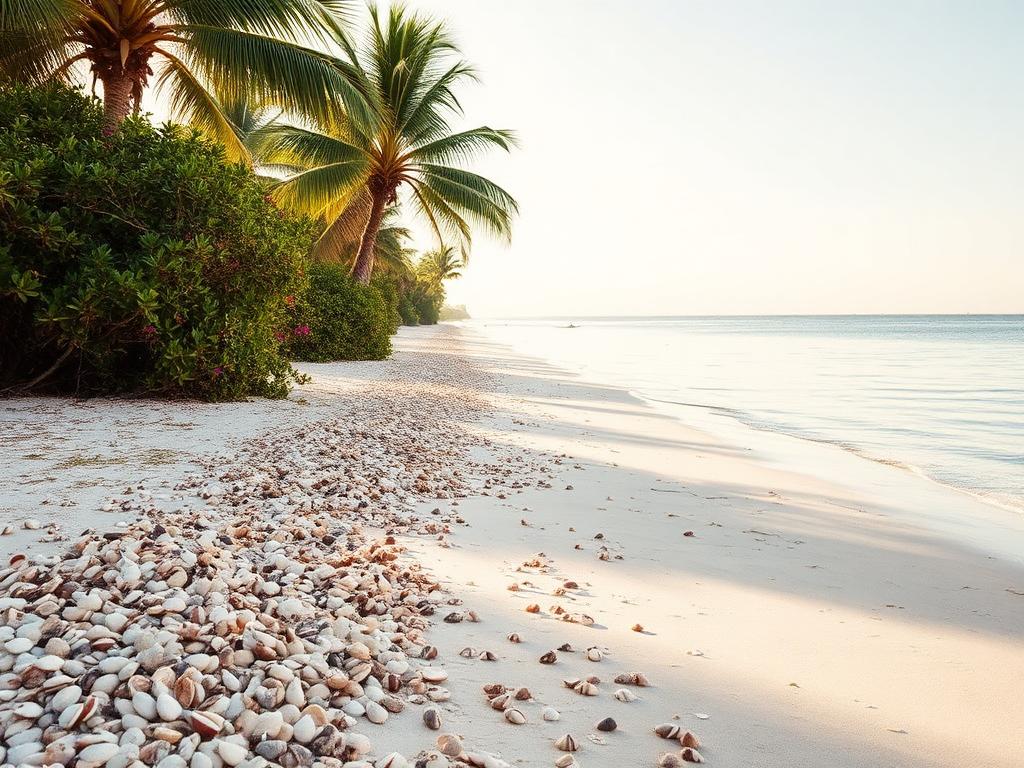
SaveA family-friendly spot where you can find Pink Scallops, Giant Atlantic Cockles, Alphabet Cones, and Pear Whelks. It is also known for producing beautiful Banded Tulips and the occasional Lion's Paw fragment.
South Carolina Shelling Beaches
SaveEdisto Beach State Park, Edisto Island: famous for finding Whelks, Angel Wings, and fossilized Shark Teeth.
Hunting Island: the eroding shoreline often reveals Lettered Olives, Sand Dollars, and Starfish.
Pawleys Island: look for the unique "Pawleys Shell" (Venus Clam) and diverse Whelks.
Outer James Islands: a premier spot for Shark Teeth and Atlantic Surf Clams.
Bull Island: a remote haven for large, pristine Conchs and Whelks thanks to limited foot traffic.
North Carolina Shelling Beaches
 Save
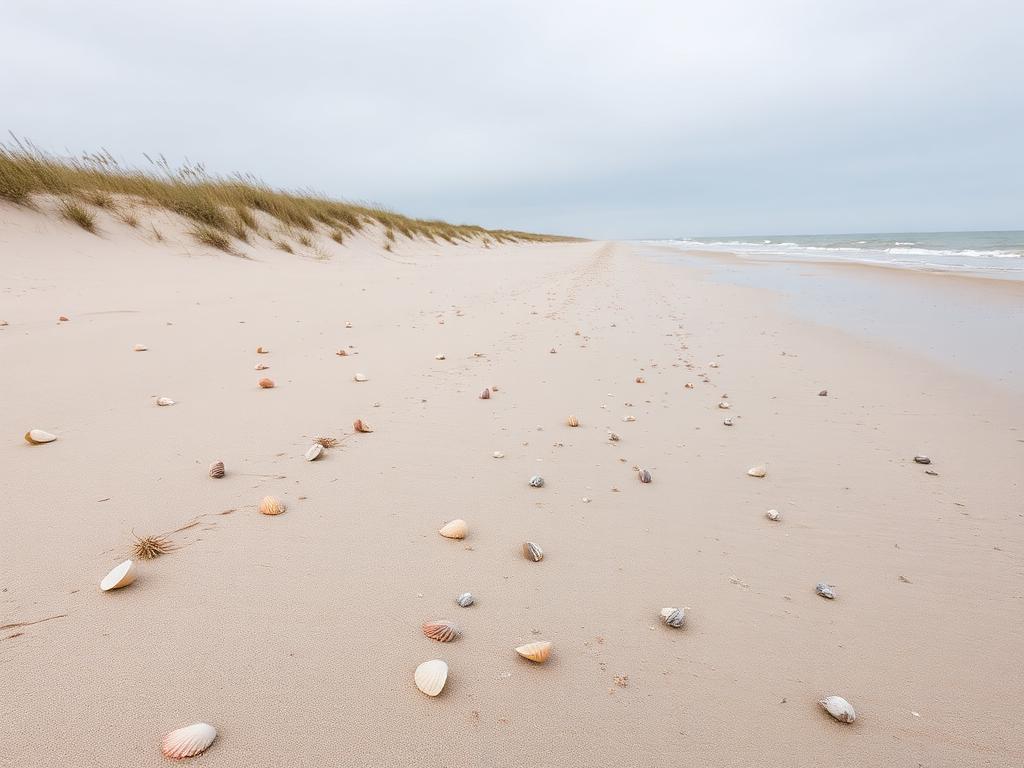
SaveOcracoke Island: a top spot for the state shell, the Scotch Bonnet, and large Whelks.
Cape Lookout National Seashore: offers undisturbed shell beds filled with Conchs, Helmet Shells, and Sand Dollars.
Portsmouth Island: uninhabited and remote, perfect for finding large, whole Whelks and Olives.
Shackleford Banks: known for Shark Teeth and unique shells like Lettered Olives.
New Jersey Shelling Beaches
SaveBayshore Waterfront Park, Port Monmouth: best for Knobbed Whelks, Slipper Shells, and Blue Mussels.
Stone Harbor Point, Stone Harbor: a natural tip where you can find Sand Dollars, Conchs, and Whelks.
Cape May Point State Park, Cape May Point: known for its "Cape May Diamonds" (quartz) and diverse Clam shells.
Island Beach State Park, Lanoka Harbor: an undeveloped, protected stretch offering Atlantic Surf Clams, Oysters, and Whelks.
Corson's Inlet State Park: excellent for small Scallops, Jingle Shells, and Crab molts.
Maryland & Delaware Shelling Beaches
 Save
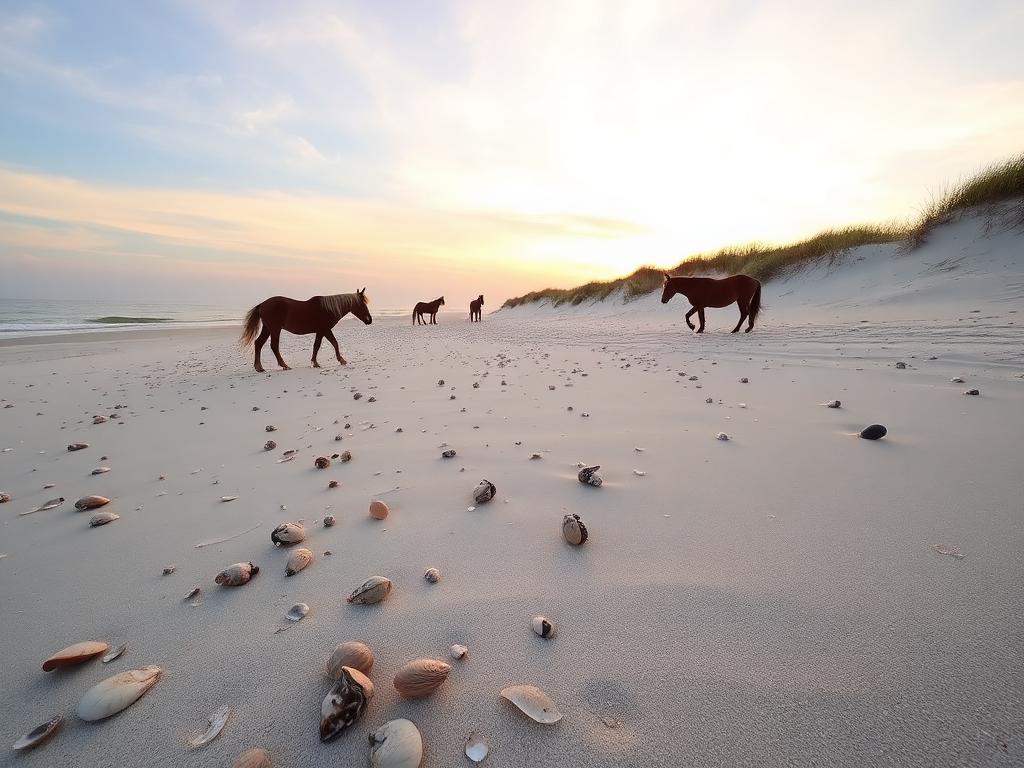
SaveAssateague Island National Seashore, Berlin, MD: offers a wild mix of Whelks, Moon Snails, and Atlantic Surf Clams.
Calvert Cliffs State Park, Lusby, MD: the world-class spot for fossilized Shark Teeth and ancient Scallops.
Purse State Park, Nanjemoy, MD: a "hidden gem" for dense concentrations of Shark Teeth and fossils.
Flag Ponds Nature Park, Lusby, MD: provides easy access to Shark Teeth and fossilized shells in a natural setting.
Cape Henlopen State Park, Lewes, DE: famous for Whelks, Sea Glass, and Horseshoe Crab molts.
In Closing
Once you can sort a find as gastropod or bivalve and read its spiral, aperture, and spire, every walk along the shore turns into a treasure hunt. Keep a small notebook or printable guide in your beach bag and log your finds over time.
However you collect, remember to take only empty shells and leave living creatures where they belong.
Recommended Companion
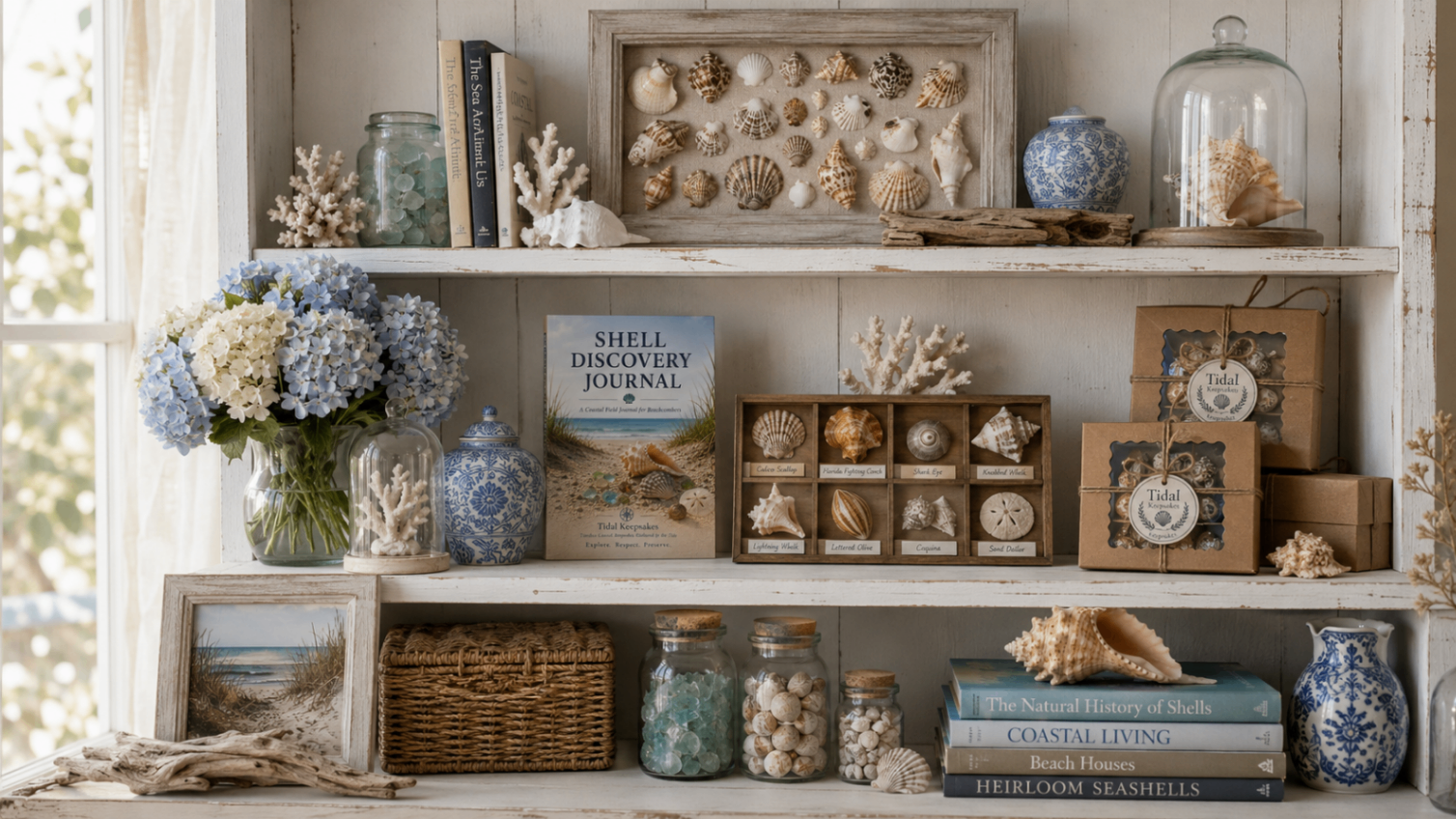
The Shell Discovery Journal
Continue Your Beachcombing Journey
Hand-picked next steps — chosen because they build directly on what you've just read.
Article
Best Seashell Identification Books for Beach Lovers
Hand-picked next step from the editors.
Guide
How to Identify a Shell: Shape, Aperture, and Sculpture
Hand-picked next step from the editors.
Resource
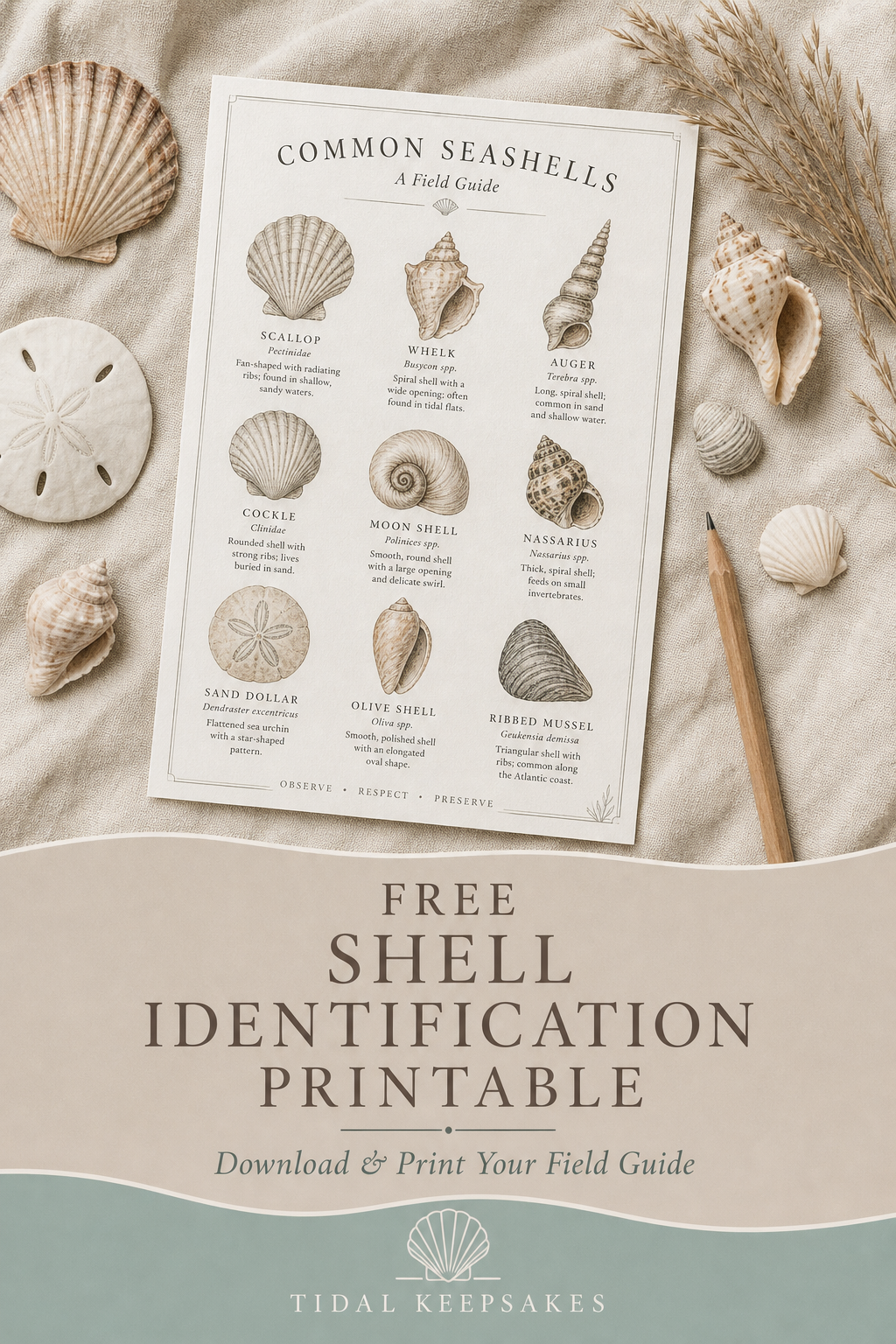
Free Shell Identification Printable
Builds on the same core topic.
Curated Shell Box
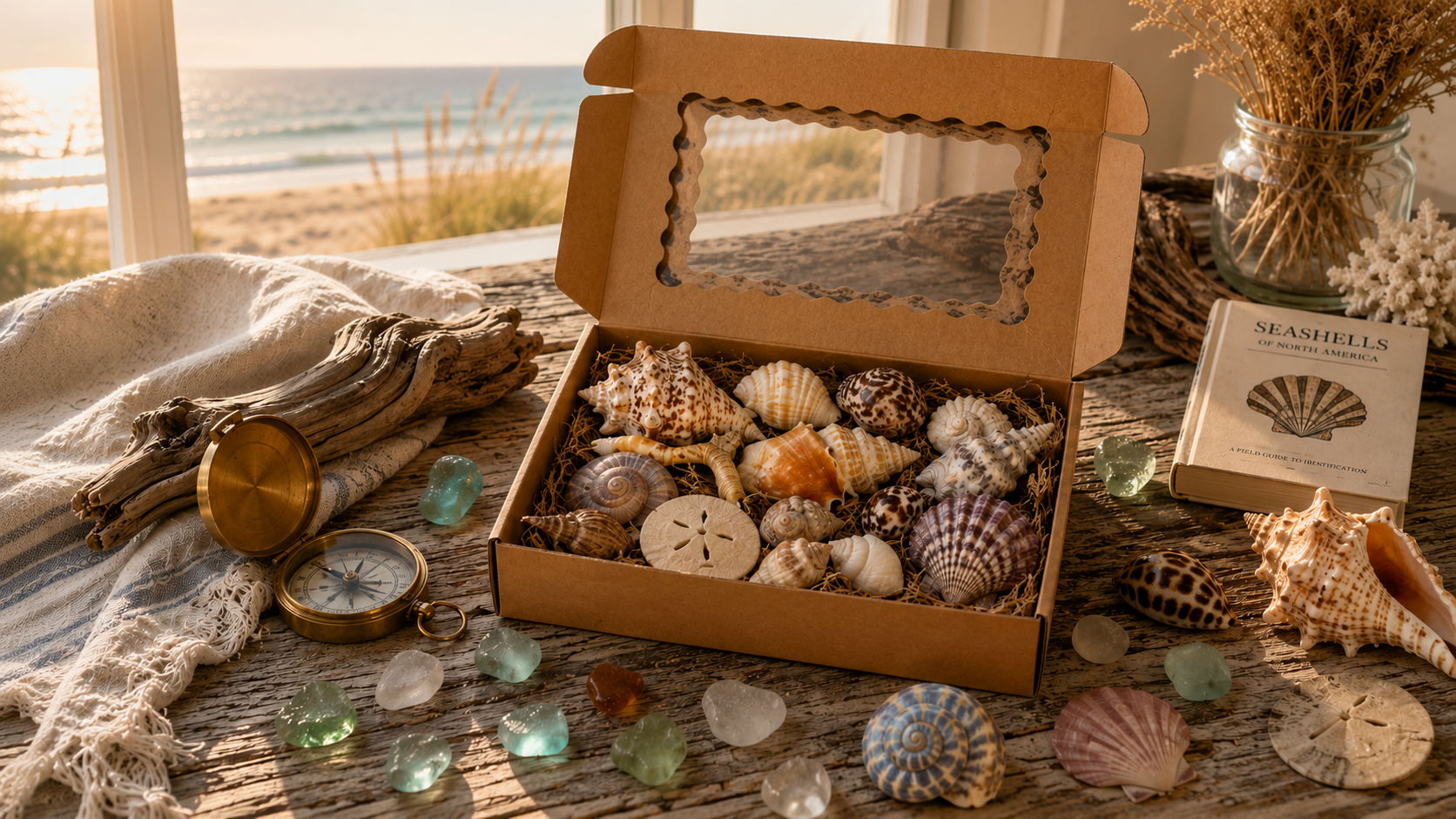
The Collector Box
See these ideas in a curated collection.
Compare Similar Shells
Species and look-alikes worth studying side by side. Every card routes into the shell reference.
Species
Scotch Bonnet
Semicassis granulata
Cream base with regular reddish-brown squares in tidy rows. Rounded body whorl and short spire; toothed inner lip.
Explore ShellSpecies
Knobbed Whelk
Busycon carica
Aperture opens on the right when the spire points up. Row of blunt knobs along the shoulder of the body whorl; interior often flushed with orange.
Explore ShellSpecies
Lettered Olive
Americoliva sayana
Cylindrical body with a very short spire and a long narrow aperture. The polished cream base carries tan or brown zigzag lines that give the species its 'lettered' name.
Explore ShellSpecies
Atlantic Auger
Terebra dislocata
Elongated screw-shaped shell up to 2 inches, pale grey to tan with faint spiral banding; each whorl carries fine axial ribs.
Explore ShellBeaches Worth Exploring Next
Shores connected to the shells, regions, and conditions on this page.
North Carolina Outer Banks
Outer Banks
A 200-mile chain of Atlantic barrier islands — Cape Hatteras, Ocracoke, and Cape Lookout deliver whelks, olive shells, and the state shell,…
Explore BeachGeorgia Coast
Jekyll Island
Historic Golden Isle with generous public beaches — Driftwood Beach and St. Andrews shore deliver moon snails, jingle shells, and…
Explore BeachFlorida Gulf Coast
Sanibel Island
Sanibel's east-west orientation sweeps Gulf shells onto its shore in exceptional variety — the reason it's the most celebrated shelling…
Explore BeachNorth Carolina Outer Banks
Ocracoke Island
A ferry-only Outer Banks island south of Hatteras — sixteen miles of protected National Seashore beach where Scotch bonnets and knobbed…
Explore BeachDiscover More Coastal Inspiration
Curated coastal favorites and specimen boxes that echo the story above.
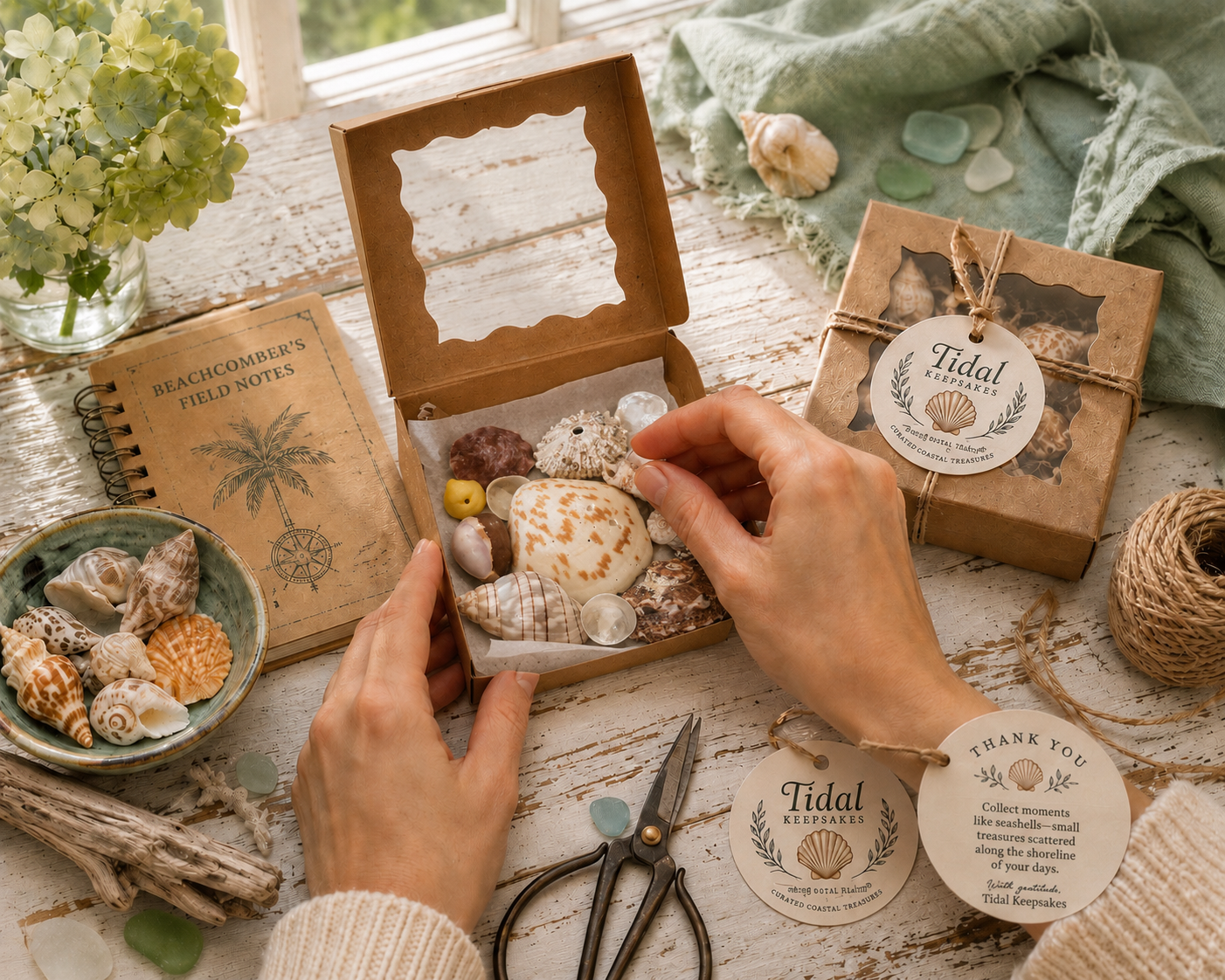
A Learning Journey to Follow
Learning Shell Identification
For growing collectors · 5 steps
For readers who already know a scallop from a whelk and want to sharpen the edge cases. Ends at the journal, where identification becomes a practice, not a lookup.
- 1
Understand the Anatomy
Shell Identification Guide
Vocabulary first — apex, whorl, aperture, columella.
Continue - 2
Meet the Common Species
Explore Common Shells
Browse the canonical shell records the site is built on.
Continue - 3
Compare Look-Alikes
Commonly Confused Shells
Side-by-side markers for the pairs that trip up new collectors.
Continue - 4
Find Them in the Wild
Best Beaches for Shelling
Where each species actually washes up.
Continue - 5
Practice in the Field
Shell Discovery Journal
Record each ID with sketches and notes to lock the learning in.
Continue