 Save
SaveTravel Guides
Sanibel Island: The Gateway to International Shell Collecting
For many collectors, the love of shelling begins on a single stretch of Florida sand. Sanibel Island — the barrier island famous for its shell-strewn beaches — is where countless beachcombers find their first perfect cockle, their first lightning whelk, and, if they are very lucky, their first Junonia.
But Sanibel is more than a destination. It is a starting point. Once the thrill of the search takes hold, collectors find themselves chasing pink sand in the Bahamas, sea glass in the Caribbean, cones in the Philippines, and the elusive golden cowrie off Australia.
This guide follows that journey — from Florida's shell capital to the world's greatest coastal destinations — so you can plan the adventures that turn a beach walk into a lifelong pursuit.
Why Sanibel Is Famous Worldwide
Sanibel's reputation as the shelling capital of North America is no accident — it is a matter of geography. Unlike most barrier islands, Sanibel runs east to west rather than north to south. This unusual orientation turns the island into a giant scoop, catching shells carried up from the Gulf of Mexico and the Caribbean and depositing them along its southern beaches.
Gentle Gulf currents, a broad, shallow shelf, and warm tropical waters create ideal conditions for an extraordinary variety of mollusks. After storms and strong tides, the beaches can be carpeted with shells from the waterline to the dune grass.
More than 250 species have been recorded here, making Sanibel one of the richest shelling beaches on Earth — and the perfect place to learn the skills that travel with you anywhere in the world.
Best Shelling Areas on Sanibel
 Save
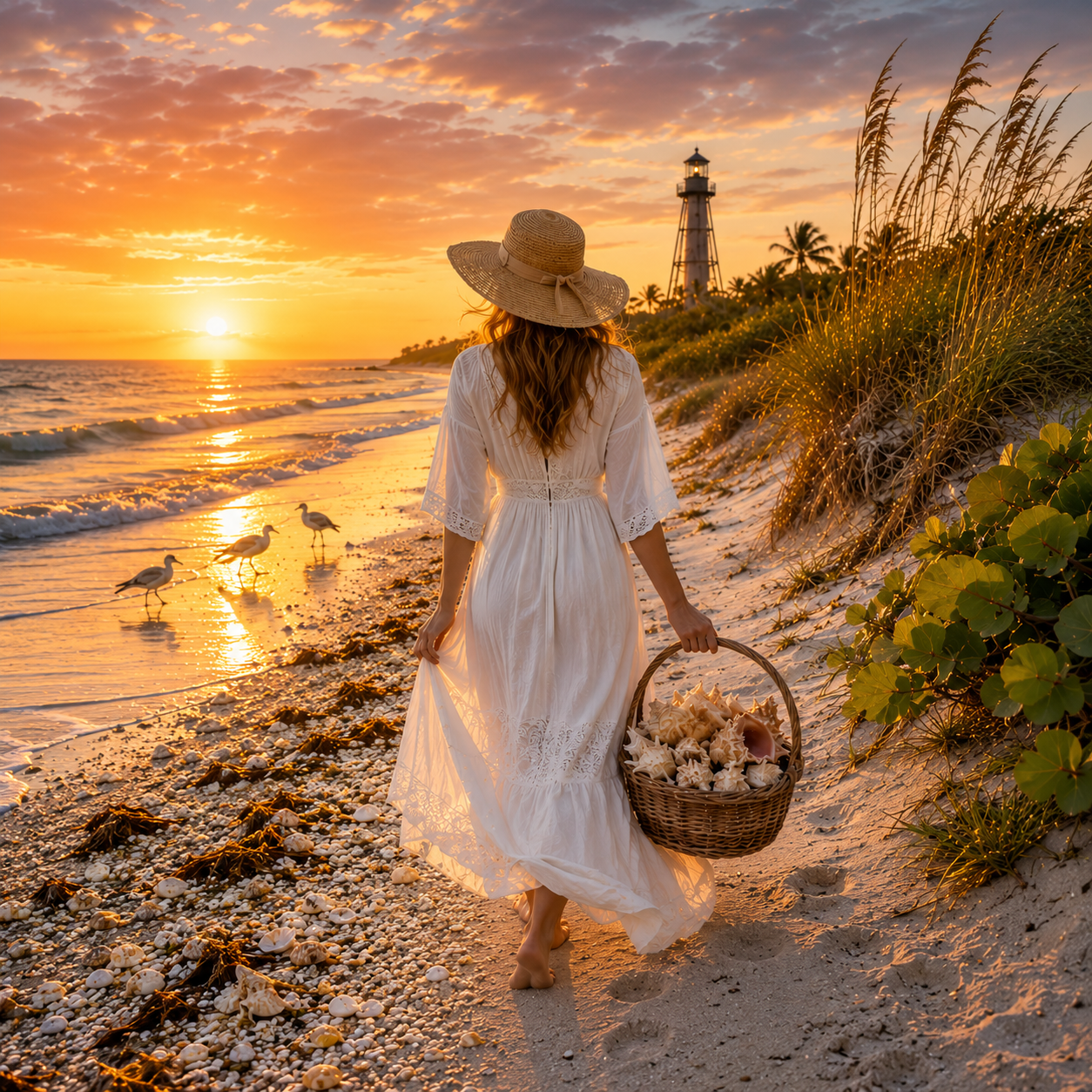
SaveEvery beach on Sanibel offers shells, but a few spots are legendary among collectors. Plan your visit around low tide and you'll find these the most rewarding places to search.
- Blind Pass. The narrow cut between Sanibel and Captiva concentrates shells where the water moves fastest, making it one of the most productive — and popular — spots on the island.
- Bowman's Beach. Quieter and more remote, Bowman's rewards those willing to walk a little farther with thick shell lines and fewer footprints.
- Lighthouse Beach. At the island's eastern tip near the historic Sanibel Lighthouse, converging currents pile shells along the point.
- Bailey-Matthews National Shell Museum. Not a beach, but essential: the only museum in the country devoted entirely to shells and mollusks, perfect for learning to identify your finds.
Understanding Where Shells Collect
 Save
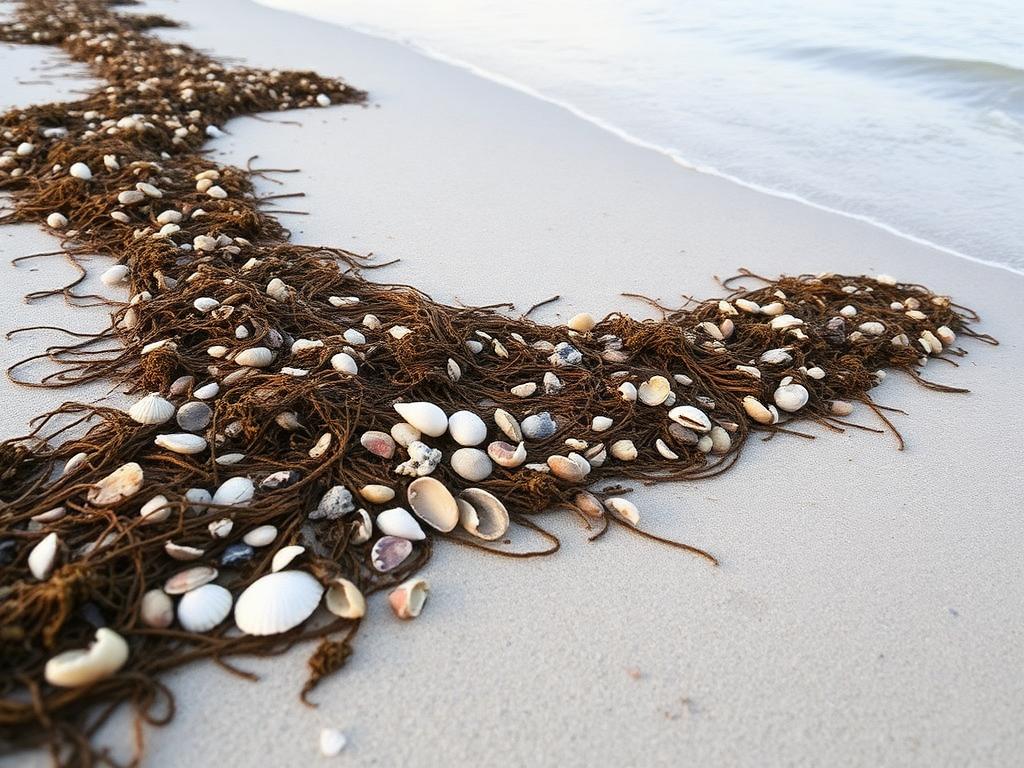
SaveLearning to read a beach is the single most useful skill a collector can develop — and it works on every coastline in the world. Shells don't scatter randomly; currents, waves, and tides gather them in predictable places.
- The Wrack Line. The curving band of seaweed, broken shells, and debris left by the high tide is where lighter shells come to rest. Walk it slowly and look closely.
- Tidal Pools and Cuts. Low spots and channels trap shells as water drains, concentrating finds in a small area.
- Points and Passes. Wherever land narrows or two bodies of water meet, currents speed up and drop their heaviest cargo — often the best shells on the beach.
The Sanibel Stoop
 Save
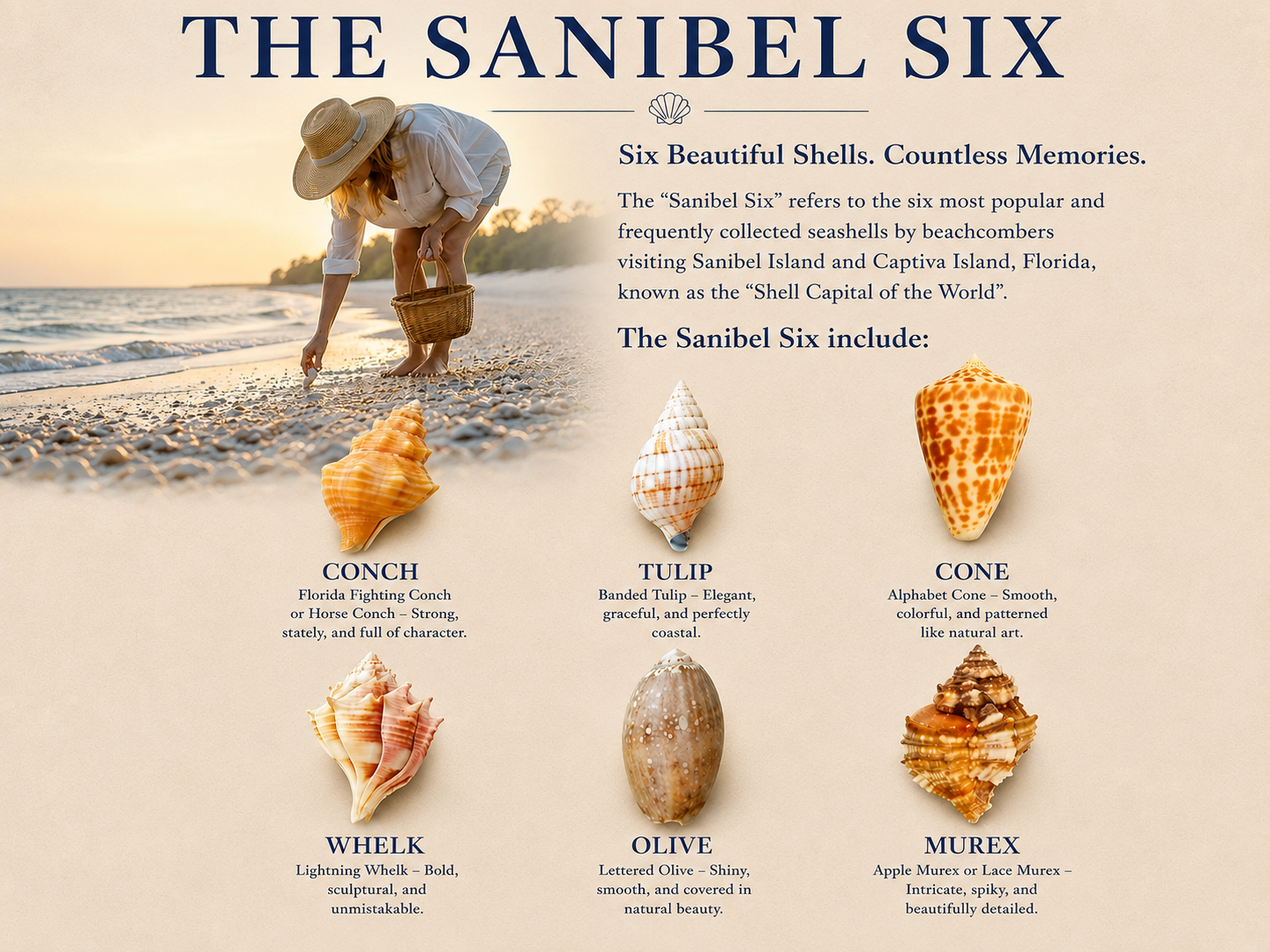
SaveVisit Sanibel at sunrise and you'll see it everywhere: the unmistakable silhouette of collectors bent at the waist, scanning the sand. Locals call it the Sanibel Stoop — the slightly hunched posture of someone who has found something worth keeping.
It's more than a joke. The Stoop is a technique. Moving slowly, eyes down, scanning a narrow lane of sand at a time, you train yourself to notice the subtle differences between an ordinary shell and an exceptional one.
Master the Stoop on Sanibel and you carry it with you — to every beach, on every trip, for the rest of your collecting life.
Best Seasons for Shelling
Shells wash ashore year-round, but timing dramatically improves your odds. The richest hauls follow weather and tide rather than the calendar — and the same logic applies everywhere you travel.
On Sanibel, the cooler months bring the best conditions, but the universal rule is simple: search after rough water, on a falling tide, as early in the day as you can.
| Season | Conditions | What to Expect |
|---|---|---|
| Winter (Dec–Mar) | Cold fronts and strong winds churn the Gulf | Peak season — the heaviest, most varied shell lines of the year |
| Spring (Apr–May) | Calmer seas, lower tides, fewer crowds | Excellent low-tide searching and easier walking |
| Summer (Jun–Aug) | Warm, calm water with afternoon storms | Quieter beaches; search after a passing storm |
| Fall (Sep–Nov) | Tropical systems stir the seabed | Storm-driven finds — outstanding right after weather moves through |
The Bahamas
 Save
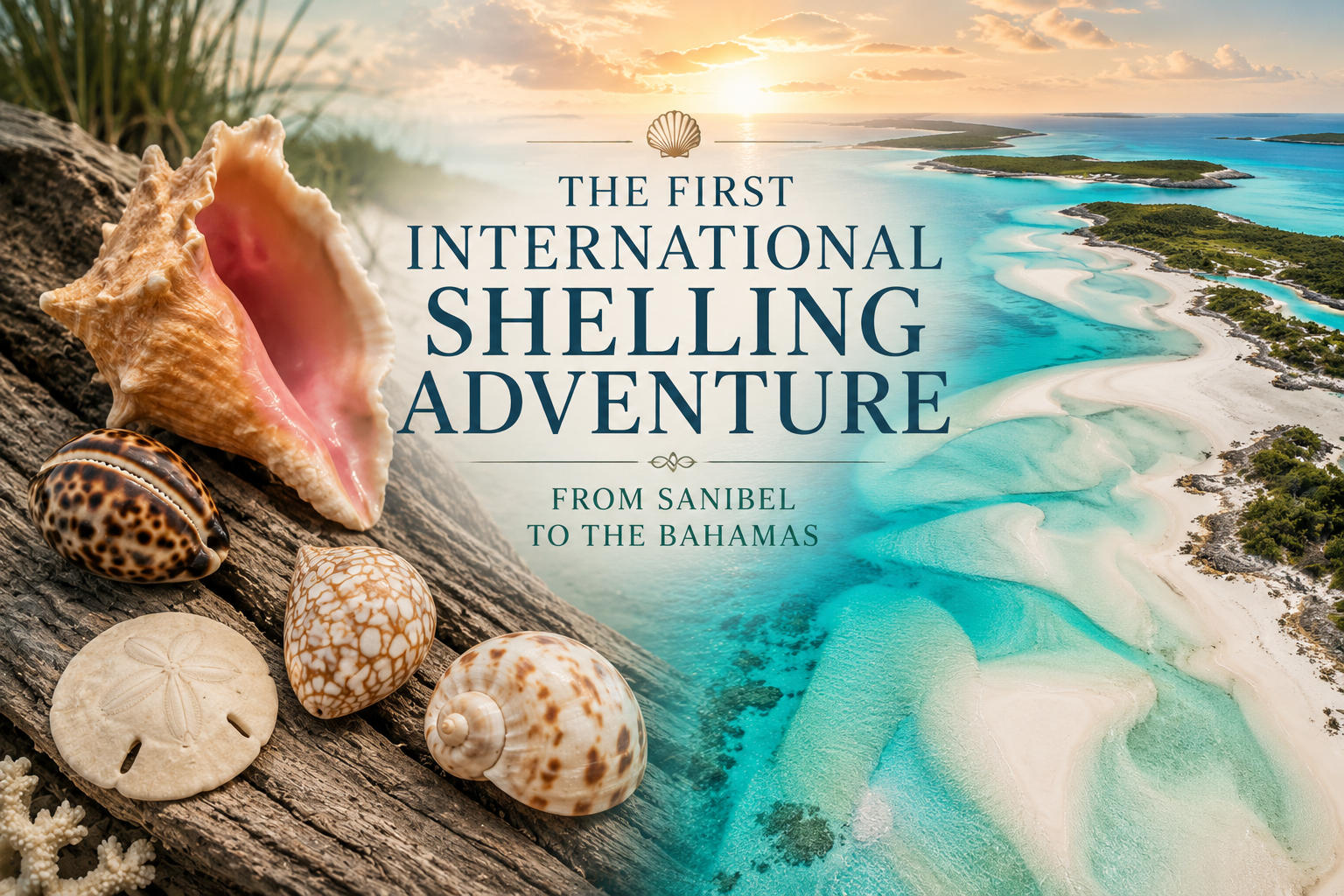
SaveThe First International Shelling Adventure
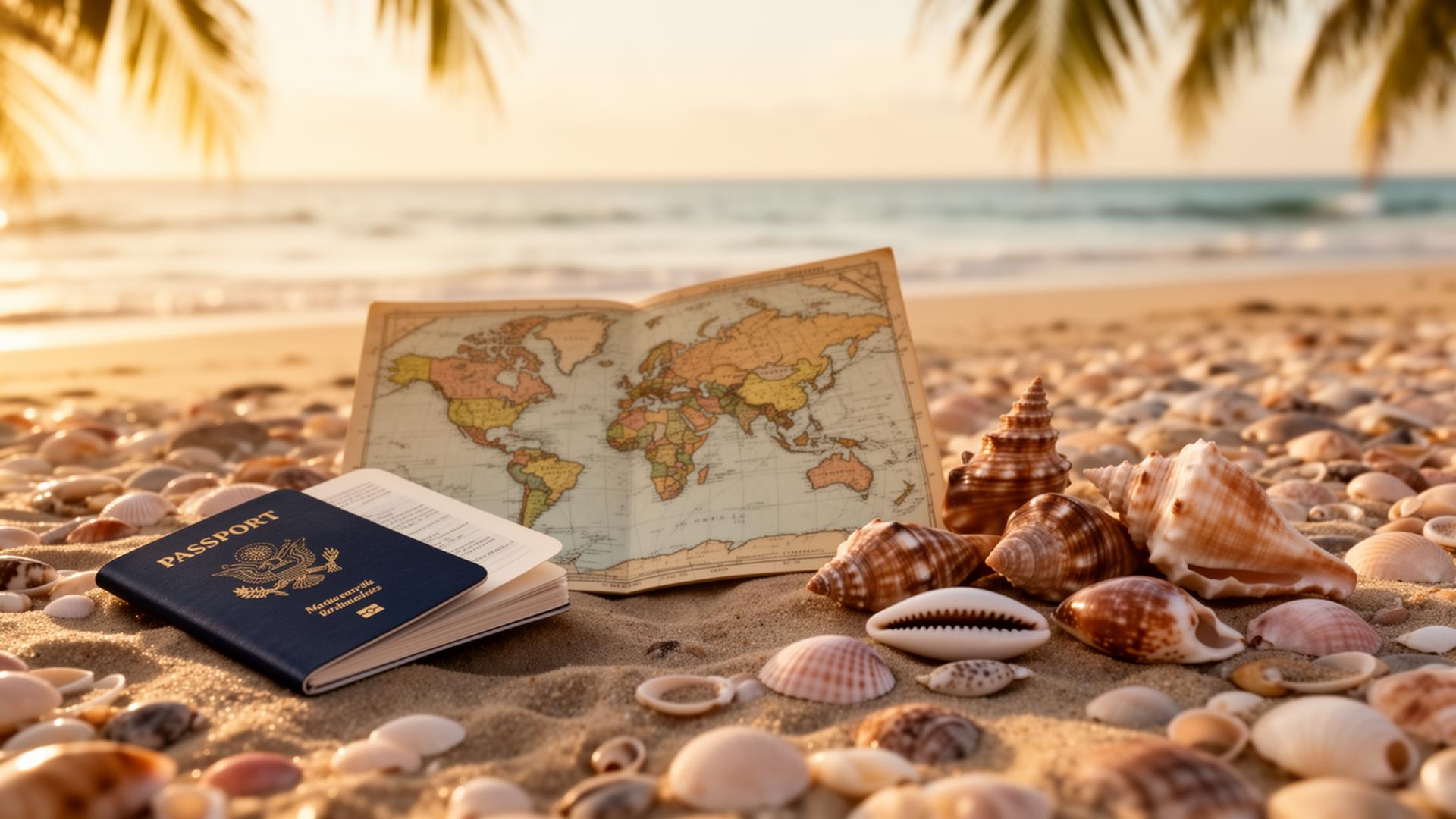
Just a short flight from Florida, the Bahamas is often the first international shelling destination for collectors who discovered their passion on Sanibel Island. Many shellers describe their first visit as the moment they realize how vast and diverse the world of shells truly is.
What You'll Find
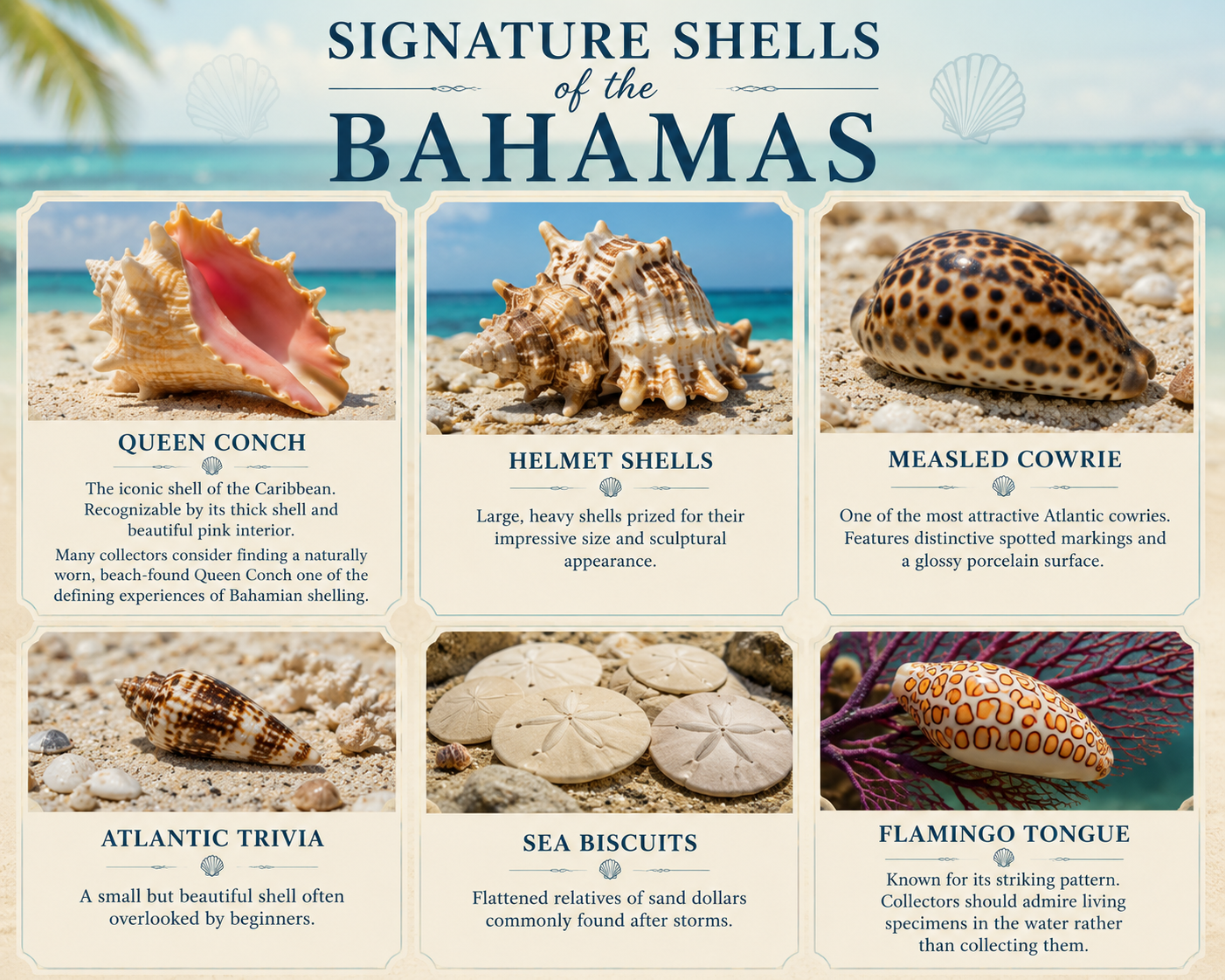
- Conchs
- Cowries
- Murex
- Sea Biscuits
Coastal Landscape
 Save
SaveThe Bahamas consists of more than 700 islands and over 2,000 cays spread across a vast area of the Atlantic Ocean.
Most of the islands sit atop shallow limestone banks surrounded by brilliant turquoise water.
The geography creates:
- Extensive sand flats
- Coral reefs
- Seagrass meadows
- Mangrove systems
- Barrier beaches
- Tidal channels
These varied habitats support tremendous shell diversity.
Unlike mountainous Caribbean islands, much of the Bahamas is low and flat, creating endless beaches and shoreline environments perfect for shelling.
Culture & People
One of the greatest parts of visiting the Bahamas extends beyond the shells.
Bahamian culture blends African, British, Caribbean, and maritime influences into a unique island identity.
Visitors encounter:
- Friendly local communities
- Colorful waterfront settlements
- Fresh seafood restaurants
- Island music
- Local art and crafts
- Historic colonial architecture
The people of the Out Islands are especially known for their hospitality.
Many visitors discover that conversations with local fishermen, boat captains, and residents often lead to the best shelling advice.
Throughout the islands you'll find a slower pace of life centered around family, community, fishing, and the sea.
Junkanoo festivals, local food, and waterfront culture make the Bahamas rewarding even on days when shelling conditions are less than perfect.
Best Season to Visit
November through April
The premier season for shelling and travel.
Benefits:
- Comfortable temperatures
- Lower humidity
- Less rain
- Excellent beach conditions
- Clear water
May through June
Excellent weather with fewer visitors.
July through October
Warm and tropical.
Storm systems occasionally produce exceptional shell deposits, though hurricane season requires flexibility.
Travel Tips for Shell Collectors
Island Hop Whenever Possible
Many of the best shelling beaches are located on smaller islands rather than Nassau.
Consider visiting:
- Eleuthera
- Exuma
- Long Island
- Cat Island
- Andros
Bring Cash
Many smaller communities have limited banking services. Cash remains useful throughout the Out Islands.
Rent Transportation Early
Golf carts, rental cars, and scooters often sell out during peak season.
Check Collection Regulations
Rules vary by location. Always confirm local regulations regarding shells, marine life, and protected species.
Pack Smart
- Mesh shell bag
- Reef-safe sunscreen
- Polarized sunglasses
- Water shoes
- Reusable water bottle
- Lightweight field guide
Time Your Shelling
- Low tide
- Early morning
- After storms
- Areas near tidal cuts and channels
Respect Living Marine Life
Only collect empty shells. Many species remain important parts of the local ecosystem and tourism economy.
For many collectors, the Bahamas is where shelling evolves from a hobby into a travel lifestyle. The combination of extraordinary beaches, world-class shell diversity, welcoming communities, and breathtaking scenery makes it one of the most rewarding destinations in the entire Atlantic region.
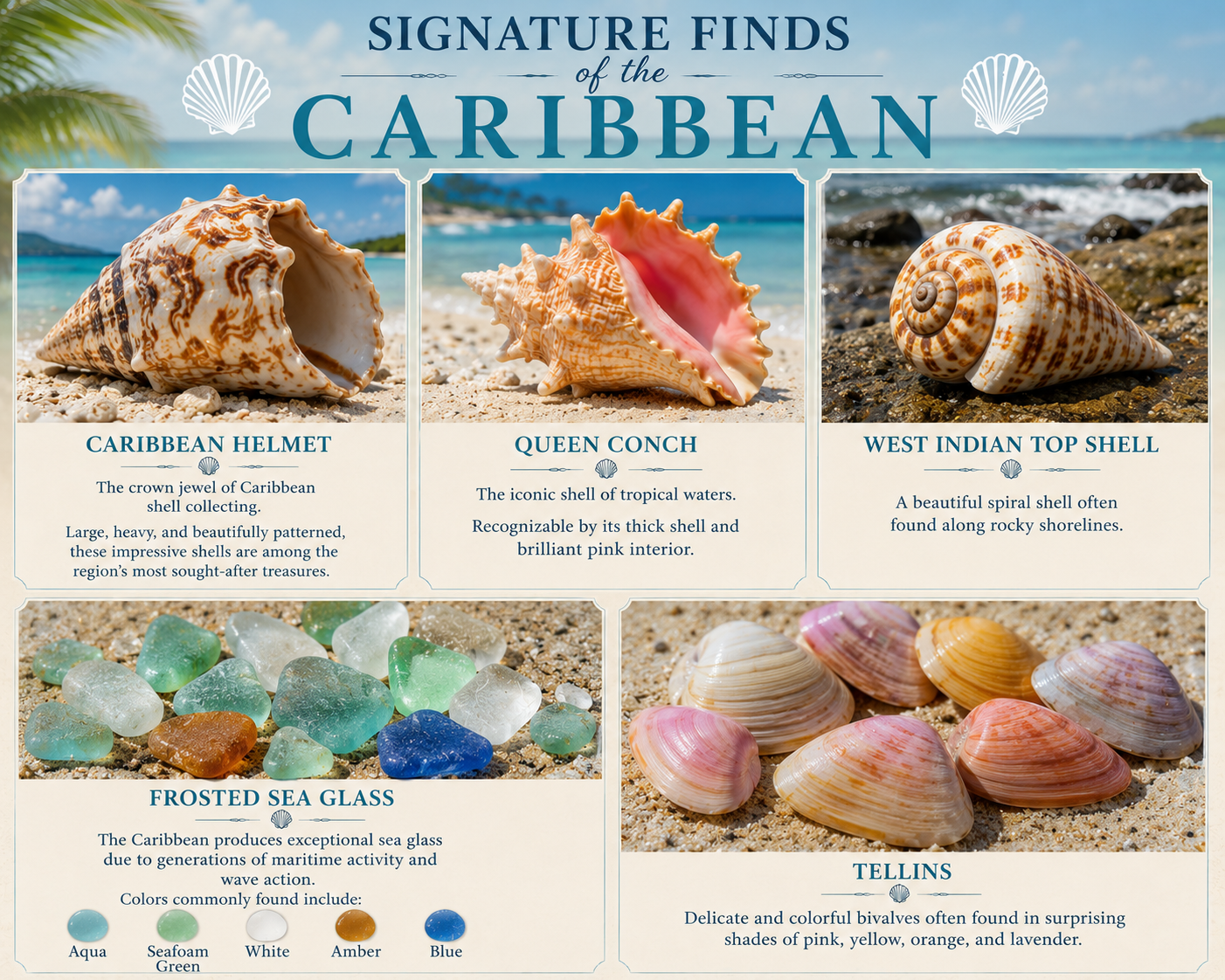
Caribbean Islands
 Save
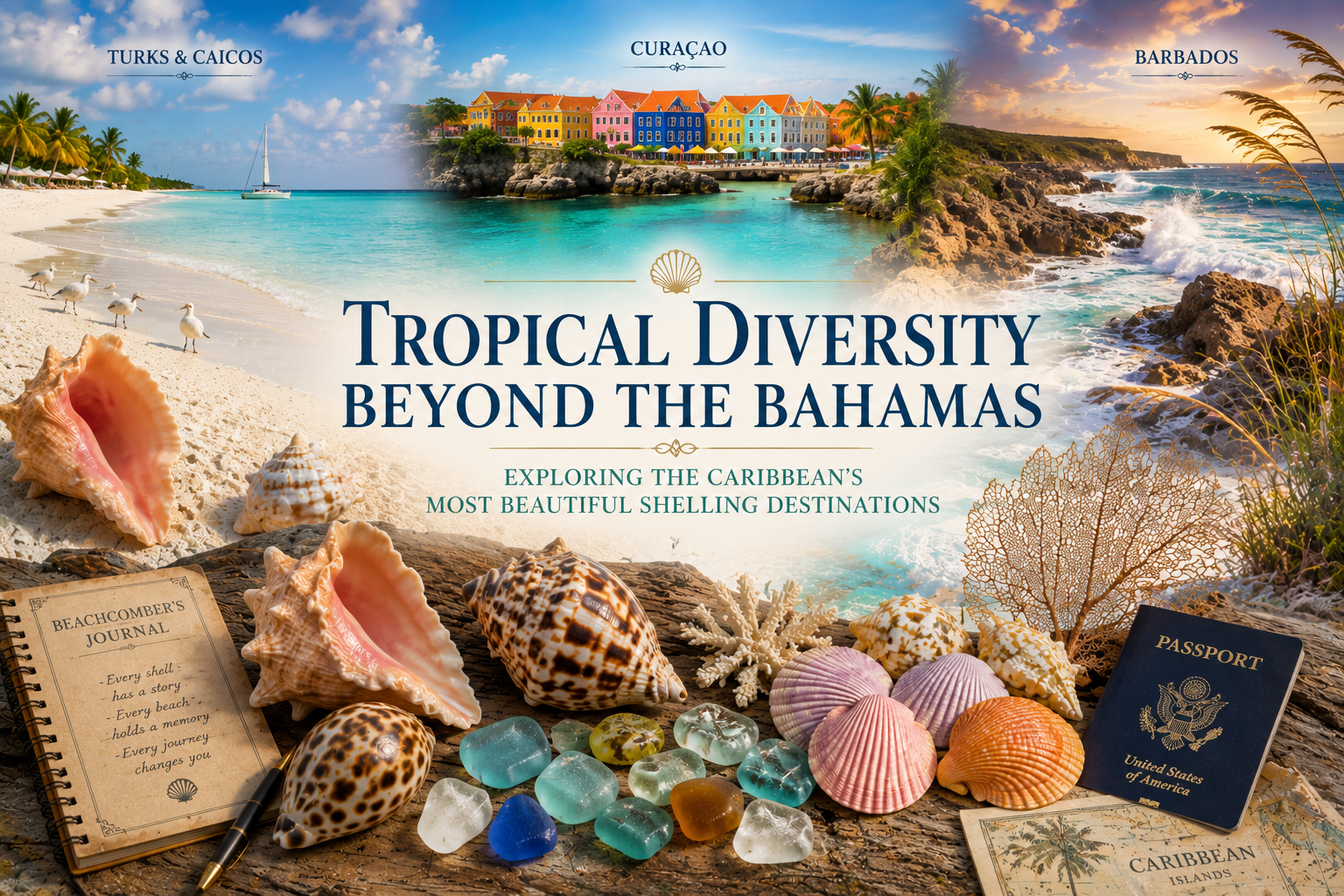
SaveTropical Diversity Beyond the Bahamas
If the Bahamas introduces collectors to international shelling, the Caribbean opens the door to an entirely new world of coastal exploration.
Why Visit
One of the Caribbean's most pristine marine environments.
Coastal Landscape
 Save
SaveThe Caribbean's geography is extraordinarily diverse.
Collectors encounter:
- Coral reefs
- Volcanic coastlines
- Mangrove forests
- Limestone cliffs
- Hidden coves
- Barrier beaches
- Blue holes
- Tropical lagoons
Each environment supports different shell species and collecting opportunities.
The region's reefs provide habitat for many species rarely encountered elsewhere.
Mangrove systems often trap shells and sea glass carried by tides.
Atlantic-facing beaches receive fresh deposits after storms, while protected bays preserve delicate specimens.
Culture & People
One of the greatest rewards of Caribbean travel is experiencing the incredible diversity of its people and cultures.
The Caribbean blends influences from:
- African traditions
- Indigenous Caribbean peoples
- European settlers
- Asian communities
- Maritime history
Every island has its own identity.
Visitors experience:
- Colorful architecture
- Local seafood cuisine
- Reggae, calypso, soca, and steel drum music
- Open-air markets
- Historic colonial towns
- Warm hospitality
Island communities often maintain deep connections to fishing, boating, and the sea.
Many collectors find that local fishermen provide some of the best advice about tides, currents, and productive beaches.
The relaxed pace of island life encourages visitors to slow down and appreciate both the shells and the surrounding culture.
Best Season to Visit
December through April
The most popular season.
Benefits:
- Pleasant temperatures
- Lower humidity
- Less rainfall
- Excellent beach conditions
May through June
Excellent weather with fewer crowds. Often one of the best values for travelers.
July through November
Hurricane season. Storm activity occasionally creates exceptional shell deposits, but flexibility is important.
Travel Tips for Caribbean Shell Collectors
Research Collection Rules
Every island has different regulations.
Some areas restrict collection of:
- Live shells
- Coral
- Protected species
- Marine artifacts
Always verify local regulations before collecting.
Rent a Vehicle
Many of the best shelling beaches are located away from resort areas. Having transportation greatly expands your options.
Visit Early
The most productive shelling often occurs:
- At sunrise
- After storms
- During low tide
You'll also avoid the midday heat.
Bring Water Shoes
Many Caribbean beaches contain:
- Coral rubble
- Limestone rocks
- Sharp shell fragments
Proper footwear improves both comfort and safety.
Carry Cash
Smaller communities often prefer cash payments. ATMs may be limited outside major tourist areas.
Island Hop When Possible
Many collectors choose to visit multiple islands during one trip. This dramatically increases the variety of species encountered.
Pack Smart
- Mesh shell bag
- Polarized sunglasses
- Reef-safe sunscreen
- Snorkeling gear
- Lightweight rain jacket
- Portable field guide
Respect Marine Life
The Caribbean contains some of the world's most important reef ecosystems. Only collect empty shells. Avoid disturbing coral reefs, seagrass beds, and nesting areas.
For many collectors, the Caribbean becomes a lifelong destination. Every island offers a new landscape, a different culture, and the possibility of discovering shells that have never appeared in any previous collection. The combination of world-class beaches, tropical beauty, rich traditions, and extraordinary marine diversity makes the Caribbean one of the most rewarding shelling regions on Earth.
Mexico
 Save
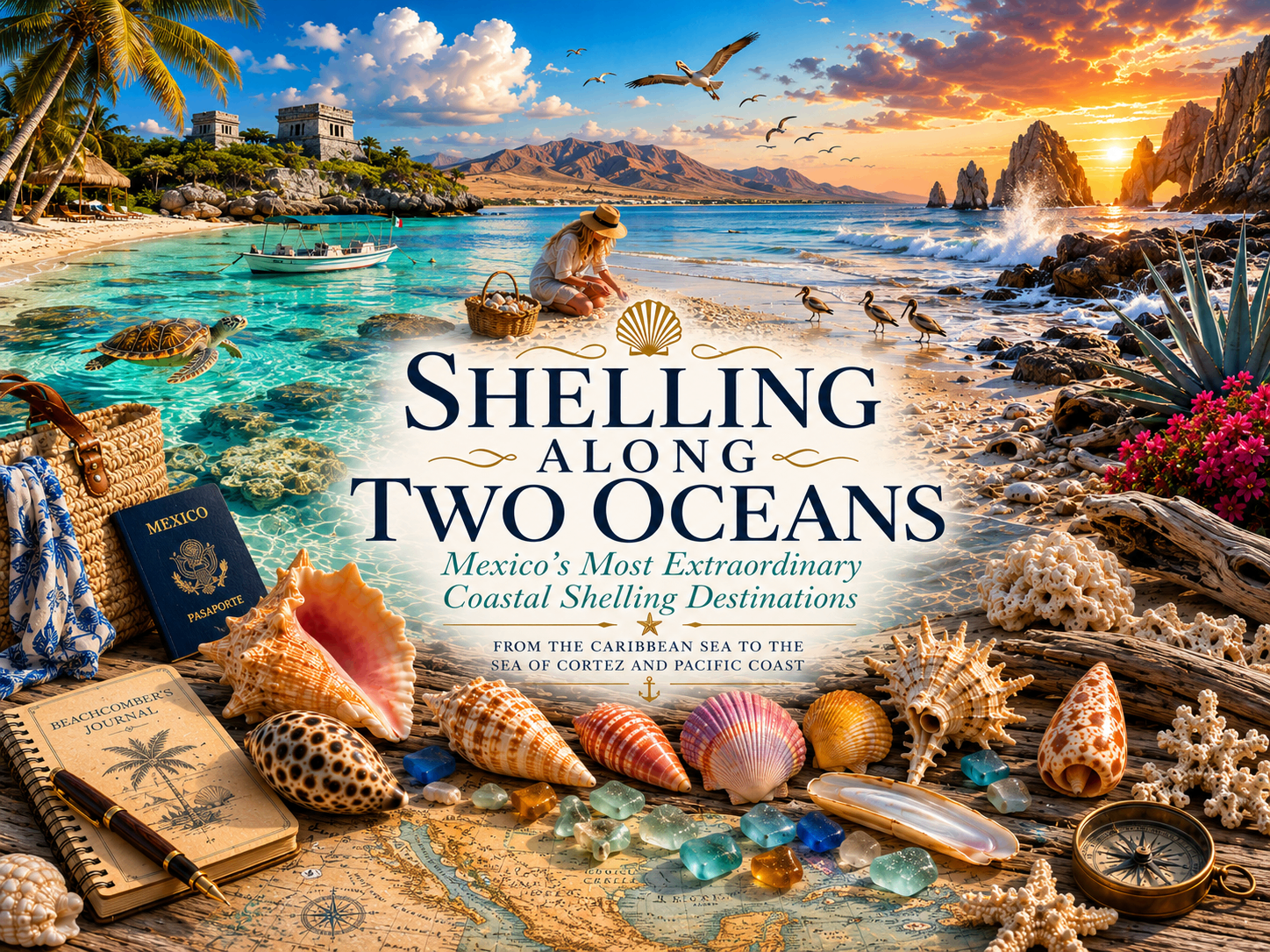
SaveShelling Along Two Oceans
Mexico is one of the most diverse shelling destinations in the world because it offers access to three completely different marine environments: the Caribbean Sea, the Gulf of Mexico, and the Pacific Ocean. Few countries provide such a wide variety of beaches, habitats, and shell species within a single destination.
Why Visit
Excellent shelling combined with authentic coastal communities.
Coastal Landscape
 Save
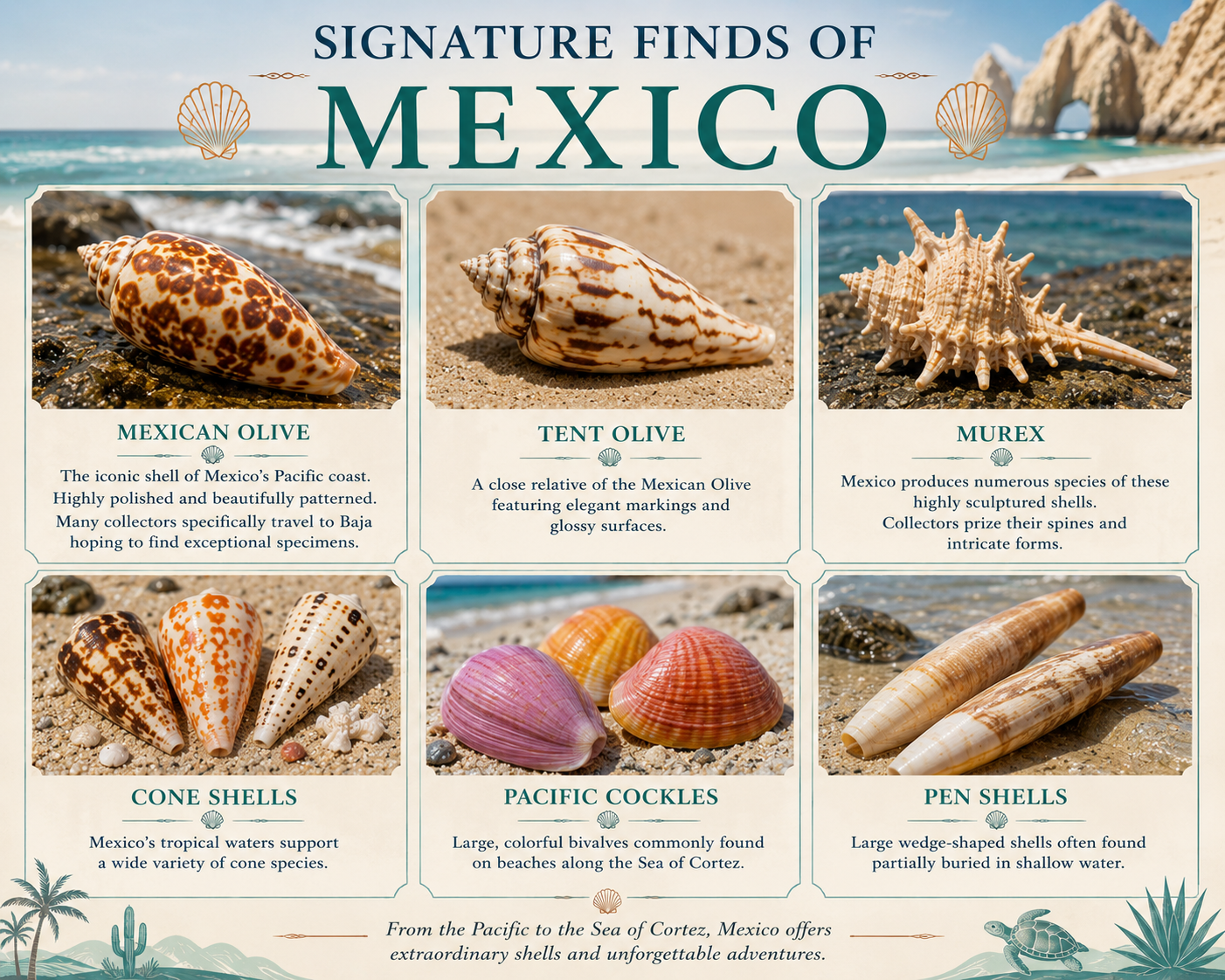
SaveMexico offers one of the most diverse coastal environments on Earth.
Collectors encounter:
Caribbean Coast
- Coral reefs
- White sand beaches
- Mangrove lagoons
- Tropical islands
Pacific Coast
- Volcanic cliffs
- Rugged shorelines
- Powerful surf zones
- Black sand beaches
Sea of Cortez
- Desert coastlines
- Tidal flats
- Protected bays
- Rocky coves
- Shell-rich beaches
Few destinations allow collectors to experience tropical reefs and desert coastlines within the same country.
Culture & People
Mexico's culture is every bit as rewarding as its shelling.
Visitors quickly discover that coastal communities maintain strong connections to the ocean.
The country's rich heritage blends:
- Indigenous traditions
- Spanish influences
- Fishing culture
- Artisan craftsmanship
- Regional cuisines
Throughout coastal Mexico you'll encounter:
- Friendly local communities
- Vibrant town squares
- Fresh seafood markets
- Colorful festivals
- Historic architecture
- Family-owned restaurants
Many shell collectors find that conversations with local fishermen often provide valuable insights into tides, currents, and productive beaches.
Coastal towns tend to move at a slower pace, creating a relaxed atmosphere that pairs perfectly with beachcombing.
Food is also a major highlight.
Regional specialties include:
- Fresh ceviche
- Fish tacos
- Shrimp dishes
- Grilled seafood
- Tropical fruits
Many visitors find themselves planning future trips as much around favorite coastal towns as favorite shelling beaches.
Best Season to Visit
November through April
The prime season for shelling throughout much of Mexico.
Benefits:
- Comfortable temperatures
- Lower humidity
- Minimal rainfall
- Excellent beach conditions
Baja California
Best from October through May. Cooler temperatures and excellent visibility.
Caribbean Coast
Best from December through April. Pleasant weather and calm water.
Summer Months
Warmer temperatures and fewer visitors. Occasional storms may create excellent shell deposits.
Travel Tips for Shell Collectors
Learn Basic Spanish
Simple phrases go a long way in smaller coastal communities. Locals often appreciate the effort and may share valuable shelling advice.
Carry Pesos
Many small businesses, taxis, and local vendors prefer cash. Especially important outside major tourist areas.
Respect Protected Areas
Mexico protects numerous marine reserves and ecological parks. Always verify local regulations before collecting shells.
Rent a Vehicle
Many of the best shelling beaches are located far from resort areas. A rental vehicle provides access to remote shorelines and hidden coves.
Watch the Tides
The Sea of Cortez experiences dramatic tidal fluctuations. Some beaches become completely different environments between high and low tide.
Bring Proper Gear
- Mesh shell bag
- Polarized sunglasses
- Reef-safe sunscreen
- Water shoes
- Wide-brim hat
- Refillable water bottle
Start Early
Many productive beaches are best explored shortly after sunrise.
Benefits include:
- Cooler temperatures
- Fewer people
- Fresh overnight deposits
- Better photography conditions
Combine Shelling with Snorkeling
Some of Mexico's best shell species are easier to observe in shallow water than on the beach. Snorkeling opens access to habitats many collectors never see.
For shell collectors, Mexico represents one of the most complete coastal destinations in the world. From the turquoise waters of Cozumel to the shell-rich shores of Baja California, every region offers new species, new landscapes, and new adventures. Many travelers arrive expecting beautiful beaches and leave amazed by the country's extraordinary marine diversity, welcoming people, and endless opportunities for exploration.
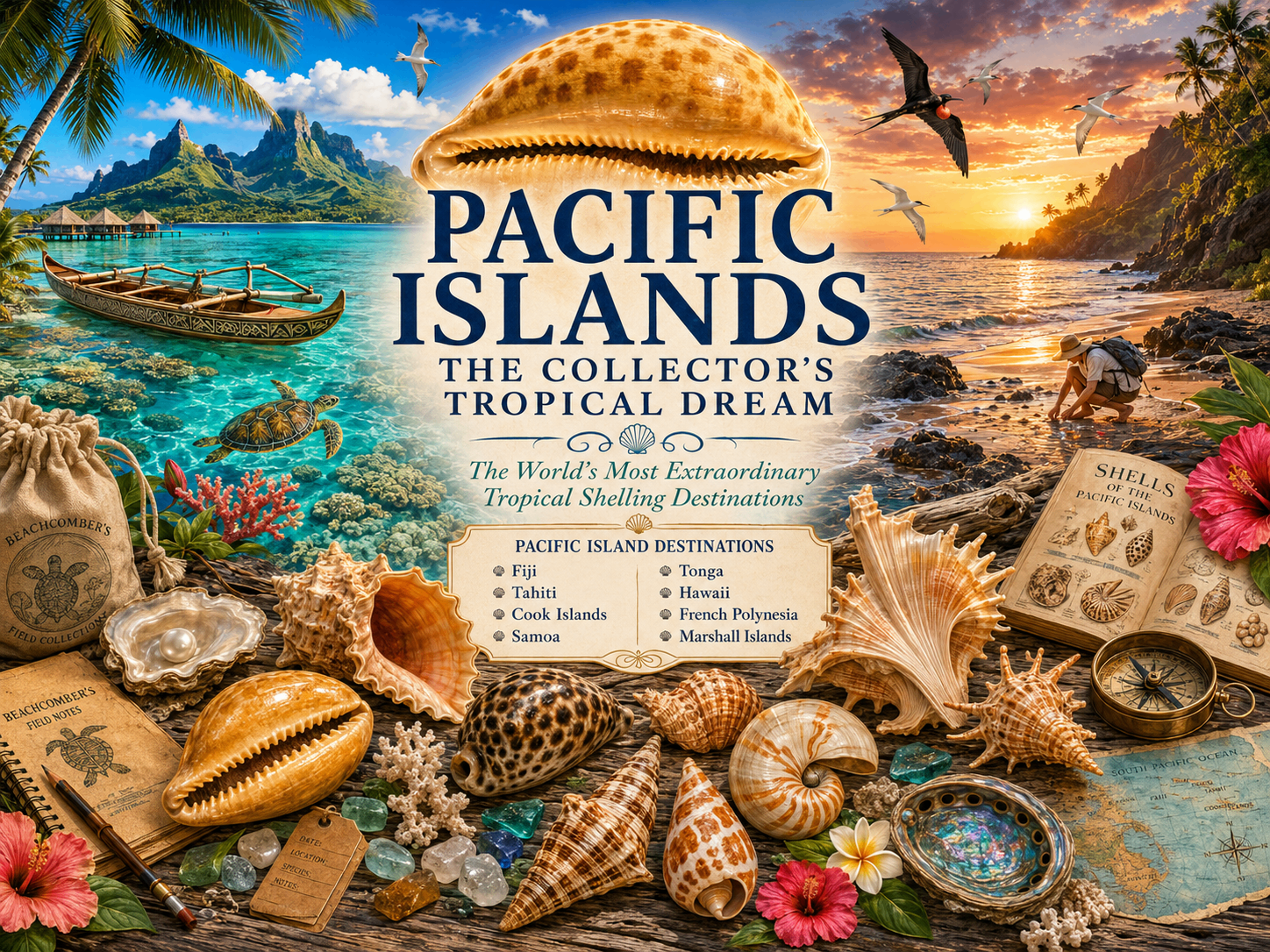
Pacific Islands
 Save
SaveThe Collector's Tropical Dream
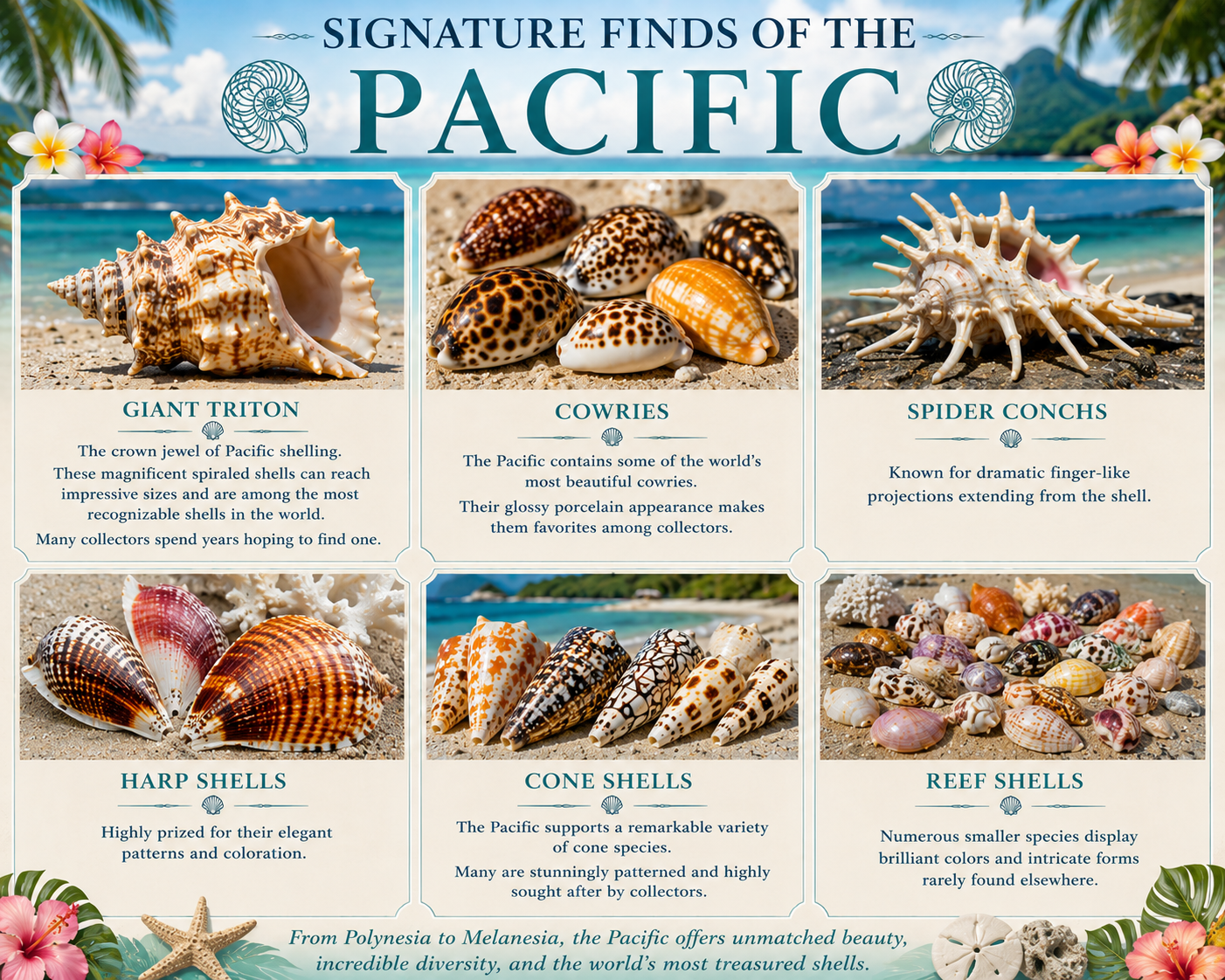
For many shell collectors, the South Pacific represents the ultimate shelling adventure. Images of turquoise lagoons, palm-fringed beaches, coral reefs, and remote islands have inspired collectors for generations.
Why Visit
Authentic island culture and remarkable coastal scenery.
Coastal Landscape
 Save
SaveThe Pacific Islands offer some of the world's most spectacular coastal environments.
Collectors encounter:
- Coral atolls
- Barrier reefs
- Lagoon systems
- Volcanic islands
- Palm-lined beaches
- Tide pools
- Seagrass beds
- Mangrove forests
Many islands feature enormous reef flats exposed during low tide. These shallow environments often become productive shelling grounds.
The water's clarity is often extraordinary, allowing collectors to spot shells and marine life from considerable distances.
Culture & People
The people of the Pacific are among the greatest reasons to visit.
Throughout Polynesia, Melanesia, and Micronesia, visitors encounter cultures deeply connected to the ocean.
Traditional navigation, fishing, and seafaring remain important parts of island life.
Visitors often experience:
- Traditional dance performances
- Polynesian music
- Island festivals
- Handcrafted art
- Local seafood cuisine
- Community-centered lifestyles
Hospitality is a defining characteristic throughout much of the Pacific. Many travelers find island communities welcoming, generous, and eager to share their traditions.
Respect for family, community, and the natural environment plays a central role in daily life.
The connection between people and the sea is visible everywhere, from fishing boats and coastal villages to traditional stories and ceremonies.
Best Season to Visit
Fiji
Best: May through October. Dry season with pleasant temperatures.
Tahiti & French Polynesia
Best: May through October. Lower humidity and excellent visibility.
Cook Islands
Best: May through October. Comfortable weather and calm conditions.
Hawaii
Best: Year-round. April through October generally offers calmer conditions.
Samoa & Tonga
Best: May through October. Dry season with excellent beach conditions.
Travel Tips for Pacific Shell Collectors
Research Local Regulations
Many Pacific islands actively protect reefs and marine ecosystems.
Rules may restrict collecting in:
- Marine parks
- Protected reefs
- Wildlife reserves
Always verify local regulations.
Reef Etiquette Matters
Pacific reef systems are among the world's most fragile ecosystems.
Follow these principles:
- Collect only empty shells
- Never remove live mollusks
- Avoid stepping on coral
- Leave marine life undisturbed
- Take only what you will appreciate
Pack Reef-Friendly Gear
- Reef-safe sunscreen
- Water shoes
- Snorkeling gear
- Polarized sunglasses
- Mesh collection bag
- Lightweight dry bag
Learn Tide Schedules
Many Pacific shelling opportunities occur during extreme low tides. Reef flats often become accessible only for a few hours.
Island Hopping Takes Time
Flights and ferries between islands may operate less frequently than travelers expect. Build flexibility into your schedule.
Respect Local Customs
Many island communities maintain strong cultural traditions. Modest dress, respectful behavior, and interest in local customs are always appreciated.
Combine Shelling with Snorkeling
Some of the Pacific's most beautiful shells are easier to observe underwater than on the beach. Snorkeling often reveals species that never wash ashore.
Start Early
- Cooler temperatures
- Better visibility
- Fewer visitors
- More productive shelling conditions
For many collectors, the Pacific Islands represent the fulfillment of a lifelong dream. The combination of extraordinary shells, turquoise lagoons, coral reefs, welcoming cultures, and breathtaking scenery creates an experience unlike anywhere else in the world. While Sanibel may start the journey, the Pacific often becomes the destination collectors spend a lifetime imagining.
Australia
 Save
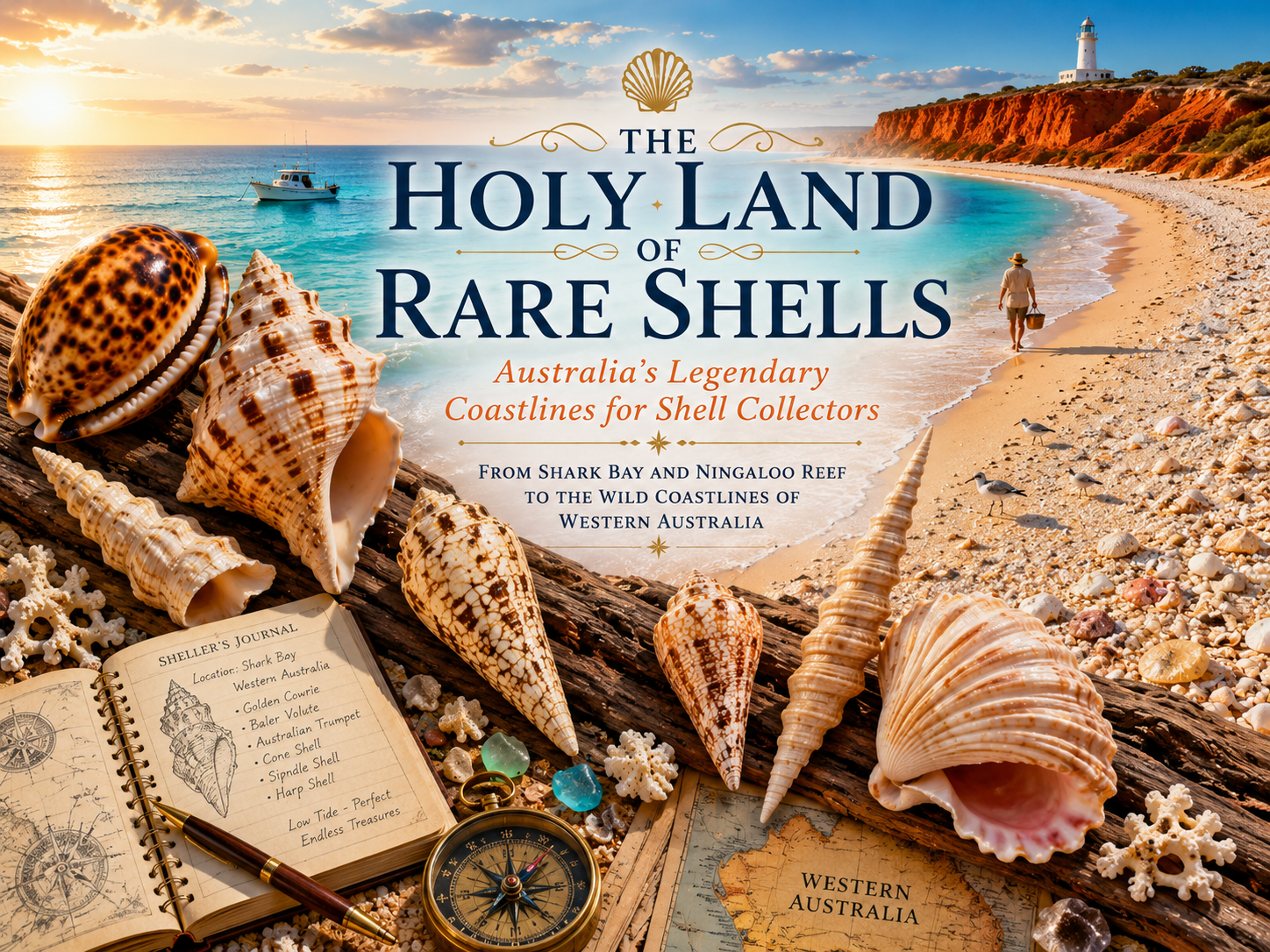
SaveThe Holy Land of Rare Shells
For serious shell collectors, Australia occupies a legendary place in the shelling world. Few countries can match its combination of biodiversity, remoteness, and sheer scale. Stretching nearly 22,000 miles along the coastline, Australia offers everything from tropical coral reefs and turquoise lagoons to rugged cliffs, red desert coastlines, and isolated beaches that may go weeks without seeing another visitor.
Why Visit
Exceptional reef biodiversity and world-famous snorkeling.
Coastal Landscape
 Save
SaveAustralia's coastline is astonishingly diverse.
Collectors encounter:
Tropical Coral Reefs
Northern Australia features some of the richest marine habitats on Earth.
Turquoise Lagoons
Shallow protected waters create ideal shelling environments.
Red Desert Coastlines
Unique landscapes where rugged desert meets the sea.
Limestone Cliffs
Dramatic formations line many stretches of coast.
White Sand Beaches
Some of the world's brightest and cleanest beaches.
Remote Wilderness
Entire sections of coastline remain largely untouched.
The variety of habitats creates extraordinary shell diversity and endless opportunities for exploration.
Culture & People
Australia offers much more than exceptional shelling.
Visitors quickly discover a culture centered around outdoor living, adventure, and appreciation for nature.
Australian coastal communities often revolve around:
- Fishing
- Diving
- Boating
- Surfing
- Conservation
- Marine exploration
The people are generally known for being friendly, laid-back, and welcoming.
Many coastal towns maintain strong maritime traditions and deep connections to the ocean.
Australia's Indigenous cultures also hold profound connections to coastal environments stretching back tens of thousands of years.
Visitors can experience:
- Indigenous cultural tours
- Wildlife encounters
- Coastal food culture
- Historic pearling communities
- World-class seafood
Many shell collectors find conversations with local fishermen and divers invaluable for understanding tides, currents, and productive shelling areas.
Best Season to Visit
Western Australia
Best: April through October. Comfortable temperatures and lower humidity. Excellent shelling conditions.
Ningaloo Reef
Best: March through October. Outstanding visibility and pleasant weather.
Broome
Best: May through September. Dry season with ideal travel conditions.
Great Barrier Reef
Best: June through October. Comfortable temperatures and lower rainfall.
Southern Australia
Best: November through April. Warmer weather and excellent beach access.
Travel Tips for Australian Shell Collectors
Prepare for Distance
Australia is far larger than many visitors expect. Driving between shelling destinations can take many hours. Plan travel carefully.
Rent a Reliable Vehicle
Many of the best beaches are located far from major cities. Four-wheel-drive vehicles are useful in remote areas.
Carry Extra Supplies
When exploring remote beaches bring:
- Water
- Snacks
- Sun protection
- First-aid supplies
- Phone charger
Some beaches have no nearby services.
Watch the Tides
Australia's tidal ranges can be dramatic. Many productive shelling areas become accessible only during low tide.
Respect Protected Areas
Many marine environments are protected. Always verify local collection regulations before removing shells.
Bring Snorkeling Equipment
Many remarkable Australian shells are easier to observe in shallow reef habitats than on beaches.
Start Early
- Cooler temperatures
- Better visibility
- Fewer visitors
- Improved wildlife viewing
Expect Wildlife
Australia's coastal regions support incredible wildlife including:
- Dolphins
- Sea turtles
- Rays
- Dugongs
- Whales
- Seabirds
Wildlife encounters often become as memorable as the shelling itself.
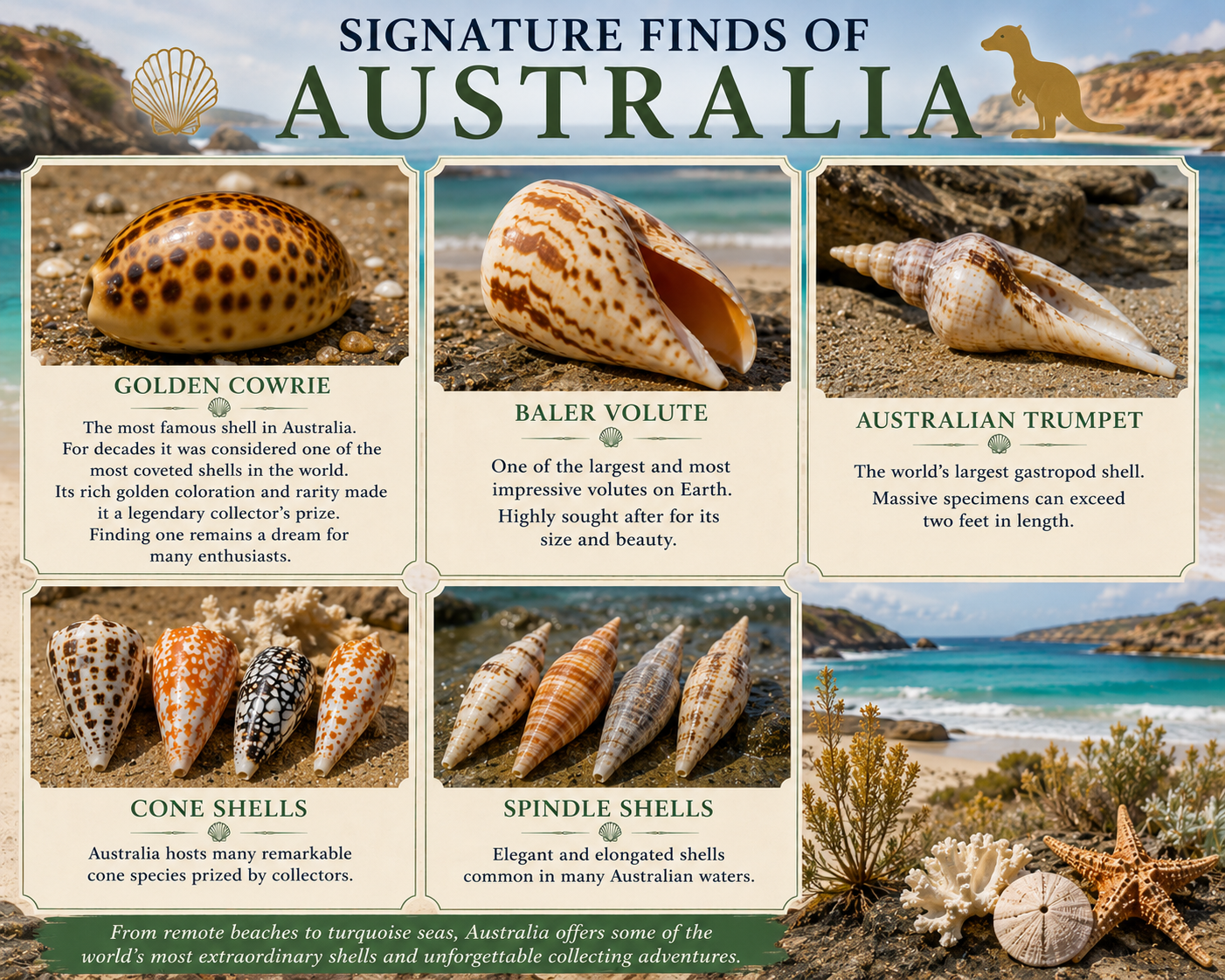
For many collectors, Australia is the destination that sits at the top of every bucket list. The combination of legendary shell species, remote beaches, spectacular scenery, and world-class marine habitats creates an experience unlike anywhere else on Earth. Finding a Golden Cowrie on a quiet Western Australian beach is the kind of moment that shell collectors remember for a lifetime.
Philippines
 Save
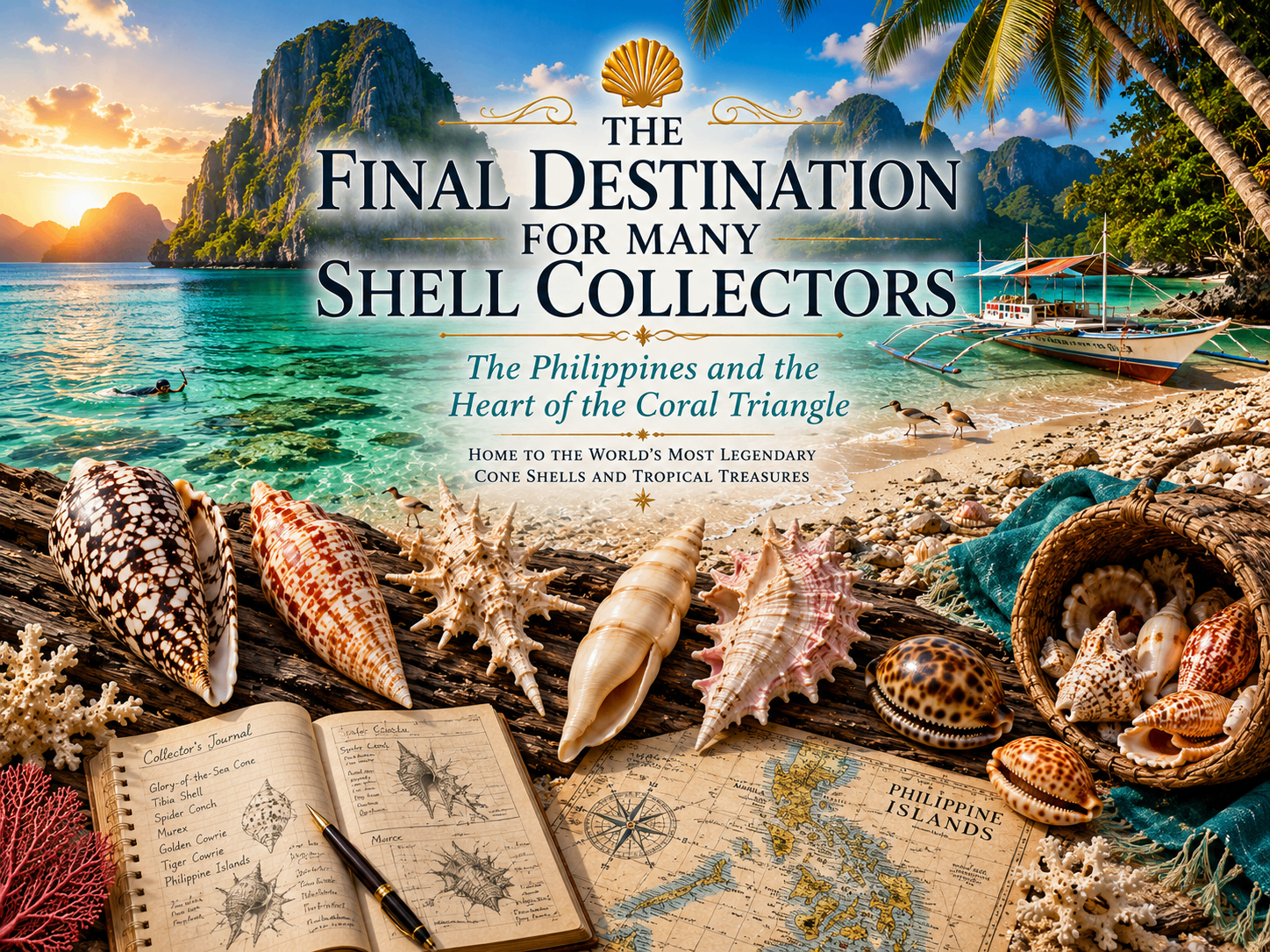
SaveThe Final Destination for Many Shell Collectors
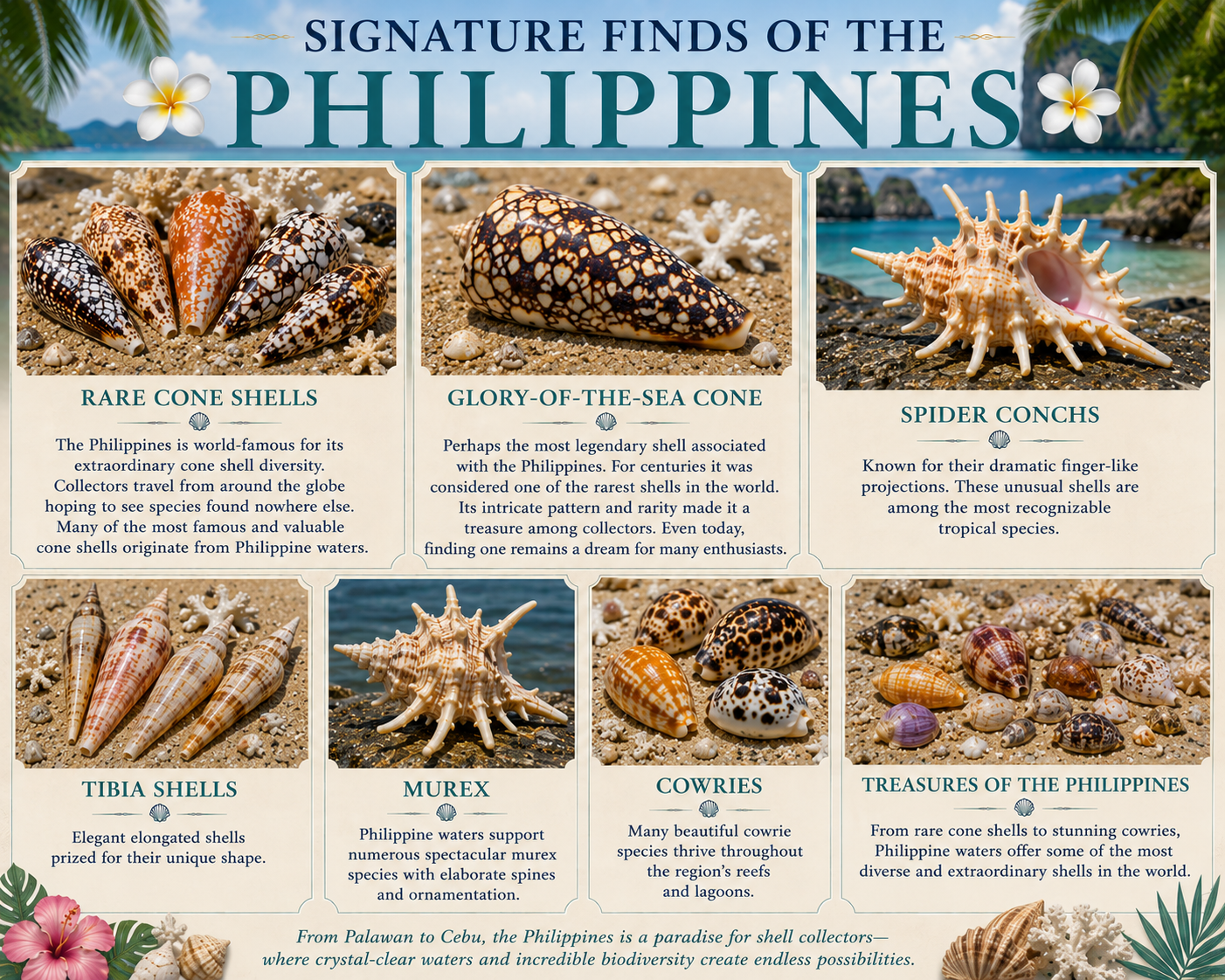
For serious shell collectors, the Philippines is often considered the ultimate shelling destination. Located at the center of the Coral Triangle, the most biologically diverse marine region on Earth, the country offers an astonishing variety of shells found nowhere else in such abundance.
Why Visit
Excellent reefs and fewer crowds.
Coastal Landscape
 Save
SaveThe Philippines offers one of the most varied coastal environments on Earth.
Collectors encounter:
Coral Reefs
The foundation of the region's incredible biodiversity.
Limestone Islands
Towering cliffs rising from turquoise water.
White Sand Beaches
Some of the most beautiful tropical beaches in the world.
Mangrove Forests
Important nursery habitats for marine life.
Shallow Lagoons
Productive shelling grounds during low tide.
Remote Islands
Many islands remain accessible only by small boat.
These varied habitats support extraordinary shell diversity and create endless opportunities for exploration.
Culture & People
One of the most memorable aspects of visiting the Philippines is the warmth of its people.
Filipino culture is widely known for hospitality, kindness, and a strong sense of community.
Visitors often experience:
- Friendly local communities
- Family-centered traditions
- Vibrant festivals
- Fresh seafood cuisine
- Colorful local markets
- Rich maritime heritage
The country's culture reflects a blend of:
- Indigenous traditions
- Spanish influences
- Asian heritage
- Maritime island life
In coastal communities, the ocean plays a central role in daily life.
Fishing, boating, and marine stewardship remain important traditions across many islands.
Many travelers find local residents eager to share information about beaches, marine life, and hidden coastal gems.
Best Season to Visit
December through May
The premier season for travel and shelling.
Benefits:
- Dry weather
- Calm seas
- Excellent visibility
- Easier island hopping
- Comfortable beach conditions
January through April
Often considered the best overall shelling season. Many beaches experience calmer water and improved access.
June through November
Rainy season. Storm activity can occasionally uncover unusual shell deposits, though travel conditions become less predictable.
Travel Tips for Shell Collectors
Plan for Island Hopping
The Philippines consists of thousands of islands. Flights, ferries, and boats are often required to reach the best shelling destinations. Allow extra travel time between locations.
Research Marine Protected Areas
Many reefs and beaches are protected. Always verify local regulations before collecting shells.
Carry Cash
Smaller islands and remote communities may have limited banking services. Cash is often preferred.
Bring Reef-Friendly Gear
- Reef-safe sunscreen
- Water shoes
- Polarized sunglasses
- Mesh shell bag
- Snorkeling equipment
- Dry bag
Explore During Low Tide
Many productive shelling areas become accessible only when water levels drop. Lagoon flats and reef edges often reveal shells hidden during high tide.
Respect Marine Life
The Coral Triangle contains some of the world's most important marine ecosystems. Only collect empty shells. Never remove live mollusks or disturb reef habitats.
Combine Shelling with Snorkeling
Many of the Philippines' most spectacular shells are more commonly observed underwater than washed ashore. Snorkeling dramatically expands what collectors can see and learn.
Start Early
- Cooler temperatures
- Better visibility
- Fewer visitors
- Fresh overnight deposits
For many shell enthusiasts, the Philippines represents the pinnacle of international shell collecting. The combination of extraordinary shell diversity, legendary species, breathtaking island scenery, and welcoming communities creates an experience unlike anywhere else on Earth. From searching for a Glory-of-the-Sea Cone in Palawan to discovering a Spider Conch on a quiet reef flat in Cebu, every beach offers the possibility of finding something truly unforgettable.
Following the Shelling Journey
Every great shell collection tells a story — not just of the shells themselves, but of the places that gave them up and the mornings spent searching for them.
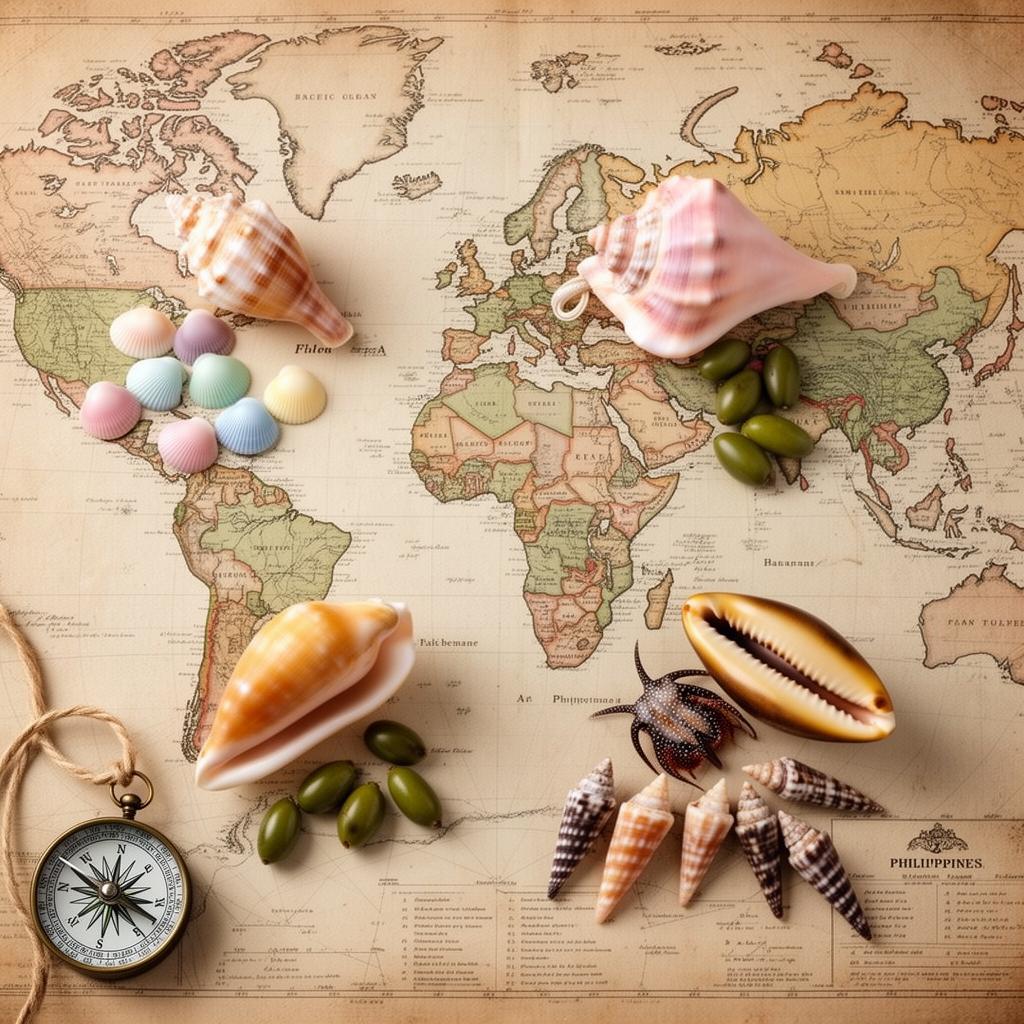
It often begins with a single Junonia on Sanibel and grows into a lifetime of journeys: pink sand in the Bahamas, sea glass in the Caribbean, olive shells in Mexico, tritons in the Pacific, a golden cowrie in Australia, and rare cones in the Philippines.
Wherever your collecting takes you, the skills are the same ones you first learned on a Florida beach at sunrise: read the wrack line, follow the tide, slow down, and keep looking. The next treasure is always just beyond the next wave.
 Save
SaveIn Closing
Sanibel Island is where so many collectors begin — but it is rarely where they end. The same instincts that help you spot a perfect cockle on a Gulf beach will lead you to conchs in the Bahamas, cones in the Philippines, and cowries half a world away.
Start where the shells are easy to find and the lessons come quickly. Then follow the tide wherever it leads. A lifetime of coastal adventures is waiting.
Recommended Companion
The Shell Discovery Journal
Continue Your Beachcombing Journey
Hand-picked next steps — chosen because they build directly on what you've just read.
Article
The Ultimate Guide to Beachcombing Along the East Coast
Hand-picked next step from the editors.
Guide
Ethical Shell Collecting Checklist
Builds on the same core topic.
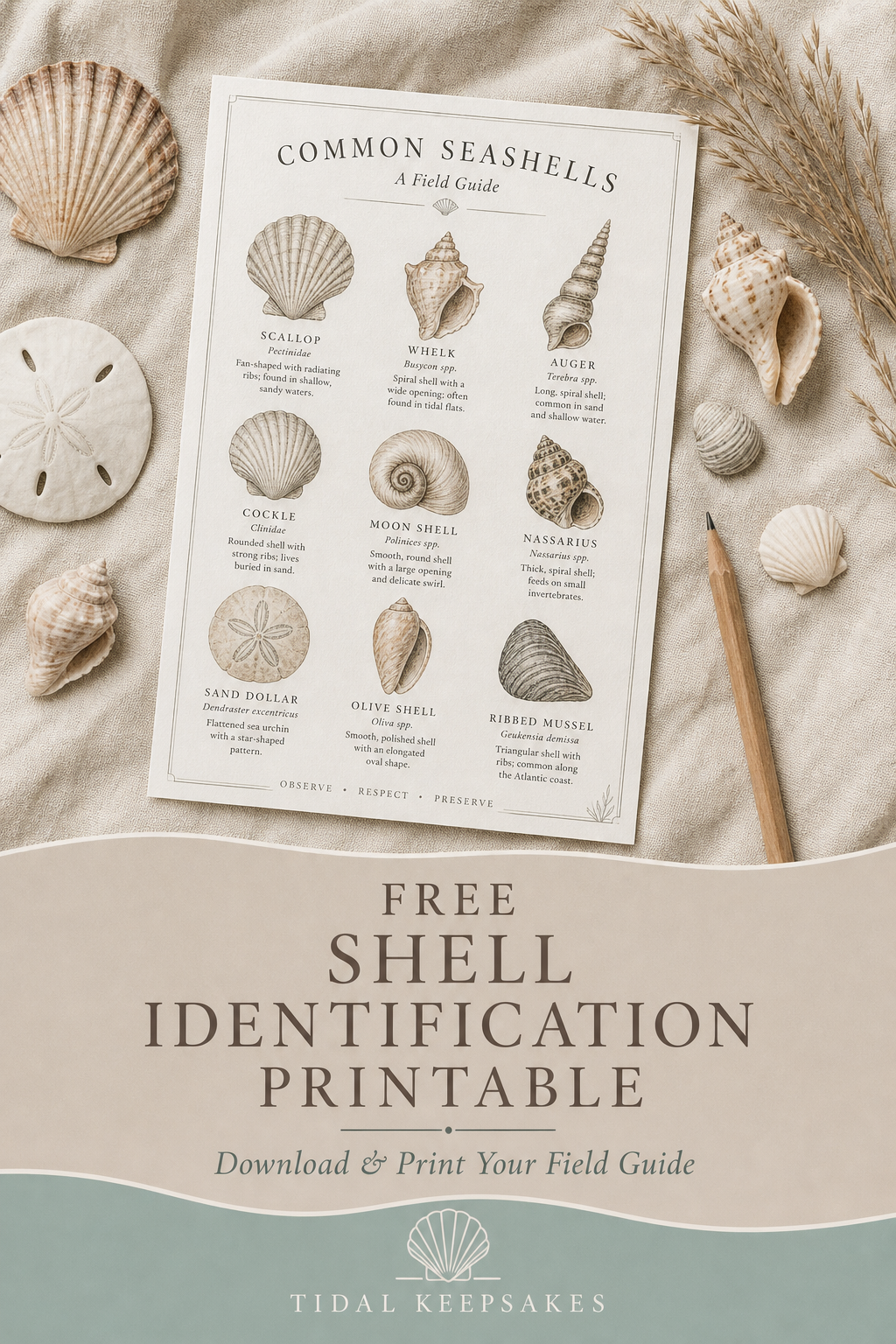
Resource
Free Shell Identification Printable
A thoughtful next step in your coastal journey.
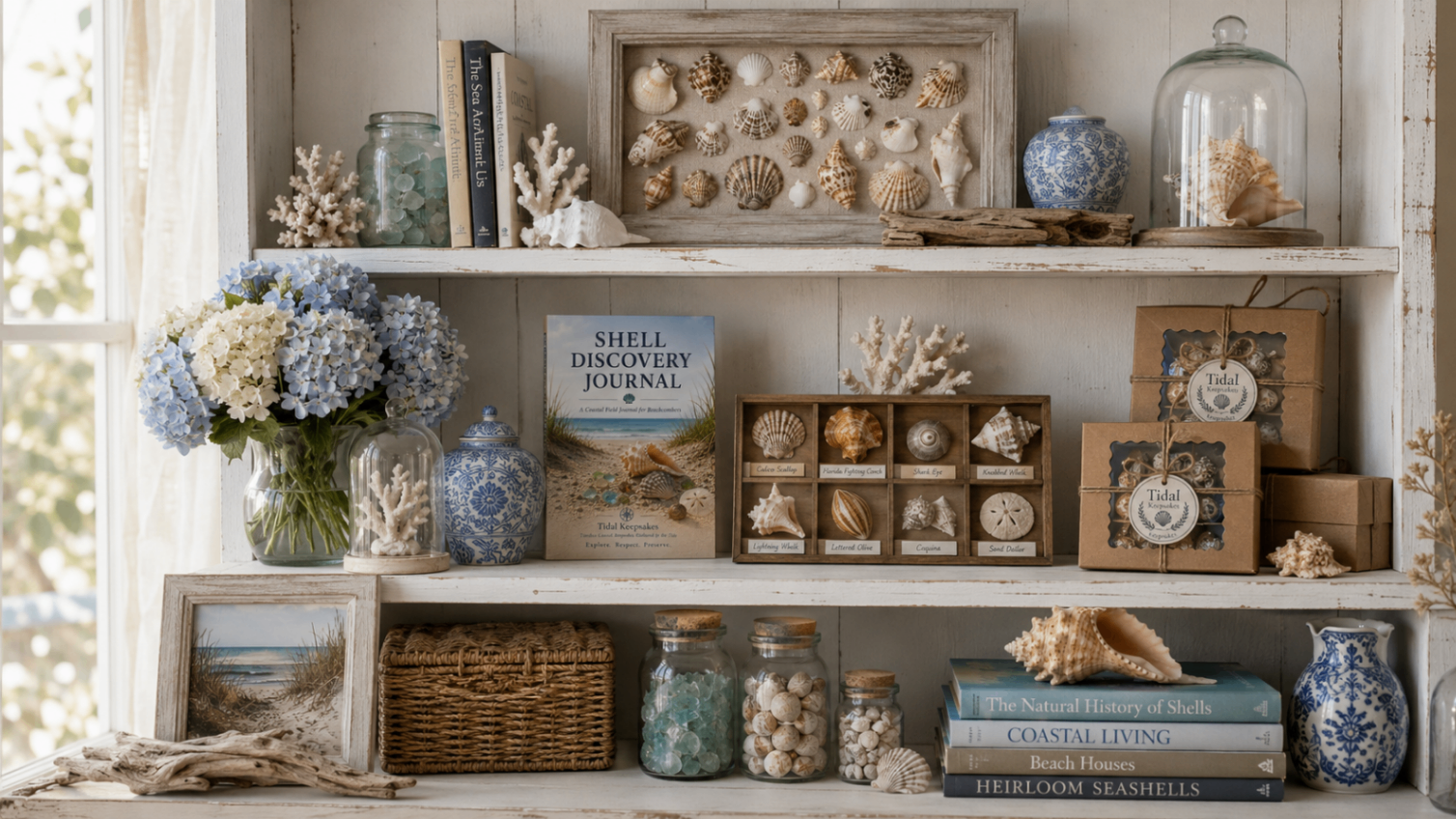
Curated Shell Box
The Collector Box
See these ideas in a curated collection.
Compare Similar Shells
Species and look-alikes worth studying side by side. Every card routes into the shell reference.
Species
Scotch Bonnet
Semicassis granulata
Cream base with regular reddish-brown squares in tidy rows. Rounded body whorl and short spire; toothed inner lip.
Explore ShellSpecies
Knobbed Whelk
Busycon carica
Aperture opens on the right when the spire points up. Row of blunt knobs along the shoulder of the body whorl; interior often flushed with orange.
Explore ShellSpecies
Lettered Olive
Americoliva sayana
Cylindrical body with a very short spire and a long narrow aperture. The polished cream base carries tan or brown zigzag lines that give the species its 'lettered' name.
Explore ShellSpecies
Atlantic Auger
Terebra dislocata
Elongated screw-shaped shell up to 2 inches, pale grey to tan with faint spiral banding; each whorl carries fine axial ribs.
Explore ShellBeaches Worth Exploring Next
Shores connected to the shells, regions, and conditions on this page.
North Carolina Outer Banks
Outer Banks
A 200-mile chain of Atlantic barrier islands — Cape Hatteras, Ocracoke, and Cape Lookout deliver whelks, olive shells, and the state shell,…
Explore BeachGeorgia Coast
Jekyll Island
Historic Golden Isle with generous public beaches — Driftwood Beach and St. Andrews shore deliver moon snails, jingle shells, and…
Explore BeachFlorida Gulf Coast
Sanibel Island
Sanibel's east-west orientation sweeps Gulf shells onto its shore in exceptional variety — the reason it's the most celebrated shelling…
Explore BeachNorth Carolina Outer Banks
Ocracoke Island
A ferry-only Outer Banks island south of Hatteras — sixteen miles of protected National Seashore beach where Scotch bonnets and knobbed…
Explore BeachDiscover More Coastal Inspiration
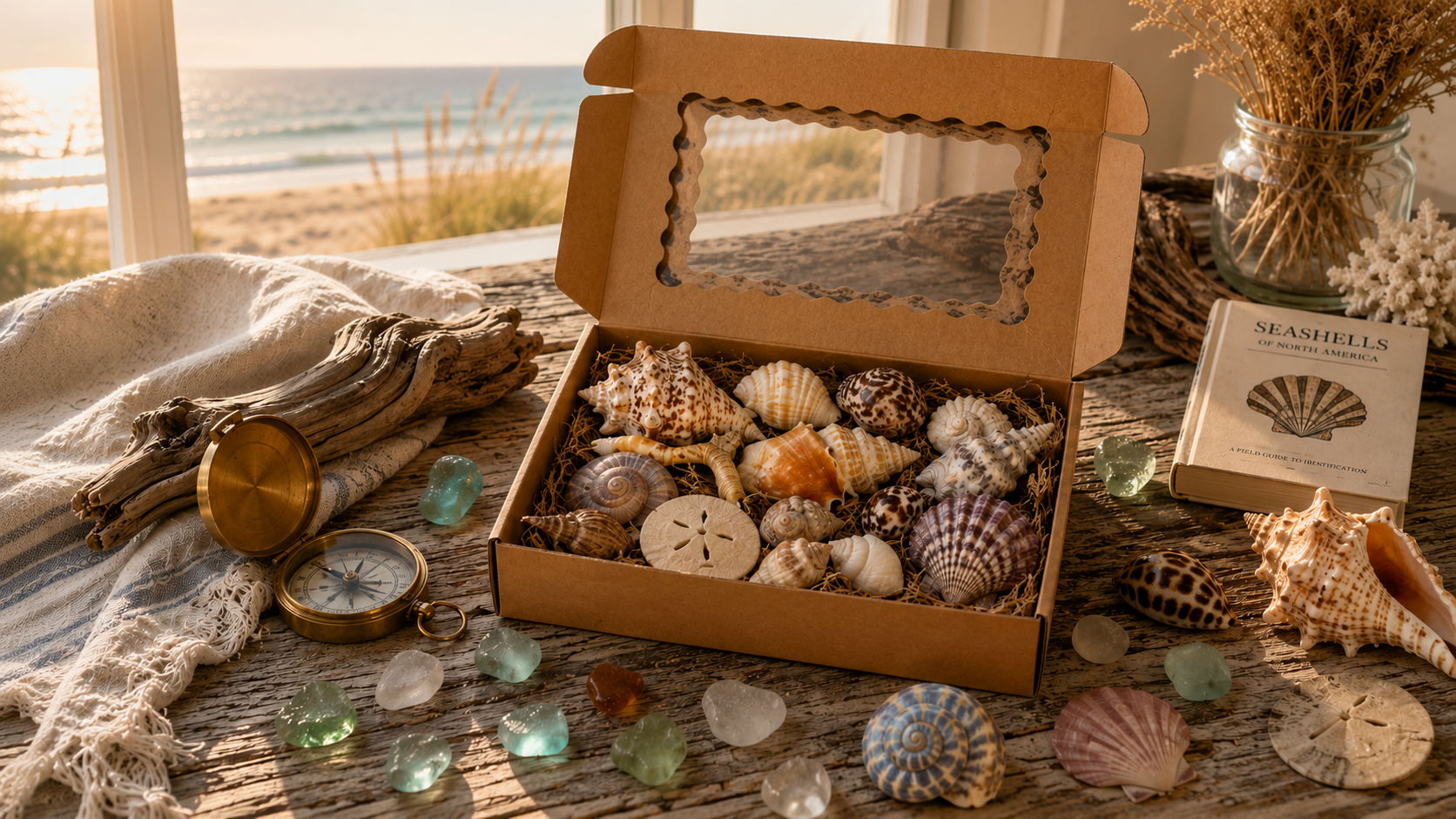
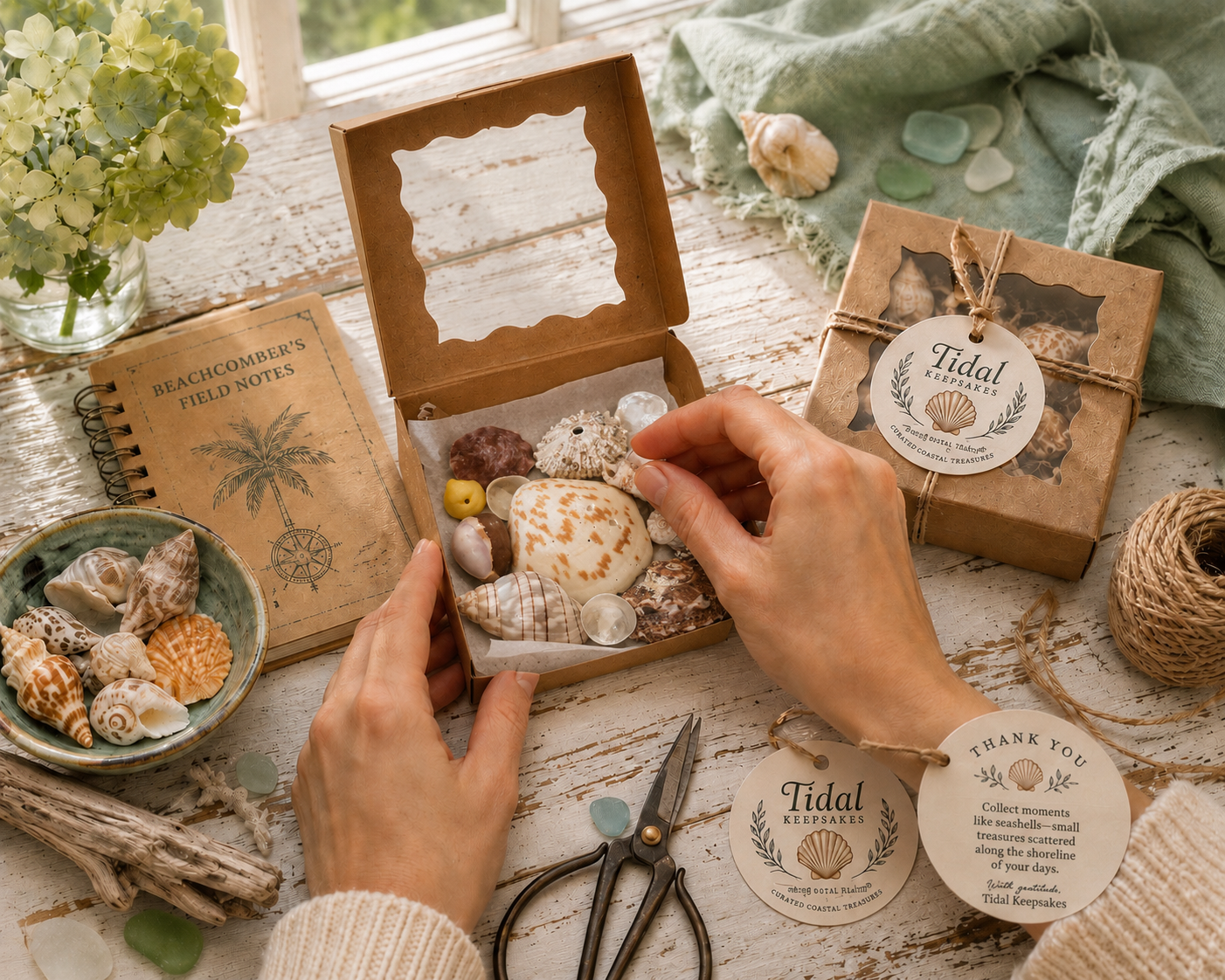
Curated coastal favorites and specimen boxes that echo the story above.
A Learning Journey to Follow
Learning Shell Identification
For growing collectors · 5 steps
For readers who already know a scallop from a whelk and want to sharpen the edge cases. Ends at the journal, where identification becomes a practice, not a lookup.
- 1
Understand the Anatomy
Shell Identification Guide
Vocabulary first — apex, whorl, aperture, columella.
Continue - 2
Meet the Common Species
Explore Common Shells
Browse the canonical shell records the site is built on.
Continue - 3
Compare Look-Alikes
Commonly Confused Shells
Side-by-side markers for the pairs that trip up new collectors.
Continue - 4
Find Them in the Wild
Best Beaches for Shelling
Where each species actually washes up.
Continue - 5
Practice in the Field
Shell Discovery Journal
Record each ID with sketches and notes to lock the learning in.
Continue