Search
Explore Tidal Keepsakes
Shells, beaches, guides, articles, curated collections, and coastal favorites — all in one editorial index.
44 results for “Ocracoke Island”
 Beach
BeachBeach · North Carolina, USA
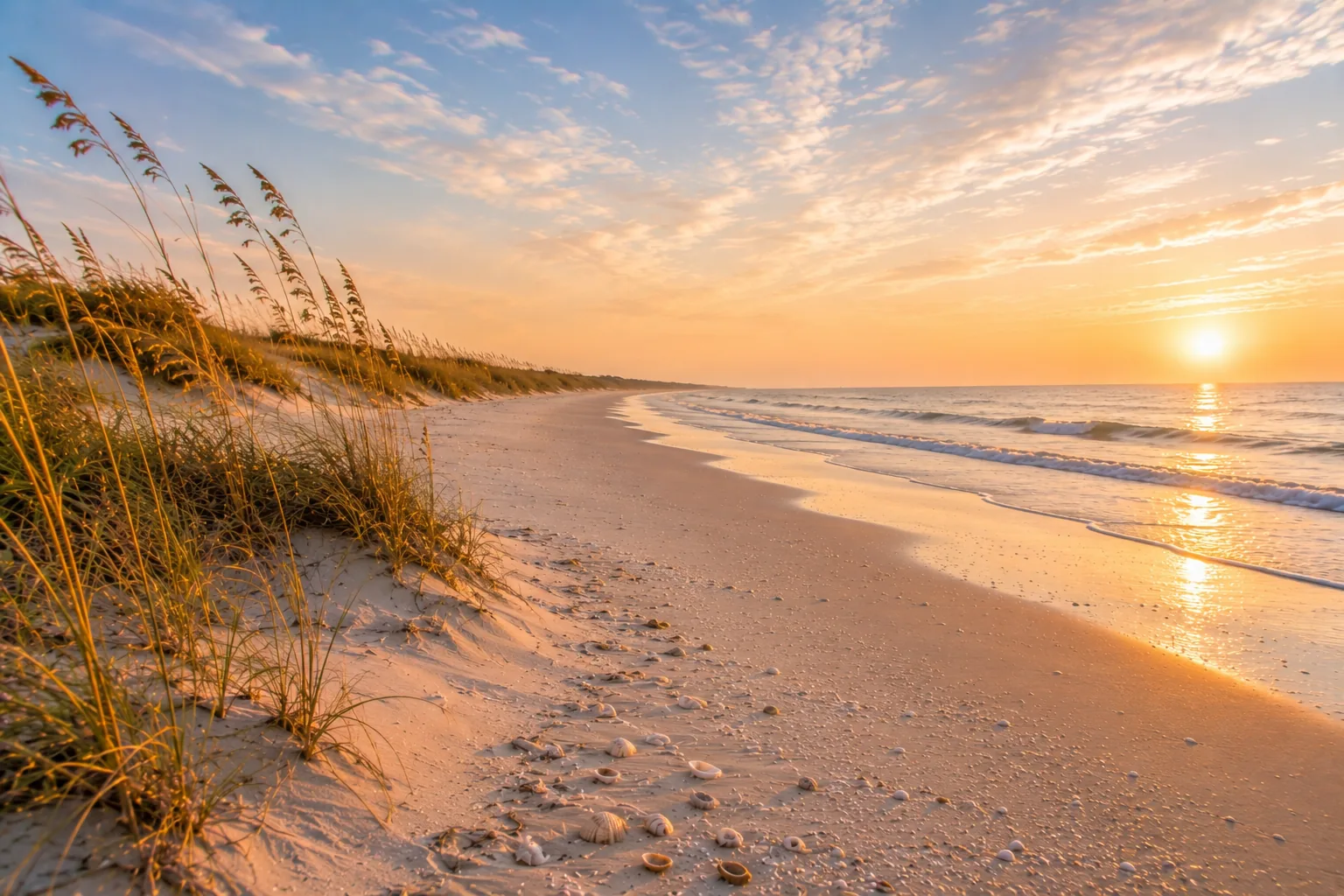
Ocracoke Island
A ferry-only Outer Banks island south of Hatteras — sixteen miles of protected National Seashore beach where Scotch bonnets and knobbed whelks still reach the wrack line.
 Beach
BeachBeach · Florida, USA
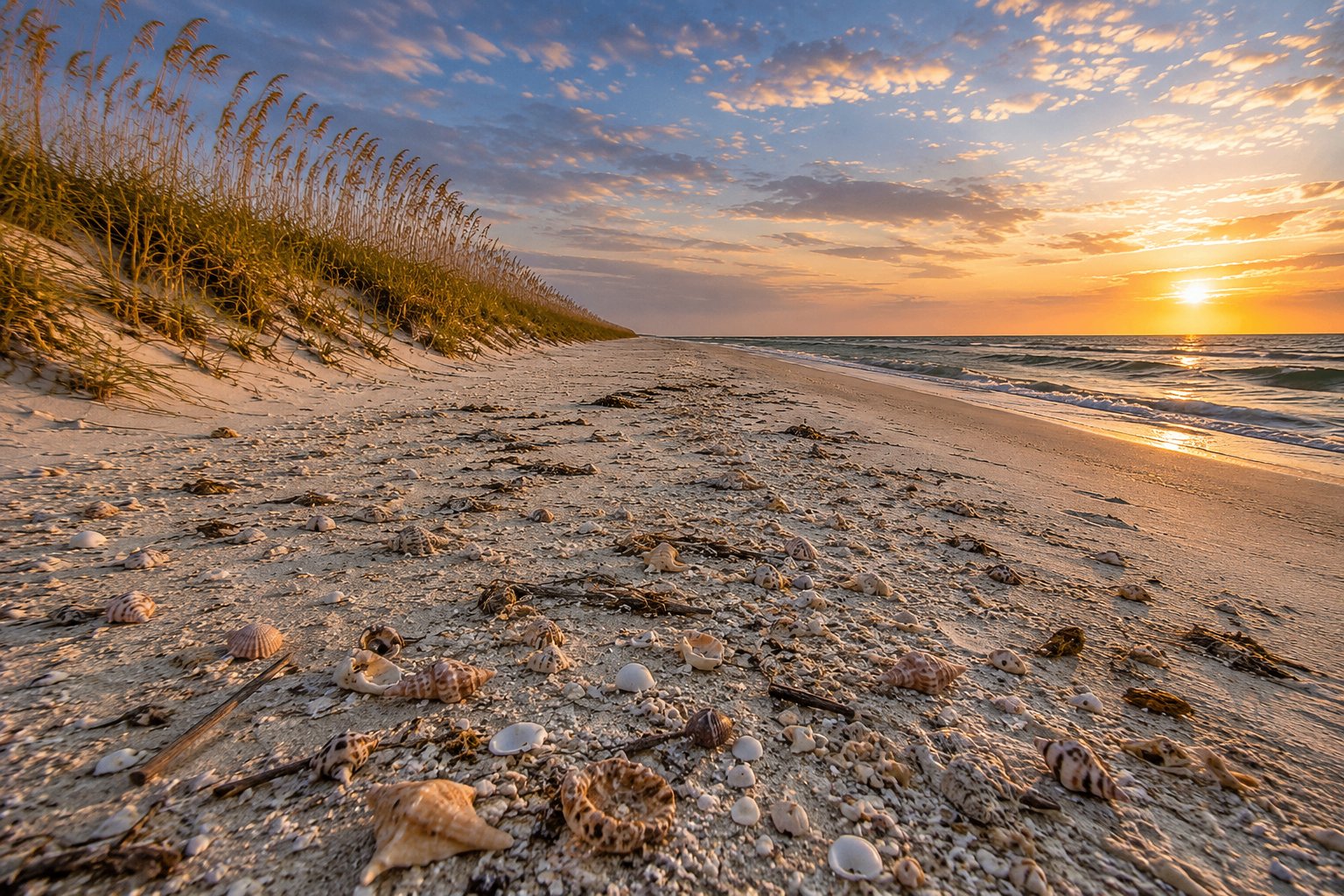
St. George Island
A quiet barrier island in Apalachicola Bay — soft white sand, long stretches without crowds, and coquina-rich wrack lines that suit patient collectors.
 Beach
BeachBeach · Texas, USA
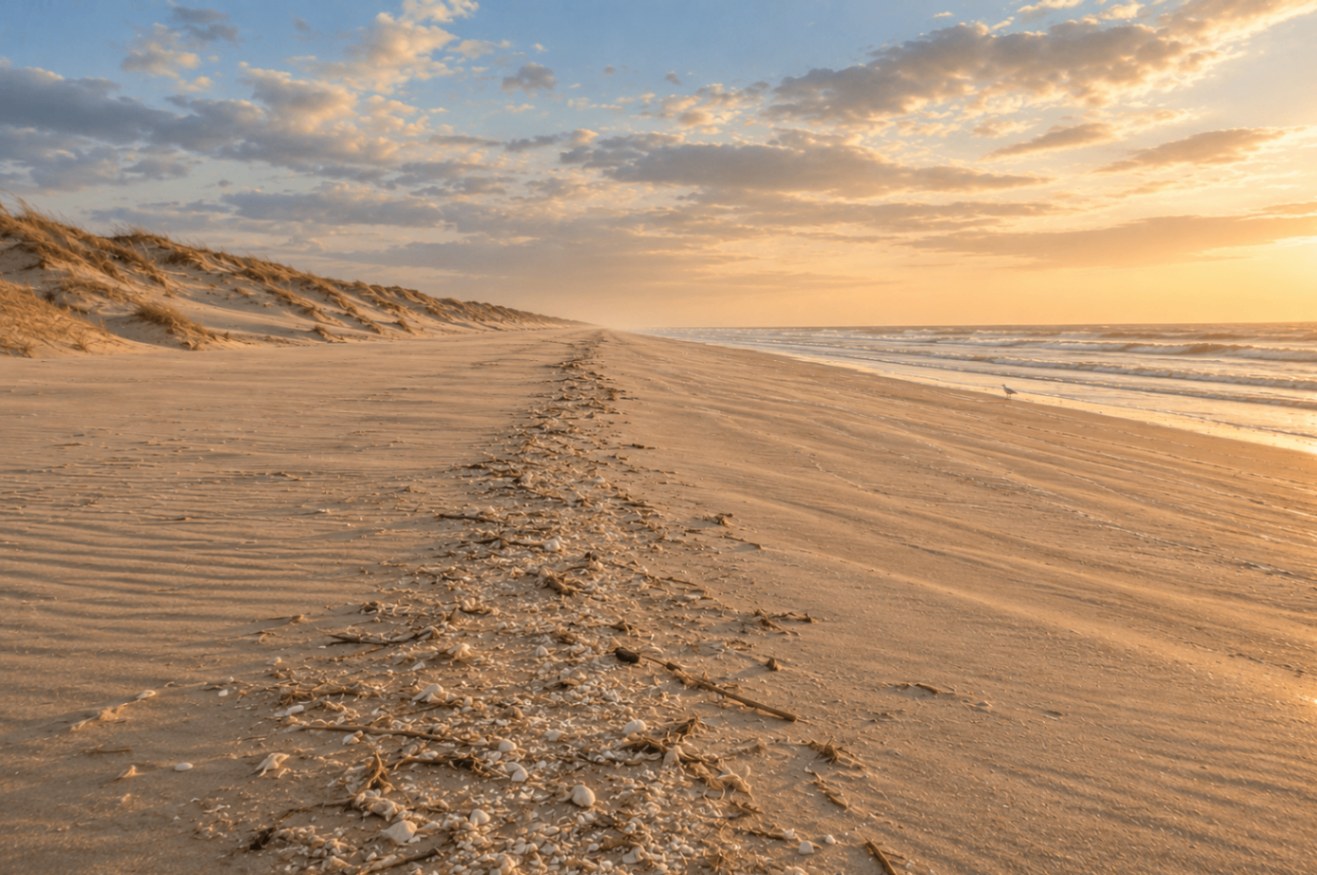
Padre Island
The longest undeveloped barrier island in the world — Padre's Gulf-facing beaches deliver large whelks, lightning whelks, and Sargassum-line finds prized by determined collectors.
 Beach
BeachBeach · Florida, USA
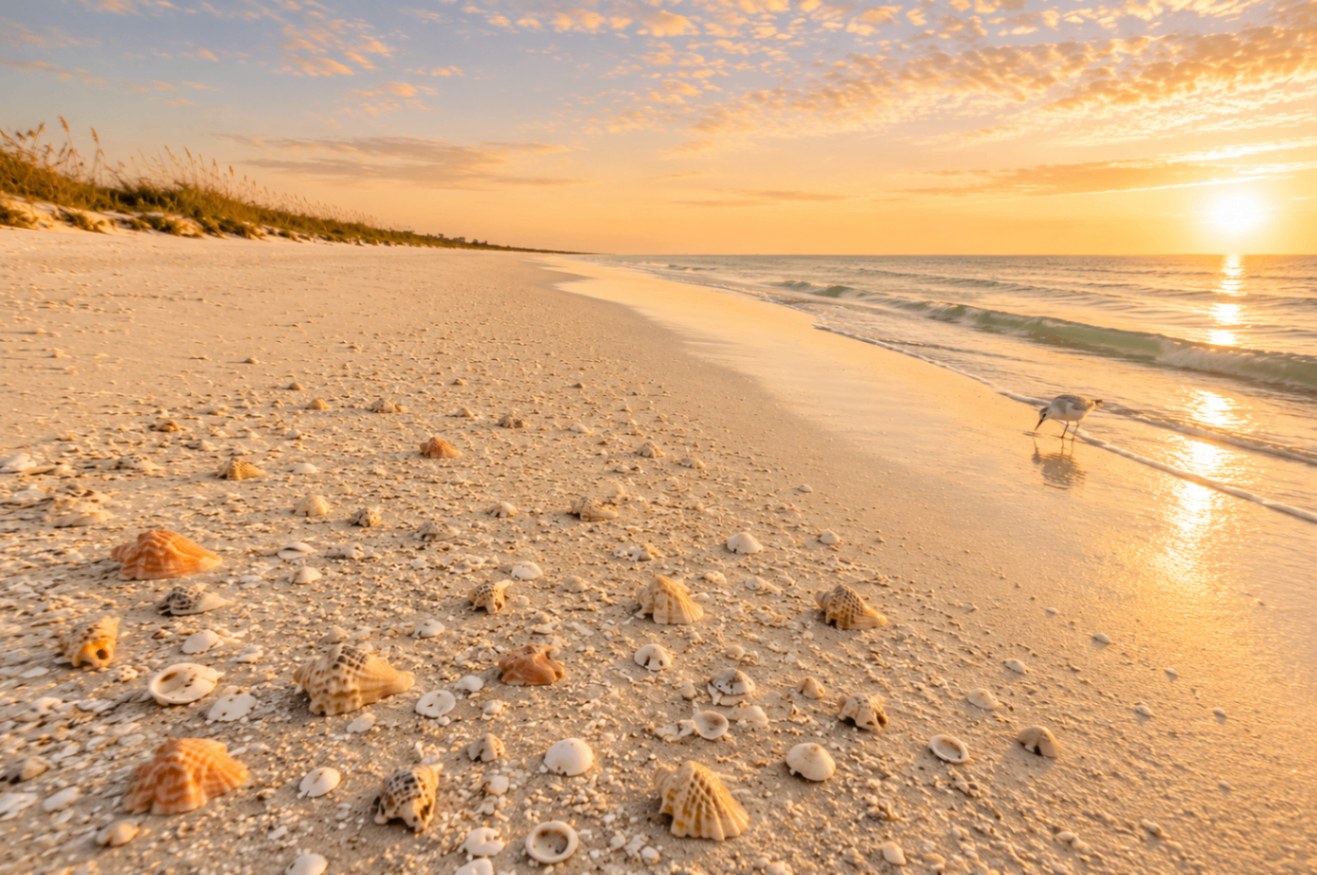
Fort Myers Beach
A seven-mile barrier-island beach on Estero Island where the Gulf's westerly winds pile shells along a gently sloping shore — an easy, family-friendly base for exploring the wider Sanibel-Captiva shell coast.
 Beach
BeachBeach · Florida, USA
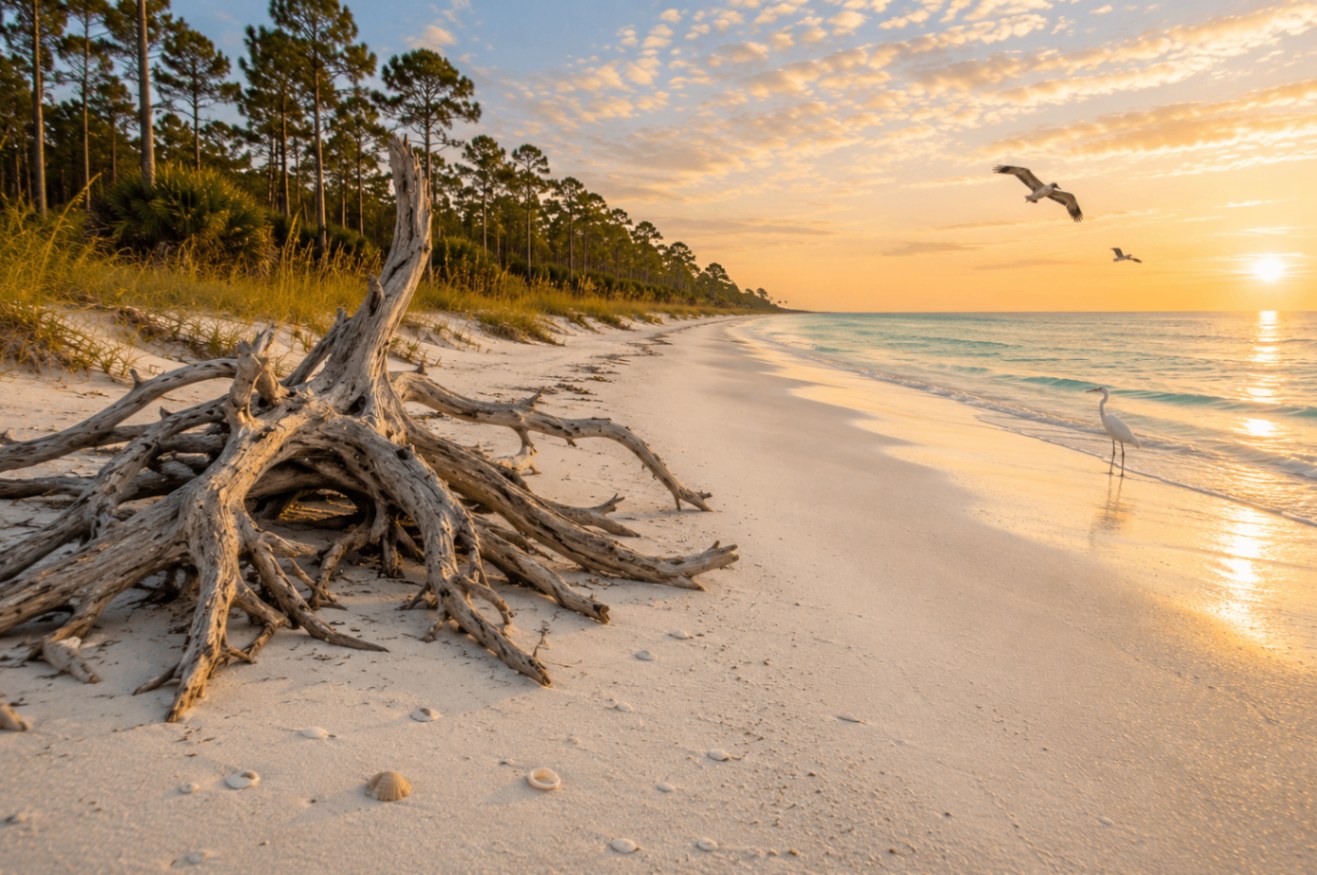
Honeymoon Island
A Pinellas County state park barrier island north of Clearwater — long stretches of pale sand, an accessible causeway, and consistent everyday shelling for families and beginner collectors.
 Beach
BeachBeach · Florida, USA
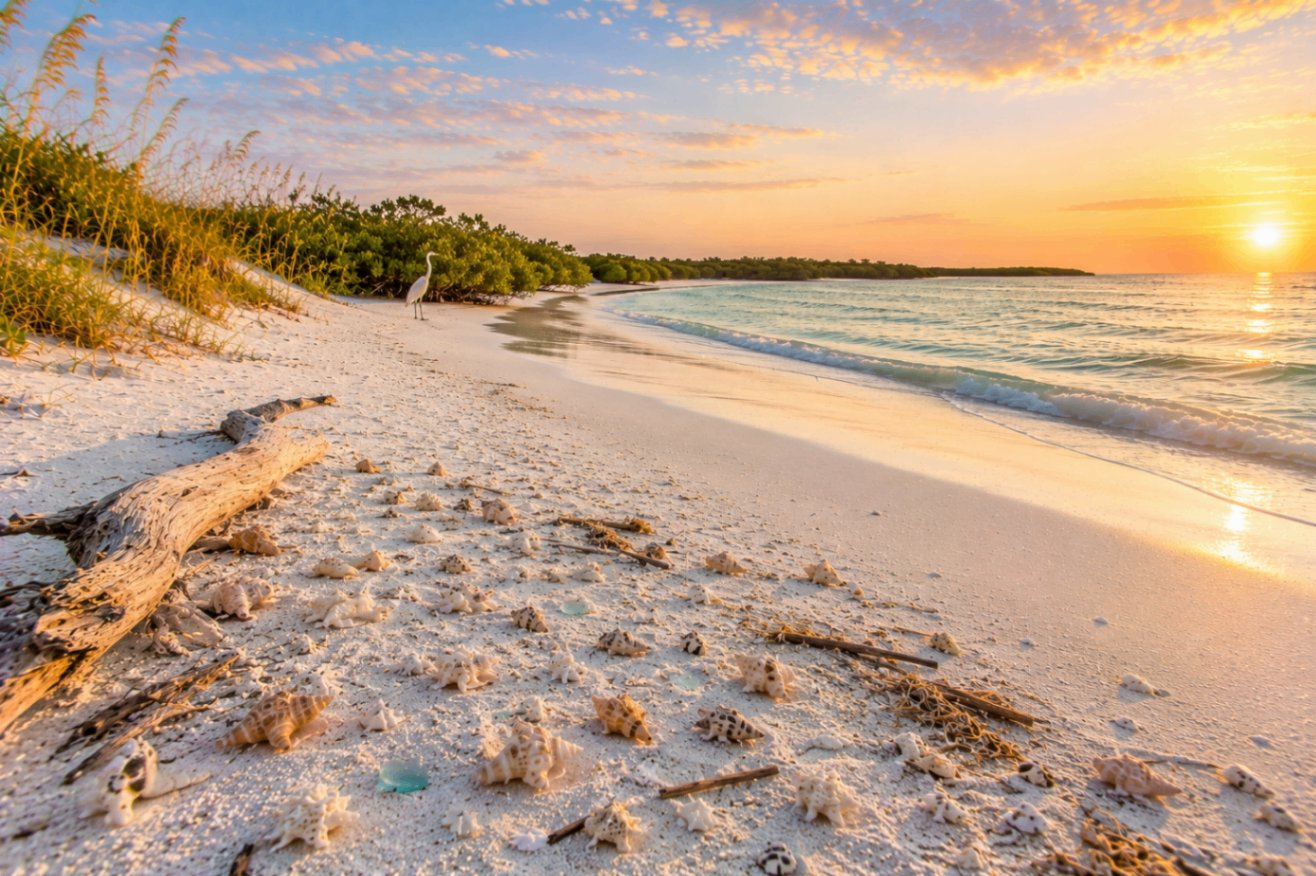
Caladesi Island
A boat- or ferry-access state park immediately south of Honeymoon Island — the lower foot traffic means shells linger on the tide line long after nearby beaches have been walked over.
 Beach
BeachBeach · Florida, USA
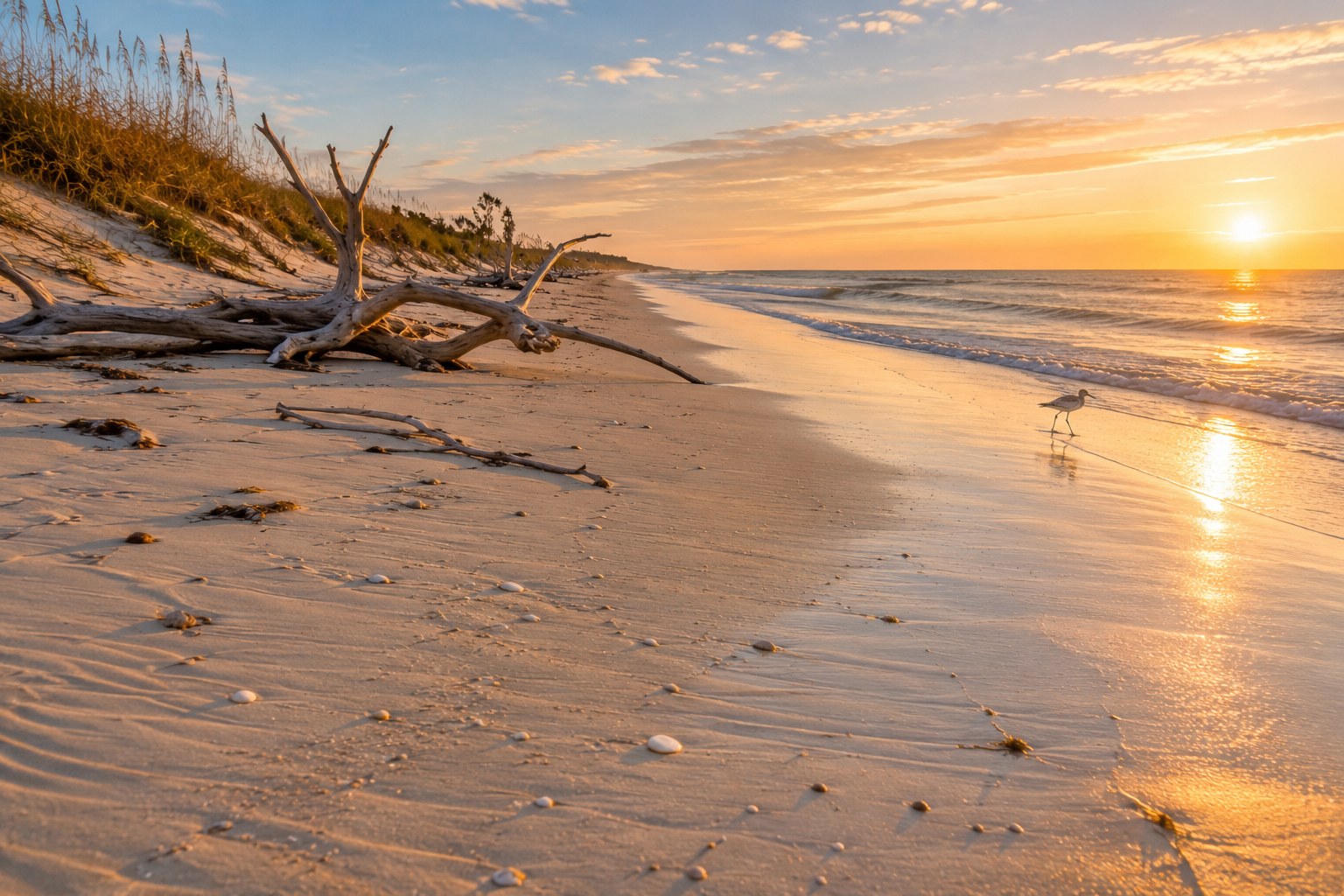
Amelia Island
Northeast Florida barrier island whose thirteen-mile Atlantic shore delivers whelks, olive shells, and the occasional shark tooth for patient walkers.
 Beach
BeachBeach · Georgia, USA
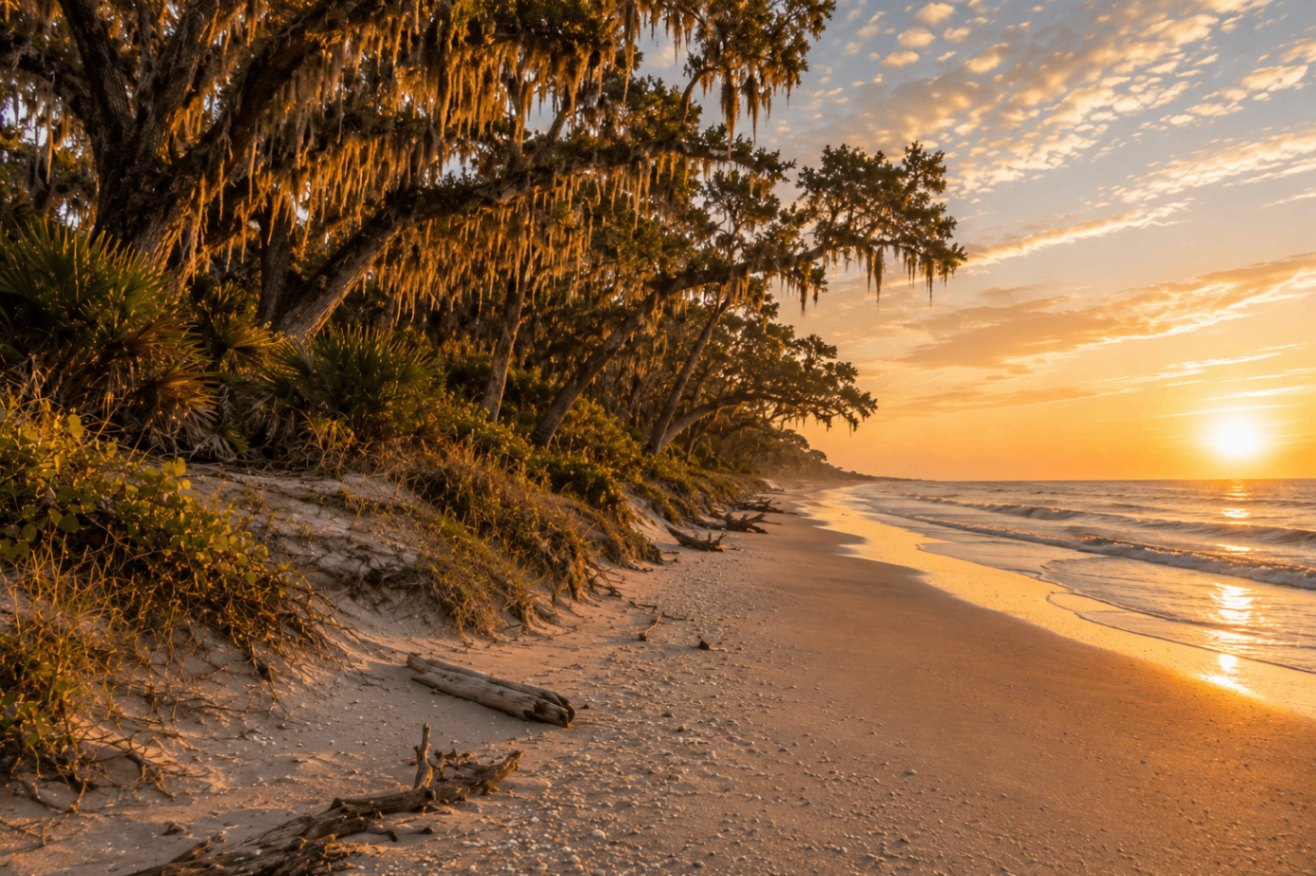
Cumberland Island
A wild National Seashore reachable only by ferry — long empty beaches, whelks, moon snails, and an unmatched sense of solitude for reflective shellers.
 Beach
BeachBeach · Florida, USA
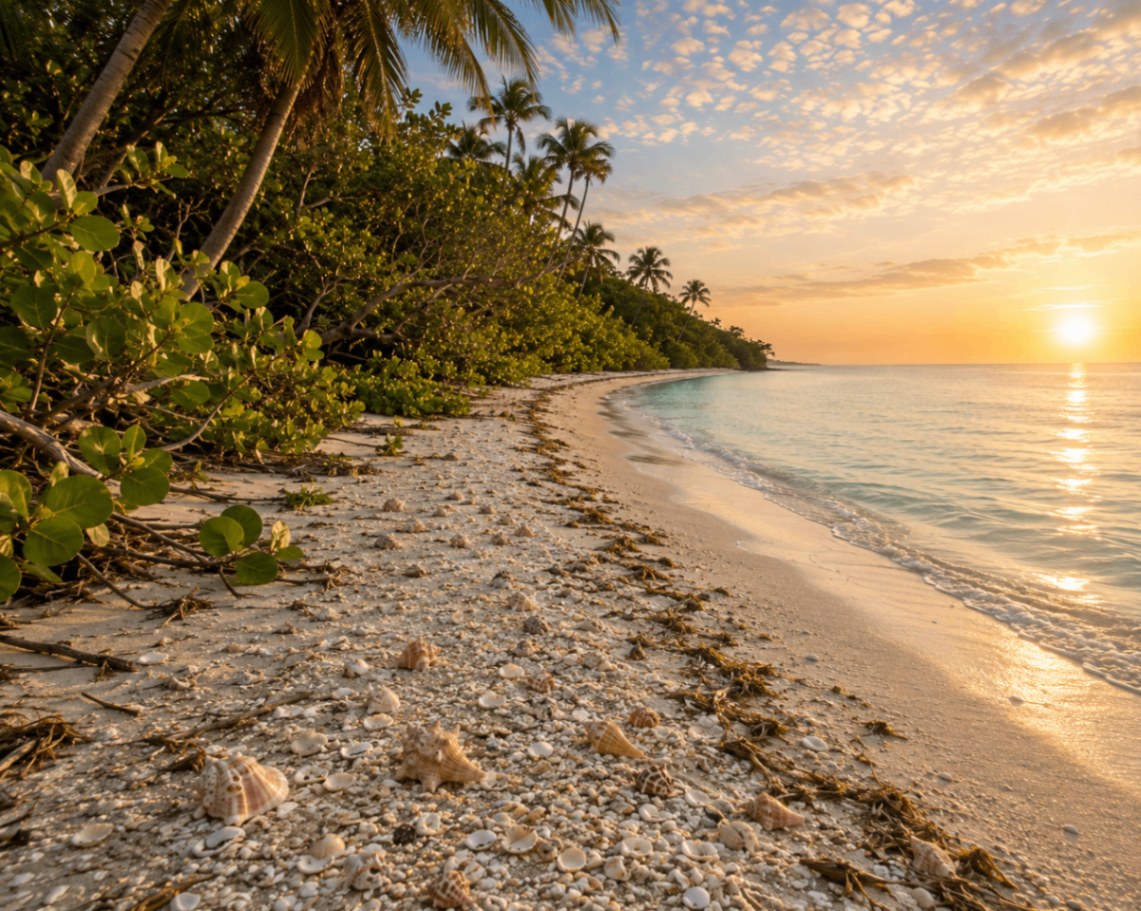
North Captiva
Reachable only by boat and separated from Captiva by Redfish Pass — one of the least-walked shell beaches on the Gulf, especially after storms.
 Beach
BeachBeach · Florida, USA
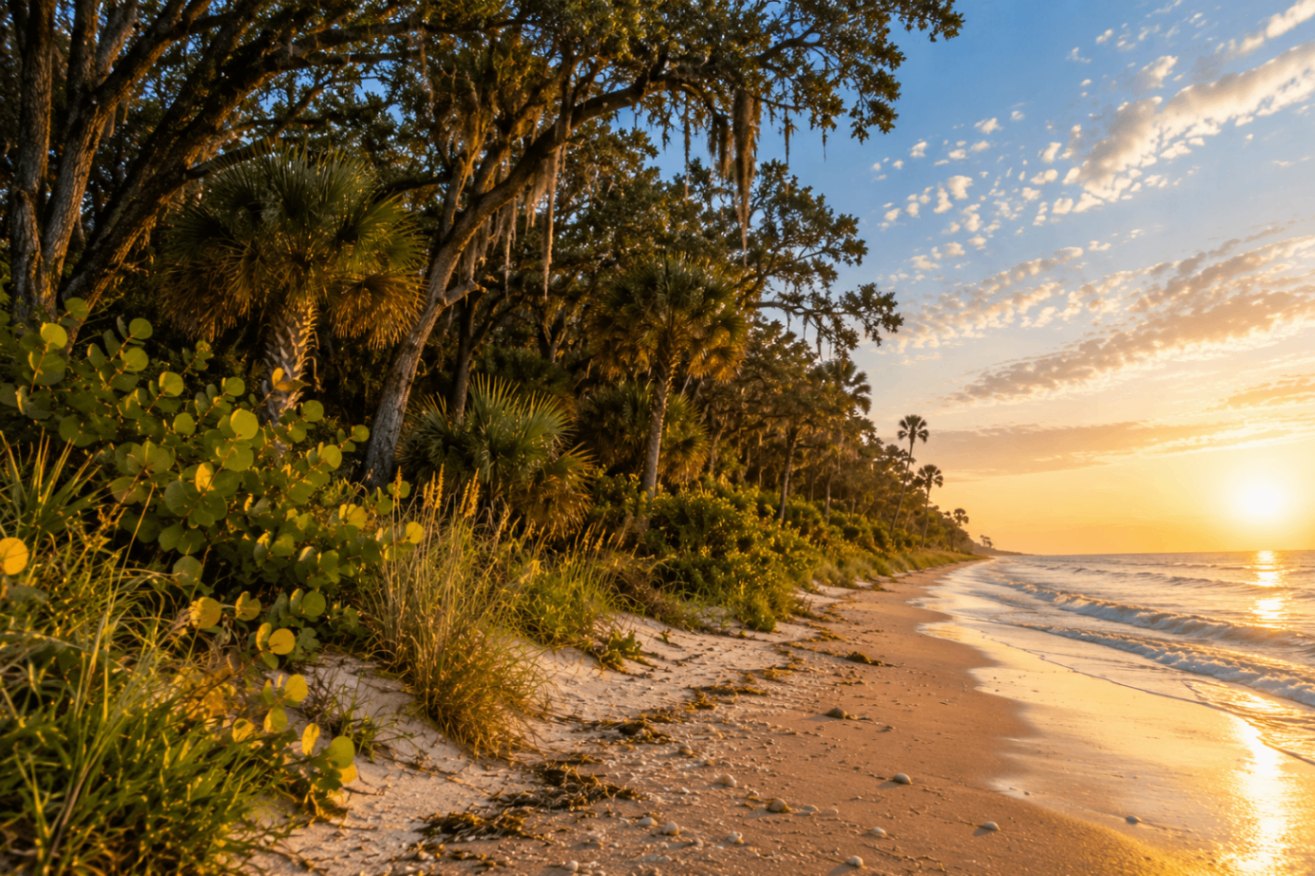
Anastasia State Park
A 1,600-acre state park south of St. Augustine — four miles of Atlantic beach with steady wrack lines and reliable coquina, ark, and jingle finds.
 Beach
BeachBeach · Florida, USA
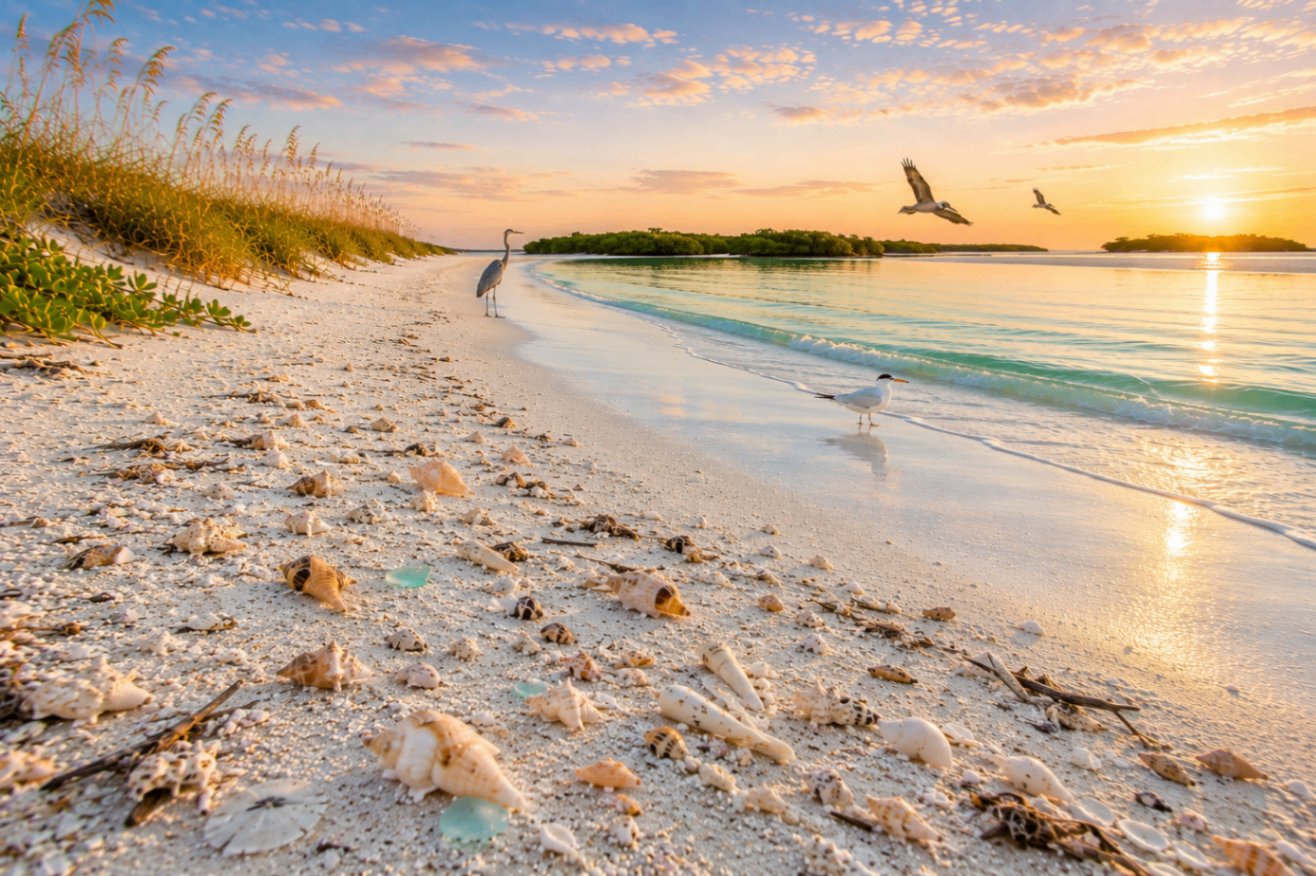
Marco Island
The southern anchor of Florida's Gulf shelling coast — olives, fighting conchs, and sand dollars appear along Tigertail Beach and the Cape Romano sandbars.
 Beach
BeachBeach · South Carolina, USA
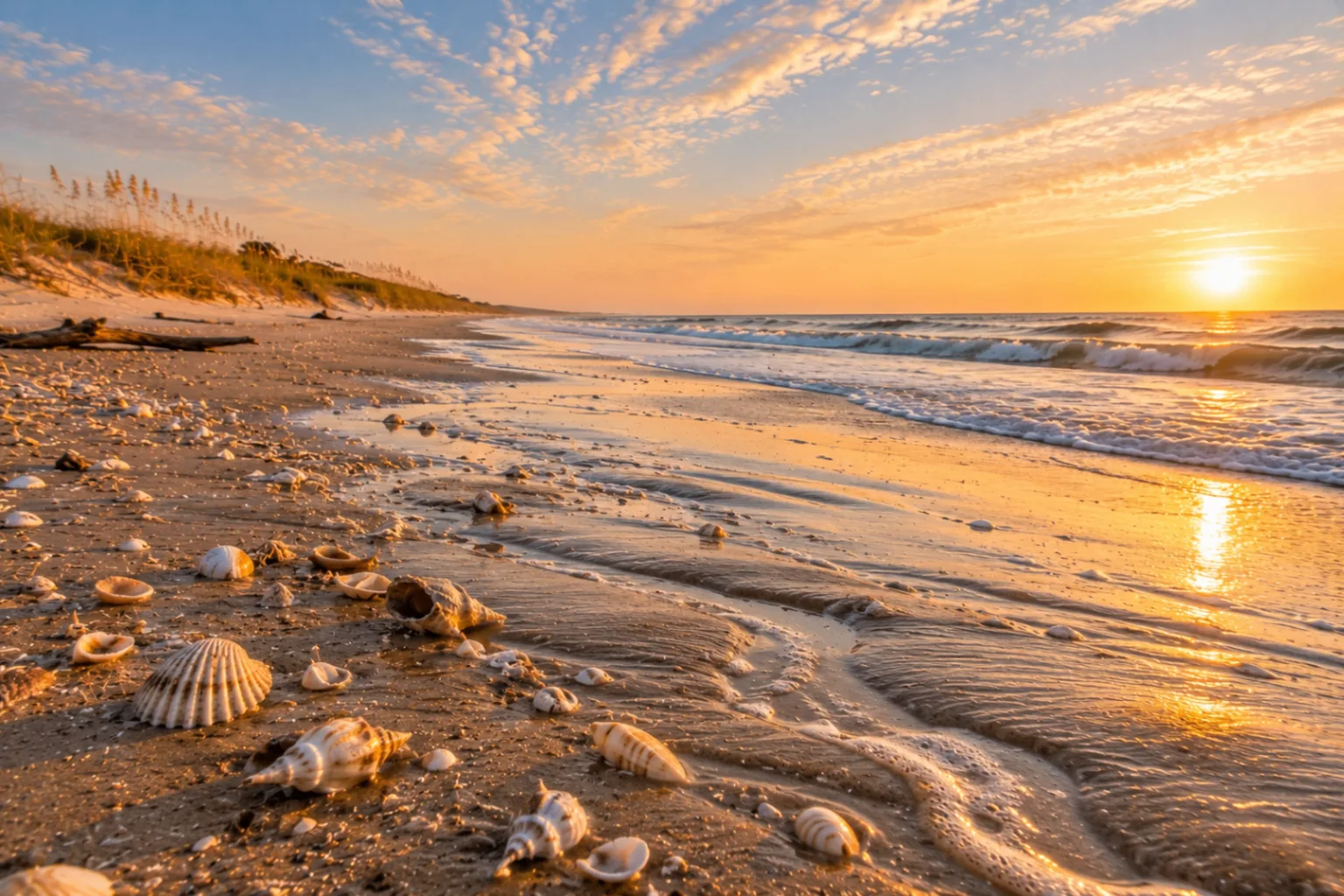
Edisto Beach
A quiet ACE Basin barrier island south of Charleston — Edisto's state-park shore is one of the most reliable places on the East Coast to find whole lettered olives.
 Beach
BeachBeach · Maryland, USA
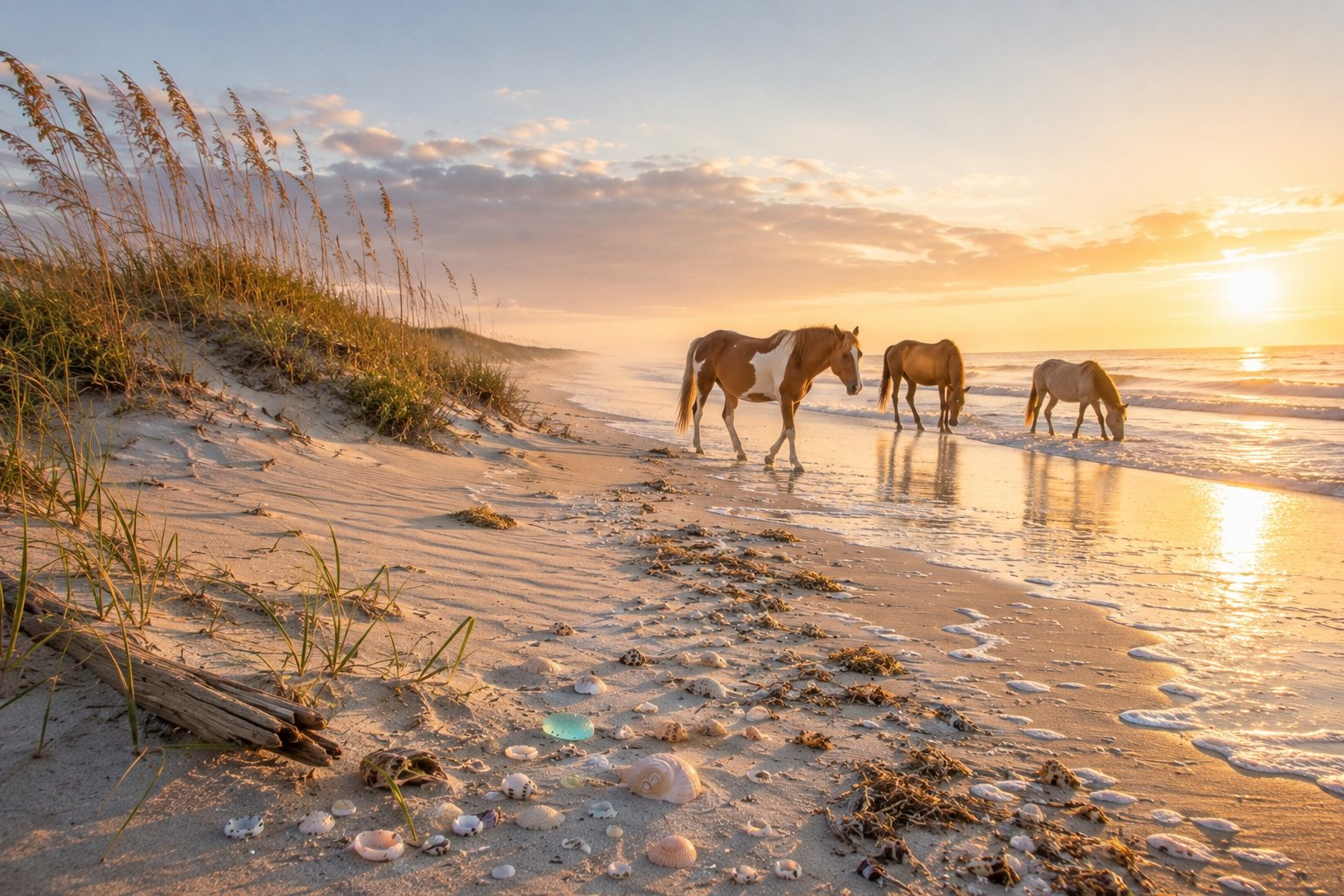
Assateague Island
A wild Atlantic barrier island shared by Maryland and Virginia — whelks, moon snails, and sea glass gather along wrack lines that feel a world away from resort beaches.
 Beach
BeachBeach · Georgia, USA
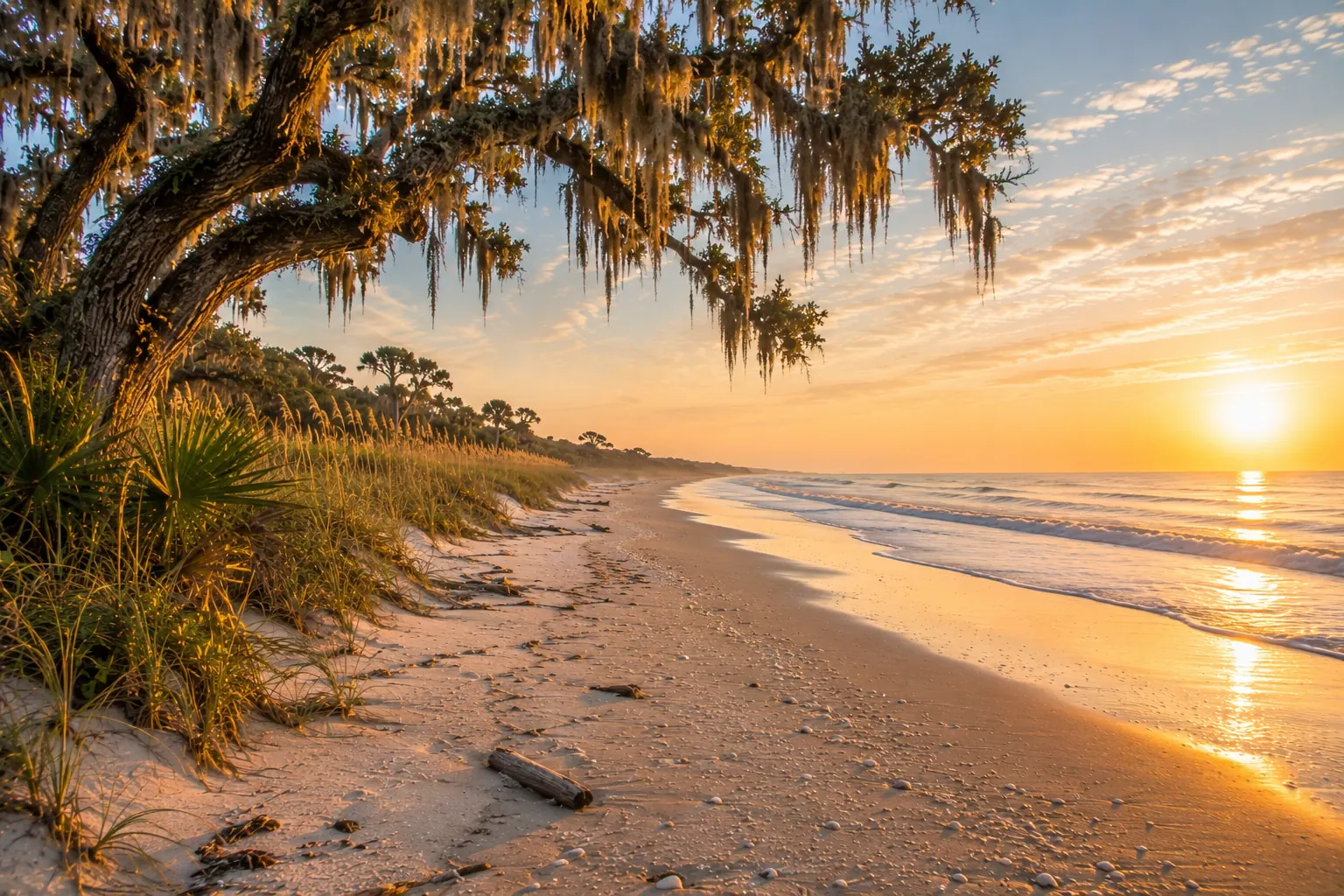
St. Simons Island
Golden Isles anchor with wide public beaches at East Beach and Gould's Inlet — moon snails, whelks, and jingles along a gentle Atlantic slope.
 Beach
BeachBeach · Florida, USA
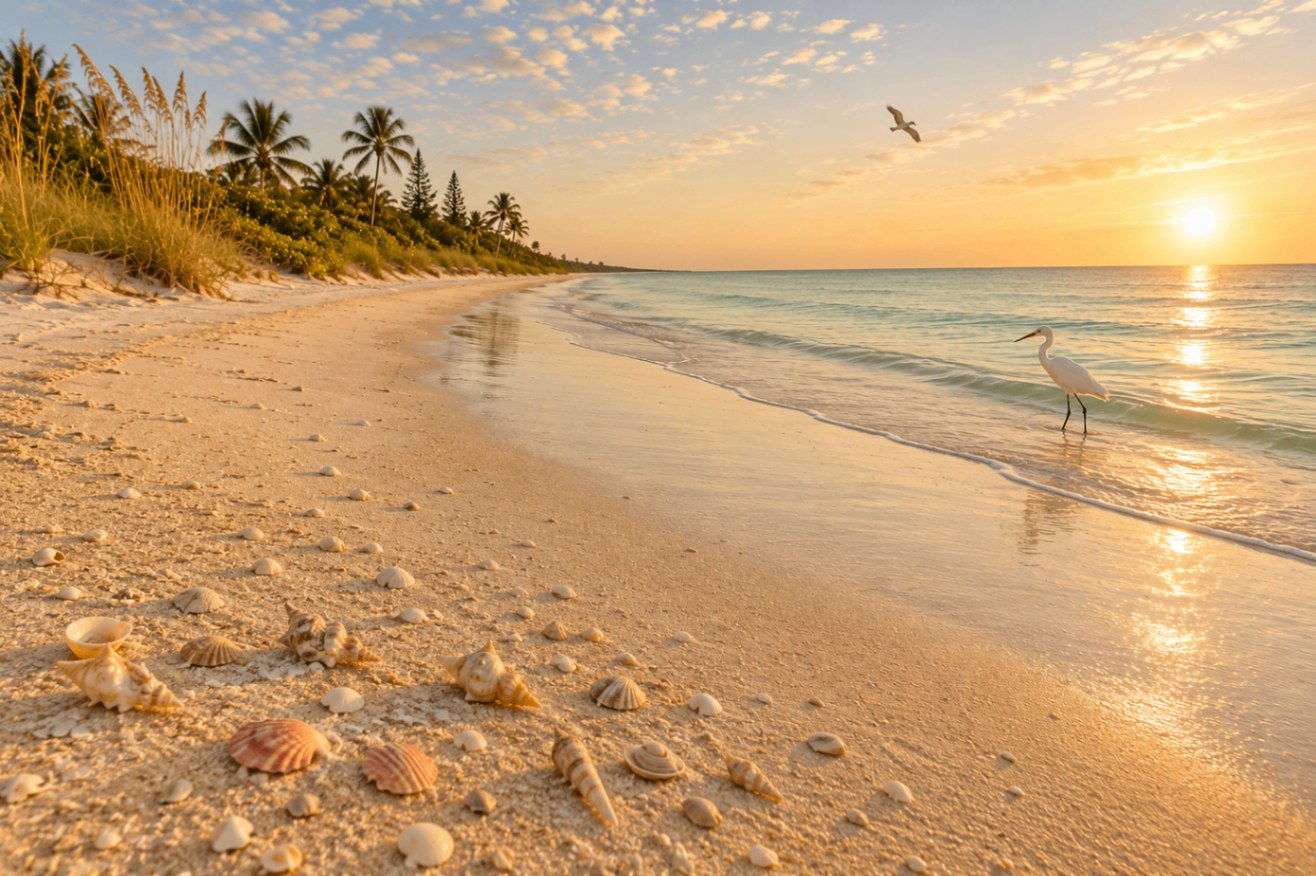
Anna Maria Island
A gentle stretch of Gulf shoreline — Bean Point and Coquina Beach deliver a beginner-friendly mix of scallops, olives, and coquinas that make Anna Maria one of the best family shelling islands in Florida.
 Beach
BeachBeach · Florida, USA
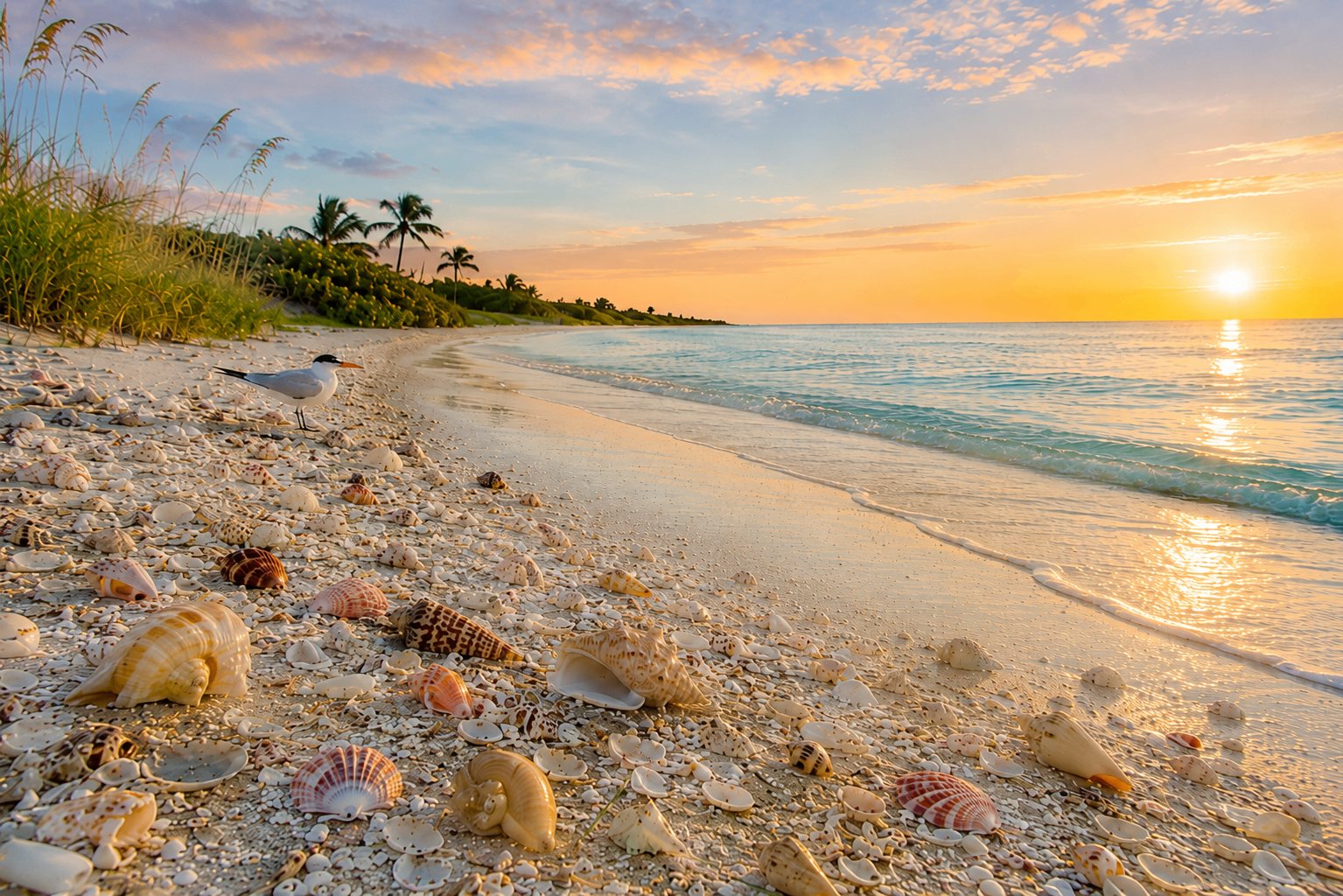
Sanibel Island
Sanibel's east-west orientation sweeps Gulf shells onto its shore in exceptional variety — the reason it's the most celebrated shelling beach in North America and the yardstick every collector measures other beaches against.
 Beach
BeachBeach · North Carolina, USA
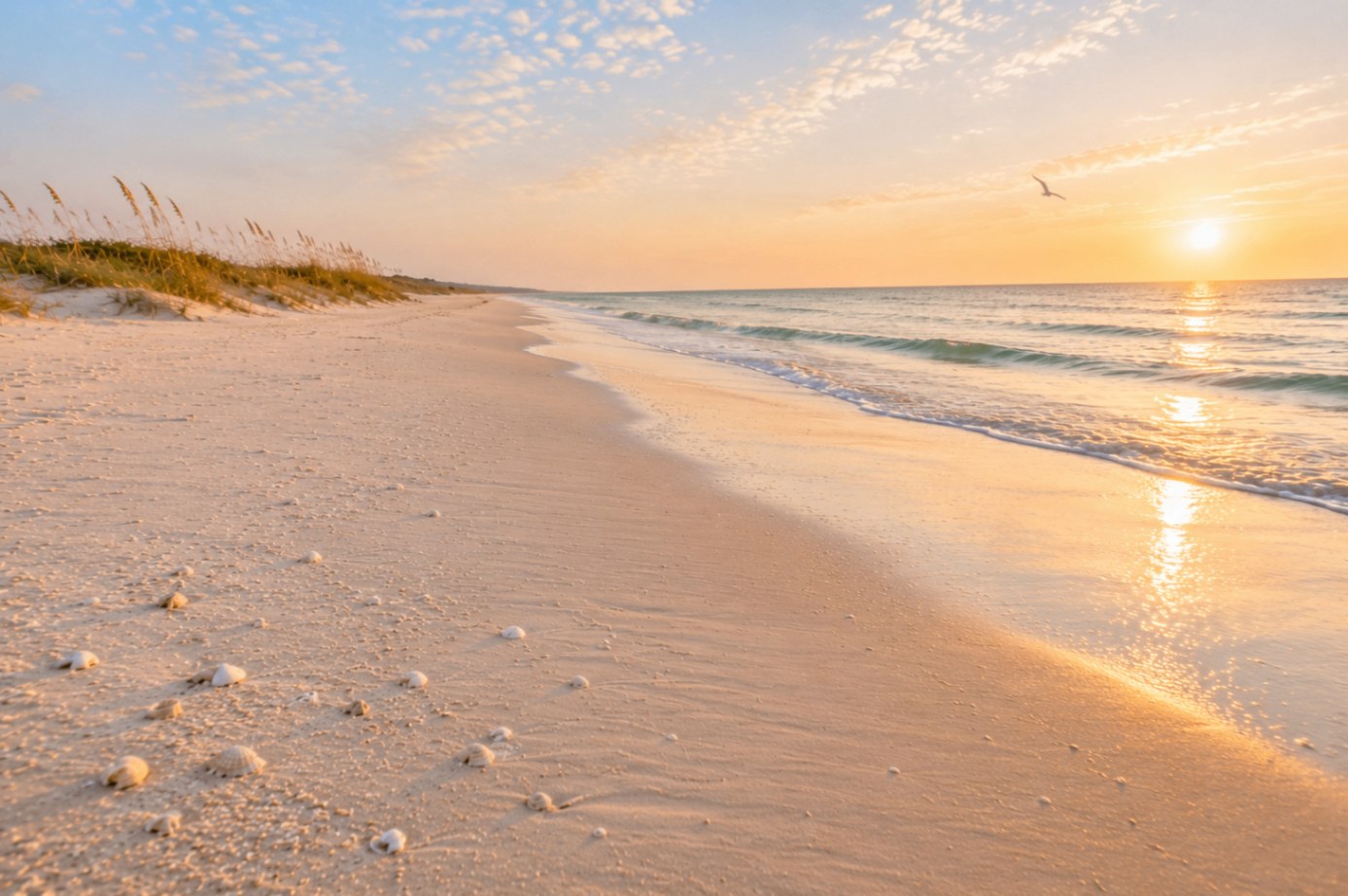
Topsail Island
A quieter barrier island north of Wrightsville — gentle Atlantic shore, whelks along the wrack line, and long walks that suit beginners just learning how to read a beach.
 Beach
BeachBeach · Florida, USA
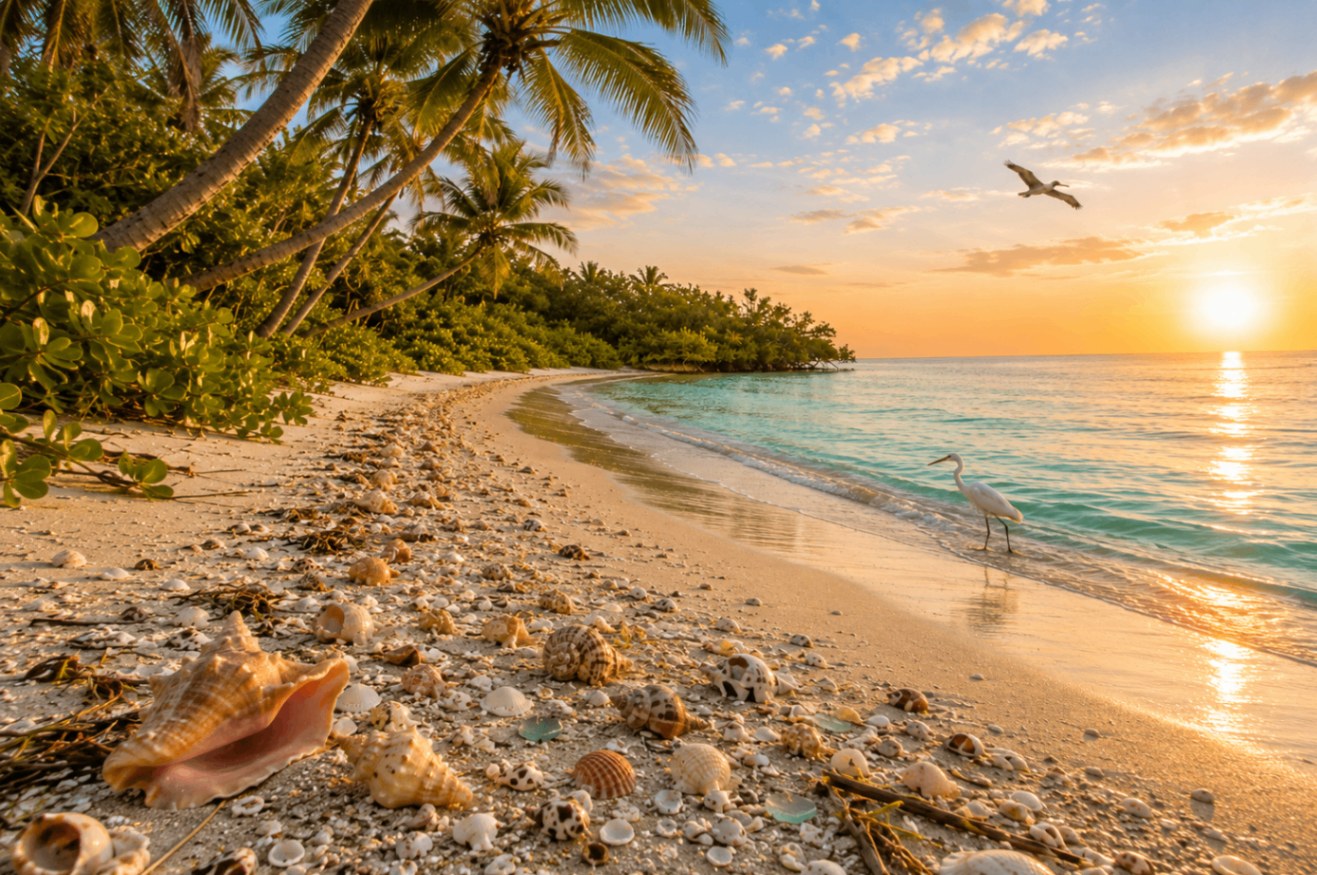
Captiva Island
Captiva shares Sanibel's shell-catching orientation but rewards collectors willing to boat or walk to its remote north end — larger whelks and deep-water rarities appear after storms.
 Beach
BeachBeach · Georgia, USA
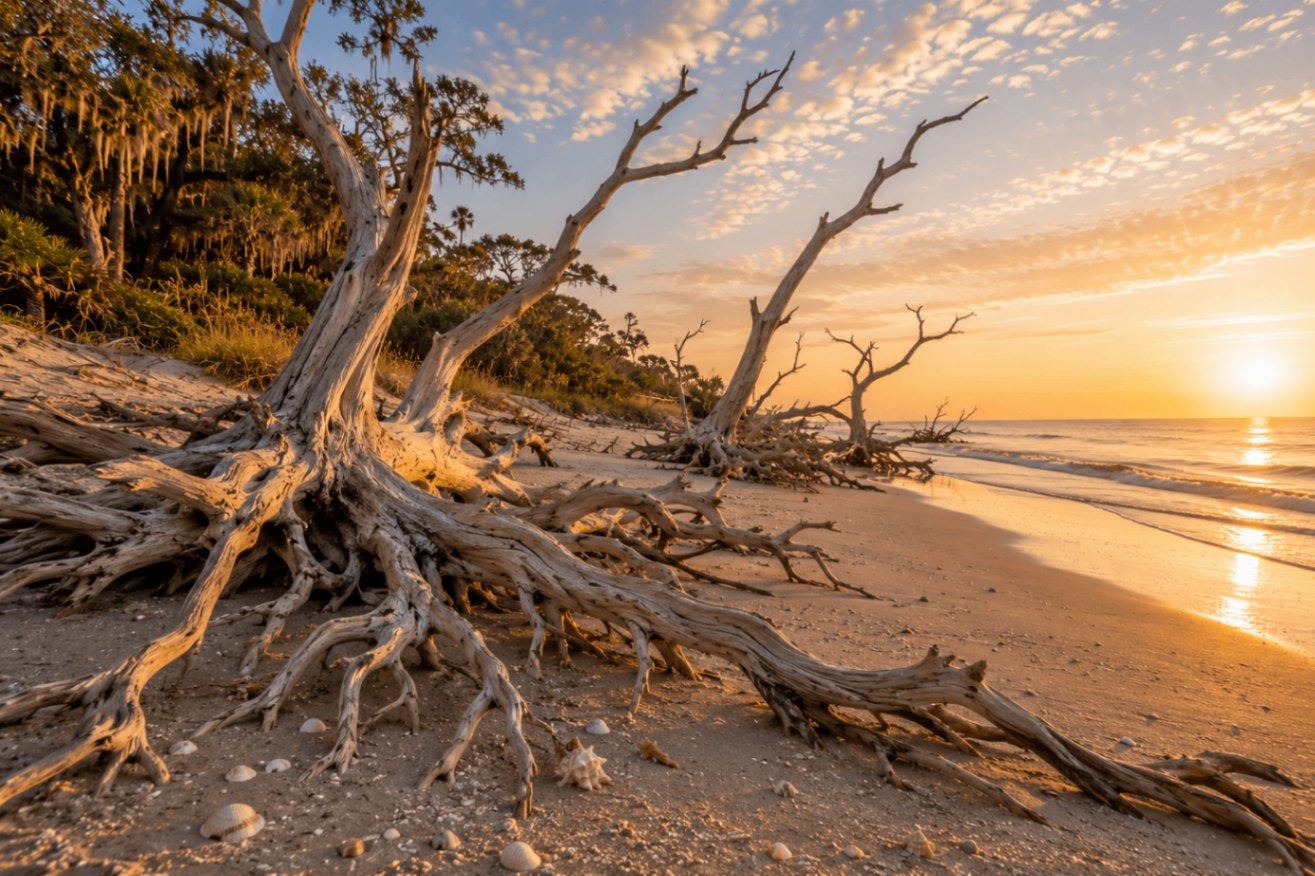
Jekyll Island
Historic Golden Isle with generous public beaches — Driftwood Beach and St. Andrews shore deliver moon snails, jingle shells, and photogenic driftwood in equal measure.
 Beach
BeachBeach · North Carolina, USA
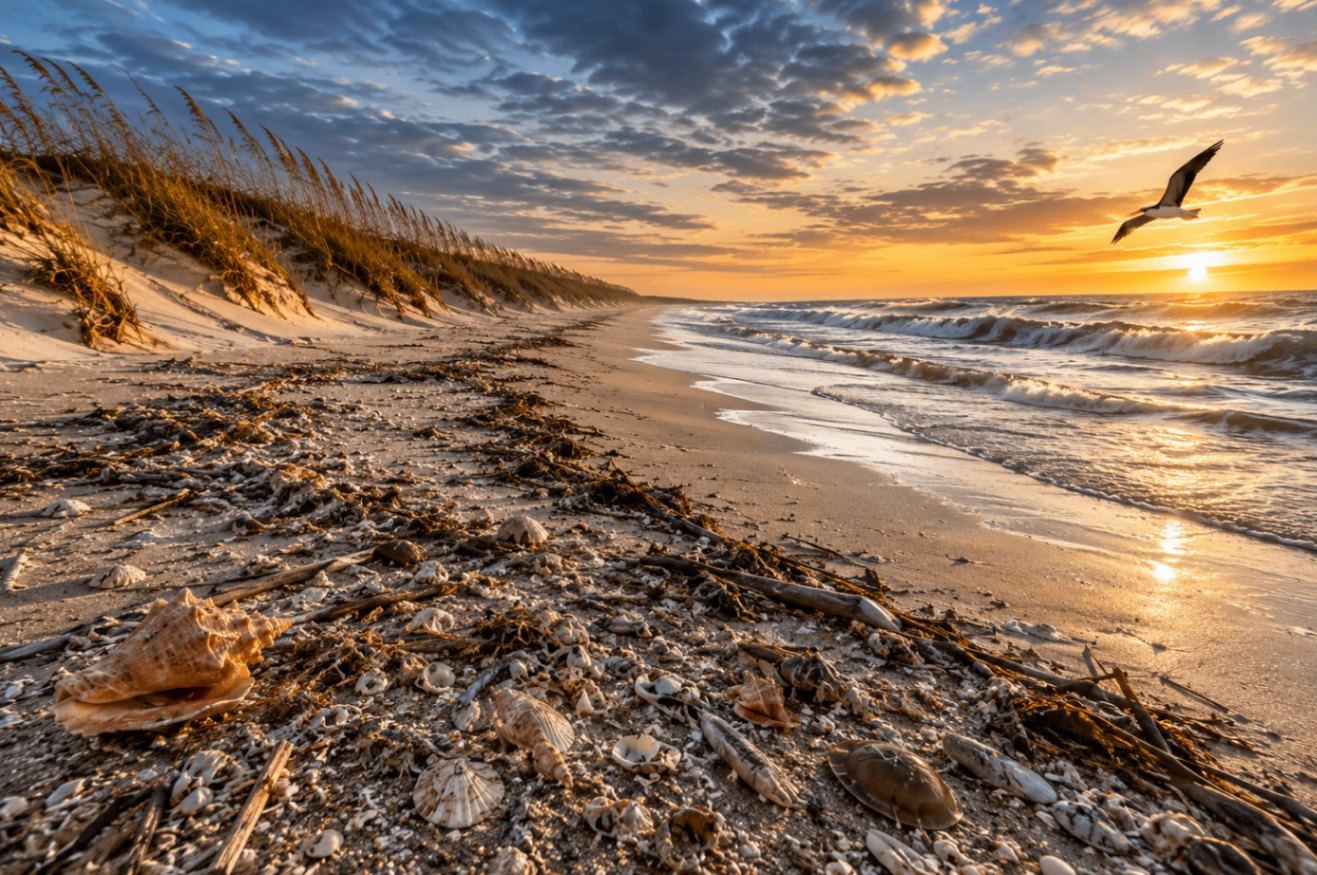
Outer Banks
A 200-mile chain of Atlantic barrier islands — Cape Hatteras, Ocracoke, and Cape Lookout deliver whelks, olive shells, and the state shell, the Scotch bonnet, especially after nor'easters.
 Beach
BeachBeach · Florida, USA
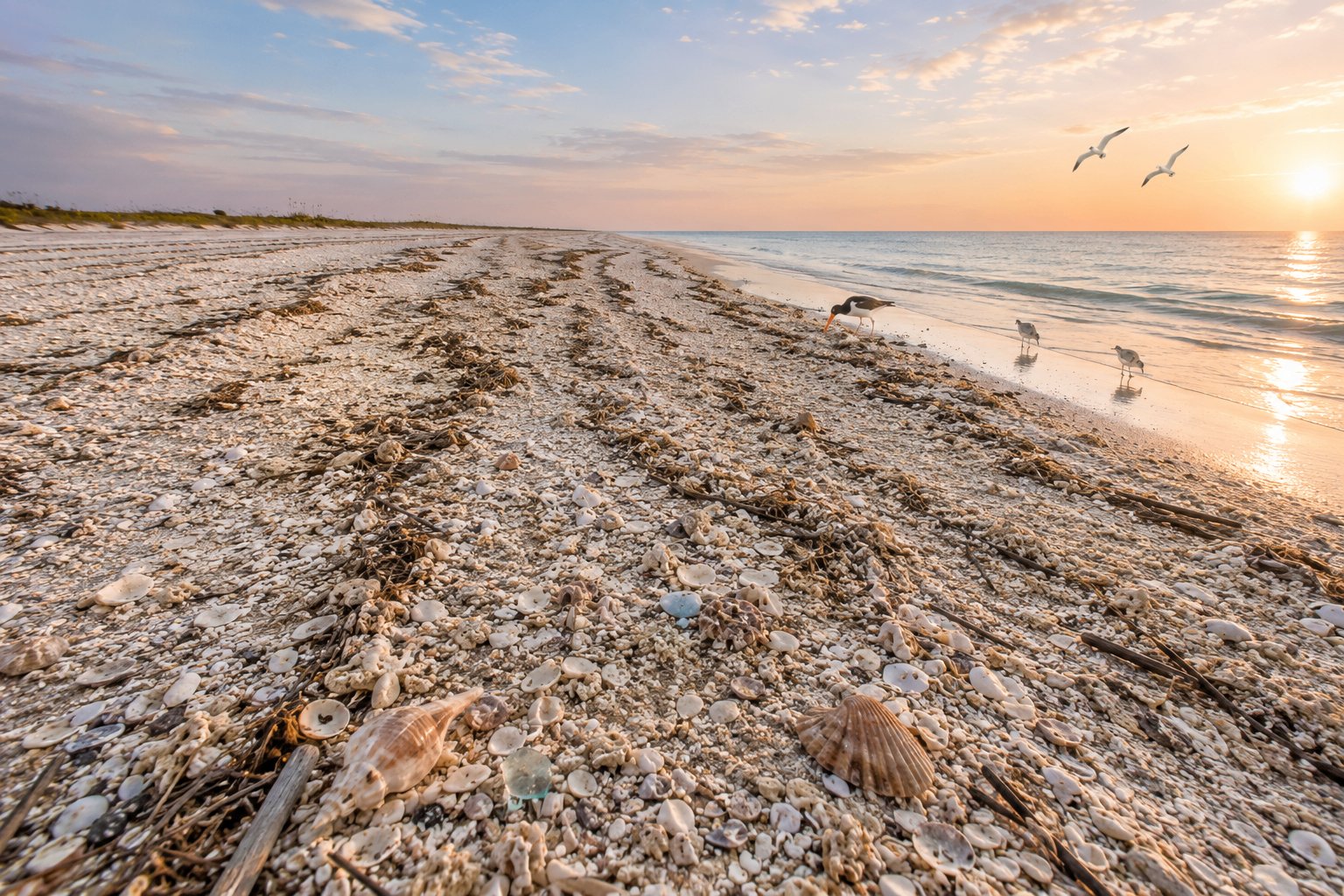
Shell Key
A boat-in barrier island preserve near St. Petersburg — the walk-off-into-untouched-shells experience serious collectors chase, best after cold fronts.
 Beach
BeachBeach · North Carolina, USA
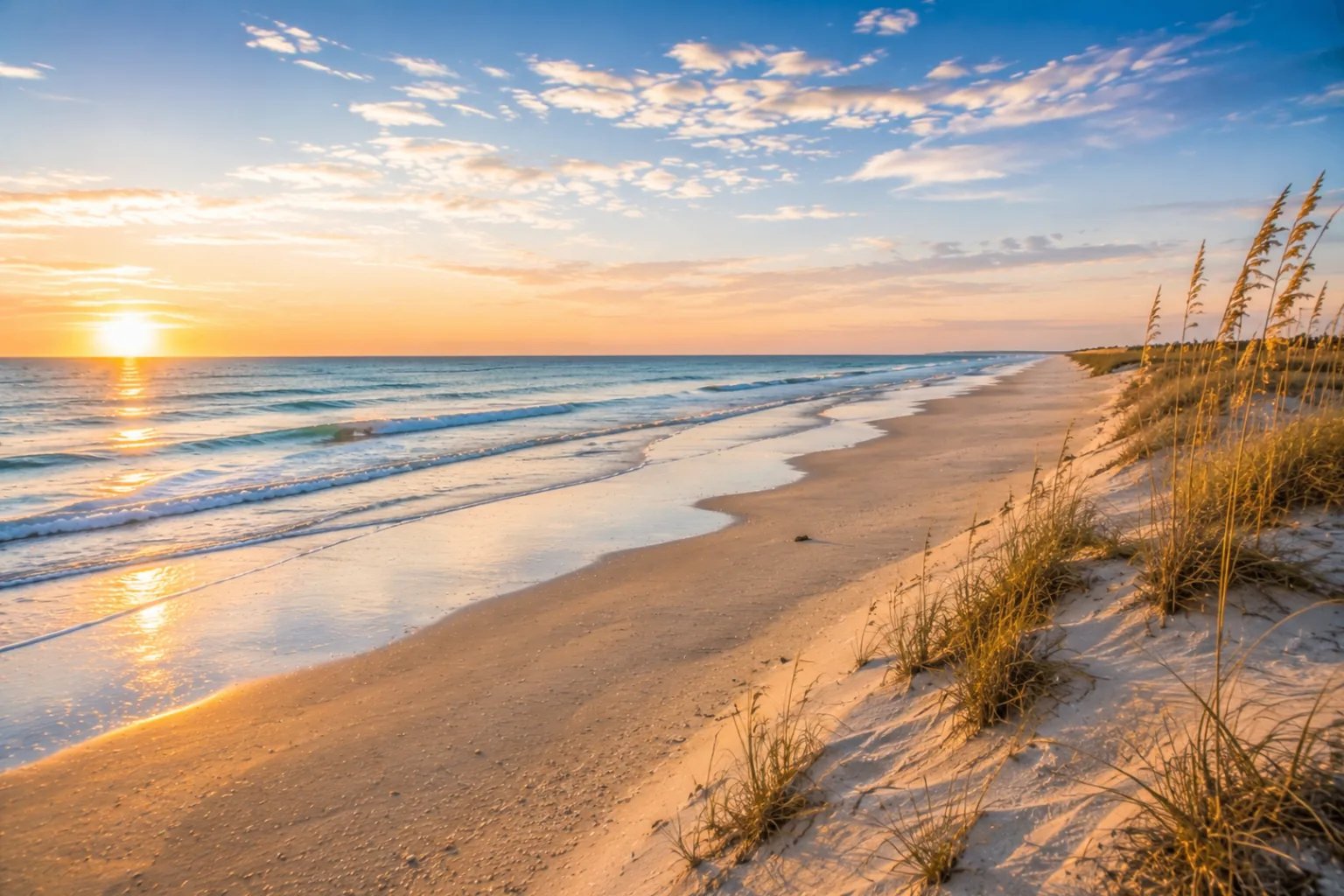
Cape Lookout
A ferry-in National Seashore south of the Outer Banks proper — unbroken beaches, minimal footprints, and reliable Scotch bonnet territory.
 Beach
BeachBeach · Florida, USA
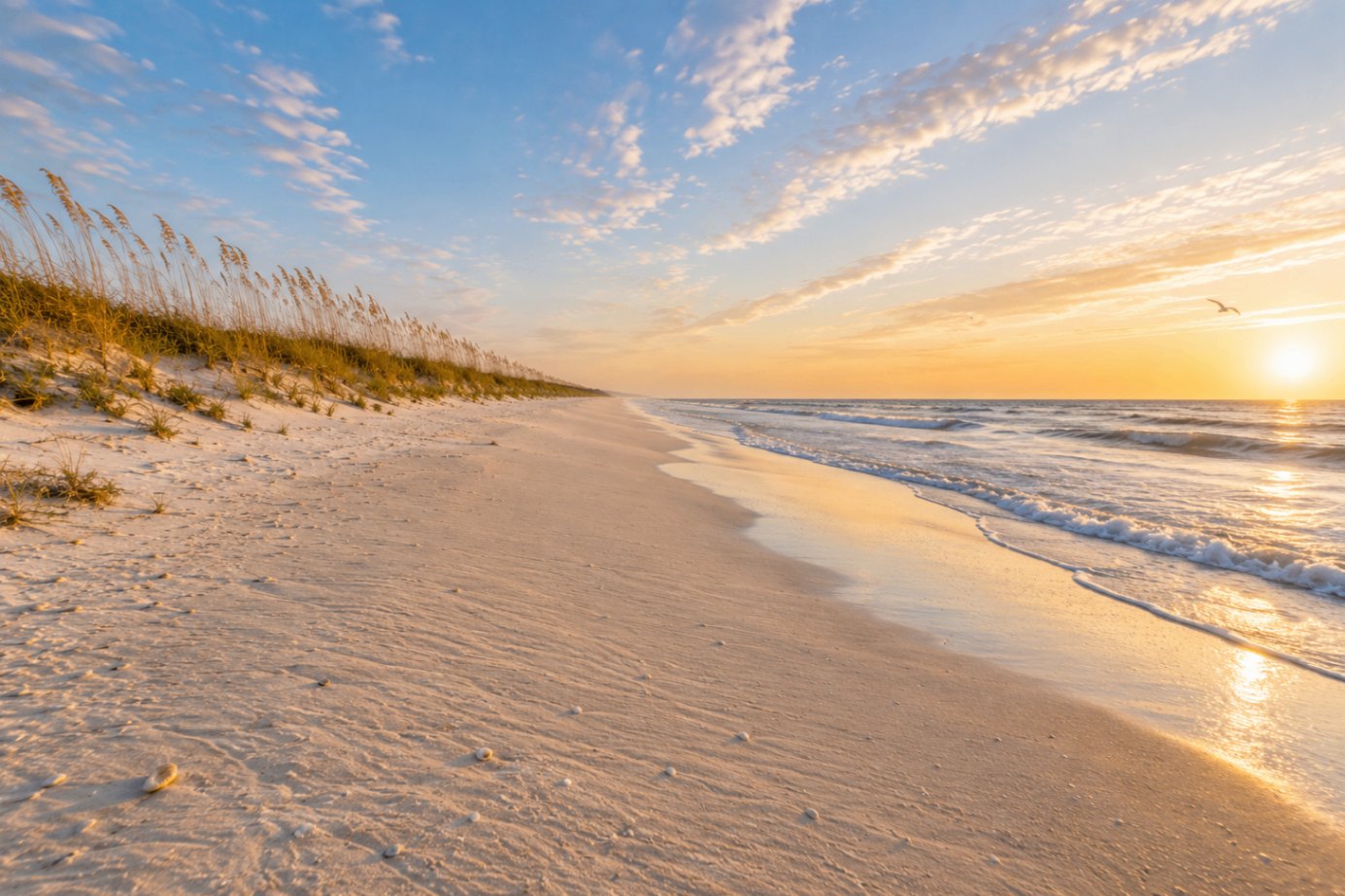
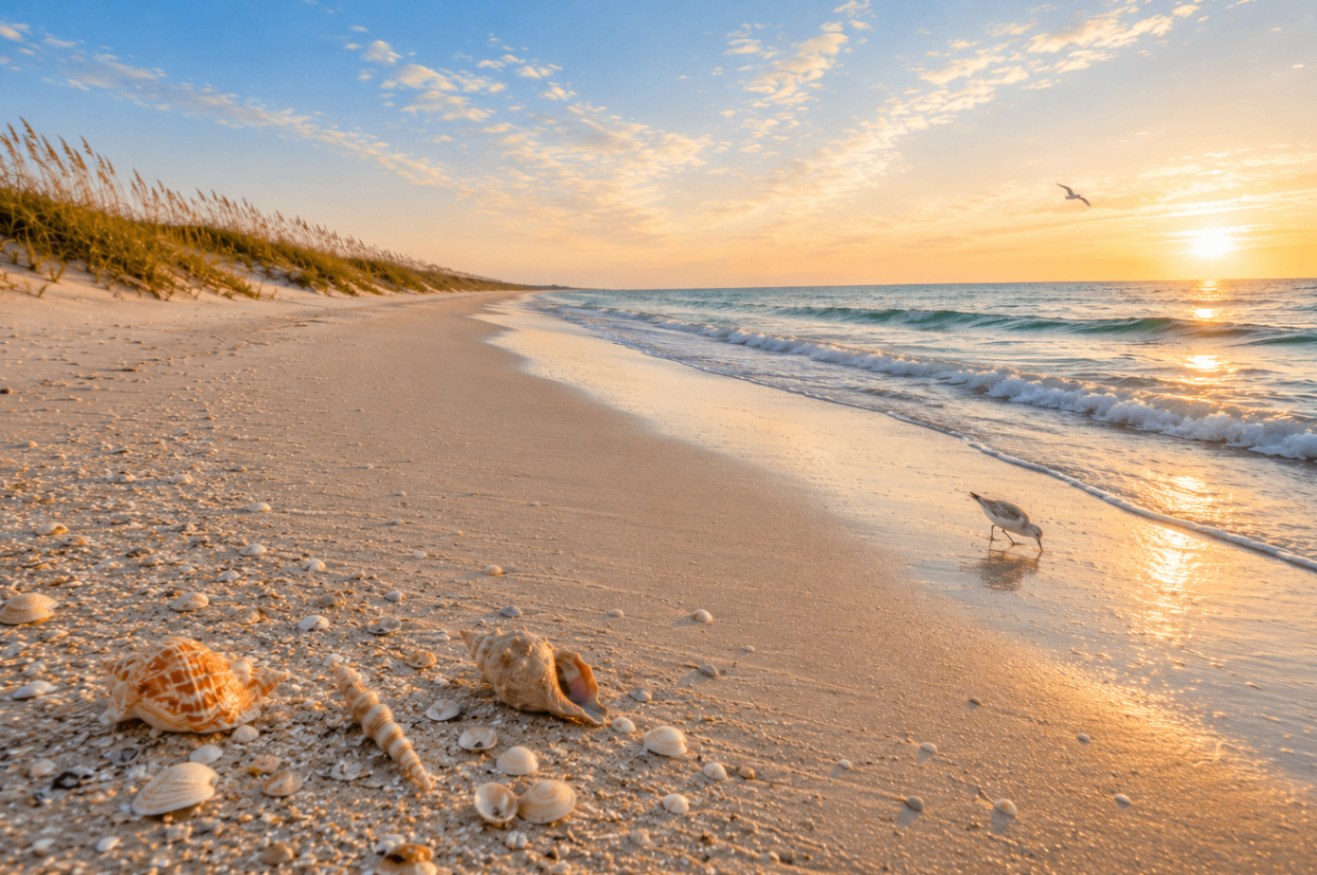
Canaveral National Seashore
Twenty-four undeveloped miles of Atlantic barrier beach between New Smyrna and Titusville — one of the last wild shell walks on Florida's east coast.
 Beach
BeachBeach · North Carolina, USA
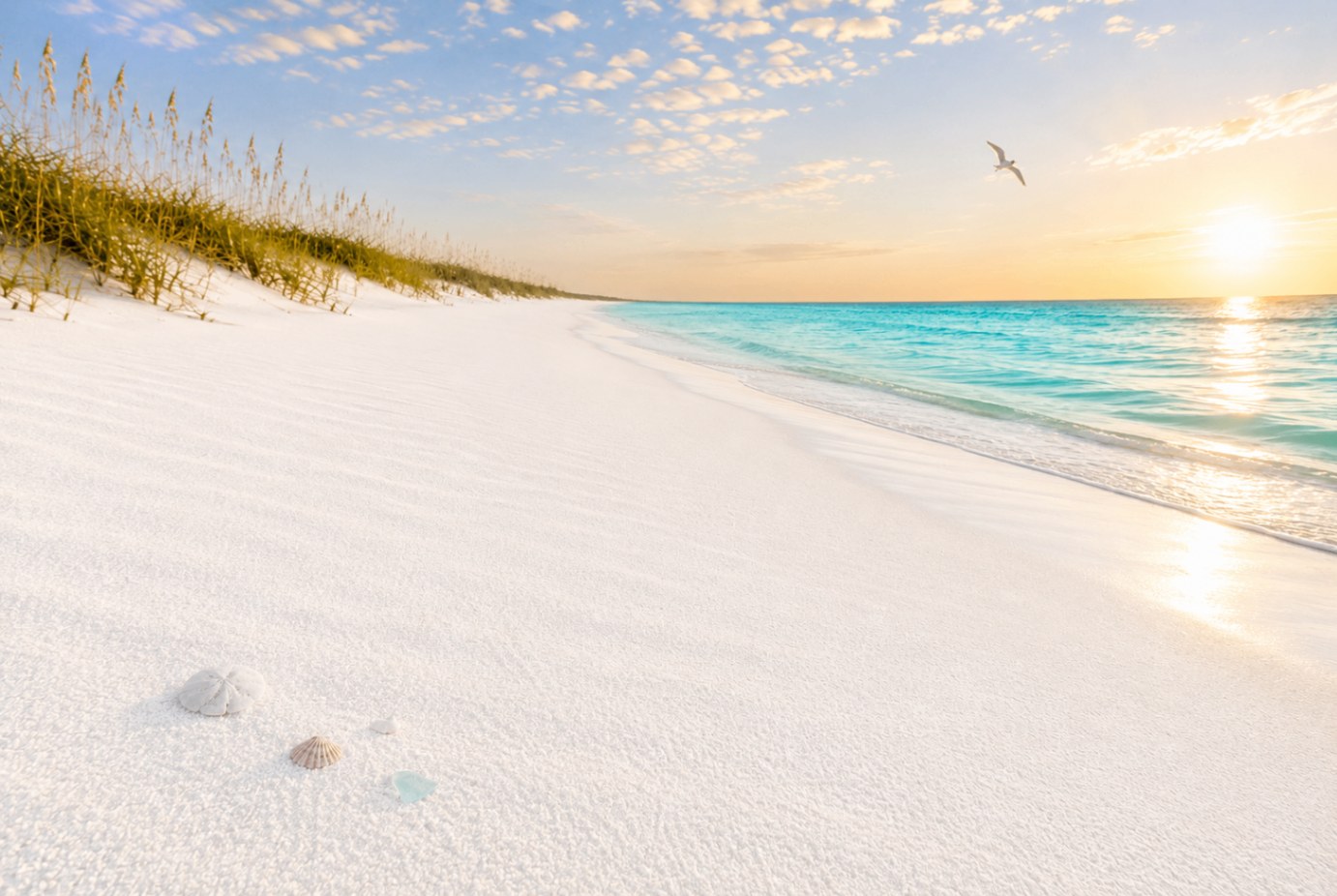
Emerald Isle
The western anchor of the Crystal Coast's Bogue Banks — a south-facing Atlantic beach whose Scotch bonnets, whelks, and augers appear reliably after nor'easters.
 Beach
BeachBeach · Florida, USA
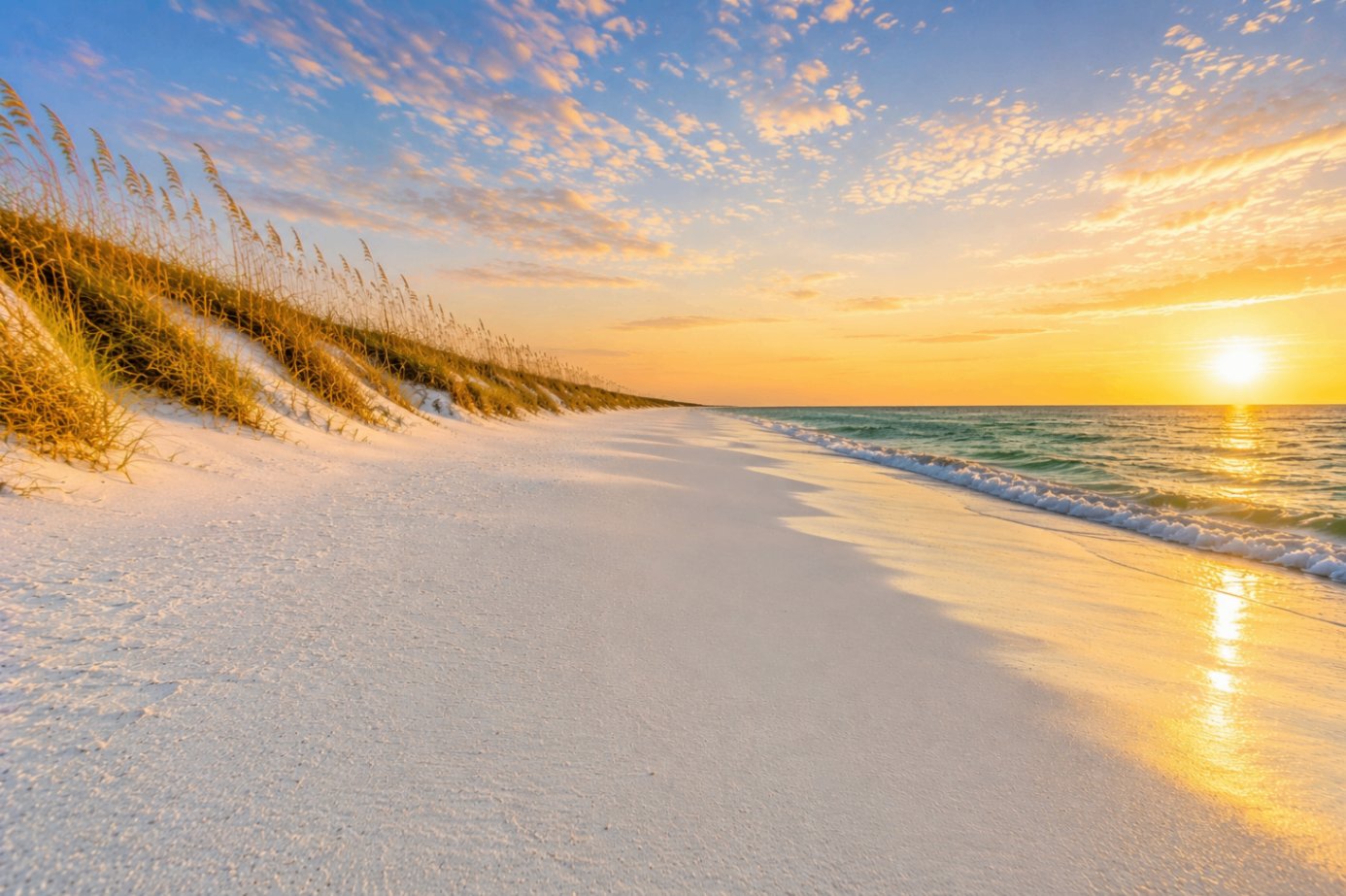
Siesta Key
Famous for its white quartz sand — the shelling story unfolds away from the main beach, at Turtle Beach and the tide line near Point of Rocks.
 Beach
BeachBeach · Alabama, USA
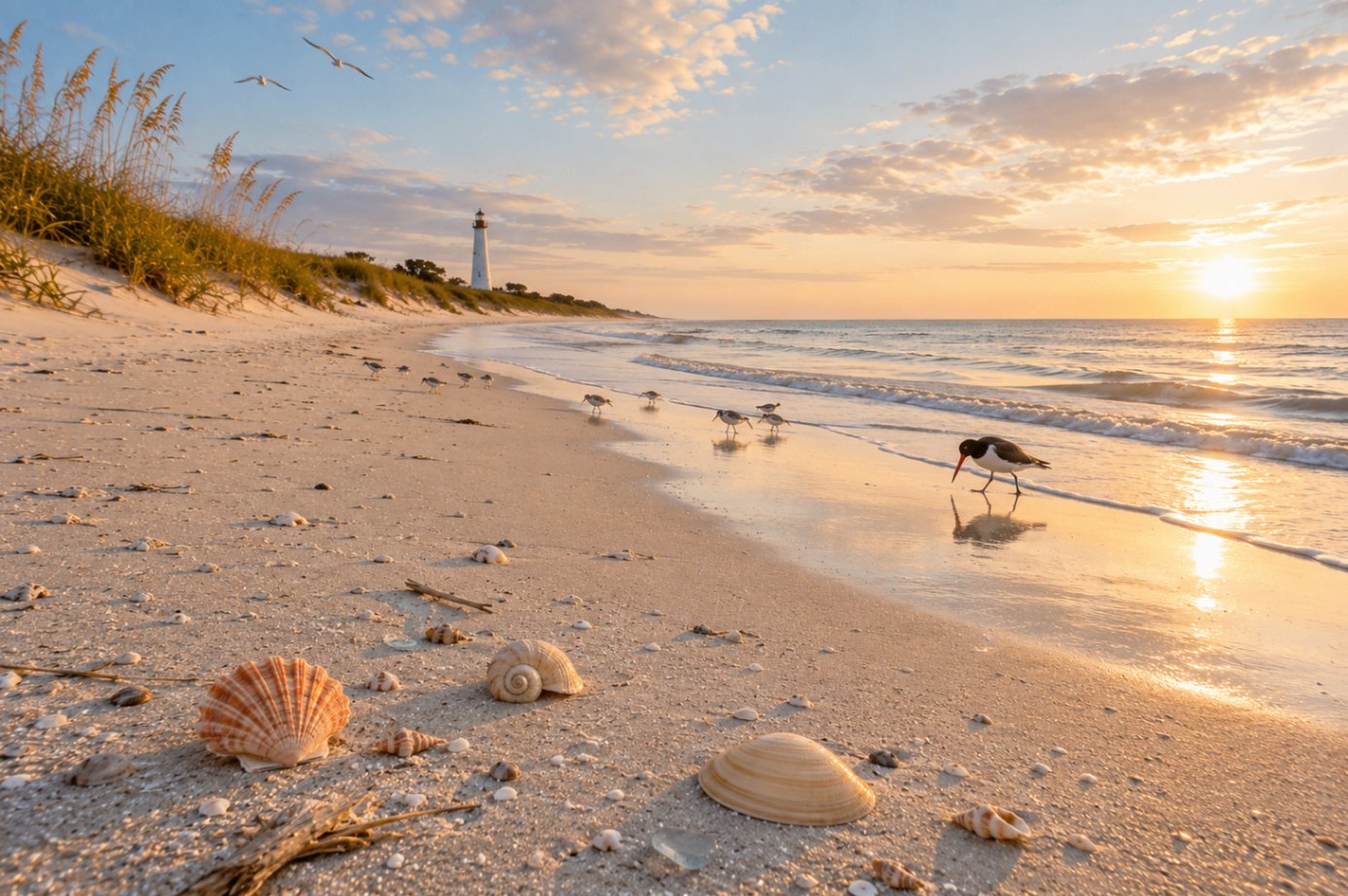
Gulf Shores
Alabama's flagship Gulf beach — white sand, warm shallow water, and steady deposits of coquinas, scallops, and sand dollars that make it a natural family destination.
 Beach
BeachBeach · New Jersey, USA
Cape May
The southern tip of New Jersey — Sunset Beach yields the famous 'Cape May diamonds' (wave-polished quartz) alongside knobbed whelks, moon snails, and jingle shells.
 Beach
BeachBeach · Florida, USA
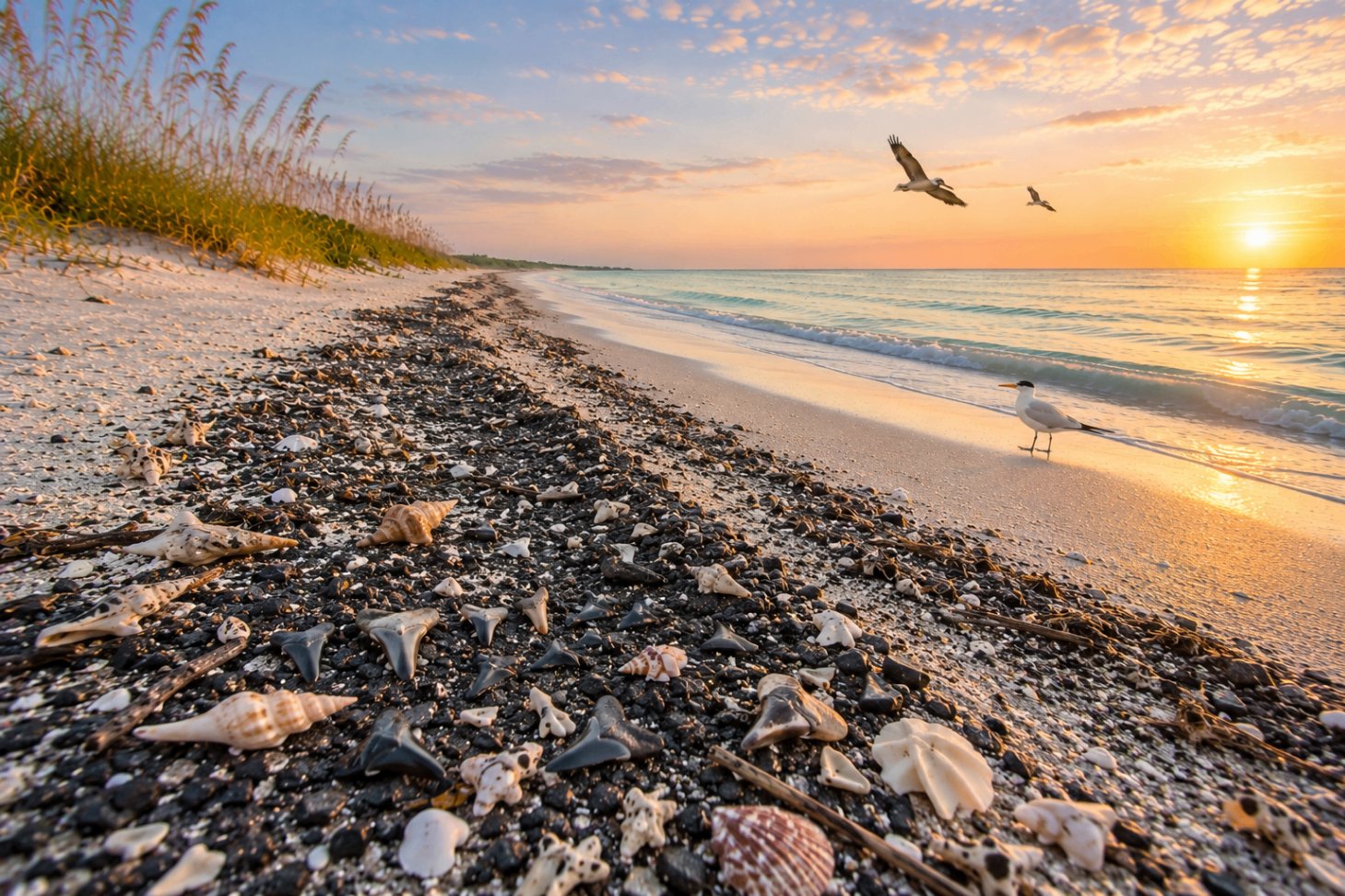
Venice Beach
The self-styled Shark Tooth Capital of the World — Caspersen Beach yields black fossilised shark teeth alongside its Gulf shells.
 Beach
BeachBeach · South Carolina, USA
Folly Beach
Charleston's barrier-island beach — the eastern washout end and the Lighthouse Inlet spit yield lettered olives, whelks, moon snails, and the occasional fossilised shark tooth.
 Beach
BeachBeach · South Carolina, USA
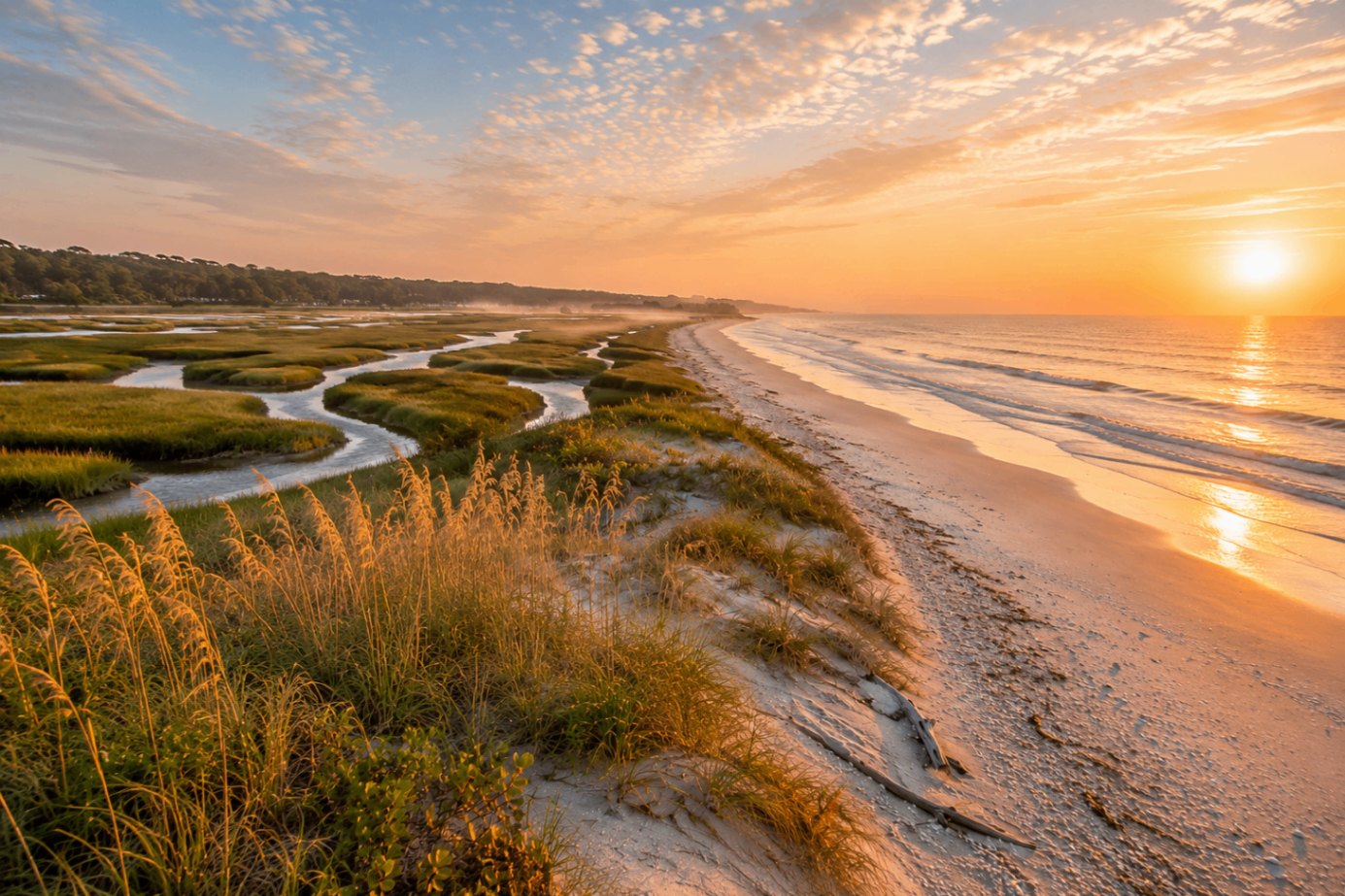
Huntington Beach State Park
A three-mile stretch of protected Atlantic beach south of Myrtle Beach — the state park's low-slope shore reliably delivers lettered olives, moon snails, and knobbed whelks.
 Beach
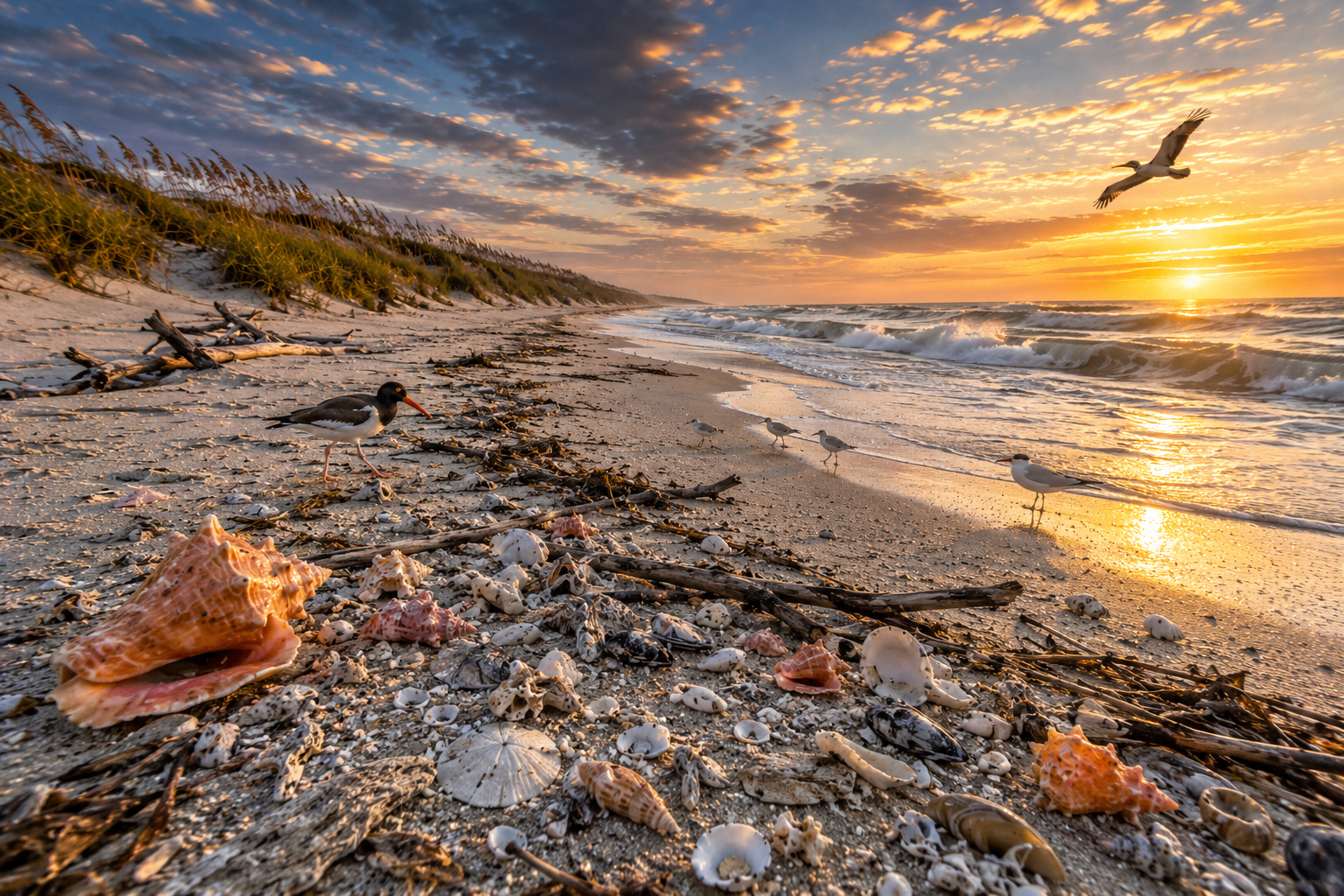
BeachBeach Guide
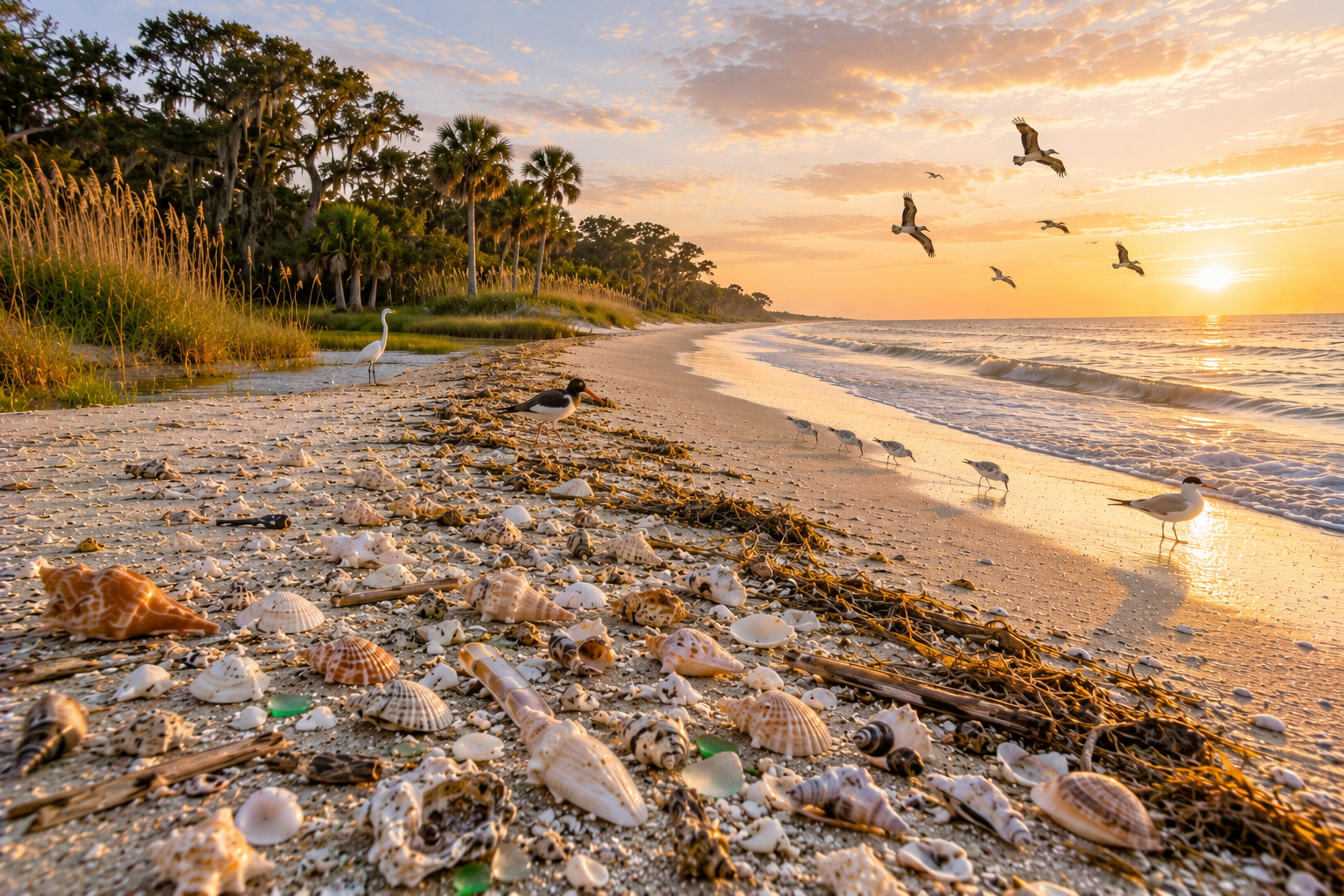
South Carolina Shelling Guide
Lowcountry beaches, barrier islands, and the best spots to find whelks, sand dollars, and olive shells.
 Beach
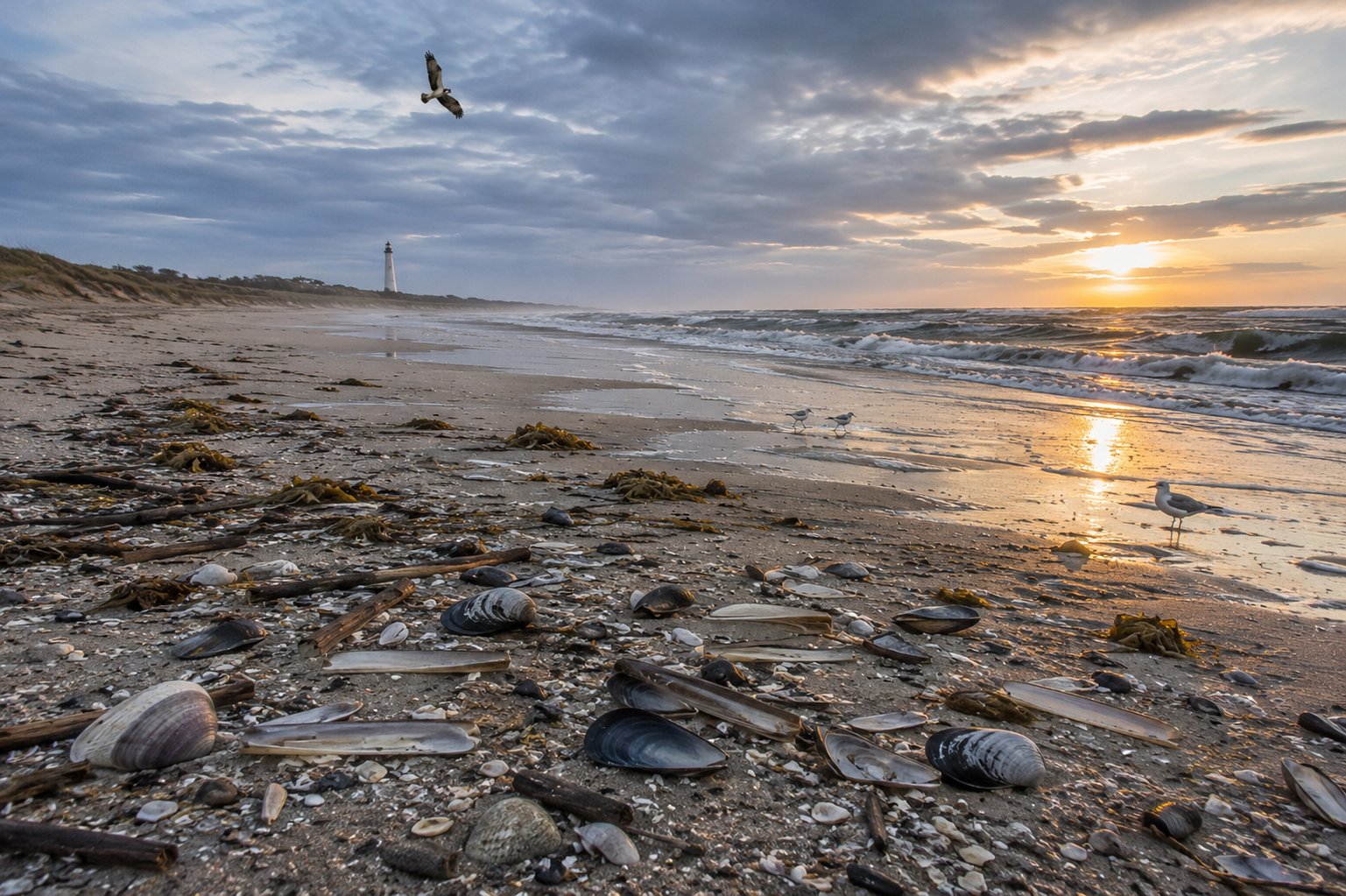
BeachBeach Guide
North Carolina Shelling Guide
The Outer Banks and Crystal Coast offer some of the wildest, most rewarding shelling on the Atlantic.
 Beach
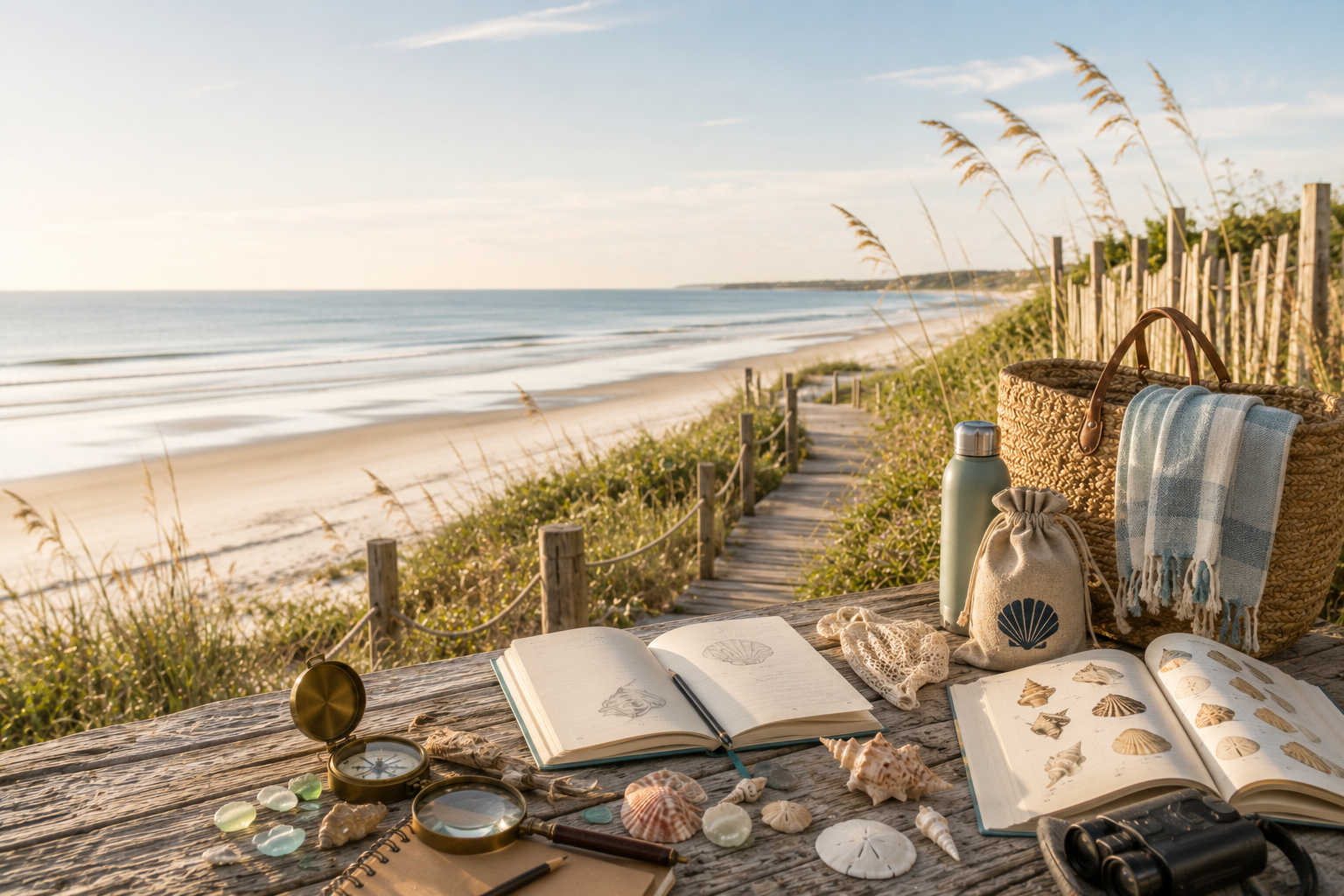
BeachBeach · New Jersey, USA
Sandy Hook
The New Jersey barrier peninsula inside Gateway National Recreation Area — jingles, moon snails, and slipper shells along calm bayside stretches and open Atlantic beaches.
 Beach
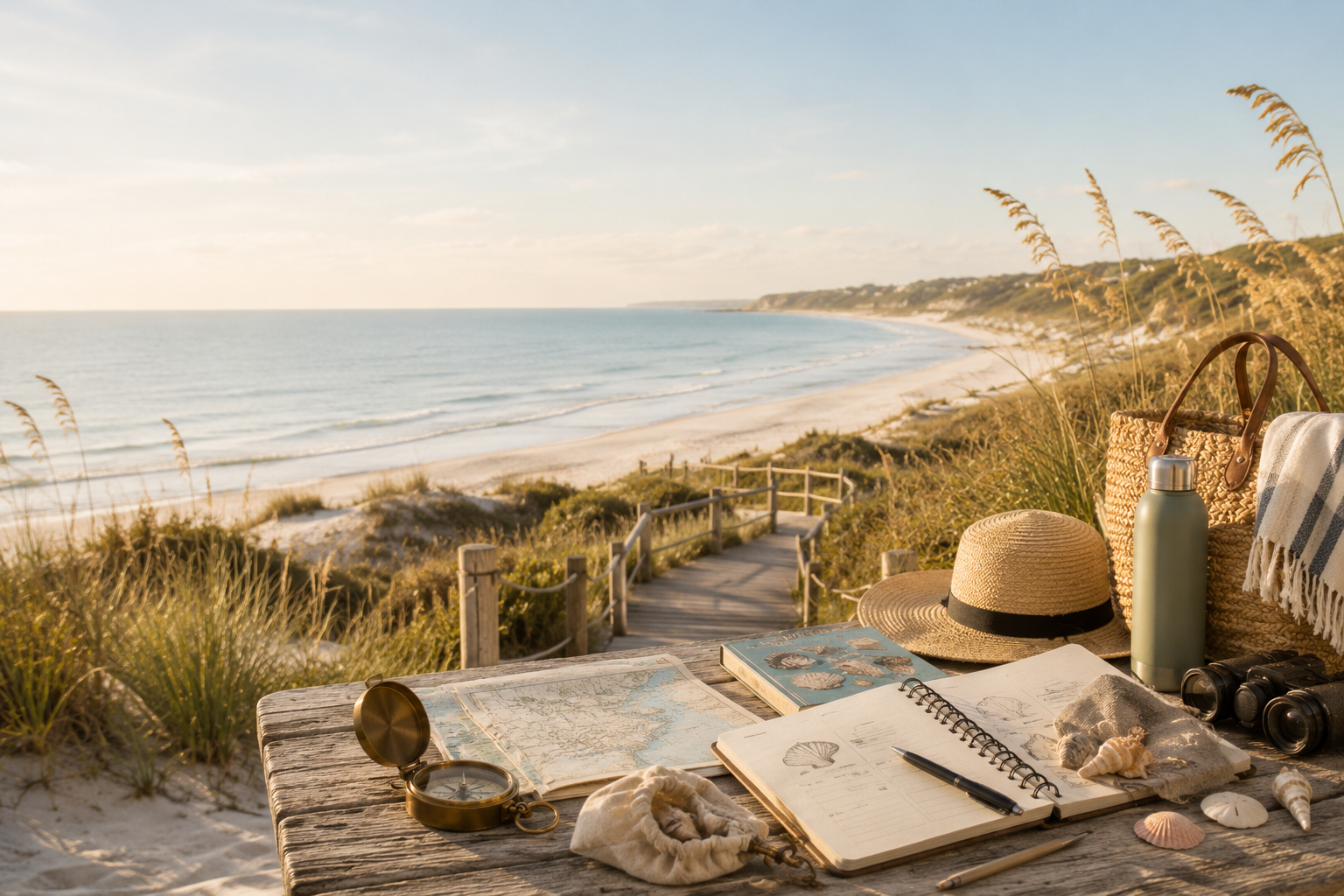
BeachBeach Guide
Beginner's Beachcombing Guide
Everything you need to know before your first shell hunt — timing, location, gear, and the treasures to look for.
 Beach
BeachBeach Guide
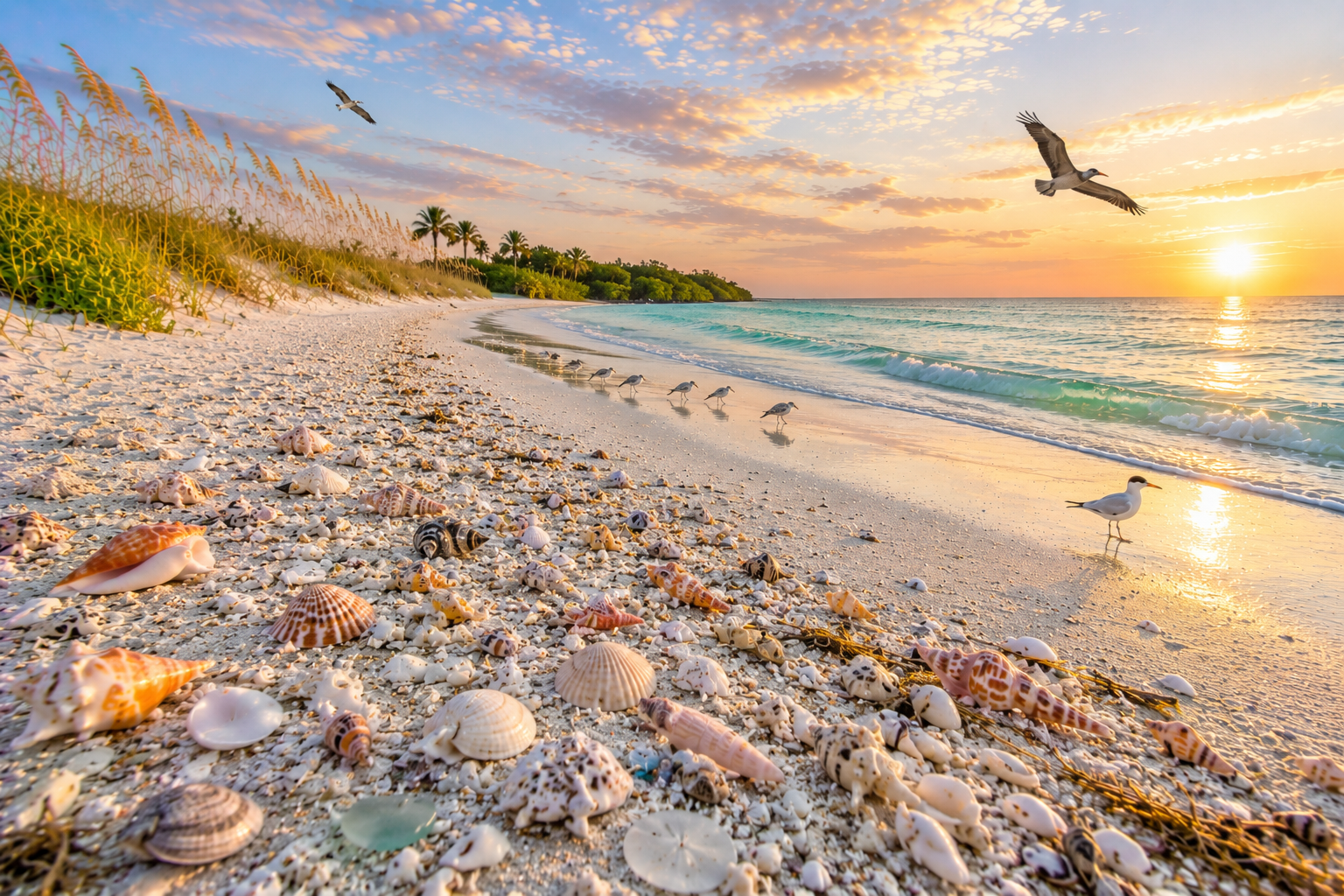
Best Beaches for Shelling
Our favorite stretches of coast where the shelling is reliably wonderful.
 Beach
BeachBeach Guide
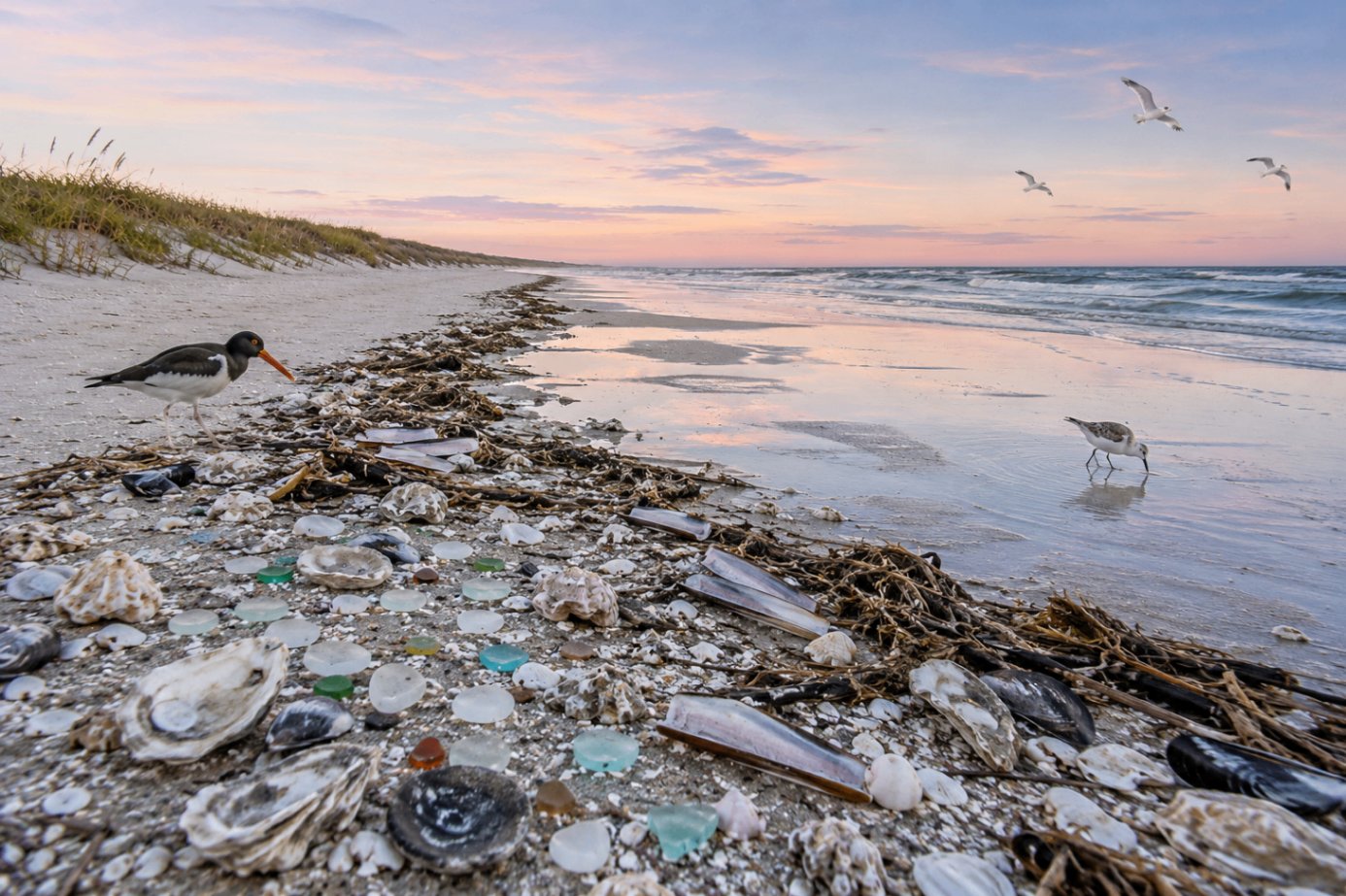
Florida Shelling Guide
Where, when, and how to find Florida's famous seashells — from Sanibel's Gulf Coast to the Atlantic shore.
 Beach
BeachBeach Guide
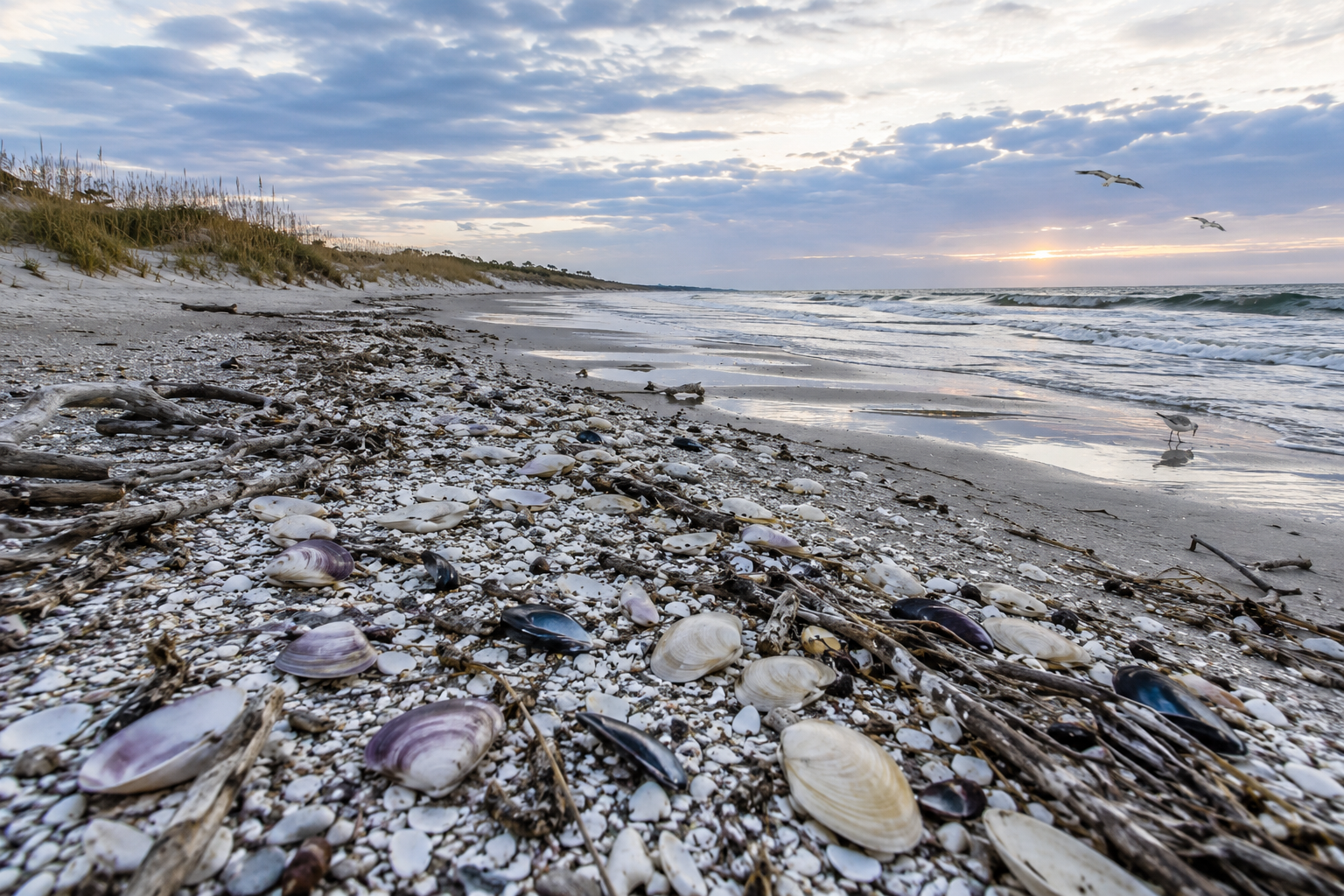
Maryland & Delaware Shelling Guide
Assateague, Rehoboth, and the Mid-Atlantic bays — where to find clams, jingles, and bay scallops.
 Beach
BeachBeach Guide
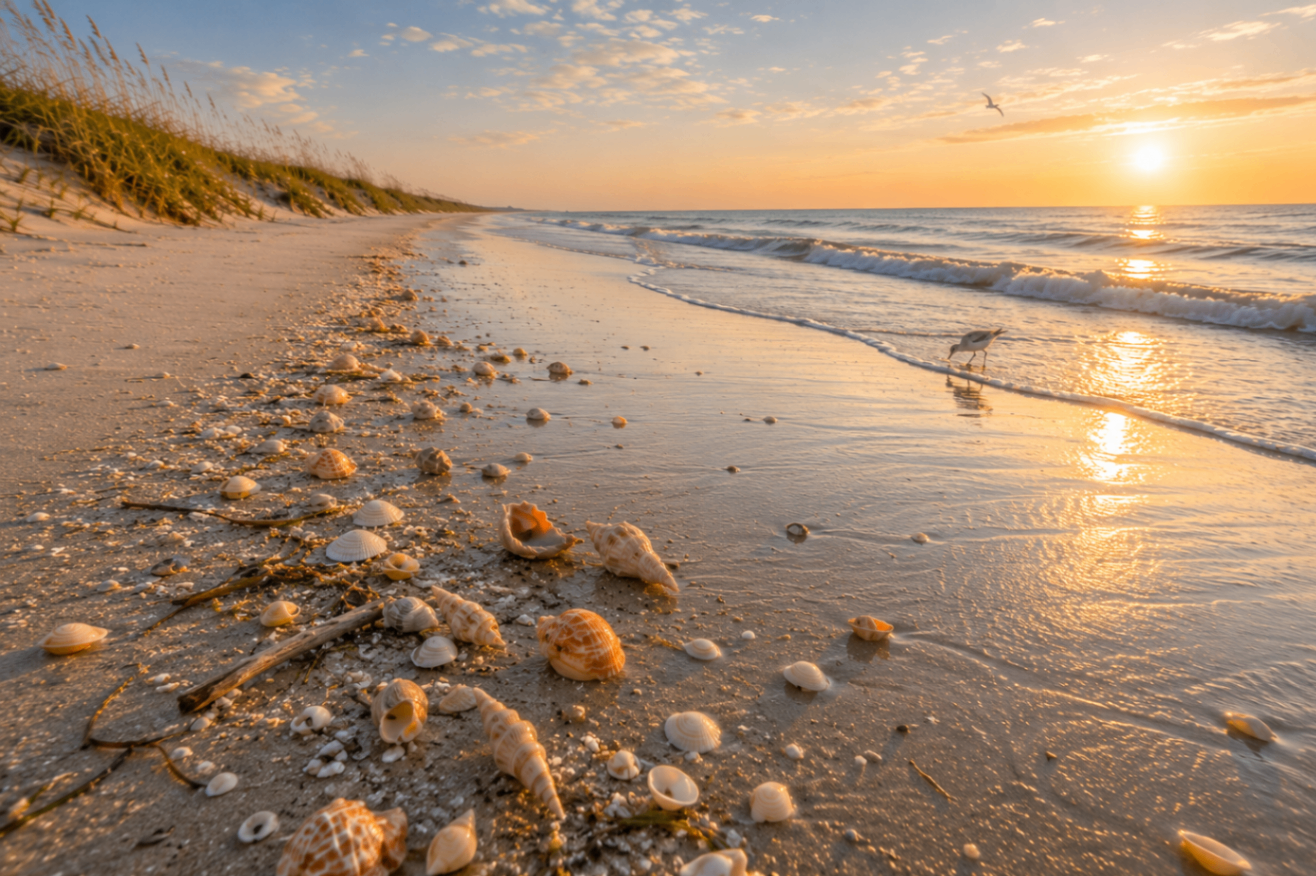
New Jersey Shelling Guide
From the Jersey Shore's classic beaches to quiet inlets, here's where and when to fill your shell bag.
 Beach
BeachBeach Guide
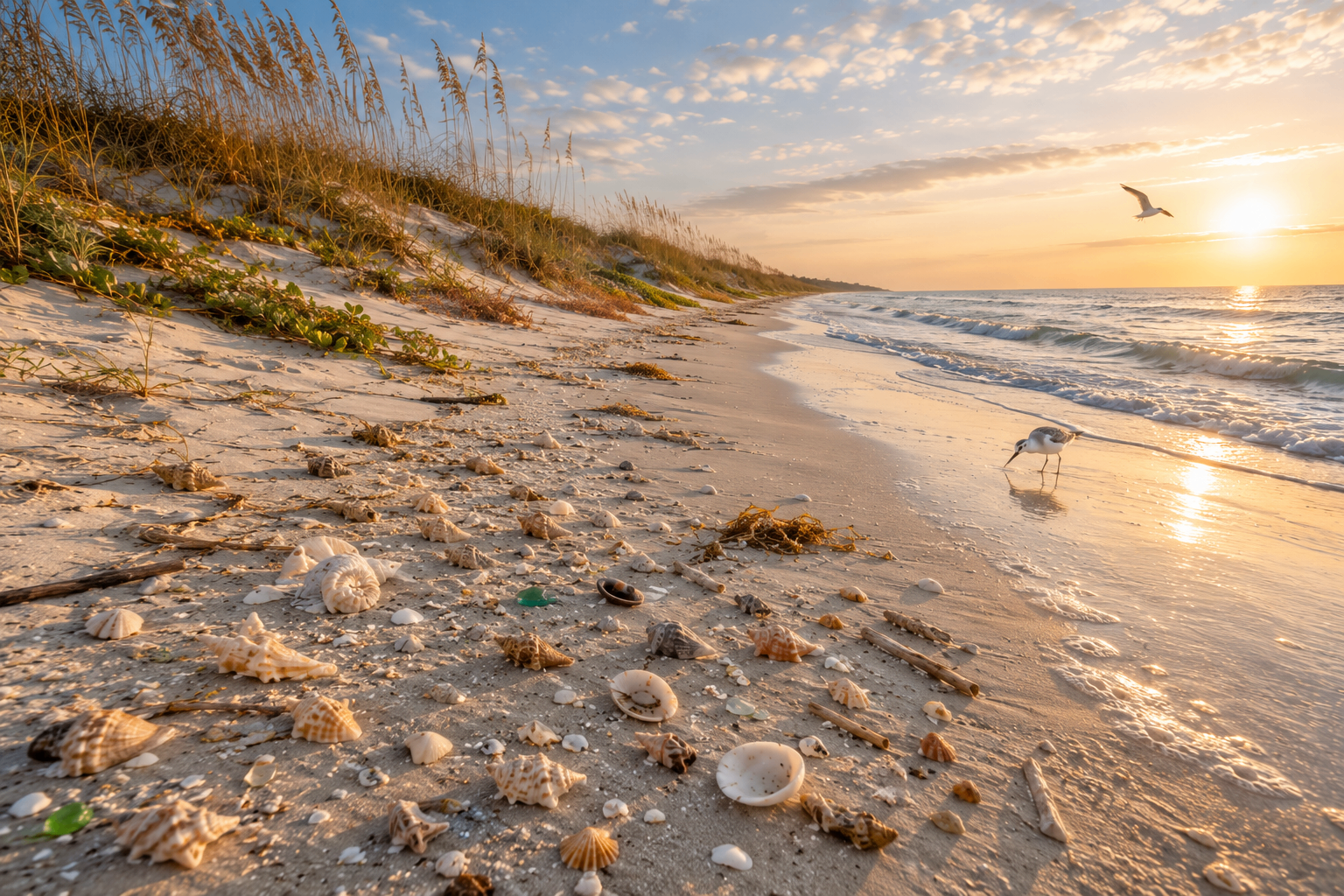
How Tides Affect Shelling
Understand the tides and you'll understand where the shells are. A simple guide to reading the water.
 Beach
BeachBeach Guide
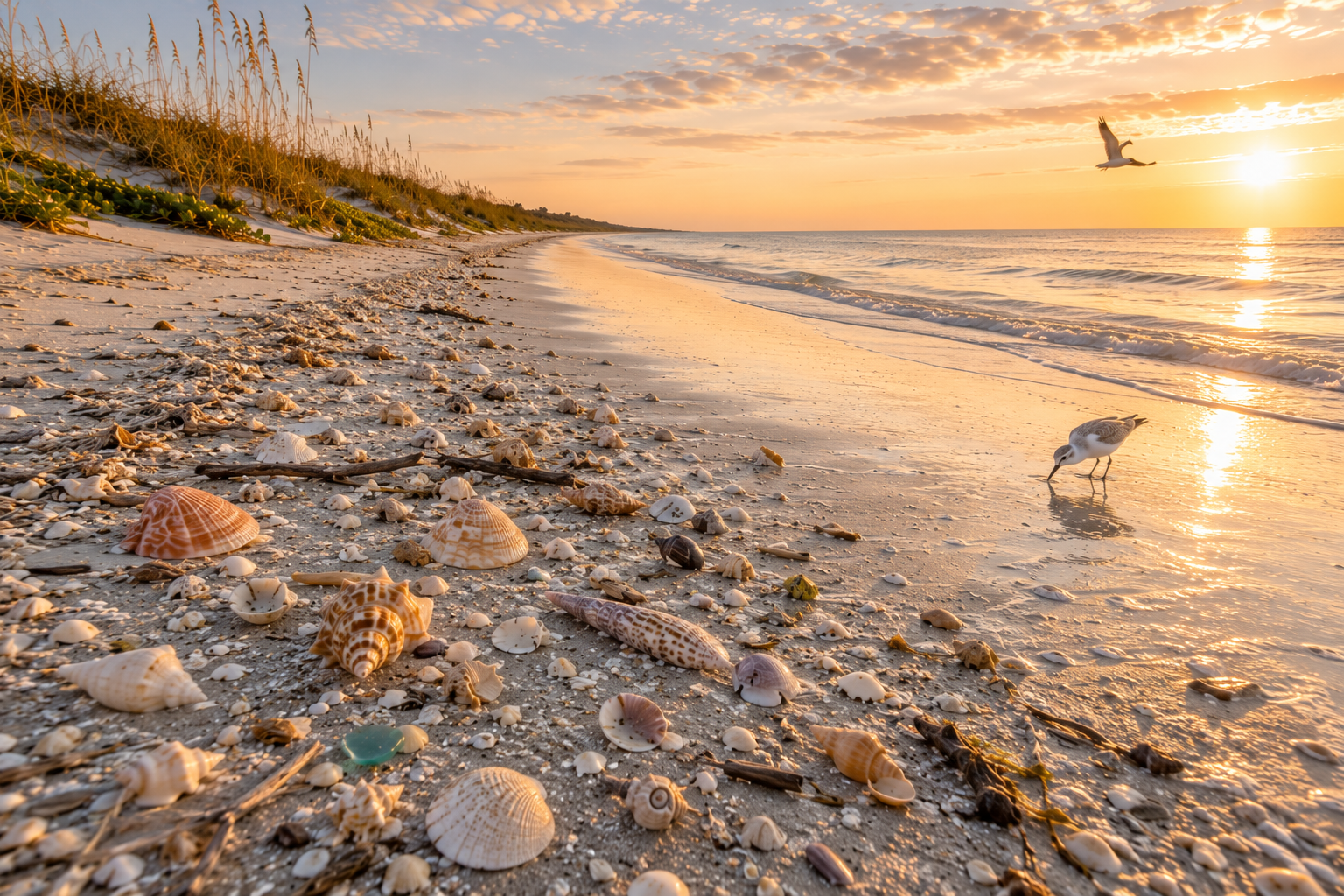
Seasonal Shelling Calendar
What to look for season by season — a year-round calendar for East Coast beachcombers.
 Beach
BeachBeach Guide
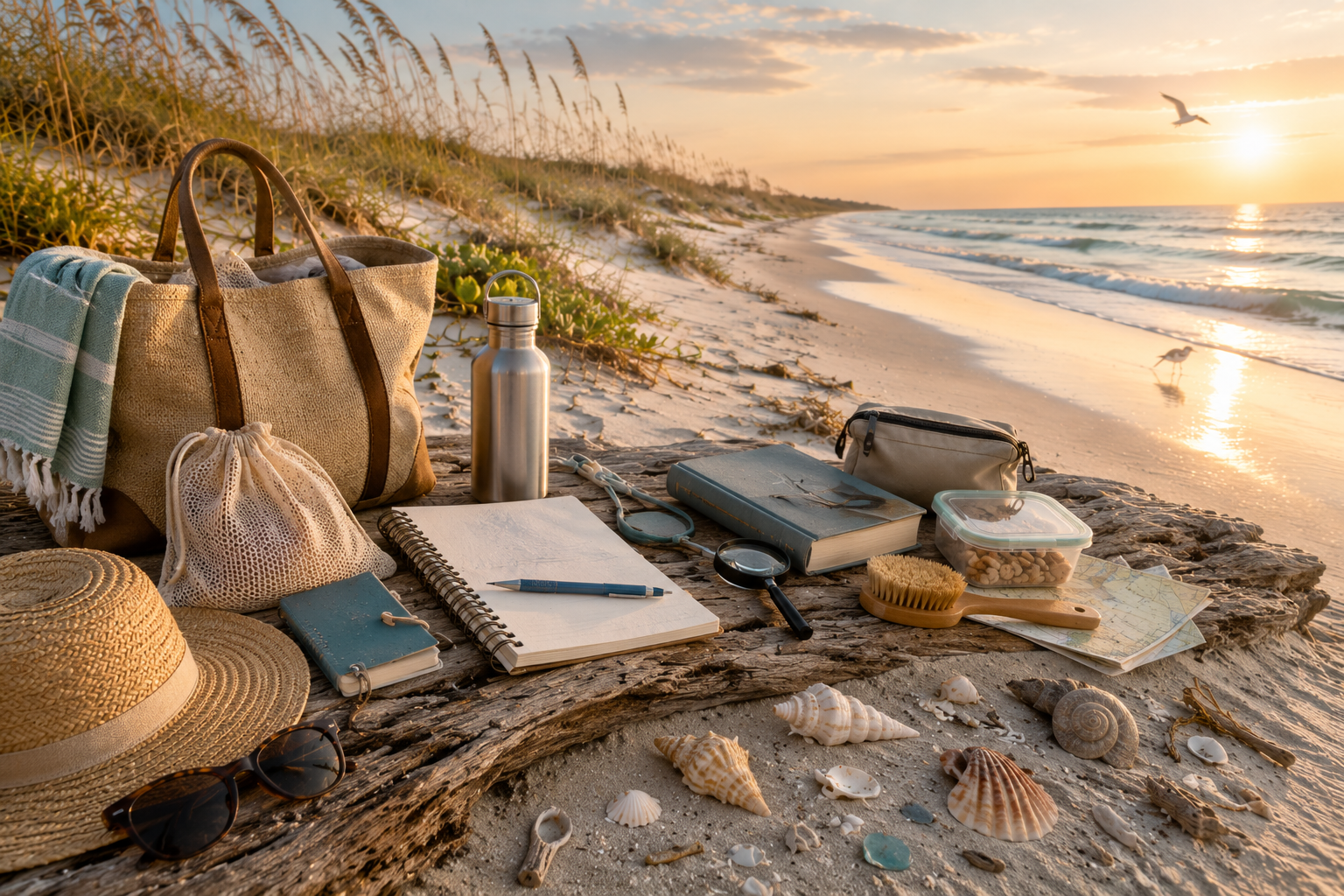
What to Bring Beachcombing
A simple packing list for a successful day of shelling — no expensive gear required.
 Beach
BeachBeach Guide
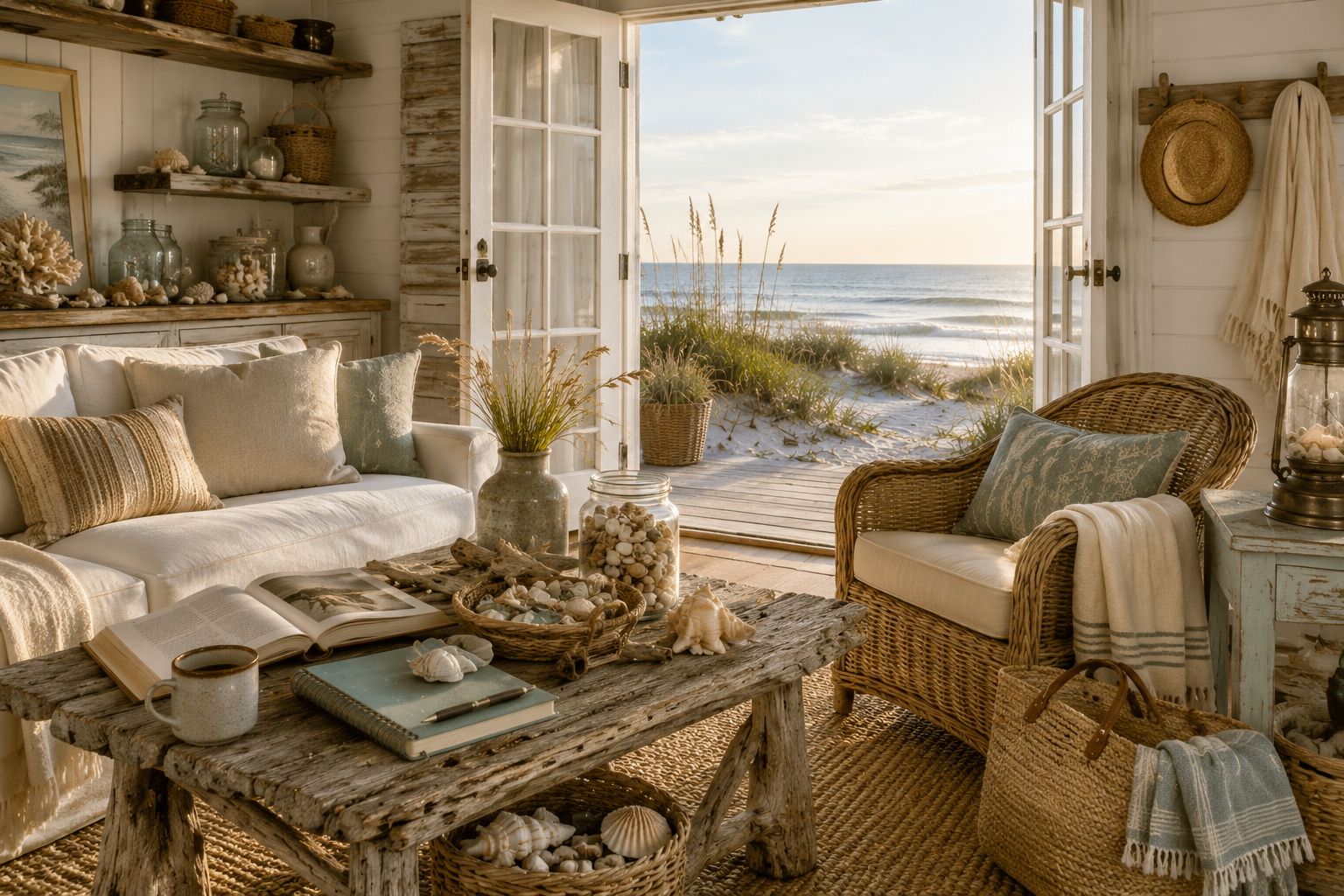
Beach Cottage Decor
Breezy, timeless beach cottage style — soft textures, natural materials, and seaside calm.
 Beach
BeachBeach Guide
Best Time to Go Shelling on Florida's Gulf Coast
Timing beats luck. A practical guide to the tides, weather, and seasons that decide whether a Gulf Coast shell walk is exceptional or merely pleasant.
 Beach
BeachBeach Guide
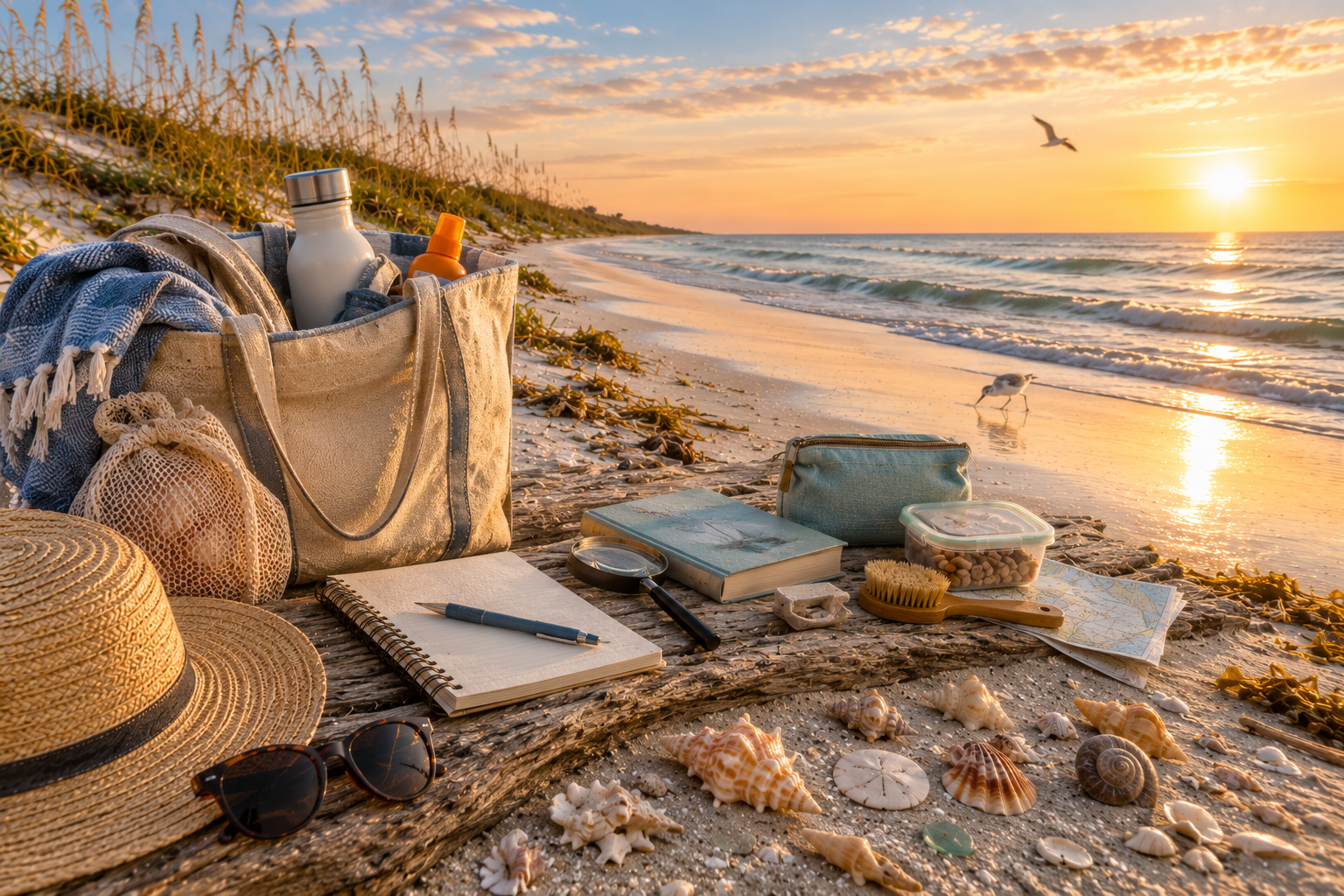
What to Bring on a Florida Shelling Trip
A short, honest packing list. Everything you actually need, and a few things people bring that they don't.