 Save
SaveGuide
How Tides Affect Shelling
Understand the tides and you'll understand where the shells are. A simple guide to reading the water.
Understand the tides and you'll understand where the shells are. A simple guide to reading the water.
Tides move shells from the seafloor to the shore and back again. Understanding the cycle helps you be in the right place at the right moment.
What the Tide Actually Does to Shells
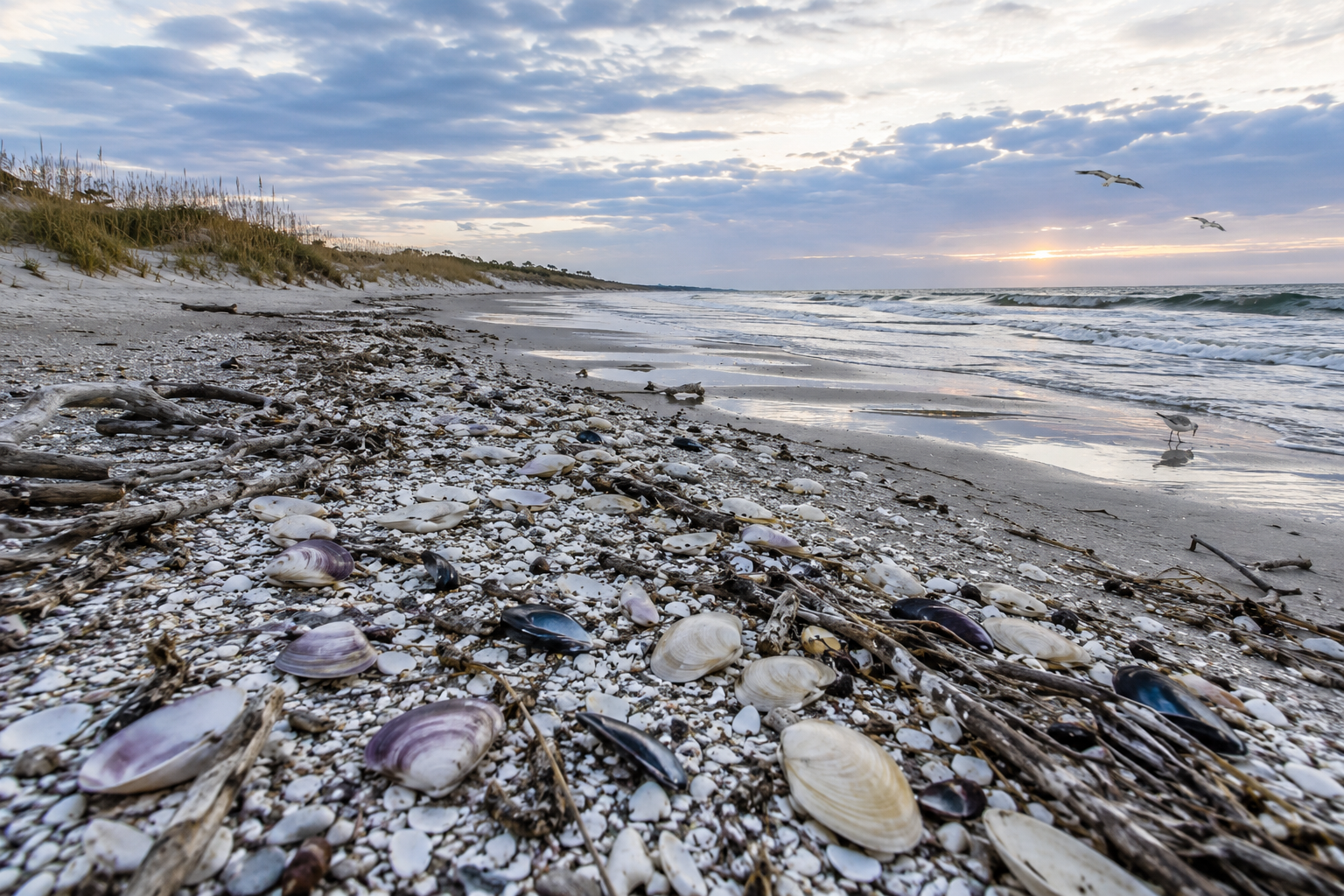
Shells sit on shallow beds offshore. A rising tide carries water — and whatever the water has lifted — up the beach; a falling tide drains away and leaves the heavier material behind on the sand. Every tide therefore does two jobs: it delivers new shells and it uncovers the strip of beach where the last tide left its own. That is why the same beach can look picked clean at noon and freshly stocked at dawn.
The Cycle in Plain Terms
- Most Atlantic and Gulf beaches see two high tides and two low tides in roughly 24 hours.
- Each low arrives about 50 minutes later than the previous day's — yesterday's perfect hour is not today's.
- The strip of beach between the high-water mark and the water's edge is the whole search area, and it is widest at low tide.
- Between the tides, wind and swell decide how much of what the water lifted actually reaches the sand.
Why Low Tide Wins
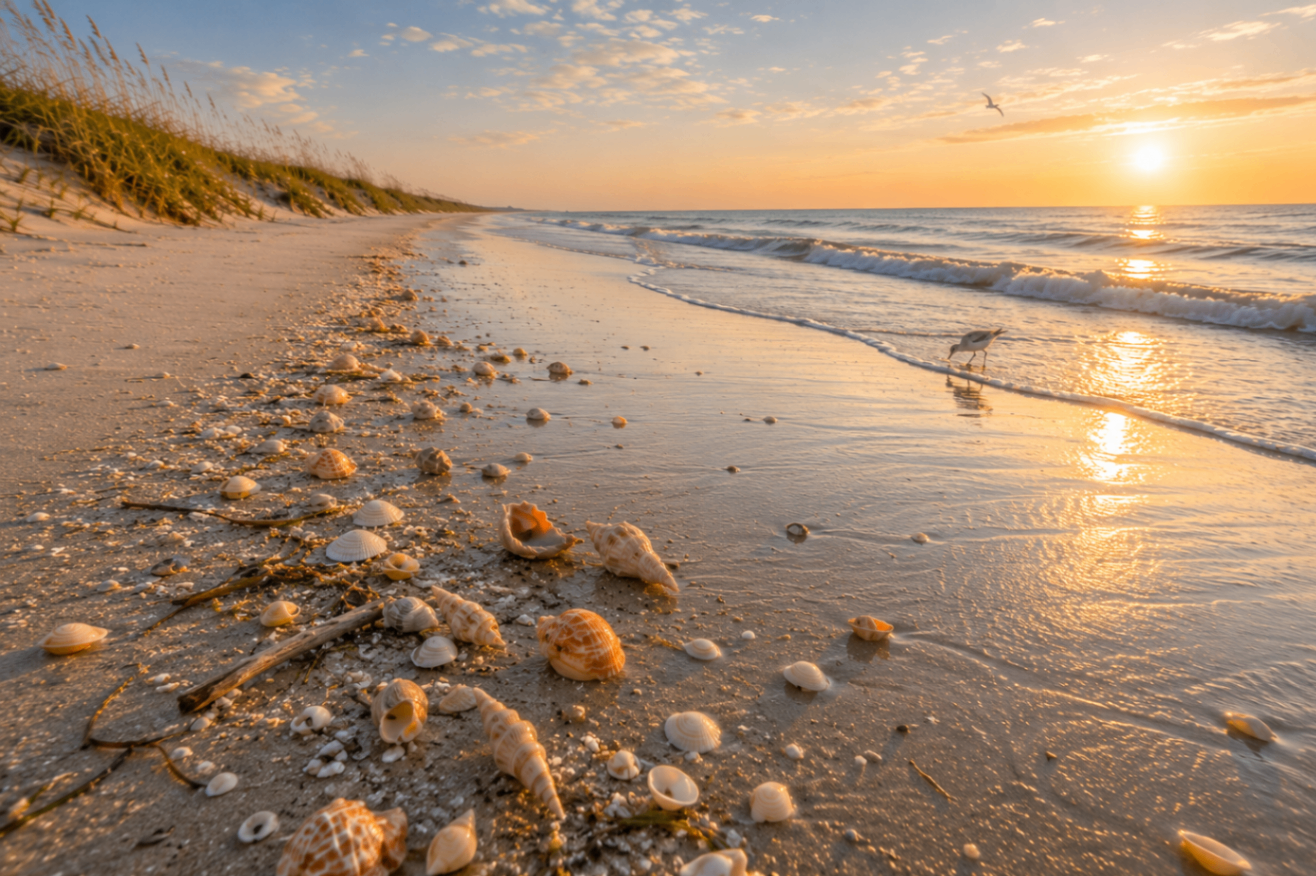
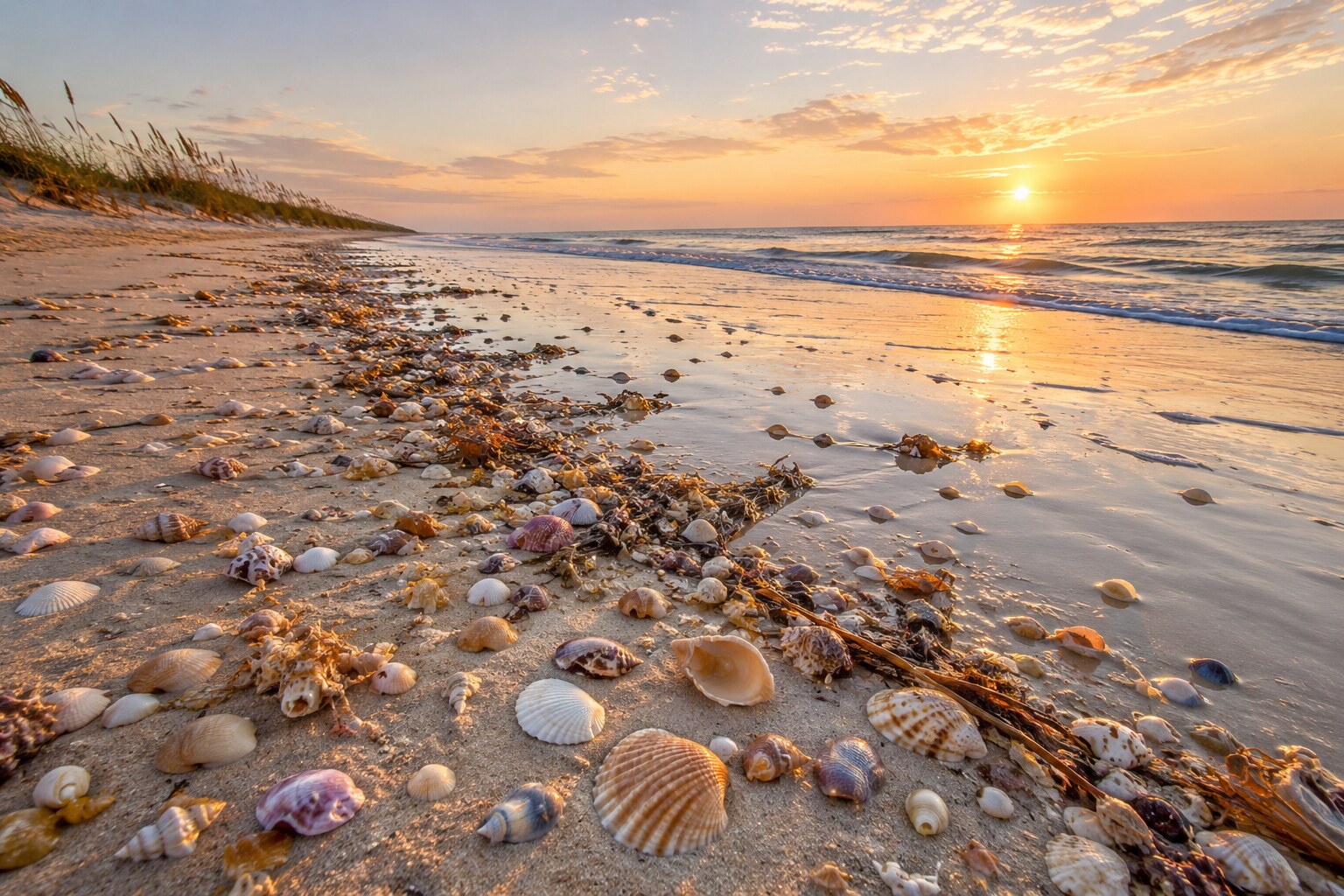
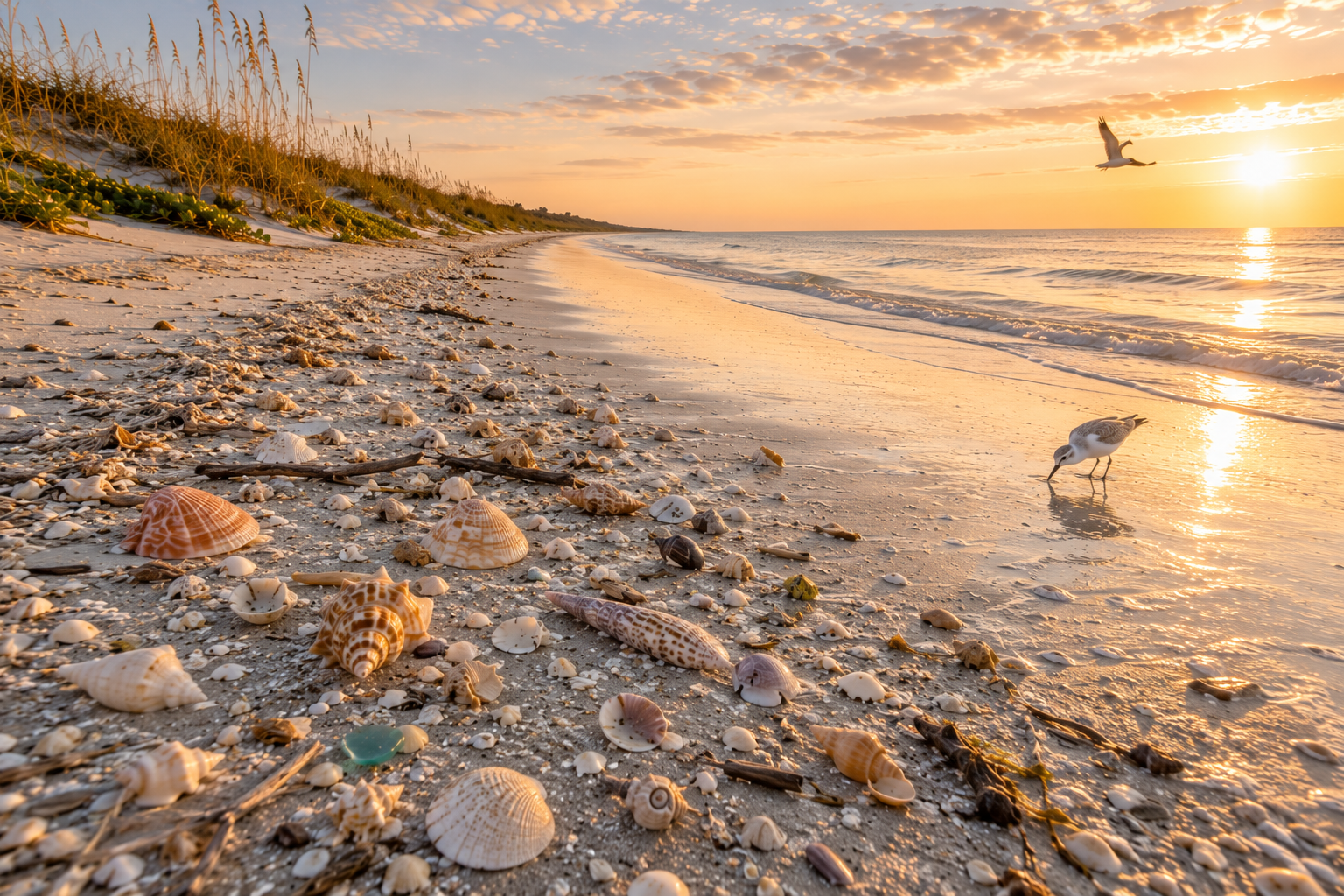
As the water recedes, it drops shells along the exposed sand and leaves the wrack line — a band of seaweed and treasures marking the high-water mark. Low tide gives you the most beach, the newest deposits, and the best light angle for spotting a glossy shell in wet sand.
When to Start Walking
- Begin about an hour before the predicted low and follow the water down.
- Walk out along the wrack line, then walk back along the wet sand the tide has just left.
- The first low of the day is usually best — overnight deposits are still untouched.
- A second pass on the same falling tide often turns up what the first light missed.
Read the Wrack Line
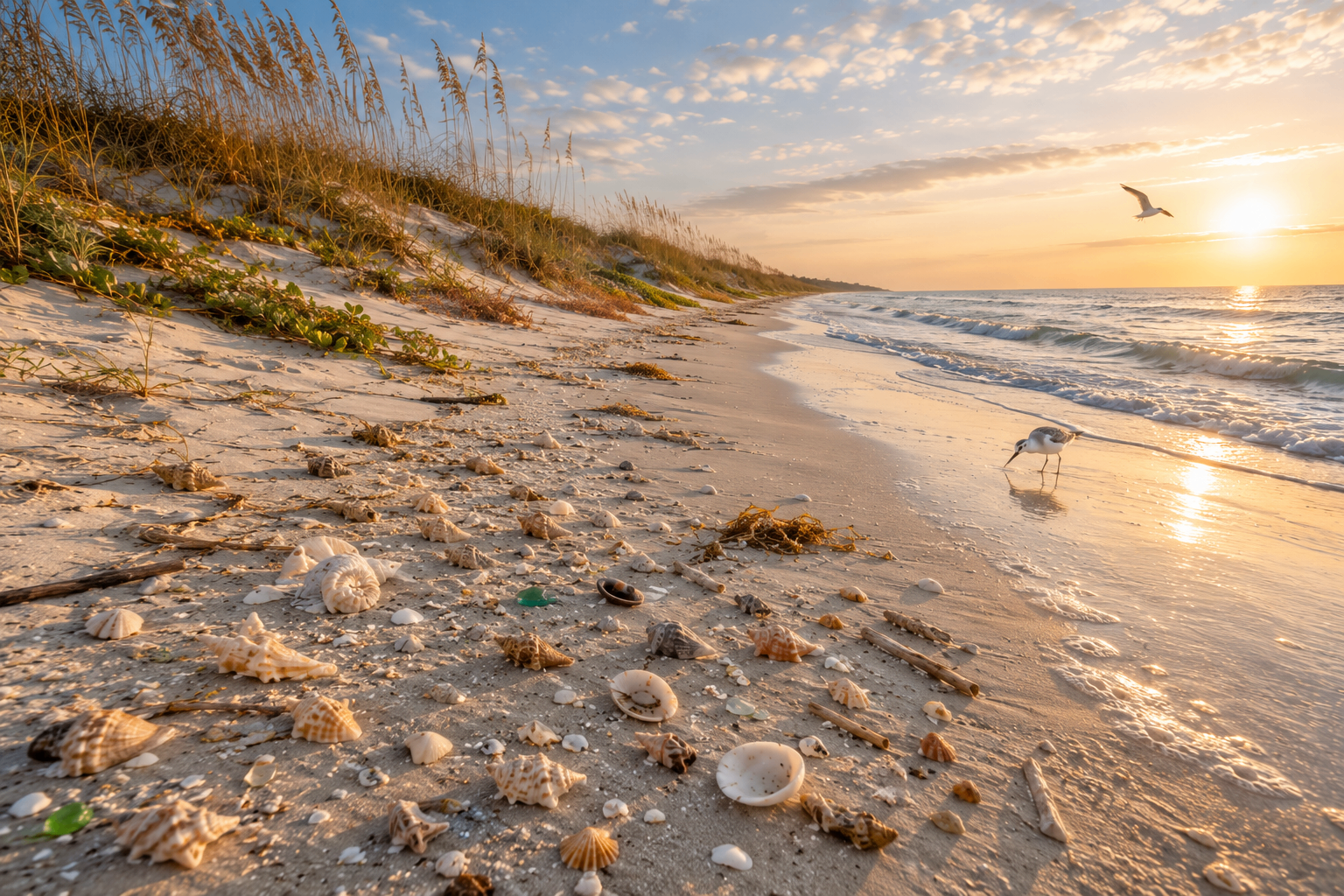
Follow the curving line of debris left by the highest tide. It concentrates shells, sea glass, and other finds in one easy-to-search ribbon.
- Where the wrack line is thick with seaweed, small shells hide inside it — lift rather than scan.
- Where two wrack lines run parallel, the upper one is older and the lower one is from the most recent high tide.
- Curves and points where the line bends seaward collect the heaviest material, including whelks.
- Runnels and shallow pools left behind at low tide trap shells that would otherwise wash back.
Spring vs. Neap Tides
- Spring tides (around new and full moons) have the widest range and expose the most beach.
- Neap tides have a smaller range and reveal less shoreline.
- Check a local tide chart and plan your walk for the lowest low of the day.
Over a week the difference is significant: plan a trip around the spring-tide lows if the dates are flexible, and accept a shorter search window during neap weeks.
When Tide Isn't the Whole Story
Tide sets the stage; weather decides the show. A perfect dead-low tide after a calm, flat week can produce very little, while an average low tide the morning after a storm or a sustained onshore wind can be the best walk of the year. Plan the hour with the tide table and plan the day with the forecast.
A Simple Tide Routine
- Check a local tide table for the week, not just the day, and find the lowest early-morning low.
- Cross-check the forecast for a front or onshore wind in the preceding 48 hours.
- Arrive an hour before low with a mesh bag so sand and water drain as you walk.
- Search the wrack line first, then the wet sand, then any pools left behind.
- Check every shell for a live animal before pocketing it.
Put tide timing into practice with our Beginner's Beachcombing Guide.
Read the Beachcombing GuideContinue Your Beachcombing Journey
Hand-picked next steps — chosen because they build directly on what you've just read.
Compare Similar Shells
Species and look-alikes worth studying side by side. Every card routes into the shell reference.
Species
Scotch Bonnet
Semicassis granulata
Cream base with regular reddish-brown squares in tidy rows. Rounded body whorl and short spire; toothed inner lip.
Explore ShellSpecies
Knobbed Whelk
Busycon carica
Aperture opens on the right when the spire points up. Row of blunt knobs along the shoulder of the body whorl; interior often flushed with orange.
Explore ShellSpecies
Lettered Olive
Americoliva sayana
Cylindrical body with a very short spire and a long narrow aperture. The polished cream base carries tan or brown zigzag lines that give the species its 'lettered' name.
Explore ShellSpecies
Atlantic Auger
Terebra dislocata
Elongated screw-shaped shell up to 2 inches, pale grey to tan with faint spiral banding; each whorl carries fine axial ribs.
Explore ShellBeaches Worth Exploring Next
Shores connected to the shells, regions, and conditions on this page.
North Carolina Outer Banks
Outer Banks
A 200-mile chain of Atlantic barrier islands — Cape Hatteras, Ocracoke, and Cape Lookout deliver whelks, olive shells, and the state shell,…
Explore BeachGeorgia Coast
Jekyll Island
Historic Golden Isle with generous public beaches — Driftwood Beach and St. Andrews shore deliver moon snails, jingle shells, and…
Explore BeachFlorida Gulf Coast
Sanibel Island
Sanibel's east-west orientation sweeps Gulf shells onto its shore in exceptional variety — the reason it's the most celebrated shelling…
Explore BeachNorth Carolina Outer Banks
Ocracoke Island
A ferry-only Outer Banks island south of Hatteras — sixteen miles of protected National Seashore beach where Scotch bonnets and knobbed…
Explore BeachDiscover More Coastal Inspiration
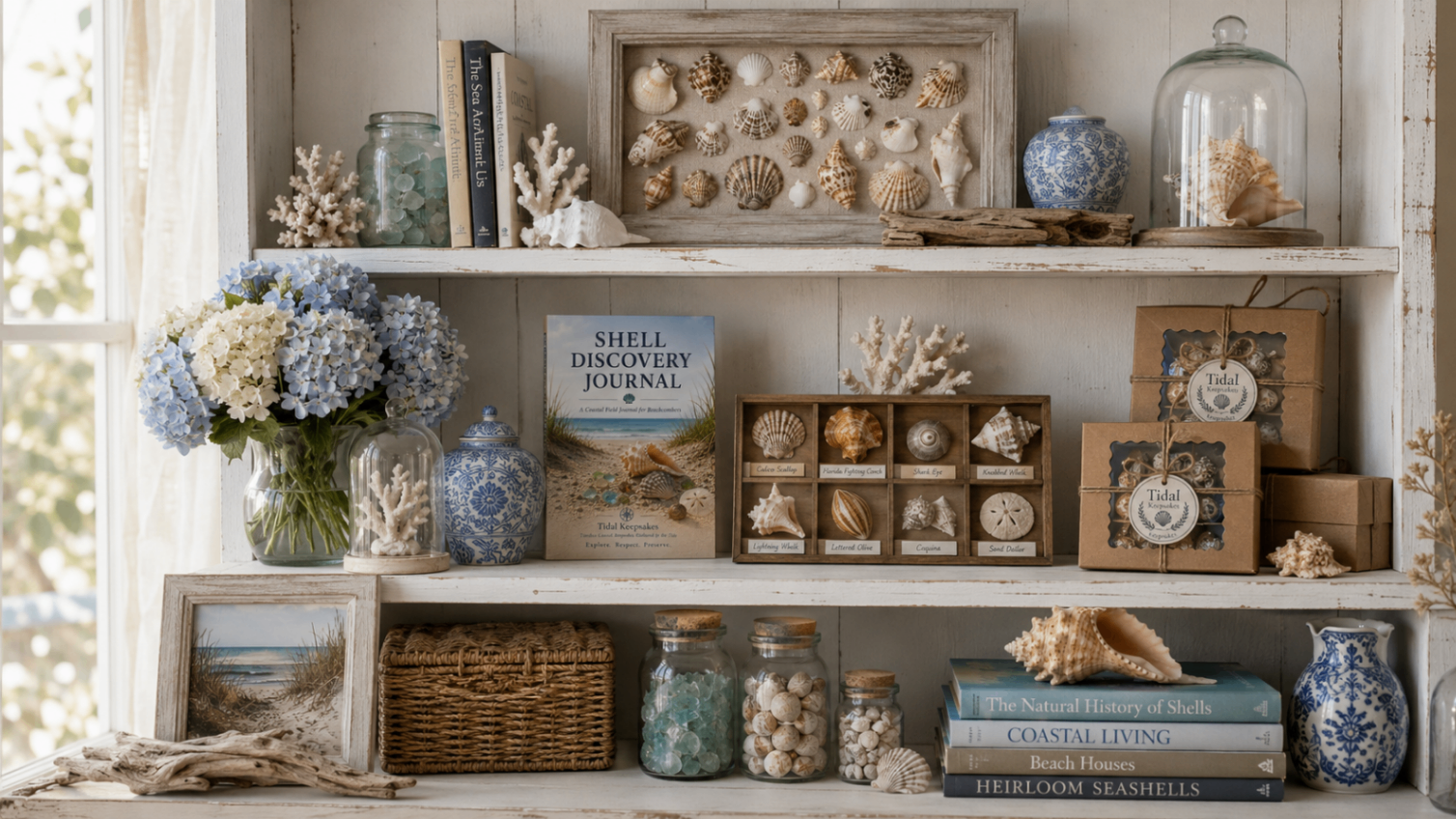
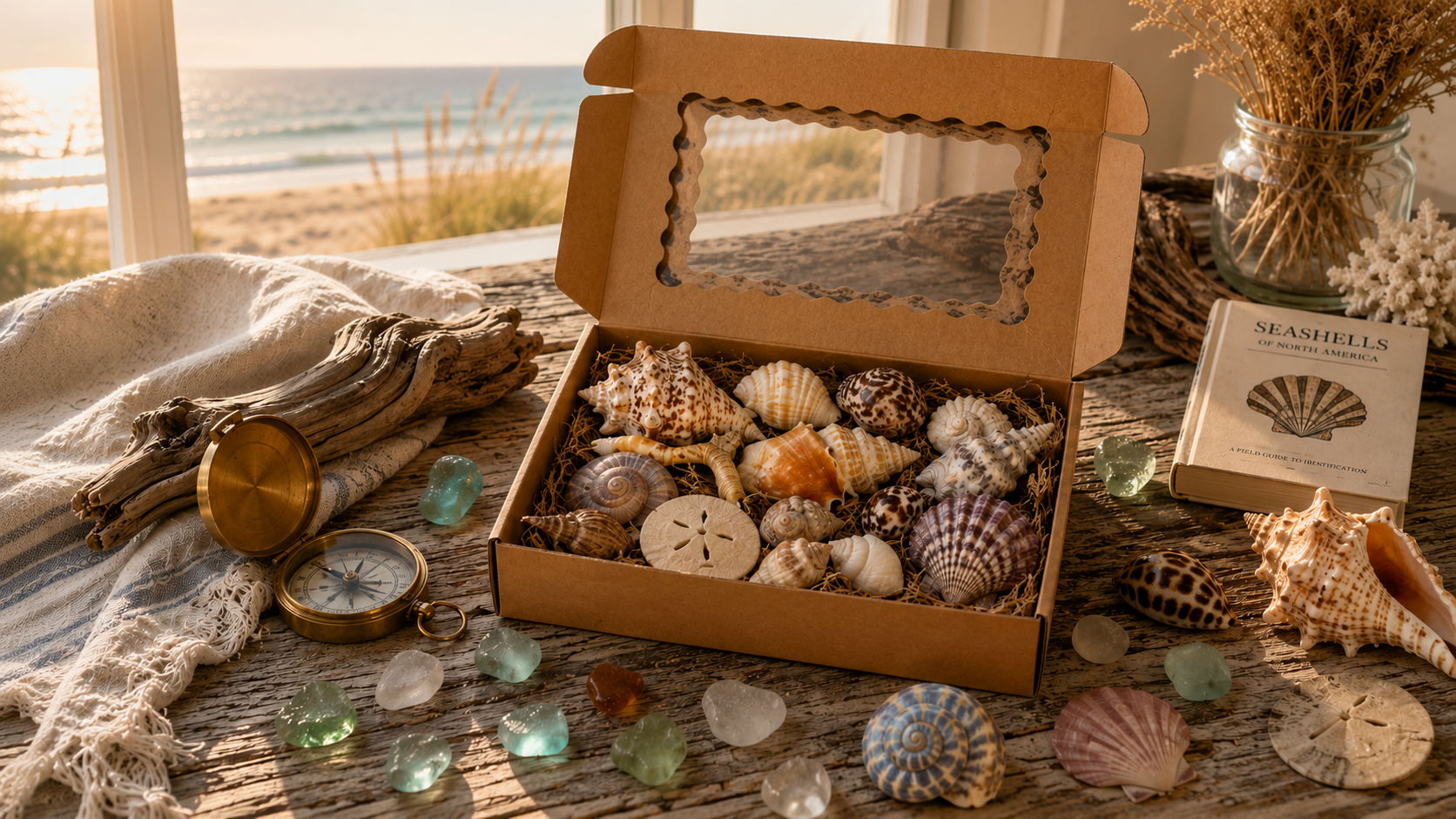
Curated coastal favorites and specimen boxes that echo the story above.
A Learning Journey to Follow
Learning Shell Identification
For growing collectors · 5 steps
For readers who already know a scallop from a whelk and want to sharpen the edge cases. Ends at the journal, where identification becomes a practice, not a lookup.
- 1
Understand the Anatomy
Shell Identification Guide
Vocabulary first — apex, whorl, aperture, columella.
Continue - 2
Meet the Common Species
Explore Common Shells
Browse the canonical shell records the site is built on.
Continue - 3
Compare Look-Alikes
Commonly Confused Shells
Side-by-side markers for the pairs that trip up new collectors.
Continue - 4
Find Them in the Wild
Best Beaches for Shelling
Where each species actually washes up.
Continue - 5
Practice in the Field
Shell Discovery Journal
Record each ID with sketches and notes to lock the learning in.
Continue