 Save
SaveGuide
Lettered Olive Identification
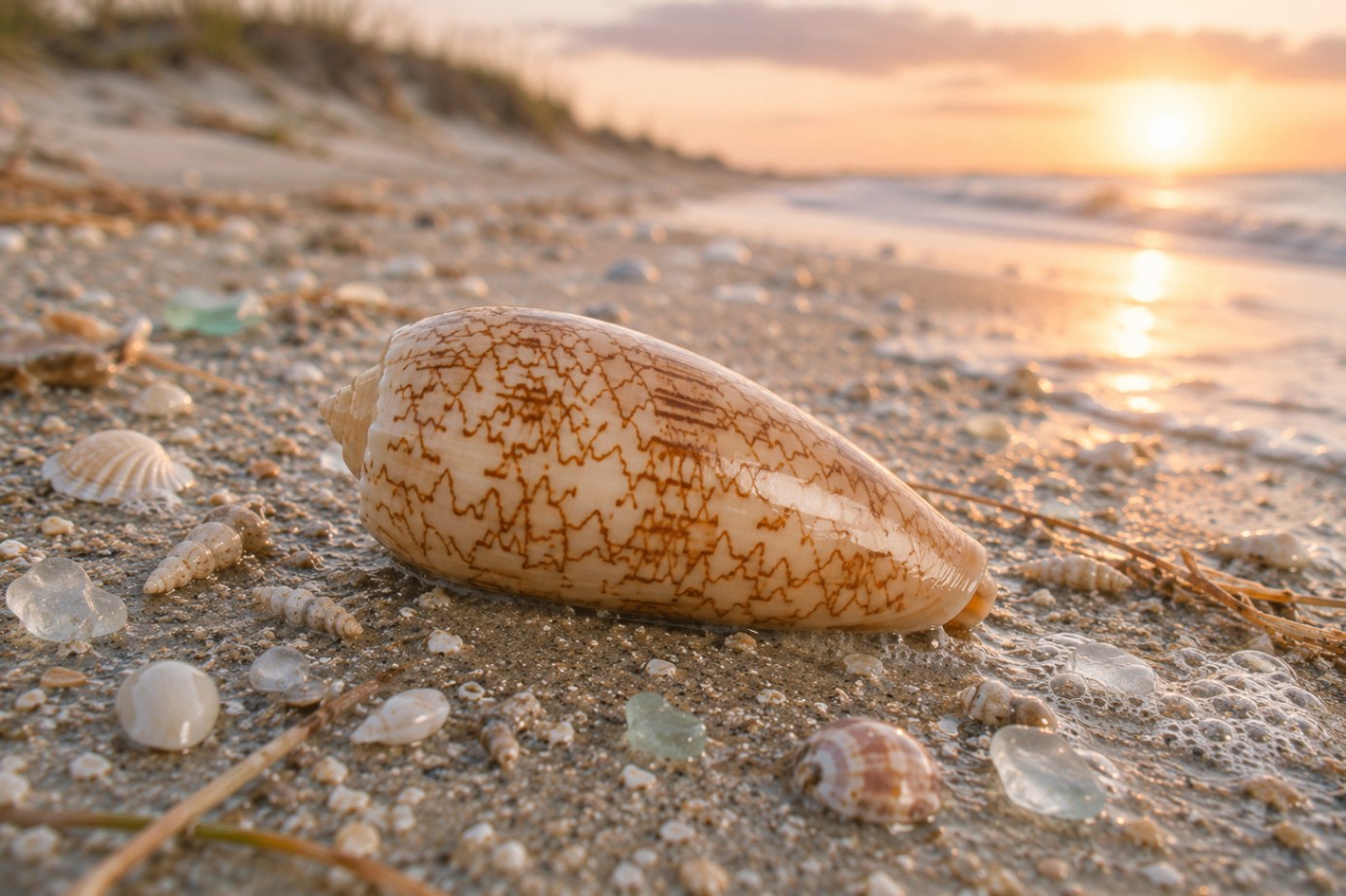
A polished, cylindrical shell with fine zigzag markings — South Carolina's state shell and one of the Gulf Coast's most photogenic finds.
A polished, cylindrical shell with fine zigzag markings — South Carolina's state shell and one of the Gulf Coast's most photogenic finds.
The lettered olive (Americoliva sayana) is South Carolina's state shell and one of the most satisfying finds on any southeastern beach. It is a member of the family Olividae, and the name comes from the fine tan or brown zigzag lines on its polished cream surface, which look like handwriting running around the shell. Once you have handled one you will never mistake the surface again — it looks wet even when it is bone dry.
Field Marks
- Highly polished, almost oiled surface — the shell looks wet even when dry
- Cylindrical outline with a very short conical spire
- Long, narrow aperture running most of the shell's length
- Fine tan or brown zigzag 'lettering' on a polished cream base
- Typical size: 2–3 inches
Quick ID Reference
| Feature | Lettered Olive |
|---|---|
| Scientific name | Americoliva sayana |
| Family | Olividae |
| Shell class | Gastropod |
| Outline | Cylindrical with a short conical spire |
| Surface | Polished, glossy |
| Colour | Cream base with tan or brown zigzag lettering; some specimens grey |
| Aperture | Long and narrow, running most of the shell's length |
| Typical size | 2–3 inches |
| Regions recorded | East coast and Gulf coast |
| Seasons recorded | Spring, summer, fall |
| Collector difficulty | Beginner |
Where to Look
Lettered olives burrow in the swash zone — the strip of wet sand between tides — and also occur on sandy intertidal and shallow subtidal bottoms. Walk the wet strand at low tide and watch for glossy cylindrical shapes that catch the light differently from the surrounding shells; the polish gives them away before the pattern does.
- Beaches recorded for lettered olives in our registry: the Outer Banks, Topsail Island, Cumberland Island, and Sanibel Island.
- They are common along the Carolinas and northern Florida coasts, and especially plentiful on quieter Atlantic barrier islands.
- In South Carolina's Lowcountry they appear in the records for Huntington Beach State Park, Folly Beach, and Edisto Beach.
- Best chances: spring through fall, on a falling tide, early in the morning before the strand has been walked.
Look-Alikes
The shell most often confused with a lettered olive is an auger (family Terebridae). Both are elongate, smooth-ish gastropods that turn up in the same sandy intertidal habitat, but the outline settles it immediately.
| Feature | Lettered Olive | Auger |
|---|---|---|
| Spire | Very short and conical | Very tall and narrow, many whorls |
| Outline | Cylindrical, stout | Screw-like, tapering to a point |
| Aperture | Long and narrow, most of shell length | Small, at the base only |
| Surface | Polished and glossy | Cream to tan, subtler sheen |
| Pattern | Zigzag 'lettering' | Subtle banding along each whorl |
If the aperture runs nearly the full length of the shell, it is an olive. If the shell is mostly spire with a small opening at the bottom, it is an auger.
Collecting Responsibly
- Lettered olives are active predators — check for a live animal in the aperture before collecting.
- Return live specimens to the wet sand where you found them.
- Follow the local collecting rules for the beach you are on; limits vary by state and by park.
Journal Prompts
- Compare the direction and density of the 'letters' between specimens from different beaches.
- Record the swash-zone position where each olive appeared.
See the full record.
Lettered OliveContinue Your Beachcombing Journey
Hand-picked next steps — chosen because they build directly on what you've just read.
Article
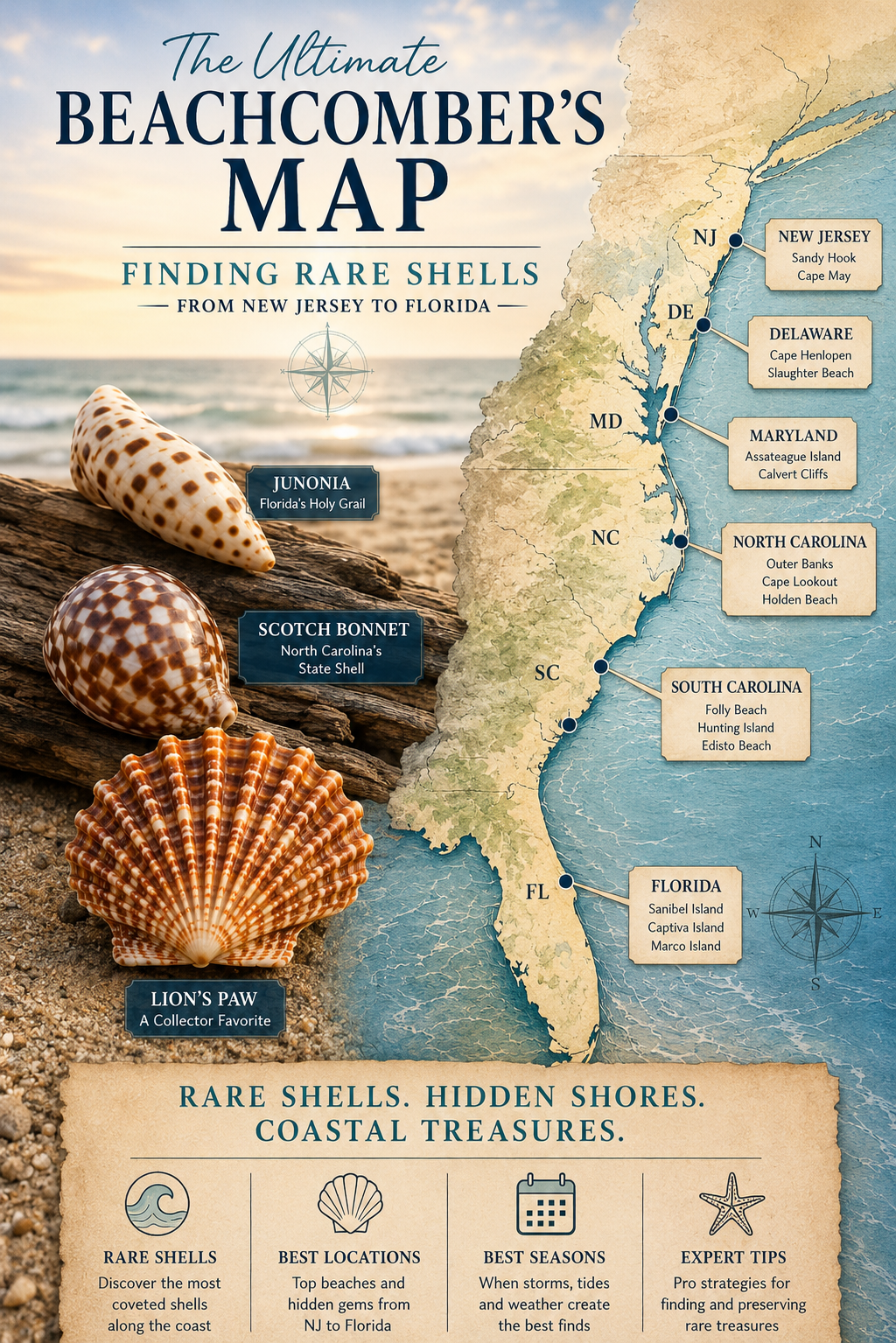
The Ultimate Beachcomber's Map: Finding Rare Shells from Jersey to Florida
Builds on the same core topic.
Guide
Lightning Whelk vs. Knobbed Whelk: A Field ID
Builds on the same core topic.
Resource
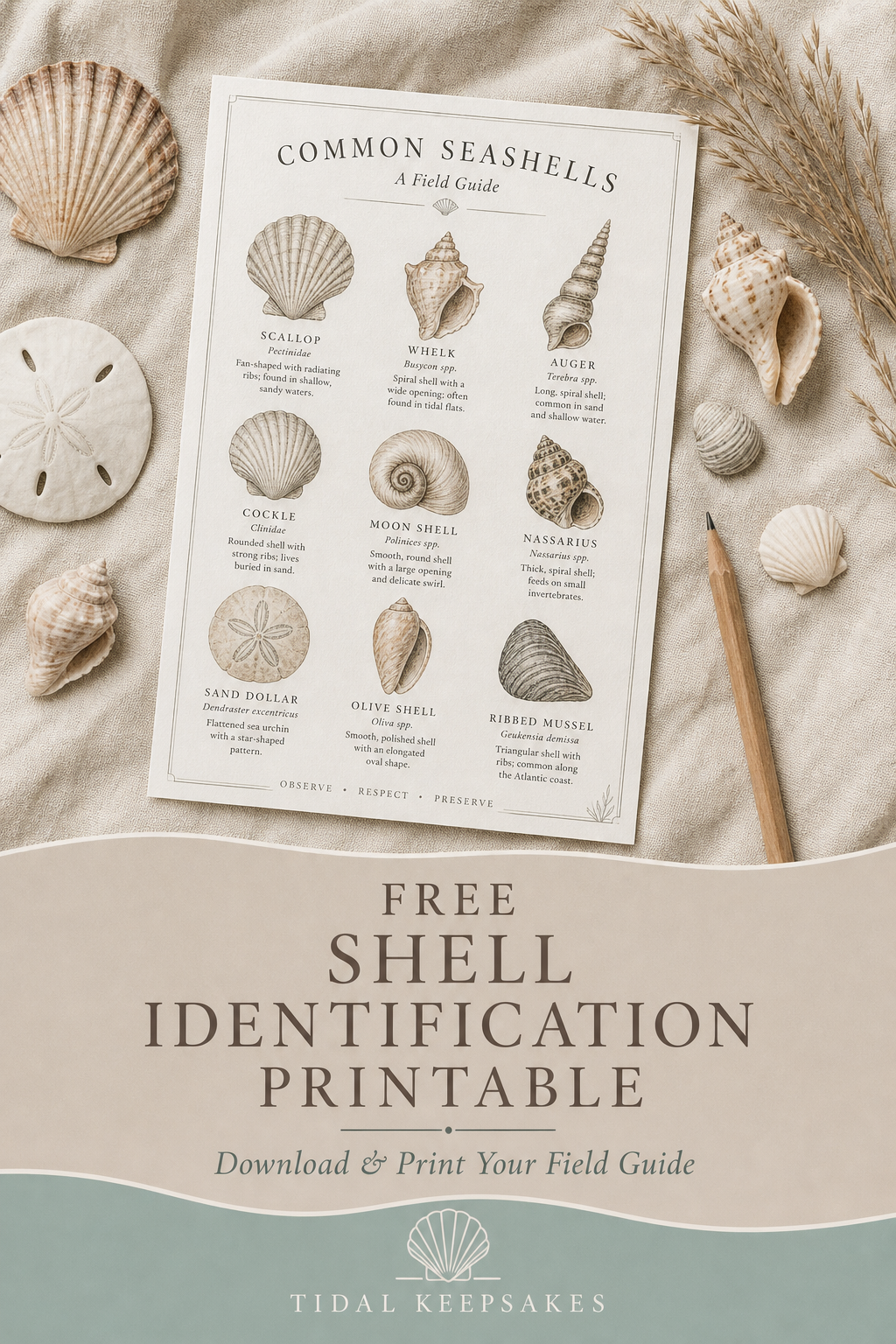
Free Shell Identification Printable
Builds on the same core topic.
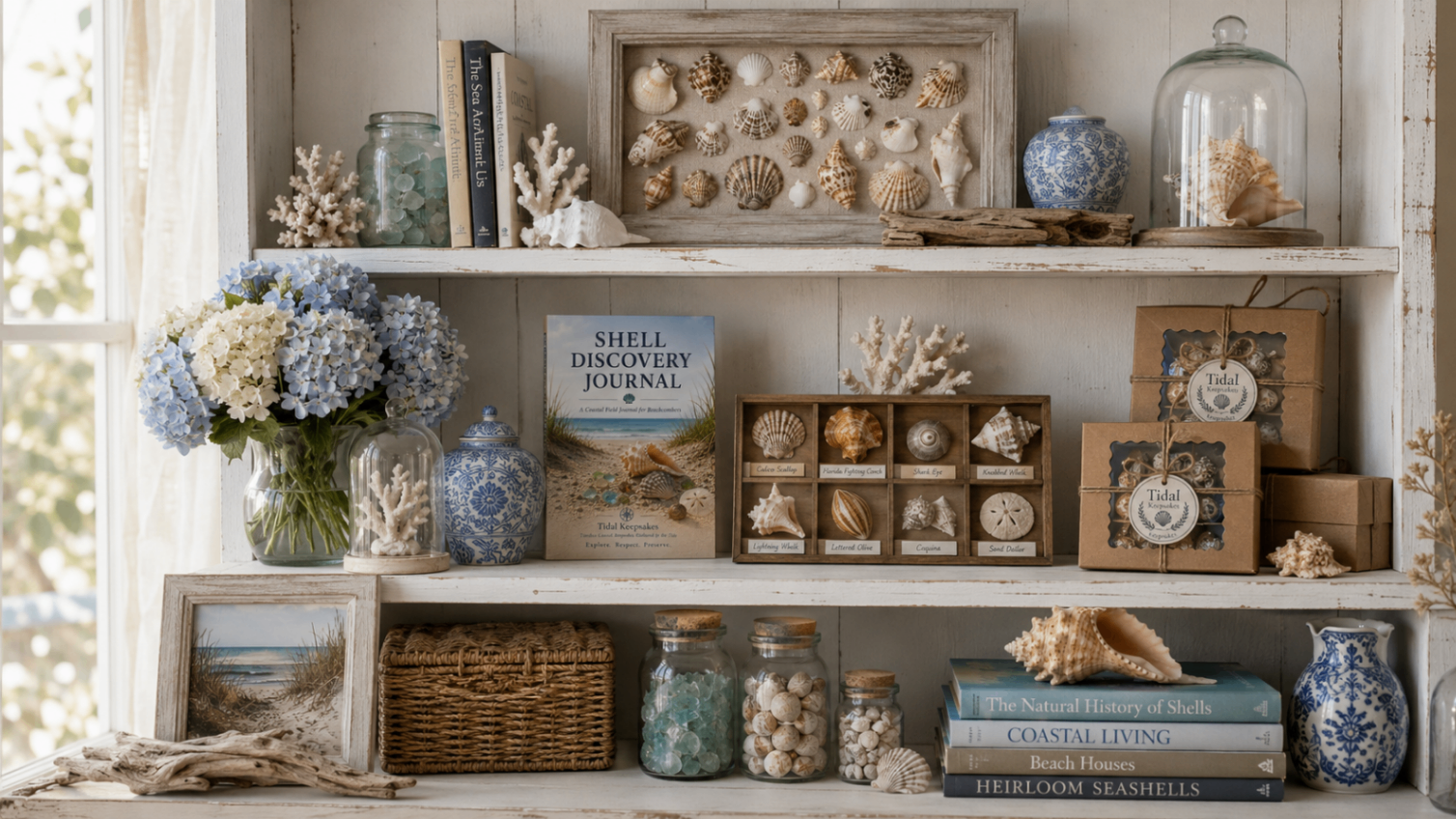
Curated Shell Box
The Collector Box
See these ideas in a curated collection.
Compare Similar Shells
Species and look-alikes worth studying side by side. Every card routes into the shell reference.
Species
Scotch Bonnet
Semicassis granulata
Cream base with regular reddish-brown squares in tidy rows. Rounded body whorl and short spire; toothed inner lip.
Explore ShellSpecies
Knobbed Whelk
Busycon carica
Aperture opens on the right when the spire points up. Row of blunt knobs along the shoulder of the body whorl; interior often flushed with orange.
Explore ShellSpecies
Lettered Olive
Americoliva sayana
Cylindrical body with a very short spire and a long narrow aperture. The polished cream base carries tan or brown zigzag lines that give the species its 'lettered' name.
Explore ShellSpecies
Atlantic Auger
Terebra dislocata
Elongated screw-shaped shell up to 2 inches, pale grey to tan with faint spiral banding; each whorl carries fine axial ribs.
Explore ShellBeaches Worth Exploring Next
Shores connected to the shells, regions, and conditions on this page.
North Carolina Outer Banks
Outer Banks
A 200-mile chain of Atlantic barrier islands — Cape Hatteras, Ocracoke, and Cape Lookout deliver whelks, olive shells, and the state shell,…
Explore BeachGeorgia Coast
Jekyll Island
Historic Golden Isle with generous public beaches — Driftwood Beach and St. Andrews shore deliver moon snails, jingle shells, and…
Explore BeachFlorida Gulf Coast
Sanibel Island
Sanibel's east-west orientation sweeps Gulf shells onto its shore in exceptional variety — the reason it's the most celebrated shelling…
Explore BeachNorth Carolina Outer Banks
Ocracoke Island
A ferry-only Outer Banks island south of Hatteras — sixteen miles of protected National Seashore beach where Scotch bonnets and knobbed…
Explore BeachDiscover More Coastal Inspiration
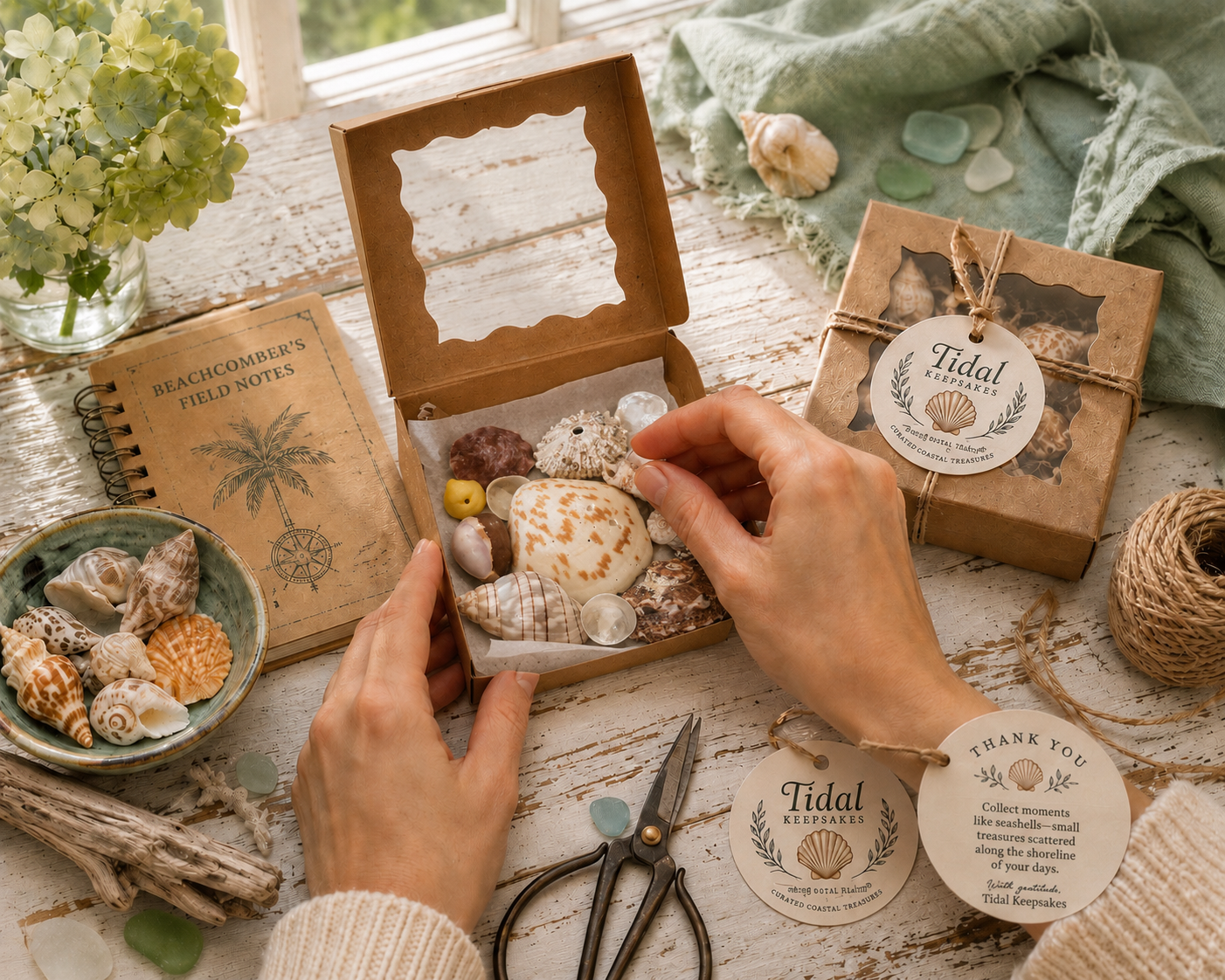
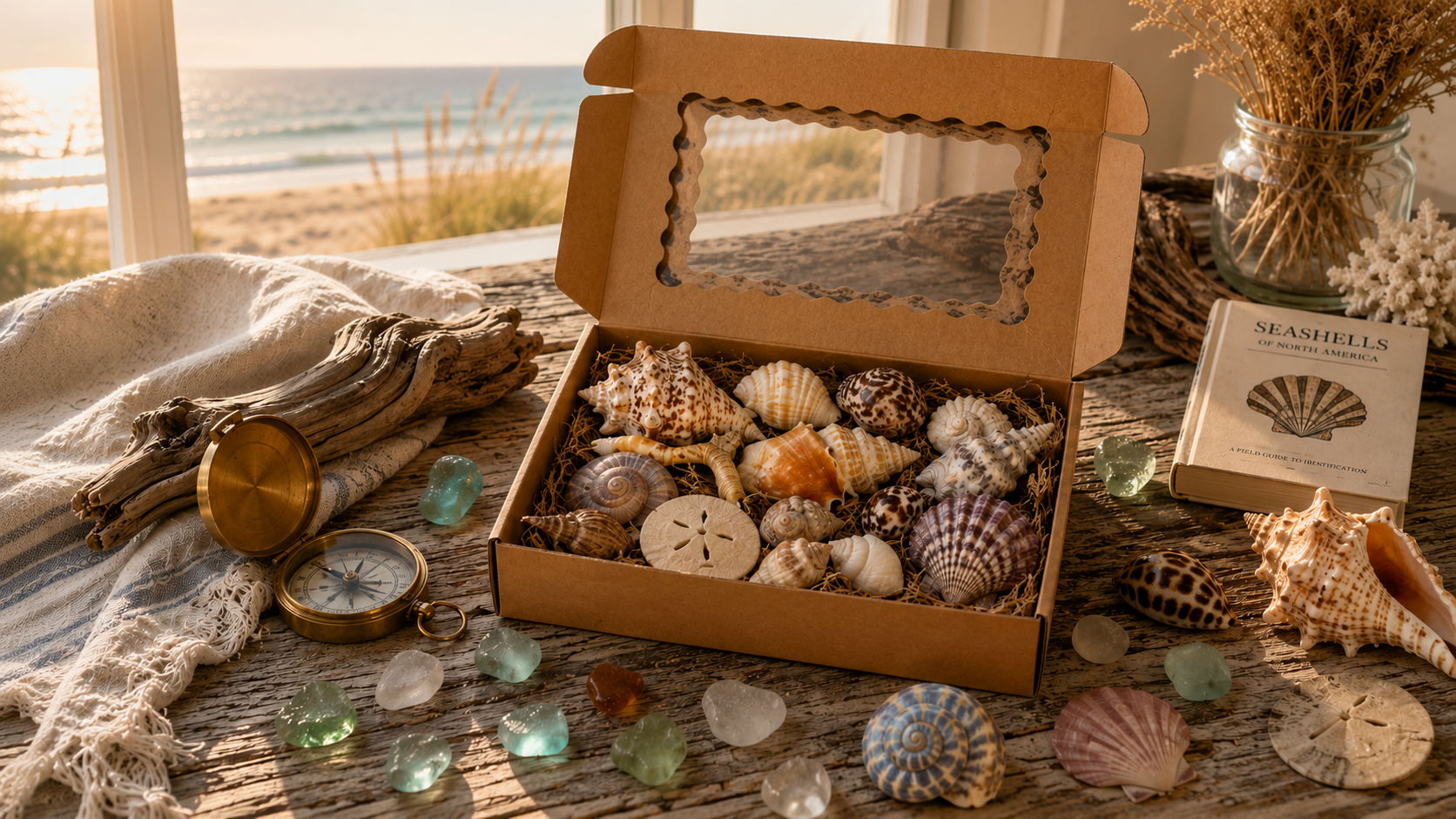
Curated coastal favorites and specimen boxes that echo the story above.
A Learning Journey to Follow
New to Beachcombing
For beginners · 5 steps
The pathway most first-time visitors take. It moves calmly from the beginner's guide into shell identification, then out to the beach and back home to the journal.
- 1
Start Here
Beginner's Beachcombing Guide
The foundation — what to bring, when to walk, how to look.
Continue - 2
Learn the Shells
Shell Identification Guide
Meet the species you're most likely to find on your first walk.
Continue - 3
Take Care of Finds
How to Clean Seashells
Bring shells home the right way so they last for years.
Continue - 4
Record the Walk
Shell Discovery Journal
Field-note every find while the memory is still fresh.
Continue - 5
Take the Coast Home
The Mini Box
A petite assorted shell collection, hand-gathered from the coast.
Continue